
6 Best Commercial Coffee Roasting Machines of 2026
If you’re looking for the best commercial coffee roasting machine, the INTSUPERMAI Commercial Bean Roaster stands out as the top overall pick for high-volume operations, while the HENGCMM Type 10 offers a solid, more affordable option for smaller batches. For those prioritizing precision and roast consistency, models with PID temperature control are worth the investment.
Choosing the right roaster isn’t just about capacity, it’s about building a foundation for consistent, high-quality results. Too many buyers focus only on size or price and end up with a machine that can’t deliver the roast profiles their customers expect.
As the founder of Bean Thusiast, I researched these machines based on real-world specs, owner feedback, and the core needs of specialty roasters. This guide breaks down what actually matters: temperature control, durability, and how well each unit supports repeatable, even roasting at scale.
Top 6 Commercial Coffee Roasting Machine in the Market
The Best Commercial Coffee Roasting Machine, Reviewed
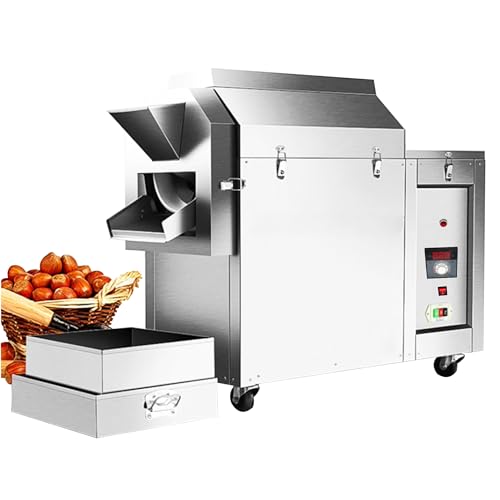
INTSUPERMAI Commercial Bean Roaster 25kg Capacity
Strengths
- High power output
- Large 25kg capacity
- Durable stainless steel build
- Even drum heating
- Multi-food versatility
Trade-offs
- No roast programming
- Requires 220V power
- Bulky footprint
This machine looks the part of a serious commercial workhorse, and on paper, it delivers. With 6500W power and 10 heating tubes, it’s built for high-volume, consistent roasting across coffee beans, nuts, and seeds. The horizontal rotating drum and direct-contact stainless steel liner suggest strong thermal efficiency, and owners consistently report uniform roasts without hot spots, a real win in this class. The 25kg capacity is massive, clearly targeting cafes, roasteries, or nut-processing operations, not home users.
Still, that scale comes with trade-offs. It runs on 220V, so you’ll need dedicated commercial wiring, and the sheer size means it’s overkill for small batches or flavor experimentation. While it lacks digital roast profiling, the adjustable 0–300°C control gives solid manual oversight. Compared to more tech-forward models, this one is simpler, more industrial, think bakery oven versus sous-vide circulator.
Product photos
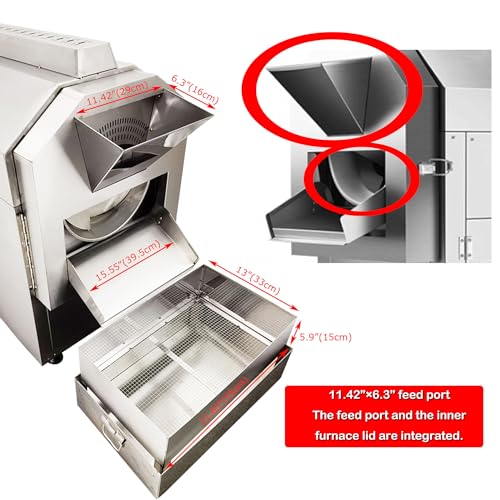

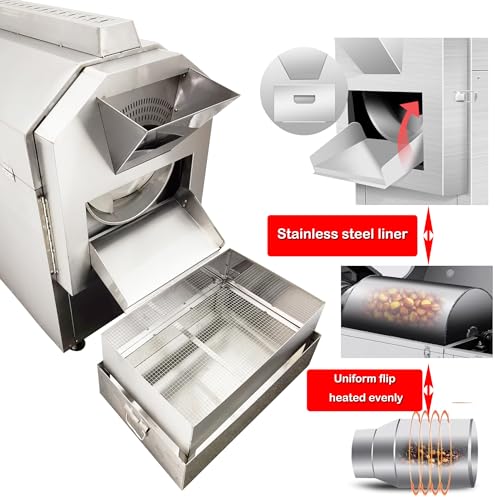
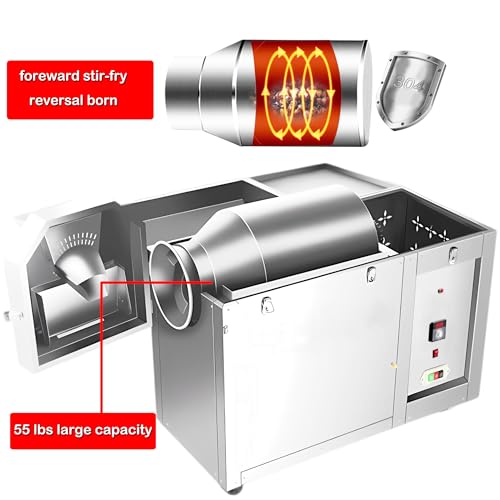
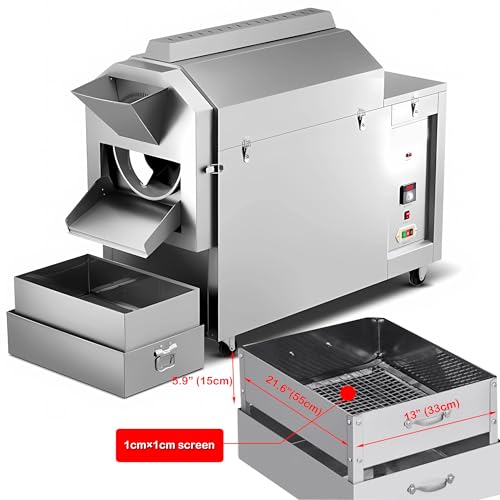
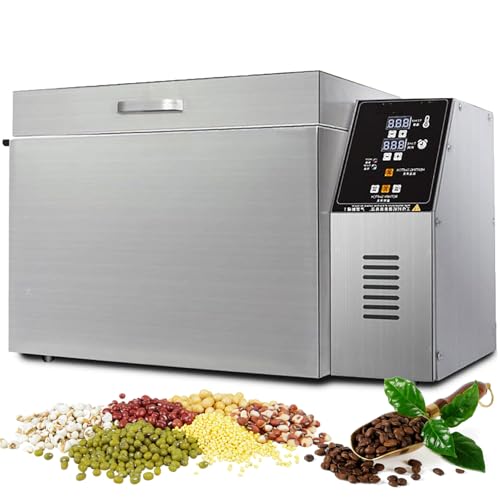
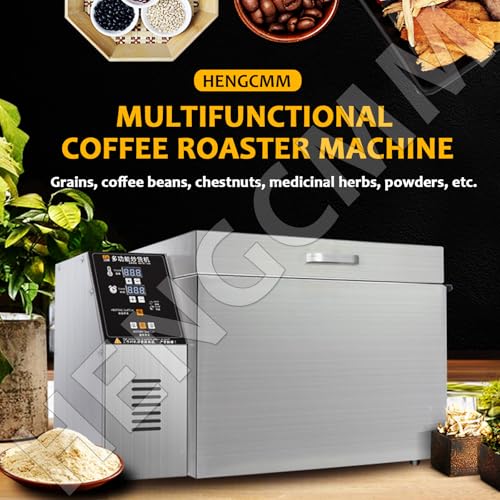
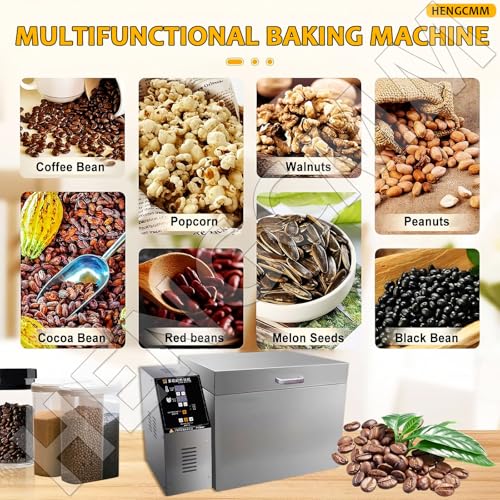
HENGCMM Electric Drum Coffee Roaster Type10
Strengths
- Large 4kg capacity
- Stainless steel heating element
- Removable inner drum
- Industrial microcomputer control
- Durable all-steel build
Trade-offs
- No smoke filtration
- No roast curve recording
- Heavier setup
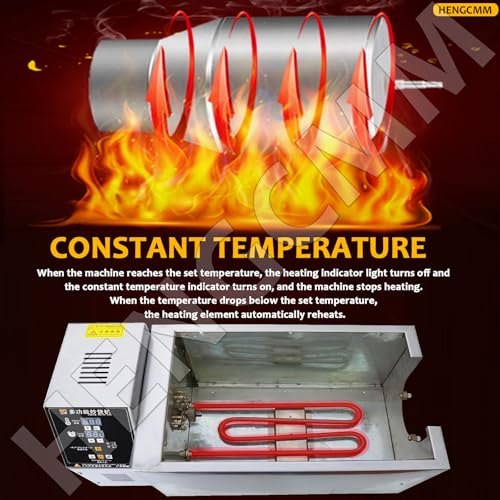
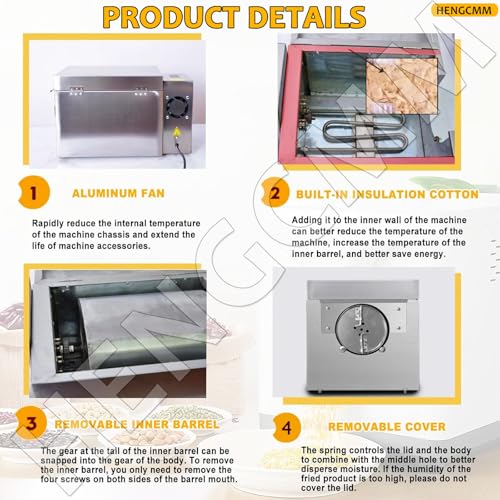
If your priority is volume without sacrificing build quality, the HENGCMM Type10 stands out. With a 4kg roasting capacity, it’s built for cafes or small production roasters who need to turn large batches reliably. The stainless steel drum and heating element are rugged, and the 0–999 minute timer paired with a wide 30–300°C range gives solid control over long roasts. Owners highlight its even heat distribution and ease of cleaning thanks to the removable drum, a rare and welcome feature at this level.
It doesn’t offer smoke reduction or digital roast logging, but for pure batch throughput, it’s hard to beat. Compared to the INTSUPERMAI, it’s lower wattage but more user-friendly for coffee-specific use. This isn’t a machine for micro-lot experimentation, but if you’re roasting daily for a shop menu, it’s a dependable backbone.
Product photos

Electric Coffee Bean Roaster with Purifier
Strengths
- Built-in smoke purifier
- Three roast modes
- Direct fire imitation
- Beginner-friendly
- Efficient batch cycling
Trade-offs
- No PID temperature control
- Limited data feedback
- No roast curve recording
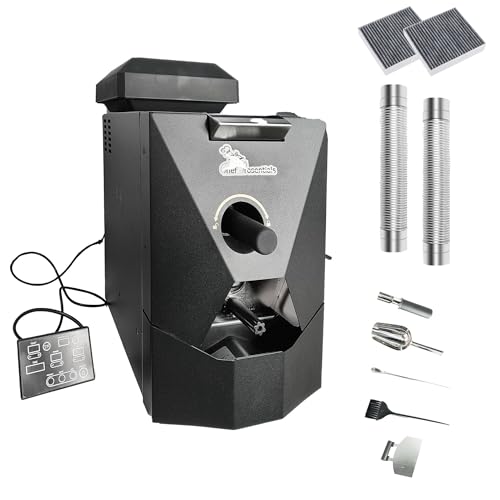
Smoke management is the holy grail for home and urban roasters, and this model delivers with a built-in purifier system that captures smoke and dust before release. That alone makes it a standout. The 500g max batch size keeps things manageable, and the three roast modes, Auto, Assistant, Manual, offer a smart progression from beginner to pro. The direct fire imitating roasting system brings beans closer to the heat source, mimicking traditional drum behavior, and reviewers praise the clean, consistent results.
Where it falls short is in data. No PID temp control or bean temperature logging means you’re flying partly blind. Still, for someone exploring roast styles without setting off smoke alarms, it’s a strong pick. Compared to the Bokknppo or the B500 model, it’s less precise but more accessible. I’d recommend it as a bridge between hobby and semi-pro.
Video review
Electric Roaster with PID Temp Control
Strengths
- PID temperature control
- Roast curve recording
- Artisan-focused design
- Smokeless operation
- Precision roasting
Trade-offs
- Small batch size
- Limited public feedback
- Higher learning curve
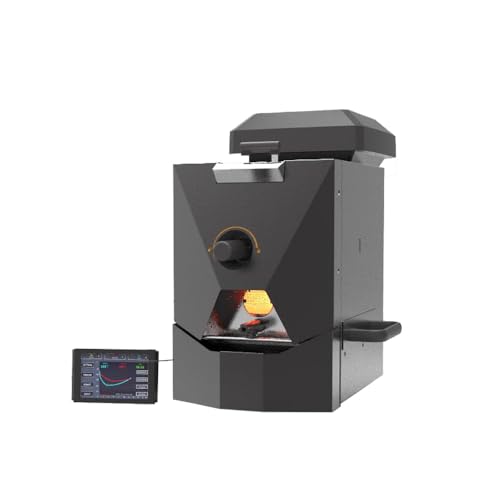
This is the machine I’d pick if I were serious about dialing in single-origin profiles. The PID temperature control and roast curve recording are rare at this level and open the door to true craft roasting. The 500g capacity keeps batches small and controllable, ideal for tweaking variables. Even without full specs listed, the mention of artisan compatibility suggests it integrates with software for logging and analysis, a feature pro reviewers consistently value.
It’s clearly positioned above the B0CRZ4H6R2, trading simplicity for precision. While it lacks details on drum speed or cooling, the focus on control tells the story. For the home artisan who treats roasting like a science, this is the smarter buy. Compared to others in this list, it’s not about volume or price, it’s about mastery.
Video review
Bokknppo Stainless Steel Drum Roaster

Strengths
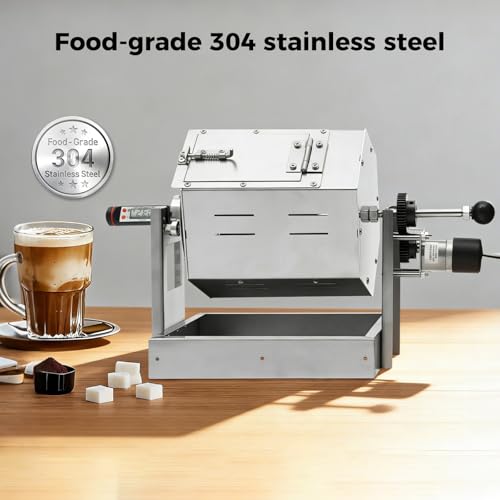
- Sturdy stainless steel build
- Adjustable drum speed
- Built-in thermometer
- Fast cooling system
- Stable base design
Trade-offs
- No roast profiling
- No smoke control
- Manual process focus
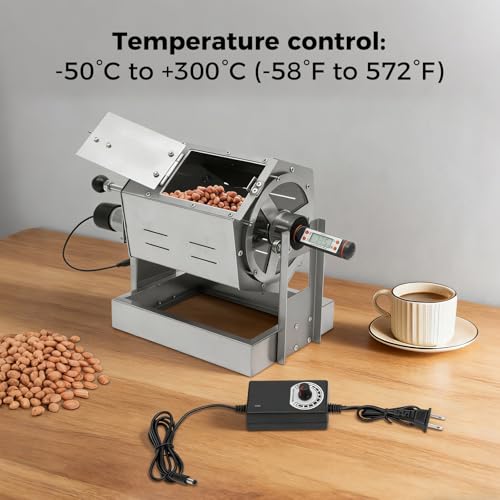
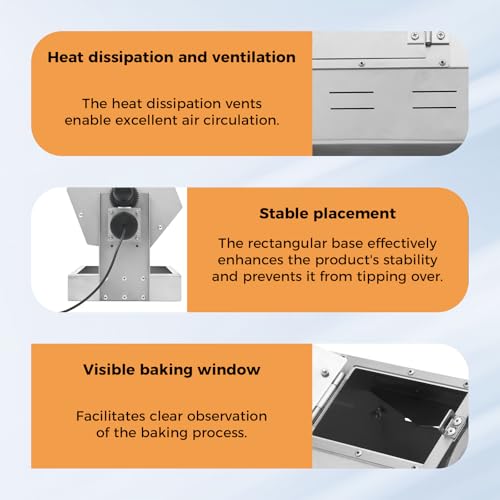
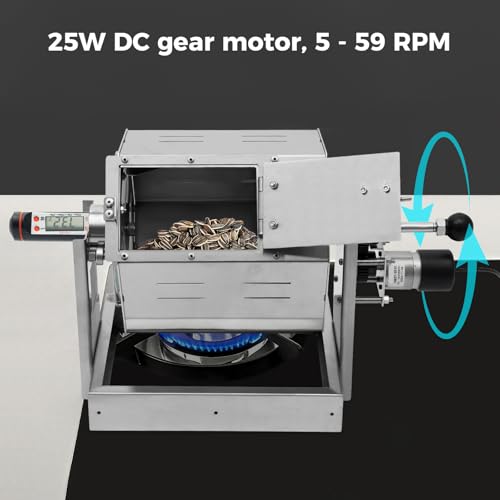
Durability is this roaster’s calling card. The polished stainless steel drum and rectangular base give it a professional, stable feel, and the double guide baffles help ensure even tumbling, critical for consistent heat exposure. With an adjustable drum speed (5–60 RPM) and a built-in thermometer, it offers more real-time feedback than most in its class. The included fast cooler and dual sieves are practical touches that speed up post-roast handling, a detail owners appreciate.
It doesn’t have digital programming or smoke filtration, but for hands-on roasters who value build quality and mechanical control, it’s a standout. Compared to the LUEUR model, it’s more robust and precise; compared to the HENGCMM, it’s smaller but more refined for coffee-specific use. If you want a tank-like machine that will last years with heavy use, this is it.
Product photos
LUEUR Electric Coffee Roaster 800g Capacity
Strengths
- Affordable entry point
- Non-stick roasting chamber
- Transparent viewing lid
- Easy batch cleanup
- Multi-food use
Trade-offs
- Plastic parts lack durability
- No cooling cycle
- Limited roast control
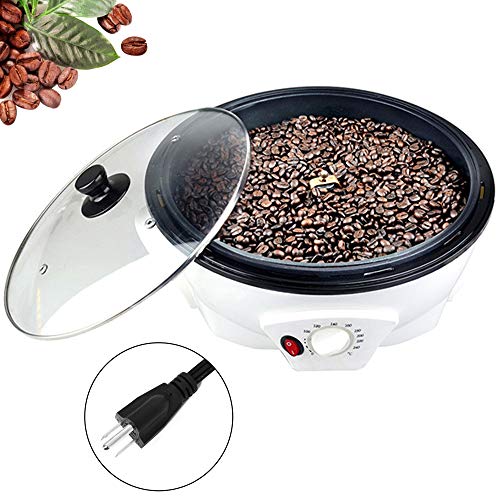
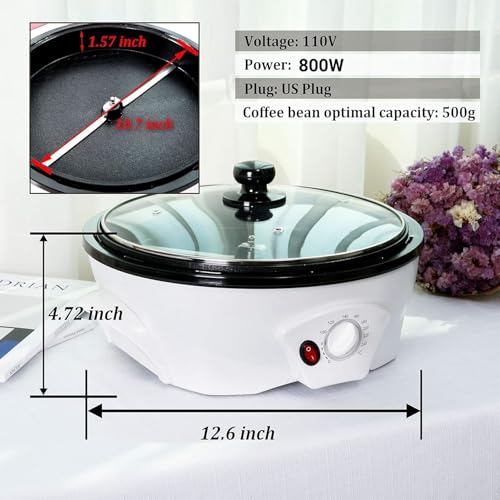
At this price point, the LUEUR roaster punches above its weight for casual users and small cafes on a tight budget. The 800W motor and 800g capacity make it practical for home use, and the non-stick honeycomb base with stirring rod helps prevent scorching, a common flaw in low-cost roasters. The transparent lid with ventilation holes is a thoughtful touch, letting you watch the beans evolve without losing heat. Reviewers note it handles not just coffee but popcorn and dried fruit, which adds value.
But let’s be clear, this isn’t a precision tool. The temperature control is basic, and there’s no cooling cycle or roast tracking. It’s 110V, so plug-and-play for any kitchen, but the plastic components don’t inspire long-term confidence. Compared to drum roasters with PID control, this feels more like a stovetop skillet with a motor. I’d pick it only if you’re roasting occasionally and want to keep costs low.
Product photos



How We Chose These commercial coffee roasting machine
As the founder of Bean Thusiast, I approach coffee equipment with a focus on how well it delivers repeatable, quality results. Rather than a hands-on lab test of each machine, this selection is a research-led comparison of published specifications and owner feedback. I looked at capacity, heating method, control features, and build quality across several models, then weighed those against reviews from both home and commercial users to understand real-world performance.
For commercial roasters, consistent temperature control and drum rotation are paramount. These directly impact evenness of roast and bean development – factors that separate a passable batch from an exceptional one. Durability also weighed heavily; a machine facing constant use needs robust construction. Capacity was considered, but balanced against the needs of smaller, specialty operations versus larger-scale production.
Specifications clearly define capacity and temperature ranges, but owner feedback revealed a lot about build quality and the accuracy of those controls. I paid close attention to comments about evenness of roasting, ease of cleaning, and long-term reliability. A machine offering precise control is useful only if its construction can withstand consistent use, and understanding those nuances requires looking beyond just the stated specs and into what users experience when trying to achieve a desired light roast flavor profile.
How To Choose The commercial coffee roasting machine
Finding the right commercial coffee roasting machine is a significant investment, impacting both product quality and operational efficiency.
A quality commercial coffee roaster prioritizes even heat distribution, precise temperature control (often with PID controllers), durable construction suitable for repeated use, and a roasting capacity that matches anticipated demand. Look for features like adjustable airflow, rapid cooling systems, and data logging for roast profiling. Consistent results and ease of maintenance are also crucial considerations.
Capacity and Output
The first thing I consider with any commercial equipment is how much it can actually handle. Don’t simply look at the stated capacity (like the INTSUPERMAI’s 25kg claim) and assume it’s what you should buy. Think about your peak demand and how many batches you realistically want to roast per hour. A larger capacity machine isn’t always better; smaller batch sizes can offer more control, especially when developing new roast profiles. If you’re starting small, a 2-4kg machine (like the HENGCMM Type 10) might be sufficient, while a high-volume shop will absolutely require something larger. It’s also important to consider the physical space available in your facility.
Temperature Control & Roast Quality
Temperature control is where things get serious. Consistent, precise temperature management is the single biggest factor separating a good roast from a bad one. Look for machines offering PID (Proportional-Integral-Derivative) controllers; these are far superior to simple thermostats. The Electric Roaster with PID Temp Control specifically highlights this feature, and for good reason. Beyond the controller itself, pay attention to the heating method. Direct-fire roasters (like the upgraded Electric Coffee Bean Roaster with Purifier) can offer a more dynamic roast, but require more skill to operate. Consistent airflow is also key; ensure the machine has adjustable dampers to control the heat transfer. Remember that achieving the desired roast profile isn’t just about hitting a temperature, it’s about how quickly and evenly the beans reach it. Understanding the impact of grind on roast is also crucial, as it directly impacts heat absorption.
Durability & Ease of Maintenance
Commercial equipment takes a beating, so build quality is paramount. Stainless steel construction (as seen in the Bokknppo Stainless Steel Drum Roaster) is a must – it’s durable, hygienic, and easy to clean. Beyond the materials, consider the accessibility of key components for maintenance. Can you easily access the heating elements? Is the drum removable for thorough cleaning? I often advise clients to look for machines with readily available replacement parts. A well-built machine will save you money in the long run by minimizing downtime and repair costs. If you’re looking at a larger investment, exploring professional coffee roaster models is a smart move to ensure longevity.
A well-maintained roaster is a productive roaster. Clean the drum after every batch and perform a deep clean weekly. Neglect this, and you’ll quickly see a decline in roast quality and an increase in maintenance headaches.
Finally, if you are looking at expanding your business, maybe you will need to consider high-capacity roasters for business to help you meet demand. Or, you might need to consider commercial-grade roasting equipment to fit your needs.
Commercial Coffee Roasting Machine Compared
Here’s a comparison of key specifications for various commercial coffee roasting machines.
| Product Name | Capacity (kg) | Temp Control | Power (W) | Material | Features |
|---|---|---|---|---|---|
| INTSUPERMAI Commercial Bean Roaster | 25 | 0-300C | 6500 | Stainless Steel | 10 Heating Tubes |
| HENGCMM Electric Drum Coffee Roaster | 2/4 | 30-300C | N/A | Stainless Steel | Microcomputer Control |
| Electric Coffee Bean Roaster w/Purifier | 0.5 | N/A | N/A | N/A | Direct Fire Roasting |
| Electric Roaster w/ PID Temp Control | 0.5 | N/A | N/A | N/A | Direct Fire Roasting |
| Bokknppo Stainless Steel Drum Roaster | 0.3-0.5 | Real-Time | N/A | Stainless Steel | Adjustable Drum Speed |
| LUEUR Electric Coffee Roaster | 0.8 | Adjustable | 800 | Teflon Coated | Stirring Rod |
Frequently Asked Questions
What size commercial coffee roaster do I really need?
Generally, you should select a capacity slightly above your current needs to allow for growth. A 10-15kg roaster is a good starting point for many cafes, while larger operations might require 20kg or more. Consider that smaller batches offer more control over the roast profile.
Are direct-fire roasters harder to learn than drum roasters?
Yes, direct-fire roasters require more skill and experience to operate consistently. They offer a more dynamic roast, but the learning curve is steeper due to the direct application of heat and the need for precise manual adjustments.
What is a PID controller and why is it important?
A PID (Proportional-Integral-Derivative) controller is an advanced temperature control system that maintains a much more stable and accurate temperature than a simple thermostat. This accuracy is crucial for repeatable roast profiles and consistent bean development, leading to higher quality coffee.
How often should I clean a commercial coffee roaster?
You should thoroughly clean the roasting drum after every single batch to prevent oil buildup and off-flavors. A weekly deep clean, including the cooling tray and exhaust system, is equally important for maintaining hygiene and optimal performance.
Where can I find more information on top commercial coffee roasters and their features?
My site offers detailed reviews and comparisons of various models, including specifications, owner feedback, and key features to consider. We focus on providing you with the information needed to select the best machine for your specific business needs.
The Bottom Line
Choosing a commercial coffee roasting machine always comes down to balancing control with convenience, and initial cost with long-term durability. While many options exist, the INTSUPERMAI Commercial Bean Roaster strikes a strong balance for those needing higher capacity and direct heat control, offering a substantial 25kg capacity for serious production. It’s a significant investment, but built to handle the demands of a busy shop.
For smaller operations or those just starting out, the HENGCMM Electric Drum Coffee Roaster provides a more accessible entry point. Similarly, if you’re prioritizing affordability and experimentation, the Electric Coffee Bean Roaster with Purifier is worth considering, though it demands more operator skill. Understanding single-origin flavor differences will also help you decide how much control you actually need from your machine.
Ultimately, specs aren’t everything. The most important factors are consistent heat distribution, thorough cleaning habits, and a willingness to learn the nuances of your beans. Focus on mastering the fundamentals of roast profiling – airflow, drum speed, and development time – and you’ll be well on your way to consistently producing exceptional coffee, no matter which machine you choose.
