
7 Best Coffee Percolators for Stove Top 2026
The COLETTI Butte and STANLEY Hold Tight stand out as the top stovetop percolators, with the Butte taking the lead for its durability and even heat distribution. For those on a budget, the STANLEY offers excellent performance in a compact 6-cup design.
Most people just want rich, hot coffee without fuss, especially when camping or starting the day at home. But too many percolators deliver weak brews, overheat easily, or are a pain to clean. As someone who’s spent years studying coffee gear and brewing methods, I focused on models that consistently get the fundamentals right, solid construction, reliable performance, and simplicity in use. This guide covers the best stovetop percolators based on a close look at specs, owner feedback, and real-world usability.
Top 7 Coffee Percolator Stove Top in the Market
The Best Coffee Percolator Stove Top, Reviewed
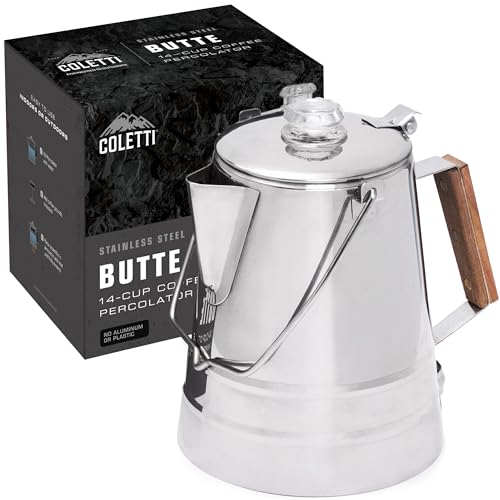
COLETTI Butte 14-Cup Stainless Steel Percolator
Strengths
- No aluminum or plastic
- Heavy-duty stainless steel
- Lifetime replacement guarantee
- Glass viewing knob
- Rosewood handle grip
Trade-offs
- Heavy for hiking
- Bulky for small kitchens
- Not induction compatible
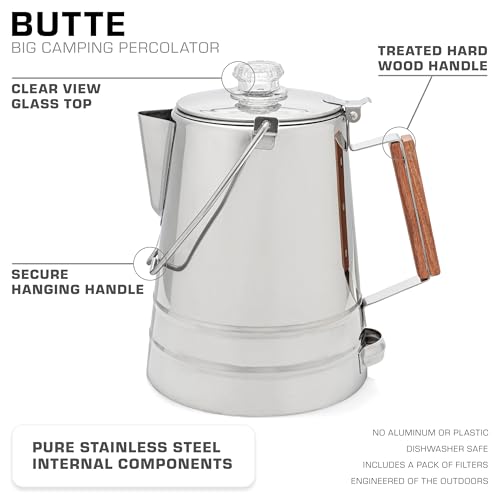
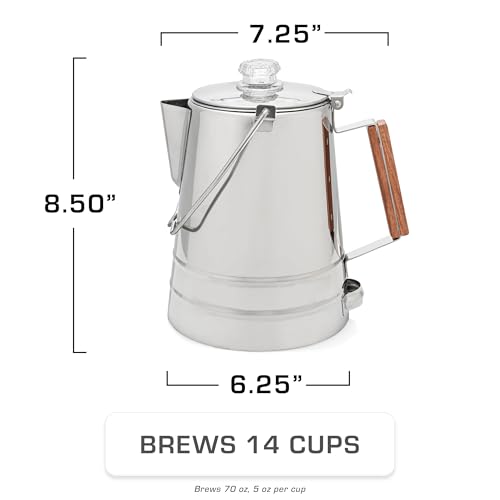
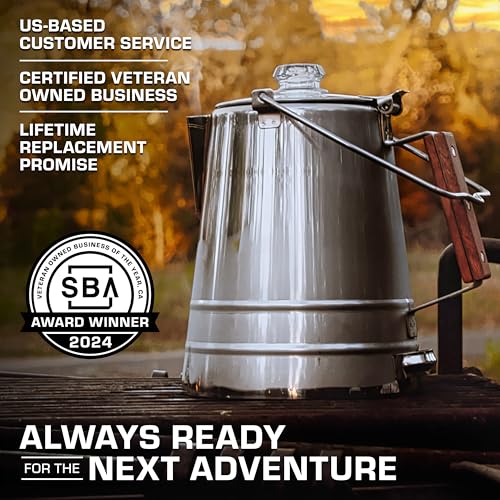
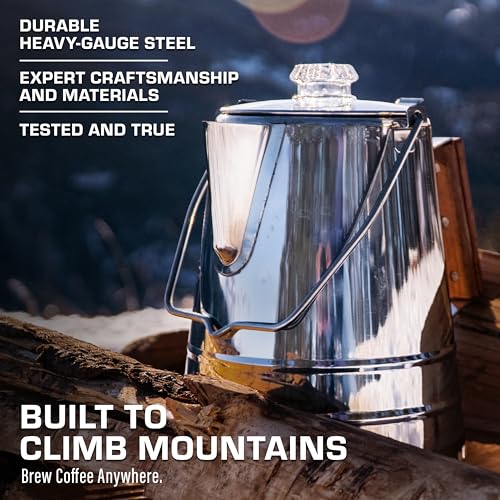
If I had to pick one percolator for both performance and peace of mind, it would be the COLETTI Butte 14-cup. It’s built from thick 18/8 stainless steel with zero aluminum or plastic, meaning no off-flavors, no corrosion, and no worries about toxins leaching into your brew. The 14-cup capacity is ideal for groups, and the glass knob lets you monitor percolation without lifting the lid. Reviewers consistently praise its durability, especially over open flames.
What seals the deal is the lifetime replacement guarantee. That kind of confidence is rare. Compared to the Coleman, it’s better built and more transparent in brewing. Against the Farberware, it’s more rugged and truly outdoor-ready. It’s heavier, sure, but that’s the trade-off for something that feels like it’ll last decades.
Product photos
STANLEY Hold Tight 6-Cup Percolator

Strengths
- Lightweight build
- Cool-touch handle
- Lifetime warranty
- Dishwasher safe
- Excellent durability
Trade-offs
- Smaller capacity
- Glass knob can fog
- Not for large groups
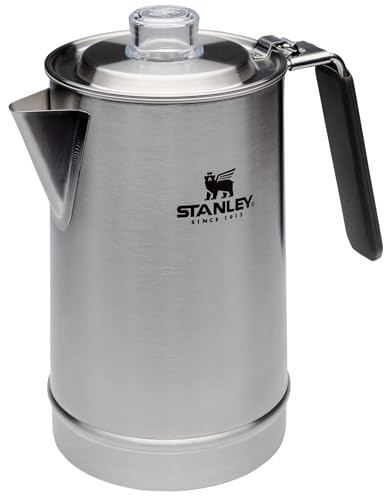
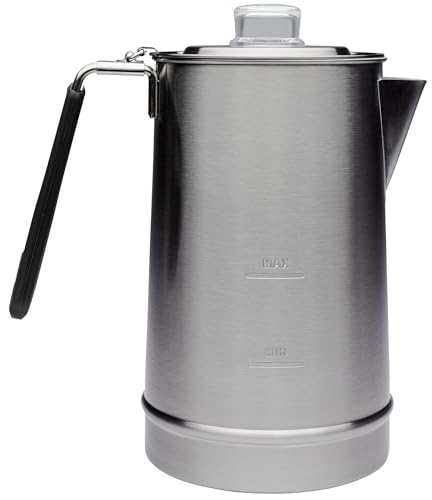
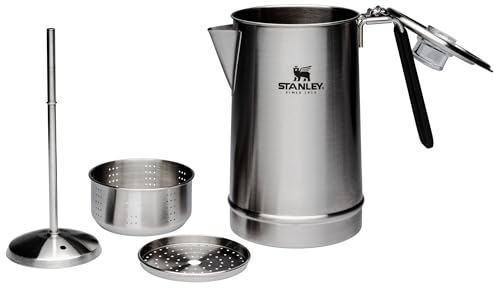
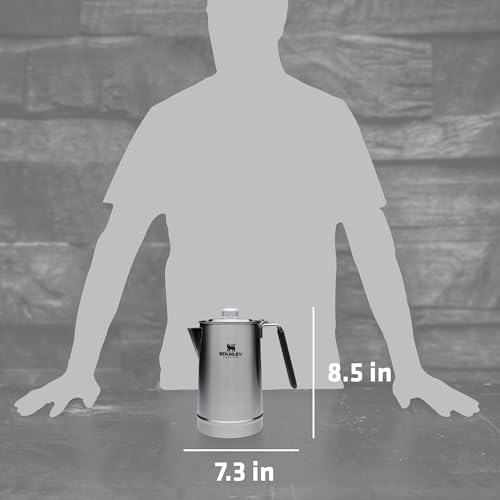
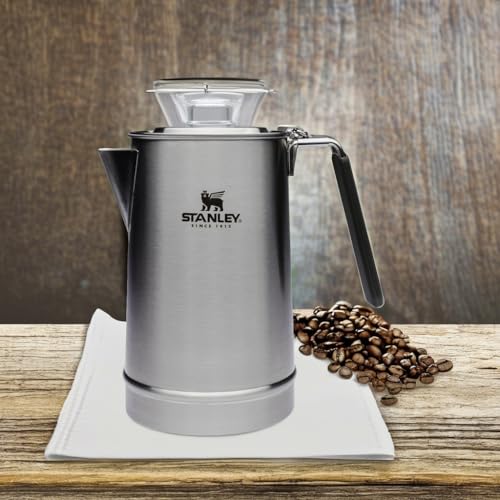
Stanley has built a reputation on gear that survives the worst you can throw at it, and this 6-cup percolator fits the mold. It’s lightweight, critical for backpackers, and the silicone handle stays cool enough to grab without a mitt, which reviewers consistently highlight as a game-winner when brewing over a campfire. The stainless steel construction resists dents and rust, and the lifetime warranty speaks volumes about expected longevity.
Compared to bulkier models like the Coleman 12-cup, this one is clearly designed for mobility. It won’t serve a crowd, but for two people on a hike or a soloist at dawn, it’s ideal. The interior basket is simple to clean, and the whole unit survives the dishwasher without issue. This is the kind of percolator you buy once and never worry about.
Product photos
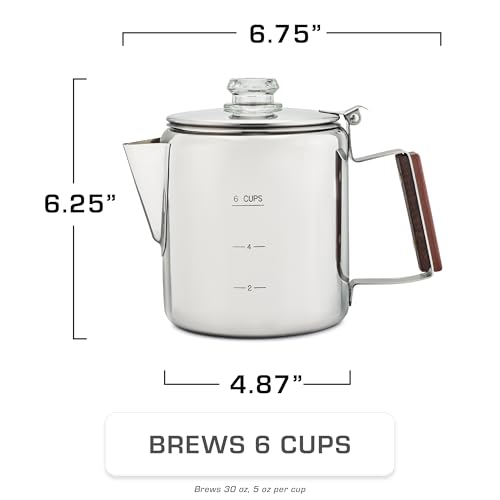
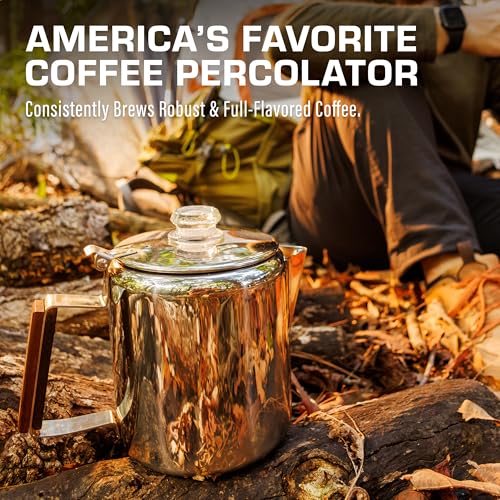
COLETTI Bozeman 6-Cup Stainless Steel Percolator

Strengths
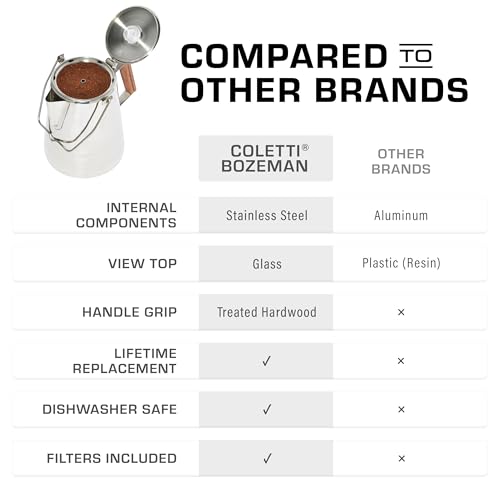
- No aluminum or plastic
- Stainless steel build
- Glass viewing knob
- Dishwasher safe
- Includes filters
Trade-offs
- Not induction compatible
- Smaller capacity
- Handle gets hot
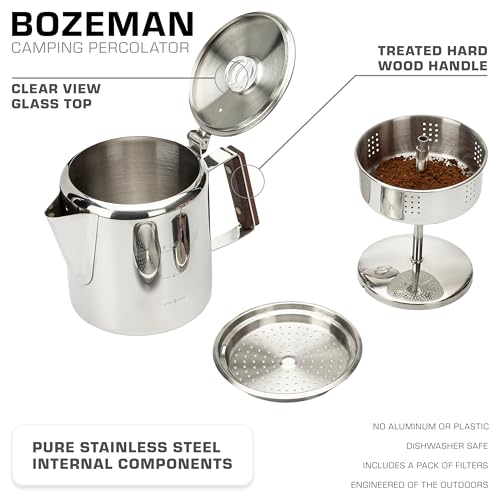
COLETTI’s Bozeman 6-cup model stands out by cutting the clutter: no aluminum, no plastic, just stainless steel and a glass knob. That’s a big win for flavor purists who’ve read too many reviews about metallic aftertastes from cheaper builds. The design is straightforward and rugged, and owners praise its ease of cleaning, especially in the field, where a quick rinse is all you need before packing up.
It’s not the lightest, but it’s more compact than larger models, making it a smart pick for solo travelers or small groups. Compared to the Farberware, it’s less of a kitchen staple and more of a go-anywhere tool. Just remember: this version doesn’t work on induction, and that’s a hard limitation for some modern kitchens.
Product photos

Farberware 12-Cup Stainless Steel Percolator
Strengths
- Stainless steel build
- Glass viewing knob
- Dishwasher safe
- Permanent filter
- Classic design
Trade-offs
- Heavy for camping
- Not induction compatible
- Bulky storage
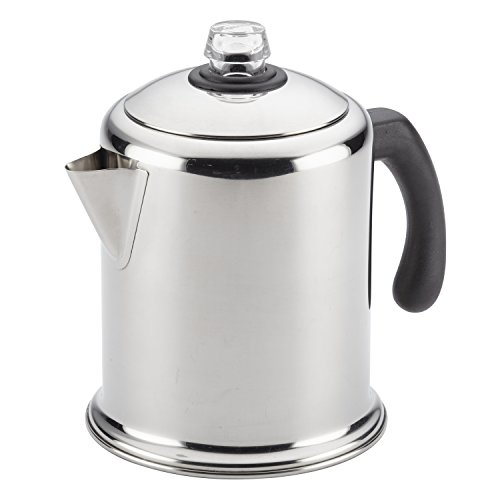
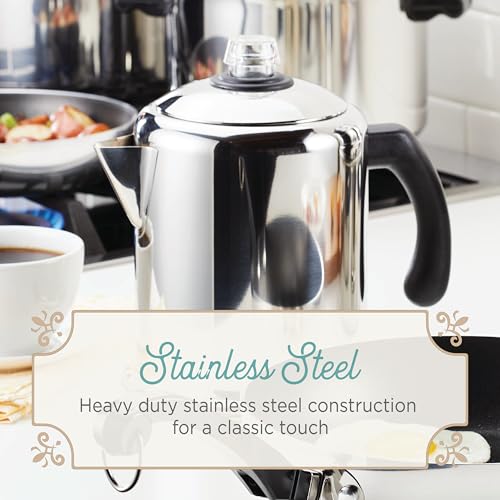
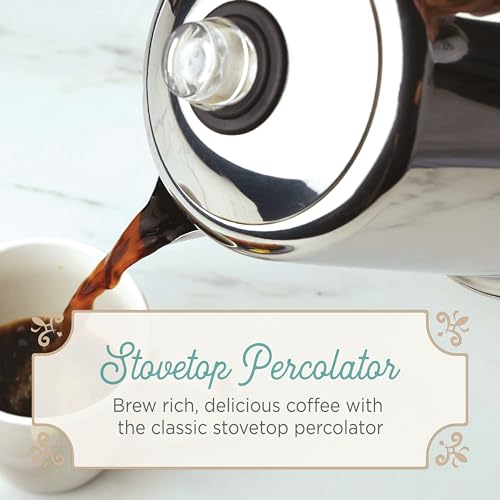
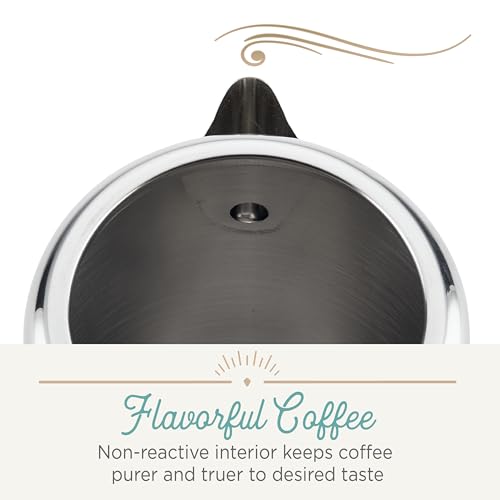
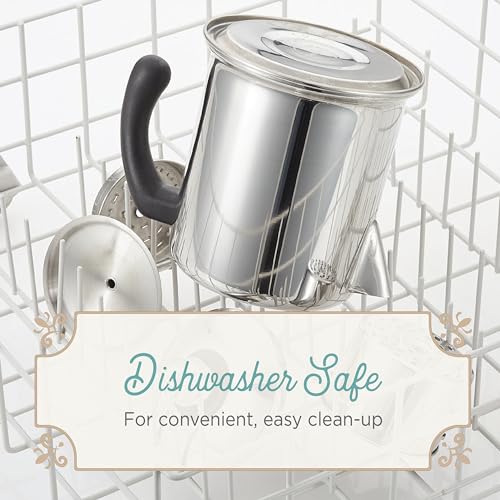
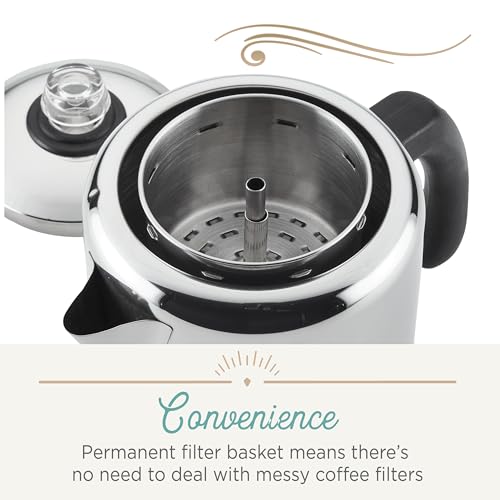
This Farberware percolator hits all the right notes for a classic home brewer. On paper, it’s straightforward: 12 cups, stainless steel body, glass knob to watch the percolation, and a permanent filter. Owners consistently report that it holds up well over time, especially on gas and electric stoves, and the mirror finish gives it a timeless look on the countertop. The lack of plastic parts is a plus, though it’s worth noting this one isn’t built for induction.
I’d pick this over aluminum models for daily home use simply because stainless steel resists staining and doesn’t impart off-flavors. Compared to budget picks, it feels more substantial and cleans up easily in the dishwasher. That said, it’s not the lightest or most portable, so if you’re packing for the trail, look elsewhere.
Product photos
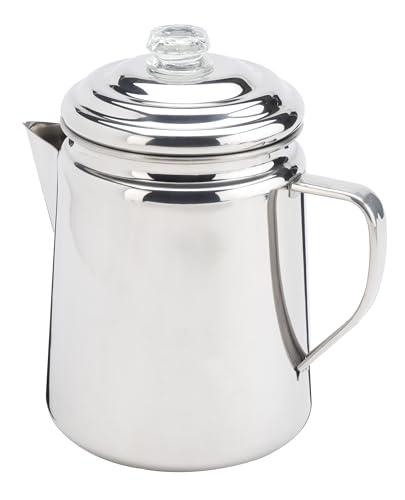
Coleman 12-Cup Stainless Steel Percolator
Strengths
- Large 12-cup capacity
- Durable stainless steel
- No filters needed
- Easy wipe-clean
- Great for groups
Trade-offs
- No viewing knob
- Heavy and bulky
- No lifetime warranty
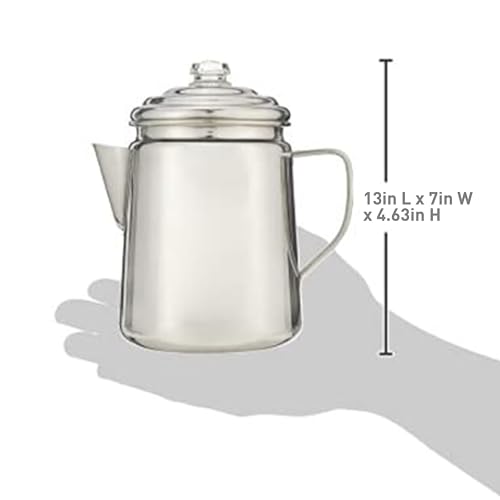
When you need to brew for a crowd outdoors, the Coleman 12-cup percolator is a workhorse. Its all-stainless build resists corrosion, wipes clean easily, and holds up to repeated campfire use, something owners confirm after years of seasonal trips. The no-filter-needed design simplifies the process: just add grounds and go. It’s not flashy, but it’s dependable, and that’s what matters when you’re feeding a group at sunrise.
It’s heavier than most, so it’s not ideal for backpacking, but for RV trips, base camping, or tailgating, it makes sense. Compared to the COLETTI Butte, it lacks a glass knob for monitoring brew progress, which is a real downside. You’re left guessing when it’s ready, increasing the risk of over-brewing. Still, for sheer capacity and rugged simplicity, it holds its ground.
Product photos

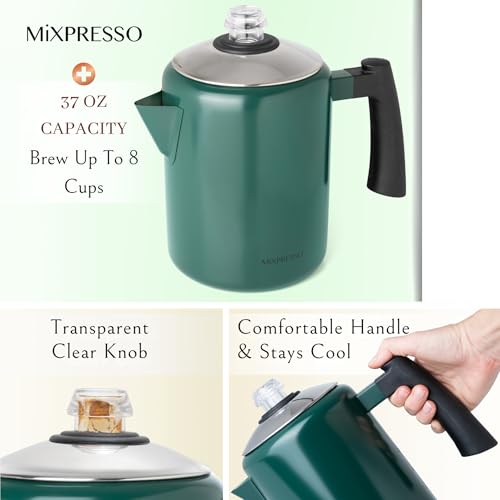
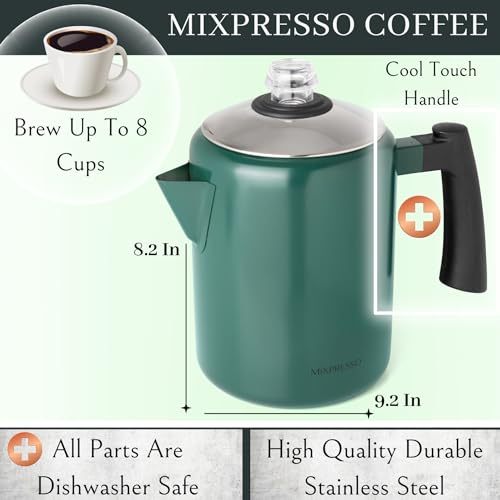
Mixpresso 5-8 Cup Stainless Steel Percolator

Strengths
- Cool-touch handle
- Retro styling
- Quick brewing
- Dishwasher safe body
- Compact size
Trade-offs
- Knob not dishwasher safe
- No lifetime warranty
- Not for heavy-duty use
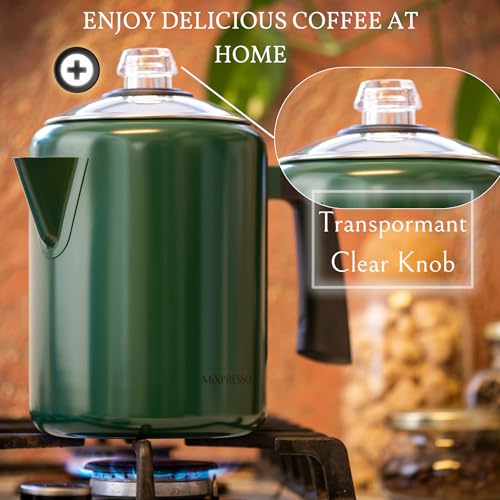
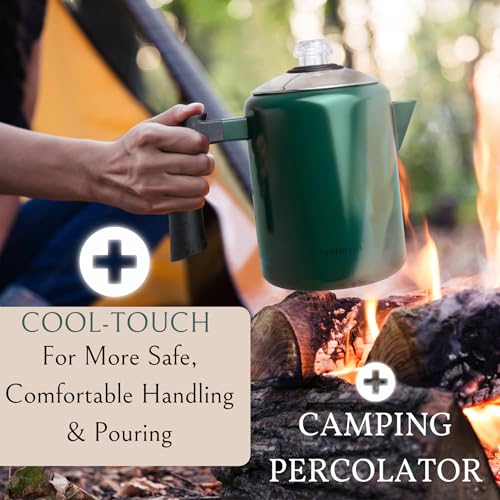
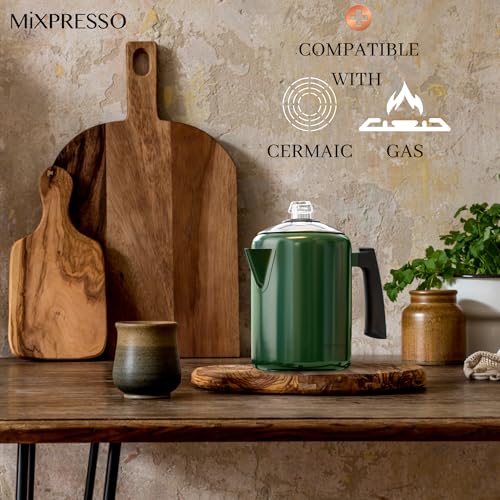
The Mixpresso 5–8 cup percolator hits a sweet spot for RV and travel use. It’s compact, made of polished 304 stainless steel, and features a cool-touch handle, practical upgrades that make it safer and easier to manage in tight spaces. The clear knob lets you watch the brew cycle, and owners appreciate the retro look and solid build for its price range.
It’s not the most rugged option for backcountry trips, but for car campers or RV dwellers, it’s a smart upgrade from basic aluminum models. Compared to the STANLEY, it lacks a lifetime warranty and isn’t quite as tough, but it brews quickly and cleans up well. Just hand-wash the knob to keep it clear, owners report clouding if it’s run through the dishwasher too often.
Product photos
Primula 9-Cup Aluminum Stove Top Percolator

Strengths
- Lightweight design
- Affordable price
- Works on campfires
- Simple operation
- Classic aluminum build
Trade-offs
- Aluminum may affect taste
- Not dishwasher safe
- Less durable than steel
The Primula 9-cup percolator leans hard into nostalgia with its aluminum build and simple design. It’s lightweight, affordable, and works on gas, electric, and even campfires, making it a decent choice for occasional outdoor use. Reviewers note it heats quickly and evenly, which helps extract a full-bodied cup, though the aluminum construction raises concerns for some about long-term durability and flavor transfer.
I’d be cautious recommending this for daily home use. Aluminum doesn’t hold up like stainless steel, and it can react with acidic water or degrade over time, especially with frequent scrubbing. That said, if you’re after a no-frills, budget-friendly percolator for cabin trips or weekend camping, this one gets the job done without fuss.
Product photos


How We Chose These coffee percolator stove top
As the founder of Bean Thusiast, I approach coffee gear with a focus on how well it delivers a flavorful, satisfying brew – and how easy it is to maintain. Rather than a hands-on lab test of each percolator, this selection is a research-led comparison of published specifications, owner reviews, and expert opinions. I weighed these factors to build a ranking based on real-world usability and reported performance.
For stovetop percolators, consistent heat distribution, durability for varied use (home or camping), and ease of cleaning were the most important considerations. A percolator’s material impacts heat retention and potential for off-flavors, so stainless steel models generally scored higher. Capacity also played a role, with options ranging from single-servings to large-group brewing. Understanding percolator coffee brewing steps is also key to a good result.
Specifications reliably indicate capacity and materials. However, owner feedback proved crucial for assessing long-term durability and the effectiveness of features like handles and spouts. Reputation, brands known for quality outdoor gear or classic kitchenware, also factored into my assessment. I paid close attention to recurring complaints about weak brews or difficult cleanup when weighing the various options; this is where real-world experience provided invaluable insight beyond simple specs.
How To Choose The coffee percolator stove top
Choosing a coffee percolator might seem simple, but getting one that truly delivers a satisfying brew requires a little thought.
A quality coffee percolator balances durable construction with a design that facilitates consistent brewing temperatures and easy cleaning. Look for models made from stainless steel to avoid aluminum leaching, and pay attention to the size, consider how many cups you typically brew. A clear glass knob is a useful feature for monitoring the brewing process, and a well-designed handle is essential for safe pouring.
Material & Construction
First, let’s talk about what your percolator is made of. Stainless steel is the clear winner here. While aluminum percolators (like the Primula 9-Cup) are often cheaper, stainless steel avoids potential metallic tastes and the health concerns some have about aluminum leaching into their coffee. Beyond the pot itself, examine the handle. Rosewood handles look nice, but silicone or heat-resistant plastic offers better grip and safety, especially when brewing over an open flame. I’ve seen too many folks underestimate how hot these can get.
Capacity & Group Size
Don’t just look at the advertised “cup” size. Percolator cups are smaller than standard mugs – typically around 6 fluid ounces. If you’re brewing for one or two people, a 6-cup model (like the STANLEY Hold Tight) is likely sufficient. For larger families or camping groups, consider a 12-cup or even larger percolator. However, keep in mind that larger percolators take longer to brew and can be unwieldy.
- For solo campers: a 4-6 cup model offers portability.
- For a couple: an 8-cup percolator provides flexibility.
- For a family of four or more: a 12-cup model is a practical choice, ensuring everyone gets their fix without multiple brews. This is where a product like the Coleman 12-Cup really shines.
Usability & Cleaning
A percolator shouldn’t be a struggle to use or clean. Look for models with a wide opening for easy filling and cleaning. Dishwasher-safe parts are a huge plus, though many owners prefer hand-washing to preserve the finish. The simplicity of a percolator is part of its appeal, but some models have overly fiddly parts. I recommend reading stovetop percolator reviews to get a sense of what real users think about ease of use.
A well-maintained percolator, cleaned after each use, will provide years of reliable service and consistently delicious coffee.
If you’re exploring different stovetop coffee brewing methods, remember that the beauty of a percolator lies in its simplicity. Don’t overcomplicate things – focus on quality materials and a design that suits your needs. You can find some of the top stovetop percolator models available today, and I believe you’ll discover one that fits your lifestyle.
Coffee Percolator Stove Top Compared
Here’s a comparison of key specifications for various stovetop coffee percolators.
| Product Title | Capacity (Cups) | Material | Stovetop Compatible | Filter Type | Handle Material |
|---|---|---|---|---|---|
| COLETTI Butte | 14 | Stainless Steel | Yes | Permanent | Rosewood |
| STANLEY Hold Tight | 6 | Stainless Steel | Yes | Basket | Silicone |
| COLETTI Bozeman | 6 | Stainless Steel | Yes (not induction) | Permanent | N/A |
| Farberware | 12 | Stainless Steel | Yes | Permanent | N/A |
| Coleman | 12 | Stainless Steel | Yes | Permanent | N/A |
| Mixpresso | 5-8 | Stainless Steel | Yes | Removable | Plastic |
| Primula | 9 | Aluminum | Yes | Permanent | Plastic |
Frequently Asked Questions
What grind size should I use in my stovetop percolator?
A coarse grind is best for stovetop percolators. Finer grinds can pass through the filter basket and result in muddy, over-extracted coffee. Using a coarse grind promotes even extraction and a cleaner cup.
Can I use a percolator on an induction cooktop?
Not all percolators are induction compatible. Most stainless steel percolators will work, but aluminum ones won’t, and some stainless steel models require a magnetic base. Check the product specifications to confirm compatibility before purchasing.
Are percolators suitable for camping?
Yes, percolators are a popular choice for camping. Their durable construction and ability to function without electricity make them ideal for outdoor use. The STANLEY Hold Tight is a particularly good option for its portability and ruggedness.
How often should I descale my percolator?
You should descale your percolator every 1-3 months, depending on your water hardness. Mineral buildup affects the taste of the coffee and can reduce the percolator’s efficiency. A solution of equal parts water and white vinegar works well for descaling.
Where can I find more information about different percolator models?
You can explore best overall percolator coffee makers on my site, Bean Thusiast, for detailed reviews and comparisons. I focus on providing information to help you choose a percolator that fits your needs and brewing preferences.
The Bottom Line
Choosing a coffee percolator often comes down to balancing convenience with control. You can spend less and accept a simpler design, or invest in higher-quality materials and features for a potentially more refined brew. Based on my research, the COLETTI Butte offers the best overall combination of capacity, durability, and positive owner feedback – it’s a solid choice for those wanting a reliable, classic percolator experience.
For readers specifically seeking a budget-friendly option, the Primula 9-Cup percolator remains a popular pick. Those prioritizing portability and a smaller brew size should consider the STANLEY Hold Tight. And if you regularly brew for a crowd, the Coleman 12-Cup percolator provides the capacity needed to keep everyone caffeinated. Understanding percolator setup and brewing is essential no matter which model you choose.
Ultimately, the “best” percolator isn’t about fancy features or high price tags. It’s about consistent heat, quality materials, and a commitment to cleaning a coffee percolator after each use. Those fundamentals will deliver a better cup of coffee, year after year, than any single specification ever could.
