
8 Best Stovetop Coffee Percolators of 2026
The COLETTI Bozeman 12-Cup stands out as the best overall stovetop coffee percolator, delivering consistent brews and solid stainless steel construction. For a budget-friendly option, the Farberware Yosemite 12-Cup offers reliable performance, while the COLETTI Bozeman 6-Cup is ideal for smaller batches and greater control.
If you’ve ever ended up with bitter, overcooked coffee or a flimsy pot that barely survived the stove, you know choosing the right percolator matters. I’ve seen how material, size, and design直接影响 the quality of the brew and the lifespan of the pot.
This guide cuts through the noise, ranking models based on specs, owner feedback, and what actually matters in real use, like durable stainless steel builds, accurate capacity, and designs that make cleaning less of a chore.
Top 8 Stovetop Coffee Percolator in the Market
The Best Stovetop Coffee Percolator, Reviewed
COLETTI Bozeman 6-Cup Stainless Steel Percolator

Strengths
- Perfect size for small groups
- No plastic or aluminum
- Includes filters
- Dishwasher safe
- Rugged build
Trade-offs
- Not induction compatible
- No cool-touch handle
- Smaller capacity
If I had to pick one percolator for most buyers, it’d be this 6-cup Coletti Bozeman. It strikes the best balance between size, durability, and build quality. The compact footprint makes it ideal for small kitchens, RVs, or solo campers, and the all-stainless construction ensures no off-flavors creep in.
Owners love how easy it is to clean and how well it performs over a campfire or gas stove. The glass knob works as intended, and the included filters help reduce grit. While the 12-cup Coletti is better for groups, this one is the smarter buy for 1–3 people. It’s not induction-ready, but for everyone else, it’s the most complete package in the category.
Video review
COLETTI Bozeman 12-Cup Stainless Steel Percolator
Strengths
- Stainless steel build
- No plastic or aluminum
- Glass view knob
- Dishwasher safe
- Includes extra filters
Trade-offs
- Not induction compatible
- Heavier than some
- No cool-touch handle
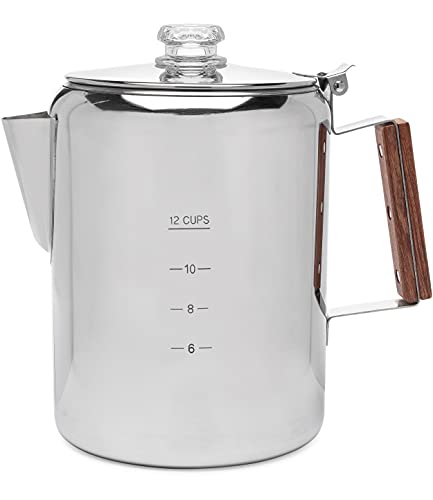
I appreciate when a percolator sticks to tradition without cutting corners, and the 12-cup Coletti Bozeman does exactly that. It’s built entirely from stainless steel with no aluminum or plastic in contact with the brew path, which matters for both flavor purity and long-term durability. The glass knob lets you monitor the percolation cycle, and owners consistently report rich, bold coffee without the metallic aftertaste that cheaper models sometimes deliver.
It’s clearly designed with off-grid use in mind, rugged enough for camping, and the included filters help reduce sediment. But I’d note it’s not induction compatible, a dealbreaker for some modern kitchens. Compared to the Farberware Yosemite, it feels more rugged and intentional, though it’s pricier. If you’re brewing for a family or a campsite crew, this one holds its own.
Video review
COLETTI Bozeman 9-Cup Stainless Steel Percolator
Strengths
- Ideal mid-size capacity
- All stainless steel
- Glass view knob
- Dishwasher safe
- Includes filters
Trade-offs
- Not induction compatible
- No cool-touch handle
- Heavier than 6-cup
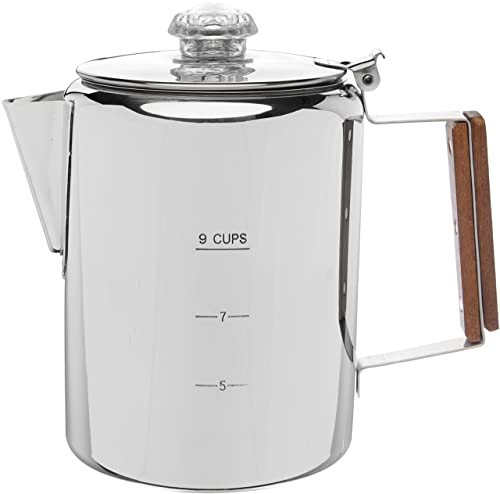
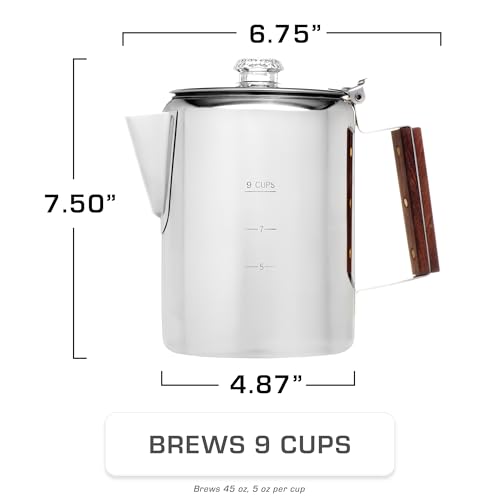
The 9-cup Coletti Bozeman fills a rare niche, large enough for a family, compact enough for travel. On paper, it’s nearly identical to the 6 and 12-cup versions: same stainless steel build, glass knob, and included filters. It’s a smart middle ground for those who find 6 cups too little and 12 too much.
Reviewers note it heats evenly and brews consistently, with no hotspots or weak coffee. Compared to the Farberware 8-cup, it feels sturdier and more adventure-ready. But again, the lack of induction compatibility limits its appeal. If you’re in between sizes and want quality, this is a great pick, just know you’re locked out of induction use.
Product photos




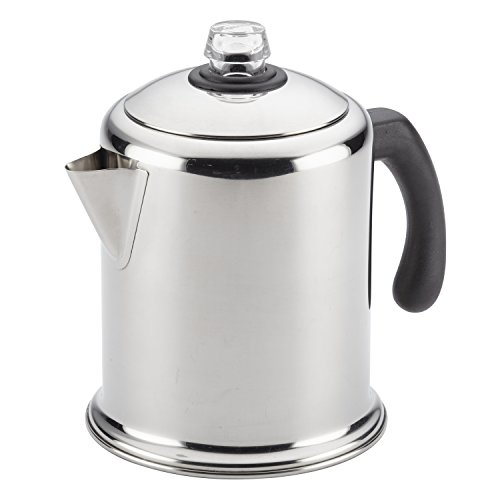
Farberware 12-Cup Stainless Steel Yosemite Percolator
Strengths
- Classic design
- Durable stainless steel
- Glass knob
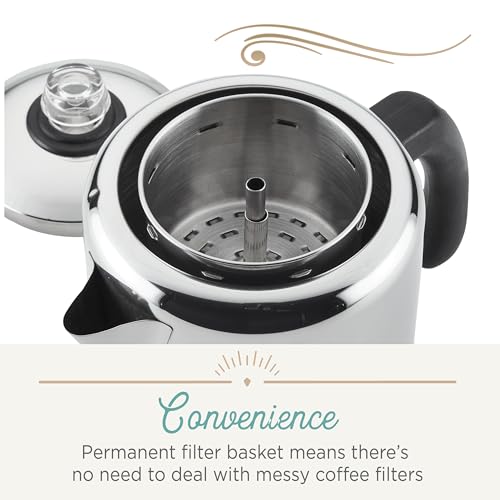
- Permanent filter
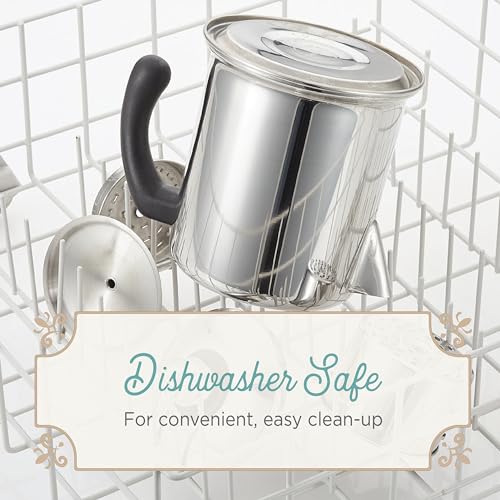
- Dishwasher safe
Trade-offs
- No induction compatibility
- Knob requires removal for cleaning
- Heavier than some
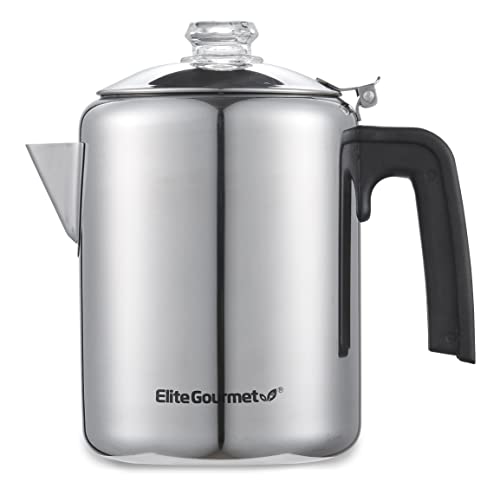
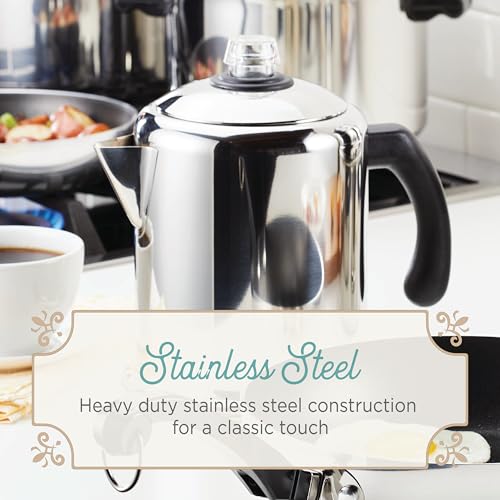
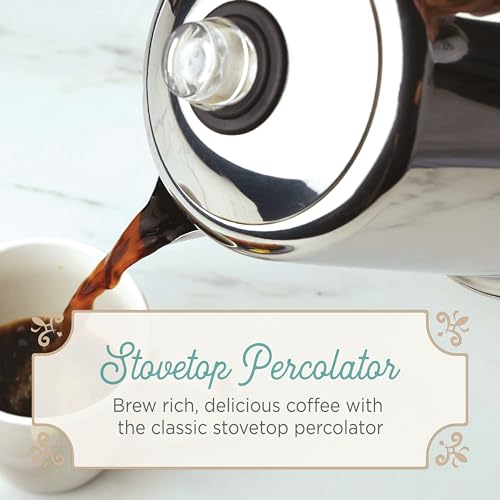
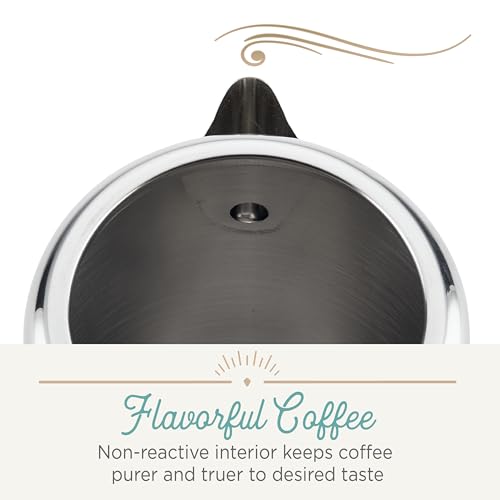
Farberware has been in the percolator game for decades, and this 12-cup Yosemite model reflects that legacy. It’s a straightforward, no-frills workhorse with a mirror-polished stainless steel body and a clear glass knob to track brewing. The permanent filter basket is reliable, and owners report it holds up well over time, even with regular use.
It’s dishwasher safe, which is a win, though you have to remove the knob and tube. Compared to the Coletti, it lacks the same level of outdoor-focused durability, but it’s more than capable for home use. If you’re nostalgic for a classic design and brew for a family, this delivers solid performance without fuss.
Product photos
Farberware 8-Cup Stainless Steel Yosemite Percolator

Strengths
- Compact size
- Durable construction
- Permanent filter
- Classic look
- Dishwasher safe
Trade-offs
- No cool-touch handle
- Not induction compatible
- Knob needs removal
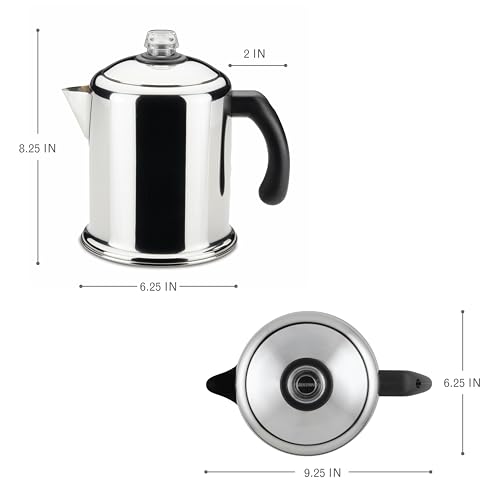
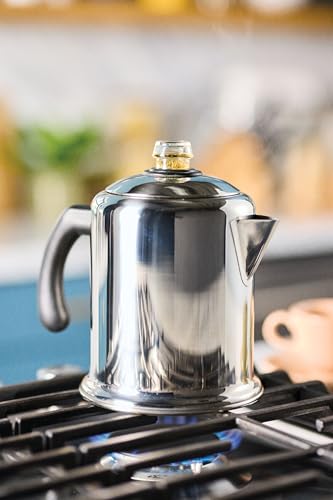
This 8-cup Farberware is a solid, no-surprises pick for small households. It’s got the same polished stainless steel body and glass knob as its bigger sibling, but in a more manageable size. The permanent filter basket works well, and owners report it cleans up easily, though you still need to remove the knob and tube for full dishwasher use.
It’s less rugged than the Coletti models and lacks modern touches like a cool-touch handle, but it’s reliable and affordable. For someone who just wants a basic percolator for morning coffee and doesn’t plan to take it off-grid, this gets the job done. I’d still lean toward the Coletti 6-cup for better build quality, but this is a decent budget-friendly alternative.
Product photos
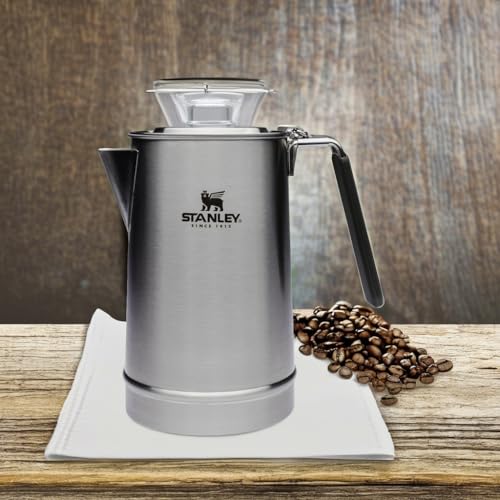
STANLEY Hold Tight 6-Cup Stainless Steel Percolator

Strengths
- Lifetime warranty
- Cool-grip handle
- Lightweight
- Dishwasher safe
- Rugged build
Trade-offs
- Smaller capacity
- No filter included
- Basic knob design
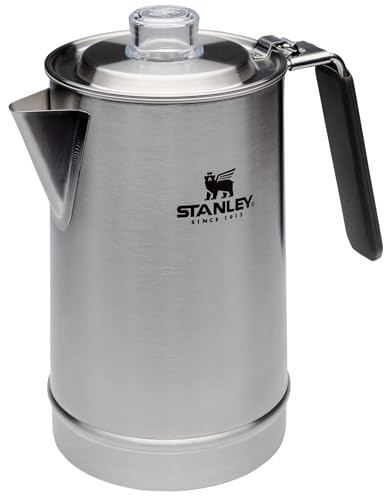
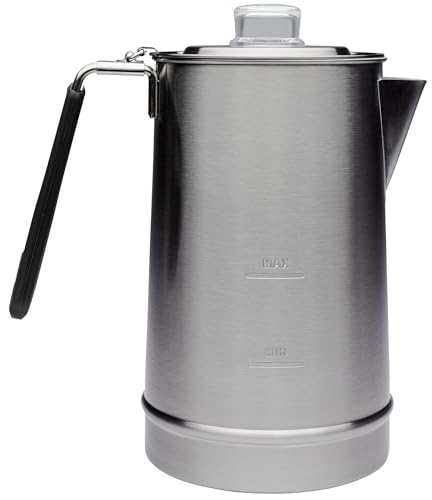
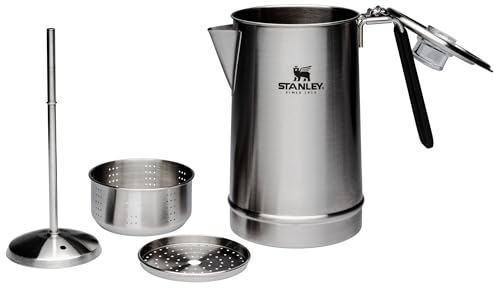
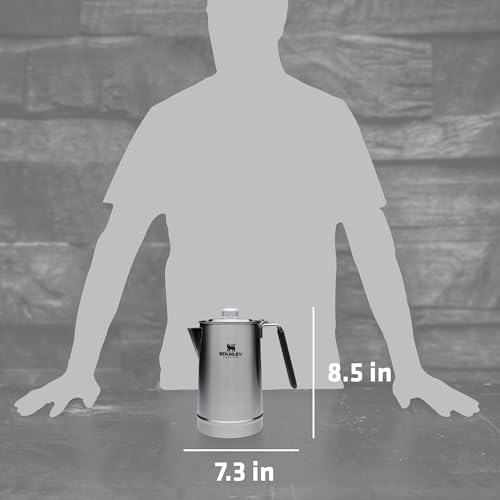
Stanley’s Hold Tight 6-cup percolator feels like it was built to survive. It’s lightweight, rugged, and backed by a lifetime warranty, which speaks volumes about its intended use. The silicone cool-grip handle is a standout, actual safety upgrade when brewing over a campfire.
Owners consistently praise its durability and ease of cleaning, and the fact that it’s 100% dishwasher safe is a big plus. Compared to the Coletti 6-cup, it’s slightly more trail-focused, with a design that’s easier to pack and handle in the wild. The trade-off? A slightly less refined finish than Coletti’s polished look. But for true outdoor enthusiasts, this is the one I’d trust.
Product photos
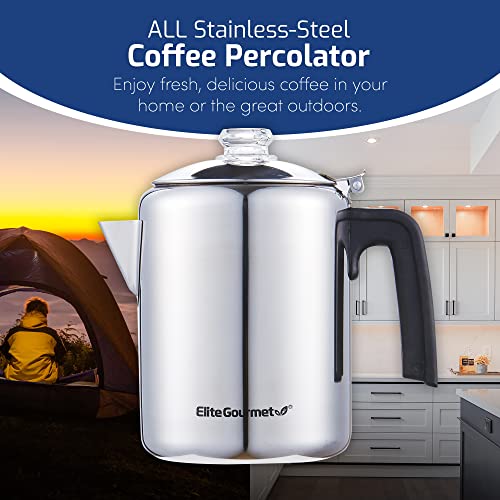
Elite Gourmet 8-Cup Stainless Steel Percolator
Strengths
- Cool-touch handle
- Glass brew knob
- Dishwasher safe
- Modern design
- Versatile use
Trade-offs
- Less rugged build
- Smaller capacity
- Not ideal for open fire
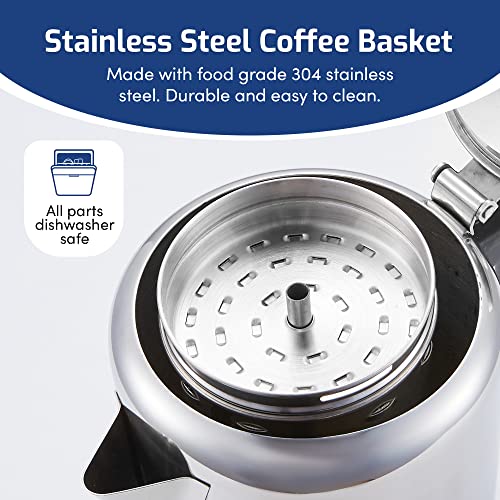
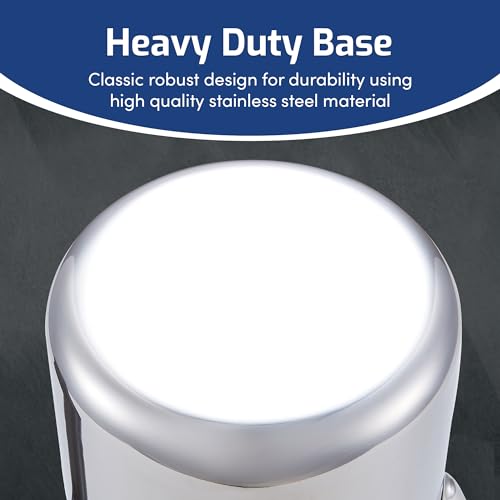
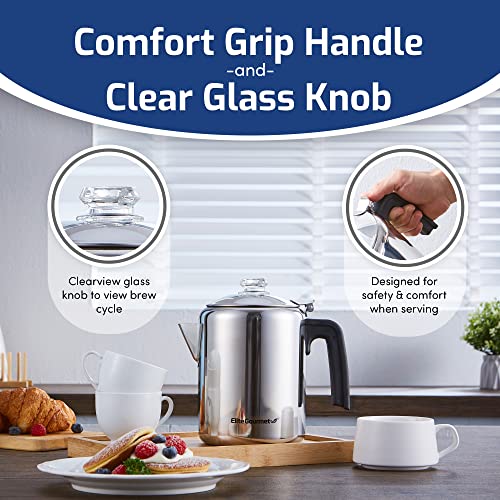
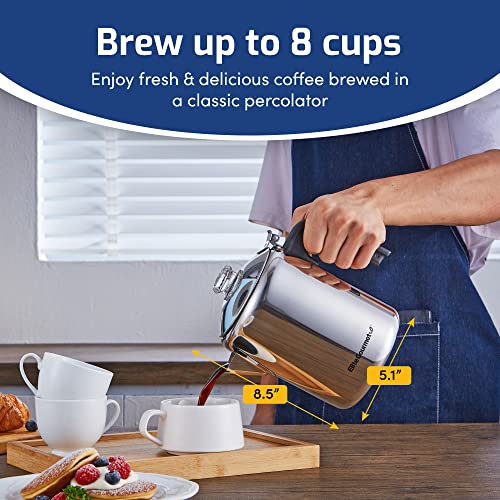
This Elite Gourmet model stands out with its modern aesthetic and thoughtful touches like the cool-touch handle and real glass brew knob. For home users who want a percolator that looks at home on a kitchen stovetop, this hits the mark. The 304 stainless steel construction is solid, and the permanent filter basket is a standard perk in this category.
Owners praise how quickly it brews a full pot, and the ability to use it for tea or hot cereals adds versatility. But compared to the Coletti Bozeman line, it feels a bit less rugged for true outdoor use, more ‘kitchen camper’ than backwoods brewer. I’d pick the Coletti for trail use, but for a small household that values convenience and safety, this is a strong contender.
Product photos
Coleman 12-Cup Stainless Steel Camping Percolator
Strengths
- Affordable
- Lightweight
- No filters needed
- Stainless steel
- Easy setup
Trade-offs
- Thin metal construction
- No brew visibility
- Not dishwasher safe
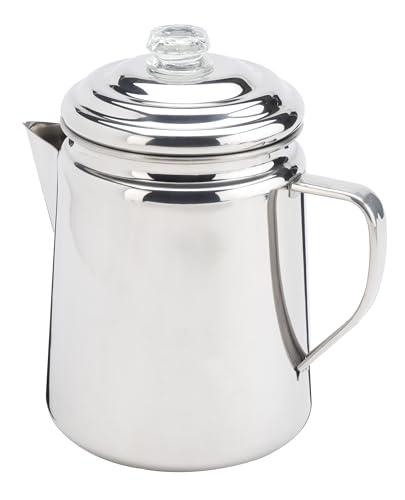
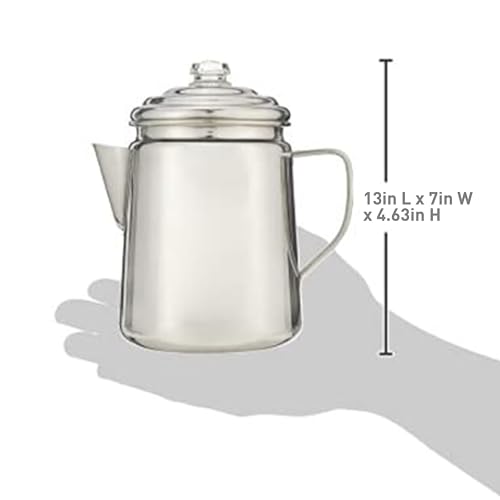
The Coleman 12-cup percolator is a budget-friendly option built for outdoor use. It’s lightweight, made from stainless steel, and doesn’t require paper filters, just the included basket and lid. For campers or RVers on a tight budget, it’s a functional, no-frills choice that gets hot coffee into mugs fast.
But compared to the Coletti or Stanley models, it feels thinner and less durable. Owners report it works fine for occasional use, but it’s not built to last a decade of campfires. It’s also missing a glass knob, so you can’t monitor brewing visually. If you’re just starting out with camping coffee, it’s a decent entry point, but I’d upgrade to the Stanley or Coletti for anything more serious.
Product photos

How We Evaluated stovetop coffee percolator
As the founder of Bean Thusiast, I’ve always been fascinated by the different ways to brew a great cup of coffee. For this guide, we didn’t rely on long-term personal use with each percolator, but rather a research-led comparison of published specifications and features. We weighed owner reviews from multiple sources alongside expert opinions to assess each model’s strengths and weaknesses, applying my experience with coffee brewing methods to rank them against clear criteria.
For stovetop percolators, capacity, material quality, and ease of cleaning were the most important factors. Capacity directly addresses the intended use – a solo camper has different needs than a family. Stainless steel construction is crucial for durability and avoiding flavor contamination, while simple designs and dishwasher-safe components streamline cleanup, especially when you’re off-grid. These three elements dictated our final rankings.
Specifications reliably tell you about capacity and materials. However, owner feedback proved vital for gauging real-world durability and ease of use. We carefully examined reviews for complaints about flimsy parts, difficulty cleaning, or off-flavors. Reputation, particularly for brands like Farberware and Stanley, also played a role, as these names have a long history of producing reliable camping and kitchen equipment. You can learn even more about percolator coffee steps on our site.
How To Choose The stovetop coffee percolator
As someone who’s spent years exploring the world of coffee, I know a good percolator can deliver a uniquely robust and satisfying brew.
A quality stovetop percolator prioritizes durable, non-reactive materials like stainless steel. Consistent heat distribution is key for even extraction, avoiding burnt flavors. Capacity should match typical brewing needs, and ease of cleaning is vital – especially for outdoor use. Look for models with clear indicators of the brewing cycle and robust construction that will withstand repeated use.
Material & Construction
The material a percolator is made from dramatically impacts both the taste of your coffee and its longevity. While aluminum was common in older models, stainless steel is the clear winner today. It won’t impart metallic flavors, resists rust, and generally lasts far longer. Avoid models with plastic components, particularly those that come into contact with hot water or coffee grounds. A well-built percolator should feel substantial, not flimsy. I’ve seen too many cheaper models buckle under repeated heating and cooling.
Capacity & Brewing Size
Consider how much coffee you typically brew. Percolators range from small, single-serve options to larger models capable of brewing 12 cups or more. Don’t automatically assume “bigger is better.” Brewing a small amount in a large percolator can result in weak, over-extracted coffee.
Here’s what I recommend thinking about when sizing: * 1-2 people: A 6-cup model is often sufficient. * 3-4 people: An 8- or 9-cup percolator will likely be a good fit. * 5+ people: A 12-cup percolator is the way to go, though you may want to consider multiple brews.
Remember that “cup” sizes on percolators are typically smaller than a standard 8oz measuring cup; check the fluid ounce capacity to be sure.
Ease of Cleaning & Maintenance
Percolators, by their nature, can be a bit messy. Coffee oils and sediment accumulate, and regular cleaning a coffee percolator is essential. Look for models with wide openings for easy access. Dishwasher-safe components are a huge plus, but even with those, a periodic percolator descaling method is vital to remove mineral buildup.
A quick wipe-down after each use and a thorough cleaning at least once a week will dramatically extend the life of your percolator and ensure consistently good coffee.
If you’re looking to explore the top-rated coffee percolators currently available, or want to see some best overall percolator models, my site has a helpful overview.
Stovetop Coffee Percolator Compared
Here’s a comparison of key specifications for various stovetop coffee percolators to help you choose the right one.
| Product Name | Capacity (Cups) | Material | Induction Compatible | Filter Type | Handle Material |
|---|---|---|---|---|---|
| COLETTI Bozeman 6-Cup | 6 | Stainless Steel | No | Paper/Reusable | N/A |
| COLETTI Bozeman 12-Cup | 12 | Stainless Steel | No | Paper/Reusable | N/A |
| COLETTI Bozeman 9-Cup | 9 | Stainless Steel | No | Paper/Reusable | N/A |
| Farberware Yosemite 12-Cup | 12 | Stainless Steel | N/A | Permanent | N/A |
| Farberware Yosemite 8-Cup | 8 | Stainless Steel | N/A | Permanent | N/A |
| STANLEY Hold Tight 6-Cup | 6 | Stainless Steel | N/A | N/A | Silicone |
| Elite Gourmet 8-Cup | 8 | Stainless Steel | N/A | Permanent | Cool-Touch |
| Coleman 12-Cup | 12 | Stainless Steel | N/A | N/A | N/A |
Frequently Asked Questions
What percolator material is best for coffee flavor?
Stainless steel is the best material, as it doesn’t impart any metallic taste to your coffee and is very durable. Avoid aluminum models, as they can sometimes leave a metallic aftertaste and are more prone to corrosion over time.
Can I use a percolator on an induction cooktop?
Not all percolators are induction compatible. Most traditional models, like the COLETTI Bozeman line, are not designed for induction, but some newer options are starting to feature induction-ready bases.
How often should I descale my percolator?
You should descale your percolator every 1-3 months, depending on your water hardness. Mineral buildup can affect the coffee’s taste and the percolator’s performance, and a simple vinegar and water solution works well for cleaning.
What’s the difference between a paper and a permanent filter in a percolator?
A permanent filter is reusable and made of metal, while a paper filter requires replacement after each brew. Paper filters produce a cleaner cup of coffee by trapping more sediment, but permanent filters are more convenient and environmentally friendly. You can find information about the best stovetop and electric percolators on my site.
What capacity percolator should I buy if I often have guests?
For brewing for groups, a 12-cup percolator is generally the best choice. Keep in mind that percolator “cup” sizes are smaller than standard 8oz cups, so check the fluid ounce capacity to ensure it meets your needs. It’s also helpful to review our recommended percolator coffee makers for larger brewing options.
The Bottom Line
Choosing a stovetop percolator often comes down to balancing convenience with control. While some models offer more features, the best overall experience – a blend of durability, capacity, and straightforward operation – is consistently delivered by the COLETTI Bozeman 9-Cup. It strikes an excellent balance for most households, delivering a reliably robust brew without unnecessary complexity.
For those on a tighter budget, the Coleman 12-Cup offers a lot of capacity for the price, and it’s a solid performer for larger groups. If versatility is your priority, and you want a percolator that’s equally at home on the stove or over a campfire, the STANLEY Hold Tight 6-Cup is a fantastic choice. It’s built to withstand a lot of use and travel, and its silicone handle is a thoughtful addition.
Ultimately, the specific features matter less than understanding the fundamentals of good coffee brewing. Freshly roasted beans, properly sized grinds, and clean water will make a bigger difference in your cup than any percolator’s bells and whistles. Learning percolator operation steps will also help you dial in your perfect brew.
