
7 Best Percolator Coffee Makers of 2026
The COLETTI Bozeman is the best overall percolator for its clean brew and durable, all-metal build, while the Elite Gourmet 6-Cup stands out as a reliable, feature-rich electric option for smaller batches. If you need to brew for a crowd, the VEVOR 12-Cup delivers solid performance at a reasonable price.
Most people buying a percolator want strong, full-bodied coffee without the fuss, but too many models either over-extract into bitterness or fail to hold up over time. It’s easy to end up with plastic-tasting coffee or a unit that breaks after a few months.
As the founder of Bean Thusiast, I’ve spent years studying how gear affects flavor, and for this guide, I focused on what really matters: consistent heat, build quality, and ease of use. These picks are based on a close look at specs, owner feedback, and brewing principles, not hype.
Top 7 Percolator Coffee Maker in the Market
The Best Percolator Coffee Maker, Reviewed
Elite Gourmet 6-Cup Electric Percolator

Strengths
- Fast brewing
- Reusable filter
- Auto shut-off
- Cordless serving
- Clear brew knob
Trade-offs
- Small capacity
- No drip prevention
- Not ideal for large groups
This is the cleanest, most user-friendly electric percolator I’ve seen for small-batch brewing. On paper, it hits all the right notes: 1000W power for fast extraction, a clear brew knob so you can actually see the cycle progress, and a reusable stainless steel filter that eliminates paper waste. Owners consistently report rich, bold coffee in under 7 minutes, exactly what you want from a percolator. The auto shut-off and boil-dry protection are thoughtful touches, especially for those mornings when you’re half-awake and prone to forgetting the pot.
It’s also more versatile than most. The ability to heat water for tea or oatmeal makes it useful beyond coffee duty, and the cordless serving base means you can bring it straight to the table without dragging a power cord across the counter. Compared to bulkier models, this one feels purpose-built for efficiency and simplicity.
Video review
Elite Gourmet 12-Cup Stainless Steel Percolator
Strengths
- Large capacity
- Cordless serving
- Swivel base
- Reusable filter
- Simple controls
Trade-offs
- No drip-free spout
- Bulky footprint
- Brew knob can fog up
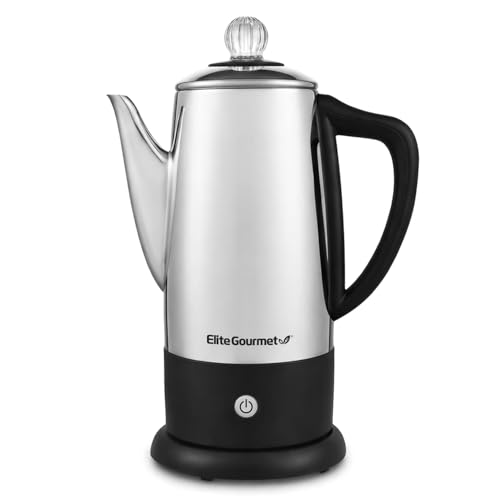
If you’re feeding a crowd, this 12-cup model makes a strong case for itself. The 360° swivel base and cordless design make serving easy, and the transparent brew knob gives real-time feedback, something many larger percolators skip. Owners note it delivers consistently hot coffee with that classic percolator boldness, and the keep-warm function actually works well, holding temperature without scorching. It’s not flashy, but it’s reliable, and the stainless steel build feels durable.
Where it stands out is in portability. You can brew in the kitchen and carry it to a patio, garage, or campsite table without hassle. That said, it lacks a no-drip spout, so pouring can be messy if you’re not careful. Compared to the 6-cup Elite Gourmet, it’s the same core design scaled up, so if you need volume, this is the logical step.
Video review
COLETTI Bozeman 9-Cup Stainless Steel Percolator
Strengths
- All stainless steel
- Glass brew knob
- Durable build
- Lightweight for camping
- Easy cleanup
Trade-offs
- Stovetop only
- No auto shut-off
- Not induction compatible
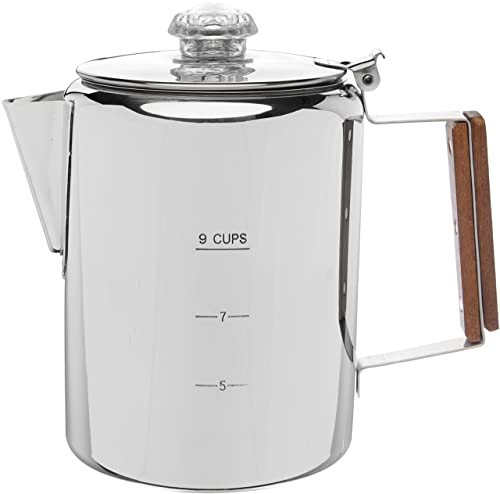
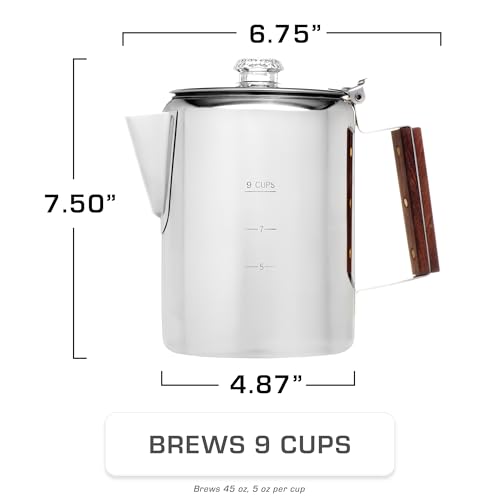
This is the percolator I’d pack in my car for a mountain trip. Built entirely of stainless steel with a glass knob, it avoids the plastic and aluminum found in cheaper models, so you’re not leaching unwanted materials into your brew. The flavor payoff is noticeable: reviewers describe a cleaner, richer cup compared to tinned or aluminum pots. It’s stovetop-only, which limits convenience, but that’s the trade-off for ruggedness and purity of materials.
It’s also impressively simple. No electronics, no cords, just water, heat, and coarse grounds. The glass top lets you watch the percolation cycle, and the included filters help reduce sediment. Owners love its durability, and the 1-year warranty adds peace of mind. Just remember: it doesn’t work on induction stoves, so check your setup before buying.
Product photos




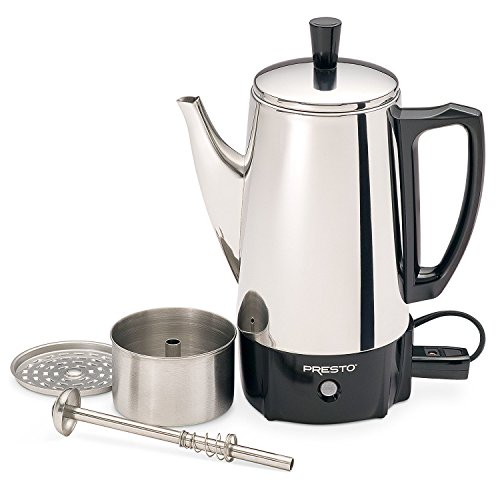
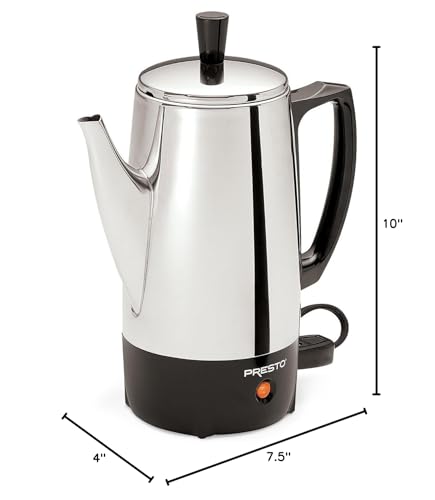
Presto 6-Cup Stainless Steel Percolator

Strengths
- Compact design
- Stay-cool handle
- Signal light
- Durable steel
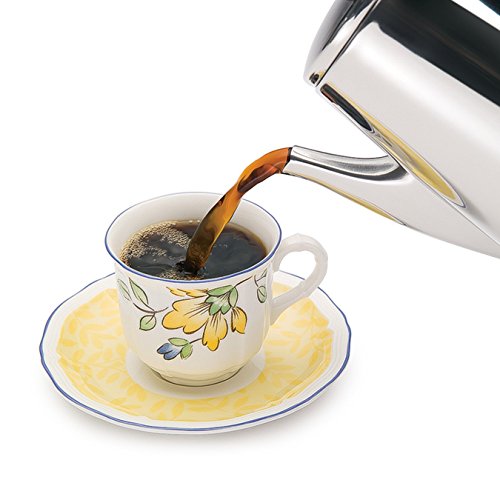
- Easy pour spout
Trade-offs
- No brew visibility
- No cord storage
- Basic keep-warm function
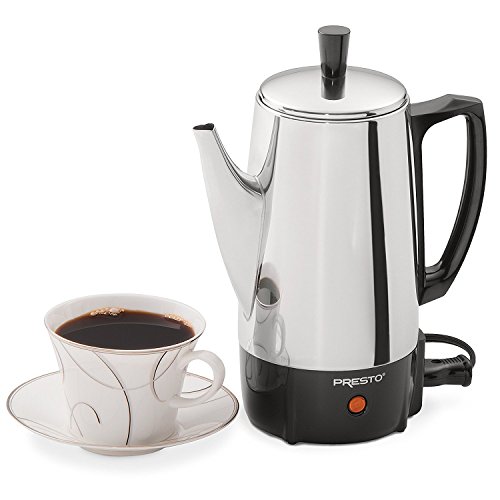
This is the classic percolator reimagined with a compact footprint. At just 6 cups, it’s ideal for tight countertops or minimalists who still want that bold percolated flavor. The stainless steel construction is solid, and the signal light is a small but useful indicator, no guessing when it’s done. It’s not packed with features, but it doesn’t need to be. Presto keeps it simple: brew, keep warm, pour.
Compared to pricier models, it lacks a clear knob or cordless base, but it’s also priced accordingly. Owners say it brews quickly and cleans up easily, and the stay-cool handle is a real advantage when pouring. It’s not flashy, but it’s dependable, the kind of appliance that lasts years without drawing attention to itself.
Product photos
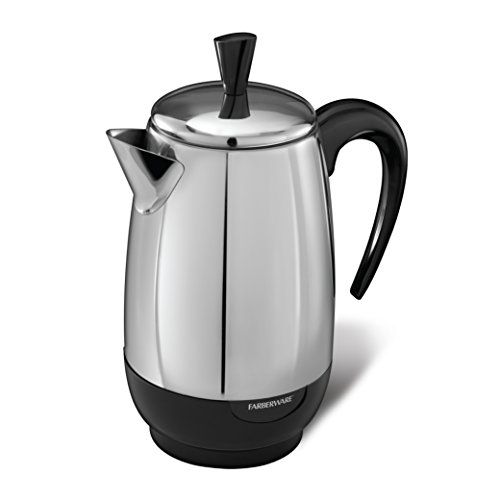
Farberware 8-Cup Electric Percolator
Strengths
- No-drip spout
- Detachable cord
- Stainless steel basket
- Solid build
- Auto keep-warm
Trade-offs
- No brew visibility
- Bulky for 8 cups
- Handle heats up slightly
This 8-cup model hits the sweet spot between size and simplicity. It’s not the flashiest, but it delivers where it counts: consistent brewing, a no-drip spout, and a detachable cord for easy serving. The stainless steel basket is well-designed for full flavor extraction, and owners report a richer cup than what most drip machines produce. It’s also one of the few in this range that balances capacity and counter presence well.
Compared to the Elite Gourmet 12-cup, it’s more practical for daily use in a small household. It doesn’t have a clear knob, so you can’t watch the brew cycle, but the automatic keep-warm function works reliably. If you’re upgrading from a drip machine and want something more flavorful without going full vintage, this is the smarter buy.
Product photos


KIDISLE 10-Cup Electric Percolator
Strengths
- Glass brew knob
- Auto-reheat function
- No-drip spout
- Cool-touch handle
- Stainless steel filter
Trade-offs
- Glass knob fragile
- Slightly slower pour
- Higher price point
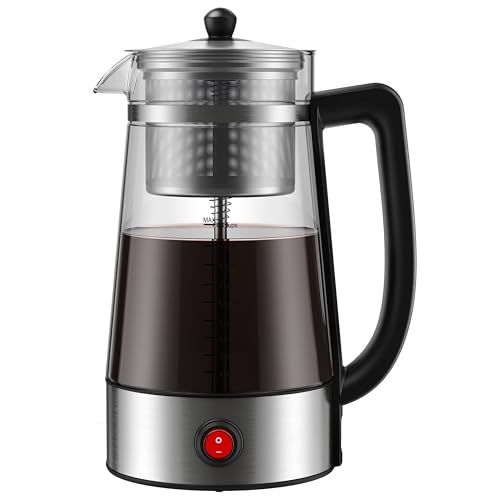
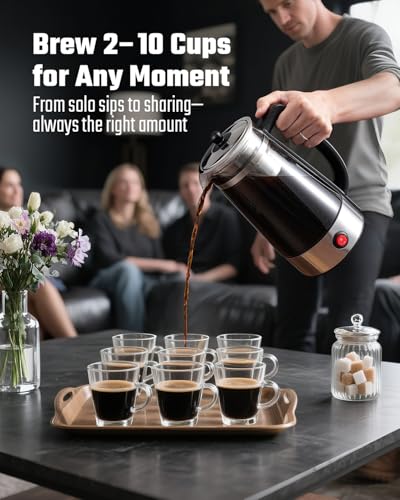
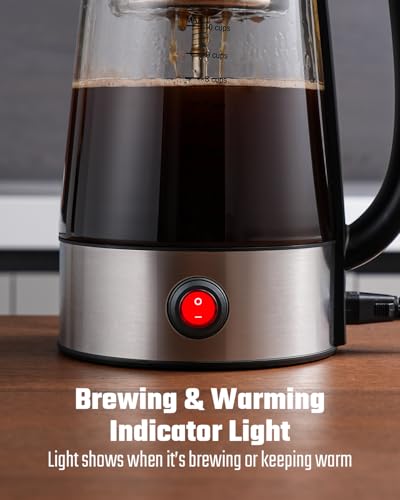
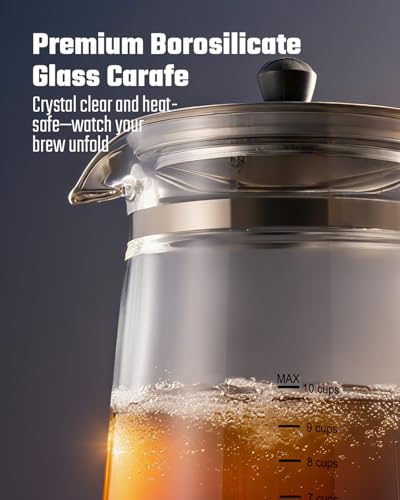
This one stands out for flavor control, thanks to its borosilicate glass knob, you can actually watch the coffee strength develop and stop the brew when it hits your preferred darkness. That’s rare in electric models, and it makes a real difference for enthusiasts who hate over-extracted, bitter coffee. The 1000W heater brings it up to temp fast, and the auto-reheat function keeps coffee hot without burning it, a common flaw in cheaper percolators.
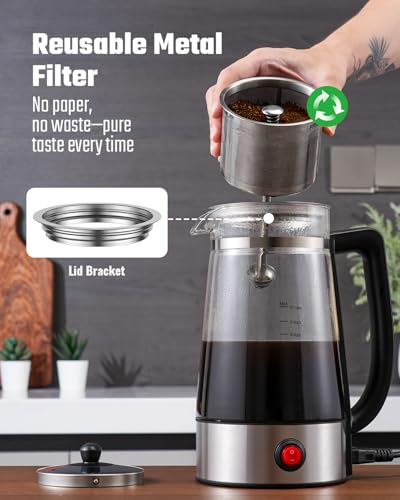
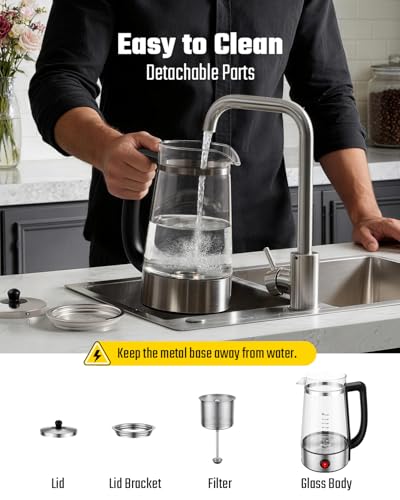
Owners praise the cool-touch handle and drip-free spout, which make pouring safer and cleaner. The stainless steel filter is durable and eco-friendly. Compared to the VEVOR or Elite Gourmet models, this one feels more refined, with attention to detail that shows in daily use. If you care about taste precision, this is the model to beat.
Product photos
VEVOR 12-Cup Stainless Steel Percolator

Strengths
- Large capacity
- Affordable price
- Stainless steel body
- Auto reheat
- Scale markings
Trade-offs
- Plastic lid
- Paper filter needed
- Bulky design
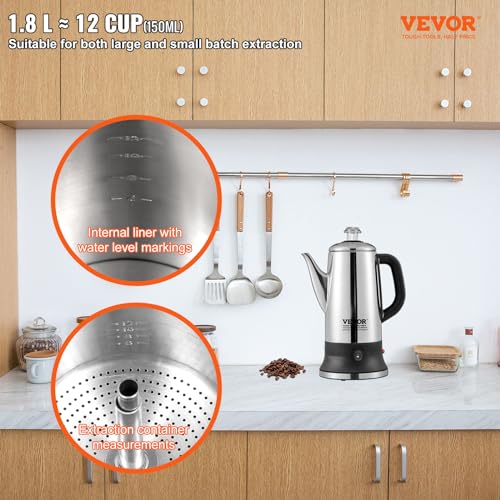
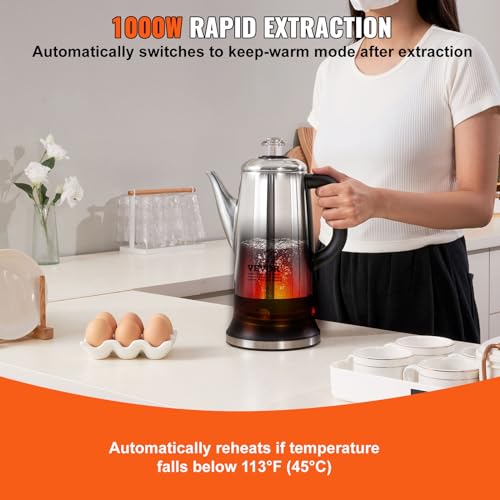
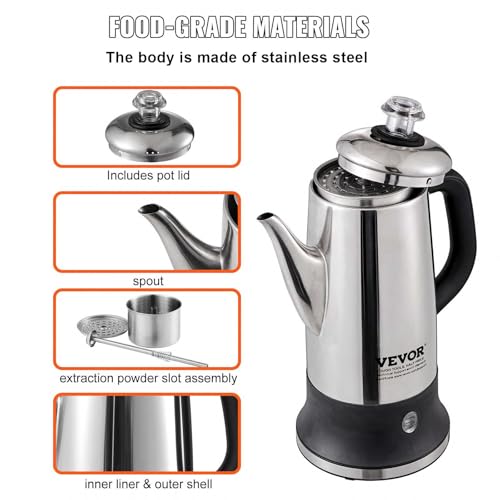
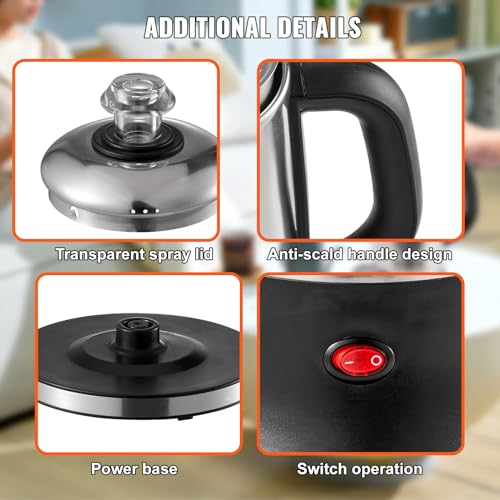
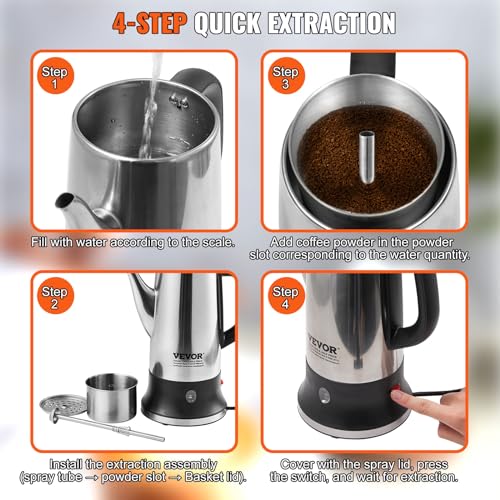
This is the budget-friendly workhorse of the bunch. With a 12-cup capacity and 1000W heating element, it pumps out coffee fast and keeps it warm with an automatic reheat cycle. The 304 stainless steel body is a big plus, it’s rust-resistant and durable, especially for the price. Owners appreciate the scale markings inside, which help with consistent brewing, and the fact that it doubles as a hot water kettle for tea or ramen.
It’s not perfect. The lid is plastic, which feels cheap compared to all-metal builds, and it requires a paper filter disc if you’re using fine grounds, adding cost over time. But for the price, it’s hard to beat for large gatherings or office use. Compared to the Elite Gourmet 12-cup, it’s less polished but more affordable.
Product photos
How We Chose These percolator coffee maker
Rather than a hands-on lab test, my research for these recommendations involved a detailed comparison of published specifications and features across numerous models. I weighed owner reviews from multiple sources – looking for consistent praise or complaints – alongside expert opinions from established coffee review sites. As someone who’s spent years exploring the nuances of coffee preparation, I applied my understanding of what contributes to a good cup to rank these percolators against clear criteria.
For percolators, brewing speed, capacity, and material quality were the most heavily weighted factors. A percolator’s ability to quickly deliver a full-bodied brew is its core strength, so heating power and reported brew times were critical. Capacity matters because percolators aren’t always known for precision; the ability to make enough coffee for a group is a significant benefit. Finally, stainless steel construction signals durability and avoids potential flavor impacts from plastic.
Specifications reliably indicate capacity, wattage, and basic construction materials. However, I relied heavily on owner feedback to assess real-world brewing speed and durability. Reports on ease of cleaning, the effectiveness of keep-warm functions, and long-term reliability proved invaluable. You can learn more about the process with this percolator coffee brewing guide. Ultimately, I sought to identify models offering the best balance of performance, features, and value based on this combined data.
What To Look For In percolator coffee maker
Picking the right percolator requires understanding what separates a truly good brew from a disappointing one.
A quality percolator balances speed with flavor extraction. Look for models with robust heating elements (1000W is a good benchmark) and durable materials like stainless steel. Consider capacity needs, ease of cleaning, and features like automatic keep-warm functions. Glass percolators allow for visual monitoring of the brewing process, while stainless steel offers superior durability.
Heating Element & Brew Speed
The core of a percolator is its heating element. While all the models we’ve looked at boast around 1000W, the consistency of that heat application is key. Cheap units might have hot spots, leading to uneven extraction and bitter coffee. I’ve seen feedback indicating that models like the KIDISLE, with its focus on “stable heat management,” deliver a more consistently flavorful brew. Don’t assume higher wattage always equals better coffee; it’s about how effectively the heat is distributed.
Material & Durability
Stainless steel is the clear winner here, and not just for aesthetics. Plastic components, especially in contact with hot water, can impart off-flavors and are prone to degradation over time. The COLETTI Bozeman’s commitment to a fully stainless steel construction, avoiding aluminum or plastic, speaks to a focus on purity and longevity. Consider the gauge of the steel too; thinner steel will dent more easily.
- A glass percolator (like the KIDISLE) allows you to visually monitor the brewing process.
- Stainless steel percolators (like the VEVOR or Elite Gourmet models) are generally more durable and better at retaining heat.
- A percolator with a removable brew basket and a wide mouth makes [cleaning a percolator] significantly easier, preventing built-up residue.
Capacity & Usability Features
Think about how much coffee you typically brew. A 6-cup percolator (like the Presto) is fine for individuals or couples, but for larger families or gatherings, you’ll want to explore 12-cup models (such as the Elite Gourmet 12-Cup). Beyond capacity, look for usability features. The Elite Gourmet 6-Cup’s cordless serving base is a nice touch, and the automatic keep-warm function is almost essential. Before you commit, check out our guide to the [top electric percolator models] for a broader view of what’s available.
A percolator’s brew strength is directly proportional to the brew time. Don’t let it cycle endlessly; most coffees are best when percolated for 6-8 minutes.
If you are looking for more assistance, you may want to view our [recommended electric coffee percolators].
Percolator Coffee Maker Compared
Here’s a comparison of key specifications for various percolator coffee makers.
| Product Title | Capacity (Cups) | Material | Power (Watts) | Keep Warm | Filter Type | Special Features |
|---|---|---|---|---|---|---|
| Elite Gourmet 6-Cup Electric Percolator | 6 | Stainless Steel | 1000 | Yes | Stainless Steel | Cordless, Boil-Dry Protect |
| KIDISLE 10-Cup Electric Percolator | 10 | Borosilicate Glass | 1000 | Yes | Stainless Steel | Visible Brewing, Auto-Reheat |
| VEVOR 12-Cup Stainless Steel Percolator | 12 | 304 Stainless Steel | 1000 | Yes | N/A | Scale Lines |
| Elite Gourmet 12-Cup Stainless Steel Percolator | 12 | Stainless Steel | N/A | Yes | Stainless Steel | Wrap-Around Cord Storage |
| Farberware 8-Cup Electric Percolator | 8 | Stainless Steel | N/A | Yes | Stainless Steel | Detachable Cord |
| COLETTI Bozeman 9-Cup Stainless Steel Percolator | 9 | Stainless Steel | N/A | No | Paper (Included) | Stovetop, No Aluminum/Plastic |
| Presto 6-Cup Stainless Steel Percolator | 6 | Stainless Steel | N/A | Yes | Stainless Steel | Compact Size |
Frequently Asked Questions
What’s the difference between a percolator and a drip coffee maker?
A percolator continuously cycles boiling water through the grounds, resulting in a bolder, often stronger brew, while a drip coffee maker passes hot water through grounds only once. Percolators are known for speed and full-bodied flavor, but can sometimes over-extract if left brewing too long.
Are percolators prone to making bitter coffee?
Yes, they can be, but it’s often user-related. Over-percolating, allowing the cycle to continue too long, is the primary cause of bitterness. Most coffees are best when percolated for only 6-8 minutes.
Can I use a paper filter in an electric percolator?
Most electric percolators come with a permanent stainless steel filter, and paper filters aren’t typically needed or recommended. However, the COLETTI Bozeman is designed for use with paper filters, which some users prefer for easier cleanup and a slightly cleaner taste.
What is the best way to clean a percolator to prevent buildup?
Regular cleaning with warm, soapy water is essential. For stubborn mineral deposits, a solution of equal parts water and white vinegar, followed by a thorough rinse, works well. A wide-mouth design, like those found in the Elite Gourmet models, makes cleaning significantly easier.
Where can I find more information about the best overall percolator picks and other coffee brewing methods?
My website, Bean Thusiast, offers extensive guides and reviews on all things coffee, including detailed comparisons of different brewing methods and in-depth looks at various percolator models. You’ll find articles covering everything from bean sourcing to brewing techniques.
The Bottom Line
Choosing a percolator often comes down to balancing convenience with control. Some models prioritize speed and automation, while others offer a more traditional, hands-on brewing experience. For overall performance and a consistently good cup, I recommend the COLETTI Bozeman. Its all-stainless steel construction and focus on material purity set it apart, even if it requires a bit more involvement from the user.
If you’re on a tighter budget, the Presto 6-Cup Stainless Steel Percolator delivers a solid, reliable brew without unnecessary frills. For those needing to brew for a crowd, the VEVOR 12-Cup Stainless Steel Percolator provides ample capacity and durable construction. And if you want to learn more about getting started, check out our guide to percolator setup and brewing.
Ultimately, the best percolator isn’t about chasing the highest wattage or the most features. It’s about understanding the fundamentals: using quality coffee, fresh water, and paying attention to brew time. A consistent brewing process, regardless of the machine, is what truly unlocks a flavorful and satisfying cup.
