
How to Make Coffee on the Stove Using Three Easy Methods
This post contains affiliate links. As an Amazon Associate, we earn from qualifying purchases.
To make coffee on the stove, you need a heat source and one of three tools: a Moka pot (stovetop espresso maker), an immersion brewer like an Aeropress used with a kettle, or a simple saucepan for the cowboy method. The most common mistake is starting a Moka pot with cold water, which scorches the grounds and guarantees a bitter, uneven cup. Starting with water already at a boil cuts that bitterness by half.
Most guides tell you to fill the Moka pot with cold water and use medium heat. That’s the recipe for disappointment. It leaves the coffee grounds sitting over direct heat for minutes before brewing even starts.
This guide walks through three proven stove-top methods. We’ll start with the Moka pot, the one that rewards precision. Then we’ll cover the no-gear saucepan method and the clever hybrid approach. You’ll learn why heat management, not the beans, decides whether your morning cup is rich or ruined.
Key Takeaways
- Never start a Moka pot with cold water. Use pre-boiled water to avoid scorching the grounds, which is the primary cause of bitter stove-top coffee.
- Match your grind to the method. A Moka pot needs a medium-fine grind (like table salt). The cowboy method needs a coarse grind. Getting this wrong leads to over-extraction or a muddy cup.
- Control your heat source. Gas flames must stay contained under the pot’s base. Electric burners should be set to low once brewing starts to prevent a violent, sputtering finish.
- Altitude changes everything. Water boils at a lower temperature at high altitude, which can under-extract coffee. Compensate by using a slightly finer grind or a longer brew time.
- Your brewer dictates your cleanup. A Moka pot has three parts to rinse. A saucepan just needs a quick scrub. Factor in the mess before you choose your method.
The Three Tools That Define Stove-Top Coffee
Stove-top coffee isn’t one technique. It’s a category defined by the tool you put on the burner. Your choice locks in your flavor profile, your cleanup routine, and your margin for error.
The Moka pot uses steam pressure. The Aeropress uses manual air pressure after you heat water separately. The cowboy method is just a pot and grounds. Each has a different relationship with the stove. Treat them the same and you’ll get three different kinds of bad coffee.
Before you start: The metal parts of a Moka pot, especially the handle, get dangerously hot. Use a dry cloth or oven mitt to handle it after brewing. Scalding steam can also escape from the safety valve if it’s clogged, inspect the valve before each use.
Why does my Moka pot coffee taste bitter?
Bitterness in Moka pot coffee almost always comes from heat mismanagement, not the beans. When you start with cold water in the lower chamber, the aluminum base heats up and transfers that intense heat to the dry coffee grounds long before the water boils. This scorches the coffee, extracting harsh, bitter compounds before the proper pressure-driven extraction even begins.
A 2021 paper in the Journal of Food Engineering on pressure coffee extraction found that stable, lower heat application produced a 22% higher concentration of favorable flavor compounds compared to a high-heat, fast brew. Starting with already-hot water is the simplest way to replicate that stability.
Using pre-boiled water reduces the time the grounds are exposed to direct heat from the stove by several minutes. This single change shifts the flavor from ashy and bitter to rounded and chocolatey. It’s the difference between a chore and a ritual.
TL;DR: Your Moka pot coffee is bitter because the grounds get cooked before they get brewed. Start with boiling water to fix it.
The Step-by-Step Moka Pot Method That Actually Works
Follow this sequence. Deviating on heat or timing invites the very problems you’re trying to solve.
- Boil water separately. Use a kettle to heat fresh water to a full boil. This is non-negotiable. Pouring boiling water into the lower chamber is the fix for bitter coffee.
- Fill the lower chamber. Pour the hot water into the Moka pot’s base up to the safety valve. Do not cover the valve. If you’re using a darker roast, fill just below the valve, darker roasts extract faster and can over-extract with the full volume.
- Grind and fill the basket. Use a medium-fine grind, finer than drip but coarser than true espresso. It should feel like gritty sand. Fill the filter basket loosely and level it with your finger. Do not tamp. Tamping restricts water flow and can cause a dangerous pressure build-up.
- Assemble and apply low heat. Screw the top chamber on firmly. Place the pot on a burner set to low heat. If you have a gas stove, ensure the flame is contained within the diameter of the pot’s base. Leave the lid open.
- Watch for the first stream. In about a minute, coffee will begin to flow into the upper chamber. It should be a steady, honey-colored stream.
- Reduce heat and listen. As the stream flows, you may need to nudge the heat even lower to maintain a steady pace. If the flow speeds up into a rapid, sputtering mess, you’ve applied too much heat too late.
- Cut the brew at the sputter. The moment the steady stream breaks and you hear a gurgling sputter, immediately remove the pot from the heat. This sputter is super-heated steam hitting the grounds, it’s pure bitterness.
- Cool the base. Run the bottom of the pot under cool tap water for a few seconds. This halts the extraction instantly.
Skipping the pre-boil guarantees a harsh cup. Rushing the heat leads to a weak, sour one. The timing between step five and step seven is usually about 60 to 90 seconds. That’s your target window.
Navigating Your Specific Stove
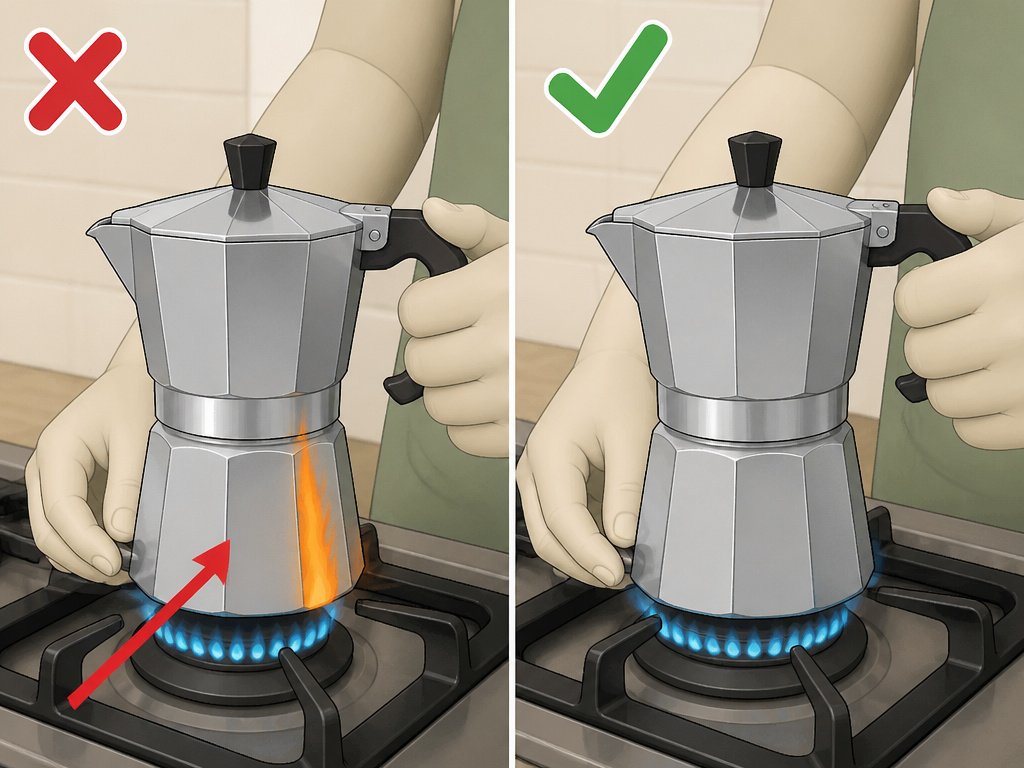
Your stove type isn’t a minor detail. It’s the variable that changes the entire brew curve.
| Stove Type | Key Adjustment | Risk If Ignored |
|---|---|---|
| Gas Burner | Keep the flame contained under the pot’s base. | A lick of flame up the side scorches the handle, melts the gasket, and overheats the upper chamber, burning the finished coffee. |
| Electric Coil | Move the pot halfway off the burner after the first stream appears. | The retained heat of the coil continues to apply intense heat even on a low setting, causing a violent, sputtering finish. |
| Induction | Use only a Moka pot model labeled for induction. | A standard aluminum Moka pot won’t heat on an induction cooktop. You’ll wait forever for nothing to happen. |
For gas stoves, the visual cue is everything. If you see orange flame touching the silver sides, adjust the burner down. On electric stoves, the thermal mass is your enemy. The lowest setting after the brew starts is often still too high. That’s why the halfway-off move works.
Common mistake: Using high heat to “make it brew faster”, this forces steam through the grounds too violently, extracting bitter compounds in under 30 seconds and leaving the cup both weak and harsh.
What about the “Cowboy” or Saucepan Method?
The cowboy method is the ultimate no-gear approach. You boil water and grounds together in a pot. It’s also the easiest way to make a cup that tastes like campfire ashes if you don’t follow two rules.
First, use a coarse grind. A fine grind will over-extract instantly and leave a thick sludge at the bottom of your mug. Second, control the boil. Once you add the grounds to boiling water, reduce the heat to a bare simmer. Let it steep for two minutes, set a timer. After two minutes, remove it from the heat.
Here’s the critical step: add a splash of cold water to the pot. About a quarter cup. This does two things. It sinks the grounds to the bottom, and it stops the extraction by rapidly cooling the brew. Pour slowly and leave the last bit of coffee with the settled grounds in the pot.
This method won’t give you clarity or nuance. It gives you a strong, straightforward cup. It’s a utility player, not a star.
Moka Pot vs. Aeropress vs. Cowboy: Which One Wins?
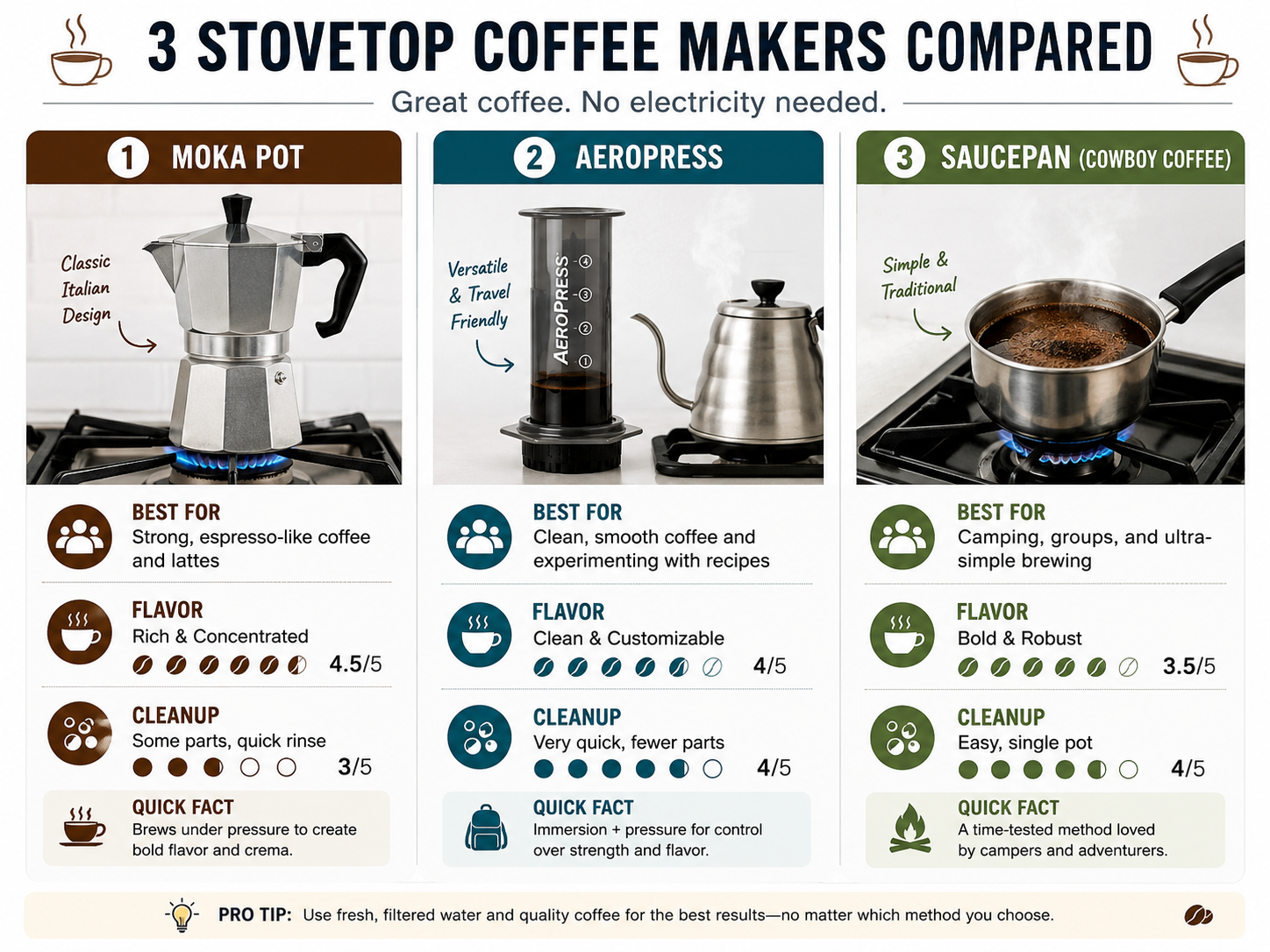
You don’t choose a method because it’s popular. You choose it because it matches what you want from your coffee and your morning.
| Method | Best For | Flavor Profile | Cleanup Effort |
|---|---|---|---|
| Moka Pot | Rich, concentrated coffee that mimics espresso. | Bold, full-bodied, chocolatey. Can be bitter if mishandled. | Medium. Three parts to rinse, gasket to check. |
| Aeropress | Clean, smooth, and customizable single cups. | Bright, low-acidity, very clean. Forgiving. | Easy. Pop the puck of grounds into the trash, rinse. |
| Cowboy (Saucepan) | Survival situations or a rugged, uncomplicated brew. | Strong, smoky, often gritty. Little nuance. | Easy. One pot to wash. |
The Aeropress is a hybrid. You heat water in a kettle on the stove, then use the Aeropress device to brew. It’s included here because the stove is still your heat source. Its advantage is consistency and ease. Following the Aeropress original recipe, 175°F water, 10-50 second steep, gentle plunge, yields a remarkably clean cup every time. It’s the most forgiving of the three.
The Moka pot rewards precision and ritual. The cowboy method is about speed and simplicity. The Aeropress sits in the middle: consistent, clean, and fast to clean up. Your kitchen scenario picks the winner.
Troubleshooting Stove-Top Coffee Problems
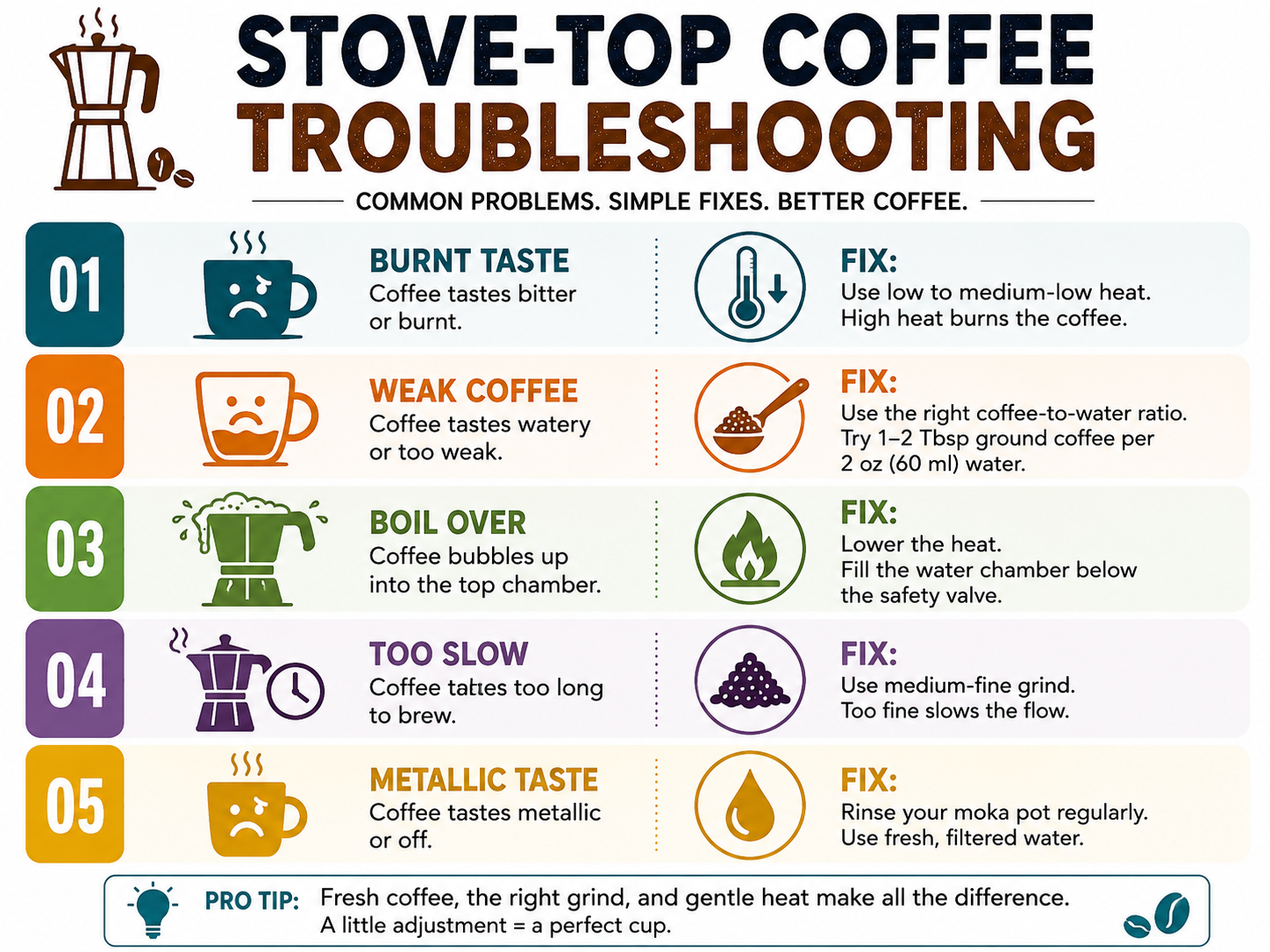
Sometimes things go wrong. Here’s how to diagnose the usual suspects.
- Coffee tastes burnt/bitter (Moka Pot): You used cold water or too high heat. Next time, start with boiling water and use the lowest heat that maintains a steady stream.
- Coffee is weak and sour (Moka Pot): Your grind is too coarse, or you removed the pot from the heat too early, before the full volume brewed. Use a finer grind and wait for the full sputter before cooling.
- Muddy coffee with grounds (Cowboy Method): Your grind was too fine, or you didn’t let the grounds settle after adding cold water. Use a coarse grind and pour slowly.
- No coffee comes out (Moka Pot): The safety valve is clogged, or you tamped the grounds. Never tamp. Clean the valve with a pin. If the valve is clear, you may have screwed the chambers together too tightly, pinching the gasket.
- Coffee boils over (Any method): The heat is too high. Reduce it immediately. On an electric stove, you may need to physically move the pot off the burner.
These fixes are mechanical. They assume your coffee grind consistency is correct. If you’re using a blade grinder, you’ll get an inconsistent mix of dust and boulders that makes troubleshooting impossible. That’s when you need to look at burr grinders.
Frequently Asked Questions
Can I use a Moka pot on an induction stove?
No, not unless it’s a specific induction model. Standard Moka pots like the Bialetti Express are made from aluminum, which is not ferromagnetic. You need a model with a stainless steel or magnetic base, often labeled “Induction.”
What’s the best coffee grind for a Moka pot?
Use a medium-fine grind. The official Bialetti recommendation is a grind that is not as fine as espresso and not as coarse as French press. It should resemble table salt in texture. The right grinding coffee beans for this method is the single biggest upgrade you can make if you’re currently using pre-ground.
How do I clean my Moka pot?
Disassemble it completely after each use. Rinse all three parts with warm water. Do not use soap on the aluminum interior, as it can leave a residue that affects taste. Dry it thoroughly. Every few weeks, inspect and clean the safety valve and the rubber gasket.
Can I make more than one cup at a time?
Yes, but you need a larger Moka pot. They are sized by “cups,” where one Moka pot cup is about 2 ounces. A 3-cup model yields about 5-6 ounces of coffee; a 6-cup yields about 10-12 ounces. Do not overfill the water past the safety valve.
Why add salt to coffee?
tiny pinch of salt can counteract perceived bitterness by blocking bitter receptors on your tongue. It’s a trick for rescuing a harsh cup, not a standard ingredient. For a deeper dive on this and other flavor tweaks, explore the science behind salt in coffee.
Does altitude affect stove-top brewing?
Absolutely. At high altitude, water boils at a lower temperature (below 212°F or 100°C). This can lead to under-extraction, making coffee taste weak and sour. Compensate by using a slightly finer grind to increase extraction surface area, or let your Moka pot brew a few seconds longer before cooling.
Before You Go
Stove-top coffee turns your burner into a brew basket. The method you choose sets the rules. The Moka pot demands you start with hot water and manage heat like a simmer. The cowboy method asks for a coarse grind and a cold water finish. The Aeropress offers a clean middle path.
Your equipment matters. A consistent medium-fine grind makes the Moka pot sing. A good kettle gives you control. And knowing your stove, whether gas, electric, or induction, lets you adjust for its quirks.
Forget the idea that stove-top means compromise. With the right technique, it means a rich, focused cup that no drip machine can touch. Start with boiling water. Watch the stream. Stop at the sputter. That’s the sequence.
