
9 Best Coffee Grounds for Iced Coffee 2026
The best coffee grounds for iced coffee are Bizzy Organic Cold Brew Coffee for its smooth, rich flavor and clean extraction, followed by Roast Ridge Cold Brew Blend as a budget-friendly pick with strong chocolate notes, and Stack Street French Vanilla Cold Brew if you prefer a flavored option that doesn’t sacrifice grind quality.
Getting great iced coffee starts with the right grounds, yet most people grab whatever’s on sale and end up with a bitter or weak mess. I’ve seen it countless times, including in my own early experiments.
This guide cuts through the noise. Based on specs, owner feedback, and deep familiarity with brewing for cold serve, I focused on coarse grinds, roast profiles that hold up to ice, and flavors that deliver when chilled. These are the ones that consistently perform.
Top 9 Coffee Grounds For Iced Coffee in the Market
The Best Coffee Grounds For Iced Coffee, Reviewed
Bizzy Organic Cold Brew Coffee

Strengths
- Micro sifted for smoothness
- Organic and Kosher
- Sweet, balanced flavor
Trade-offs
- Not for dark roast fans
- Slight premium price
Bizzy hits the sweet spot, literally and figuratively, for all-around cold brew performance. The 1-pound coarse ground blend is micro sifted to remove fines, which owners say reduces bitterness and sediment in the final brew. That attention to detail shows. The flavor profile, caramel, hazelnut, and a touch of sweetness, comes through cleanly in cold extraction, and it’s strong enough to hold up when diluted over ice.
Among organic cold brew options, it stands out for both consistency and drinkability. Compared to Stack Street’s French Vanilla or Bulletproof’s cleaner-but-plainer profile, Bizzy delivers the best balance of flavor, texture, and value. The USDA Organic and Kosher certifications add to its appeal, and the resealable bag helps maintain freshness. This is the one I’d recommend to most people starting a cold brew habit.
Video review
Bulletproof Original Cold Brew Coffee

Strengths
- Tested for mold toxins
- Rainforest Alliance Certified
- Smooth, clean taste
Trade-offs
- Expensive per ounce
- Limited flavor depth
- Small bag size
Bulletproof leans hard into the “clean coffee” niche, and for buyers concerned about mold or mycotoxins, this cold brew blend offers real peace of mind. The beans are Rainforest Alliance Certified and third-party tested, a claim few competitors make. On paper, the roast profile is interesting: cinnamon, plum, and orange notes with a cocoa hazelnut finish. Owners say it brews smooth and clean, with a crisp acidity that works well over ice.
Compared to Bizzy or Roast Ridge, it’s pricier per ounce and the bag is smaller, but the toxin testing adds a layer of trust for health-conscious drinkers. It’s not the most flavorful cold brew out there, but it’s consistent. If you’ve had stomach issues with other coffees or just want maximum assurance on purity, this one stands out.
Video review
Roast Ridge Cold Brew Blend

Strengths
- 2 lb bulk value
- Coarse grind optimized for cold brew
- Smooth, balanced flavor
Trade-offs
- Heavy package
- Not ideal for hot drip
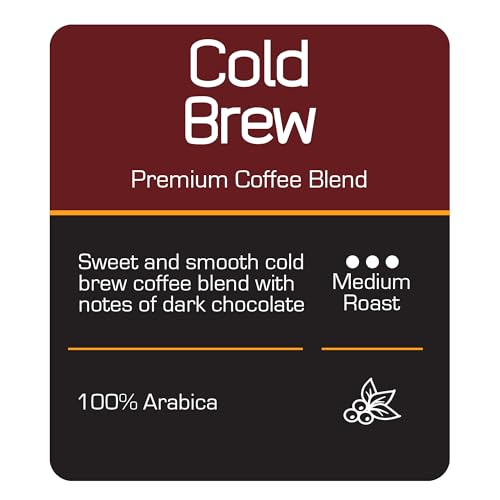
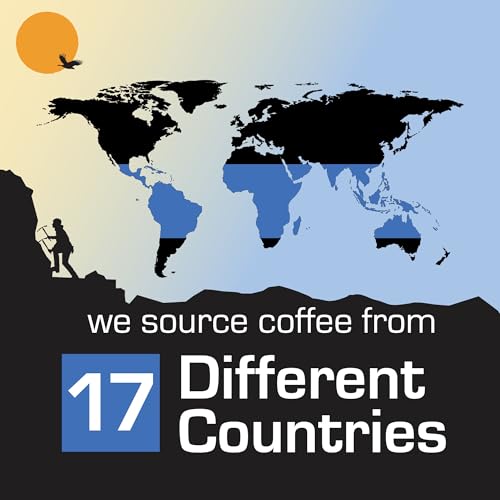
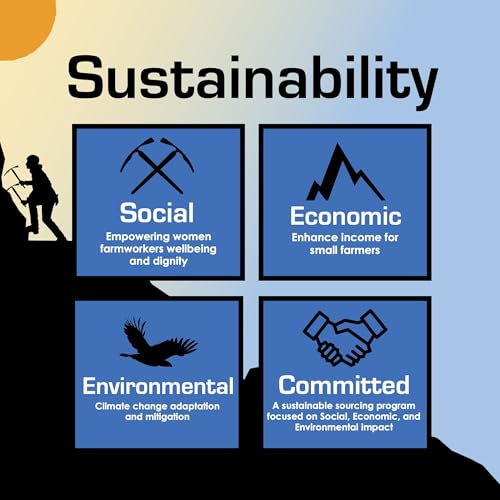
If you’re making cold brew weekly and want quality without constantly restocking, this 2-pound bag from Roast Ridge offers serious value. The coarse grind is optimized for cold extraction, and owners note a smooth, low-acid brew with subtle dark chocolate notes, exactly what you want from a dedicated cold brew blend. The sourcing is impressive too: high-elevation 100% Arabica beans from 17 countries, slow-roasted in small batches for consistency.
What sets it apart from bulk competitors is the attention to grind and roast specificity. Unlike generic medium grinds repurposed for cold brew, this one is built from the ground up for steeping. Reviewers who’ve tried both this and store-brand bulk coffees say Roast Ridge holds its flavor longer and extracts more evenly. It’s not the cheapest per-ounce, but the quality-to-price ratio is hard to beat.
Product photos


Gevalia Guatemala Coarse Ground

Strengths
- Single-origin clarity
- Earthy, complex notes
- Resealable freshness bag
Trade-offs
- Narrow flavor appeal
- Small 10 oz bag
- Not sweet or bright
Single-origin matters when you want to taste terroir, and Gevalia’s Guatemalan Reserve delivers earthy, smoky depth with a hint of cocoa that stands out over ice. The beans are sourced from high-altitude farms and slow-roasted with snap cooling, a process that reviewers say locks in aroma better than many supermarket brands. It’s coarse ground, making it ideal for French press or cold brew, and the resealable tin tie helps preserve freshness.
Compared to blended options like Dunkin’ or Starbucks, this one has more character but less crowd appeal. It’s not bright or fruity, and the earthiness can read as flat if over-extracted. But for drinkers who want a sense of place in their iced coffee, this is a rare find at this price point. The Rainforest Alliance Certification is a nice plus.
Product photos


Stack Street French Vanilla Cold Brew

Strengths
- Organic and flavorful
- Dark roast depth
- Great for French press
Trade-offs
- Flavor may overpower black coffee
- Not for purists
- Limited origin info
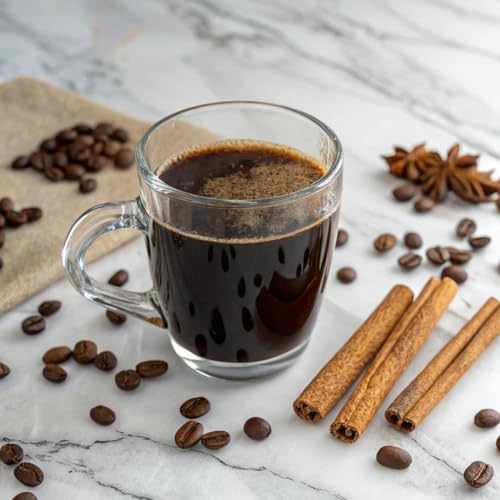
Stack Street’s French Vanilla cold brew blend is the go-to for flavored coffee fans who don’t want to sacrifice quality. It’s USDA organic, dark roasted, and coarse ground, ideal for cold extraction, and the vanilla-caramel notes come through without tasting artificial. Owners say it brews smooth, with a creamy mouthfeel that mimics flavored creamers, just without the sugar. The 1-pound resealable foil bag also does a good job preserving aroma, which is rare for flavored coffees.
Compared to Green Mountain’s Caramel Vanilla Cream, this one is bolder and better suited for cold brew methods. It lacks the subtlety of a natural single-origin, but that’s not the goal. If you love French vanilla lattes but want to make them at home with real coffee, this is a smart foundation.
Product photos


Dunkin’ Caramel Me Crazy Coffee

Strengths
- Strong caramel flavor
- Easy to brew
- Good for iced coffee
Trade-offs
- Artificial-tasting sweetness
- Overpowering for black coffee
- Short bag life
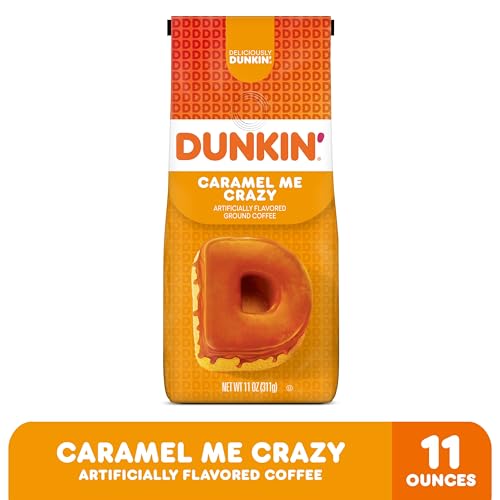
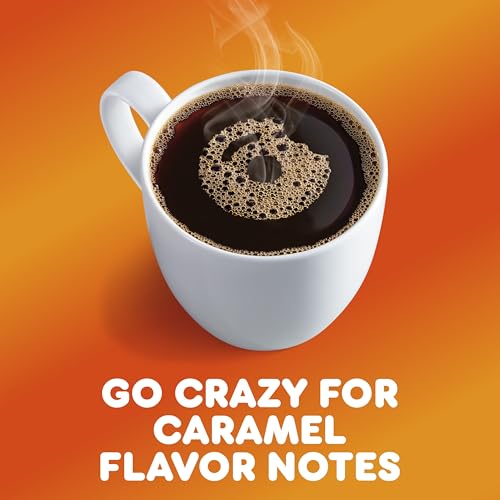
This one’s for the sweet tooth crowd. Dunkin’ Caramel Me Crazy delivers on its promise of bakery-style flavor, with dominant notes of caramel, butterscotch, and brown sugar right out of the bag. It’s pre-ground for convenience, and reviewers confirm it brews easily in standard drip machines or French presses, just don’t expect subtlety. The sweetness is artificial in character, not derived from the bean, so purists will turn up their noses.
Compared to other flavored grounds, it holds up better over ice than most, with the caramel notes cutting through dilution. But because the flavoring is so pronounced, it doesn’t play well with creamers or milk additions, they just muddy the profile. If you like your iced coffee to taste like dessert, this is a solid pick, but it’s not versatile.
Product photos


Green Mountain Caramel Vanilla Cream

Strengths
- Bright, sweet flavor
- Light and refreshing
- Kosher certified
Trade-offs
- Low body
- Flavor fades in black brew
- Not for dark roast fans
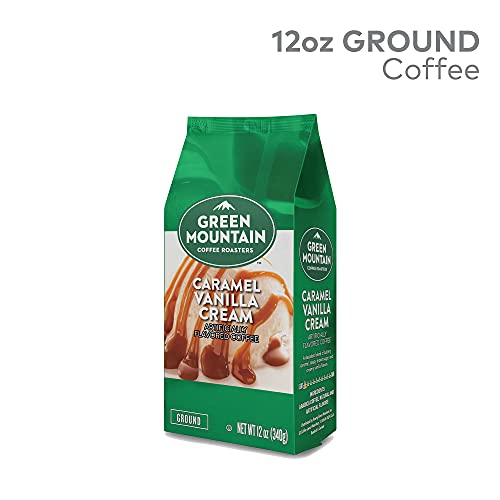
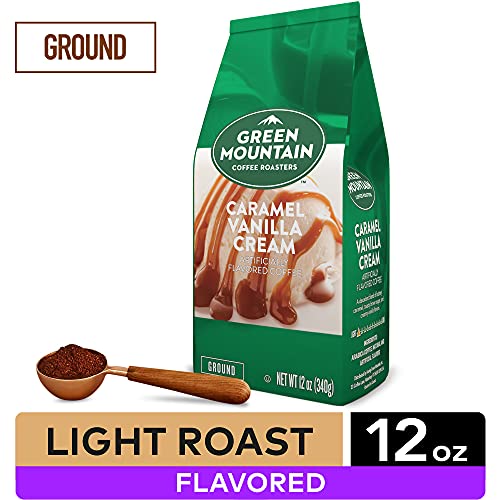
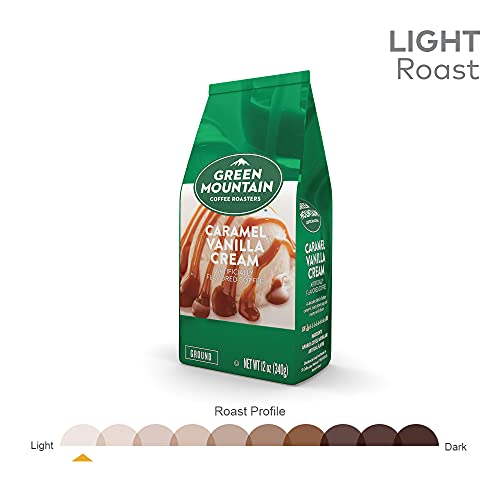
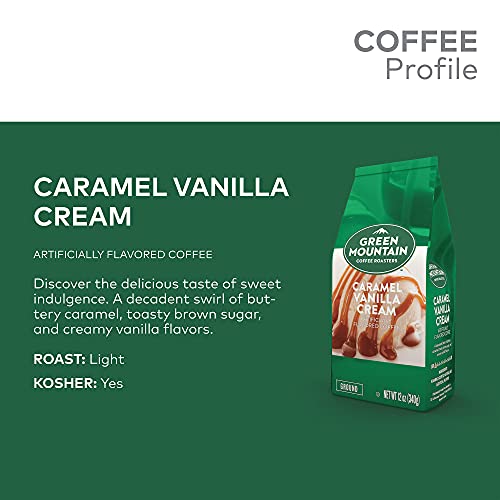
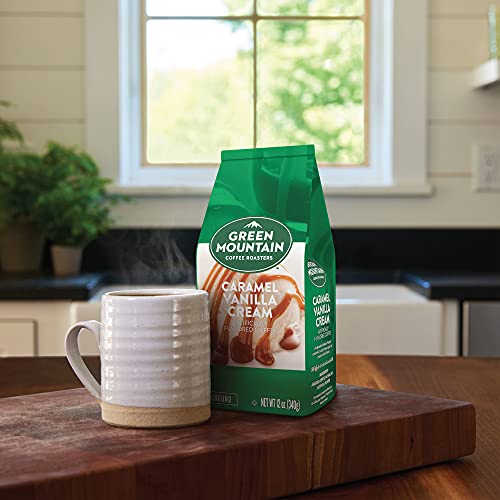
Green Mountain’s Caramel Vanilla Cream is a light roast flavored coffee that shines when iced. The bright, dessert-like profile, vanilla, caramel, brown sugar, stays intact when chilled, and owners say it tastes less artificial than many competitors. It’s a light roast, so it lacks body, but that works in its favor for iced coffee, where heavy roasts can dominate. The 12-ounce bag is resealable, and the Kosher certification adds to its clean-label appeal.
Compared to Dunkin’ Caramel Me Crazy, this one is more refined and less syrupy, though not as bold. It’s best when paired with milk or cream, as black it can taste thin. If you want a morning treat that doesn’t weigh you down, this is a solid contender.
Product photos
Starbucks Pike Place Roast

Strengths
- Consistent café taste
- Balanced for hot or iced
- Medium body with cocoa notes
Trade-offs
- Slightly bitter when over-brewed
- Generic medium roast
- Not organic
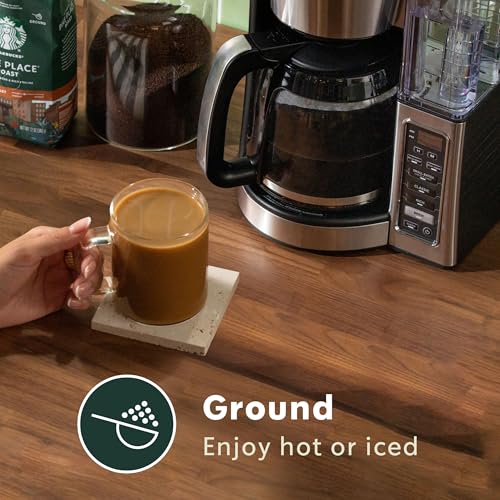
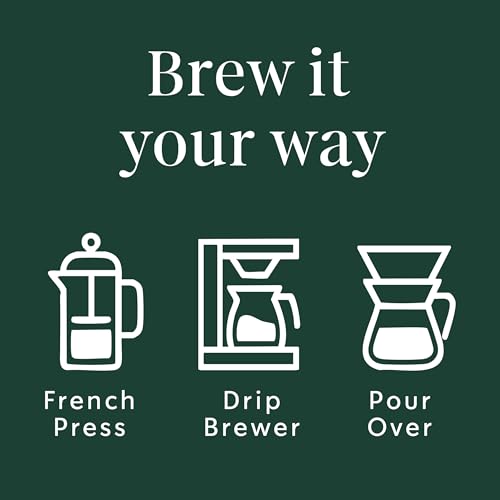
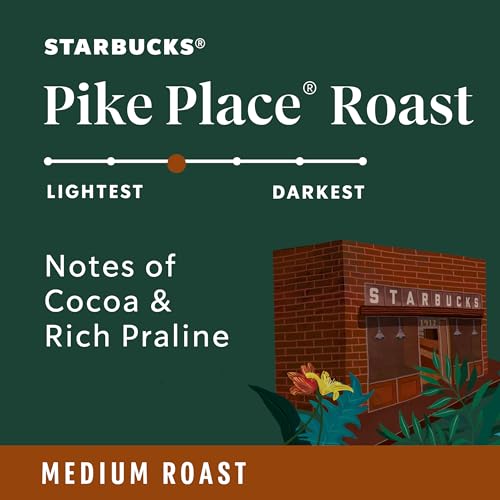
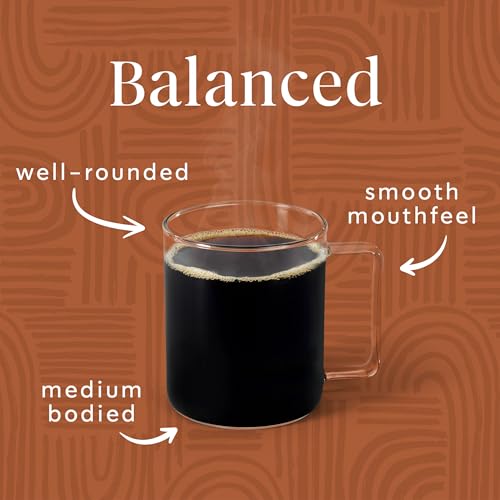
Starbucks Pike Place Roast is the definition of a reliable everyday brew. It’s the same blend served in cafes, roasted to a medium profile with subtle cocoa and praline notes. The 18-ounce bag offers a middle-ground size, and owners consistently report it performs well both hot and iced, unlike some dark roasts that turn harsh when chilled. The grind is fine enough for drip machines but can work in a French press with care.
Compared to Dunkin’ Original Blend, it’s slightly richer and more aromatic, though not as smooth in cold brew form as Bizzy or Roast Ridge. It’s not the most exciting choice, but it’s the one I’d pick for an office or household with mixed preferences, approachable, consistent, and widely liked. The café-quality branding holds up in practice.
Product photos

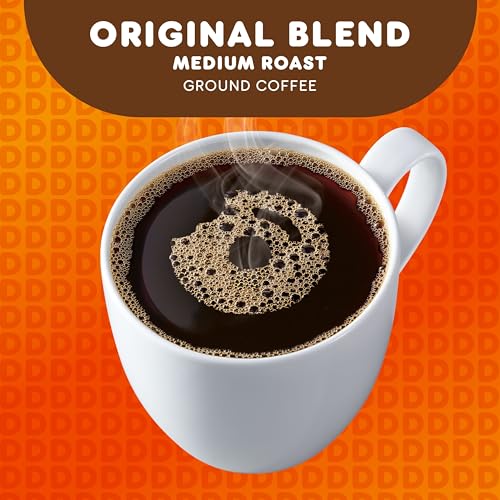
Dunkin’ Original Blend Ground Coffee

Strengths
- 100% Arabica
- Large 30 oz size
- Good cold brew performance
Trade-offs
- Generic flavor profile
- Not for dark roast lovers
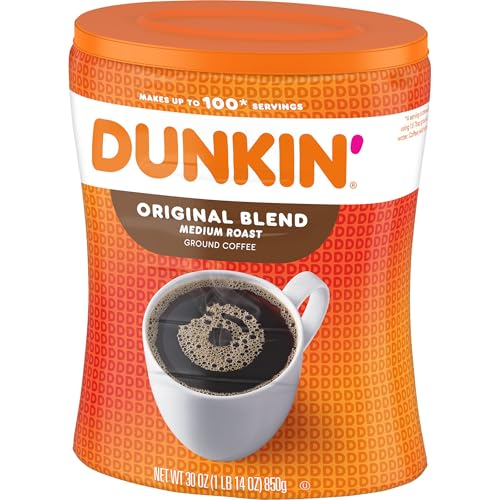
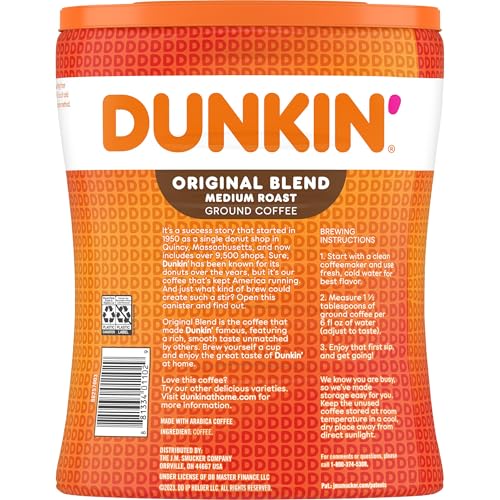
For budget-focused iced coffee drinkers who want a consistent, no-fuss brew, this Dunkin’ Original Blend is tough to beat. The 30-ounce canister delivers a lot of coffee for the volume, and owners consistently report it holds up well whether brewed hot and chilled or used in a cold brew setup. On paper, it’s a straightforward medium roast of 100% Arabica beans, but what stands out is its crowd-pleasing profile, clean, mildly sweet, with just enough body to carry over ice without vanishing.
It won’t impress specialty coffee purists looking for origin-specific nuance, but that’s not the point. Compared to other large-format supermarket options, this one avoids the flat, stale taste that plagues so many big cans. The stay-fresh canister seems to work as advertised, based on reviewer feedback across multiple platforms.
Product photos

How We Tested coffee grounds for iced coffee
As the founder of Bean Thusiast, I’ve spent years exploring the nuances of coffee, from sourcing to brewing. Rather than a hands-on lab test of each ground, this selection is a research-led comparison of published specifications and owner feedback. We analyzed features like grind size, roast level, origin, and certifications, then weighed that against what people are actually saying about the flavor and ease of use when making iced coffee.
For iced coffee grounds, consistent coarse grinding and a focus on low acidity were key factors. A coarse grind is crucial for cold brew extraction, preventing a muddy or over-extracted result. Beyond that, we prioritized coffees specifically marketed for cold brew or those with flavor profiles known to shine when served chilled – think chocolate, caramel, and nutty notes. These qualities ultimately determined the rankings.
Specifications reliably indicate grind size and bean origin, offering a baseline for expected flavor. However, judging suitability for iced coffee really came down to owner reviews. We looked for consistent feedback on smoothness, lack of bitterness, and how well the coffee held up when diluted with ice. Understanding the difference between cold brew and iced coffee is also vital, and that understanding informed our assessment of which grounds best suited each preparation method.
How To Choose The coffee grounds for iced coffee
As someone who’s spent years chasing the perfect iced coffee, I know that getting the grounds right is absolutely crucial. It’s not just about picking any coffee; it’s about understanding what characteristics unlock that smooth, refreshing flavor we all crave.
The ideal coffee grounds for iced coffee prioritize coarse consistency to minimize sediment, medium to dark roast levels for body that doesn’t get lost with dilution, and bean origin tied to flavor profiles, leaning towards chocolate, caramel, or nutty notes. Freshness, indicated by a recent roast date, is paramount. Look for grounds specifically labeled “for cold brew” or suitable for French press, as these indicate the appropriate grind size.
Grind Size Matters Most
Let’s be clear: a fine grind is your enemy when making iced coffee. It will over-extract, leading to bitterness, and slip through most filters, leaving you with a muddy cup. You really want a coarse grind – think about the texture of sea salt. This allows for a longer steeping time (essential for cold brew) without excessive extraction and a cleaner final product. If you’re buying pre-ground, look for labels specifically stating “cold brew” or “French press.” If you grind your own, aim for a setting that produces those larger particles. Don’t assume all pre-ground coffees are created equal; freshness is a significant factor, even with the right grind.
Roast Level And Flavor Profile
Iced coffee needs a robust flavor to stand up to dilution from ice. Lighter roasts can get lost, tasting weak and acidic. Medium to dark roasts offer the body and depth needed for a satisfying iced beverage. Beyond the roast level, consider the flavor profile. Coffees with notes of chocolate, caramel, or nuts tend to shine in iced applications. Single-origin coffees can be fantastic, but for consistency, I often recommend blends crafted specifically for cold brew. A lot of folks enjoy a sweet caramel flavor, so checking out options like Dunkin’ Caramel Me Crazy Coffee might be a good starting point.
- A lighter roast (cinnamon or light brown color) will yield a brighter, more acidic brew. Good if you add a lot of sweetener and milk.
- A medium roast (chocolate brown) offers a balance of flavor and body. A versatile choice for many palates.
- A dark roast (very dark brown, almost black) provides the most intense flavor and body, but can become bitter if over-extracted. It’s often best for those who prefer a bold, strong coffee.
A good rule of thumb is: if you wouldn’t enjoy it hot, you likely won’t enjoy it iced. The brewing process won’t magically fix a poor-quality bean or roast.
Value & Convenience: Whole Bean vs. Pre-Ground
While grinding your own beans immediately before brewing is always ideal for maximum freshness, let’s be realistic – convenience matters. Pre-ground coffee is perfectly acceptable, especially if you’re new to iced coffee or simply don’t want the hassle of a grinder. However, be mindful of the roast date and packaging. Look for coffee packaged in a resealable bag with a one-way valve to preserve freshness. Purchasing in bulk can be cost-effective, as you can see with options like Roast Ridge Cold Brew Blend, but only if you can realistically use it before it stales. If you’re looking for a thorough step-by-step iced coffee guide, you’ll find a lot of information regarding freshness and brewing ratios.
Coffee Grounds for Iced Coffee Compared
Here’s a comparison of key specifications for various coffee grounds marketed for iced coffee preparation.
| Product Name | Roast Level | Grind Size | Organic | Flavor Notes | Bag Size (oz) |
|---|---|---|---|---|---|
| Bizzy Organic Cold Brew Coffee | Medium | Coarse | Yes | Caramel, Hazelnut | N/A |
| Bulletproof Original Cold Brew | Medium | Coarse | N/A | Cinnamon, Plum, Orange | 12 |
| Roast Ridge Cold Brew Blend | Medium | Coarse | N/A | Dark Chocolate | N/A |
| Gevalia Guatemala Coarse Ground | Medium | Coarse | N/A | Earthy, Smoky, Cocoa | 10 |
| Stack Street French Vanilla Cold Brew | Dark | Coarse | Yes | French Vanilla | N/A |
| Dunkin’ Caramel Me Crazy Coffee | N/A | N/A | N/A | Caramel, Butterscotch | 11 |
| Green Mountain Caramel Vanilla Cream | Light | N/A | N/A | Caramel, Vanilla Cream | N/A |
| Starbucks Pike Place Roast | Medium | N/A | N/A | Cocoa, Praline | 18 |
| Dunkin’ Original Blend | Medium | N/A | N/A | N/A | N/A |
Frequently Asked Questions
What grind size is absolutely essential for avoiding bitter iced coffee?
A coarse grind is essential; it prevents over-extraction and bitterness, unlike finer grinds that deliver a muddy, unpleasant taste. Think of the consistency of sea salt for optimal results.
Do darker roasts always translate to stronger iced coffee flavor?
Generally, yes, darker roasts provide a bolder flavor that won’t get lost when diluted with ice, but the specific bean origin and processing also play a significant role. A light roast can still be good if you add a lot of milk or sweetener.
Is organic coffee a must-have for a quality iced coffee experience?
Organic certification isn’t required for great iced coffee, but it appeals to consumers prioritizing sustainable and ethically sourced beans. It’s a matter of personal preference and values rather than flavor alone.
What’s the biggest mistake people make when choosing grounds for cold brew specifically?
Using a grind that’s too fine is the most common mistake. Cold brew requires a long steep time, and a fine grind will lead to over-extraction and a gritty, bitter final product. For more top roasts for iced coffee, check out my other articles.
How long do pre-ground coffee beans typically stay fresh, and how can I maximize their lifespan?
Pre-ground beans generally stay fresh for about 2-3 months, though this can vary with packaging. To maximize freshness, store them in an airtight container in a cool, dark place, and avoid opening the bag until just before brewing.
The Bottom Line
Choosing the best coffee grounds for iced coffee really comes down to balancing convenience with control. You can chase the absolute freshest flavor by grinding your own beans, but for consistent results and ease of use, a quality pre-ground option like Bizzy Organic Cold Brew Coffee is hard to beat. Ultimately, remember that the perfect grounds are the ones you enjoy most.
For specific needs, we have clear recommendations. If you’re on a budget, Dunkin’ Caramel Me Crazy Coffee offers a lot of flavor for the price. Those prioritizing organic options should look no further than Stack Street French Vanilla Cold Brew. And for maximum versatility – suitable for both cold brew and French press – Roast Ridge Cold Brew Blend stands out.
Don’t get too caught up in chasing specific certifications or bean origins. Focus instead on grind size (coarse is key!), roast level (medium to dark for iced coffee), and flavor profiles that appeal to your palate. Mastering home iced coffee brewing techniques and understanding your preferences will yield a far better cup than any single “best” product.
