
A Guide on How to Brew Iced Coffee at Home with Two Ways
To brew iced coffee at home, you have two proven paths: cold brew and Japanese iced coffee. Cold brew steeps coarse grounds in cold water for 12-16 hours, producing a smooth, low-acid concentrate. Japanese iced coffee brews hot coffee at double strength directly over ice, delivering a bright, aromatic cup in minutes. The core difference is time versus immediacy, and each method suits a different coffee flavor profile.
Most people pick one method and stick with it forever, missing out on the other half of the iced coffee experience. They make cold brew in the fridge for 24 hours and wonder why it tastes weak. Or they pour regular-strength hot coffee over a mountain of ice and get a watery, bitter mess.
This guide breaks down both methods with the specific ratios, grind settings, and gear that actually work. You will learn why brew temperature matters more than you think and how to avoid the single mistake that ruins 80 percent of homemade attempts.
Key Takeaways
- Cold brew is an immersion method requiring a coarse grind and a 12-16 hour steep at room temperature, not in the fridge, for proper extraction.
- Japanese iced coffee is a pour-over method where hot water brews directly onto ice, instantly chilling the coffee to lock in aromatic compounds.
- The universal mistake is using the wrong coffee-to-water ratio. Cold brew needs a 1:8 ratio for a concentrate; Japanese iced coffee needs a 1:10 ratio with half the water replaced by ice.
- Grind consistency from a burr grinder is non-negotiable for both methods. A blade grinder creates fine dust that over-extracts and muddies the flavor.
- Store cold brew concentrate, not diluted ready-to-drink coffee, in the fridge. It keeps for up to two weeks without losing character.
The Core Choice: Cold Brew vs. Japanese Iced Coffee
Your first decision is not about beans. It is about time and taste. These two methods produce fundamentally different drinks from the same bag of coffee.
Cold brew extracts slowly without heat. The result is a concentrate notably low in acidity and certain aromatic oils that heat normally pulls out. Japanese iced coffee, sometimes called flash-chilled coffee, uses heat for a full extraction but captures the resulting aromatics instantly by freezing them in place over ice.
Cold brew coffee extracted at room temperature (around 70°F) reaches optimal strength in 12-16 hours. The same brew placed in a refrigerator at 40°F may require 18-24 hours for comparable extraction, as detailed in the Serious Eats guide to iced coffee. This temperature differential is the most common cause of weak homemade cold brew.
The choice maps to your goal. Want a smooth, chocolatey, low-acid base you can keep in a pitcher all week? Choose cold brew. Craving the bright, fruity notes of a light roast Ethiopian, served immediately? Japanese iced coffee is your only real option.
TL;DR: Cold brew for batchable, low-acid smoothness. Japanese iced coffee for immediate, bright, and aromatic single servings.
Gear You Actually Need (And What to Skip)
You do not need a dedicated cold brew tower. The marketing is compelling, but the physics are simple. Your kitchen already holds 90 percent of the required tools.
The mandatory list is short. A kitchen scale measures coffee and water by weight. Volume is unreliable; a “cup” of whole beans versus grounds varies by over 20 percent. A burr coffee grinder provides consistent particle size. Inconsistent grounds from a blade grinder guarantee a mix of bitter over-extraction and weak under-extraction in the same batch.
For cold brew, any large glass jar or your French press works as a brewer. For filtering, a fine-mesh sieve lined with a paper coffee filter or a nut milk bag is perfect. For Japanese iced coffee, you need a pour-over brewer like a Hario V60 or a Chemex, and the server must be able to hold ice without melting instantly. A pre-chilled stainless steel cocktail shaker or a double-walled carafe is ideal for this rapid chilling step.
Skip the single-use disposable cold brew bags. They often restrict water flow, leading to uneven saturation. Skip the “iced coffee” button on your drip machine—it just brews weaker coffee hot and chills it poorly. That method always tastes stale.
The Cold Brew Method: A 12-Hour Room-Temperature Steep
This is a patience game. Rushing it with heat or shortening the time makes a thin, unsatisfying drink. The process is forgiving, but it has two non-negotiable rules.
First, grind coarse. Aim for a consistency resembling coarse sea salt. If your grounds look like table salt, you have gone too fine. Fine particles will over-extract, turning your batch bitter and murky. A proper burr coffee grinder set to its coarsest setting is the right tool.
Second, use room-temperature water, not cold water from the fridge. Chemistry moves slower when cold. A 2023 study in the National Library of Medicine on cold brew optimization found extraction efficiency drops significantly below 20°C. Your kitchen counter is the perfect lab.
| Variable | Cold Brew Specification | Consequence If Wrong |
|---|---|---|
| Grind Size | Coarse (sea salt) | Fine dust over-extracts, causing bitterness and a sludgy texture after filtering. |
| Coffee:Water Ratio | 1:8 by weight (e.g., 100g coffee to 800g water) | A weaker ratio (1:12) makes a dilute concentrate; stronger (1:5) can taste harsh. |
| Water Temperature | Room temp (~70°F / 21°C) | Cold fridge water extends brew time to 18-24+ hours for similar strength. |
| Steep Time | 12-16 hours | Under 10 hours tastes weak; over 24 hours can develop woody, over-extracted notes. |
| Filter Medium | Paper filter or fine mesh | Cheesecloth or a too-coarse sieve leaves fine sediment in the final concentrate. |
Combine your coarse grounds and water in your jar. Stir gently to ensure all grounds are wet. Cover it loosely—a cheesecloth or coffee filter secured with a rubber band allows gas to escape. Do not seal it airtight.
Place the jar on the counter, out of direct sunlight. Wait. At the 12-hour mark, taste a small sample. If it lacks body, let it go another 2-4 hours. Strain through your filter into a clean pitcher. This is your concentrate.
Common mistake: Brewing cold brew in the refrigerator — the cold slows extraction so much that a 12-hour brew is only half-strength. You either wait a full day or end up with a weak batch you try to fix by steeping longer, which often over-extracts the tannins.
Store this concentrate in a sealed container in the fridge. It will keep for up to two weeks. To serve, dilute it. A standard ratio is one part concentrate to one part water or milk over ice. Adjust to your taste.
TL;DR: Coarse grind, 1:8 ratio, room-temperature steep for 12-16 hours. Filter well and store as a concentrate.
The Japanese Iced Coffee Method: Flash-Chilled Clarity
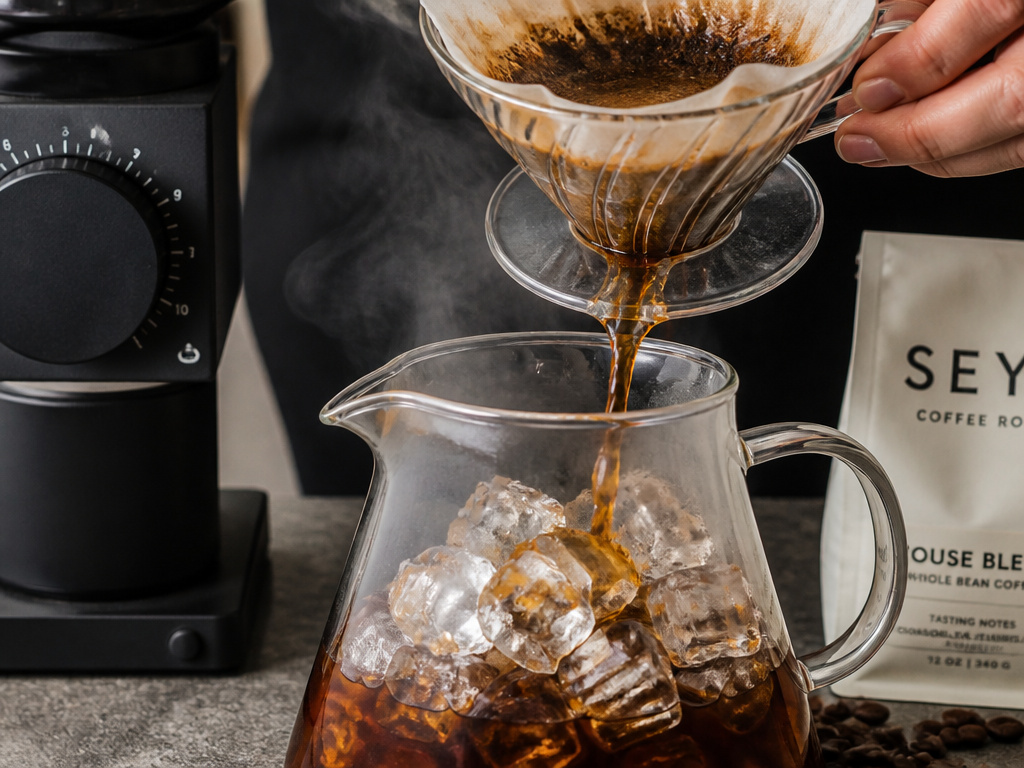
This method is for the impatient perfectionist. It delivers a cup that tastes like the best version of hot coffee, but cold. The entire trick happens in about three minutes.
You are brewing hot coffee directly onto ice. The ice’s job is twofold: it chills the coffee instantly, and it is part of your water recipe. You must account for it. The standard approach is the “50/50 method.” If your total recipe calls for 300 grams of water, you will use 150 grams of hot water to brew and 150 grams of ice waiting in the server.
The rapid chilling is critical. It halts the extraction process at its peak and traps volatile aromatic compounds that would otherwise evaporate as the coffee cools slowly. This is why iced coffee made from day-old pot coffee always tastes flat.
- Weigh your ice. Place 150 grams of ice into your serving vessel—a pre-chilled carafe or a cocktail shaker works best.
- Grind your coffee. Use a medium-fine grind, similar to what you would use for a standard V60 pour-over. You need 15 grams of coffee for this 300g total water recipe.
- Set up your brewer. Place your paper coffee filter in your pour-over cone, rinse it with hot water, and discard the rinse water. Add the grounds to the damp filter.
- Bloom and brew. Pour just enough hot water (about 200°F) to saturate the grounds (30g). Wait 30 seconds for the bloom. Then, slowly pour the remaining 120 grams of hot water in a spiral pattern, aiming to finish pouring within 1:30-2:00 total.
- Serve immediately. The hot coffee will melt most of the ice as it drips through, creating a perfectly chilled, undiluted cup. Give it a gentle stir and pour.
The result is a bright, clean, and complex cup. It highlights acidity and fruitiness in a way cold brew never can. This method is ideal for exploring single-origin coffee from regions like Ethiopia or Colombia.
Choosing and Preparing Your Coffee Beans
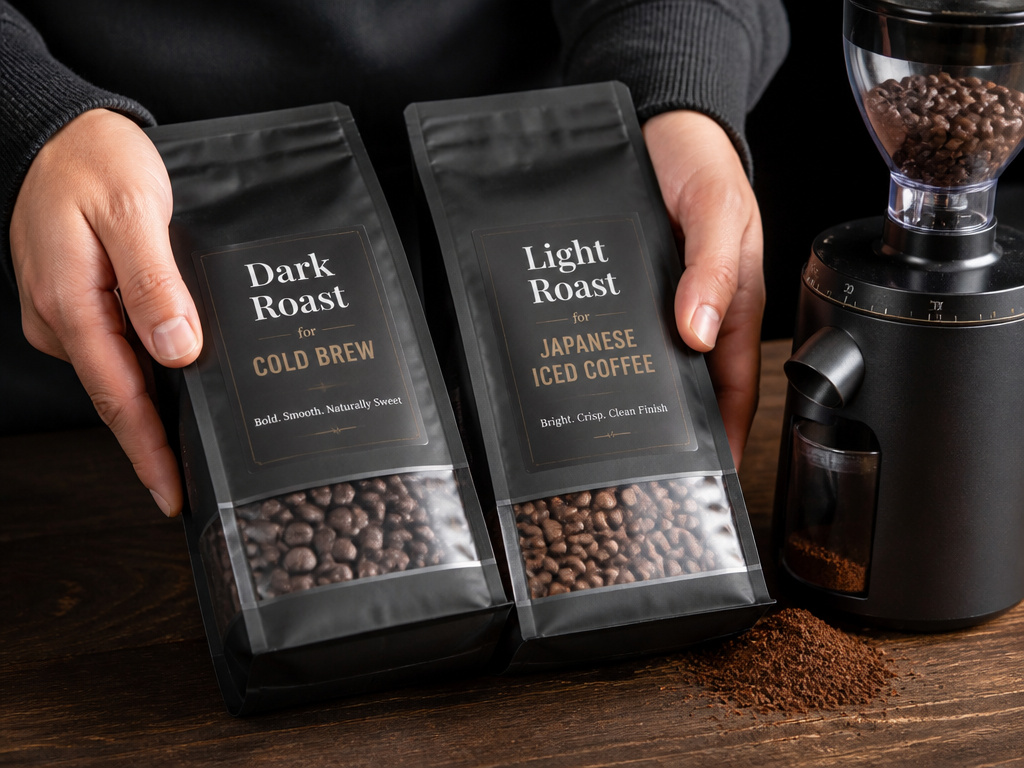
The method dictates the bean. This is where most generic guides stop, but it is the step that elevates your drink from good to memorable.
For cold brew, you want a bean that shines without high acidity. Dark roasts, blends with chocolate or nutty notes, and blonde roast beans all work well. The slow, cool extraction mutes bitterness, so a darker roast that might taste charred hot can become smooth and sweet. A coffee blend designed for balance is often a safe, delicious bet.
For Japanese iced coffee, seek out high-quality Arabica beans with pronounced tasting notes. Think of a light roast Ethiopian with floral and berry notes, or a washed Colombian with apple and caramel hints. The flash-chilling method preserves these delicate top notes that heat normally burns off or that slow cooling lets escape.
Freshness matters for both, but it is paramount for the pour-over method. Grind your beans immediately before brewing. Stale, pre-ground coffee lacks the gases needed for a proper bloom and will taste hollow.
Serving, Storing, and Customizing Your Iced Coffee
You have a perfect base. Now, do not ruin it with a bad finish.
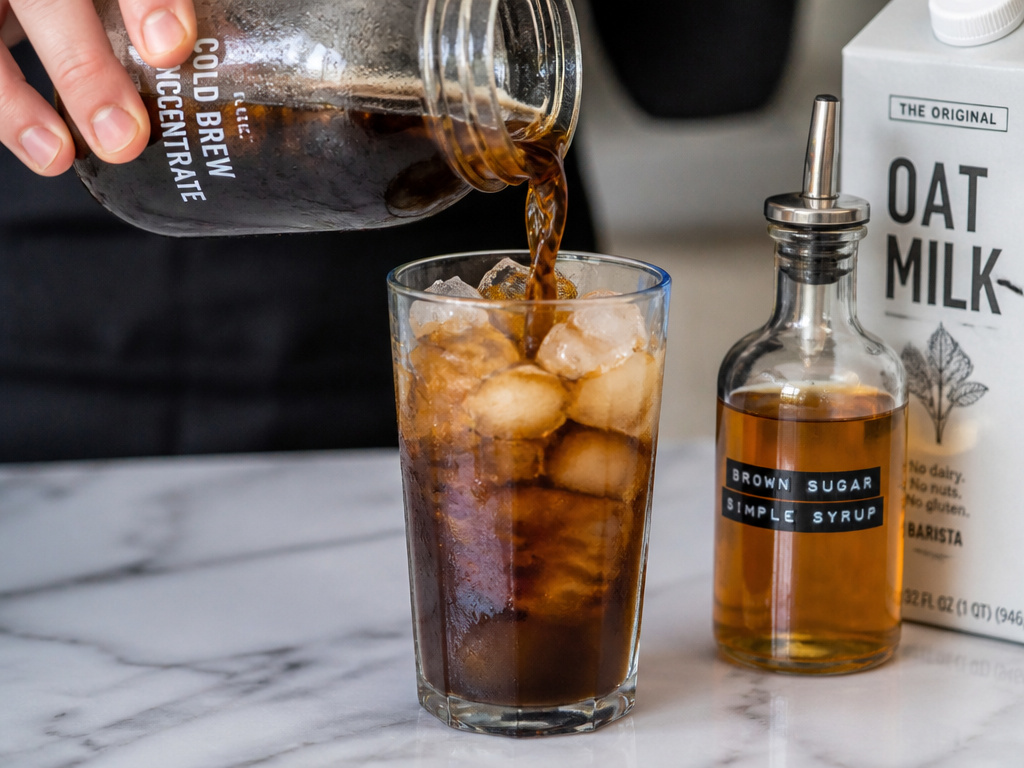
Cold brew concentrate should be stored undiluted. Pour it into a clean glass bottle or jar and keep it refrigerated. It is stable for about two weeks. When you are ready to drink, dilute to taste. Start with a 1:1 ratio of concentrate to water or milk over ice. The beauty of a concentrate is its flexibility—make it stronger or weaker by the glass.
Japanese iced coffee is a serve-immediately affair. It does not store well. The aromatic compounds that make it special dissipate within an hour or two, even in the fridge. Brew only what you will drink right away.
Customization is where you make it yours. For sweetness, skip refined white sugar. It can crystallize in cold liquid. Simple syrup integrates instantly. Brown sugar sweetener dissolved into a syrup adds a molasses depth that pairs wonderfully with cold brew. For dairy, whole milk adds creaminess, but almond milk or oat milk are excellent non-dairy options that complement without overpowering.
If your brew turns out slightly more bitter than you like, do not drown it in sugar. Try a pinch of salt. Sodium ions block bitterness receptors on your tongue. It is a trick that works.
Frequently Asked Questions
Can I use pre-ground coffee for iced coffee?
You can, but you will sacrifice quality. Pre-ground coffee is almost always ground for drip machines, which is too fine for cold brew and often stale. It will make your cold brew bitter and your Japanese iced coffee flat. Investing in a basic burr grinder is the single biggest upgrade for home iced coffee.
Why is my homemade iced coffee watery?
You are likely making one of two errors. For cold brew, you are not using a concentrated enough ratio, or you are steeping in the fridge for too short a time. For Japanese iced coffee, you are not accounting for the ice as part of your water weight. If you brew 300g of hot water and then pour it over a separate 100g of ice, you have 400g of liquid for your coffee dose, diluting it.
Which method has more caffeine?
It depends on your serving. Cold brew concentrate, drunk straight, is extremely high in caffeine due to its high coffee-to-water ratio and long extraction time. However, it is meant to be diluted. A peer-reviewed scientific comparison of cold vs hot brew found that when prepared as typically consumed, caffeine content is similar. A serving of Japanese iced coffee will have caffeine levels comparable to a hot cup, as it is a complete extraction. For a detailed breakdown, see our article on caffeine in iced tea vs coffee.
Do I need special filters for cold brew?
Not really. A standard paper coffee filter works perfectly. If you dislike paper taste, use an unbleached filter or rinse it first. For a richer body with more oils, a fine metal mesh filter or a French press allows more sediment through. This is a matter of taste preference.
How can I make my iced coffee less acidic?
Use the cold brew method. Its cold, slow extraction pulls out far fewer acidic compounds than hot brewing. If you prefer Japanese iced coffee, choose a low-acid bean like a Sumatran or a Brazilian natural process. Darker roasts also have lower perceived acidity.
Before You Go
Brewing great iced coffee at home is not about finding one secret. It is about matching a method to your craving and executing it with precision. Cold brew rewards planning with a smooth, versatile concentrate. Japanese iced coffee rewards attention with a vibrant, immediate cup.
Remember the two anchors: grind coarse and wait at room temperature for cold brew; grind for pour-over and brew hot directly onto your measured ice for the Japanese method. Your gear is less important than your ratios. Your beans should suit your chosen path.
Now, pick a method, weigh your coffee, and start. The first batch is always a learning experience. The second one is where you find your perfect summer drink.
{
“@context”: “https://schema.org”,
“@type”: “HowTo”,
“name”: “How to Brew Iced Coffee at Home”,
“totalTime”: “PT15M”,
“tool”: [
{
“@type”: “HowToTool”,
“name”: “Burr coffee grinder”
},
{
“@type”: “HowToTool”,
“name”: “Kitchen scale”
},
{
“@type”: “HowToTool”,
“name”: “Large jar or French press”
},
{
“@type”: “HowToTool”,
“name”: “Pour-over brewer (like a Hario V60)”
},
{
“@type”: “HowToTool”,
“name”: “Double-walled carafe or cocktail shaker”
}
],
“step”: [
{
“@type”: “HowToStep”,
“name”: “Choose your method”,
“text”: “Pick between cold brew for a smooth, low-acid concentrate or Japanese iced coffee for a bright, aromatic cup ready in minutes.”
},
{
“@type”: “HowToStep”,
“name”: “Grind your beans”,
“text”: “For cold brew, use a coarse grind like sea salt. For Japanese iced coffee, use a medium-fine grind suited for your pour-over device.”
},
{
“@type”: “HowToStep”,
“name”: “Measure the coffee and water”,
“text”: “Use a 1:8 coffee-to-water ratio by weight for cold brew. For Japanese iced coffee, use a 1:10 ratio, with half the water weight replaced by ice in the serving vessel.”
},
{
“@type”: “HowToStep”,
“name”: “Brew and filter”,
“text”: “Steep cold brew for 12-16 hours at room temperature, then filter. For Japanese iced coffee, brew hot coffee directly over the waiting ice to chill it instantly.”
},
{
“@type”: “HowToStep”,
“name”: “Serve and store”,
“text”: “Dilute cold brew concentrate with water or milk over ice. Japanese iced coffee is ready to drink. Store cold brew concentrate in the fridge for up to two weeks.”
}
]
}
{
“@context”: “https://schema.org”,
“@type”: “FAQPage”,
“mainEntity”: [
{
“@type”: “Question”,
“name”: “Can I use pre-ground coffee for iced coffee?”,
“acceptedAnswer”: {
“@type”: “Answer”,
“text”: “You can, but you will sacrifice quality. Pre-ground coffee is almost always ground for drip machines, which is too fine for cold brew and often stale. It will make your cold brew bitter and your Japanese iced coffee flat. Investing in a basic burr grinder is the single biggest upgrade for home iced coffee.”
}
},
{
“@type”: “Question”,
“name”: “Why is my homemade iced coffee watery?”,
“acceptedAnswer”: {
“@type”: “Answer”,
“text”: “You are likely making one of two errors. For cold brew, you are not using a concentrated enough ratio, or you are steeping in the fridge for too short a time. For Japanese iced coffee, you are not accounting for the ice as part of your water weight. If you brew 300g of hot water and then pour it over a separate 100g of ice, you have 400g of liquid for your coffee dose, diluting it.”
}
},
{
“@type”: “Question”,
“name”: “Which method has more caffeine?”,
“acceptedAnswer”: {
“@type”: “Answer”,
“text”: “It depends on your serving. Cold brew concentrate, drunk straight, is extremely high in caffeine due to its high coffee-to-water ratio and long extraction time. However, it is meant to be diluted. A peer-reviewed scientific comparison of cold vs hot brew found that when prepared as typically consumed, caffeine content is similar. A serving of Japanese iced coffee will have caffeine levels comparable to a hot cup, as it is a complete extraction. For a detailed breakdown, see our article on caffeine in iced tea vs coffee.”
}
},
{
“@type”: “Question”,
“name”: “Do I need special filters for cold brew?”,
“acceptedAnswer”: {
“@type”: “Answer”,
“text”: “Not really. A standard paper coffee filter works perfectly. If you dislike paper taste, use an unbleached filter or rinse it first. For a richer body with more oils, a fine metal mesh filter or a French press allows more sediment through. This is a matter of taste preference.”
}
},
{
“@type”: “Question”,
“name”: “How can I make my iced coffee less acidic?”,
“acceptedAnswer”: {
“@type”: “Answer”,
“text”: “Use the cold brew method. Its cold, slow extraction pulls out far fewer acidic compounds than hot brewing. If you prefer Japanese iced coffee, choose a low-acid bean like a Sumatran or a Brazilian natural process. Darker roasts also have lower perceived acidity.”
}
}
]
}
