
7 Best Philips Coffee Machines of 2026
The Philips 5500 Series stands out as the overall best choice, delivering consistent espresso and a top-tier LatteGo milk system. For budget-focused buyers, the Philips 2200 Series offers solid performance at a lower price, while the 4400 Series strikes a smart balance for those who want LatteGo convenience without paying for extra presets.
If you’re like me and crave café-quality drinks at home, the real challenge isn’t just finding a machine that brews coffee, it’s finding one that handles milk well, stays reliable, and doesn’t become a chore to clean. Too many machines look great on paper but fall short in daily use, especially when it comes to frothing and maintenance.
This guide cuts through the noise by focusing on what actually matters: real owner experiences, key features like grind quality and milk systems, and long-term usability. I looked at specs, user feedback, and support resources to highlight the Philips models that consistently deliver where it counts.
Top 7 Philips Coffee Machine in the Market
The Best Philips Coffee Machine, Reviewed
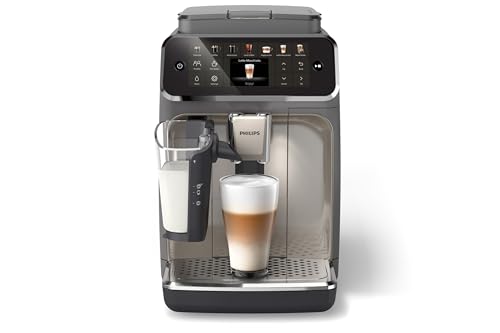
Philips 4400 Series Espresso Machine
Strengths
- 12 drink presets
- User profile memory
- SilentBrew certified
Trade-offs
- Only 2 user profiles
- No cold milk frothing
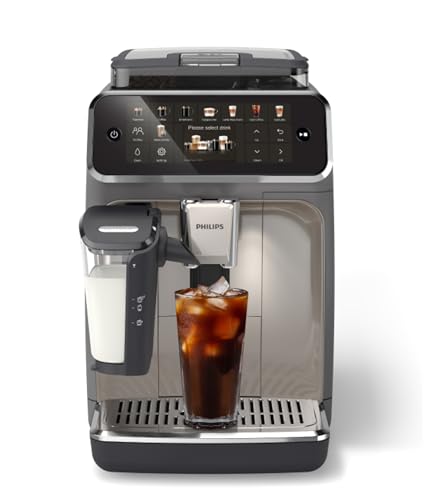
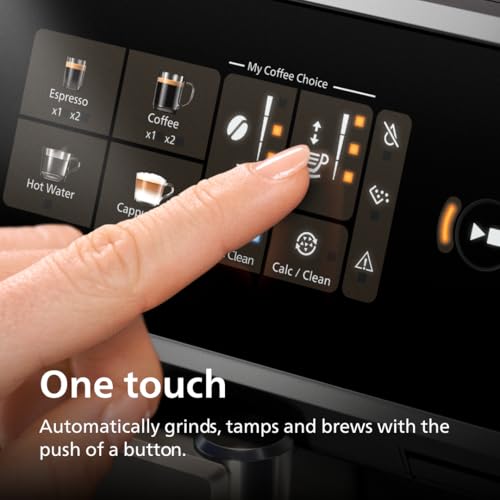
This is the machine I’d recommend to most households, the EP4444/90 strikes the sweet spot between automation, quiet operation, and versatility. With 12 presets, including iced coffee, it covers more ground than the 3200 or 2300. The color display is easier to navigate, and being able to save two user profiles means you and your partner can have your drinks ready at the tap of a button.
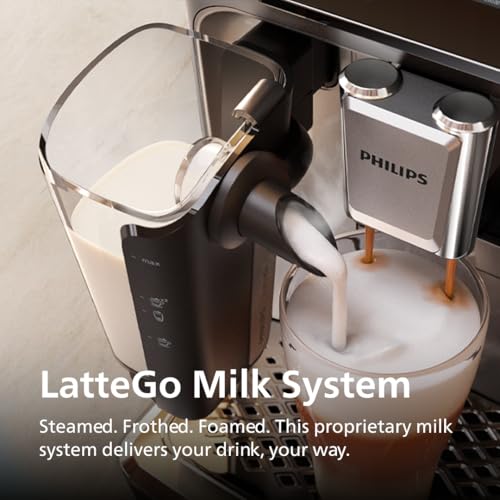
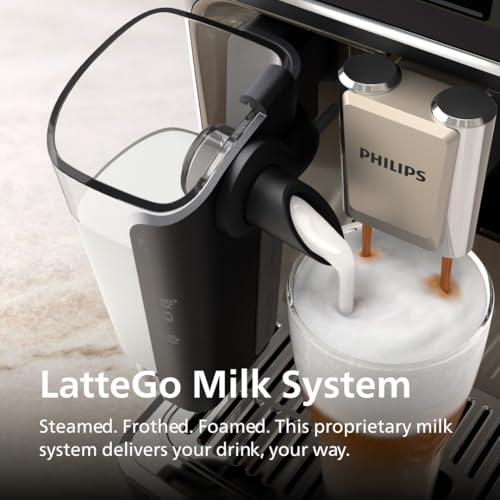
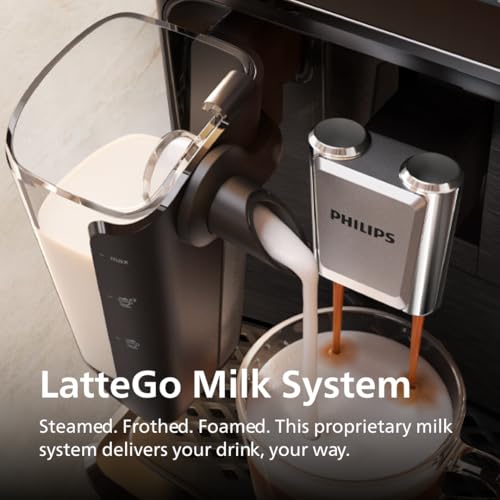
The LatteGo system and SilentBrew are proven performers, owners praise how fast it brews (just 3 seconds to ready) and how little noise it makes. Combine that with the AquaClean filter, and you’ve got a machine that’s both convenient and low-maintenance. It’s not the most feature-rich in the Philips line, but it’s the most balanced.
Product photos

Philips 5500 Series Espresso Machine
Strengths
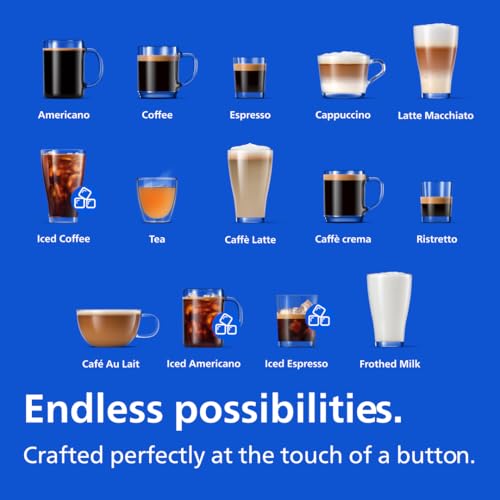
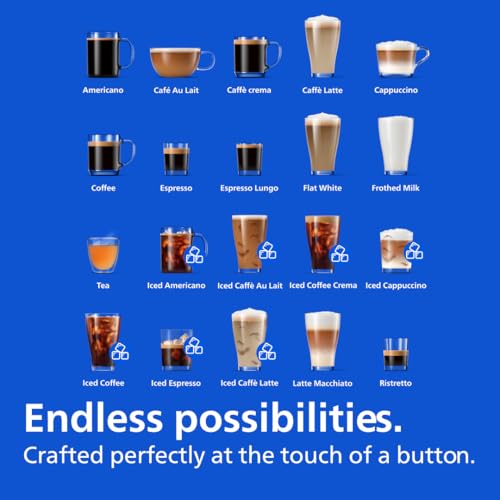
- 20 drink options
- 4 user profiles
- QuickStart ready
Trade-offs
- Higher price point
- Same milk system as lower models
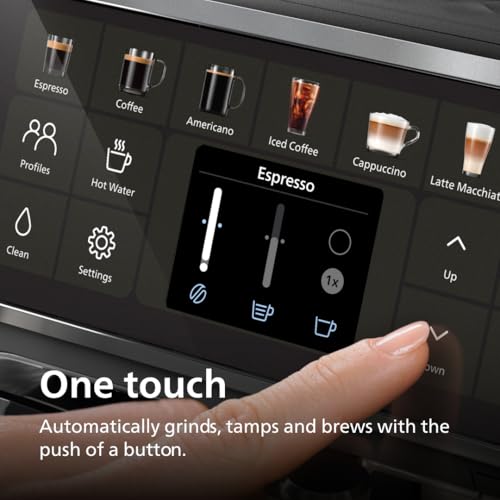
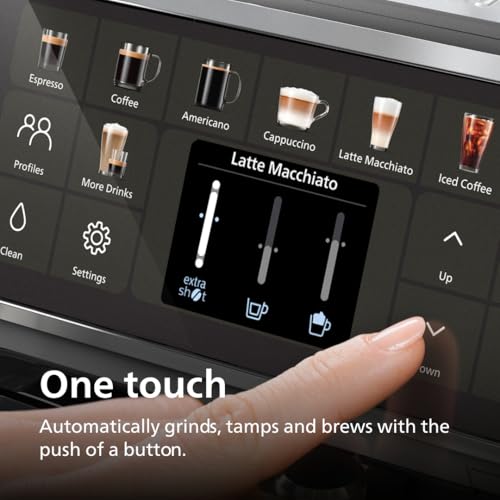
If the 4400 is balanced, the EP5544/94 is the upgrade for coffee lovers who want more choices and personalization. With 20 drink presets, it’s the most versatile in the lineup, letting you fine-tune everything from strength to milk volume across hot and iced formats. The ability to save up to 4 user profiles is a major perk for larger households, no more reprogramming your lungo every morning.
On paper, it’s nearly identical to the 4400: same SilentBrew, QuickStart, and LatteGo system. But that extra customization justifies the step up for frequent users. Owners say the interface stays intuitive despite the added options, and the build quality feels premium. It’s not a massive leap, but if you live for your morning ritual, those small refinements add up.
Product photos
Philips 3300 Series Espresso Machine
Strengths
- Includes iced coffee
- SilentBrew tech
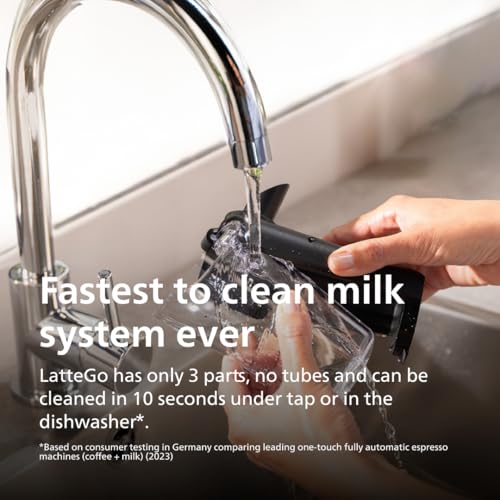
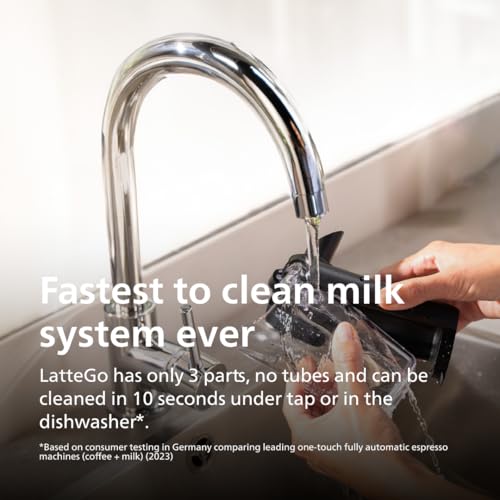
- Easy-to-clean LatteGo
Trade-offs
- No user profiles
- Fewer presets than 4400
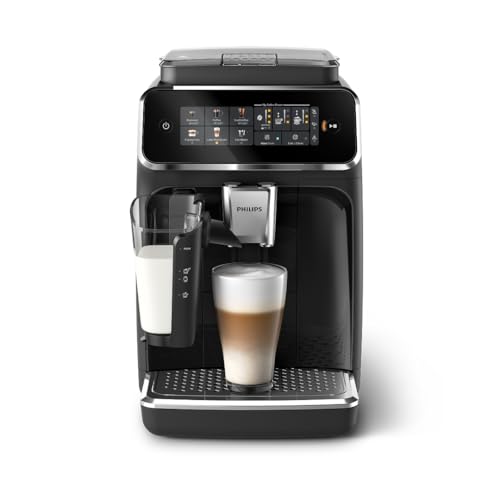
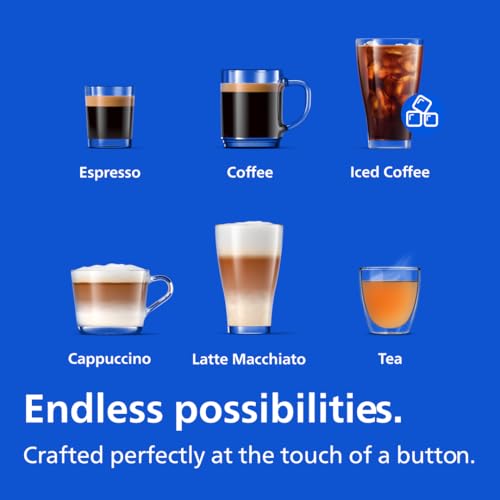
The EP3341/50 is what I’d call the value champion, it packs SilentBrew, LatteGo, and iced coffee presets into a package that undercuts the 4400 and 5500. With 6 drink options, including iced coffee, it offers more versatility than the 2300 or 3200, and the full-color display makes navigation smoother than touch buttons.
It’s essentially a trimmed-down 4400: same core tech, but fewer presets and no profile saving. Still, for a single user or couple who wants quiet, reliable performance and the occasional iced latte, it delivers excellent bang for the buck. Owners consistently report it feels like a premium machine without the premium cost.
Product photos
Philips 3200 Series Espresso Machine
Strengths
- Compact design
- Aroma Extract system
- Quick-clean milk system
Trade-offs
- No iced coffee presets
- Basic touch interface
- No profile saving
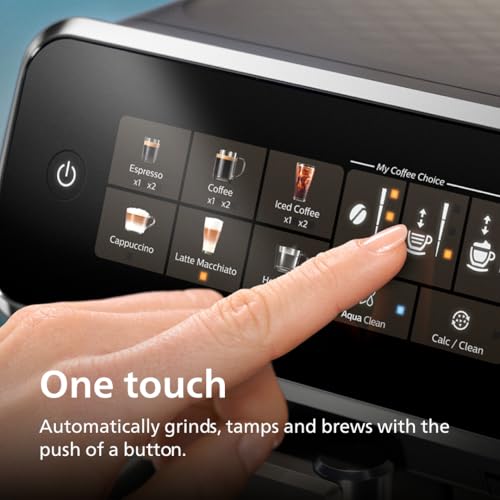
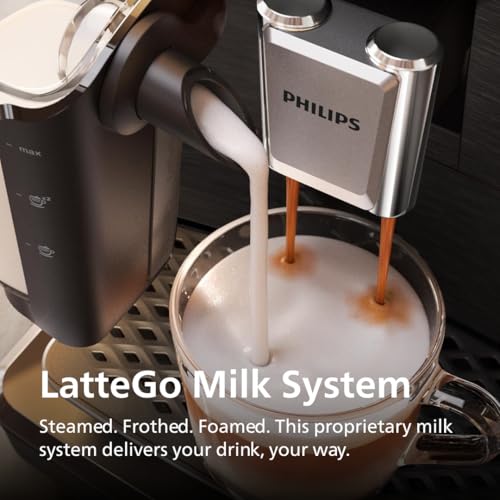
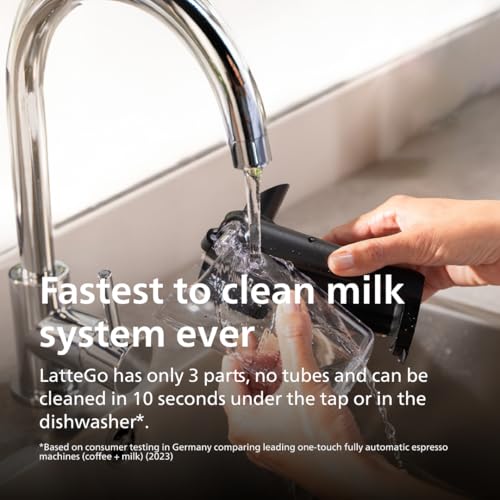
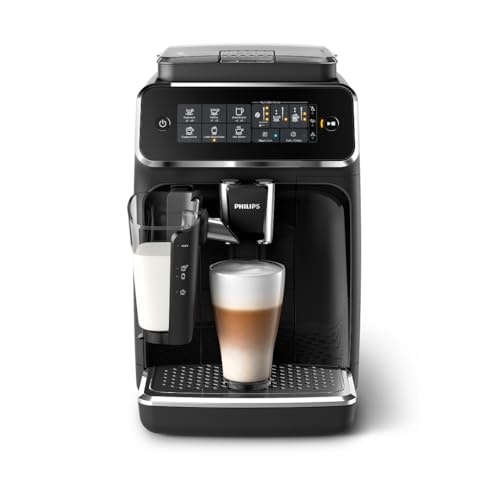
The EP3241/54 is where Philips starts to balance features and footprint. It offers 5 drink options, including americano and latte macchiato, which the 2300 lacks, and keeps the LatteGo milk system in a streamlined 2-part design. That means cleanup is even faster, under 15 seconds, according to most owners. The ceramic grinder preserves bean aroma better than cheaper blade grinders, and the Aroma Extract system helps maintain consistent temperature for richer shots.
It’s not the quietest or most customizable, but it’s one of the most space-efficient fully automatics in the lineup. The touch display is simple, maybe too basic for some, but it gets the job done. If you’re tight on counter space but still want a full range of hot drinks, this model makes strong sense.
Product photos
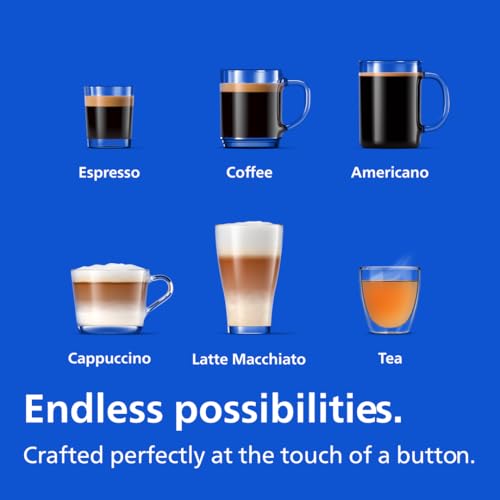
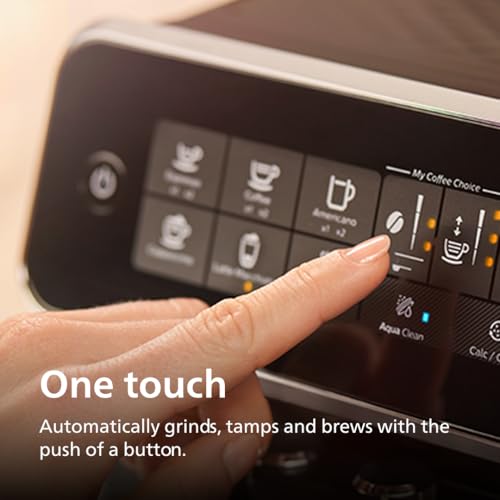
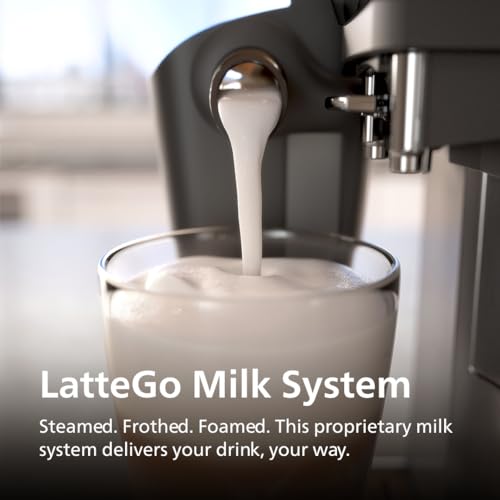
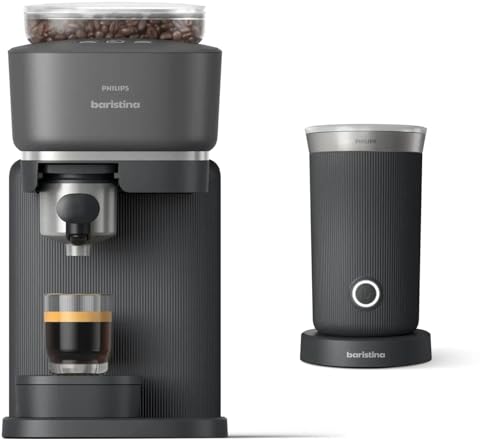
Philips Baristina Espresso Machine Bundle
Strengths
- Hot and cold milk frothing
- Compact footprint
- Supports plant-based milks
Trade-offs
- Manual portafilter handling
- No built-in milk system
- Limited automation
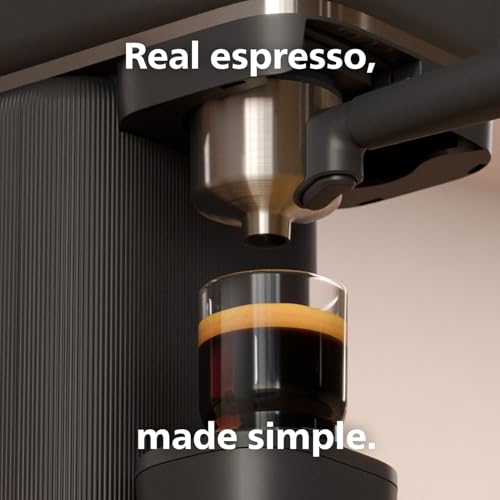
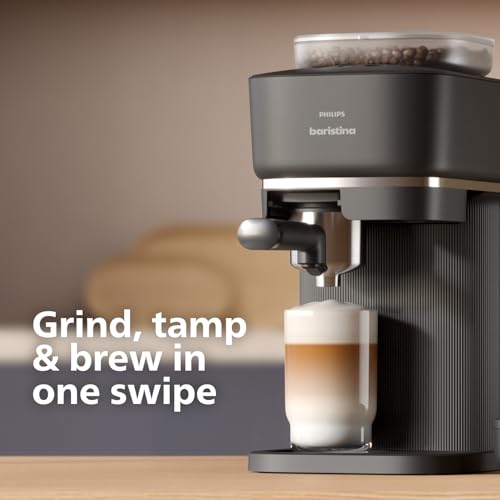
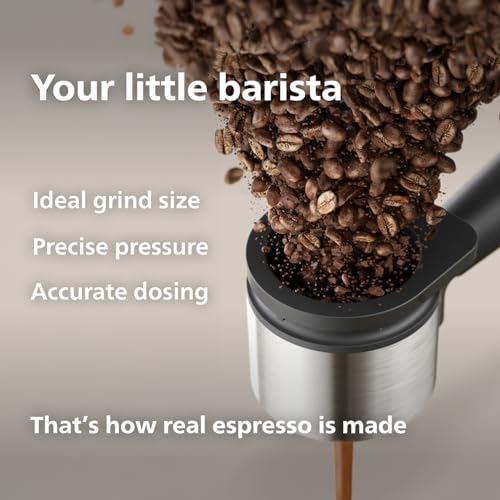
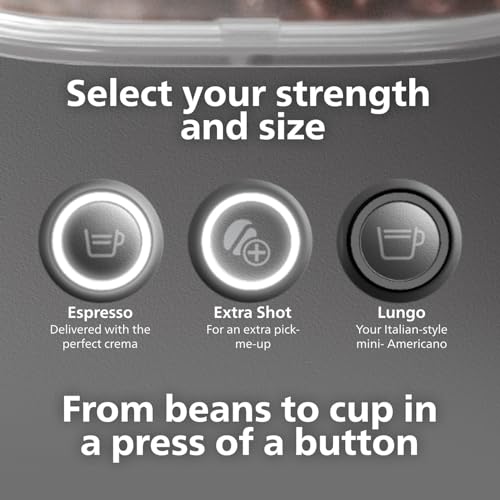
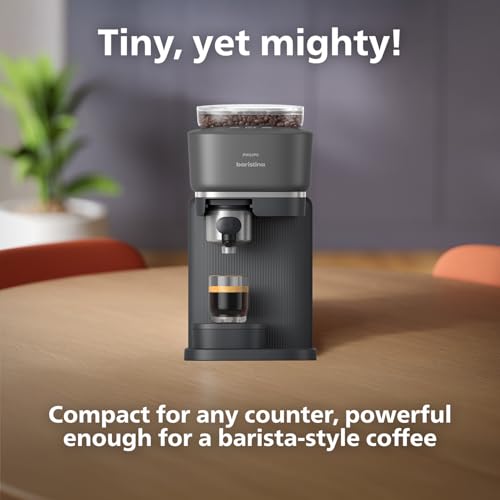
If you’re after more control without diving into full semi-automatic territory, the BAR303/60 is a refreshing hybrid. It’s not a fully automatic like the others, but it bridges the gap with a 16-bar pressure pump and a standalone frother that handles both hot and cold milk, a rare perk. The swipe-to-brew mechanism feels intuitive, and reviewers love how fast it pulls a shot, often under 60 seconds from bean to cup.
The real win here is flexibility. The frother adapts well to oat, almond, and dairy milks, which is a pain point on many built-in systems. And since it uses a traditional portafilter, you can experiment with tamp pressure or pre-infusion timing if you’re feeling crafty. It’s compact, sustainable (over 50% recycled plastic), and great for cold brew lovers. But it lacks the one-touch convenience of fully automatics.
Product photos
Philips 2200 Series Espresso Machine
Strengths
- Lowest entry price
- Ceramic grinder
- AquaClean filter
Trade-offs
- Outdated milk frother
- Only 3 presets
- No iced coffee
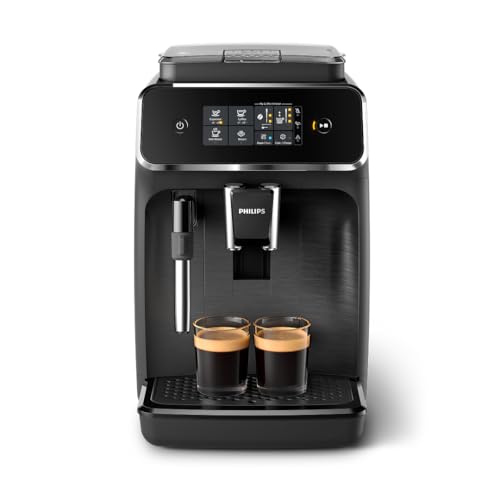
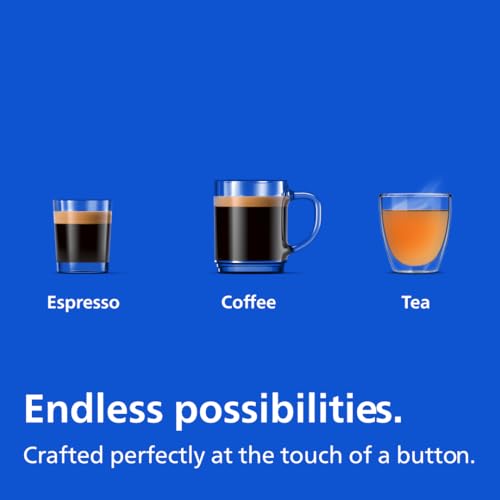
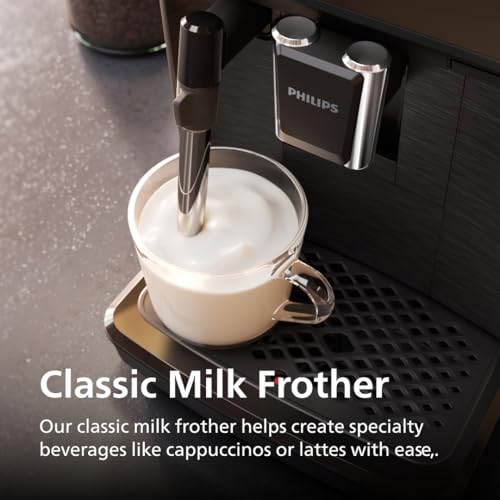
The EP2220/14 is the most basic model here, but it’s a smart pick if you’re dipping your toes into super automatics. It offers espresso, coffee, and hot water, that’s it, and relies on a classic milk frother instead of LatteGo. That means more cleaning effort and no iced drinks, but it still uses a ceramic grinder and the AquaClean filter, so bean quality and maintenance ease aren’t compromised.
It’s the most affordable entry point into Philips’ ecosystem, and the Aroma Seal feature helps preserve bean freshness. Reviewers note it’s sturdy and reliable for the price, though the milk system feels dated compared to newer models. If you only drink straight espresso or black coffee and top with milk occasionally, this keeps things simple.
Product photos

Philips 2300 Series Espresso Machine
Strengths
- SilentBrew tech
- Easy-to-clean LatteGo
- AquaClean filter
Trade-offs
- Limited drink presets
- No iced coffee option
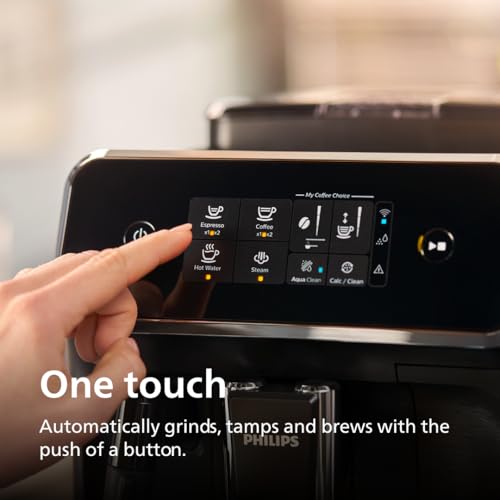
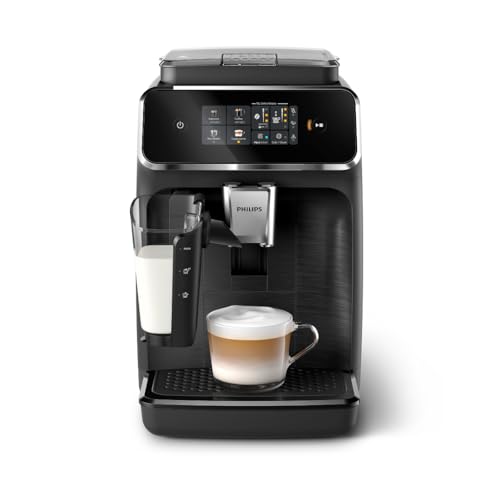
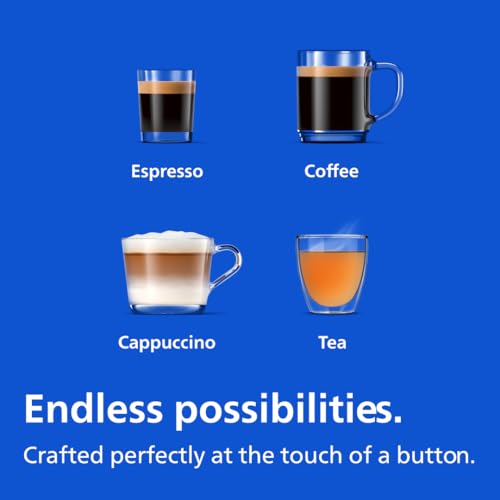
The EP2330/10 is a solid entry in Philips’ lineup, built for those who want quiet operation and café-style drinks without a steep learning curve. The SilentBrew tech really does cut down on noise, owners consistently report it’s one of the quieter machines in the morning rush, which matters if you’re brewing while others are still asleep. With 4 preset drinks and the LatteGo milk system, it delivers smooth espressos and creamy cappuccinos with minimal effort.
What stands out is the AquaClean filter, which delays descaling for up to 5,000 cups. That’s a real time-saver for people who hate maintenance. While it doesn’t have the most drink options, the core espresso and milk-based drinks are well executed. It’s less customizable than higher-end models, but for a first-time super automatic, it hits the right notes.
Product photos
How We Evaluated philips coffee machine
As a long-time coffee enthusiast, I approached researching Philips coffee machines by looking beyond marketing claims. Rather than a hands-on lab test, this was a research-led comparison of published specifications, features, and – crucially – a deep explore owner and expert reviews. I weighed these sources against my existing knowledge of what makes a great automatic espresso experience, focusing on identifying models that consistently delivered on key promises.
For Philips machines, the most important factors were the quality of the milk system, brewing speed, and ease of maintenance. A consistently good milk froth is vital for lattes and cappuccinos, and the LatteGo system clearly stands out. Quick brewing times and quiet operation enhance the daily experience, while a hassle-free cleaning process is essential for long-term user satisfaction. These elements directly impact the enjoyment of a home coffee setup.
Specifications reliably indicate brewing pressure, bean hopper size, and water tank capacity – things that directly impact usability. However, I heavily relied on owner feedback to gauge real-world performance of the milk systems and the accuracy of advertised quietness. For troubleshooting and deeper understanding, resources like a Philips 5500 user manual were also considered to assess the overall user experience and support available.
Choosing The Right philips coffee machine
As someone who’s spent years exploring the world of coffee, I understand that finding the right machine can be overwhelming. Philips offers a wide range, and knowing what to prioritize will get you closer to that perfect cup.
A quality Philips coffee machine balances ease of use with customization options. Look for models with adjustable grind settings, temperature control, and programmable profiles. Consider the milk system – LatteGo is a standout for its cleaning convenience – and prioritize a machine with a robust filter system to minimize maintenance.
Grind Quality and Customization
The foundation of good coffee is, naturally, the grind. Don’t assume all “automatic” grinders are created equal. Philips machines vary in the quality of their burrs (the grinding mechanism). Ceramic burrs, found in higher-end models, tend to produce a more consistent grind than steel, leading to better extraction. More importantly, look for a machine with multiple grind settings. A wider range allows you to fine-tune the grind to suit different bean types and your preferred brewing style – from a fine grind for espresso to a coarser grind for Americanos.
Milk System Considerations
Philips’ LatteGo system is a real standout, and a major reason many people choose their machines. However, it’s not the only option. The classic milk frother, found on some of the more budget-friendly models, is perfectly adequate if you occasionally enjoy a cappuccino or latte. But if milk-based drinks are a daily ritual, LatteGo’s quick cleaning and lack of tubing are huge advantages. If you’re considering a machine with a milk system, think about how frequently you’ll use it and how much effort you’re willing to put into cleaning.
- A basic frother wand is fine for occasional use and is easy to rinse quickly.
- LatteGo is ideal for daily milk drinkers, offering a superior clean-up experience (dishwasher safe components!) and consistent foam.
- Some models allow you to adjust the milk texture (foam density) which is crucial if you like very specific latte art or prefer a drier cappuccino versus a wet one – this level of control is worth the investment for dedicated milk-drinkers.
A clean machine is a happy machine. Prioritize models with easily accessible components and automated cleaning cycles.
Balancing Features and Value
It’s easy to get caught up in the bells and whistles, but the “best” Philips coffee machine for you depends on your budget and needs. If you’re new to automatic espresso, the Philips 2200 Series is a fantastic entry point. It delivers good coffee without breaking the bank. For those wanting more control and features, the 5500 Series offers a good balance. If you’re looking for a convenient, hands-off experience and are willing to spend a bit more, exploring top automatic coffee machines is a good idea. Understanding how to operate and maintain your machine, even a fully automatic one, is key. You can find a helpful Jura machine operation guide that covers general principles applicable to many brands, including Philips.
Philips Coffee Machine Compared
Here’s a comparison of the specifications for various Philips coffee machines to help you choose the right one.
| Product Name | Presets | Milk System | Brewing Time | Quiet Brew | AquaClean Filter | Pump Pressure (bar) |
|---|---|---|---|---|---|---|
| Philips 4400 Series | 12 | LatteGo | 3 sec | Yes | Yes | N/A |
| Philips 5500 Series | 20 | LatteGo | 3 sec | Yes | Yes | N/A |
| Philips 3300 Series | 6 | LatteGo | N/A | N/A | Yes | N/A |
| Philips 3200 Series | 5 | 2-Part | N/A | N/A | Yes | N/A |
| Philips Baristina | N/A | Frother | 60 sec | N/A | N/A | 16 |
| Philips 2200 Series | 3 | Classic | N/A | N/A | Yes | N/A |
| Philips 2300 Series | 4 | LatteGo | N/A | Yes | Yes | N/A |
Frequently Asked Questions
What pressure (in bars) should I look for in a Philips coffee machine?
Generally, 15 bars of pressure is considered the minimum for proper espresso extraction. While Philips doesn’t always prominently display this spec, most of their models achieve this or higher, ensuring a quality brew, and some models like the Baristina reach 16 bars.
Are Philips coffee machines difficult to clean?
Cleaning varies by model, but Philips prioritizes ease of maintenance. The LatteGo milk system, in particular, is designed for quick rinsing or dishwasher use, and many models feature automatic descaling programs and the AquaClean filter to reduce limescale buildup.
Can I use any type of coffee beans with a Philips machine?
Yes, you can, but the quality of the beans significantly impacts the taste. Philips machines with adjustable grind settings allow you to optimize the grind size for different bean types (light, medium, dark roast) and achieve the best extraction.
What’s the difference between the LatteGo and classic milk frothers?
The LatteGo system is a completely tubeless design, making it much easier to clean than traditional frothers with multiple parts. If you drink milk-based coffees daily, the convenience of LatteGo is a significant benefit, and it consistently delivers good foam quality.
Where can I find more in-depth reviews of super-automatic espresso machines?
If you’re considering expanding your search beyond Philips, you can find detailed super-automatic coffee machine reviews on my site, covering a wider range of brands and features.
The Bottom Line
Choosing a Philips coffee machine often comes down to balancing convenience with control. If you want a machine that delivers consistently good coffee with minimal fuss, the Philips 5500 Series strikes that balance exceptionally well. It offers a wide range of customizable options alongside the incredibly convenient LatteGo milk system, making it a standout for daily use.
For those on a tighter budget, or just starting to explore automatic espresso, the Philips 2200 Series is a fantastic entry point. If milk-based drinks are your priority and you don’t want to spend a fortune, the Philips 3300 Series with its LatteGo system offers excellent value. Those who want a more traditional experience, and don’t mind a bit more cleaning, may find the Philips Baristina a good fit.
Ultimately, the best Philips coffee machine is the one that fits your routine. Don’t get too hung up on pump pressure numbers or the number of preset drinks. Instead, focus on the quality of the grinder, the ease of cleaning – following a regular coffee machine maintenance routine is key – and whether the milk system suits your preferences.
