
Coffee After Gallbladder Removal | What Broke After 3 Days
You can drink coffee after gallbladder removal, but reintroduce it after one week with surgeon approval. Start with a few sips of a low-acid, low-caffeine option like cold brew. The key is observing your body’s response for several hours before increasing the amount to avoid bile stimulation and digestive irritation.
Most guides tell you to go slow. They miss the part where “slow” has a real timeline and “listen to your body” needs a concrete checklist. You can follow all the generic advice and still end up with a system that rebels against your morning ritual.
This guide walks through the physiology, lays out a day-by-day reintroduction plan grounded in medical sources, and gives you specific ways to modify your coffee to keep it in your life.
Key Takeaways
- Wait at least 7-10 days post-surgery and get your surgeon’s explicit okay before your first sip.
- Caffeine stimulates colonic motility and bile release, without a gallbladder to regulate it, that bile can cause diarrhea or cramping.
- Start with a half-cup of cold brew or a light-roast, black coffee and take only two small sips on your first attempt.
- High-fat creamers and sugary additives are bigger triggers than the coffee itself for many people post-cholecystectomy.
- If coffee doesn’t work, low-caffeine black tea or green tea offer a gentler alternative with L-theanine to smooth the stimulant effect.
Why Coffee is a Post-Surgery Wild Card
Coffee affects digestion in two direct ways that matter after a cholecystectomy. First, caffeine stimulates the colon. It increases motility, which can speed things along a little too enthusiastically for a system finding its new normal. Second, and this is the part most articles gloss over, coffee, even decaf, stimulates the release of cholecystokinin. This hormone tells your liver to produce bile and your gallbladder to squeeze it out.
You don’t have a gallbladder anymore. That bile now drips continuously from your liver into your small intestine. A strong trigger like coffee can cause a larger, less controlled release of bile salts. For some people, that excess bile irritates the intestinal lining, leading to what’s clinically called bile acid diarrhea. It’s a known component of post-cholecystectomy syndrome (PCS), which up to 40% of patients experience to some degree.
The continuous, unregulated flow of bile into the intestine after gallbladder removal is called bile acid malabsorption. When a stimulant like coffee triggers a surge, it can overwhelm the intestine’s ability to reabsorb the salts, leading to urgency and watery stools.
This isn’t about willpower or “toughing it out.” It’s a mechanical change. Your body lost a storage and regulation organ. The Cleveland Clinic post-cholecystectomy diet guide emphasizes a low-fat diet initially because fat is the other major bile trigger. Coffee sits in a similar category, a non-fat trigger that still demands bile for digestion.
TL;DR: Coffee stimulates bile release and colon contractions. Without a gallbladder to regulate the flow, that can mean cramping or diarrhea for some people.
How to Reintroduce Coffee After Surgery
You need a protocol, not just hope. The following table outlines a cautious, observant approach. This isn’t a race.
| Post-Op Day | Action | What to Watch For |
|---|---|---|
| 1-6 | No caffeine. Focus on hydration and simple foods. | N/A |
| 7-10 | Seek surgeon clearance. If approved, plan your test. | Official medical go-ahead is required. |
| Test Day | Sip test: 2-3 sips of weak, low-acid coffee (black). | Cramping, urgent diarrhea within 2-4 hours. |
| Day After Test (if OK) | Half-cup trial: Increase to ¼ cup of the same coffee. | Same symptoms, plus any heartburn or nausea. |
| Following Week (if OK) | Slow scaling: Gradually work up to a full cup over 7 days. | Tolerance level—stop at the maximum comfortable volume. |
The most critical phase is the first test. Choose a day when you’re home and can rest. Brew a cup using a method lower in acidity, like a light roast or, even better, cold brew. Drink two small sips. Then wait.
You’re not waiting for a flavor verdict. You’re waiting for a physical one. Note any gurgling, cramping, or urgent need for the bathroom within the next two to four hours. A normal, scheduled bowel movement is fine. Pain or watery diarrhea is your body saying “not yet.”
Common mistake: Jumping straight to a large mug of your usual dark roast with cream on day eight, this often delivers a double hit of caffeine and fat that can trigger severe cramping and diarrhea, setting your recovery back.
If the sip test goes poorly, wait another full week before trying again. Consider trying a decaffeinated version next time to isolate acidity as the culprit. If it goes well, the next day you can try a quarter cup. The goal is to find your new ceiling, not to immediately return to your old three-cup habit.
The First Sip: A Personal Timeline
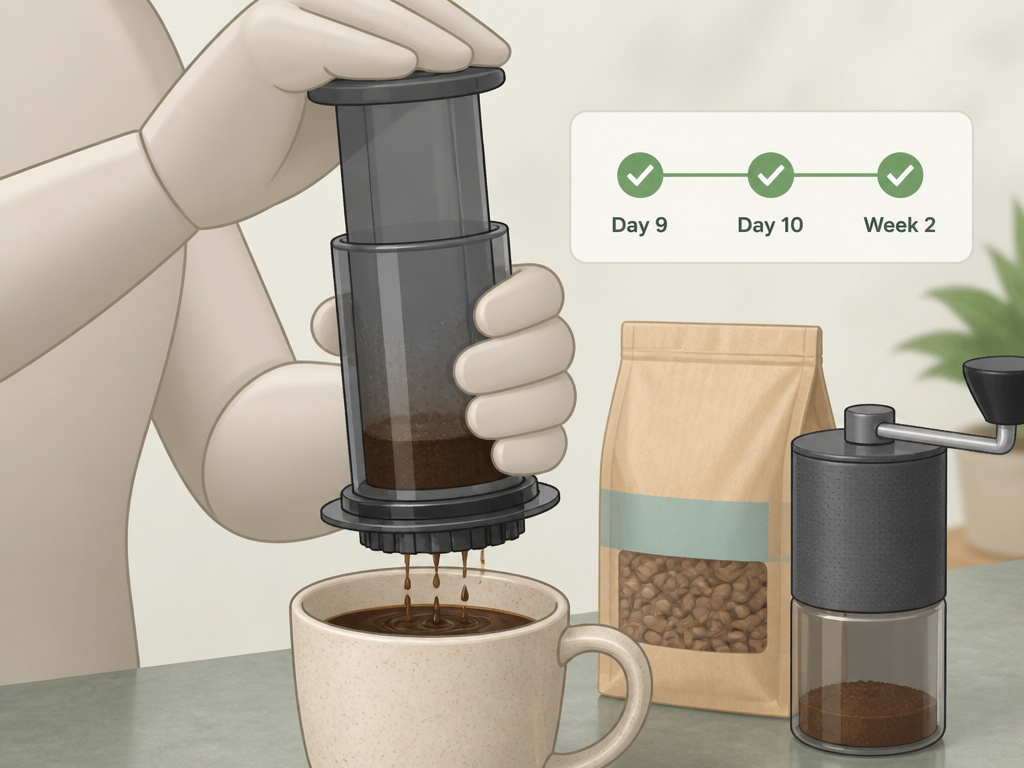
I waited nine days. My surgeon cleared me at the one-week checkup but told me to keep it minimal. The first morning I felt normal, I ground a light roast Ethiopian, usually my favorite. I made a half-cup in the AeroPress, which produces a lower-acid brew. I took three small sips, black.
Nothing happened for an hour. Then a familiar, low gurgle. Not pain, just activity. By hour three, I had a single, normal bathroom visit. No urgency, no cramping. I marked that as a win.
The next day, I drank the full half-cup. Same result. By the end of the second week, I was back to one full cup a day. My limit, I discovered, was two. The third cup, regardless of the time of day, would reliably cause an urgent, loose stool about 45 minutes later. That’s my permanent line now.
Your timeline will be your own. The guy in the YouTube transcript drank a full black coffee two weeks post-op and was fine, just noting a normal bathroom break. The ScienceInsights article on coffee and gallstones details how coffee’s compounds can affect biliary function, which is why responses vary so wildly. The only way to know is to test conservatively.
How to Adapt Your Coffee for a Sensitive System
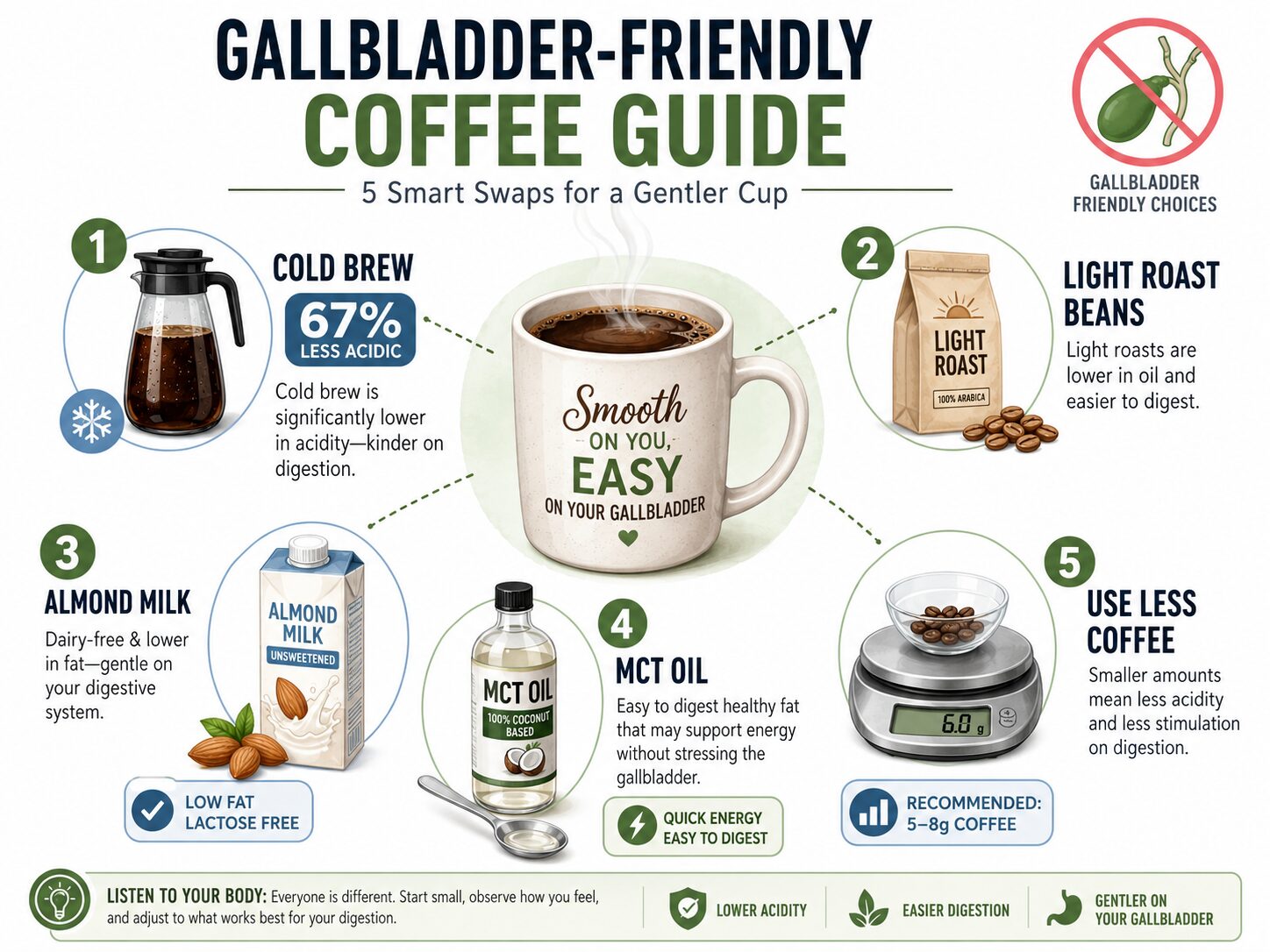
If straight black coffee triggers symptoms, you don’t have to abandon it. You can modify almost every variable.
Choose a gentler brew method. Cold brew is 67% less acidic than hot-brewed coffee. Methods like the AeroPress or Clever Dripper with a paper filter also reduce oils and acids compared to a French press.
Rethink your additives. The fat in heavy cream or half-and-half is a potent bile trigger. Switch to a low-fat or fat-free milk. Almond milk or oat milk are popular, gut-friendly choices. If you need fat for satiety, consider a small amount of MCT oil coffee; it’s metabolized differently than long-chain fats and may be easier on your system.
Manage sweetness and flavor. Sugary syrups can ferment in the gut and cause gas. For sweetness, consider a tiny amount of brown sugar sweetener or a non-fermentable sweetener like allulose. A pinch of salt in coffee can reduce perceived bitterness without adding calories or digestive stress.
Dose carefully. Use a scale. If 18 grams of beans gives you trouble, try 15 grams. A slightly weaker cup is better than no cup.
| Modification | Why It Works Post-Cholecystectomy | Best For |
|---|---|---|
| Cold Brew | Up to 67% lower acidity; smoother, less bitter. | Anyone with acid reflux or a sensitive stomach. |
| Light Roast Beans | Generally lower in bitter compounds formed during longer, darker roasts. | Those finding dark roast too harsh. |
| Low-Fat Milk (Almond, Skim) | Avoids triggering a large bile release; easier to digest. | People who miss creaminess but get cramps with dairy. |
| MCT Oil or Coconut Oil in Coffee | Medium-chain triglycerides are absorbed directly and may not require bile salts. | Those needing sustained energy without digestive upset. |
| Reduced Serving Size | Lowers the total load of caffeine and acids on your system. | Establishing a new, comfortable baseline. |
What If Coffee Just Doesn’t Work?
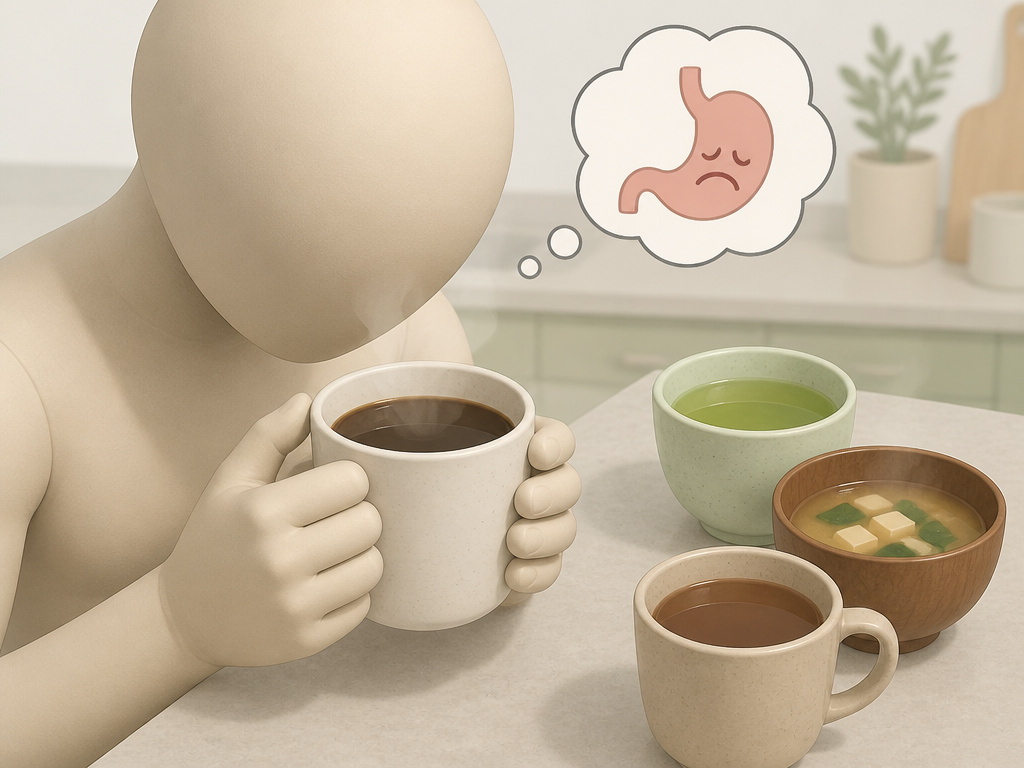
For some people, coffee remains a trigger no matter the preparation. If after several cautious attempts you’re still experiencing coffee causing loose stools or pain, it’s time to consider alternatives.
Black tea contains about half the caffeine of coffee and is less acidic. The presence of L-theanine can also smooth out the caffeine jitters, providing a more relaxed alertness. Green tea has even less caffeine and is packed with antioxidants, making it a gentler stimulant choice.
For a hot, savory drink, bone broth or miso soup can satisfy the ritual without any stimulants. If you crave the roasted flavor, roasted grain beverages like barley tea or chicory root “coffee” offer a caffeine-free option.
I won’t recommend pushing through discomfort to keep drinking coffee. The gut-brain axis is real, and training your body to dread your morning ritual defeats the purpose. Sometimes the better move is to step away for a month, let everything fully heal, and then retest from zero.
Frequently Asked Questions
How long after gallbladder surgery can I drink coffee?
Most surgeons recommend waiting at least 7-10 days, until after your first post-operative follow-up appointment. You must get their explicit clearance, as your personal recovery speed and any complications will dictate the safe timeline.
Can decaf coffee cause problems after gallbladder removal?
Yes, it can. While the caffeine is removed, other compounds in coffee that stimulate bile production and gastric acid secretion remain. If your primary trigger is acidity or these other compounds, decaf might still cause issues.
What can I put in my coffee after gallbladder removal?
Opt for low-fat or non-dairy milks like almond milk, oat milk, or skim milk. Avoid heavy cream and high-fat butter. For sweeteners, simple sugars or digestible sweetener options like brown sugar in small amounts are better than artificial sweeteners, which can cause gas and bloating in some people.
Why does coffee make me poop after gallbladder surgery?
Caffeine stimulates colonic contractions, speeding up transit. Furthermore, coffee triggers the release of bile. Without a gallbladder to store and regulate it, this bile can flow more readily into the colon, where it acts as an irritant and draws in water, leading to urgency and loose stools.
Is cold brew better after gallbladder removal?
Generally, yes. The cold brewing process extracts fewer acidic compounds and bitter oils, resulting in a smoother, less irritating drink. Its naturally lower acidity of coffee makes it a smarter first test than hot-brewed coffee.
Are there any benefits to drinking coffee after gallbladder removal?
For those who tolerate it, coffee provides normal benefits like improved alertness and concentration. Some studies suggest coffee consumption is associated with a lower risk of certain liver conditions, which may be relevant as your liver adapts to continuously producing bile.
Before You Go
Coffee after gallbladder removal is a negotiation, not a guarantee. Start late, start small, and start simple, black, low-acid, and in sips. Your body’s response is the only manual that matters. Track it.
Fat is a more common trigger than caffeine for many. Before you blame the coffee, look at what you’re putting in it. A switch to almond milk in coffee or paying attention to the calorie content in coffee from additives can make the difference between a comfortable cup and a regrettable one.
If coffee remains off the table, green tea benefits from L-theanine and lower caffeine offer a gentle alternative. The goal is to find a morning ritual that works with your new physiology, not against it.
