
7 Best Antique Coffee Grinders of 2026
The Cast Iron Manual Burr Grinder stands out as the best overall antique coffee grinder, combining rugged durability with reliable grind adjustment. For those on a tighter budget, the Retro Wooden Coffee Bean Grinder offers solid performance and classic looks. If you value versatility for different brews, the Beech Wood Handcrafted Coffee Grinder is a strong pick.
Hunting for a genuine antique coffee grinder means balancing charm with function, many look beautiful but deliver inconsistent grinds or wobbly mechanics. As the founder of Bean Thusiast, I’ve researched the market to find models that honor vintage craftsmanship without sacrificing brewing quality.
This guide focuses on real-world usability, drawing from specs and owner experiences to highlight grinders that deliver consistent results, durable builds, and authentic appeal. We looked at burr type, materials, adjustability, and practical design to narrow down the best options worth your time.
Top 7 Antique Coffee Grinder in the Market
The Best Antique Coffee Grinder, Reviewed
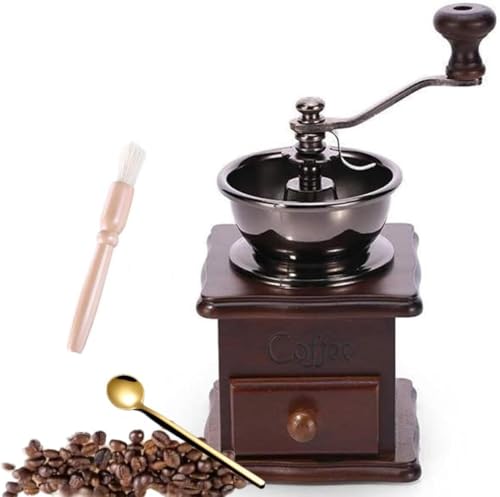
Eitonbu Ceramic Burr Coffee Grinder
Strengths
- Compact and space-saving
- Ceramic burr consistency
- Includes cleaning brush
Trade-offs
- Small hopper capacity
- Adjustment dial lacks markings
- Drawer can be tight
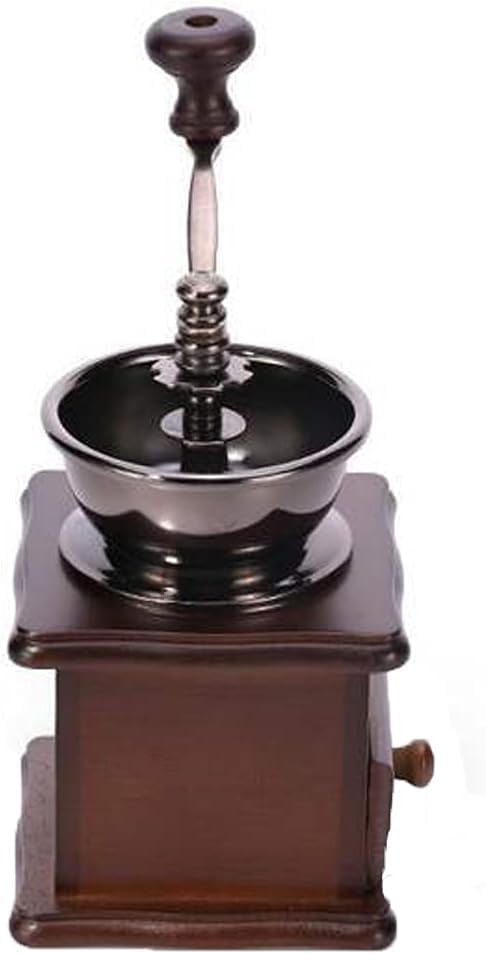
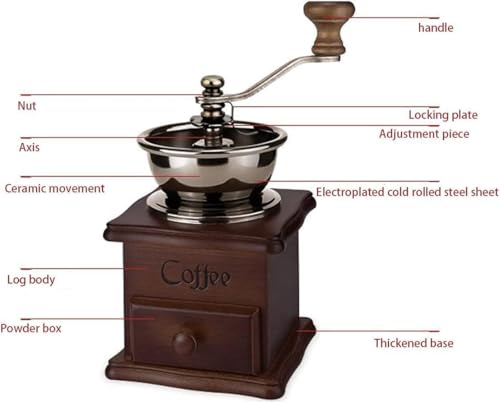
If you’re after a balance of form, function, and footprint, this one hits the sweet spot. The dark brown beechwood body looks rich without screaming ‘decor piece,’ and the ceramic burr delivers a surprisingly uniform grind, owners routinely compare it to models twice the price. At just over 7 inches tall, it’s compact enough for tight spaces but still holds a decent amount of beans.
The hand crank is smooth, and the included cleaning brush is a small but appreciated touch. Adjustability is simple: turn the gear to fine-tune your grind. It won’t match a high-end electric burr grinder, but for hand-cranked, it’s impressively repeatable.
I’d pick this over the flashier IMAVO or budget B0BQ24KCKK models because it takes the middle road and executes well, no gimmicks, just solid grinding.
Product photos
Beech Wood Handcrafted Coffee Grinder
Strengths
- Uniform grind output
- Includes dust cover
- Beechwood durability
Trade-offs
- No grind markings
- Basic crank design
- Drawer release stiff
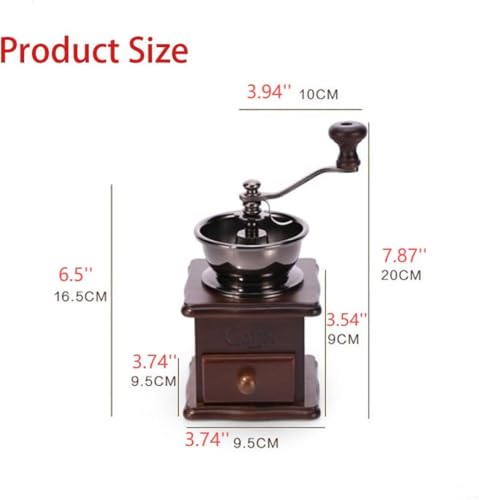
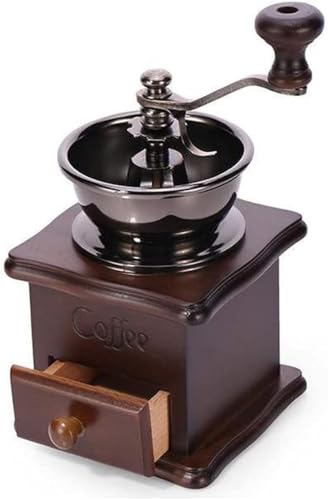
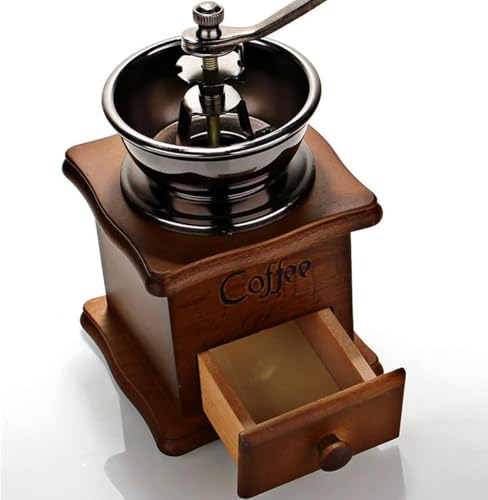
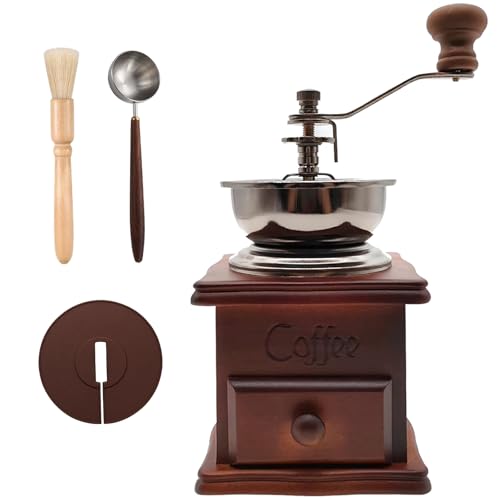
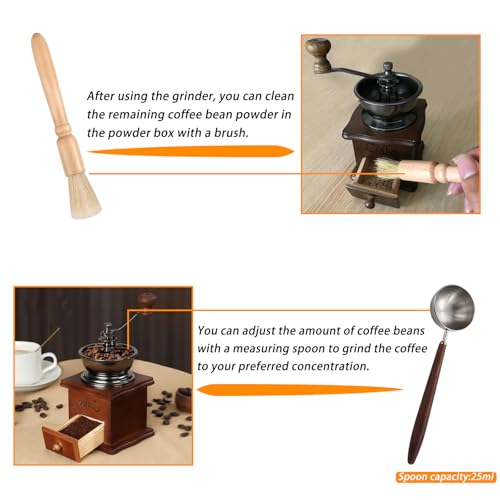
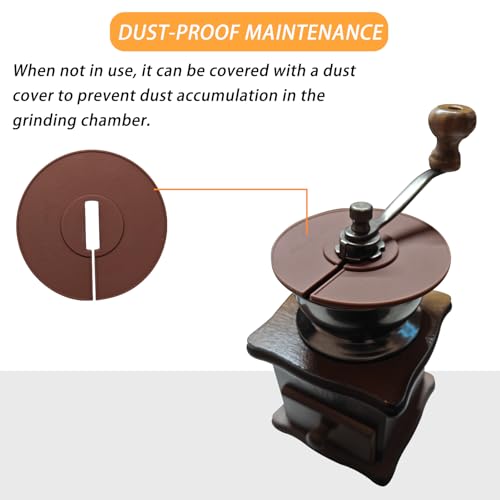
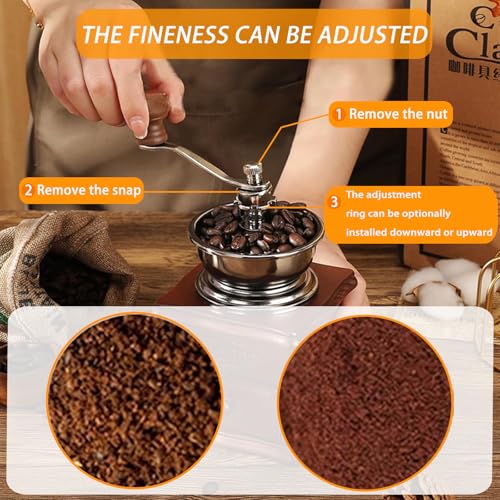
What makes this one stand out is the focus on uniformity. The beechwood body houses a ceramic grinding mechanism that owners say produces a remarkably even grind, fewer fines, fewer boulders. That’s critical if you’re brewing with a moka pot or French press and want balanced extraction. The included dust cover is a thoughtful addition, keeping it clean when not in use.
It’s not the most adjustable in the lineup, but the fineness control is reliable within its range. The measuring spoon and cleaning brush add utility, and the drawer slides out cleanly. It’s less about show, more about function done quietly and well.
Product photos

IMAVO Antique Design Coffee Grinder

Strengths
- Vintage pine wood design
- Ceramic grinding core
- No electricity needed
Trade-offs
- Inconsistent fine grind
- Adjustment mechanism imprecise
- Lightweight build
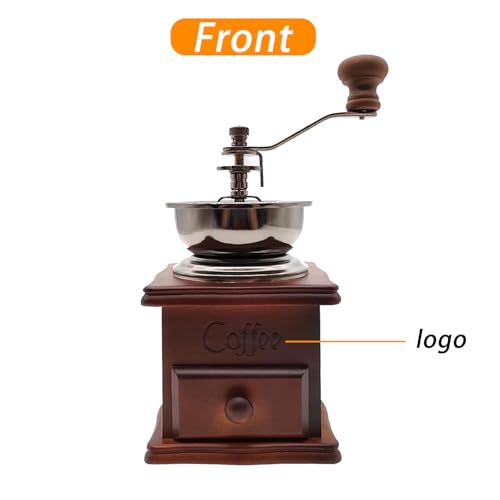
This grinder leans hard into the antique look, and on that front, it delivers. The pine wood body and cast iron crank give it that old-world charm that’ll catch eyes on a shelf or countertop. Owners consistently report it feels solid in hand, and the ceramic core is a smart touch, no metallic taste, and it keeps heat from muddying the bean’s profile.
Still, while it looks the part, the grind consistency isn’t quite at the level of more precision-focused models. It adjusts via a polygon knob, which sounds precise but in practice, reviewers note it can be a bit hit-or-miss, especially if you’re chasing a fine espresso grind. It’s more about the ritual than the results.
Product photos
Wooden Manual Coffee Grinder

Strengths
- Affordable price point
- Antique pine wood look
- No electricity required
Trade-offs
- Less durable construction
- Grind inconsistency
- Loose fit over time
This is the budget pick, no question. It mirrors the IMAVO design, same pine wood, same ceramic core, same cast iron crank, but comes in at a lower price point. For the look and basic function, it’s a solid value. You can grind enough for a couple of cups, and the polygon adjustor lets you shift between coarse and fine, though don’t expect lab-level precision.
Owners say it works fine for occasional use, especially if you’re not grinding daily. But the build feels lighter, and long-term durability gets mixed feedback. It’s a ‘you get what you pay for’ situation, fine for light use, but don’t expect it to last years of daily cranking.
Product photos
Retro Wooden Coffee Bean Grinder
Strengths
- Complete with accessories
- Strong gift appeal
- Retro aesthetic
Trade-offs
- Basic grind control
- Plastic parts inside
- Adjustment lacks precision
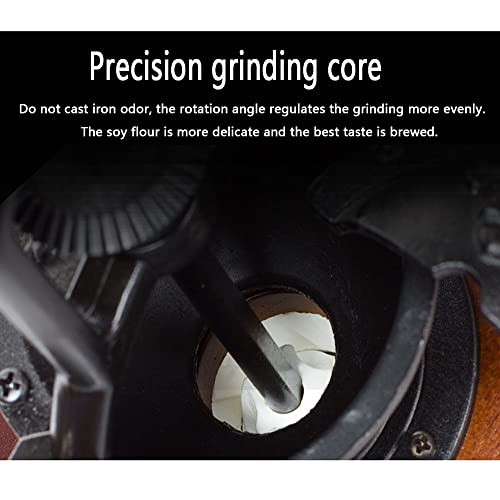
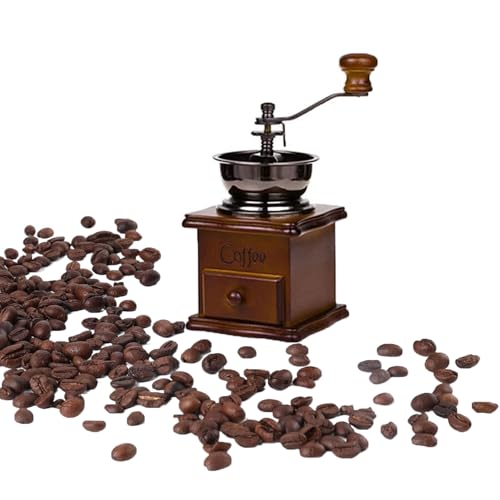
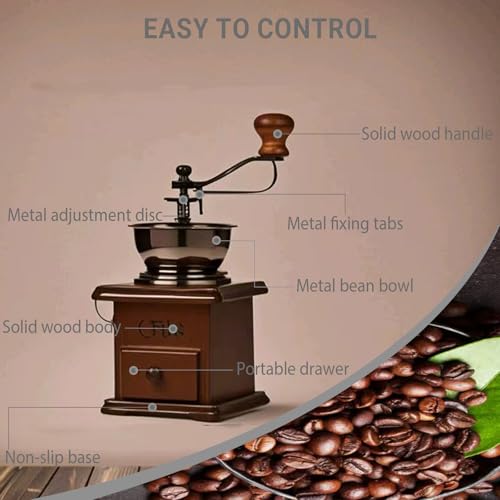
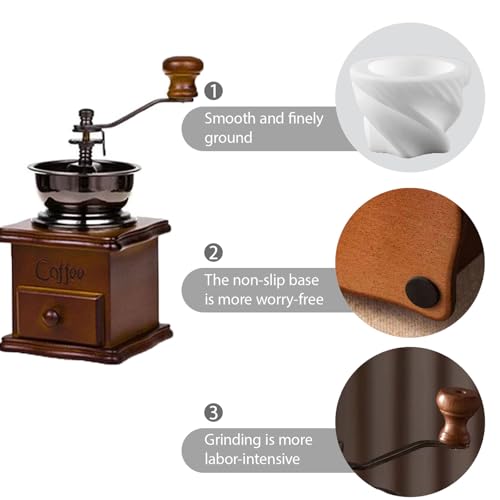
Packaged as a gift, sold as a grinder, this one nails the presentation. The pine wood body, retro crank, and included extras like the dust cover and measuring spoon make it feel complete right out of the box. It’s marketed as both functional and decorative, and owners agree: it works well enough for casual brewing and looks great on a shelf.
The ceramic conical burr is a plus, and the polygon adjuster lets you dial in coarseness, though not as precisely as higher-end options. Where it really shines is in gifting, thoughtful, nostalgic, and usable. If you’re buying for someone who loves coffee but isn’t obsessive about grind science, this is the pick.
Product photos
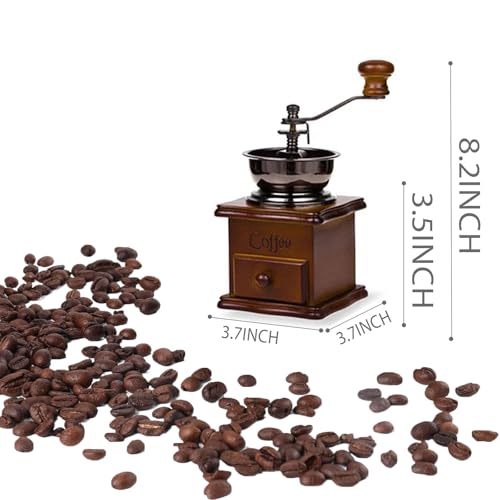

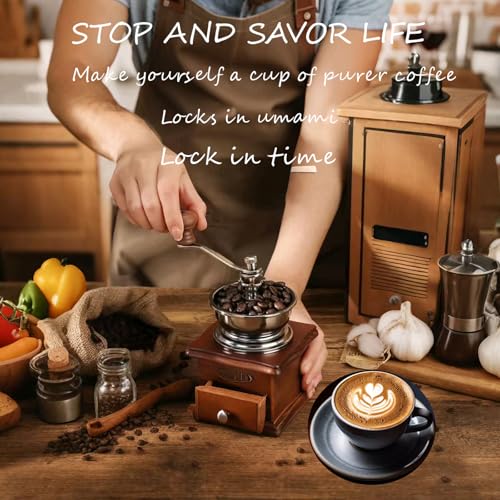
Cast Iron Wheel Coffee Grinder
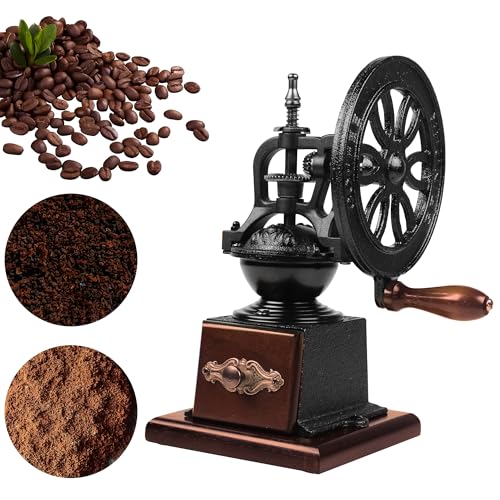
Strengths
- Striking vintage appearance
- Carbon steel core
- Solid cast iron wheel
Trade-offs
- Inconsistent fine grind
- Heavy hand crank
- Bulky design
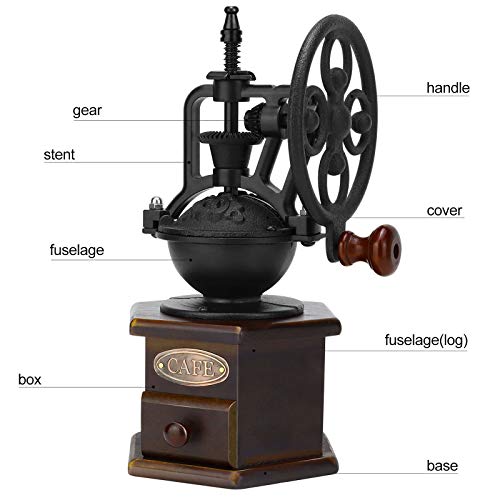
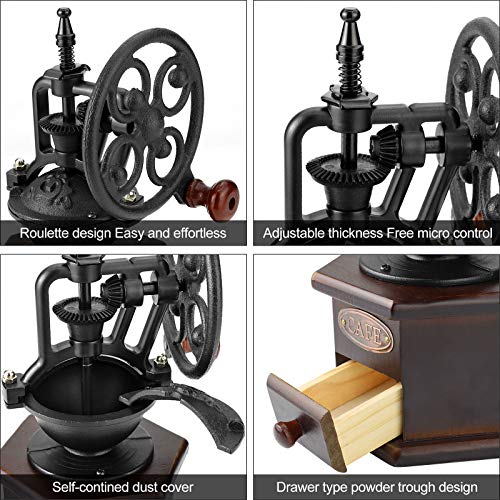
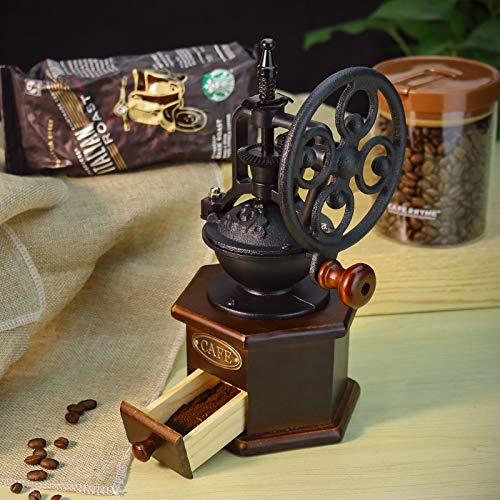
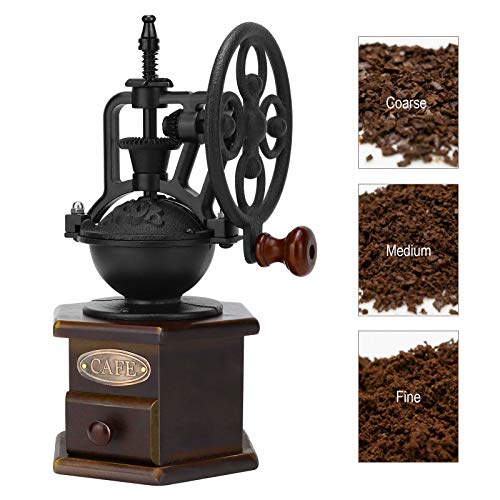
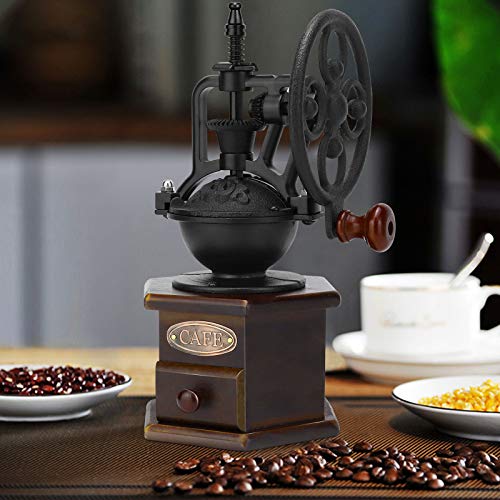
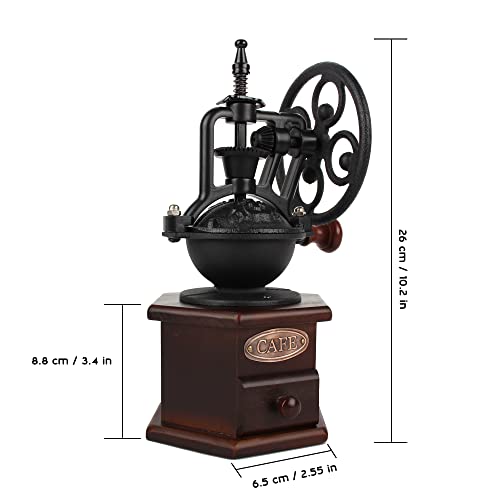
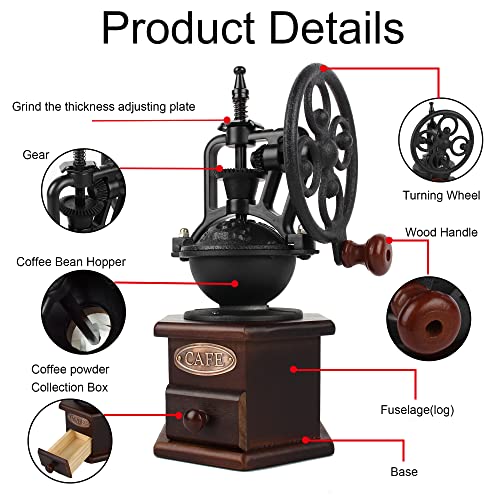
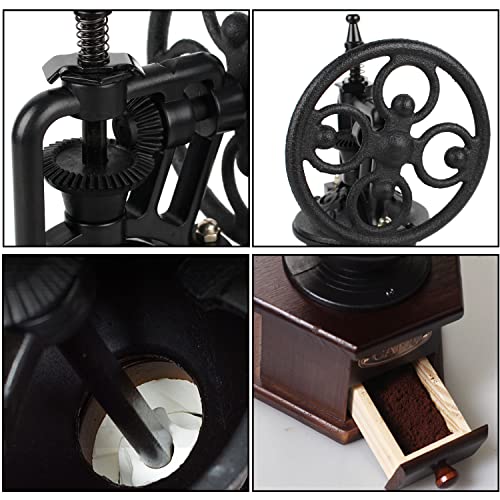
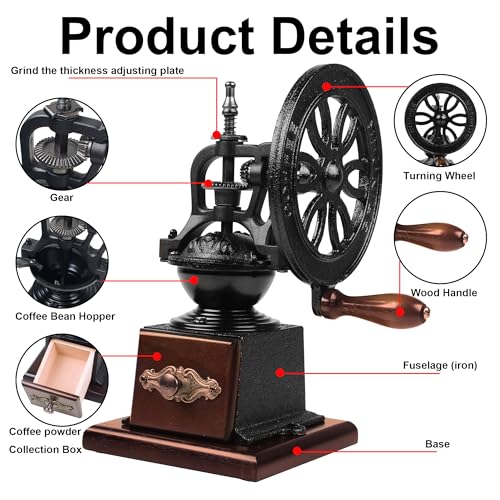
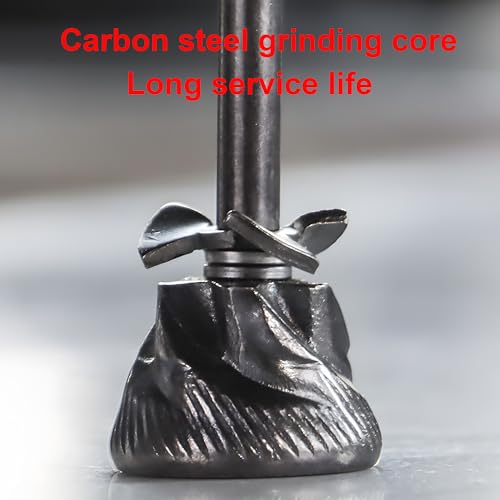
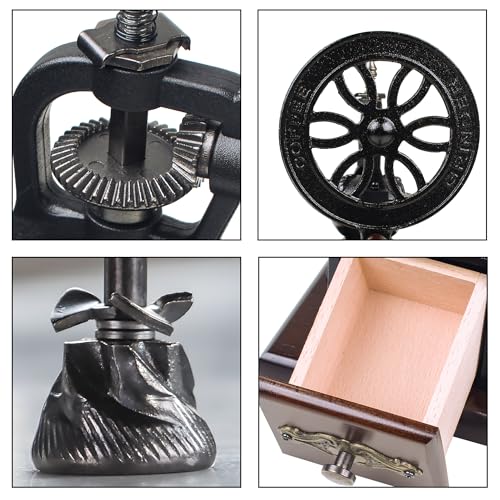
This one feels more like a museum piece than a daily driver. The cast iron wheel and black-and-brown finish scream 19th-century apothecary, and at over 10 inches wide, it makes a statement. The carbon steel grinding core is tougher than ceramic, which helps with longevity, but owners note the grind can be uneven, especially on finer settings.
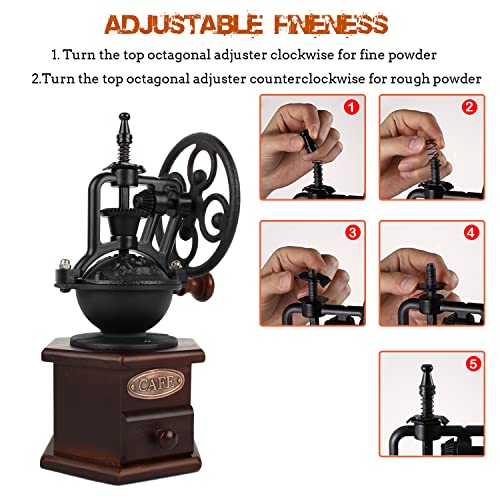
It’s not the easiest to adjust, the thickness plate works, but it’s finicky, and the crank requires more effort than others. But if you’re after something that doubles as a conversation starter, this wins. I’ve seen similar models in coffee shops purely for display.
Product photos


Cast Iron Manual Burr Grinder
Strengths
- Heavy-duty cast iron build
- Consistent burr grind
- Made in Italy heritage
Trade-offs
- Very heavy
- Copper finish shows wear
- Large footprint
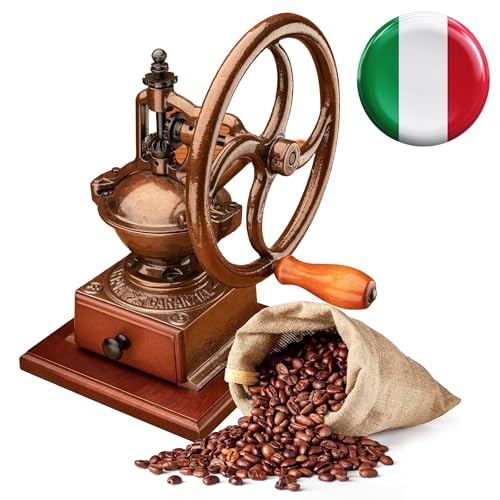
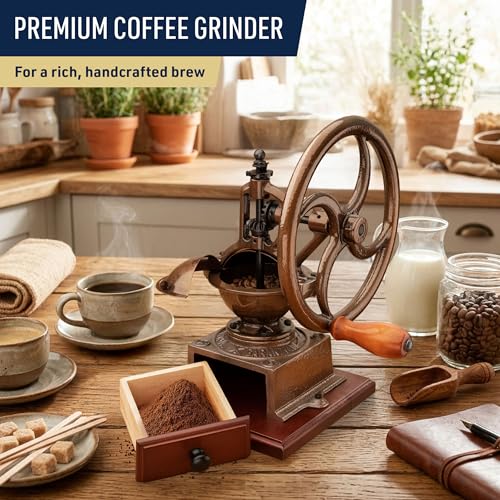
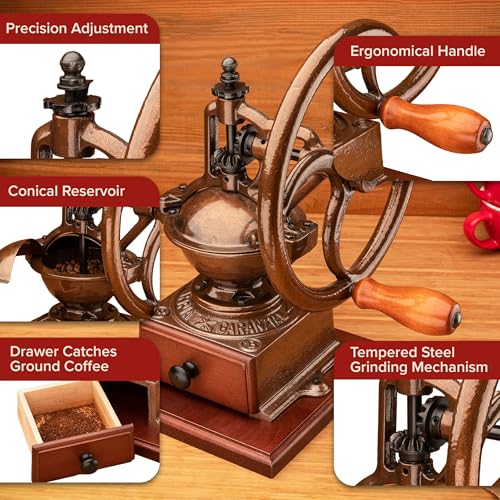
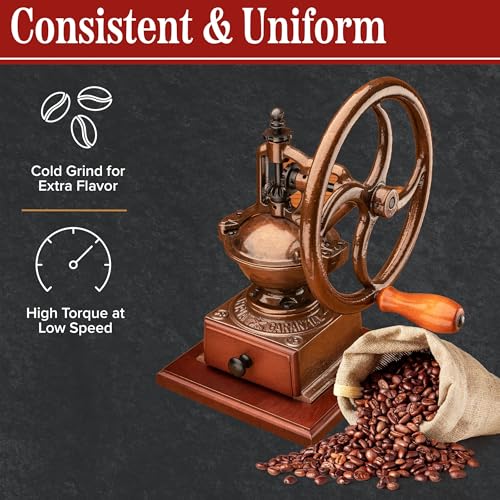
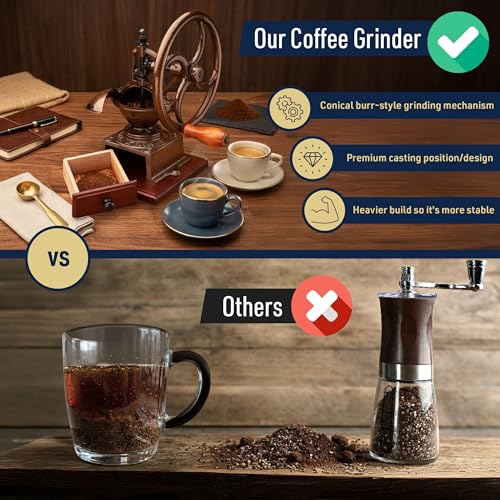
This Italian-made grinder stands out with its heft and heritage. At over 14 pounds, it’s built like a countertop anchor, and the beechwood and cast iron combo feels both timeless and tough. The conical burr system uses tempered steel, not ceramic, which gives it a sharper bite and better durability over time. On paper, that means less blade wear and more consistent particle size across grinds.
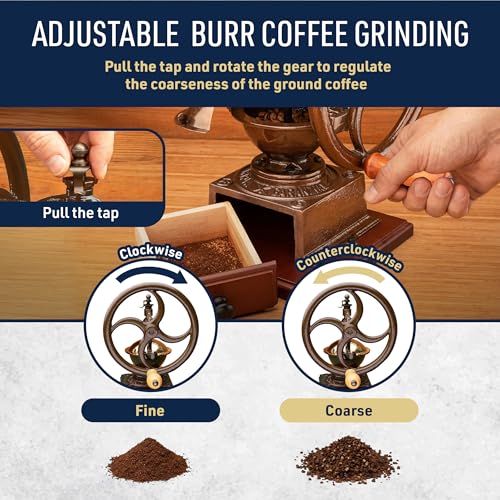
Reviewers praise its smooth crank and reliable adjustability, clockwise for finer, counterclockwise for coarser, making it adaptable for everything from moka pot to drip. It’s not the prettiest of the bunch, but if you value performance over pure looks, this one earns its place.
Product photos
How We Chose These antique coffee grinder
As the founder of Bean Thusiast, I approach evaluating coffee equipment with a focus on how well it supports a flavorful, enjoyable brewing experience. Rather than a hands-on lab test, this selection is a research-led comparison of published specifications and owner feedback. I compared features like grind adjustment mechanisms, build materials, and hopper/drawer capacity across numerous models. Weighing this against owner reviews and expert opinions allowed me to rank these grinders based on their suitability for different needs.
For antique-style coffee grinders, consistency of grind and build quality were the most significant factors. A uniform grind is critical for even extraction and a balanced cup, while durable construction ensures longevity – important for a piece intended to evoke a sense of history. Aesthetic appeal also played a role, as many buyers prioritize the visual charm of these grinders.
Specifications reliably indicate build materials and grind adjustment ranges. However, I placed greater weight on owner feedback regarding ease of use, grind consistency in practice, and overall durability. Information on long-term performance and potential issues is best gleaned from those who’ve incorporated these grinders into their daily routines. If you’re curious about the history of a particular grinder, resources for identifying vintage coffee grinders can be helpful.
How To Choose The antique coffee grinder
Finding the right antique coffee grinder is about more than just aesthetics; it’s about connecting with a slower, more intentional brewing process.
A quality antique coffee grinder prioritizes consistent burr grinding (typically ceramic), durable construction – often featuring cast iron and solid wood – and a design that balances functionality with the desired vintage aesthetic. Buyers should examine the grinding mechanism, assess the build materials for longevity, and consider how easily the grinder can be adjusted for different brew methods.
Grind Consistency & Burr Type
The core of any good grinder, antique or modern, is its ability to produce a consistent grind. While many antique grinders use burrs, the material matters. Ceramic burrs, like those found in the Eitonbu and Beech Wood models, are generally preferred over steel for their ability to grind without imparting heat, which can affect the coffee’s flavor. However, ceramic can chip, so inspect carefully for cracks. Don’t assume all older grinders have burrs; some used blades, which deliver an uneven grind unsuitable for most brewing methods. If you’re considering a manual grinder, learning about operating manual coffee grinders is a great place to start.
Construction & Materials
Antique coffee grinders were built to last, but age takes its toll. Look for solid wood bases (beechwood is a common, durable choice) and robust metal components. Cast iron, frequently used in the grinding mechanism and sometimes the crank, is excellent, but check for rust. The IMAVO and Cast Iron Wheel models showcase this type of build quality. A wobbly base or a crank that feels flimsy are red flags. While a patina is desirable, structural integrity is paramount.
Aesthetics & Practicality
A significant draw of antique grinders is their visual appeal. The Retro Wooden Coffee Bean Grinder and Cast Iron Wheel Grinder particularly excel here. However, don’t let looks completely overshadow usability.
- A larger hopper capacity (over 100g) is useful if you brew for multiple people.
- An easily accessible grounds collection drawer, like those featured on the Beech Wood and Cast Iron Wheel grinders, simplifies cleanup.
- Adjustability is key. The ability to switch between coarse grinds for French press and finer grinds for espresso is vital, and models like the Cast Iron Manual Burr Grinder offer this flexibility.
A well-maintained antique grinder is a joy to use, but remember: patience is key. Don’t expect the speed of an electric grinder; embrace the ritual of hand-grinding.
If you’re looking for alternatives or want to explore more modern options, checking out our list of top-rated coffee grinders can be a helpful next step.
Antique Coffee Grinder Compared
Here’s a comparison of the specifications for each antique coffee grinder.
| Product Title | Burr Type | Material (Body) | Grind Adjustment | Hopper Capacity | Dimensions (approx.) |
|---|---|---|---|---|---|
| Eitonbu Ceramic Burr Coffee Grinder | Ceramic | Wood | N/A | N/A | 7.5 x 3.3 x 6.3 in |
| Beech Wood Handcrafted Coffee Grinder | Ceramic | Wood | Adjustable | N/A | N/A |
| IMAVO Antique Design Coffee Grinder | Ceramic | Pine Wood | Adjustable | N/A | N/A |
| Wooden Manual Coffee Grinder | Ceramic | Pine Wood | Adjustable | N/A | N/A |
| Retro Wooden Coffee Bean Grinder | Ceramic | Pine Wood | Adjustable | N/A | N/A |
| Cast Iron Wheel Coffee Grinder | Steel | Wood/Cast Iron | Adjustable | N/A | 10.63 x 5.71 in |
| Cast Iron Manual Burr Grinder | Steel | Cast Iron/Beechwood | Adjustable | 125g | 12.2 x 9.06 x 13.78 in |
Frequently Asked Questions
What should I do if my antique grinder is rusty?
First, assess the extent of the rust. Light surface rust can often be removed with a gentle scrub using a vinegar and water solution, followed by thorough drying and oiling with food-safe mineral oil. Deeper rust might require professional restoration to prevent further damage.
Are antique coffee grinders suitable for all brew methods?
Generally, yes, but grind consistency is key. Models with adjustable burrs, like the Cast Iron Manual Burr Grinder, offer the versatility needed for everything from coarse French press to finer drip coffee. However, achieving a truly espresso-fine grind with most antique models can be difficult.
Can I use an antique grinder for flavored coffee beans?
While you can, I advise against it. Oils from flavored beans can build up quickly within the grinder’s mechanism and are difficult to fully remove, potentially affecting the flavor of future batches. Consider dedicating a separate grinder for flavored coffees.
What’s the typical lifespan of a well-maintained antique coffee grinder?
With proper care, a quality antique grinder can last for generations. Durable materials like cast iron and beechwood contribute to longevity, but regular cleaning and oiling are essential. Many owners report using their antique grinders daily for decades with minimal issues.
Where can I find replacement parts for an antique grinder?
Finding exact replacements can be challenging, but not impossible. Online auction sites and vintage parts dealers are good starting points. Alternatively, you might find compatible parts from best manual coffee grinder or explore options from suppliers specializing in vintage kitchen equipment.
The Bottom Line
Choosing an antique coffee grinder is often a balancing act between preserving a piece of history and achieving a consistent grind for a delicious cup. For the best overall combination of functionality and aesthetic appeal, I recommend the Cast Iron Manual Burr Grinder. It offers adjustable grind settings, a decent hopper capacity, and the durable build quality you’d expect from a well-made antique.
If you’re on a tighter budget, the Eitonbu Ceramic Burr Coffee Grinder provides a solid entry point, while those prioritizing visual charm should consider the Retro Wooden Coffee Bean Grinder. Remember, each grinder has its own unique quirks and requires a bit of patience to operate. Proper antique grinder maintenance is key to keeping these beautiful machines running smoothly.
Ultimately, the most important factors aren’t a specific burr type or a large hopper, but a willingness to embrace the slower pace of hand-grinding and a commitment to understanding your grinder’s individual characteristics. A consistent technique and regular cleaning cast iron grinders will yield far better results than chasing the latest specifications.
