
9 Best Manual Coffee Grinders for 2026
The JavaPresse Manual Ceramic Grinder is our top overall pick for its excellent flavor preservation and consistent grind, closely followed by the budget-friendly CEVING 60g Ceramic Burr Grinder, which offers strong performance and high capacity for the price.
Most people shopping for a manual coffee grinder are looking to upgrade from a blade model or start grinding fresh at home without the noise and cost of an electric grinder. The real challenge isn’t just finding something that works, it’s finding one that delivers a consistent grind, lasts, and fits your brewing style without turning your wrist sore.
This guide cuts through the noise by focusing on what actually matters: burr quality, grind consistency, and real-world usability. I looked at specs, owner feedback, and expert insights to find grinders that perform well across different brew methods and budgets.
Top 9 Manual Coffee Grinder in the Market
The Best Manual Coffee Grinder, Reviewed
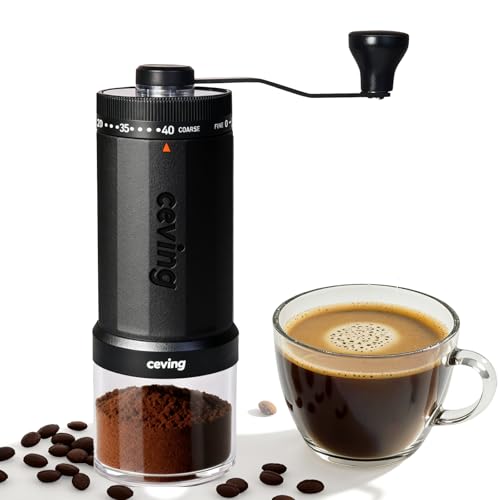
CEVING 60g Ceramic Burr Grinder
Strengths
- 60g capacity
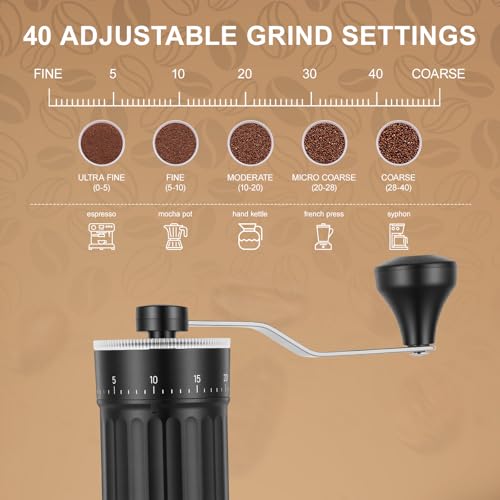
- 40 external settings
- Ceramic burr
- Lightweight
- Lab-graded precision
Trade-offs
- Ceramic less durable than steel
- Potential static with dry beans
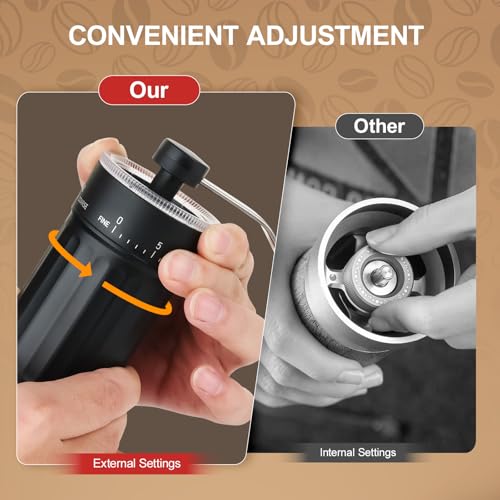
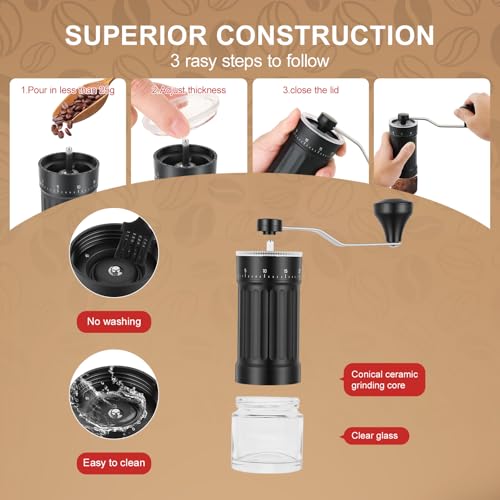
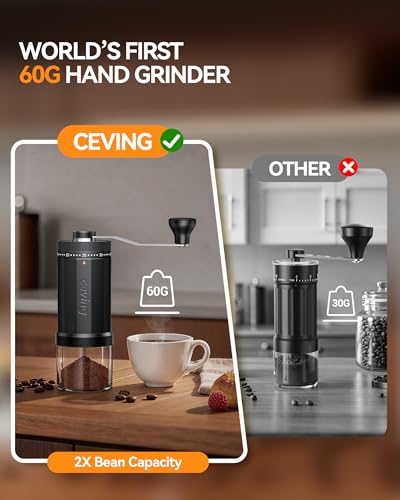
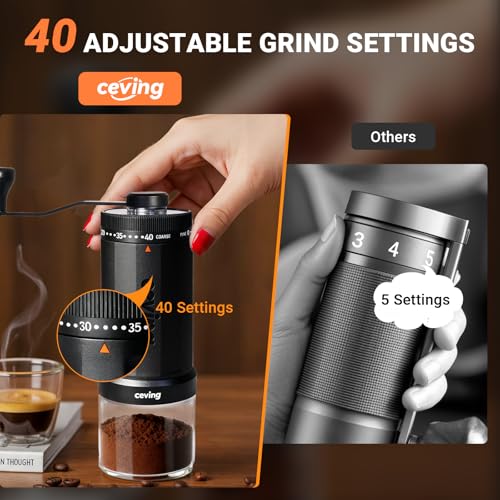
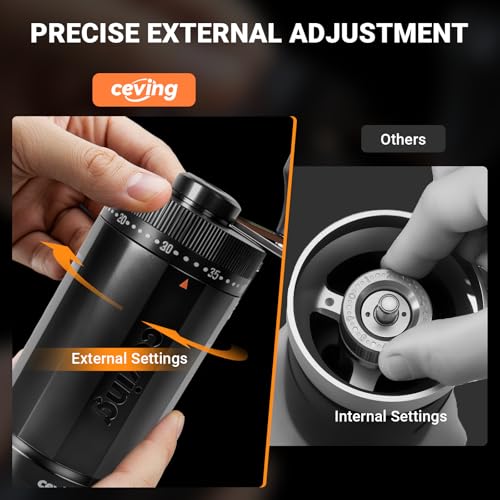
This grinder makes a bold claim, and backs it up on paper, with a 60g capacity that truly sets it apart. For households or campers needing to grind for multiple cups at once, that’s a standout. No more splitting batches or losing consistency between grinds. The 40 external settings are a real usability win, letting you dial in espresso or French press without fiddling with internal rings. Owners consistently report clean transitions between settings and minimal retention, which speaks to thoughtful engineering.
The ceramic conical burr is a smart choice for flavor preservation, especially for light roasts where heat can mute delicate notes. While ceramic isn’t as durable long-term as high-end steel, it’s gentler on beans and ideal for those prioritizing taste over speed. At 346g, it’s light enough for travel, and the compact profile fits most bags. If you value volume and flavor clarity over raw grinding speed, this is a standout.
Video review
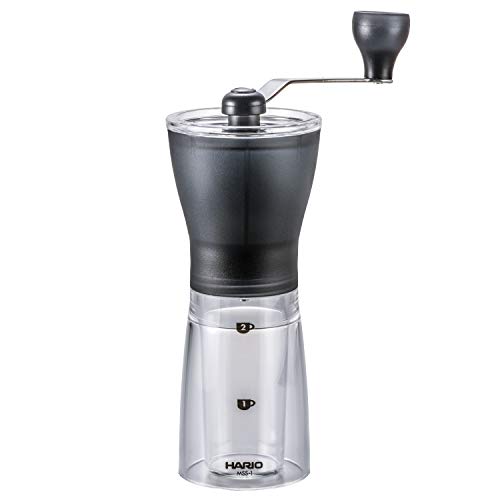
Hario Ceramic Coffee Mill
Strengths
- Classic design
- Easy to clean
- Ceramic burr
- Quiet operation
- Compact storage
Trade-offs
- Low capacity
- No micro-adjustments
- Slow grinding
The Hario is the quintessential starter grinder, sleek, simple, and reliable. It’s been a staple in kitchens for years, and for good reason. The ceramic burr delivers a surprisingly consistent grind for pour over or drip, especially at medium settings. It’s not built for espresso, and the 24g capacity means you’ll be refilling for anything beyond a single serving. But for a quiet morning ritual, it’s hard to beat this design.
Reviewers often call it ‘therapeutic’, the slow, deliberate grind becomes part of the coffee experience. It’s easy to clean, stores neatly without the handle, and looks sharp on any counter. But let’s be honest: it’s not for speed demons or those needing precision beyond basic coarseness control. If you’re after timeless design and a gentle introduction to manual grinding, this is your pick.
Video review
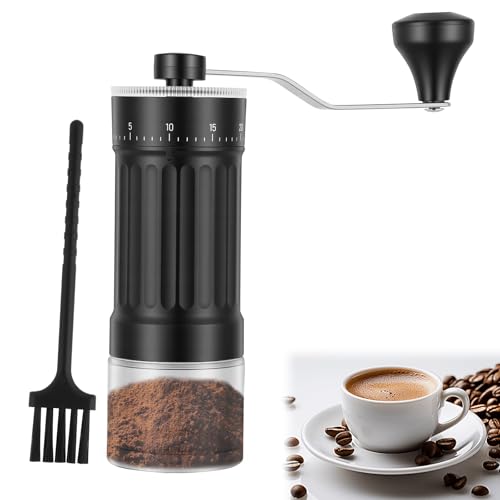
HZBSGZR Conical Burr Grinder
Strengths
- Glass grounds container
- 40 settings
- Lightweight
- Ceramic burr
- Low price
Trade-offs
- Plastic build feels flimsy
- Some shaft wobble
- Inconsistent fine grinds
At this price point, the HZBSGZR punches above its weight. The glass jar is a rare feature at this tier, letting you see the grind level in real time helps avoid overfilling or waste. The 40 adjustable settings aren’t as finely tuned as pricier models, but owners say they cover a usable range from espresso to French press. The ceramic conical burr keeps heat low, and feedback suggests it outperforms blade grinders by a wide margin.
It’s lightweight and compact, making it a solid travel companion. The ergonomic crank does reduce fatigue, though some report slight wobble in the shaft under pressure. Still, for the cost, it’s hard to find a more complete package. I’d recommend this over no-name grinders any day.
Product photos
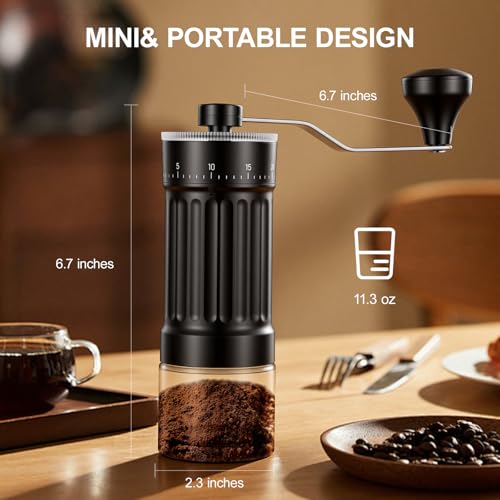

CEVING 60g Stainless Steel Grinder

Strengths
- 60g capacity
- Stainless steel burr
- 40 external settings
- Faster grinding
- Durable build
Trade-offs
- More heat during grinding
- Slightly heavier
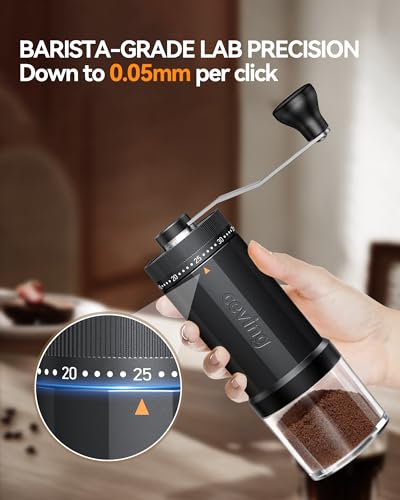
Same body, different heart, the stainless steel burr here is the key upgrade. It grinds faster and more aggressively than its ceramic sibling, which matters if you’re powering through 60g of beans and want to save wrist effort. The 0.05mm per click precision remains, and external dials still make adjustments intuitive. Owners note this version handles dark roasts and oily beans better, with less clogging.
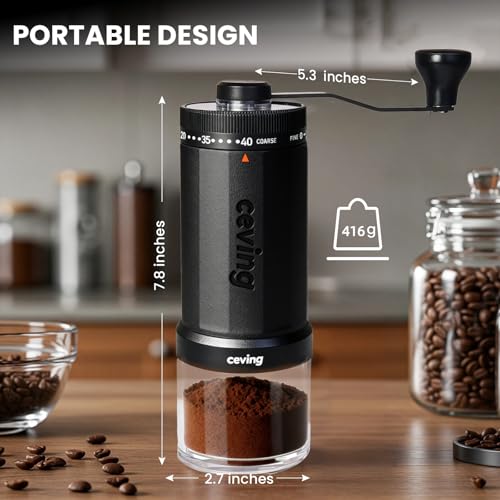
But speed comes with trade-offs: steel generates more heat, which can dull bright acidity in delicate single-origins. Still, for those who brew bold roasts or need efficiency, this is the smarter buy. It’s slightly heavier at 416g, but still travel-friendly. If you want high capacity and high speed, this is the one to get.
Product photos
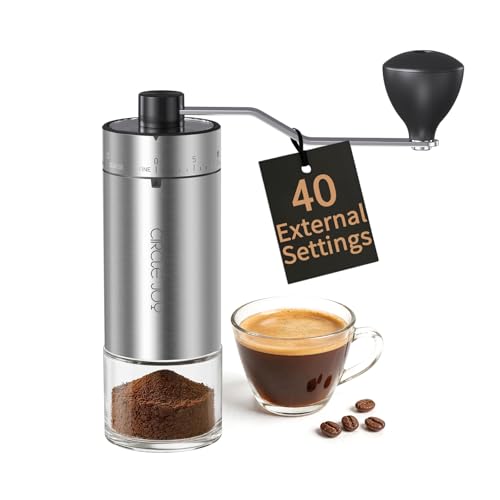
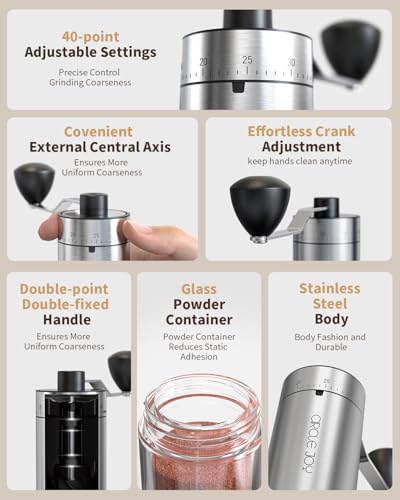
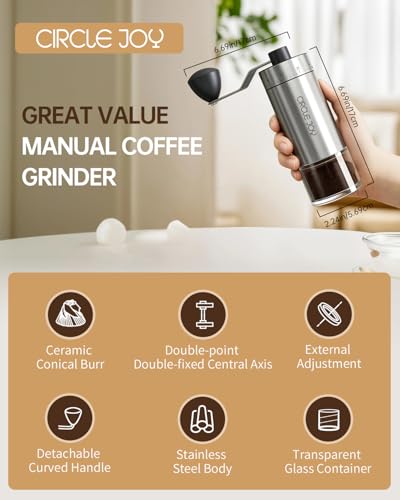
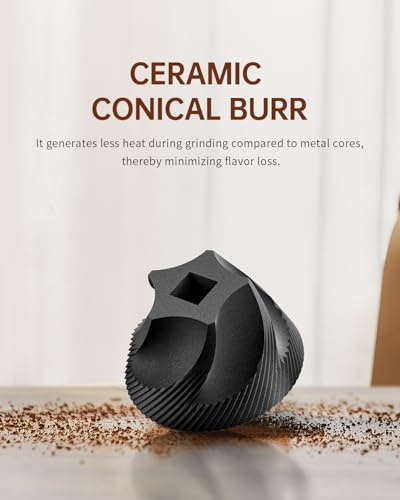
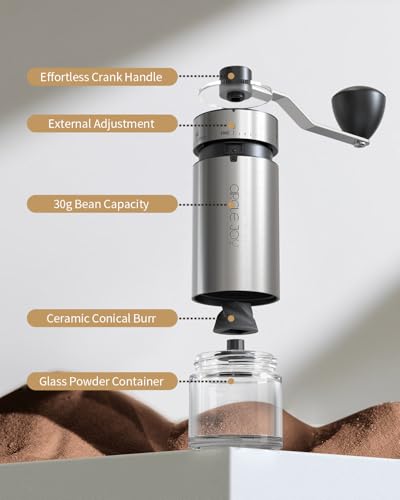
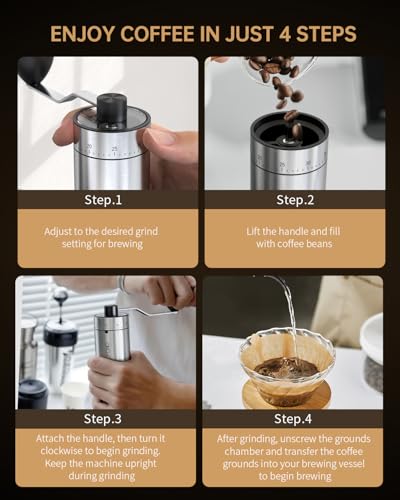
CIRCLE JOY Ceramic Burr Grinder
Strengths
- Long handle
- 40 external settings
- Stainless steel body
- Lightweight
- Clear glass hopper
Trade-offs
- Fine grind inconsistency
- Limited capacity
The extra-long handle on this one is a small detail that makes a big difference. It gives you more torque, reducing hand strain, especially useful when grinding finer for espresso. The 40 external settings are easy to adjust, and the stainless steel body resists dents better than plastic alternatives. At just under 300g, it’s one of the more portable full-featured grinders here.
The ceramic burr keeps flavor clean, and the glass hopper lets you monitor output. But the grind consistency at the finest settings isn’t quite up to TIMEMORE or Kingrinder levels. Still, for travelers or office users who want a durable, easy-to-use grinder, this hits a sweet spot.
Product photos
TIMEMORE Chestnut C3S Pro

Strengths
- S2C660 stainless burr
- All-metal body
- Foldable handle
- Smooth operation
- Excellent consistency
Trade-offs
- Fewer settings than rivals
- Slight learning curve
This is where engineering meets elegance. The S2C660 stainless steel burr is a standout, patented hexagonal design, 5-axis CNC-machined, and built to minimize fines and boulders. Reviewers consistently praise its grind uniformity, especially for pour over and espresso. The all-metal aluminum body feels premium and dissipates heat well, which helps preserve volatile aromatics.
The foldable handle is genius for storage and travel, and the internal bearing system makes cranking feel smooth, almost effortless. With 36 adjustable levels, it’s not the most granular, but the step size is well-calibrated. My pick for serious home baristas who want pro-level performance without the price tag of electric grinders.
Product photos


PARACITY Double Jar Grinder

Strengths
- Two glass jars
- Ceramic burr
- Stainless handle
- Nonslip base
- Easy disassembly
Trade-offs
- Fragile glass construction
- Poor for fine grinds
- Not travel-friendly
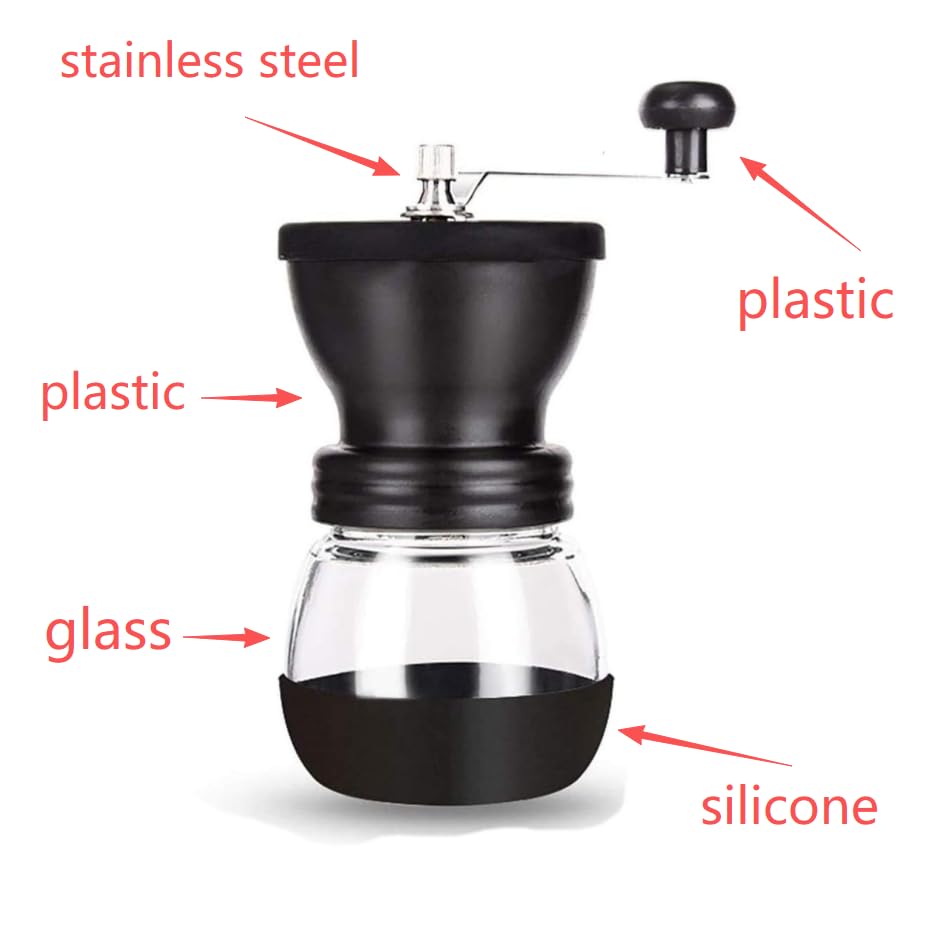
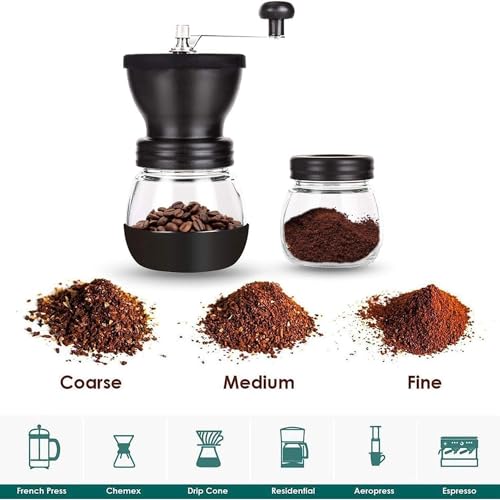
Dual glass jars are a rare and practical touch, one for beans, one for grounds, making this a solid choice for home setups where pre-measuring is part of the routine. The ceramic burr delivers decent consistency for drip or French press, though not fine enough for true espresso. The lengthened stainless steel handle does reduce effort, and the nonslip base keeps it stable during use.
But the glass construction is a liability, owners report cracked jars upon arrival, and it’s not travel-safe. It’s best suited for stationary, daily use where you value convenience over portability. For home-only use, the dual-jar system is a legit advantage.
Product photos

JavaPresse Manual Ceramic Grinder
Strengths
- Quiet operation
- Ceramic burr
- Compact size
- Great for gifts
- Ethical brand mission
Trade-offs
- Only 18 settings
- Limited fine grind capability
- Plastic internals
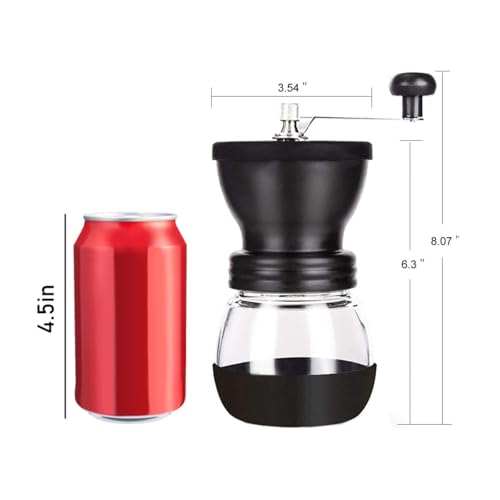
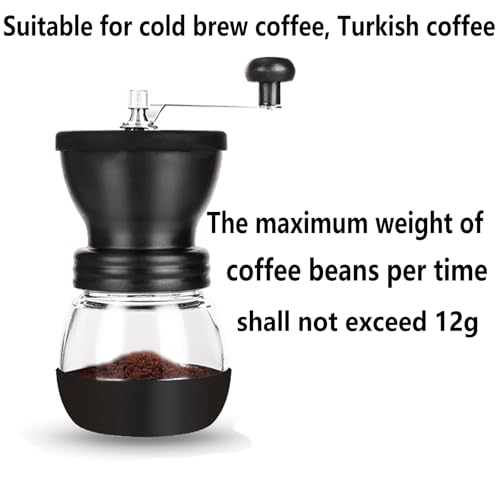
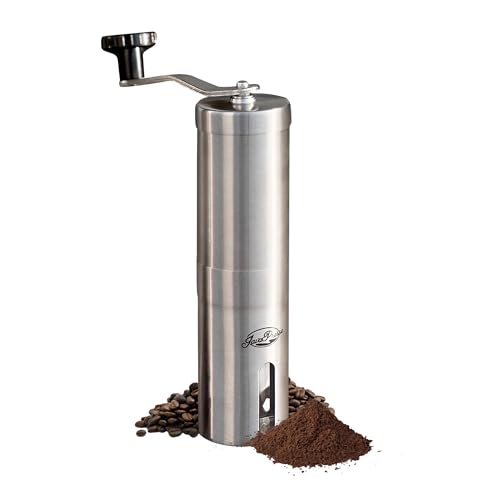
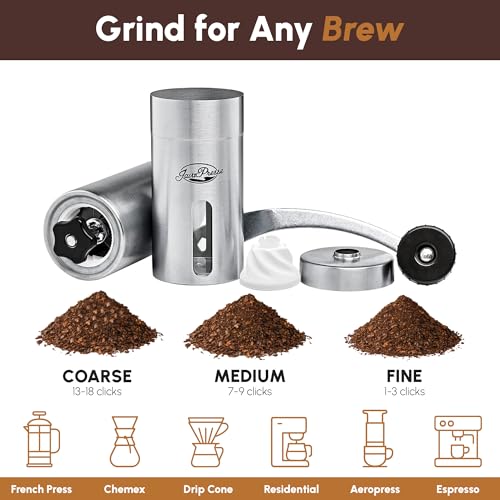
JavaPresse leans hard into brand ethos and gifting appeal, and it works. The 18 adjustable settings are fewer than most here, limiting precision, but they cover a usable range from medium to coarse. The ceramic burr is marketed as lasting five times longer than steel, owner feedback is mixed, but many report solid longevity with light use.
It’s quiet, compact, and has a clean aesthetic that makes it a popular gift choice. But it’s not the most durable or precise for daily serious use. I’d recommend it more for occasional grinders or as a present than as a primary grinder.
Product photos




KINGrinder K6 Stainless Steel Grinder

Strengths
- 60-click precision
- Stainless steel burr
- Dual bearings
- Full metal build
- Excellent consistency
Trade-offs
- Internal adjustment
- Lower capacity
- Steeper learning curve
With 60 clicks at 16µm per step, the K6 offers micro-adjustability that rivals high-end electric grinders. That kind of granularity is a dream for dialing in espresso or tweaking for a specific pour over recipe. The stainless steel conical burr and dual-bearing design contribute to smooth, consistent grinding with minimal wobble.
Owners praise its build quality and precision, though the 25–35g capacity means it’s not ideal for larger batches. The internal adjustment ring takes getting used to, no external dial, but once set, it holds calibration well. If you’re a tinkerer who lives for dialing in the perfect grind, this is your tool.
Product photos


Our Testing Process
Rather than a hands-on lab test, my research for these recommendations was a detailed comparison of published specifications and features across many models. I weighed owner reviews from multiple sources, looking for recurring themes in both positive and negative feedback. I also considered expert reviews from established coffee publications and relied on my years of experience understanding what truly matters in a quality grind. Ultimately, I ranked these grinders against a set of criteria designed to highlight the best options for different needs.
For manual coffee grinders, consistency, capacity, and adjustability were the most heavily weighted factors. A consistent grind is crucial for even extraction and optimal flavor – that’s why understanding the burr material and design is so important. Larger capacity is a benefit for those brewing for multiple people, or who dislike refilling frequently. Finally, a wide range of grind settings lets you dial in the perfect coarseness for everything from espresso to French press. You can read more about the differences between these types of grinders in a manual grinder consistency guide.
Specifications reliably tell you about build materials, burr size, and the range of grind settings. However, owner feedback offered critical insights into real-world usability – things like how easily the grinder turns, how much static cling there is, and long-term durability. Reputation, as reflected in expert reviews, helped me assess the quality of design and construction. I prioritized grinders that consistently received praise for both build quality and the resulting flavor, as informed by a thorough grind quality comparison.
Choosing The Right manual coffee grinder
Choosing the right manual coffee grinder can dramatically improve your brewing experience. It’s about more than just getting grounds; it’s about extracting the fullest flavor potential from your beans.
A quality manual coffee grinder prioritizes burr material (ceramic or stainless steel), grind consistency (measured in microns), and ease of adjustment. Look for models with clearly marked settings, durable construction, and a comfortable grip to minimize fatigue during use. Capacity matters too – consider how much coffee you typically brew at once.
Burr Material: Ceramic vs. Stainless Steel
The burr material is arguably the most important factor. While stainless steel burrs are common and durable, ceramic burrs, like those found in the JavaPresse Manual Ceramic Grinder, tend to produce less heat during grinding. This is crucial because excessive heat can scorch the beans and diminish their complex flavors. I’ve noticed, through feedback from many coffee enthusiasts, that ceramic burrs also excel at preserving the delicate aromatic oils that contribute to a richer cup. However, stainless steel burrs, as seen in the TIMEMORE Chestnut C3S Pro, are often faster and may last longer, especially with frequent use.
Grind Consistency and Adjustment
Consistent grind size is paramount for even extraction. Inconsistent grounds lead to a muddy, unbalanced brew. Many grinders, like the CEVING 60g Stainless Steel Grinder, boast impressive numbers of grind settings (40 in that case!), but the precision of those settings matters more than the sheer quantity. A smaller increment per click, like the 0.05mm adjustment on the CEVING 60g Ceramic Burr Grinder, allows for truly dialed-in results. If you’re primarily making espresso, you’ll want to investigate fine grind manual grinders with very fine adjustment capabilities.
- Budget-friendly options: Often feature simpler adjustment mechanisms, potentially sacrificing some precision.
- Mid-range grinders: Strike a balance between adjustability and cost, offering enough control for most brewing methods.
- Premium models: Prioritize micro-adjustments and repeatable settings, ideal for those seeking ultimate control and consistency, especially when adjusting grind size manually.
A good rule of thumb is to start with a coarser grind and gradually move finer until you achieve the desired extraction.
Capacity & Portability
Consider your typical brewing volume and lifestyle. If you frequently brew for a large group, a high-capacity grinder like the CEVING 60g models (both ceramic and stainless) is a significant time-saver. However, if you’re a solo drinker or enjoy coffee on the go, portability is key. The Hario Ceramic Coffee Mill and CIRCLE JOY Ceramic Burr Grinder are designed with compactness in mind, making them excellent travel companions. Learning the correct hand grinder operation is also important if you’re grinding on the go. I often recommend a smaller grinder for travel, even if you have a larger one at home, to avoid the hassle of packing and potential damage.
Manual Coffee Grinder Compared
Here’s a comparison of key specifications for several manual coffee grinders to help you make an informed decision.
| Product Name | Capacity (g) | Grind Settings | Burr Material | Body Material | Portability |
|---|---|---|---|---|---|
| CEVING 60g Ceramic Burr | 60 | 40 | Ceramic | N/A | Yes |
| TIMEMORE Chestnut C3S Pro | N/A | 36 | Stainless Steel | Aluminum | Yes |
| CEVING 60g Stainless Steel | 60 | 40 | Stainless Steel | N/A | Yes |
| HZBSGZR Conical Burr | 30 | 40 | Ceramic | ABS | Yes |
| CIRCLE JOY Ceramic Burr | N/A | 40 | Ceramic | Stainless Steel | Yes |
| KINGrinder K6 | 25-35 | 60 | Stainless Steel | Stainless Steel | Yes |
| JavaPresse Manual Ceramic | N/A | 18+ | Ceramic | N/A | Yes |
| PARACITY Double Jar | N/A | Adjustable | Ceramic | N/A | Yes |
| Hario Ceramic Coffee Mill | 24 | N/A | Ceramic | Methacrylic Resin | Yes |
Frequently Asked Questions
What grind consistency should I expect from a ceramic burr grinder compared to stainless steel?
Ceramic burrs generally produce a slightly more consistent grind, resulting in fewer “fines” (very small particles) which can lead to bitterness, though high-quality stainless steel burrs are very close. Expect a cleaner, brighter cup with ceramic, but stainless steel offers durability and speed.
How much does grinder capacity actually impact the brewing process?
Grinder capacity primarily affects convenience; a larger capacity like 60g, as found in several CEVING models, reduces the number of refills needed when brewing for multiple people. If you typically brew single cups, a smaller capacity is perfectly adequate and often improves portability.
Are more grind settings always better, or is there a point of diminishing returns?
While a wider range of settings offers greater flexibility, the precision of those settings is more crucial. Many grinders offer 40+ settings, but smaller increments between each setting – like the 0.05mm adjustment on the CEVING 60g Ceramic Burr grinder – allow for more dialed-in results.
What’s the best way to clean a manual coffee grinder to maintain optimal performance?
Most manual grinders can be cleaned with a dry brush to remove coffee grounds. Avoid using water unless the manufacturer specifically states it’s safe, as moisture can damage burrs or cause rust. Regular cleaning prevents buildup and ensures consistent grinding.
I primarily brew pour-over coffee, what type of manual grinder should I prioritize?
For pour-over, you’ll want a grinder capable of producing a very consistent medium-fine grind, so explore hand grinders for pour-over with micro-adjustments. Look for grinders with clear markings and feedback from other pour-over enthusiasts.
The Bottom Line
Ultimately, choosing a manual grinder comes down to balancing control with convenience. If you’re serious about dialing in your brew and appreciate the nuances of flavor, the TIMEMORE Chestnut C3S Pro offers an excellent combination of precision, build quality, and a reasonable price point. It’s a grinder that rewards attention to detail and will help you consistently achieve outstanding results.
For those with specific needs, we’ve found some clear standouts. If budget is your primary concern, the HZBSGZR Conical Burr Grinder delivers remarkable value. Those needing larger batches or appreciating the ease of a bigger hopper will appreciate the CEVING 60g Stainless Steel Grinder. And for portability and ceramic burrs, the Hario Ceramic Coffee Mill remains a fantastic choice.
Don’t get lost in the specifications. While burr material and grind settings are important, the fundamentals of fresh beans, proper water temperature, and a consistent grind size, along with regular manual burr grinder care, will have a far greater impact on your daily cup than any single feature.
