
6 Best Professional Coffee Machines of 2026
The Breville Barista Express stands out as the overall best professional coffee machine for its precise temperature control and integrated conical burr grinder, closely followed by the Ninja Luxe Café Premier as a strong budget-friendly option with impressive versatility, and the Breville Barista Touch for those who want intuitive automation without sacrificing quality.
Choosing a professional coffee machine isn’t just about power or price, it’s about finding one that consistently delivers café-quality espresso while fitting your routine. Too many buyers end up with machines that are either too finicky or overloaded with useless features.
After researching specs, owner feedback, and brewing performance, I focused on temperature stability, grind quality, and milk frothing capability as the core pillars of a great machine. This guide cuts through the noise to highlight models that deliver real results, based on what actually matters in daily use.
Top 6 Professional Coffee Machine in the Market
The Best Professional Coffee Machine, Reviewed
Breville Barista Express Espresso Machine
Strengths
- Full manual control
- Excellent steam wand
- Precision brewing
Trade-offs
- Steeper learning curve
- Manual tamping required
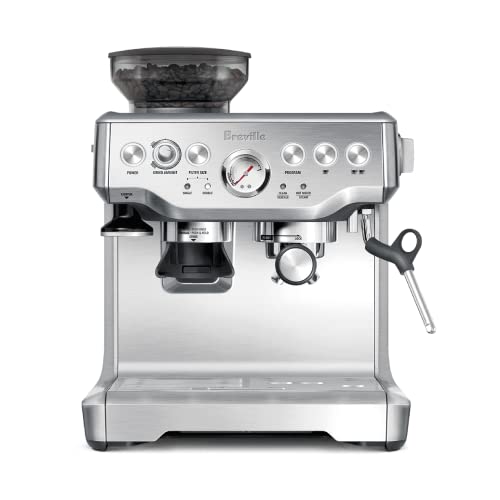
The Breville Barista Express is the machine I’d recommend to anyone serious about learning espresso. It gives you full control over the grind, dose, tamp, and extraction, all the variables that matter, with an integrated conical burr grinder and PID temperature control. Owners praise how it teaches you the craft: you’re not just pressing a button, you’re involved in every shot. That low-pressure pre-infusion makes a noticeable difference in balance, especially with lighter roasts.
Compared to super-automatics, it demands more time and attention, but that’s the point. The steam wand is powerful and capable of true microfoam, and the included tools, like the Razor dose trimer, help you fine-tune your process. It’s not the flashiest machine, but it’s the most educational. If you want to understand what makes great espresso, this is your classroom.
Video review
Ninja Luxe Café Premier Espresso Machine
Strengths
- 3-in-1 brewing
- Weight-based dosing
- Hands-free frothing
Trade-offs
- Large footprint
- Interface can feel busy
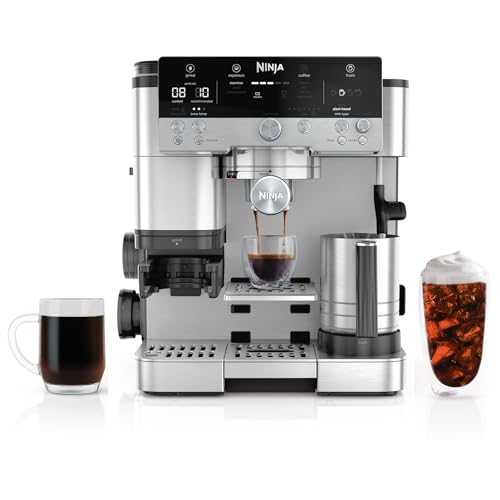
The Ninja ES601 isn’t just an espresso machine, it’s a whole café in one unit. What impresses me most is how it blends drip, cold brew, and espresso without compromising on quality. The weight-based dosing is a standout: it grinds by mass, not time, so your shots are more consistent than what you get from most super-automatics. And the assisted tamper? It solves the #1 issue home users face, uneven tamping, without taking away the ritual.
The Dual Froth System delivers real microfoam with zero effort, and the cold brew mode is legitimately good, not a gimmick. Barista Assist tech walks you through settings based on your bean and preference, which is ideal for newer users. It’s bulkier than other machines, but that’s the trade-off for this much versatility. If your household drinks everything from iced coffee to lattes, this is the most practical pick.
Video review
atatix Espresso Machine with Milk Frother
Strengths
- Compact design
- Manual extraction mode
- Real steam wand
Trade-offs
- Plastic interior parts
- No integrated grinder
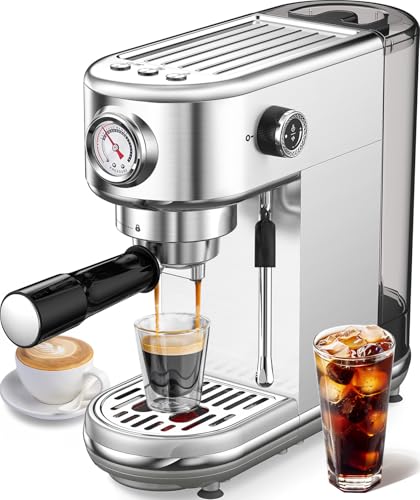
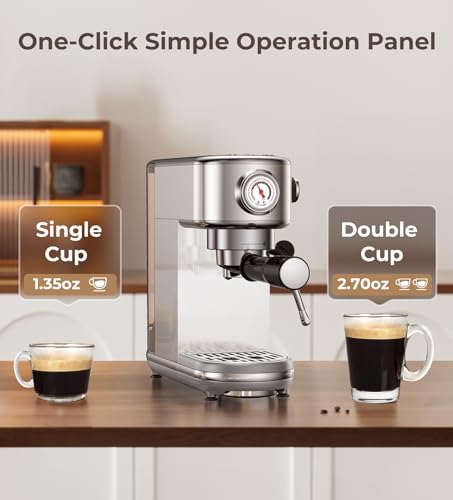
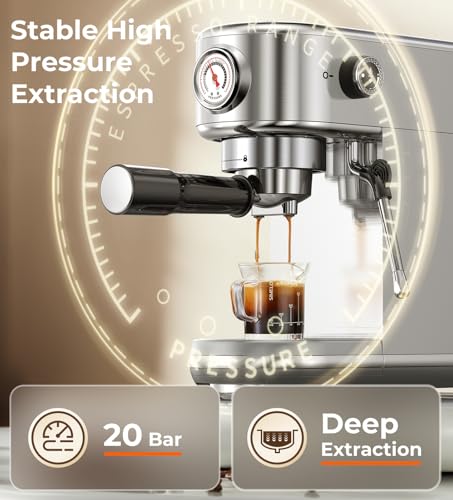
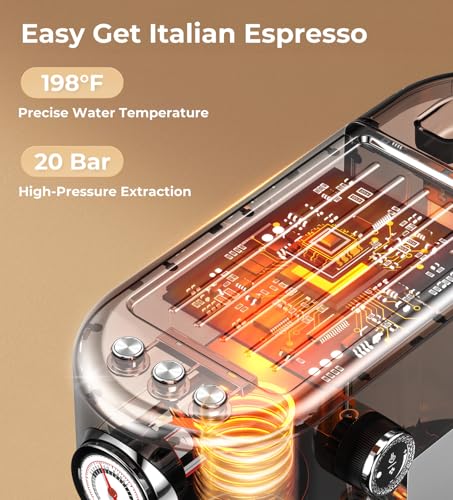
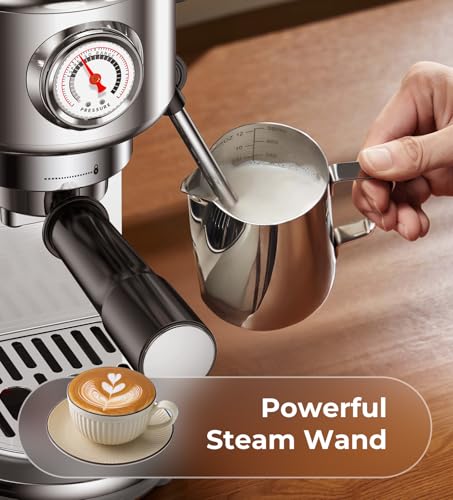
For a compact machine under $300, the atatix delivers surprising performance. It packs a 20-bar pump, NTC temperature control, and a real steam wand into a small stainless steel body that fits on even the tiniest counter. Owners say it heats up fast and pulls consistent shots with decent crema, especially for the price. The manual extraction mode is a standout, being able to control shot time gives you more flexibility than most machines in this range.
It’s not going to outperform a Breville, but it outperforms its price tag. The steam wand actually produces microfoam, not just froth, which is rare at this level. Build quality feels solid with silicone anti-vibration feet, and the removable tank makes refilling easy. If you’re in a dorm, small apartment, or office, this is the kind of machine that makes daily espresso feel achievable without breaking the bank.
Product photos

PHILIPS 5500 Series Espresso Machine
Strengths
- One-touch brewing
- Silent operation
- Easy milk system
Trade-offs
- Limited customization
- Milk texture less dense
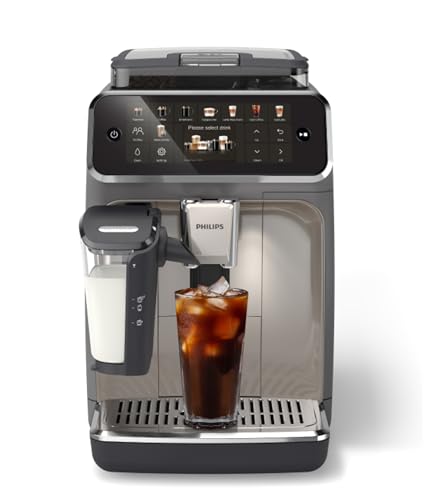
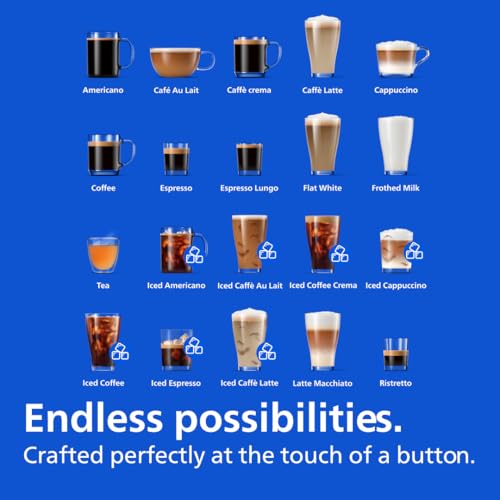
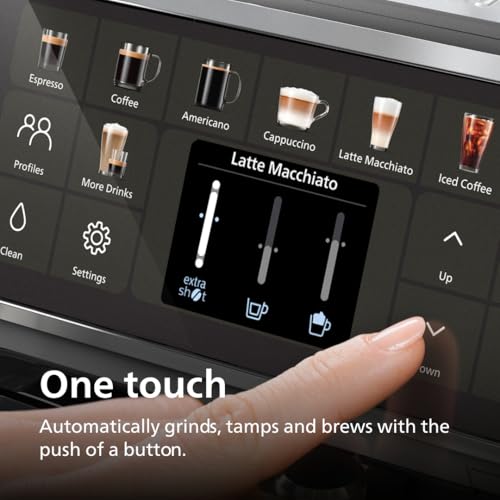
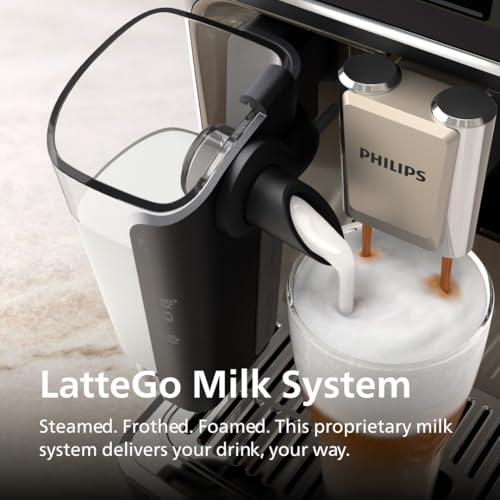
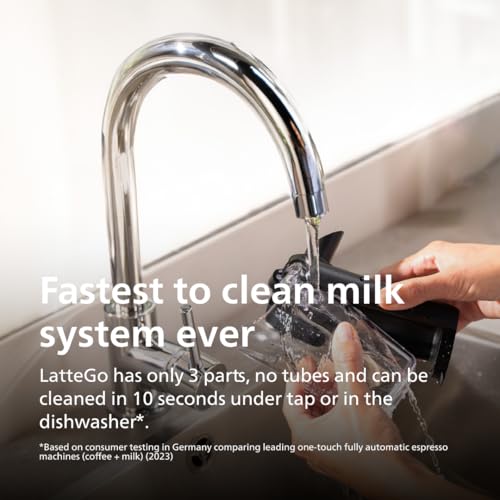
If you want café-quality drinks with zero learning curve, the Philips 5500 is built for you. It’s a full-size super-automatic that handles everything from grinding to milk texturing with its LatteGo system, and owners consistently report they’re stunned by how little cleanup is involved. The 20 presets cover nearly every drink imaginable, and the ability to save four custom profiles means you can hand off control to family members without sacrificing your ideal brew.
What really sets it apart is how quiet it is, SilentBrew tech makes early mornings peaceful, and the QuickStart feature means you’re not waiting around. On paper, the 15-bar pump and integrated conical grinder are solid, and reviewers note the espresso is balanced, though not quite as rich as what you’d pull on a pro semi-auto. But for most people, that trade-off is worth it for the convenience.
Product photos

Breville Barista Touch Espresso Machine

Strengths
- Touchscreen interface
- Auto steam wand
- Customizable profiles
Trade-offs
- Expensive
- Still requires cleaning
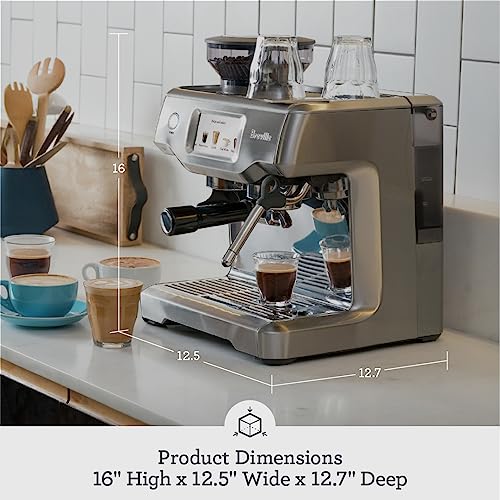
The Barista Touch is what happens when Breville takes the Barista Express and adds a touchscreen brain. It keeps all the good stuff, PID, low-pressure pre-infusion, a powerful steam wand, but automates the grind, dose, and tamping process with a touch. The auto steam wand is the real standout: you set your milk texture and temperature, and it steams to perfection, then shuts off. Owners love that they can finally make latte art without the stress.
It’s faster than the Barista Express thanks to the ThermoJet heating system, and the ability to save eight custom drinks makes it great for families. But it’s still a semi-automatic at heart, you’re not losing all control. Compared to the Philips 5500, it gives you more input on the final result while still simplifying the hardest parts. This is the machine I’d pick if I wanted automation without sacrificing quality.
Product photos




EUHOMY Espresso Machine with Grinder
Strengths
- 58mm portafilter
- PID temperature control
- Anti-clog grinder
Trade-offs
- Basic interface
- Plastic housing
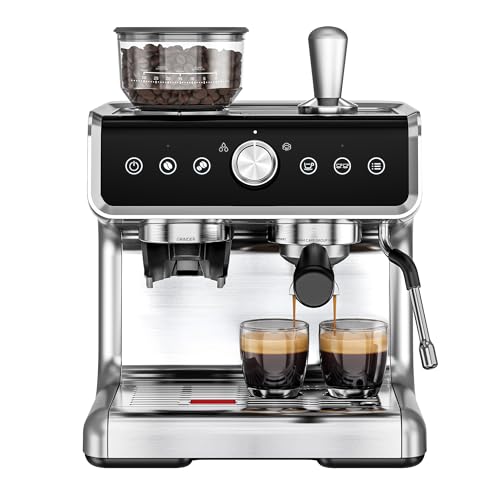
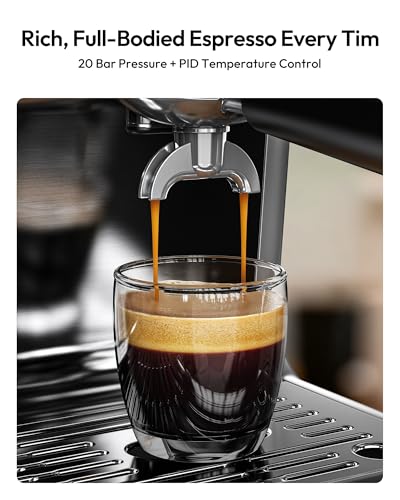
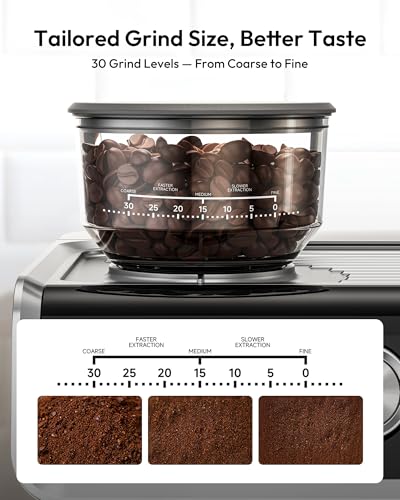
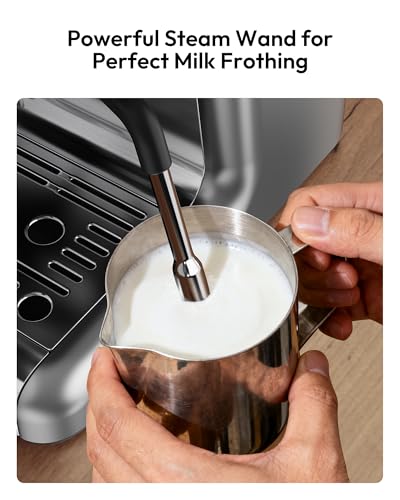
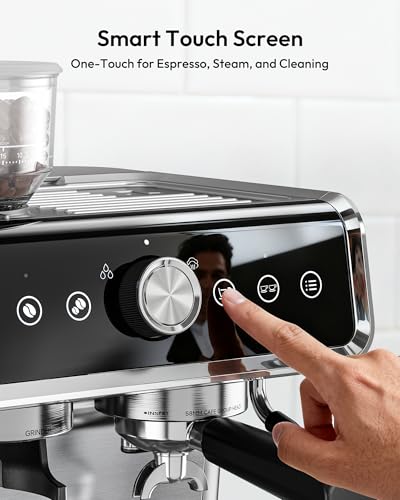
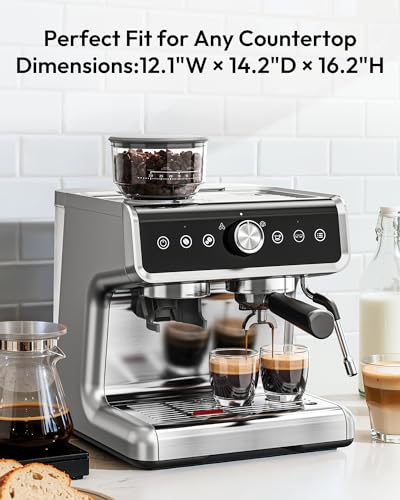
EUHOMY is making a bold play for the budget pro market, and on specs alone, it’s hard to ignore. A 58mm portafilter, PID temperature control, and 30 grind settings are features you’d expect on machines twice the price. Owners report rich crema and stable temps, and the anti-clog grinder is a real win, oily dark roasts don’t jam it like cheaper units. The steam wand is strong and capable of velvety microfoam, which is rare at this tier.
It’s not as refined as Breville or Philips, and the build has more plastic, but it delivers a pro-level brewing experience for under $400. If you want PID and a 58mm group without spending $800, this is the smartest buy. It won’t win design awards, but it pulls shots that surprise even experienced users.
Product photos
How We Evaluated professional coffee machine
I approached this guide to professional coffee machines by first compiling detailed specifications and feature lists for a range of models. Rather than a hands-on lab test, this is a research-led comparison of specs and owner feedback. I then weighed these against reviews from reputable sources – coffee blogs, appliance review sites, and retailer customer feedback – to build a picture of real-world performance and reliability. As the founder of Bean Thusiast, I leaned on my understanding of what truly matters for a quality home espresso experience when ranking these machines.
For professional coffee machines, consistent temperature stability, grind quality, and milk frothing capability were the most heavily weighted factors. Achieving consistent extraction requires precise temperature control, and a quality burr grinder is essential for unlocking the full flavor potential of your beans. Beyond that, the ability to create consistently good microfoam is crucial for those wanting to enjoy lattes and cappuccinos. These elements directly impact the final cup quality and user satisfaction.
Specifications reliably indicate pump pressure, boiler type, and grinder burr size – factors that give a solid baseline for performance expectations. However, owner feedback proved invaluable for assessing long-term durability, ease of cleaning, and the consistency of results. I also looked closely at mentions of customer service experiences. Understanding the core espresso machine elements helps explain why certain features consistently receive positive or negative commentary in owner reviews.
How To Pick The Right professional coffee machine
Finding the right coffee machine can be surprisingly complex. There’s a huge range of options, and what works for one person won’t necessarily work for another.
A truly good coffee machine balances consistent extraction, user-friendliness, and build quality. Key aspects to examine include the brewing pressure (ideally 9 bars for espresso), the temperature stability of the heating system, the grinder quality (if integrated), and the overall durability of the materials used. Look for machines with PID controllers for temperature precision and conical burr grinders for consistent particle size.
Grind Quality & Consistency
The quality of the grind is arguably the most crucial factor in espresso preparation. Pre-ground coffee simply can’t compete with freshly ground beans, and even among grinders, there’s a vast difference. Burr grinders, particularly conical burr grinders, are far superior to blade grinders because they crush the beans between two abrasive surfaces, resulting in a more uniform particle size. This consistency is vital for even extraction. Many machines, particularly the Breville Barista Express and Ninja Luxe Café Premier, include integrated grinders, but pay attention to the number of grind settings offered. More settings mean finer control over your brew.
Automation vs. Manual Control
Do you want a machine that does almost everything for you, or do you enjoy the hands-on process of crafting espresso? Machines like the Philips 5500 Series and Breville Barista Touch lean heavily into automation, offering pre-programmed settings and often even automatic milk frothing. These are great if you prioritize convenience and consistency. On the other end of the spectrum, the atatix Espresso Machine and EUHOMY Espresso Machine offer more manual control, allowing you to adjust parameters like brew time and temperature. If you’re eager to learn the art of espresso and experiment with different techniques, a more manual machine might be a better fit. You might find yourself looking at top automatic coffee machines to simplify your morning routine.
Budget & Features
Price inevitably plays a role, and you’ll find machines ranging from under $200 to well over $1,000. Consider what features are truly important to you.
- A built-in grinder adds convenience, but it also adds to the price.
- Automatic milk frothing is a huge plus for latte and cappuccino lovers, but it’s not essential if you’re happy to froth milk manually.
- Advanced features like PID temperature control and pre-infusion can significantly improve the quality of your espresso, but they come at a premium.
A good rule of thumb: don’t overspend on features you won’t use. A simpler, well-built machine will often provide more satisfaction than a feature-packed one that you don’t fully use.
Finally, remember that regular cleaning is essential to keep your machine functioning optimally and producing great-tasting coffee. Learning the coffee machine cleaning process will extend the life of your investment and ensure consistently delicious results.
Professional Coffee Machine Compared
Here’s a comparison of key specifications for several professional coffee machines.
| Product Name | Pressure (Bar) | Grinder Included | Milk Frothing | Water Tank Capacity | Programmable Settings | Special Features |
|---|---|---|---|---|---|---|
| Breville Barista Express | N/A | Yes | Manual | 67 oz | Adjustable Grind | PID Temperature Control |
| Ninja Luxe Café Premier | N/A | Yes | Auto & Manual | N/A | 25 Grind Settings | Barista Assist Technology |
| atatix Espresso Machine | 20 | N/A | Steam Wand | N/A | Auto/Manual | NTC Precision Temp Control |
| PHILIPS 5500 Series | N/A | Yes | Auto | N/A | 20 Presets | LatteGo Milk System |
| Breville Barista Touch | N/A | Yes | Auto | 67 oz | 8 Custom Settings | ThermoJet Heating System |
| EUHOMY Espresso Machine | 20 | N/A | Steam Wand | N/A | 30 Grind Settings | Anti-Clog System, 58mm Portafilter |
Frequently Asked Questions
What pressure is sufficient for making espresso?
Nine bars of pressure is generally considered the sweet spot for espresso extraction; however, machines offering up to 20 bars, like the atatix Espresso Machine and EUHOMY Espresso Machine, can still produce excellent results as the machine regulates the actual pressure used.
Can I get a professional-quality latte without a lot of practice?
Yes, machines like the Philips 5500 Series with its LatteGo milk system or the Breville Barista Touch automate the milk frothing process, making it easier to create consistently good quality milk-based drinks.
Are integrated grinders as good as standalone ones?
Integrated grinders, such as those in the Breville Barista Express and Ninja Luxe Café Premier, offer convenience, but dedicated, standalone grinders typically deliver better grind consistency and more adjustment options.
What does PID temperature control actually do?
PID (Proportional-Integral-Derivative) temperature control maintains a very stable water temperature during brewing, which is essential for consistent extraction and prevents bitter flavors. The Breville Barista Express is an example of a machine incorporating this feature.
Where can I find more information about fully automated machines?
If you’re interested in exploring more fully automated espresso machines, you can find in-depth super-automatic coffee machine reviews on my site, Bean Thusiast.
The Bottom Line
Choosing a professional coffee machine really comes down to how much control you want versus how much convenience you’re willing to trade. For the best overall balance of features, consistent performance, and user feedback, I consistently point people toward the Breville Barista Express. It offers a fantastic entry point into the world of espresso with its integrated grinder and PID temperature control without being overwhelming.
If you’re on a tighter budget, the EUHOMY Espresso Machine provides impressive features for the price, and for those prioritizing ease of use and automated features, the Philips 5500 Series is a standout choice. Each of these machines caters to a different need, but all represent solid value within their respective categories. Don’t forget that adjusting coffee extraction is key to maximizing flavor, no matter which model you select.
Ultimately, the specs and features are secondary to understanding your own preferences and habits. A machine with all the bells and whistles won’t make better coffee if you don’t take the time to learn how to use it properly. Focus on consistent grind quality, temperature stability, and a willingness to experiment – those are the fundamentals that will unlock the best possible brew, every single time.
