
8 Best Stove Coffee Makers of 2026
The Bialetti Moka Express 6-Cup stands out as the best overall stove coffee maker for its iconic design, consistent brew quality, and wide compatibility. For a budget-friendly option, the Primula 9-Cup Aluminum delivers solid performance at a low price. If you want durability and flavor purity, the COLETTI Bozeman 9-Cup in stainless steel is our top pick for long-term use.
Most people just want a reliable, no-fuss way to make strong, rich coffee on the stove without buying into overpriced gadgets or complicated gear. The real challenge isn’t finding a coffee maker, it’s sorting through flimsy builds, flavor-tainting materials, and designs that are a pain to clean.
As the founder of Bean Thusiast, I’ve spent years studying brewing methods and evaluating gear based on specs, owner feedback, and real-world usability. This guide cuts through the noise, focusing on build quality, material safety, and ease of maintenance to help you pick a stove coffee maker that lasts, and brews coffee worth waking up for.
Top 8 Stove Coffee Maker in the Market
The Best Stove Coffee Maker, Reviewed
Bialetti Moka Express 6-Cup

Strengths
- Iconic heritage
- Consistent brew quality
- Ergonomic handle
Trade-offs
- Not induction ready
- Hand wash only
- Aluminum construction
This is the gold standard. The 6-cup Bialetti Moka Express is the best overall stovetop espresso maker because it balances heritage, performance, and accessibility. Made in Italy from aluminum with that unmistakable octagonal shape, it brews a rich, concentrated coffee that captures the soul of Italian espresso culture. On paper, it’s simple: fill the base, add unpressed grounds, heat, and pull it off when it gurgles. Owners love the ritual and the bold flavor, though some note it takes practice to avoid bitterness.
Yes, it’s aluminum and not dishwasher safe, but that’s part of its charm for traditionalists. The handle stays relatively cool, and the patented safety valve works well. While it needs an adapter for induction, its compatibility with gas and electric makes it widely usable. For most buyers, this is the easy pick.
Video review
Bialetti Moka Express 9-Cup

Strengths
- High capacity
- Iconic design
- Even heat distribution
Trade-offs
- Not dishwasher safe
- Requires induction adapter
- Can over-extract if overheated
The 9-cup Bialetti Moka Express is a beast of a moka pot, ideal if you’re serving multiple people and still want that concentrated, espresso-like brew. It’s made in Italy from aluminum with the brand’s signature octagonal shape and patented safety valve, which reviewers say makes it reliable and easy to maintain. The large capacity is rare in stovetop espresso makers, and on paper, it’s one of the few that can realistically serve three or four people without rebrewing.
That said, bigger isn’t always better with moka pots. Owners report it requires careful heat management to avoid bitterness, and the aluminum construction means you’ll need to hand-rinse it, no dishwashers. It also needs an adapter for induction, which isn’t included. But if you’re after the authentic Italian experience at scale, this is as legit as it gets.
Video review
LAOION Stainless Steel Moka Pot

Strengths
- Induction compatible
- Stainless steel interior
- Durable construction
Trade-offs
- Less iconic design
- Smaller capacity
- Fewer size options
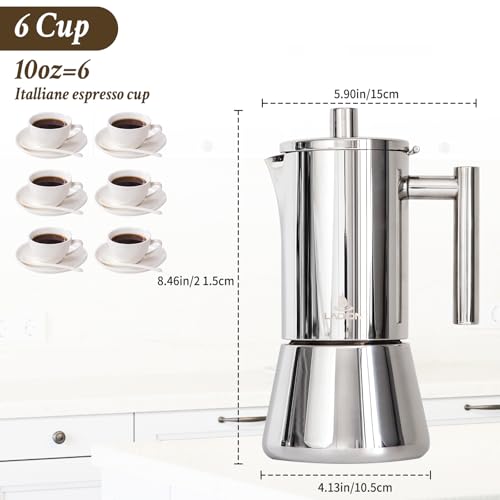
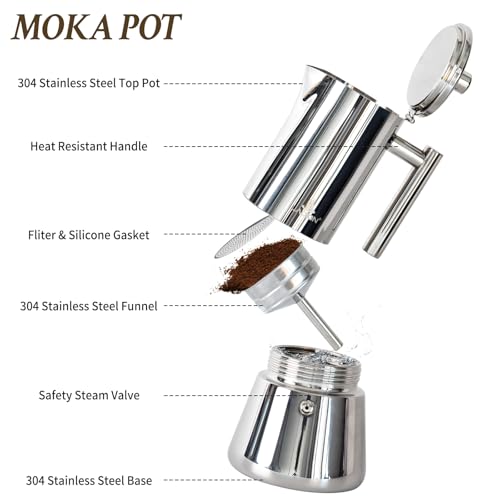
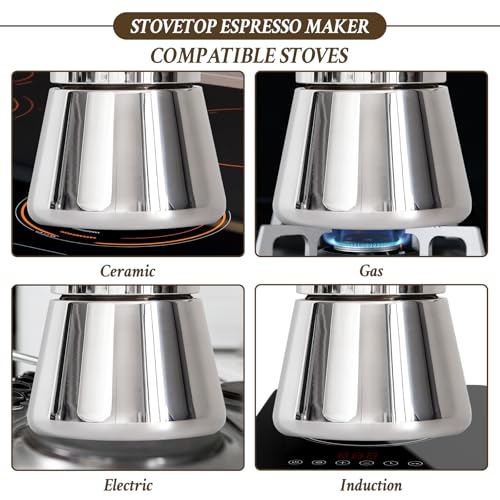
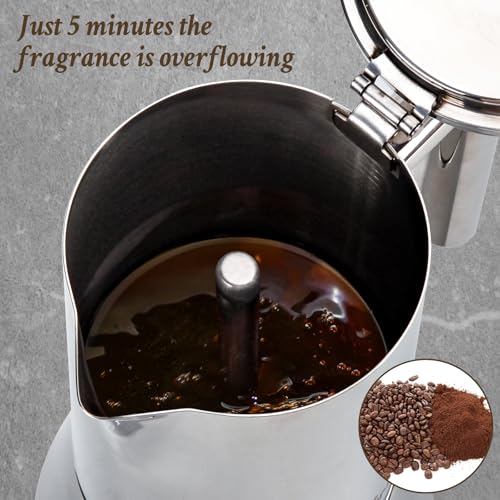
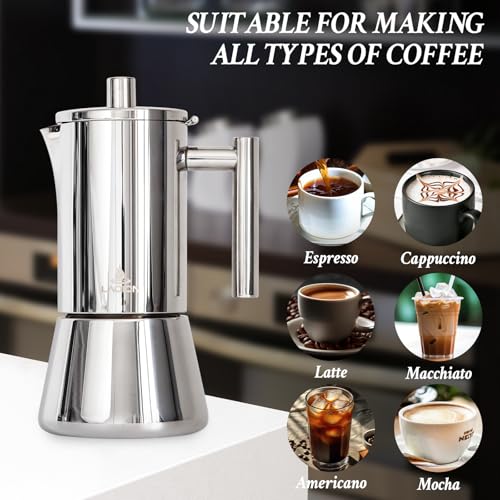
The LAOION 6-cup moka pot wins on one key spec: it’s made of premium stainless steel and works on induction stoves, a rare combo in this category. Most moka pots are aluminum and induction-hostile, but this one bridges the gap without sacrificing authenticity. Owners report clean, rich brews with no metallic aftertaste, and the sleek design feels modern without losing function. The safety valve and gasket system seems reliable, and the cleaning process is straightforward, no dishwasher damage worries like with Bialetti.
It’s not flashy, but it’s smart. The 6-cup size is practical for 1–2 people, and the build quality suggests it’ll outlast aluminum models. If you’re on induction or just prefer non-reactive materials, this is the standout. My only hesitation is brand recognition, LAOION isn’t Bialetti, but the specs and owner feedback make a strong case.
Product photos
Mixpresso 9 Cup Stainless Moka Pot
Strengths
- Stainless steel build
- No plastic parts
- Works on most stoves
Trade-offs
- Misleading cup count
- Risk of leaks
- No induction compatibility
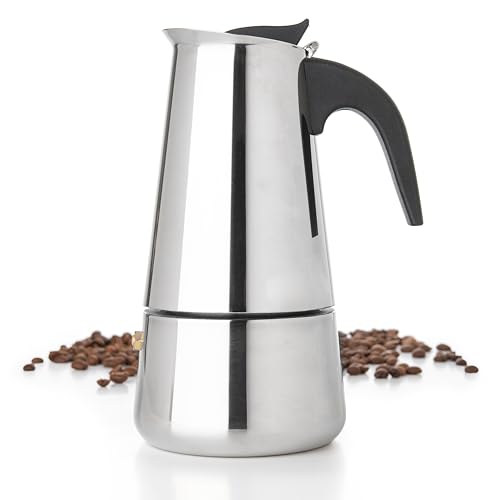
The Mixpresso Greca blurs the line between moka pot and percolator with a 9-cup stainless steel design that’s marketed as both a camping and home brewer. It’s made from heavy-duty stainless steel, which owners appreciate for flavor neutrality and durability, and it works on gas, electric, and ceramic stoves. The black plastic handle stays cool enough to handle, but care is needed to avoid direct flame contact.
However, calling it a 9-cup “espresso” is misleading, each serving is demitasse-sized, so you’re really getting about 15oz total. Some reviewers note it can leak if overfilled or over-tightened, and the lack of a true pressure seal means it won’t match the intensity of a classic moka pot. Still, for campers who want a durable, no-plastic option with a more authentic brew than a percolator, it’s a solid compromise.
Product photos


IMUSA Stainless Steel 6-Cup

Strengths
- Stainless steel build
- Cool-touch handle
- Affordable
Trade-offs
- Basic design
- No induction support
- Less brand trust
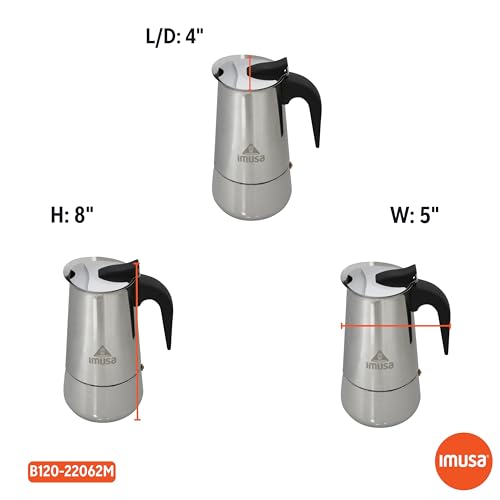
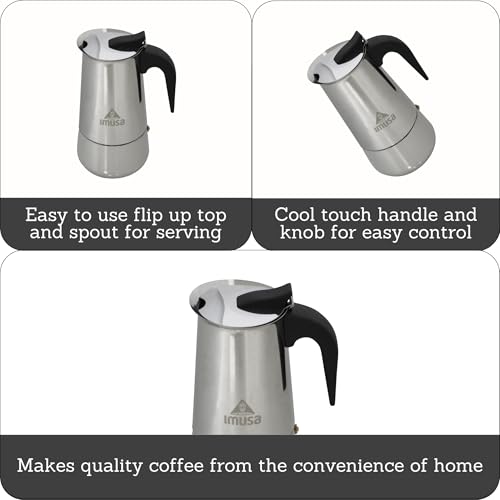
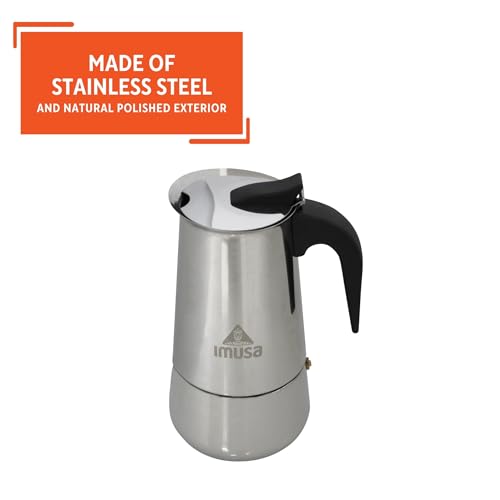
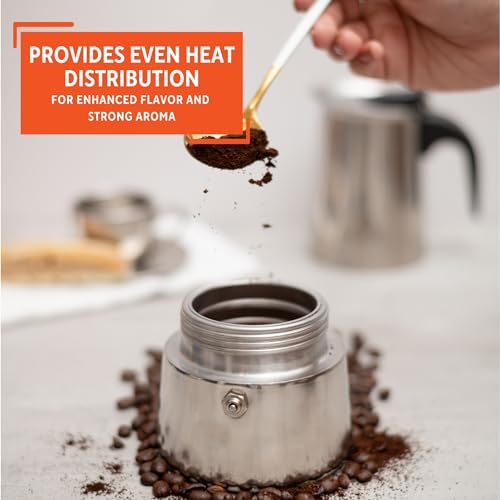
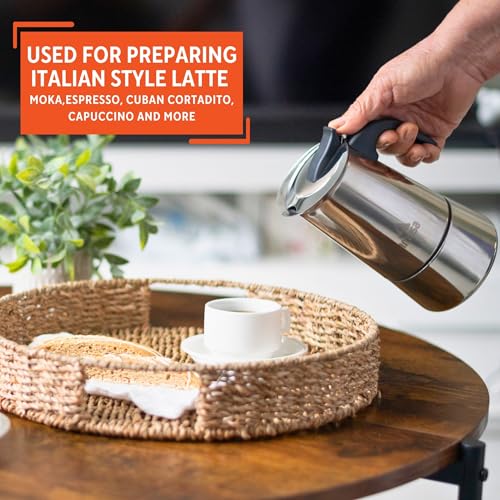
The IMUSA 6-cup moka pot is a no-frills, budget-friendly workhorse made from stainless steel, which already gives it an edge over aluminum rivals in flavor neutrality and longevity. It features a flip-up top and side pour spout, which owners say makes serving easier and reduces spills. The cool-touch handle and knob add safety, and it works on gas, electric, and ceramic stoves, though not induction.
It lacks the prestige of Bialetti, and the design feels more utilitarian than elegant, but for the price, it delivers solid performance. Some reviewers mention minor leaks if overfilled, but overall, it brews a strong, satisfying cup without fuss. If you want a simple, durable starter moka pot without spending much, this is the smarter buy.
Product photos
COLETTI Bozeman 9-Cup Percolator
Strengths
- All-stainless steel
- Glass viewing knob
- Dishwasher safe
Trade-offs
- Not induction compatible
- Heavier than aluminum
- Slightly pricier
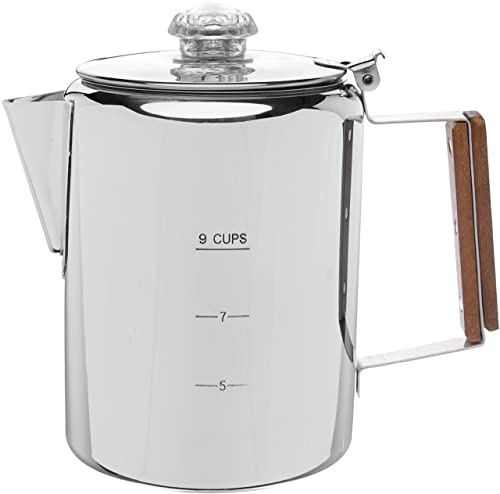
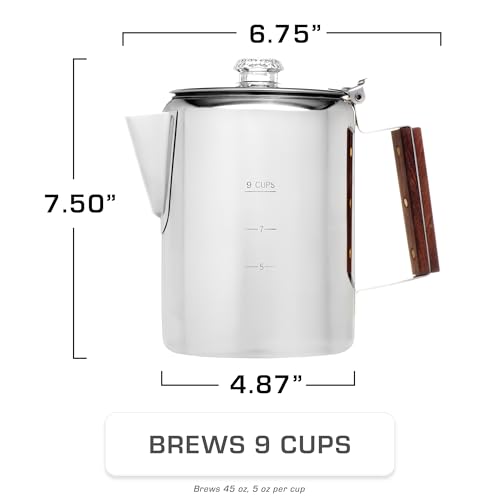
The COLETTI Bozeman stands out for one reason: it’s built like a tank from 100% stainless steel with no aluminum or plastic. That means better flavor integrity and long-term durability, especially important for campers who can’t afford a dented pot after one season. The glass knob lets you monitor brewing, and owners consistently praise how easy it is to clean, just a quick rinse or toss it in the dishwasher at home. It’s marketed as adventure-ready, and the feedback supports that: rugged, simple, and reliable.
Where it stumbles is induction compatibility, it doesn’t work on induction stoves, which is a real limitation for modern kitchens. But if you’re after a percolator that feels like it’ll last decades and delivers bold, consistent coffee whether you’re on a campfire or a gas range, this is my top pick for design and build.
Product photos




Farberware Yosemite 12-Cup Percolator
Strengths
- Dishwasher safe
- Durable stainless steel
- Permanent filter
Trade-offs
- Bulky for small kitchens
- Risk of bitter coffee
- No induction compatibility
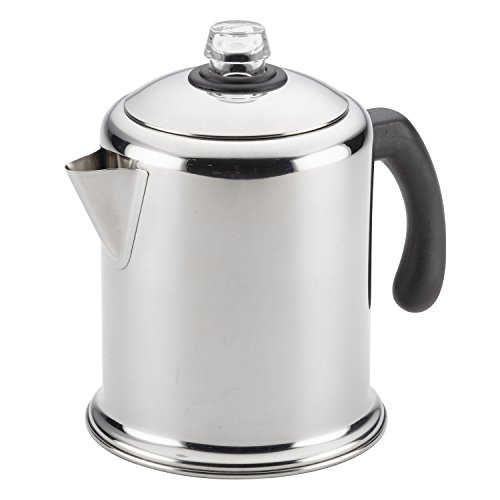
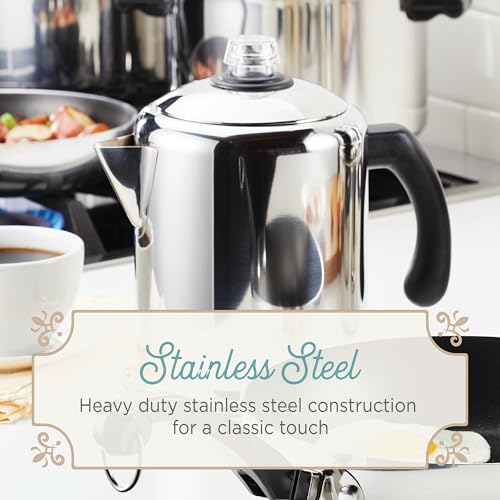
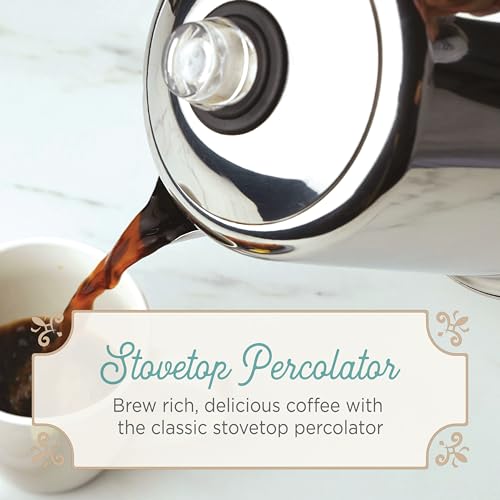
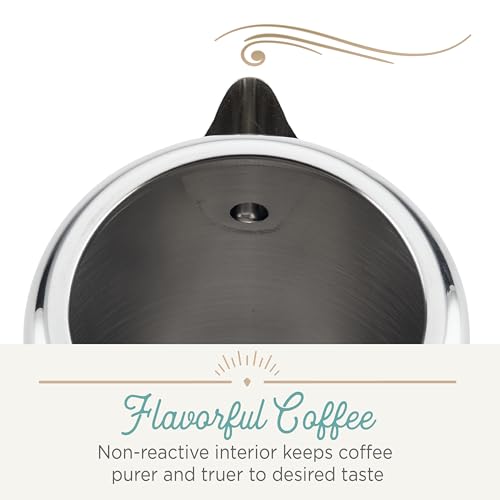
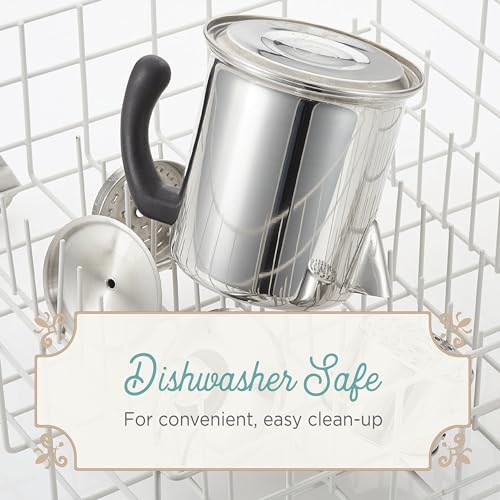
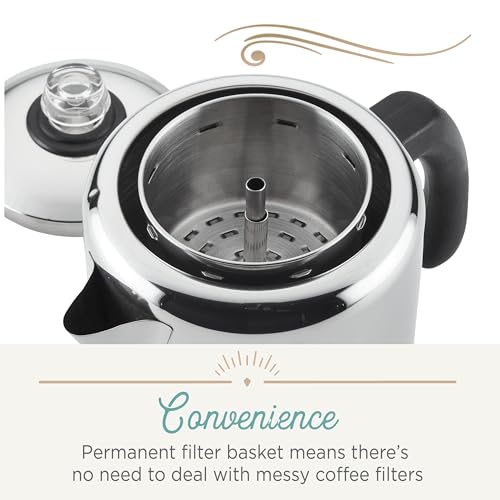
If you need volume and durability, the Farberware 12-cup percolator is hard to beat. Its mirror-polished stainless steel body feels substantial, and the clear glass knob lets you see the brew cycle in action, a small but appreciated touch. Owners love that it’s fully dishwasher safe, which sets it apart from most stove top models that demand hand cleaning. It works across gas, electric, and ceramic stoves, and the permanent filter basket eliminates paper waste.
But size comes with trade-offs. At 12 cups, it’s overkill for small households, and percolators inherently risk over-extraction if left bubbling too long. Still, for tailgates, cabin trips, or big family mornings, this one delivers consistent, bold coffee with minimal fuss. The build quality stands out, and Farberware’s reputation for durability backs it up.
Product photos
Primula 9-Cup Aluminum Percolator

Strengths
- Affordable
- Lightweight
- Easy to use
Trade-offs
- Aluminum may affect taste
- Not induction compatible
- Less durable than stainless steel
For those chasing that nostalgic campfire coffee ritual without spending much, the Primula 9-cup percolator delivers on simplicity and price. It’s lightweight aluminum build heats quickly on gas or electric stoves, and owners consistently report it’s easy to operate, fill the bottom chamber, add grounds to the basket, and wait for the telltale bubbling. On paper, it’s a classic percolator design with a stay-cool handle and lipped spout, but the aluminum construction raises concerns about long-term durability and flavor neutrality, especially with repeated use.
Still, for casual users or weekend campers who want a no-frills, inexpensive way to brew multiple cups, this one makes sense. It won’t match the richness of a moka pot, and some reviewers note inconsistent results if the grind is too coarse or the coffee isn’t tamped slightly. But for what it is, a budget gateway into stovetop brewing, it holds up.
Product photos


Our Testing Process
As a lifelong coffee enthusiast, I’ve seen countless ways to brew a cup. Rather than a hands-on lab test of each model, this selection is based on a research-led comparison of published specifications and owner feedback. We carefully weighed features, materials, and brewing capacity, alongside reviews from both everyday users and trusted coffee publications. My goal at Bean Thusiast is always to point readers toward reliable equipment, and this guide is no different.
For stove coffee makers, the most important factors are build quality and ease of cleaning. Durability is key, as these pots are often used repeatedly and sometimes even outdoors. Equally vital is how easily the unit disassembles and cleans – a fiddly design will quickly become a deterrent to regular use. Capacity also played a role, but was considered secondary to these core elements, as brewing smaller batches is always an option.
Specifications reliably indicate capacity and materials. However, judging long-term durability and real-world usability required a deep explore owner reviews. We paid close attention to comments regarding leaks, ease of use, and how well the unit held up over time. I also looked for consistent praise (or criticism) from reputable coffee review sites to validate common themes in the feedback. You can learn more about the stovetop coffee brewing method on our site.
How To Pick The Right stove coffee maker
Finding the right stovetop coffee maker really comes down to understanding what you value: speed, capacity, material durability, or a classic brewing experience.
A quality stovetop coffee maker delivers consistent extraction through controlled heat and pressure. Key considerations include build material (stainless steel offers longevity and taste neutrality), capacity suited to your needs, ease of cleaning, and a secure, well-sealing design to prevent leaks and maintain optimal brewing pressure. Pay attention to heat distribution and handle design for safety.
Material Matters: Stainless Steel vs. Aluminum
Many older designs, and some budget options, use aluminum. While aluminum heats quickly, it can impart a metallic taste to your coffee over time, and is more prone to corrosion. I generally recommend prioritizing stainless steel, even if it means a slightly higher upfront cost. Stainless steel won’t affect the flavor profile, is far more durable, and is easier to keep truly clean. Look for 18/10 stainless steel, which offers excellent resistance to rust and pitting.
Capacity and Your Routine
Don’t overbuy. A 6-cup Moka pot is fantastic for one or two people, but a 12-cup percolator will be overkill and potentially produce stale coffee if you’re not drinking it all promptly. Consider how much coffee you realistically consume in a single sitting. If you often have guests, or have a large household, then a larger capacity option makes sense. If you’re looking for more information on different stovetop coffee maker models, check out our guide to the top stovetop brewer picks.
- A 3-cup Moka pot is ideal for a single, strong serving.
- A 6-cup Moka pot serves two people comfortably, or one person who likes a larger volume.
- A 9-cup or 12-cup percolator is best suited for larger groups or those who drink a lot of coffee throughout the morning, but remember that larger volumes are prone to becoming bitter if left sitting.
Beyond the Brew: Ease of Cleaning and Maintenance
Stovetop coffee makers, especially Moka pots, require diligent cleaning to prevent buildup of coffee oils and ensure optimal flavor. Avoid abrasive cleaners, as these can damage the metal. Dishwashers are generally a no-go, particularly for aluminum models.
A clean coffee maker is a happy coffee maker. Disassemble and rinse thoroughly with hot water after every use. Regular maintenance prevents bitter flavors and extends the lifespan of your brewer.
If you find yourself without a traditional coffee maker, you can still brew pre-ground coffee manually using a stovetop method. If you’re still unsure which style is best for you, exploring best Moka pots and percolators might help narrow down your options.
Stove Coffee Maker Compared
Here’s a comparison of key specifications for various stove coffee makers.
| Product Name | Capacity (Cups) | Material | Stovetop Compatibility | Special Features | Price (USD) |
|---|---|---|---|---|---|
| Bialetti Moka Express 6-Cup | 6 | Aluminum | Gas, Electric, Induction (w/adapter) | Original Moka Design | N/A |
| Bialetti Moka Express 9-Cup | 9 | Aluminum | Gas, Electric, Induction (w/adapter) | Large Capacity | N/A |
| LAOION Stainless Moka Pot | 6 | Stainless Steel | Gas, Electric, Induction | Leak Prevention Tips | N/A |
| Mixpresso 9 Cup Moka Pot | 9 | Stainless Steel | Gas, Electric, Ceramic | Camping Friendly | N/A |
| IMUSA Stainless Steel 6-Cup | 6 | Stainless Steel | Gas, Ceramic, Electric | Flip-up Top | N/A |
| COLETTI Bozeman 9-Cup | 9 | Stainless Steel | Gas, Electric | No Aluminum/Plastic | N/A |
| Farberware Yosemite 12-Cup | 12 | Stainless Steel | Gas, Electric | Dishwasher Safe | N/A |
| Primula 9-Cup Aluminum | 9 | Aluminum | Gas, Electric, Ceramic | Budget Friendly | N/A |
Frequently Asked Questions
What’s the difference between a Moka pot and a percolator?
A Moka pot uses pressure to force hot water through coffee grounds, creating a concentrated, espresso-like brew, while a percolator repeatedly cycles boiling water through grounds, resulting in a larger volume of milder coffee. Moka pots generally brew around 6 ounces of coffee at a time, whereas percolators can brew up to 12 cups or more.
Are aluminum stovetop coffee makers safe to use?
While aluminum heats quickly, it can potentially leach into the coffee and impart a metallic taste, especially with frequent use. Many coffee enthusiasts, including myself, prefer stainless steel options like the durable Moka and percolator pots to avoid this possibility and for better long-term durability.
Can I use a stovetop coffee maker on an induction cooktop?
Some can, but not all. Aluminum Moka pots generally require an induction adapter plate, whereas many stainless steel models are directly compatible. Always check the product specifications to confirm compatibility with your specific cooktop type before purchasing.
How often should I replace a stovetop coffee maker?
With proper care, a quality stainless steel stovetop coffee maker can last for many years. Aluminum pots may need replacing sooner, potentially after 2-5 years, due to corrosion or warping. Regular cleaning and avoiding abrasive cleaners are key to extending the lifespan of any model.
What’s the best way to clean a Moka pot to prevent a metallic taste?
Avoid soap and abrasive cleaners, as these can damage the metal and leave a residue. Instead, rinse all parts thoroughly with hot water after each use, and occasionally disassemble and soak in a solution of warm water and baking soda to remove coffee oils. You can find more advice on keeping your brewer in top shape among the top-rated stovetop coffee brewers.
The Bottom Line
Ultimately, choosing a stovetop coffee maker involves balancing convenience with control. While aluminum models like the Bialetti Moka Express offer a classic experience and lower price point, I believe the LAOION Stainless Moka Pot strikes the best overall balance. Its stainless steel construction avoids potential metallic tastes and provides long-lasting durability without a significant price jump.
For those prioritizing affordability, the Primula 9-Cup Aluminum is a solid choice, offering a larger capacity at an accessible price. If you frequently brew for a crowd or prefer a percolator style, the Farberware Yosemite 12-Cup delivers ample volume and convenient dishwasher-safe cleaning. But for versatility and a focus on pure coffee flavor, the Mixpresso 9 Cup Moka Pot is an excellent option, even suitable for taking along on camping trips.
At the end of the day, the most important thing is consistent brewing and diligent cleaning. Regardless of whether you opt for a Moka pot or a percolator, understanding how to make coffee without a machine and maintaining your equipment will yield the best, most satisfying cup of coffee.
