
3 Best Stove Top Coffee Pots of 2026
The Bialetti Moka Express is the overall best stove top coffee pot for its reliable performance and iconic design, the DITOSH 3-Cup Aluminum Moka Pot is a solid budget-friendly pick, and the Granite Ware 12-Cup Enameled Pot offers unmatched versatility for campers and large batches.
Most people don’t realize how much the pot you use shapes your morning cup. A poor design leads to bitter, uneven coffee or constant cleanup battles. After years of studying brewing methods and reviewing gear at Bean Thusiast, I know what separates a great stovetop pot from the rest.
This guide cuts through the noise, focusing on models that deliver consistent flavor and real-world durability. I compared specs and owner feedback to highlight the best options based on material, heat distribution, capacity, and ease of maintenance.
Top 3 Stove Top Coffee Pot in the Market
The Best Stove Top Coffee Pot, Reviewed
Primula Classic 6-Cup Moka Pot

Strengths
- 6-cup ideal capacity
- Durable aluminum
- Works on all stoves
Trade-offs
- Handle can loosen over time
- No safety valve
- Not induction compatible
If you’re after a no-frills, reliable moka pot that mirrors the classic Bialetti design without the premium price, the Primula 6-cup model stands out. It’s built from cast aluminum, just like the vintage originals, and owners say it delivers rich, espresso-like coffee with a velvety crema when used with a medium-fine grind and controlled heat. The 6-cup (about 6 oz total) size hits the sweet spot, enough for two modest servings or one large mug.
Compared to the DITOSH, this one feels more balanced in both function and size. It works across gas, electric, and ceramic stoves, and its simple three-piece design makes cleanup a rinse-and-go affair. While it won’t last decades if mishandled, it’s a solid workhorse for daily use. I’d pick this over the DITOSH for home use any day.
Video review
DITOSH 3-Cup Aluminum Moka Pot

Strengths
- Aluminum build
- Even heat distribution
- Compact design
Trade-offs
- Too small for most
- Burn risk on high heat
- Odor when new
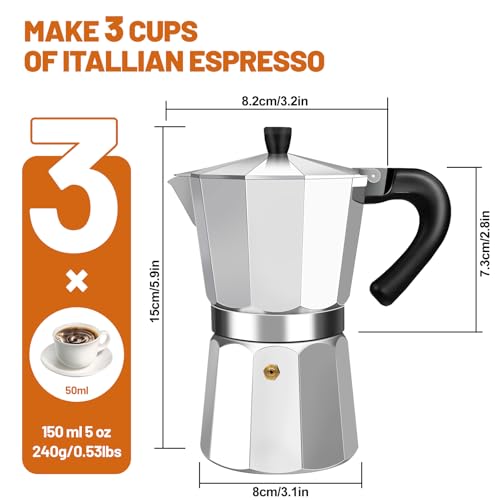
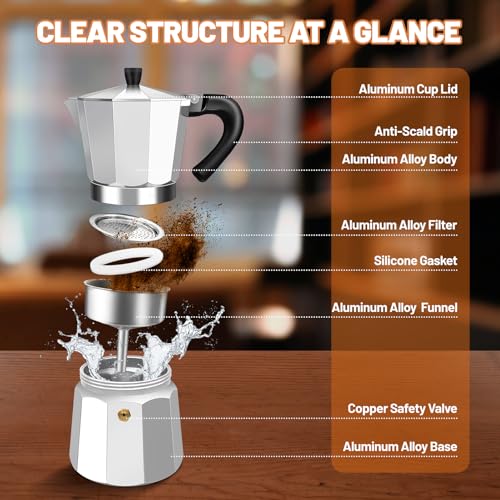
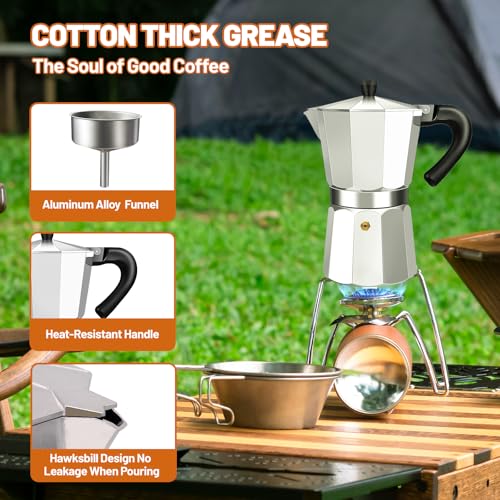
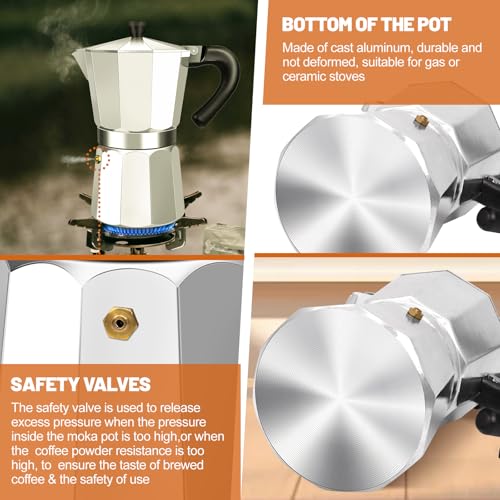
The DITOSH 3 Cup Moka Pot looks the part of a classic Italian stovetop brewer, but its size makes it a tough sell for most households. On paper, a 3-cup (150ml) capacity sounds cute for solo use, but owners consistently report it’s too small, barely enough for a single full mug, let alone sharing. The aluminum construction promises even heat, and reviewers confirm it pulls a strong, aromatic shot when used correctly, especially on gas stoves.
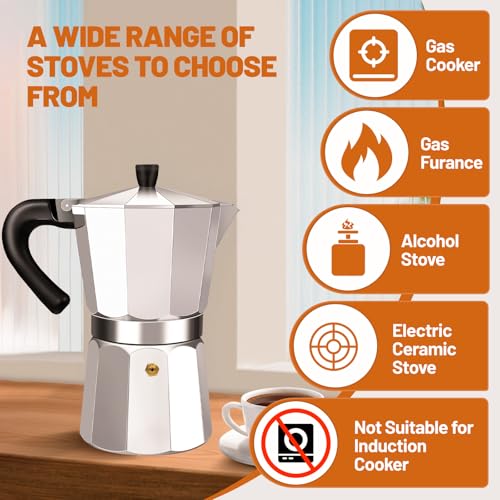
Still, the brand’s own advice gives it away: they explicitly recommend skipping the 3-cup and going for 6 or larger to avoid returns. That’s a red flag. While it’s lightweight, affordable, and works on gas and ceramic hobs, the learning curve with flame control can lead to burnt coffee if you’re not watching closely. This one feels more like a novelty than a daily driver.
Product photos
Granite Ware 12-Cup Enameled Pot
Strengths
- Large 12-cup capacity
- Enameled steel build
- Works on campfire
Trade-offs
- No built-in filter
- Not for espresso
- Enameled surface can chip
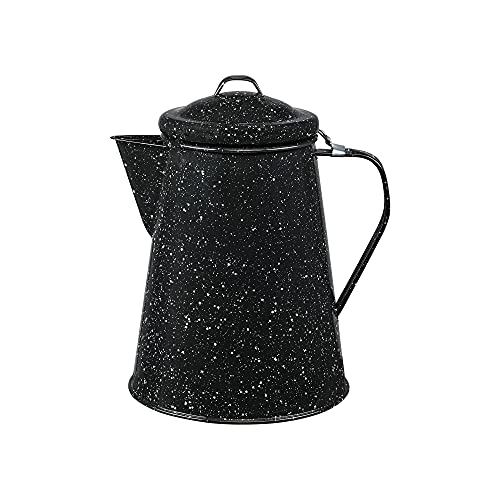
This isn’t a moka pot, it’s a throwback to old-school campfire brewing, and that’s exactly where it shines. The Granite Ware 3-quart coffee boiler is made from enameled steel, built like a tank, and designed to go from stove to fire without flinching. With a 12-cup capacity, it’s made for groups, and reviewers love it for tailgating, cabin trips, and RV life where durability trumps precision.
Unlike stovetop espresso makers, this brews regular drip-style coffee, not pressurized espresso. The even heat distribution from its carbon steel core means no scorching if you keep it moving. It’s lightweight for its size, easy to clean, and doesn’t impart off-flavors. For backcountry or rustic kitchen use, this is the real deal. But don’t expect finesse, this is camp coffee, bold and simple.
Video review
How We Chose These stove top coffee pot
As the founder of Bean Thusiast, I approach coffee equipment with a focus on how well it delivers a flavorful, consistent brew – and how practical it is for everyday use. Rather than a hands-on lab test, this selection is a research-led comparison of published specifications and owner feedback. I examined features, materials, and capacity, then weighed those against what current owners are saying about performance and durability. My goal was to identify models that consistently earn positive reviews and align with different brewing needs.
For stove top coffee pots, several factors stood out as most important. Heat distribution is critical for even extraction, so I prioritized pots made with materials known for that quality – like aluminum and carbon steel. Capacity also factored heavily, recognizing that needs range from single servings to brewing for a group. Finally, ease of cleaning and overall build quality were important indicators of long-term value and user satisfaction.
Specifications reliably reveal capacity and materials used, but owner feedback proved invaluable in assessing real-world performance. Comments regarding flavor quality, ease of use, and durability helped me differentiate between models. I also considered reputation, looking at brands with a demonstrated history of producing quality coffee equipment. Understanding the nuances of the stovetop coffee brewing method informed my evaluation of each pot’s design and features.
How To Choose The stove top coffee pot
As someone who’s spent years exploring the world of coffee, I know a good stovetop pot isn’t just about brewing a drink; it’s about the ritual, the aroma, and the flavor.
A quality stovetop coffee pot prioritizes even heat distribution for consistent extraction, durable materials to withstand repeated use, and a design that balances ease of use with effective brewing. Consider the pot’s capacity, material composition (aluminum, stainless steel, or enameled steel), and sealing mechanism to find the best fit for your needs. Proper cleaning and maintenance are also crucial for longevity.
Material Matters
The material a stovetop coffee pot is made from dramatically impacts its performance and longevity. Aluminum is a classic choice, prized for its excellent heat conductivity, making it ideal for quick and even brewing – something the DITOSH 3-Cup Aluminum Moka Pot exemplifies. Stainless steel offers durability and resistance to corrosion, but can sometimes result in less even heating if it’s not a multi-ply construction. Enameled steel, like in the Granite Ware 12-Cup Enameled Pot, is a fantastic option for camping because it’s robust and won’t impart any flavors to your brew.
Understanding Capacity & Brewing Size
Don’t get hung up on the “cup” measurements advertised. They rarely align with standard 8-ounce cups. Instead, focus on the total volume in milliliters or ounces. If you regularly brew for more than one or two people, a larger pot (9-cup or 12-cup) will save you time and effort. Here’s what to look for:
- Single-Serve (3-6oz): Perfect for a quick, individual espresso-style shot.
- Small Pot (6-9oz): Good for couples or those who prefer smaller batches.
- Large Pot (12oz+): Best for families, entertaining, or if you like to have coffee readily available throughout the morning. Remember to adjust your coffee grounds per pot ratio accordingly.
Ease of Use and Cleaning
We all want a coffee experience that’s enjoyable, not a chore. Look for pots with intuitive designs and easy-to-disassemble components. A flip-top lid, like on the Primula Classic 6-Cup Moka Pot, makes pouring and cleaning a breeze.
A little preventative care goes a long way: always allow the pot to cool completely before disassembling, and avoid abrasive cleaners that can damage the finish.
Ultimately, finding the best stovetop coffee pot for you depends on your personal preferences and brewing habits. The top stovetop coffee pots on our site offer a wide range of options to get you started.
Stove Top Coffee Pot Compared
Here’s a comparison of specifications for different stove top coffee pots.
| Product Name | Capacity (Cups) | Material | Stovetop Compatible | Cleaning | Special Features |
|---|---|---|---|---|---|
| Primula Classic 6-Cup Moka Pot | 6 | Cast Aluminum | All Types | Hand Wash | Flip-top lid |
| DITOSH 3-Cup Aluminum Moka Pot | 3 | Aluminum | Gas, Ceramic | Dishwasher Safe | Various sizes available |
| Granite Ware 12-Cup Enameled Pot | 12 | Carbon Steel | N/A | Dishwasher Safe | Large capacity |
Frequently Asked Questions
What size stovetop coffee pot should I buy if I usually brew for just myself?
A 3-cup pot is generally sufficient for a single person, but remember those “cups” are espresso-sized (around 6oz). If you prefer a larger serving, or like to have a bit extra, consider a 6-cup model instead.
Are aluminum stovetop coffee pots safe to use?
Yes, aluminum pots are safe when they have a non-reactive interior coating or are made from a high-quality aluminum alloy. Some people prefer stainless steel to avoid any potential aluminum leaching, though modern aluminum pots pose minimal risk.
Can I use a stovetop coffee pot on an induction cooktop?
Not all can. You’ll need to check the manufacturer’s specifications, as many older or basic aluminum models aren’t induction compatible. Look for pots specifically labeled as suitable for induction cooktops, or those made with a ferromagnetic base.
What’s the difference between a Moka pot and a traditional Italian moka pot?
There’s no real difference; “Moka pot” is the name for a traditional Italian stovetop espresso maker. These pots use pressure to brew a concentrated coffee similar to espresso, and are a beloved staple in Italian households.
How often should I replace my stovetop coffee pot?
With proper care, a well-made stovetop coffee pot can last for years. However, if you notice significant corrosion, warping, or a persistent metallic taste in your coffee, it’s time to replace it. Regularly inspecting the seals and filter components is also wise.
The Bottom Line
Choosing a stovetop coffee pot often comes down to balancing control over the brewing process with the convenience you desire. While many options exist, the Primula Classic 6-Cup Moka Pot consistently stands out as a fantastic all-around choice, offering a good capacity, easy cleaning, and a design that’s straightforward to master – even for those new to stovetop brewing.
For readers seeking a budget-friendly option, the DITOSH 3-Cup Aluminum Moka Pot delivers excellent value. If you regularly brew for a crowd, or simply appreciate having a larger batch ready, the Granite Ware 12-Cup Enameled Pot is a robust and reliable workhorse. And if you’re looking for detailed stovetop espresso maker steps, we have a thorough guide available on the site.
Ultimately, the best stovetop coffee pot isn’t about flashy features or the highest price tag. It’s about consistent heat distribution, durable construction, and a design that encourages you to enjoy the ritual of making coffee. Focusing on these fundamentals will yield a better brew, and a more satisfying experience, than chasing any single specification.
