
7 Best Stovetop Coffee Makers of 2026
The COLETTI Bozeman stands out as the best stovetop coffee maker for its durable stainless steel build and reliable performance, while the Primula Classic is a solid budget pick for smaller households and the Easyworkz Diego offers the most versatility with full induction compatibility and a large 12-cup capacity.
Choosing the right stovetop coffee maker isn’t just about boiling water and grounds, it’s about finding a brewer that fits your stove, your household size, and your expectations for flavor and longevity. Too many people end up with a pot that leaks, taints the taste, or simply doesn’t work on their cooktop.
As the founder of Bean Thusiast, I researched each model based on real owner feedback, build quality, and practical features like capacity and stove compatibility. This guide cuts through the noise to highlight the ones that consistently deliver.
Top 7 Stovetop Coffee Maker in the Market
The Best Stovetop Coffee Maker, Reviewed
Bialetti Moka Express 6-Cup

Strengths
- Iconic, proven design
- Precise extraction
- Ergonomic handle
- Made in Italy
- Patented safety valve
Trade-offs
- Hand wash only
- Induction requires adapter
- Aluminum construction
This is the gold standard for a reason. The Bialetti Moka Express has defined stovetop espresso for generations, and even today, its design is unmatched in balance and consistency. Made in Italy with a patented safety valve and ergonomic handle, it delivers a rich, concentrated brew that leans closer to espresso than any other moka pot in this list. Owners love its reliability and the ritual it brings to morning coffee.
It’s not dishwasher safe, Bialetti insists on hand rinsing with no detergent, which some find fussy. And while it works on gas and electric, induction requires an adapter plate. Still, compared to the Primula or IMUSA, it extracts with more finesse and longevity. If you want the real Italian experience, this is the one to beat.
Video review
COLETTI Bozeman 9-Cup Percolator
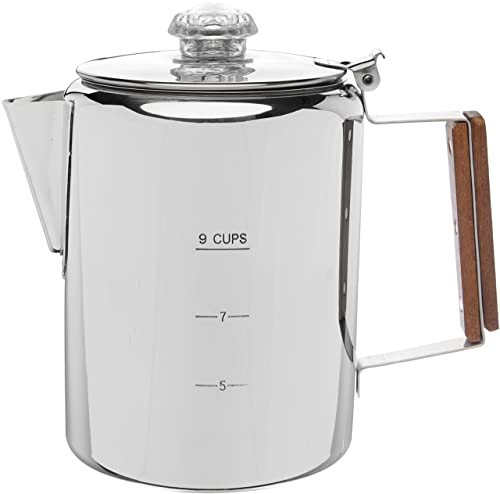
Strengths
- All-stainless steel construction
- No plastic or aluminum
- Glass view knob
- Dishwasher safe
- Veteran-owned brand
Trade-offs
- Not induction compatible
- Metal parts get very hot
- Slightly longer brew time
This is one of the few percolators that gets the materials right, 100% stainless steel, no plastic, no aluminum, just clean brewing. The build quality aligns with what I look for in a durable, long-term coffee tool, and owners consistently praise its ruggedness, especially for camping. The 9-cup capacity is practical, and the glass knob lets you monitor the brew cycle, which matters for avoiding over-extraction.
It’s not without flaws. It doesn’t work on induction, which limits its appeal for modern kitchens, and the cleaning process can be a bit more involved than drip machines. But compared to the Farberware, it’s a step up in material integrity. For those who care about what their coffee touches, this is a rare win.
Video review
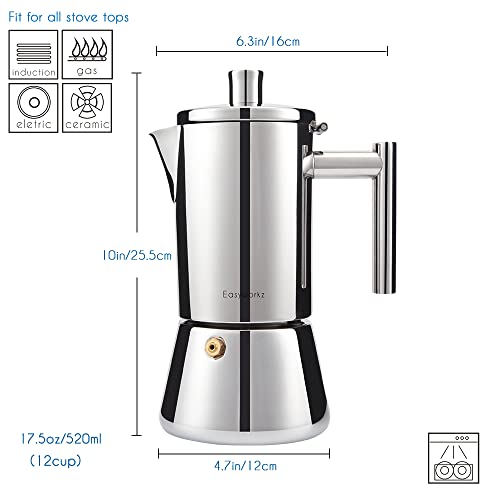
Easyworkz Diego 12-Cup Moka Pot

Strengths
- Induction compatible
- 18/8 stainless steel
- Dishwasher safe
- Includes reducer plate
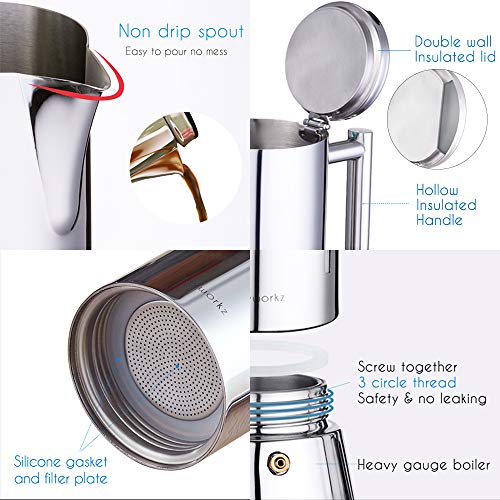
- Insulated lid and handle
Trade-offs
- Large capacity may dilute espresso strength
- Heavier than aluminum models
- Some report pressure valve noise
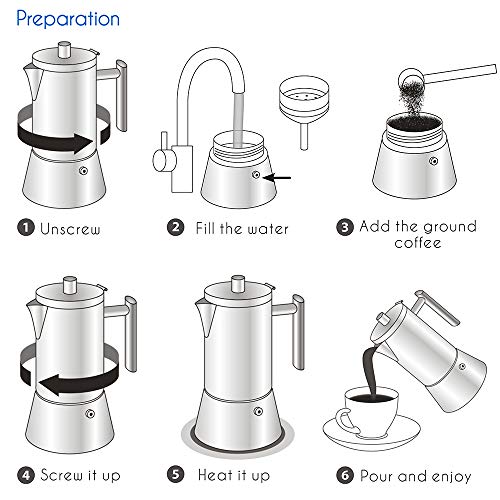
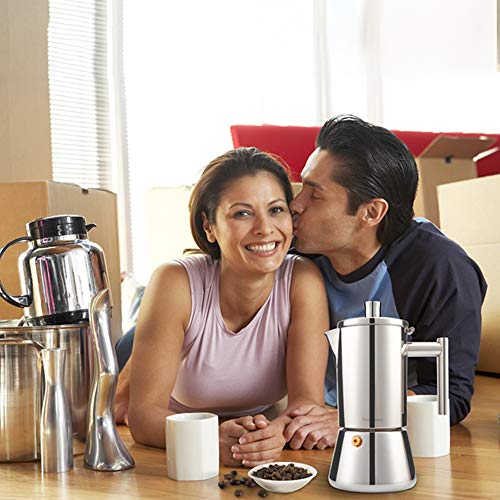
If you’re brewing on induction, this Easyworkz moka pot is one of the few stainless steel options that actually delivers. The 18/8 stainless steel build is a standout, no aluminum, no flavor concerns, and it’s fully induction compatible, which sets it apart from most traditional moka pots. Owners note it’s easy to clean and holds up well under high heat, and the included reducer plate is a smart touch for smaller brews.
At 12 cups (520ml), it’s on the larger side for a moka pot, which blurs the line between espresso concentration and regular coffee. It won’t match the Bialetti’s balance of tradition and precision, but it wins on modern stove compatibility. The insulated handle is a practical upgrade, though some users say it can still get warm.
Product photos

STANLEY Hold Tight 6-Cup

Strengths
- Lifetime warranty
- Silicone cool-grip handle
- Lightweight and portable
- Stainless steel build
- Works on open fire
Trade-offs
- Smaller capacity
- Percolator flavor can be harsh
- Not ideal for indoor aesthetics
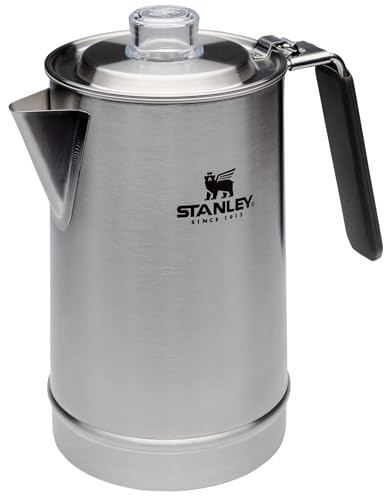
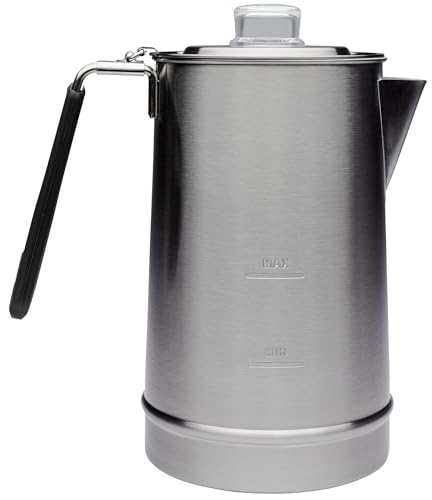
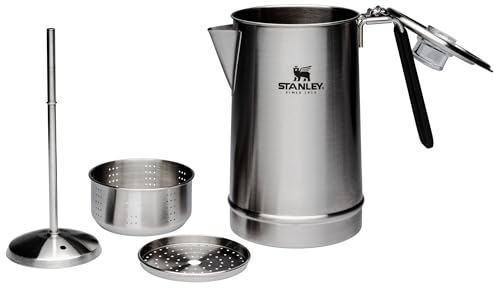
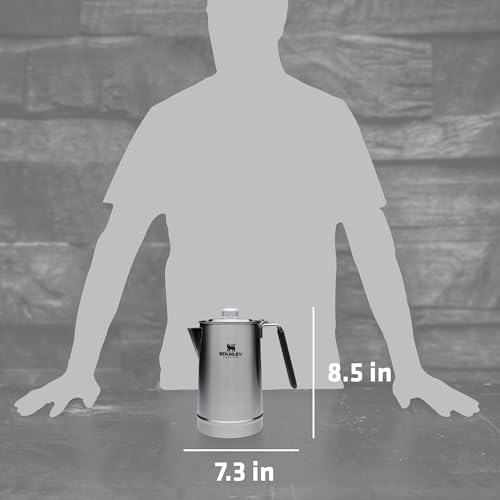
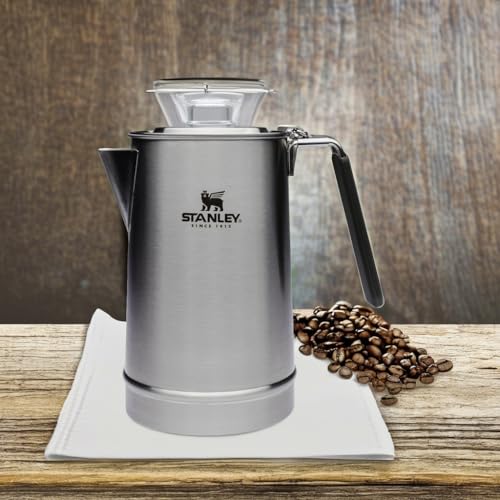
Stanley built this percolator for the trail, and it shows. The 6-cup stainless steel design is rugged, lightweight, and built to survive campfire use. The silicone handle stays cool, which reviewers consistently highlight as a standout when brewing over open flames. It’s also dishwasher safe and backed by a lifetime warranty, rare in this category.
It’s not the best for nuanced flavor, percolators tend to over-extract, and this one’s no exception. But for reliability in the wild, it outperforms most. Compared to the Farberware, it’s lighter and more adventure-ready. If you’re hiking, camping, or just want a no-fail pot that lasts decades, this is the one I’d trust.
Product photos
IMUSA 9-Cup Cast Aluminum
Strengths
- Low cost
- Cool-touch handle
- Large 9-cup capacity
- Side pour spout
- Lightweight
Trade-offs
- Aluminum construction
- Not induction compatible
- Shorter lifespan than stainless models
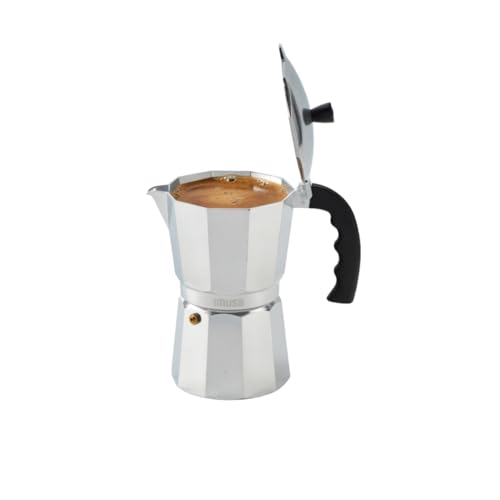
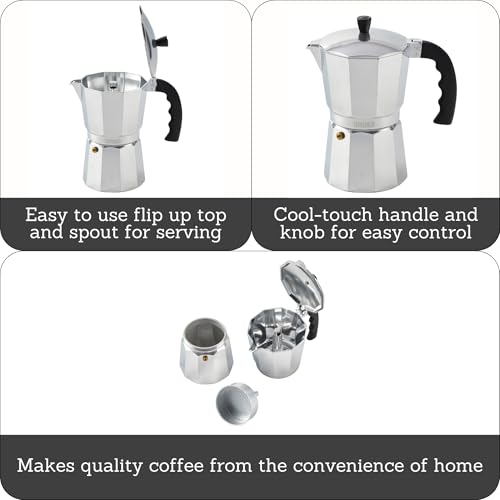
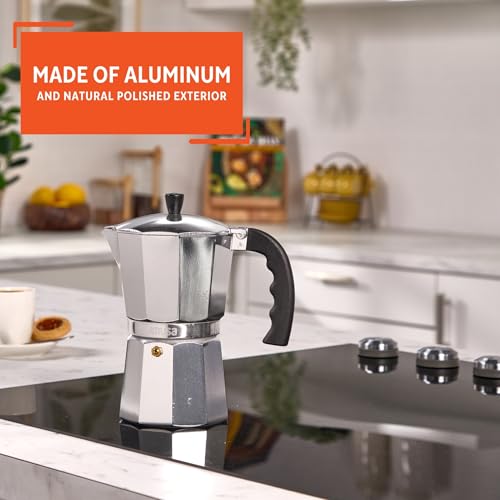
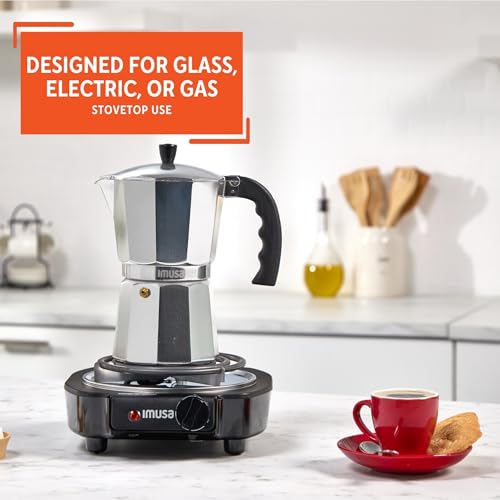
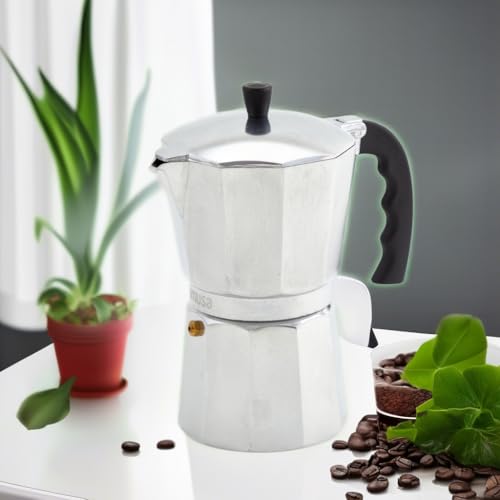
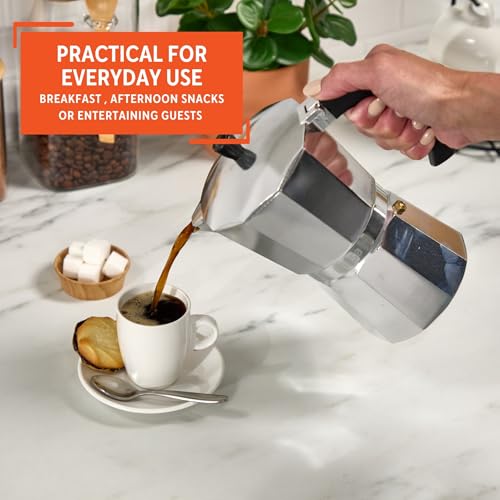
This IMUSA moka pot is the most budget-friendly option here, and it shows. The cast aluminum body keeps heat well and the cool-touch handle is a practical perk. It’s designed for Cuban and Italian-style coffee, and owners say it brews strong, traditional café with ease. At 9 cups, it’s larger than most moka pots, making it useful for families.
But aluminum means long-term concerns, some users report pitting and flavor drift over time. It’s not induction compatible, and the build feels less refined than the Bialetti or Easyworkz. Still, for a first-time user or someone who wants a no-frills, affordable pot, it gets the job done. I’d recommend it only as a starter or backup.
Product photos
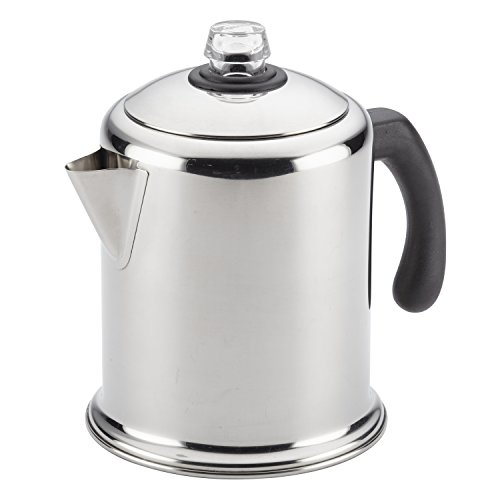
Farberware Yosemite 12-Cup
Strengths
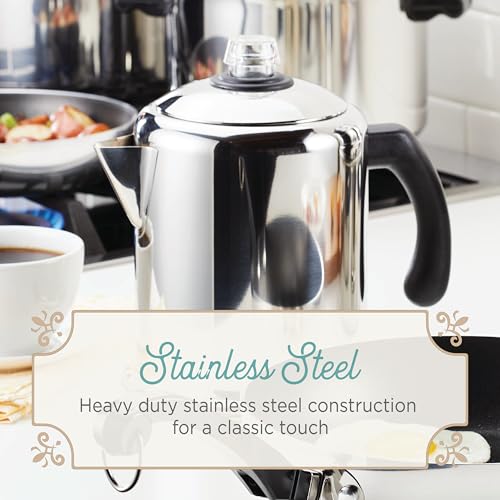
- Stainless steel build
- Large 12-cup capacity
- Dishwasher safe
- Permanent filter
- Mirror finish
Trade-offs
- Glass knob may crack with thermal shock
- Not induction compatible
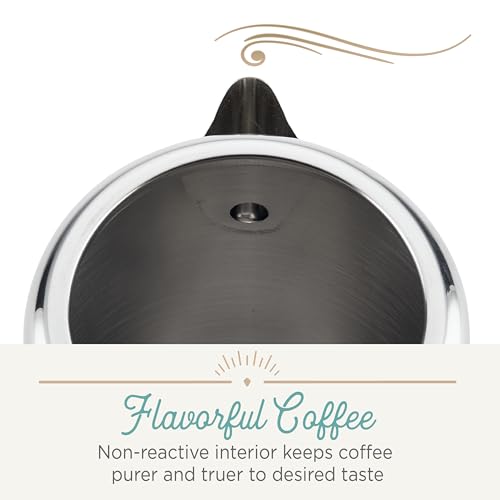
- Some owners report flavor tainting over time
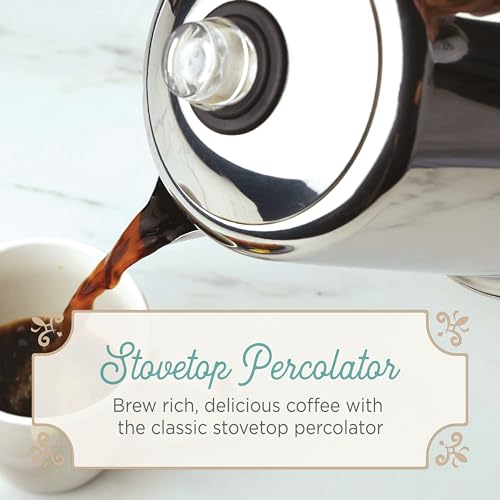
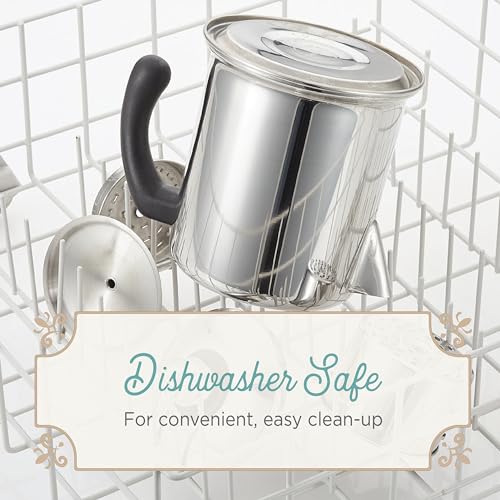
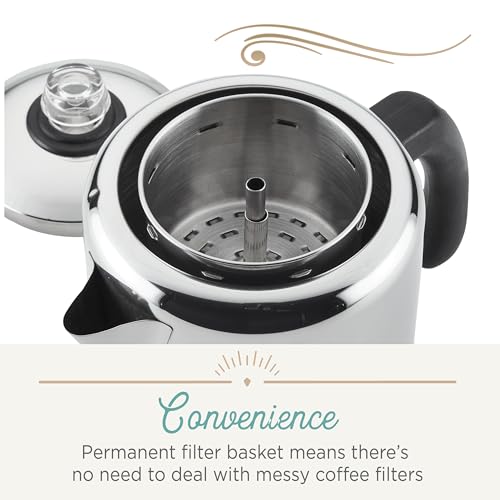
This Farberware percolator hits where it counts for folks who want a no-nonsense, high-volume brew without fuss. On paper, the 12-cup capacity stands out, and owners consistently report it delivers strong, hot coffee that holds up well for families or small groups. The polished stainless steel build feels durable, and the glass knob is a small but appreciated touch, letting you see when the perking action starts.
It’s not a specialty coffee tool, and you won’t get the nuanced extraction of a pour-over or moka pot. But for straightforward, reliable stovetop perking with easy cleanup, it’s a solid pick. Compared to the COLETTI Bozeman, it lacks the all-stainless interior pedigree, but it’s more widely available and works on induction with caution (though not officially rated for it).
Product photos
Primula Classic 3-Cup Moka Pot

Strengths
- Lightweight and portable
- Affordable entry point
- Even heat distribution
- Works on most stoves
- Easy to clean
Trade-offs
- Aluminum construction
- Not induction compatible
- Potential for metallic taste
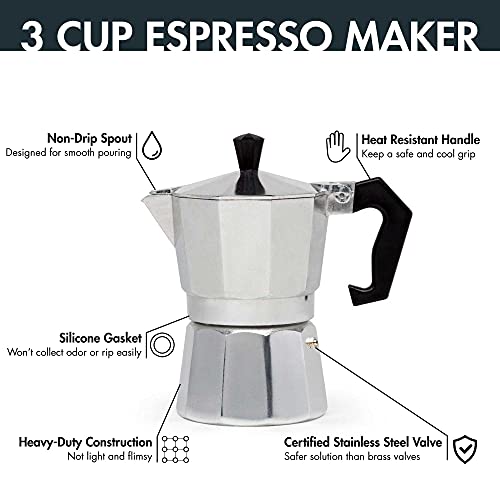
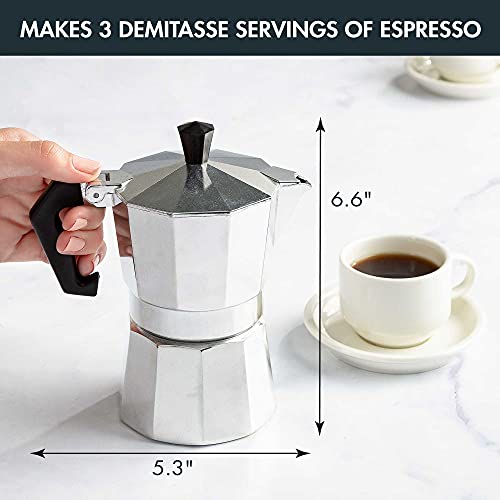
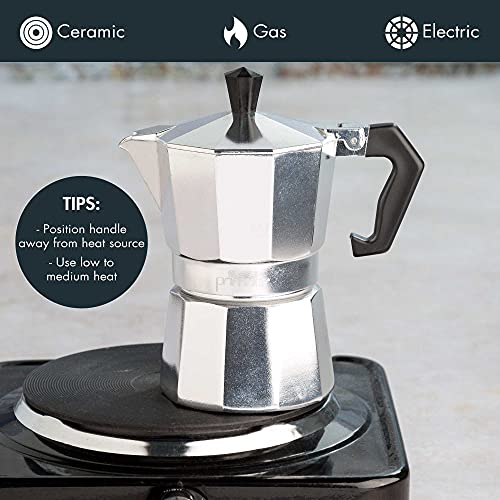
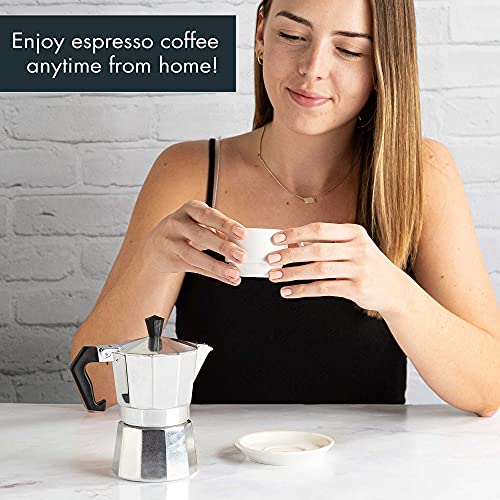
This Primula moka pot is a budget-friendly entry into stovetop espresso, but it shows in the aluminum construction. It’s lightweight and works reliably on gas, electric, and ceramic burners, which owners appreciate for camping or secondary kitchens. The 3-espresso-cup size is perfect for solo drinkers or couples who want a quick, concentrated brew without a machine.
That said, aluminum raises long-term durability and flavor concerns, some reviewers note a metallic aftertaste over time. Compared to the Bialetti Moka Express, it lacks the heritage build quality and precise engineering. It’s also not induction compatible, which limits its versatility. For occasional use or travel, it’s acceptable. For daily ritual, I’d look elsewhere.
Product photos

How We Picked These stovetop coffee maker
I approached researching stovetop coffee makers by first compiling a detailed list of available models and then comparing their published specifications and features. I weighed these technical details alongside extensive owner and expert reviews from sources like coffee blogs and retail sites. As the founder of Bean Thusiast, I applied my years of experience with different brewing methods to assess which features truly contribute to a quality cup of coffee. My goal was a research-led comparison, rather than a hands-on lab test.
For this category, build material and capacity were the most heavily weighted factors. A durable build, whether stainless steel or quality aluminum, directly impacts longevity, especially with frequent use. Capacity is also critical; a percolator or Moka pot that’s too small will be frustrating, while one that’s too large might not suit daily needs. I also considered compatibility with different stovetops, knowing many users have induction ranges.
Specifications reliably reveal capacity and materials. However, I relied on owner feedback to gauge ease of cleaning, durability over time, and the actual flavor profile produced by each maker. Reputation and brand history also played a role, as established brands often maintain consistent quality. If you’re looking for a deep explore a specific model, like the IMUSA stovetop espresso maker, you can find a detailed tutorial here: IMUSA coffee maker tutorial.
How To Choose The stovetop coffee maker
As someone who’s spent years exploring the world of coffee, I know a good stovetop coffee maker can be a real cornerstone of a satisfying morning routine.
A quality stovetop coffee maker balances heat retention, material safety, and ease of use. Look for durable construction – stainless steel is preferable to aluminum – a secure seal to maintain pressure, and a design that simplifies cleaning. Consider the capacity needed for your household and whether the unit is compatible with your stove type (gas, electric, induction).
Capacity and Household Size
The first thing to consider is how much coffee you typically brew. A smaller, 3-6 cup moka pot like the Primula Classic is fantastic for individuals or couples, providing a concentrated brew perfect for espresso-style drinks. Larger households, or those who enjoy multiple cups throughout the morning, will benefit from a 9-12 cup percolator such as the COLETTI Bozeman or Farberware Yosemite. Don’t overestimate; stale coffee is a sad reality, and brewing only what you’ll consume is always best.
Material Composition and Safety
While aluminum moka pots (like the classic Bialetti Moka Express) have a long history, stainless steel offers a significant advantage in terms of durability and avoiding potential metallic tastes. Some older aluminum pots can leach into the coffee, and while the amount is generally considered minimal, it’s a concern for many. Beyond the pot itself, check the handle and knob materials. Heat-resistant Bakelite or silicone are essential for safe handling, especially when brewing over an open flame.
- A small 3-cup pot is ideal for single servings or a quick espresso boost.
- A 6-8 cup model strikes a good balance for small families or those who like to have a little extra on hand.
- A 12-cup or larger percolator is best suited for entertaining or a household of heavy coffee drinkers, though it will take longer to brew and cool.
Stove Top Compatibility
This is a surprisingly common oversight. Not all stovetop coffee makers work on all stoves. Moka pots generally work on gas, electric coil, and ceramic glass cooktops. However, many – particularly traditional aluminum models – aren’t compatible with induction ranges. If you have an induction stove, you will specifically need to look for a model labeled as induction-compatible, like the Easyworkz Diego. If you’re looking for more information on other brewing methods, you can find a helpful French press brewing guide on our site. Understanding your stove type beforehand will save you a lot of frustration.
A well-maintained stovetop coffee maker should last for years, but regular cleaning is critical. Avoid abrasive cleaners and always disassemble all parts for a thorough wash after each use.
For those wanting to explore different options, we’ve compiled a list of the best stovetop percolators to help narrow your search, and feel free to check out our recommended stovetop percolators for a more detailed comparison of top stovetop coffee makers.
Stovetop Coffee Maker Compared
Here’s a comparison of key specifications for various stovetop coffee makers.
| Product Name | Capacity (Cups) | Material | Stovetop Compatibility | Special Features | Warranty |
|---|---|---|---|---|---|
| Bialetti Moka Express | 6 | Aluminum | Gas, Electric, Induction (w/adapter) | Safety Valve | N/A |
| COLETTI Bozeman | 9 | Stainless Steel | Gas, Electric | Glass View Top | 1 Year |
| Easyworkz Diego | 12 | Stainless Steel | Gas, Electric, Induction | Reducer & Safe Valve | 24 Months |
| STANLEY Hold Tight | 6 | Stainless Steel | Gas, Electric | Cool Grip Handle | Lifetime |
| IMUSA 9-Cup | 9 | Cast Aluminum | N/A | Flip-up Top, Pour Spout | N/A |
| Farberware Yosemite | 12 | Stainless Steel | N/A | Permanent Filter | N/A |
| Primula Classic | 3 | Cast Aluminum | Gas, Electric, Ceramic | Portable | N/A |
Frequently Asked Questions
What’s the difference between a Moka pot and a percolator?
A Moka pot brews coffee by passing steam through grounds using pressure, resulting in a concentrated, espresso-style brew. Conversely, a percolator repeatedly cycles boiling water through the grounds, producing a larger volume of coffee that’s generally less strong.
Can I use a stainless steel stovetop coffee maker on an induction cooktop?
Generally, yes, but confirm the manufacturer’s specifications. Many stainless steel models are specifically designed with a magnetic base for induction compatibility, whereas aluminum ones often require a special adapter.
How often should I replace a stovetop coffee maker?
With proper care, a quality stainless steel stovetop coffee maker can last for many years, even a lifetime, as with some STANLEY models. Aluminum pots may need replacing sooner, around 3-5 years, depending on usage and maintenance.
Are there stovetop coffee makers that are dishwasher safe?
While some parts, like the filter basket, may be dishwasher safe, it’s generally recommended to handwash all components. Harsh detergents can damage the finish and potentially affect the coffee’s flavor, and many manufacturers advise against dishwasher use to prolong the lifespan of the maker.
Where can I find more information about stovetop moka pots?
If you’re interested in learning more about stovetop moka pots, I’ve put together a guide to my stovetop moka pot picks that details the best models available and helps you choose the right one for your needs.
The Bottom Line
Choosing a stovetop coffee maker often comes down to balancing control over the brewing process with the convenience you desire. While fancier electric machines offer automation, a well-chosen stovetop maker – like the STANLEY Hold Tight – gives you direct influence over heat and timing, resulting in a truly customized cup. It’s a small trade-off for those who appreciate a hands-on approach to their morning ritual.
For readers seeking a specific solution, the COLETTI Bozeman stands out as a great all-around pick, especially if you want to watch the brewing process unfold. Those on a tighter budget should look no further than the Primula Classic, which delivers a concentrated brew at a fraction of the cost. And if you’re curious about alternative methods, you can even explore how to brew coffee without equipment.
Ultimately, the best stovetop coffee maker isn’t about the highest price tag or the most features. It’s about finding a durable, well-constructed model that suits your daily needs and allows you to consistently brew coffee you enjoy. Prioritize build material, capacity, and stovetop compatibility above all else, and you’ll be well on your way to a more satisfying coffee experience.
