
5 Best Automated Coffee Machines of 2026
The Philips 5500 Series stands out as the best overall automated coffee machine, delivering strong performance and smart features. For those on a tighter budget, the Philips 3200 Series offers solid basics without the extras. If you value compact design and app connectivity, the Bosch VeroCafe 800 Series is a strong contender.
Most people want barista-style coffee every morning without the hassle. But too many automated machines promise convenience and deliver inconsistent drinks or turn cleaning into a chore. After researching the market and analyzing owner feedback, I focused on what actually matters: grind quality, milk system ease, and long-term reliability.
This guide cuts through the noise. I looked at specs, user experiences, and real-world performance to find models that deliver great coffee with minimal fuss. You’ll learn what separates a truly dependable machine from a countertop paperweight.
Top 5 Automated Coffee Machine in the Market
The Best Automated Coffee Machine, Reviewed
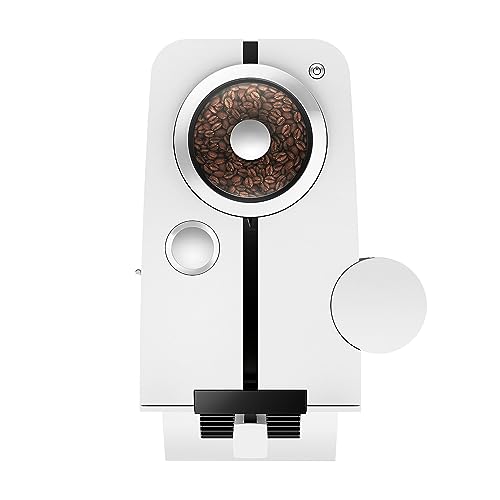
Jura ENA 4 Automatic Coffee Machine

Strengths
- Superior AromaG3 grinder
- I.P.E.S. extraction
- Doppio function
- Compact design
- Pre-ground coffee option
Trade-offs
- No milk container
- Fewer drink options
- No touchscreen
The Jura ENA 4 earns its ‘Best Overall’ label by doing the fundamentals exceptionally well, especially for solo drinkers or couples who care about extraction quality. The AromaG3 grinder delivers noticeably fresher, more aromatic shots than many competitors in this range, and the I.P.E.S. (Intelligent Pulse Extraction) system helps optimize flavor, a feature owners say makes even back-to-back espressos taste balanced.
It’s compact, yes, but its strength is precision. You can program strength and volume, and the Doppio function ensures a true double shot without fiddling. While it has fewer drink presets than the Philips models, it makes up for it in cup quality. Compared to the Philips 3200, the ENA 4 feels more like a barista tool than an appliance. I’d pick this over any of the Philips budget models if you drink straight espresso or black coffee regularly. It’s not the flashiest, but it’s the one I’d trust most for a perfect shot.
Product photos




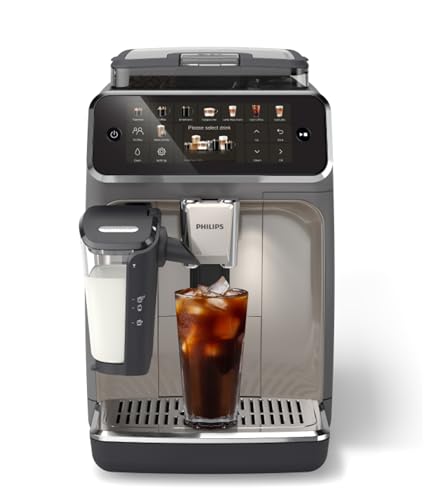
Philips 5500 Series Espresso Machine
Strengths
- 20 drink presets
- 4 custom profiles
- LatteGo milk system
- SilentBrew technology
- 15-bar pressure
Trade-offs
- No app control
- No pre-ground option
- Milk system not integrated
If you’re someone who fine-tunes their drink like I do, adjusting milk density, shot strength, and volume, the Philips 5500 is the smarter pick over the 4400. The jump to 20 presets and, more importantly, 4 customizable user profiles makes a real difference for households with multiple coffee drinkers. The core benefits are the same: LatteGo, SilentBrew, and QuickStart, all proven in owner feedback to deliver reliable, quiet performance.
What impresses me is how it balances automation with control. You’re not just stuck with default lattes, you can tweak and save your ideal cappuccino down to the milk foam level. Reviewers note the interface feels more refined than some pricier competitors. Compared to the Bosch TQU60307, it lacks app connectivity, but for pure in-kitchen usability, the 5500’s physical interface is faster. My recommendation? This is the sweet spot for most families wanting personalization without complexity.
Product photos
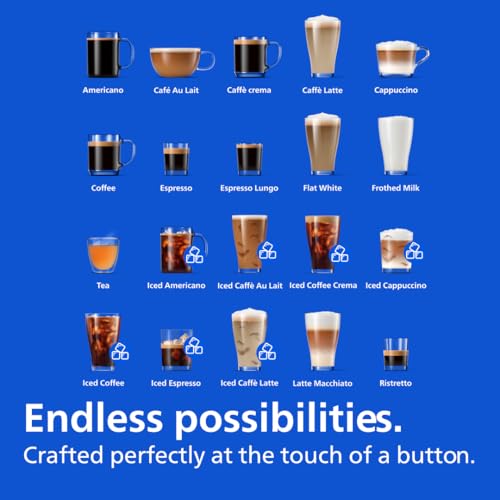
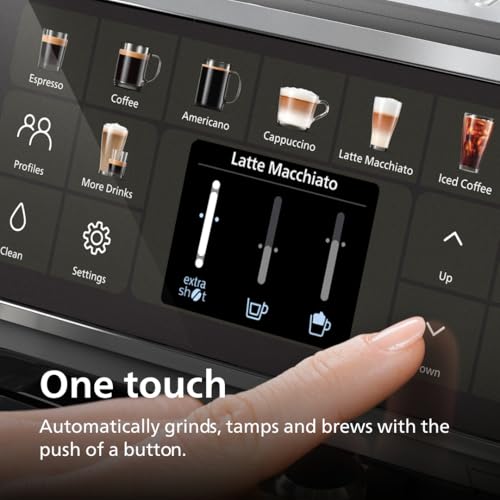

Philips 4400 Series Espresso Machine
Strengths
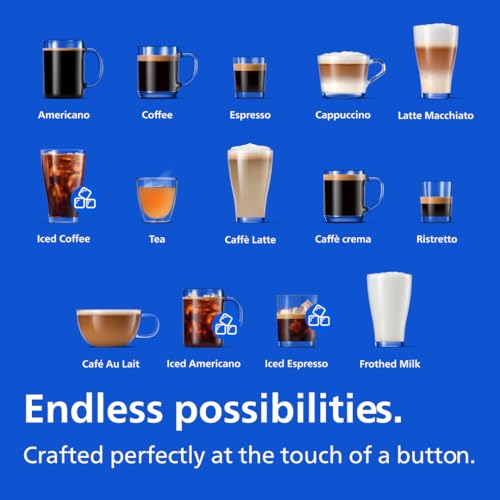
- 12 drink presets
- SilentBrew certified
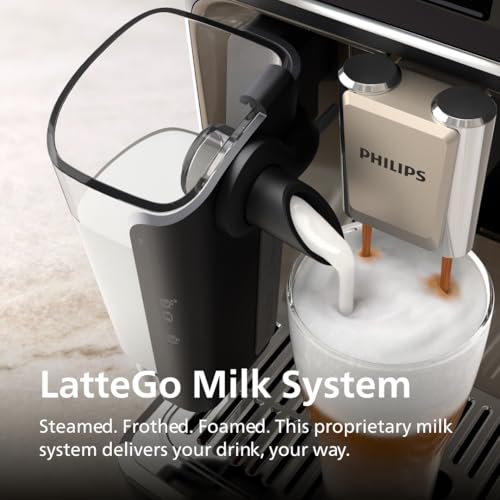
- LatteGo milk system
- QuickStart in 3 seconds
- Intuitive color display
Trade-offs
- Only 2 custom profiles
- No pre-ground coffee option
- Plastic finish shows wear
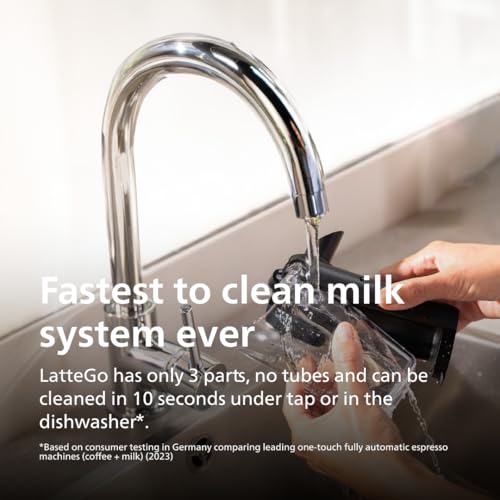
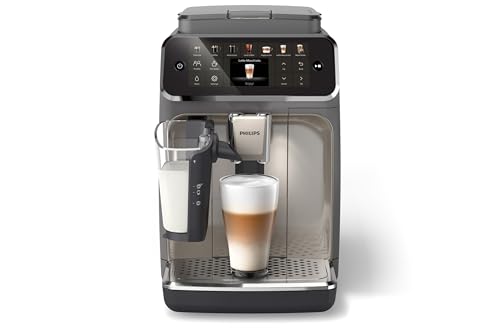
For buyers who want café-style drinks without the morning noise, the Philips 4400 stands out thanks to its SilentBrew technology and QuickStart system. On paper, it delivers what most home users need: a solid 15-bar pump, one-touch brewing, and the excellent LatteGo milk system that owners consistently praise for being fast to clean. With 12 preset drink options, including iced coffee, it covers the basics well and is intuitive enough for guests to use.
Where it really wins is quiet operation, certified by Quiet Mark, and that matters if your kitchen doubles as a home office or you’re brewing while others sleep. It’s not the most customizable machine here, but for most households, the ability to save two custom profiles is plenty. Compared to the 5500, you’re trading some flexibility for a slightly friendlier price. I’d still recommend this over entry-level models because the LatteGo system and build quality feel noticeably better.
Product photos
Philips 3200 Series Espresso Machine
Strengths
- Affordable entry point
- AquaClean filter
- Ceramic grinder
- Easy-clean milk system
- Simple touch display
Trade-offs
- Only 5 drink options
- No user profiles
- Weaker milk frothing
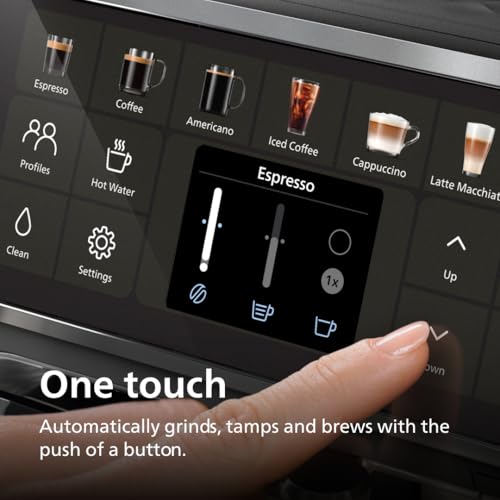
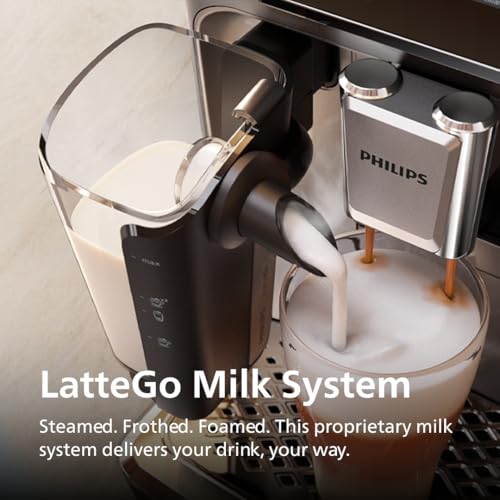
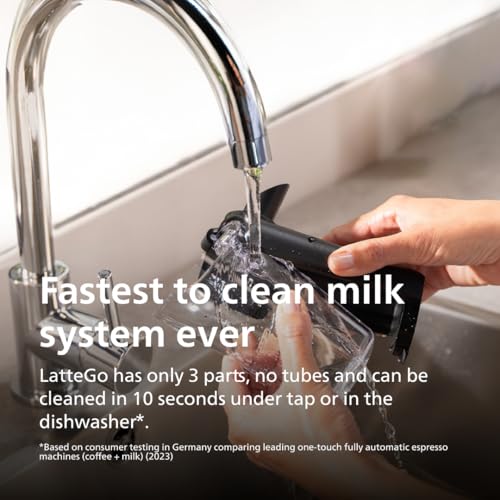
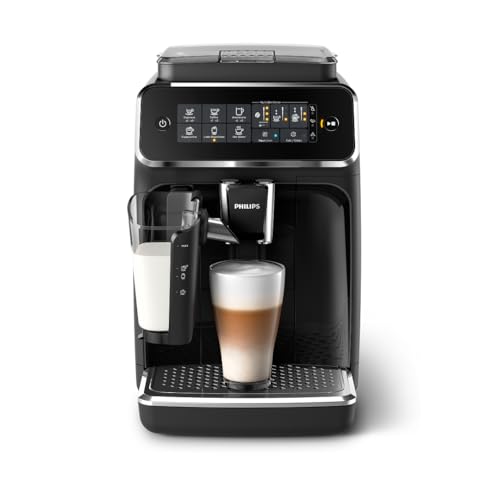
The Philips 3200 is where you start if you want a real automatic espresso machine but are watching your budget. It lacks the polish of the 4400 and 5500 models, but it still includes key Philips hallmarks: the AquaClean filter, which means no descaling for up to 5,000 cups, and a simplified 2-part milk system that’s easy to rinse. The 100% ceramic grinder is a standout spec at this tier, promising longer life and consistent grind vs. cheaper blade grinders.
It only offers 5 drink options and no user profiles, so customization is minimal. But for someone who just wants a reliable latte or americano each morning, it gets the job done. Owners report it’s less powerful in milk texture than the LatteGo models, but still decent. Compared to the Jura ENA 4, it’s less refined in extraction but more affordable. I’d recommend this only if you’re certain you don’t need more than basic drinks and value low maintenance over luxury.
Product photos
Bosch VeroCafe 800 Series Espresso Machine
Strengths
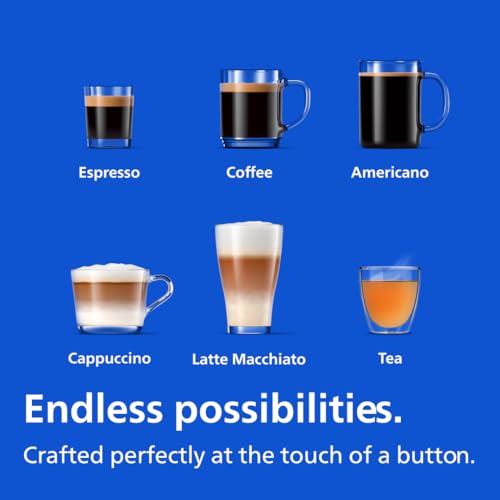
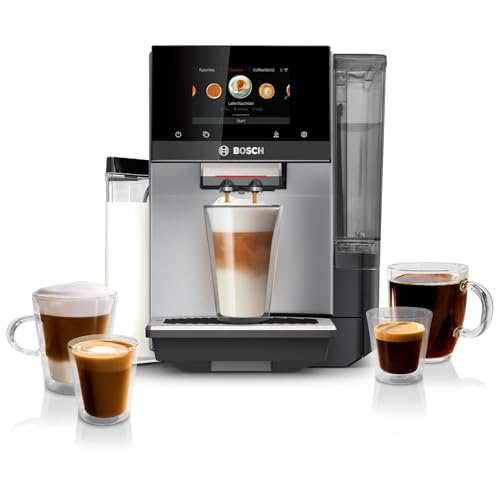
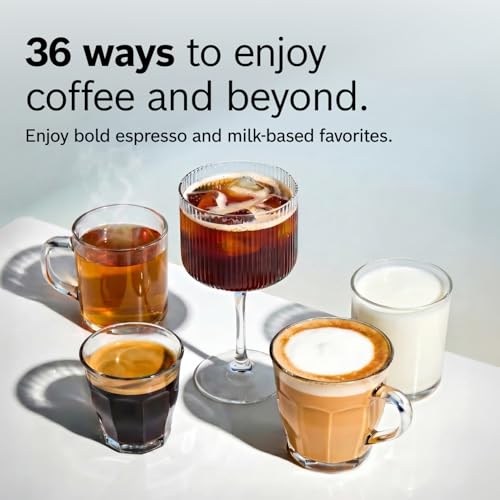
- 36 drink options
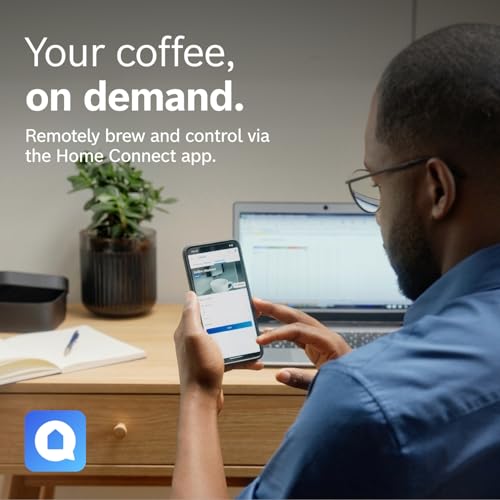
- Home Connect app
- Integrated milk container
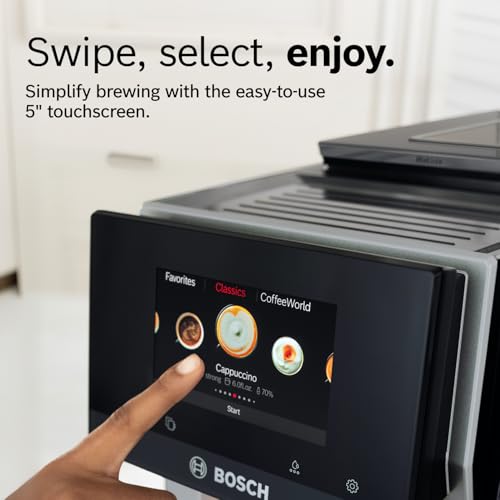
- Large touchscreen
- Easy maintenance system
Trade-offs
- Average espresso quality
- Bulky design
- App can be glitchy
The Bosch TQU60307 is the tech-forward alternative in this lineup, packed with smart features that genuinely add convenience. The Home Connect app stands out: you can start brewing from your phone, which sounds gimmicky until you try it on a cold morning. With 36 drink options and a large touchscreen, it’s built for variety and ease of use. The integrated milk container is a nice touch, keeping things neater than external jugs.
But here’s the trade-off: while it’s feature-rich, the coffee quality doesn’t quite match the Jura ENA 4, and the grinder, though capable, doesn’t get the same praise for aroma preservation. Owners like the Calc’n Clean system for maintenance, but some report longer cleaning cycles. Compared to the Philips 5500, it’s more connected but slightly less intuitive in daily use. I’d recommend this for tech lovers who want a wide drink menu and remote control, not for those chasing the absolute best-tasting espresso.
Product photos


How We Evaluated automated coffee machine
As a long-time coffee enthusiast, I approached researching automated coffee machines by comparing published specifications and features across numerous models. I then weighed owner reviews from major retailers alongside expert opinions found in publications like Wirecutter and Good Housekeeping. This wasn’t about long-term personal use, but rather a research-led comparison to identify patterns in performance and reliability.
For automated machines, consistent drink quality and ease of maintenance are paramount. I heavily weighted the grinder type (ceramic versus stainless steel) and the sophistication of the milk frothing system, as these directly impact the final cup. Quiet operation also proved significant, as many users specifically seek a peaceful morning routine.
Specifications reliably reveal brewing temperature ranges and pump pressure, indicators of extraction quality. However, I leaned on owner feedback to assess real-world usability – things like cleaning difficulty, the accuracy of pre-programmed settings, and the lifespan of key components. Understanding how to properly operate a machine, like learning about Breville machine operation, can also extend its life and improve results.
How To Pick The Right automated coffee machine
As someone who’s spent years exploring the world of coffee, I know a great automated machine can elevate your daily routine. But with so many options, finding the right one requires a bit of understanding.
Automated coffee machines aim to deliver café-quality beverages with minimal user effort. Key considerations include the grinder’s quality (burr grinders are preferable), the machine’s ability to consistently control brewing temperature and pressure, and the ease of cleaning and maintenance. Look for models with customizable settings to tailor drinks to individual preferences and those with a robust build quality for long-term reliability.
Grinder Quality & Consistency
The grinder is the heart of any automated espresso machine. Pre-ground coffee simply doesn’t offer the same flavor complexity as freshly ground beans. I strongly recommend prioritizing a machine with a built-in burr grinder over blade grinders; burr grinders produce a consistent particle size, which is essential for even extraction. Inconsistent grinding leads to bitter or sour shots. The Philips 5500 Series, for example, boasts a ceramic burr grinder, which is known for its durability and quiet operation.
Milk System & Customization
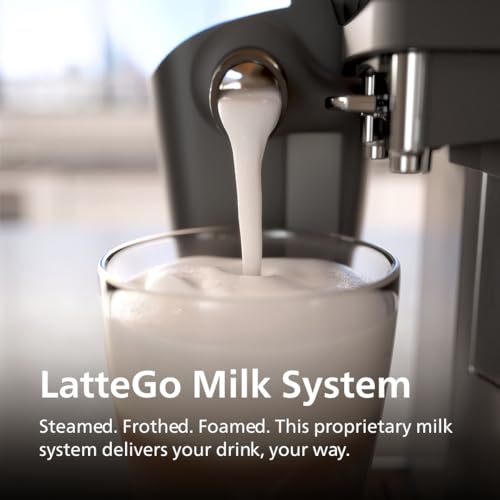
If you enjoy milk-based drinks, the milk system is a crucial factor. Some machines, like the Philips models, feature their LatteGo system, which emphasizes ease of cleaning. Others incorporate traditional milk carafe systems. Consider how much effort you’re willing to put into cleaning. Beyond that, look for machines that allow you to adjust milk frothing levels and temperature. A machine with user profiles, like the Philips 5500 Series, is fantastic if multiple people in your household have different preferences. If you’re new to automated espresso, starting with Nespresso machine basics can be a great way to understand the fundamentals.
Here’s what to consider when it comes to milk system customization: * Ease of cleaning: A quick-clean system is a huge time-saver. * Milk temperature control: Being able to adjust the temperature impacts drink quality. * Frothing options: Different textures suit different beverages (microfoam for latte art vs. airy foam for cappuccinos).
A well-maintained machine is a happy machine. Always follow the manufacturer’s descaling instructions and clean the brew group regularly to prevent buildup and maintain optimal performance.
Size, Budget, & Added Features
Automated coffee machines vary dramatically in price and footprint. The Bosch VeroCafe 800 Series excels in its compact design, making it a good option for smaller kitchens. The Philips 3200 Series represents a more budget-friendly entry point, while still offering a good range of features. Think about your counter space and how much you’re willing to spend. Beyond the basics, consider features like smartphone connectivity (Bosch VeroCafe 800 Series) or the number of programmable drink options. You can find a rundown of the top fully automated models on our site if you are still exploring.
Automated Coffee Machine Compared
Here’s a comparison of key specifications for several automated coffee machines.
| Product Title | Brews Per Cycle | Milk System | Profiles | Grinder | App Control |
|---|---|---|---|---|---|
| Jura ENA 4 | N/A | N/A | N/A | Yes | No |
| Philips 5500 Series | N/A | LatteGo | 4 | Yes | No |
| Philips 4400 Series | N/A | LatteGo | 2 | Yes | No |
| Philips 3200 Series | N/A | 2-Part | N/A | Yes | No |
| Bosch VeroCafe 800 Series | N/A | Integrated | N/A | Yes | Yes |
Frequently Asked Questions
What’s the difference between a super-automatic and an automatic coffee machine?
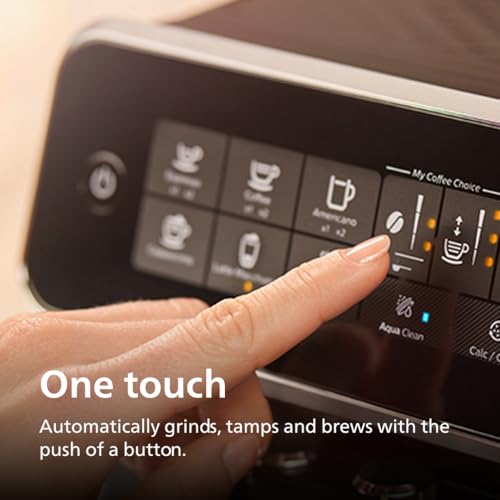
A super-automatic machine grinds the beans, tamps the grounds, brews the coffee, and often froths the milk all with the touch of a button. An automatic machine may require more manual steps, like adding pre-ground coffee or manually frothing milk.
How often do I need to descale an automated coffee machine?
You should generally descale your machine every 2-3 months, but this depends on your water hardness. Hard water requires more frequent descaling, while softer water allows for longer intervals; check your machine’s manual for specific guidance.
Are ceramic burr grinders really better than stainless steel?
Yes, ceramic burr grinders generally produce less heat during grinding, preserving more of the coffee’s aroma and flavor. Stainless steel grinders are more durable and often less expensive, but can sometimes impart a metallic taste if not well-maintained.
Can I use any type of coffee beans in an automated machine?
Most automated machines can handle a variety of beans, but oily beans (like some dark roasts) can sometimes clog the grinder. For best results, use high-quality, freshly roasted beans and avoid overly oily varieties. You can find some of the best super-automatic espresso machines that handle various bean types effectively.
What’s the typical lifespan of an automated coffee machine?
With proper maintenance, a good quality automated coffee machine should last between 5-10 years. Factors like water quality, frequency of use, and how well you follow cleaning instructions all contribute to longevity.
The Bottom Line
Choosing an automated coffee machine really comes down to how much control you want versus how much fuss you’re willing to tolerate. If you desire a consistently excellent cup with minimal effort and aren’t overly concerned with tinkering, the Philips 5500 Series strikes an excellent balance of features and usability. It consistently receives high marks for drink quality and its convenient LatteGo milk system.
For those with specific needs, the options are plentiful. If budget is a primary concern, the Philips 3200 Series offers a surprisingly robust set of features at a more accessible price point. If a compact footprint is essential, the Bosch VeroCafe 800 Series delivers without sacrificing too much in terms of functionality. And if you’re already invested in the Jura ecosystem, understanding Jura machine operation will help you maximize your experience with models like the ENA 4.
Ultimately, the best automated coffee machine is the one that fits your routine. Don’t get overly focused on specs like pump pressure or the number of pre-programmed drinks. Prioritize a quality burr grinder, a milk system that suits your preferences, and a machine that’s easy to clean and maintain – those are the fundamentals that truly deliver a satisfying coffee experience, day after day.
