
Benefits of MCT Oil in Coffee for Energy & Mental Clarity
Adding MCT oil to coffee boosts energy and mental clarity by providing C8 and C10 fats that your liver converts into ketones. For full effect, use a 6:1 C8-to-C10 ratio and a proper emulsification step to prevent separation and ensure rapid absorption without stomach upset.
Most people pour the oil straight in, watch it float, and end up with a greasy, separated drink that does nothing but upset their stomach. They miss the metabolic trigger point entirely.
This guide breaks down the science-backed benefits, the precise method to make it work, and what you’re really paying for when you buy a bottle.
Key Takeaways
- Start with 1 teaspoon of MCT oil to assess tolerance; exceeding 1 tablespoon on day one almost guarantees digestive distress.
- You must use a blender or immersion blender to properly emulsify the oil with the coffee. Stirring does not work.
- The cognitive benefits cited in studies, like improved focus, are linked to a daily dose of 20 grams (roughly 1.5 tablespoons) of MCTs.
- Nearly all MCT oil is sourced from overseas coconuts; “Made in the USA” typically means only the bottling happened stateside.
- Combining MCT oil with carbohydrates, like sugar in your coffee, can significantly blunt its ketone-producing effect.
How MCT Oil Works in Your Body
MCT stands for medium-chain triglyceride. Unlike the long-chain fats in olive oil or butter, these molecules are shorter. That difference is everything. Your body doesn’t need to package them into complex bundles for transport. They go straight from your gut to your liver via the portal vein.
The liver converts MCTs into ketone bodies, an alternative fuel your brain and muscles can use instead of glucose. A 2018 study in the Journal of Alzheimer’s Disease found that a 20-gram daily dose of MCTs elevated ketone levels and was associated with measurable cognitive improvements in older adults.
This is the core mechanism. It’s not just “good fat.” It’s a fuel that bypasses the normal digestive bottleneck. The energy hit feels different. It’s steadier. You don’t get the jittery spike and crash of a pure caffeine blast. Your brain is running on a high-octane, clean-burning fuel source it prefers.
The FDA’s GRAS Notice No. GRN 000121 specifies that commercial MCT oil must contain “not less than 95% of saturated fatty acids with 8 and 10 carbon atoms”, that’s caprylic (C8) and capric (C10) acid. C8 is the fastest to convert to ketones. C10 is slower but still efficient. Most oils are a blend.
TL;DR: MCT oil is a short-chain fat your liver turns directly into ketones, a clean fuel for your brain and body, leading to sustained energy without a sugar crash.
The Proven Benefits (And One Major Caveat)
The touted benefits of MCT oil in coffee, mental clarity, sustained energy, appetite suppression, aren’t marketing fluff. They’re downstream effects of that ketone conversion process. But they hinge on one thing: you’re not drowning the system in sugar at the same time.
Enhanced Mental Focus & Clarity
When your brain uses ketones, it doesn’t experience the same oxidative stress as it does with glucose metabolism. The result is often described as a “clean” mental energy. The chatter quietens. This isn’t placebo. The Journal of Alzheimer’s Disease study demonstrated objective improvement. Users in YouTube testimonials consistently report this effect, with one noting it “definitely helps with my brain clarity and with focus… it really does.”
Sustained Physical Energy
Ketones provide a steady stream of ATP, your cells’ energy currency. Unlike the quick burn of carbohydrates, this release is gradual. It’s why people doing intermittent fasting use it to extend their fasts, it provides fuel without breaking the fasted metabolic state. You can power through a morning workout without hitting a wall.
Appetite Control
Fats are satiating. MCTs, in particular, have been shown to increase the release of hormones like peptide YY and leptin, which signal fullness. Adding a tablespoon to your coffee can push lunch back by an hour or two. It’s a tactical tool for managing calorie intake.
Common mistake: Adding MCT oil to a sweetened coffee or after a carbohydrate-heavy breakfast. The glucose in your system will be used for fuel first, shutting down ketone production and wasting the MCT oil’s unique benefit.
The Major Caveat: The Carb Conflict
This is the part most articles glance over. A randomized controlled MCT ketosis research paper in Scientific Reports examined the effect of glucose on MCT-induced ketosis. The takeaway was stark: consuming carbohydrates alongside MCT oil “significantly blunts” the rise in blood ketones. If you take MCT oil with a sugary coffee or a muffin, you’re paying for premium fuel but putting regular in the tank. The benefits are muted, if they appear at all.
| Benefit | Mechanism | Timeline to Feel It |
|---|---|---|
| Mental Clarity | Brain uses ketones, reducing oxidative stress | 20–45 minutes after ingestion |
| Sustained Energy | Liver steadily converts MCTs to ketone bodies | 30–60 minutes, lasts 3–5 hours |
| Appetite Suppression | Increased peptide YY & leptin hormone release | Within 1 hour, can last 4+ hours |
| Fasting Extension | Provides energy without spiking insulin | Effective immediately upon taking |
TL;DR: The benefits are real but require a low-carb context to work. Adding MCT oil to a sweet drink negates its primary advantage.
MCT Oil vs. Other Coffee Additives
This isn’t about which additive is “better.” It’s about what job you need done. Throwing MCT oil, butter, coconut oil, and almond milk into the same category is a mistake.
MCT Oil vs. Coconut Oil
Regular coconut oil contains MCTs, but it’s only about 55-65% MCTs by weight. The rest is longer-chain fats and lauric acid (C12), which behaves more like a long-chain fat. Pure MCT oil is a concentrated source. Think of coconut oil as whole wheat bread and MCT oil as the extracted gluten, it’s the specific component, isolated. For a rapid ketone boost, MCT oil wins. For general healthy fat intake, coconut oil in coffee is fine.
MCT Oil vs. Butter (Bulletproof Coffee)
Traditional bulletproof coffee combines coffee, butter, and MCT oil. The butter adds flavor, creamy texture, and fat-soluble vitamins. The MCT oil provides the quick ketone conversion. They work together. Using only butter misses the fast-acting component. Using only MCT oil can lack the creamy mouthfeel and taste too thin or slick if not blended perfectly.
MCT Oil vs. Dairy or Plant Milks
Milk, almond milk in coffee, or other creamers primarily dilute and flavor coffee. They add minimal fat (unless it’s full-fat dairy) and often come with sugars or carbs. They don’t trigger ketosis. They’re for taste, not function. If you’re counting calorie content of milk, adding MCT oil adds about 120 calories per tablespoon, pure energy, no protein or carbs.
MCT Oil vs. Flavor Enhancers
Some people add cinnamon coffee benefits for antioxidants and flavor, or a pinch of salt to reduce bitterness. These are complementary. You can absolutely add cinnamon to your MCT oil coffee. The goals are different: one is metabolic, the others are sensory or minor health boosts.
TL;DR: MCT oil is a functional, metabolic tool. Butter complements it, coconut oil is a weaker version, and milk or brown sugar sweetener work against its core purpose.
The Right Way to Blend MCT Oil Into Coffee
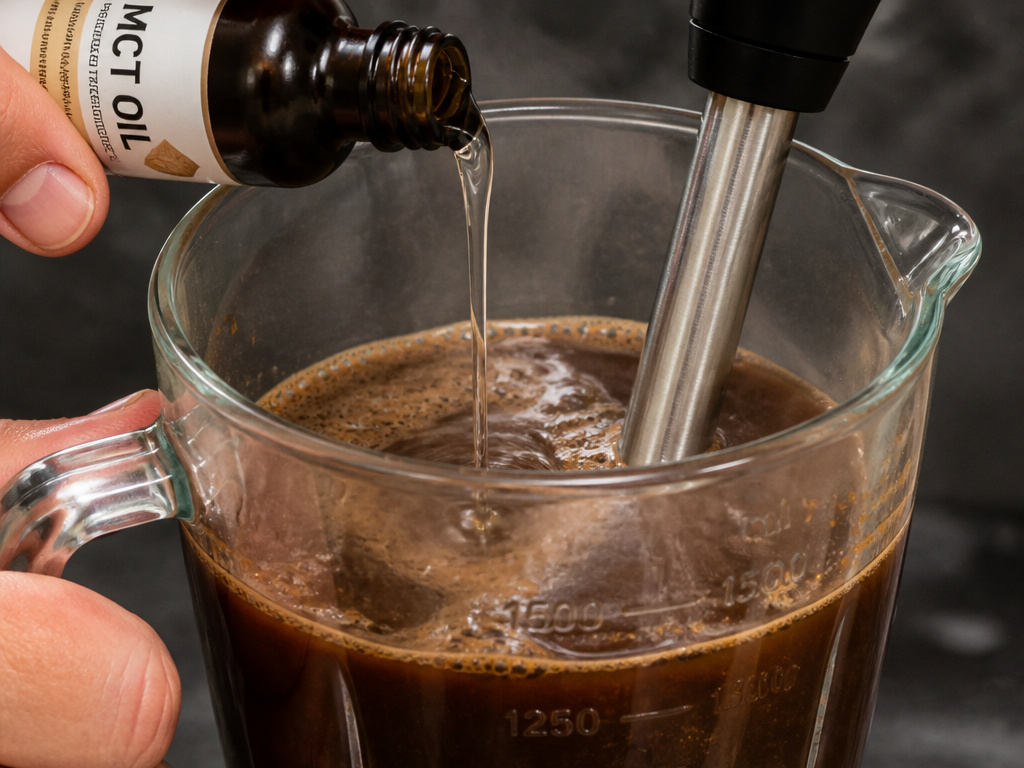
Getting this wrong leads to the two biggest complaints: an oily, separated mess and stomach cramps. The fix is mechanical and dosaged.
Step 1: Start Small. Really Small
Your gut lacks the enzymes to process a large amount of MCTs right away. I learned this the hard way. I added a full tablespoon to my first cup. Thirty minutes later, I was sprinting for the bathroom. Start with 1 teaspoon (5ml). Use that for three to four days. If you feel fine, move to 2 teaspoons. The goal is to reach 1 tablespoon (15ml) without distress. Some people never need more than a teaspoon.
Step 2: You Must Emulsify
Pouring oil into hot coffee and stirring creates a temporary suspension that separates in seconds. You see the slick on top. You need to force the oil and water to mix permanently. That requires a high-speed blender or an immersion blender.
- Brew your coffee hot.
- Add the MCT oil (and butter, if using) to the blender first.
- Pour in the hot coffee.
- Secure the lid tightly, the heat creates pressure.
- Blend on high for 20-30 seconds.
The result is a latte-like froth with no separation. It’s creamy, not greasy. Skipping this step means most of the oil coats your mouth and stomach lining, which can cause nausea and reduces absorption.
Step 3: Consider Flavor Bridges
Pure MCT oil is flavorless. Blended black coffee can taste a bit thin. This is where additions help:
* A pinch of high-quality salt cuts bitterness and enhances perception of sweetness.
* Cinnamon or cacao powder adds flavor and antioxidants.
* A splash of vanilla extract or a few drops of stevia can make it more palatable without adding carbs.
Step 4: Time Your Consumption
Drink your blended coffee within 10 minutes of making it. The emulsion eventually breaks. Also, consider your overall diet. For the best cognitive and energy effects, consume it during a fasted state or at least 3 hours after your last meal.
I won’t recommend starting with the full “bulletproof” recipe (butter + MCT oil) on day one. The combined fat load is brutal on an unprepared system. Get used to the MCT oil alone for a week, then introduce grass-fed butter if you want that richer texture and flavor.
TL;DR: Start with a teaspoon, blend don’t stir, and drink it fast. Your stomach and your taste buds will thank you.
What You’re Actually Buying (The Sourcing Truth)
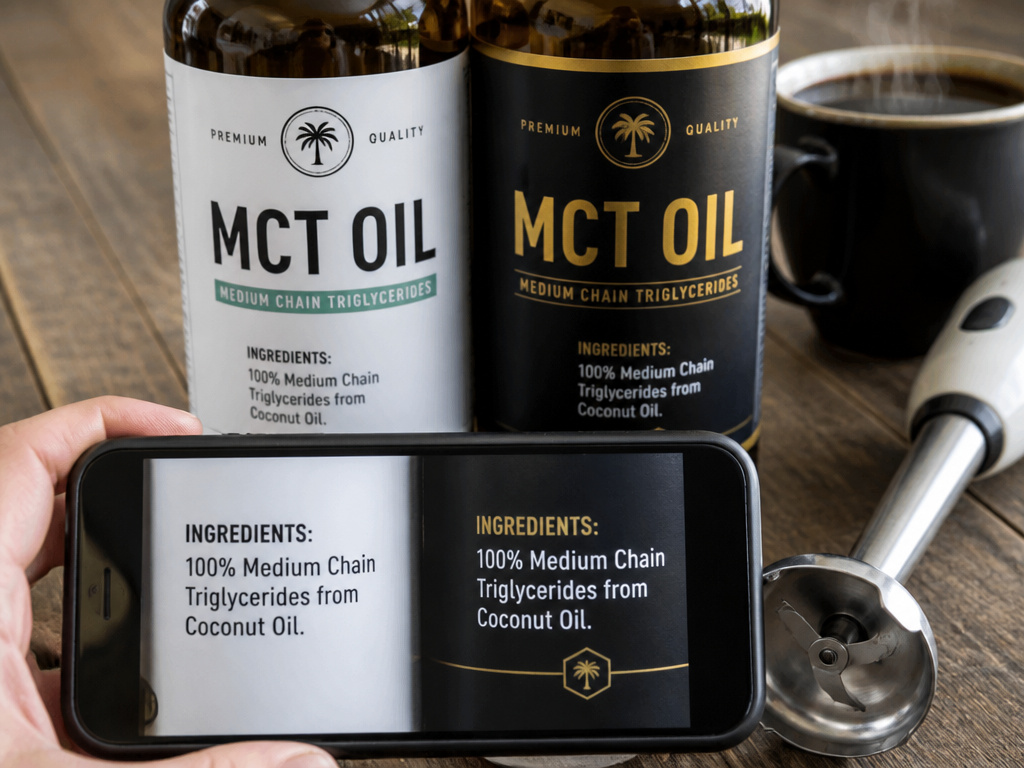
Walk down the supplement aisle and you’ll see MCT oil priced from $12 to $45 for a 16-ounce bottle. The difference is rarely in the oil itself.
As pointed out in a detailed YouTube review, “pretty much all of the MCT oil out there gets their product from the same source.” The coconuts are grown and processed overseas, primarily in Indonesia and the Philippines. The oil is then shipped in bulk to the US or Europe for bottling.
When a label says “Made in the USA,” it almost always means the oil was imported and then bottled, packaged, and labeled domestically. That’s not a bad thing, it’s just marketing. The source material is the same.
What matters more is the C8 to C10 ratio. Some premium brands sell “C8 MCT Oil,” which is almost pure caprylic acid. It’s more expensive because it’s harder to isolate, and it’s purported to convert to ketones even faster. For most people, a standard blend is effective and more affordable.
Common mistake: Paying a 300% premium for a brand that sources from the same overseas suppliers as the budget option. Check the ingredient list: it should say “100% Medium Chain Triglycerides from Coconut/Palm Kernel Oil.” Anything else is filler.
Your money is better spent on a quality blender than on the most expensive bottle of oil. A $30 immersion blender that creates a perfect emulsion will make a $15 bottle of MCT oil effective. A $50 bottle of oil stirred into coffee with a spoon is largely wasted.
Who Should Avoid MCT Oil in Coffee?

It’s not for everyone. In certain contexts, it can be counterproductive or even risky.
People on a Standard High-Carb Diet
If your daily meals are centered around bread, pasta, rice, and sugar, adding MCT oil is like putting premium diesel in a gasoline engine. Your body will prioritize the abundant glucose, and the MCTs will likely just be stored as fat. You’ll get the calories without the benefits.
Those With Digestive Sensitivities
If you have a history of gallbladder issues, pancreatitis, or irritable bowel syndrome (IBS), MCT oil can trigger symptoms. It’s a concentrated fat that demands bile and enzyme activity. Proceed with extreme caution and medical advice.
Anyone New to Intermittent Fasting
Paradoxically, while MCT oil can extend a fast, using it as a crutch from day one can prevent your body from learning to efficiently burn its own stored fat. It’s a tool for later in the fasting journey, not a day-one prerequisite.
People Comparing it to Tea
If you’re exploring coffee alternatives for gentler energy, note that MCT oil is a fat supplement, not a caffeine substitute. The calm focus from green tea benefits comes from L-theanine, not ketones. They are different mechanisms entirely.
Frequently Asked Questions
Does MCT oil in coffee break a fast?
Biochemically, yes. It contains calories (about 120 per tablespoon) and requires digestion, which breaks the technical fasted state. However, because it doesn’t spike insulin like carbohydrates do, many people following intermittent fasting for weight loss still use it without seeing a stall in progress. For autophagy or strict metabolic fasting goals, it’s best avoided.
Can I just use coconut oil instead?
You can, but the effect will be milder and slower. Coconut oil is only about 55-65% MCTs. The rest is longer-chain fats. You’d need to use nearly double the volume to get a similar MCT dose, which changes the flavor and texture significantly.
Why does MCT oil upset my stomach?
You almost certainly took too much, too soon. Your body needs time to upregulate the enzymes that break down MCTs. Start with 1 teaspoon for several days. Always consume it blended into something, never straight off the spoon.
Is there a best time of day to take it?
The most common and effective time is first thing in the morning, either during a fast or with a very low-carb breakfast. This sets your energy and focus for the day. Taking it in the afternoon can interfere with sleep for some people, as the energy boost is sustained.
How does the caffeine interaction work?
The combination is synergistic but different for everyone. The caffeine provides an immediate stimulant effect, while the MCT oil provides a sustained, non-jittery energy foundation. Some find it perfect; others sensitive to caffeine might feel overstimulated. If you’re sensitive, consider using it with black tea comparison or half-caff coffee to moderate the espresso caffeine content.
Before You Go
MCT oil in coffee is a tool, not a magic potion. Its benefits, steady energy, sharp focus, appetite control, are real but conditional. They require you to blend it properly, start with a small dose, and, most critically, consume it in a low-carb context. Paying a premium for fancy branding is unnecessary; the oil inside is virtually identical across most brands. Spend your money on a decent blender instead. That mechanical step is what transforms an oily disappointment into a frothy, effective brain fuel. Give it a honest two-week trial, starting with a teaspoon. You’ll know within days if it’s for you.
