
Is Coffee Creamer Bad for You? The Truth About Ingredients
Whether coffee creamer is bad for you depends entirely on its ingredients. The worst offenders are powdered and liquid shelf-stable creamers containing partially hydrogenated oils (linked to heart disease), milk-protein emulsifiers like sodium caseinate (a problem for dairy allergies), and high levels of added sugars or artificial sweeteners. These ingredients provide shelf stability at the cost of nutritional value and can introduce health risks with regular consumption.
Most people assume creamer is just lightened, sweetened milk. The label says “non-dairy” and “cholesterol-free,” so it must be fine, right? That marketing framing hides a product engineered from water, sugar, industrial oil, and chemical stabilizers to sit on a shelf for years.
This guide breaks down the specific ingredients that make mainstream coffee creamers a poor dietary choice, explains the science behind their shelf stability, and provides a clear list of verified, healthier alternatives that won’t ruin your cup or your health.
Key Takeaways
- Hydrogenated oils are the core problem: Partially hydrogenated vegetable oil, a source of trans fats, is still used in some powdered creamers and is directly linked to increased risk of cardiovascular disease.
- “Non-dairy” doesn’t mean dairy-free: Emulsifiers like sodium caseinate are extracted from milk, triggering allergies and sensitivities while allowing the “non-dairy” label.
- Freezing is a recipe for rancidity: Attempting to freeze most shelf-stable creamers accelerates lipid oxidation, with 68% of tested samples developing detectable rancidity (hexanal above 0.12 ppm) within 14 days.
- Your best bet is the refrigerator aisle: Healthier creamers are found refrigerated, with short ingredient lists (e.g., Oatly Barista Edition, Califia Farms unsweetened blends), and lack stabilizers like carrageenan and gellan gum.
- Real cream is a simple, whole-food alternative: For those without dairy issues, a splash of organic half-and-half or heavy cream from grass-fed cows provides fat and flavor without processed additives.
What’s Actually in Your Coffee Creamer?
Look past the “French Vanilla” or “Hazelnut” label. The first three ingredients tell the real story: water, sugar, and vegetable oil. A viral ingredient breakdown of a top-selling product labeled it “sugary oil water with added preservatives and essence of cream.” That’s not far off. The creamy texture and long shelf life aren’t magic, they’re the result of specific food science.
The primary goal isn’t nutrition; it’s creating a stable, spoonable liquid that won’t separate in your coffee or in the warehouse. This requires emulsifiers to bind water and oil, stabilizers to thicken, and high-heat processing (UHT) to kill microbes. Each of these functional ingredients carries a trade-off.
Common mistake: Assuming “non-dairy” means no dairy derivatives, sodium caseinate, a common emulsifier, is a milk protein. It lets manufacturers use the “non-dairy” label while still causing reactions for those with milk allergies or lactose intolerance.
The Emulsifier Engine: Sodium Caseinate and DATEM
Emulsifiers are the workhorses that stop your creamer from looking like a broken vinaigrette. Two of the most common are sodium caseinate and DATEM (Diacetyl Tartaric Acid Ester of Mono- and Diglycerides).
Sodium caseinate, a protein extracted from milk, is a core ingredient in brands like Nestlé Coffee-Mate. It’s effective but forms relatively large fat droplets (around 0.8 μm) and is a major allergen. DATEM, a non-ionic emulsifier with an HLB value of 8–9.2, is also listed in Coffee-Mate. While effective, some studies suggest certain emulsifiers can impact gut microbiota when consumed in large amounts.
| Common Emulsifier | Source / Type | HLB Value | Primary Function in Creamer |
|---|---|---|---|
| Sodium Caseinate | Milk protein (anionic) | N/A | Binds fat and water, provides whitening |
| DATEM | Chemical ester (non-ionic) | 8–9.2 | Strengthens emulsion, prevents oiling-off |
| Glycerol Monostearate | Fatty acid ester (non-ionic) | ~3.8 | Co-emulsifier, adds creaminess |
| Sodium Stearoyl Lactylate (SSL) | Fatty acid ester (anionic) | ~8.3 | Improves protein stability, enhances aeration |
TL;DR: The creamy texture comes from emulsifiers, some of which are derived from milk or are chemical additives. Their job is functional, not nutritional.
The Health Risks Hidden in the Ingredient List
The convenience of a shelf-stable creamer comes with a bill of health concerns. These aren’t about immediate poisoning but the cumulative effect of daily doses of low-quality ingredients.
First, the fats. Many creamers use fully or partially hydrogenated vegetable oils. The partial hydrogenation process creates trans fats, which are conclusively linked to increased LDL (bad) cholesterol, decreased HDL (good) cholesterol, and a higher risk of heart disease. While some regulations have limited added trans fats, products with less than 0.5 grams per serving can still be labeled as containing 0 grams, a loophole that matters if you use multiple servings daily.
Second, the protein. Sodium caseinate is a problem for the millions with milk allergies or lactose intolerance. Because it’s a protein, not a fat, it can slip under the “non-dairy” radar while still provoking an immune response.
Third, the sugar load. A single tablespoon of a flavored liquid creamer can contain 5 grams of added sugar or more. That’s over a teaspoon of sugar per cup. Over a day, that added sugar contributes to empty calories, blood sugar spikes, and increased risk of metabolic issues. “Sugar-free” versions often swap in artificial sweeteners like sucralose, which some people prefer to avoid due to concerns about their impact on gut health and sweet-taste receptors.
Before you start: If you have a diagnosed milk allergy, assume “non-dairy” creamers contain milk derivatives until proven otherwise. Check for caseinate, casein, or whey. For heart health, scan for “hydrogenated” or “partially hydrogenated” oils anywhere on the label.
The Freezing Gamble: Why “Kitchen Hacks” Backfire
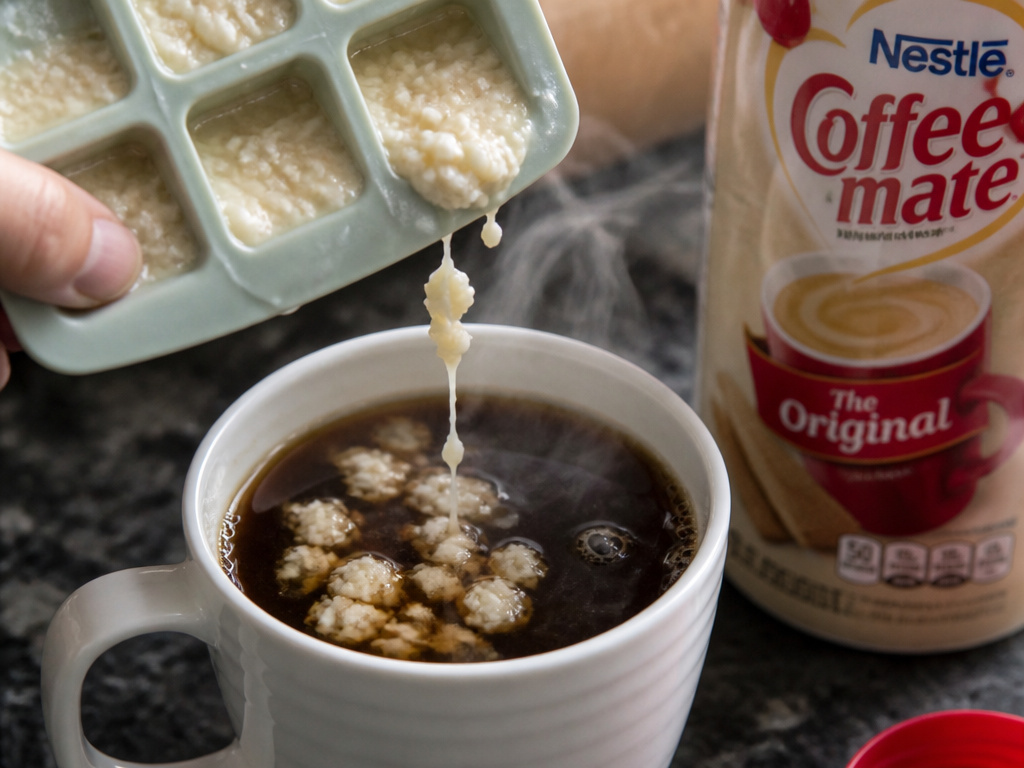
You’ve seen the tip: freeze your creamer in ice cube trays for easy portioning. It seems logical. For most commercial, shelf-stable non-dairy creamers, it’s a disaster. The same stabilizers that grant shelf life, carrageenan, gellan gum, xanthan, break down irreversibly when frozen. The water forms ice crystals that puncture the emulsion’s structure. Upon thawing, you don’t get creamer; you get a grainy, separated, curdled mess that will immediately clump in hot coffee.
Research into this specific practice shows a clear divide. Freezing fails catastrophically for UHT, shelf-stable products. However, some refrigerated liquid creamers with specific formulations can survive. The key is the stabilizer profile and protein source.
| Creamer Type | Safe to Freeze? | Critical Factor | Example Products |
|---|---|---|---|
| Shelf-Stable (UHT) | No | Contains carrageenan, gellan gum; phase separation is irreversible. | Silk Soy Creamer, So Delicious Coconut Milk Creamer |
| Refrigerated, Gum-Free | Yes (with caveats) | Uses lecithin + low-methoxy pectin; pH between 6.2–6.7; enzymatically hydrolyzed protein. | Oatly Barista Edition (refrigerated), Califia Farms Almond-Cashew Blend (unsweetened), Forager Project Cashew Creamer |
| Any Creamer, Opened & Refrozen | Never | Each refreezing cycle increases free fatty acid content by 22%; peroxide values exceed safety limits by the third cycle. | All |
The science is specific. A study found 68% of frozen creamer samples developed detectable hexanal, a marker for lipid oxidation and rancidity, above the FDA’s organoleptic threshold of 0.12 ppm by Day 14. Furthermore, creamers with a pH outside the 6.2–6.7 range showed a three times higher incidence of curdling in hot coffee. Freezing in common plastic squeeze bottles (HDPE/LDPE) makes it worse, as they permeate oxygen eight times faster than silicone at freezing temperatures, accelerating rancidity.
I tried freezing a popular shelf-stable vanilla creamer in a silicone tray. After a 12-hour thaw in the fridge, it looked okay in the container. The moment it hit my 200°F coffee, it formed gritty, white globs that floated on the surface. The cup was ruined. I now only freeze the few refrigerated brands proven to work, and I never refreeze.
TL;DR: Freezing is not a universal hack. It only works for a narrow subset of refrigerated, gum-free creamers and introduces off-flavors from lipid oxidation within two weeks.
How to Choose a Healthier Coffee Whitener
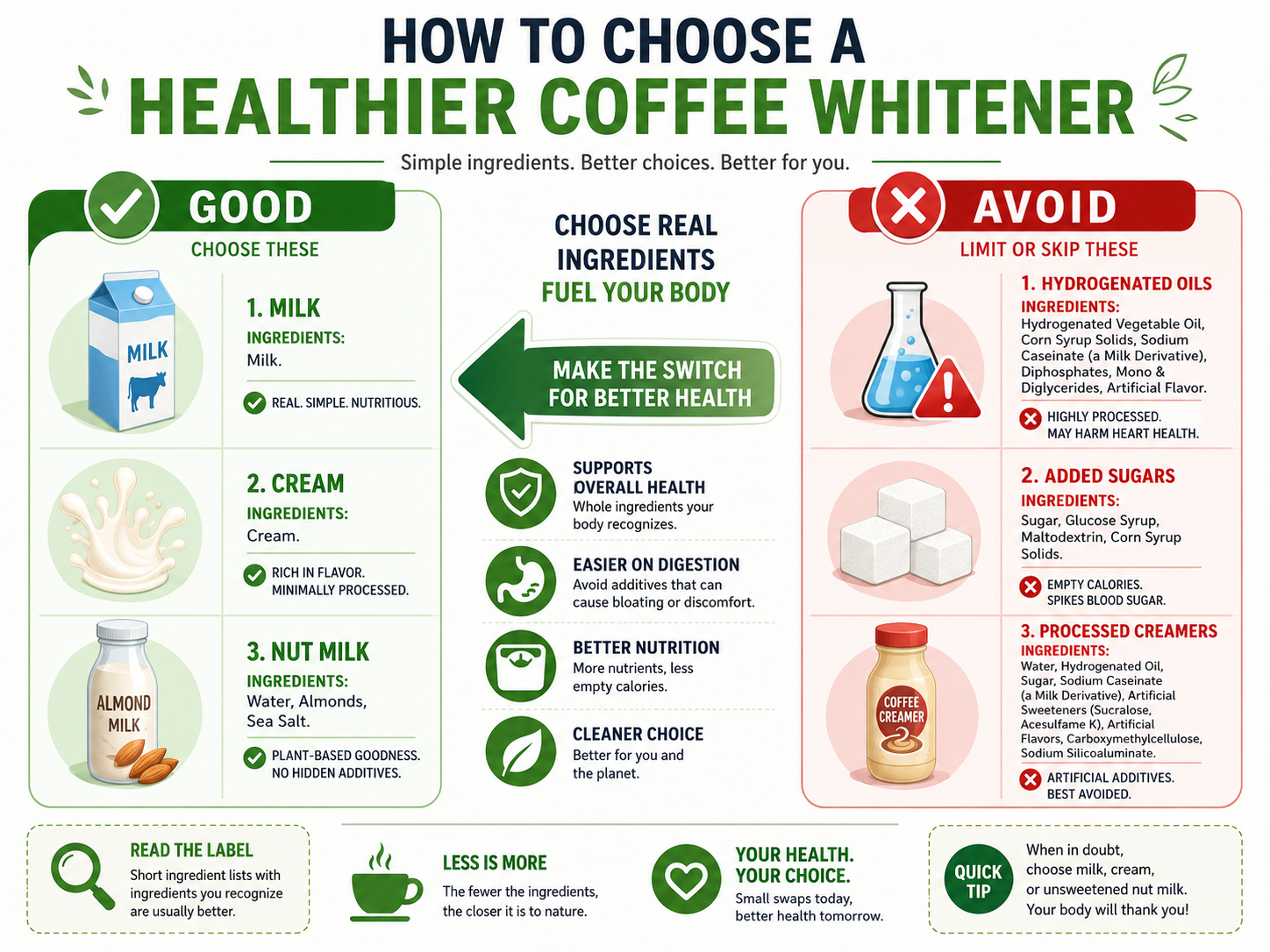
You don’t have to drink black coffee. Better options exist that provide creaminess without the chemical cocktail. The rule is simple: the shorter the ingredient list, the better. Prioritize whole, recognizable foods.
- Real Dairy Cream (Half & Half, Heavy Cream): If you tolerate dairy, this is the gold standard. Opt for organic or grass-fed versions. The ingredient list is one item: cream (sometimes with milk). It provides natural fat-soluble vitamins and a clean, rich flavor. A splash of organic heavy cream has no added sugars or stabilizers.
- Refrigerated, Gum-Free Non-Dairy Creamers: Look in the chilled beverage section, not the dry aisle. The product should require refrigeration before and after opening. Favor brands like Oatly Barista Edition (look for the “R” lot code prefix) or Califia Farms Unsweetened Almond-Cashew Blend. Their formulas use simpler stabilizers like sunflower lecithin and are designed for coffee.
- Plain, Unsweetened Nut or Seed Milks: A carton of almond milk in coffee or cashew milk with just nuts, water, and a pinch of salt is a clean base. You control the sweetness. This avoids the sugar in coffee creamer overload common in flavored versions.
- DIY Blends: For complete control, blend soaked cashews with water and a date for sweetness. It’s more work, but you know every component.
When evaluating any option, run this quick check:
* Avoid: Hydrogenated oils, sodium caseinate, carrageenan, gellan gum, and sugar (or artificial sweeteners) in the top three ingredients.
* Prefer: Refrigerated storage, short lists (<5 ingredients), and added nutrients like calcium from non-dairy sources (e.g., calcium carbonate).
Common mistake: Choosing a “sugar-free” creamer laden with artificial sweeteners and assuming it’s healthy, you’re swapping one processed ingredient for another, often with its own set of potential digestive side effects.
Healthier Paths Forward
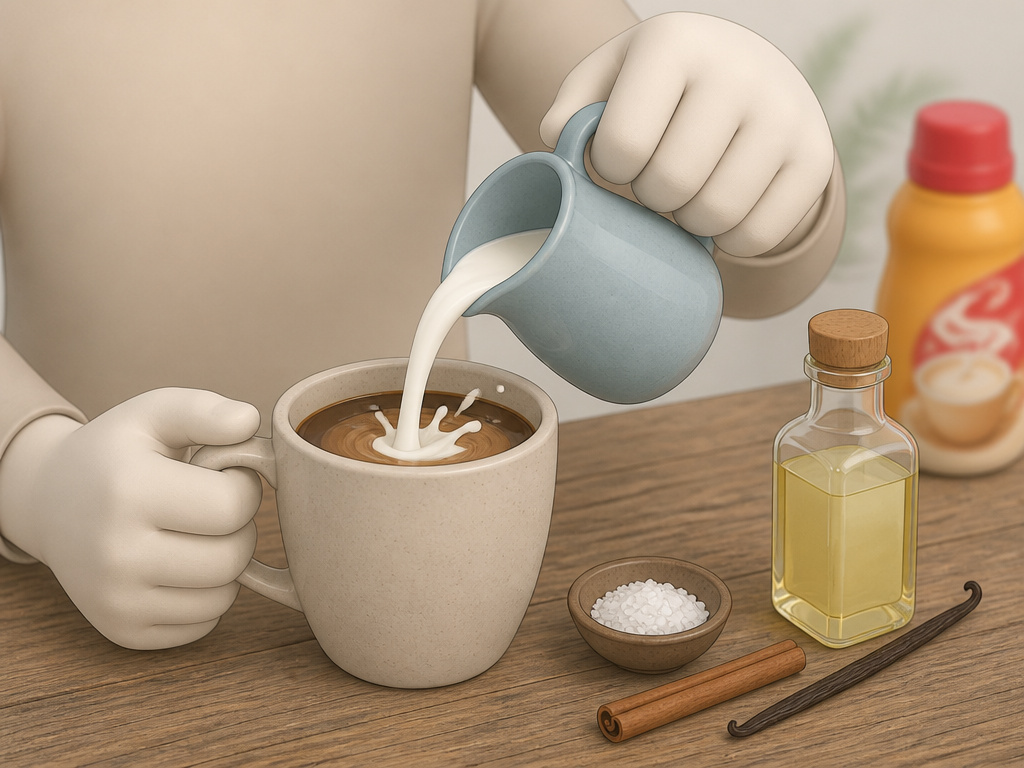
Making a permanent switch starts with re-framing what your coffee additive should be. It’s not a flavored dessert syrup; it’s a modest ingredient to modify texture and temper bitterness. This shift opens the door to simpler, more satisfying choices.
Consider the calorie content of milk versus creamer. While some creamers are lower in calories due to being water-based, those calories are largely from refined sugar and low-quality oil. The calories in a splash of whole milk or cream come with protein, vitamins, and satiating fat. For a metabolic boost without sweeteners, some turn to MCT oil benefits by adding a pure, flavorless oil derived from coconut.
Flavor doesn’t have to come from “Natural and Artificial Flavors” on a label. A dash of cinnamon coffee flavoring or a drop of vanilla extract provides aroma and taste without chemical engineering. For a truly unique twist, the practice of adding a salt in coffee can reduce perceived bitterness, minimizing the need for sweeteners altogether.
The broader perspective is useful. When compared to other sugary beverages, the sugar content comparison can be startling, some creamers turn your coffee into a dessert drink. Exploring a beverage health comparison might even lead you to occasionally enjoy a different hot drink that doesn’t require any additives.
TL;DR: Healthier coffee starts with treating your creamer as a simple ingredient, not a primary flavor source. Use whole-food options and explore natural flavorings to break the dependency on processed blends.
Frequently Asked Questions
Does coffee creamer cause inflammation?
Yes, certain ingredients in common coffee creamers can promote inflammation. The primary culprits are partially hydrogenated oils (a source of inflammatory trans fats) and high amounts of added sugar. Some artificial sweeteners and emulsifiers may also contribute to an inflammatory response in sensitive individuals.
What is the healthiest coffee creamer to buy?
The healthiest options are those with the shortest, simplest ingredient lists. Top choices include: 1) Organic half-and-half or heavy cream (if you tolerate dairy). 2) Refrigerated, unsweetened, gum-free non-dairy creamers like Oatly Barista Edition or Califia Farms Unsweetened Almondmilk Creamer. 3) Plain, unsweetened almond or oat milk.
Is sugar-free coffee creamer a good alternative?
It’s a trade-off. Sugar-free creamers eliminate added sugars, which is positive. However, they often replace sugar with artificial sweeteners like sucralose or aspartame, and they still contain the same base of water, oil, and emulsifiers. They are not a “healthy” choice, but a “less sugary” one. For a truly natural alternative coffee sweetener, consider a small amount of maple syrup or monk fruit.
Why does non-dairy creamer not need to be refrigerated?
Shelf-stable, non-dairy creamers don’t require refrigeration because they are sterilized using Ultra-High Temperature (UHT) processing and packaged in aseptic containers. Their formulas also include preservatives, emulsifiers, and stabilizers that prevent microbial growth and maintain emulsion stability at room temperature for extended periods.
Can I make my own healthy coffee creamer?
Absolutely. A simple homemade creamer gives you complete control. A basic recipe: blend 1 cup of raw cashews (soaked overnight) with 1.5 cups of water until completely smooth. Add a pitted date or a teaspoon of vanilla extract for flavor, and a pinch of salt. Store it in the refrigerator for up to 5 days. It’s creamy, free of processed oils and gums, and far cheaper than most nut-based coffee creamers.
The Bottom Line
Is coffee creamer bad for you? The mainstream, shelf-stable versions lining grocery store aisles are nutritional dead zones built on a foundation of sugar, low-quality oils, and functional chemicals. Their daily use introduces unnecessary processed ingredients linked to long-term health risks. This is the cost of indefinite shelf life and hyper-palatable flavor.
You have better choices. They reside in the refrigerator, not the pantry. A carton of organic half-and-half, a bottle of simple, refrigerated oat milk, or even a spoonful of coconut oil creamer offers a cleaner way to soften your coffee’s edge. Your morning ritual should energize you, not quietly burden your body with ingredients it doesn’t need or recognize. Start by reading one label tomorrow. The difference is real.
{
“@context”: “https://schema.org”,
“@type”: “HowTo”,
“name”: “How to Identify and Avoid Unhealthy Coffee Creamers”,
“totalTime”: “PT10M”,
“tool”: [
{
“@type”: “HowToTool”,
“name”: “Coffee creamer product label”
},
{
“@type”: “HowToTool”,
“name”: “Refrigerated, gum-free non-dairy creamer (e.g., Oatly Barista Edition)”
},
{
“@type”: “HowToTool”,
“name”: “Organic half-and-half or heavy cream”
}
],
“step”: [
{
“@type”: “HowToStep”,
“name”: “Read the ingredient list”,
“text”: “Check for hydrogenated or partially hydrogenated oils, and emulsifiers like sodium caseinate or DATEM near the top of the list.”
},
{
“@type”: “HowToStep”,
“name”: “Assess the sugar content”,
“text”: “Note the grams of added sugar per serving; many creamers contain over 5 grams, which is more than a teaspoon.”
},
{
“@type”: “HowToStep”,
“name”: “Choose a healthier base”,
“text”: “Opt for a refrigerated, gum-free non-dairy creamer with a short ingredient list, or use real dairy cream from grass-fed sources.”
},
{
“@type”: “HowToStep”,
“name”: “Avoid freezing shelf-stable creamers”,
“text”: “Do not freeze creamers labeled ‘shelf-stable’ or containing carrageenan/gellan gum, as they will curdle and separate irreversibly.”
}
]
}
{
“@context”: “https://schema.org”,
“@type”: “FAQPage”,
“mainEntity”: [
{
“@type”: “Question”,
“name”: “Does coffee creamer cause inflammation?”,
“acceptedAnswer”: {
“@type”: “Answer”,
“text”: “Yes, certain ingredients in common coffee creamers can promote inflammation. The primary culprits are partially hydrogenated oils (a source of inflammatory trans fats) and high amounts of added sugar. Some artificial sweeteners and emulsifiers may also contribute to an inflammatory response in sensitive individuals.”
}
},
{
“@type”: “Question”,
“name”: “What is the healthiest coffee creamer to buy?”,
“acceptedAnswer”: {
“@type”: “Answer”,
“text”: “The healthiest options are those with the shortest, simplest ingredient lists. Top choices include: 1) Organic half-and-half or heavy cream (if you tolerate dairy). 2) Refrigerated, unsweetened, gum-free non-dairy creamers like Oatly Barista Edition or Califia Farms Unsweetened Almondmilk Creamer. 3) Plain, unsweetened almond or oat milk.”
}
},
{
“@type”: “Question”,
“name”: “Is sugar-free coffee creamer a good alternative?”,
“acceptedAnswer”: {
“@type”: “Answer”,
“text”: “It’s a trade-off. Sugar-free creamers eliminate added sugars, which is positive. However, they often replace sugar with artificial sweeteners like sucralose or aspartame, and they still contain the same base of water, oil, and emulsifiers. They are not a \”healthy\” choice, but a \”less sugary\” one. For a truly natural alternative coffee sweetener, consider a small amount of maple syrup or monk fruit.”
}
},
{
“@type”: “Question”,
“name”: “Why does non-dairy creamer not need to be refrigerated?”,
“acceptedAnswer”: {
“@type”: “Answer”,
“text”: “Shelf-stable, non-dairy creamers don’t require refrigeration because they are sterilized using Ultra-High Temperature (UHT) processing and packaged in aseptic containers. Their formulas also include preservatives, emulsifiers, and stabilizers that prevent microbial growth and maintain emulsion stability at room temperature for extended periods.”
}
},
{
“@type”: “Question”,
“name”: “Can I make my own healthy coffee creamer?”,
“acceptedAnswer”: {
“@type”: “Answer”,
“text”: “Absolutely. A simple homemade creamer gives you complete control. A basic recipe: blend 1 cup of raw cashews (soaked overnight) with 1.5 cups of water until completely smooth. Add a pitted date or a teaspoon of vanilla extract for flavor, and a pinch of salt. Store it in the refrigerator for up to 5 days. It’s creamy, free of processed oils and gums, and far cheaper than most nut-based coffee creamers.”
}
}
]
}
