
Is Iced Coffee Good for You? The Benefits & Trade-Offs Explained
Iced coffee is good for you when consumed in moderation as black coffee, offering metabolic and cognitive benefits with fewer bitter compounds. It becomes less beneficial when loaded with sugar, syrups, and high-calorie dairy, which can negate its advantages and introduce health risks.
Most people judge iced coffee by its temperature and taste. They miss the chemical and physiological shifts that happen when you drink it cold. The real question isn’t about refreshment. It’s about what the caffeine, acids, and preparation method do inside your body over hours.
This guide breaks down the evidence. We’ll look at the physical effects, compare hot and cold brewing, and show you how to build a cup that supports your health instead of undermining it.
Key Takeaways
- Black iced coffee boosts metabolism and can aid weight management, but adding just two tablespoons of cream and sugar adds roughly 100 empty calories.
- Cold brew coffee extracts up to 60% less acidic compounds than hot coffee, which may reduce stomach irritation for some people.
- Caffeine’s half-life is 5-6 hours; an afternoon iced coffee can disrupt sleep cycles by blocking adenosine receptors long after you finish the cup.
- Iced coffee interacts with common medications like ibuprofen and warfarin, altering their absorption and potency.
- For maximum benefit, use a 1:3 dilution ratio for cold brew concentrate and avoid pre-made syrups.
The 5 Physical Effects of Iced Coffee on Your Body
Your body doesn’t process iced coffee like a neutral beverage. It triggers specific hormonal and neurological responses. Understanding these turns a casual drink into a deliberate choice.
The caffeine in your iced coffee is a adenosine antagonist. Throughout the day, adenosine molecules bind to receptors in your brain, signaling fatigue. Caffeine molecules are a similar shape. They dock in those receptors instead, blocking the sleepy signal. That’s the wake-up call. The problem is timing. Caffeine’s half-life is five to six hours. A 3 PM cold brew means half that caffeine is still in your system at 8 PM, directly interfering with your natural wind-down.
Caffeine blocks adenosine receptors in the brain, preventing the binding of fatigue-signaling molecules. This effect can persist for over six hours, delaying sleep onset and disrupting deep sleep cycles if consumed in the late afternoon.
Iced coffee stimulates gastrin release. This hormone tells your stomach to produce more acid. It’s not the pH of the drink that matters. It’s the bitter taste compounds activating type-two bitter receptors on your tongue. Your brain gets the signal and tells your stomach to gear up. For people with sensitive digestion or acid reflux, this can turn a pleasant iced coffee into a regret within twenty minutes.
Your adrenal glands sit on top of your kidneys. Caffeine prompts them to secrete adrenaline and cortisol. One effect of adrenaline is peripheral vasoconstriction. Blood vessels in your extremities tighten to shunt blood toward your core. Your hands and feet get less circulation. They feel colder. This is why you might need a sweater after a strong iced coffee on a mild day. It’s a mild, temporary stress response.
TL;DR: Iced coffee is a pharmacological agent, not just a drink. It blocks sleep signals, boosts stomach acid, triggers a stress hormone response, and changes blood flow. Dose and timing matter.
Hot vs. Cold: A Chemical Difference
Brewing method changes the chemical profile of your coffee. The compounds that end up in your cup from a cold steep are different from those in a hot extraction. This has direct consequences for how your body reacts.
Hot water, typically between 90°C and 96°C, acts as a powerful solvent. It rapidly extracts oils, acids, and bitter compounds like chlorogenic acid. A Journal of Food Science and Technology study confirmed that hot brewing pulls a wider, more intense range of flavors and acids. This is why a poorly extracted hot coffee can taste unpleasantly sharp or sour. The high temperature also causes rapid oxidation and staling of delicate aroma compounds.
Cold water brewing is a slower, gentler process. It extracts fewer of the acidic compounds and oils soluble only at high temperatures. The same Springer Nature coffee research article found cold brew produces a beverage with a “more balanced taste of sweetness, acidity, and bitterness compared with hot brewed coffee, with a much lower bitter aftertaste.” The lower acidity is tangible. Many people who get stomach upset from hot coffee can drink cold brew without issue.
The trade-off is in the aromatics. Many of the volatile compounds that give coffee its fruity, floral top notes need heat to vaporize and reach your nose. Cold brew often has a deeper, chocolatey, less complex aroma profile. You gain smoothness and digestibility but lose some of the high-end fragrance.
| Brewing Method | Primary Solvent Action | Acidity & Bitterness | Best For |
|---|---|---|---|
| Hot Brew (Iced) | Fast, high-temperature extraction | Higher; more acidic and bitter compounds extracted | Those who want bright, complex acidity and full aroma |
| Cold Brew | Slow, low-temperature immersion | Lower; smoother, less bitter aftertaste | Sensitive stomachs, preference for sweet/chocolatey notes |
TL;DR: Cold brew is chemically smoother and less acidic than hot-brewed coffee chilled over ice. Choose cold brew for digestibility, choose hot brew for aromatic complexity.
The Benefit and Risk Balance Sheet
Is iced coffee good for you? The answer is a conditional yes. The net benefit depends entirely on what you put in it and when you drink it. Let’s assign concrete values to the pros and cons.
On the asset side, black iced coffee delivers real advantages. It’s nearly calorie-free, which makes it a superb tool for weight management. Caffeine increases metabolic rate slightly and can suppress appetite. Research shows it decreases ghrelin (the hunger hormone) and increases peptide YY (the satiety hormone). This is true even for decaf. For a deeper dive on managing your morning cup, our guide on calories in coffee milk breaks down the numbers.
Cognitive and physical performance get a boost. Caffeine enhances focus, reaction time, and endurance. The NCAA considers it a performance-enhancing drug and sets a limit of about 500 mg (roughly 5 cups of coffee) for athletes. The polyphenols in coffee also act as antioxidants, which may support long-term health. You can amplify these benefits with additions like cinnamon coffee, which adds its own antioxidant layer.
The liability column is about additives and timing. This is where most people fail.
Common mistake: Loading iced coffee with flavored syrups and sweetened creamer — a single large specialty drink can contain over 50 grams of added sugar, turning a health-neutral beverage into a dessert that spikes blood sugar and promotes fat storage.
Sugar and high-fat dairy turn a beneficial drink into a sugary, calorie-dense treat. A splash of milk is fine. A venti caramel frappuccino is a milkshake. The acid and caffeine can also exacerbate anxiety, disrupt sleep, and interact with medications. Coffee changes how your body absorbs drugs like ibuprofen and metabolizes others like antidepressants. Always check with your doctor if you’re on medication.
TL;DR: The benefits belong to black iced coffee. The risks are dominated by sugary additives and poor timing. Keep it simple and drink it before noon.
How to Build a Healthier Iced Coffee
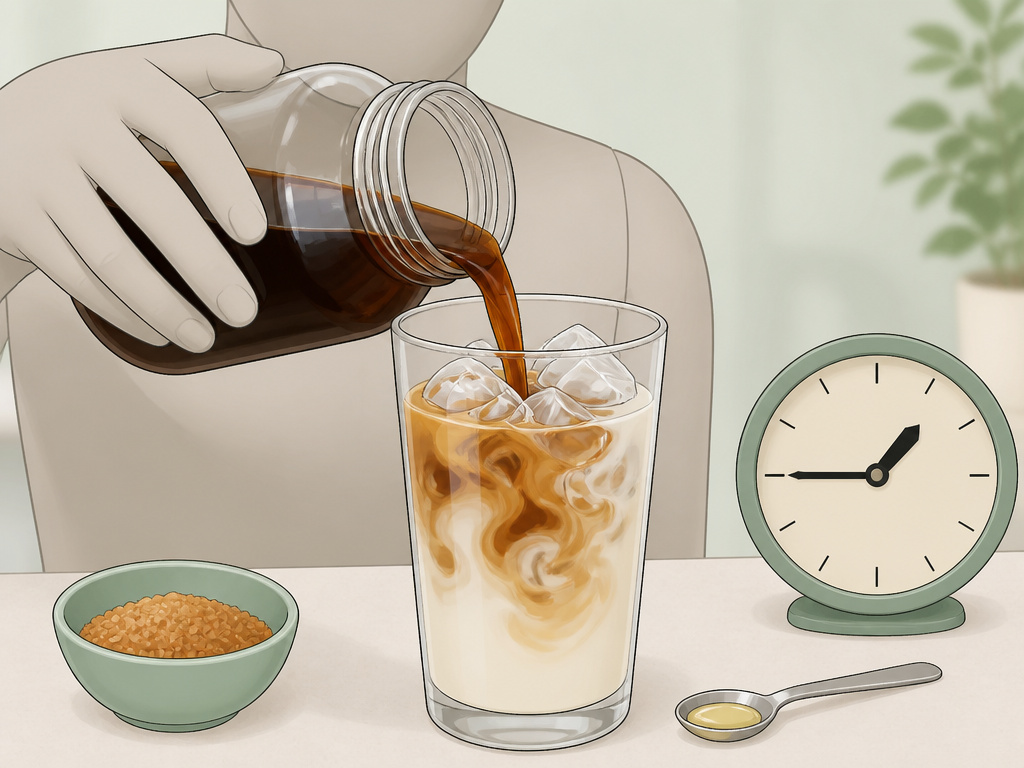
Your goal is to maximize the good parts (antioxidants, caffeine boost) while minimizing the bad (added sugar, digestive upset, sleep disruption). Follow this sequence.
First, start with the right base. Make cold brew concentrate at home. Use the KitchenAid method: 250 grams of coarsely ground coffee to water, steep for 18-24 hours, then strain. This guarantees a smooth, low-acid base. Dilute the concentrate with three parts water or unsweetened milk alternative. For a creamy texture without the dairy calories, try almond milk in coffee. It froths decently and adds a nutty note.
Second, sweeten with intelligence. Avoid liquid sugar and syrup pumps. If you need sweetness, use a tiny amount of a natural option that brings its own flavor. A teaspoon of brown sugar sweetener adds molasses depth. A pinch of salt in coffee can actually reduce perceived bitterness without adding any sweetness at all.
Third, add functional fats. This is where you can turn your coffee into a sustained energy source. Blend in a teaspoon of MCT oil benefits for quick cognitive fuel, or try coconut oil coffee for a richer texture. These fats slow caffeine absorption, preventing a jittery spike and promoting satiety.
Finally, respect the clock. Drink your iced coffee before 2 PM. This gives your body enough time to clear most of the caffeine before evening. If you’re sensitive, stick to one serving. Track how you feel. Jitters, anxiety, or an upset stomach are signs to cut back.
The Hidden Factors: Storage, Beans, and Your Biology
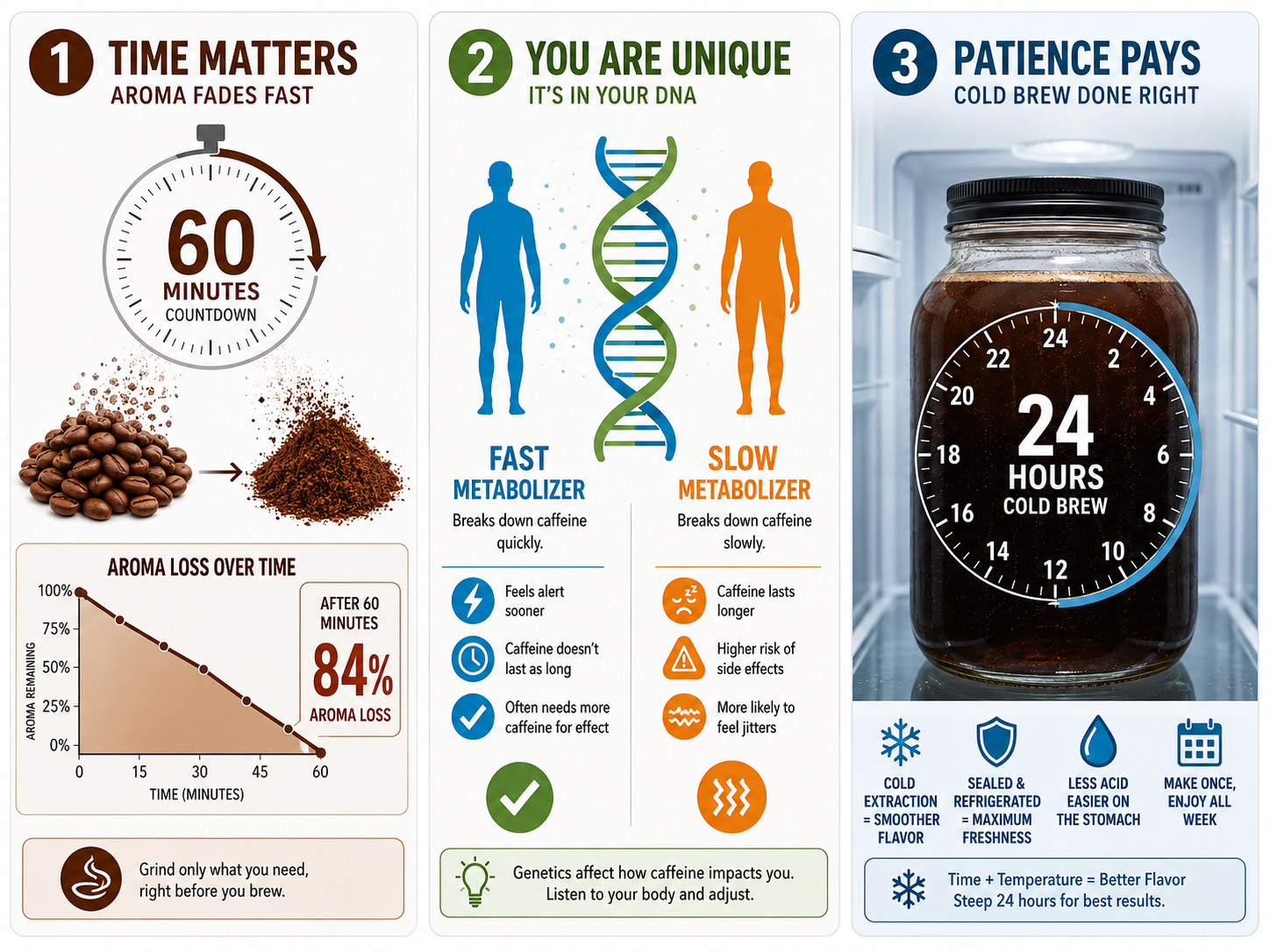
The machine matters, but the raw material and environment matter more. Three hidden factors dramatically change whether your iced coffee is good for you.
Coffee staling is a race against time. Volatile aroma compounds begin degrading the moment beans are ground. One study tracked 2-furfurylthiol, a key coffee aroma molecule, and found an 84% loss in just 60 minutes post-grind when held at serving temperature. Grinding beans fresh for your cold brew is non-negotiable. Use a burr grinder set to a coarse setting immediately before brewing. Pre-ground coffee sold for “iced coffee” is often stale before you open the bag.
Your personal biology is the ultimate governor. Genetics determine how fast you metabolize caffeine through the CYP1A2 enzyme. Fast metabolizers get the benefits with fewer side effects. Slow metabolizers may experience prolonged anxiety and sleep disruption from the same amount. Listen to your body. If coffee makes you uncomfortably jittery, you’re likely a slow metabolizer. Consider switching to half-caff or decaf cold brew.
The storage clock starts after brewing. Iced coffee left on the counter is a breeding ground. According to food safety guidelines, brewed coffee can sit at room temperature for 2-3 hours max. After that, bacterial growth risks increase. Always store your prepared cold brew concentrate or ready-to-drink iced coffee in a sealed container in the refrigerator. Drink it within 24 hours for best quality, 48 hours maximum.
| Factor | Optimal Choice | Risk of Poor Choice |
|---|---|---|
| Bean Freshness | Whole beans, ground just before brewing | Loss of 84% of key aromatics in one hour; flat, stale flavor |
| Your Genetics | Adjust intake based on jitter/anxiety response | Unnecessary side effects, sleep disruption if you’re a slow metabolizer |
| Post-Brew Storage | Sealed container in fridge, consumed within 24 hours | Bacterial growth, off-flavors, and potential foodborne illness after 3+ hours unrefrigerated |
Frequently Asked Questions
Does iced coffee have more caffeine than hot coffee?
Not inherently. Caffeine content depends on the coffee-to-water ratio and brew time, not temperature. A cold brew concentrate, because it uses a high coffee ratio and steeps for 12-24 hours, often has a higher caffeine concentration per ounce. But when diluted properly for drinking, a standard cup of iced coffee or cold brew is in the same 80-120mg caffeine range as hot coffee. For a detailed comparison with other cold drinks, see our analysis of caffeine in iced tea.
Can iced coffee help you lose weight?
Black iced coffee can be a tool in a weight loss plan. It’s calorie-free, can slightly increase metabolism, and may suppress appetite. However, it is not a magic bullet. The moment you add sugar, syrup, or creamy additions, the calorie count skyrockets and any potential benefit is lost. The caffeine boost might also help with workout performance.
Why does iced coffee sometimes upset my stomach?
If you’re drinking hot-brewed coffee that’s been chilled, the higher acid content could be the culprit. Switch to true cold brew, which extracts up to 60% fewer acidic compounds. The caffeine itself also stimulates gastrin production, increasing stomach acid. If problems persist with cold brew, you may have a sensitivity, and reducing portion size or opting for decaf may help. Learn more about coffee and digestion.
Is it bad to drink iced coffee every day?
Drinking black or minimally sweetened iced coffee daily is fine for most healthy adults, provided it doesn’t interfere with sleep or cause anxiety. The key is consistency and moderation—stick to 1-3 cups and finish them before mid-afternoon. Daily consumption of sugary, high-calorie iced coffee drinks is not recommended and contributes to excessive sugar intake.
How does iced coffee affect teeth?
Coffee is acidic and can contribute to enamel erosion over time, whether hot or iced. The tannins in coffee also cause staining. Using a straw can help minimize contact with front teeth. It’s best to wait 30 minutes after drinking coffee before brushing, as brushing immediately after an acid attack can damage softened enamel. Our guide on coffee and oral health has specific strategies.
Before You Go
Iced coffee is good for you when you treat it as a functional beverage, not a dessert. Its value hinges on preparation and moderation. Choose cold brew for a smoother, stomach-friendly experience. Drink it black, or with a splash of unsweetened plant milk and intelligent flavorings. Most importantly, listen to your body’s signals on timing and quantity.
The physical effects are real—from the adenosine blockade in your brain to the gastrin release in your gut. By understanding them, you control the outcome. Make your next cup a deliberate one.
{
“@context”: “https://schema.org”,
“@type”: “HowTo”,
“name”: “How to Make a Healthier Iced Coffee”,
“totalTime”: “PT10M”,
“tool”: [
{
“@type”: “HowToTool”,
“name”: “KitchenAid Cold Brew Coffee Maker or large pitcher”
},
{
“@type”: “HowToTool”,
“name”: “Kitchen scale”
},
{
“@type”: “HowToTool”,
“name”: “Fine mesh strainer or cheesecloth”
}
],
“step”: [
{
“@type”: “HowToStep”,
“name”: “Weigh the coffee”,
“text”: “Measure 250 grams of coarsely ground coffee, as recommended for the KitchenAid cold brew system.”
},
{
“@type”: “HowToStep”,
“name”: “Combine with cold water”,
“text”: “Add the grounds to the brewer or pitcher and cover with cold, filtered water.”
},
{
“@type”: “HowToStep”,
“name”: “Steep for 12-24 hours”,
“text”: “Let the mixture steep in the refrigerator for at least 12 hours, up to 24 for stronger concentrate.”
},
{
“@type”: “HowToStep”,
“name”: “Strain and dilute”,
“text”: “Strain the concentrate through a fine mesh. Dilute with water or milk at a 1:3 ratio (concentrate to liquid) before serving over ice.”
}
]
}
{
“@context”: “https://schema.org”,
“@type”: “FAQPage”,
“mainEntity”: [
{
“@type”: “Question”,
“name”: “Does iced coffee have more caffeine than hot coffee?”,
“acceptedAnswer”: {
“@type”: “Answer”,
“text”: “Not inherently. Caffeine content depends on the coffee-to-water ratio and brew time, not temperature. A cold brew concentrate, because it uses a high coffee ratio and steeps for 12-24 hours, often has a higher caffeine concentration per ounce. But when diluted properly for drinking, a standard cup of iced coffee or cold brew is in the same 80-120mg caffeine range as hot coffee. For a detailed comparison with other cold drinks, see our analysis of caffeine in iced tea.”
}
},
{
“@type”: “Question”,
“name”: “Can iced coffee help you lose weight?”,
“acceptedAnswer”: {
“@type”: “Answer”,
“text”: “Black iced coffee can be a tool in a weight loss plan. It’s calorie-free, can slightly increase metabolism, and may suppress appetite. However, it is not a magic bullet. The moment you add sugar, syrup, or creamy additions, the calorie count skyrockets and any potential benefit is lost. The caffeine boost might also help with workout performance.”
}
},
{
“@type”: “Question”,
“name”: “Why does iced coffee sometimes upset my stomach?”,
“acceptedAnswer”: {
“@type”: “Answer”,
“text”: “If you’re drinking hot-brewed coffee that’s been chilled, the higher acid content could be the culprit. Switch to true cold brew, which extracts up to 60% fewer acidic compounds. The caffeine itself also stimulates gastrin production, increasing stomach acid. If problems persist with cold brew, you may have a sensitivity, and reducing portion size or opting for decaf may help. Learn more about coffee and digestion.”
}
},
{
“@type”: “Question”,
“name”: “Is it bad to drink iced coffee every day?”,
“acceptedAnswer”: {
“@type”: “Answer”,
“text”: “Drinking black or minimally sweetened iced coffee daily is fine for most healthy adults, provided it doesn’t interfere with sleep or cause anxiety. The key is consistency and moderation—stick to 1-3 cups and finish them before mid-afternoon. Daily consumption of sugary, high-calorie iced coffee drinks is not recommended and contributes to excessive sugar intake.”
}
},
{
“@type”: “Question”,
“name”: “How does iced coffee affect teeth?”,
“acceptedAnswer”: {
“@type”: “Answer”,
“text”: “Coffee is acidic and can contribute to enamel erosion over time, whether hot or iced. The tannins in coffee also cause staining. Using a straw can help minimize contact with front teeth. It’s best to wait 30 minutes after drinking coffee before brushing, as brushing immediately after an acid attack can damage softened enamel. Our guide on coffee and oral health has specific strategies.”
}
}
]
}
