
Learn How to Make Instant Coffee With the Right Technique
To make instant coffee, you need three things: the correct coffee-to-water ratio, water heated to 175–195°F (80–90°C), and a thorough 15-second stir. Nescafé Classic specifies 1.8g per 150ml of water; Starbucks VIA uses 3.3g per 236ml. Using boiling water scorches the pre-extracted granules, guaranteeing a bitter, flat cup.
Most people dump granules into a mug, pour in water straight from a rolling boil, and give it a lazy swirl. The granules clump, some sink undissolved to the bottom, and the first sip tastes like burnt cardboard water. They blame the coffee, not the method.
This guide walks through the physics of dissolving freeze-dried coffee, the manufacturer ratios everyone ignores, and how to fix a bad cup after you’ve already made it.
Key Takeaways
- The standard “1-2 teaspoons” advice is wrong without a water volume. A heaping teaspoon can be 3 grams; a level one is 1.5 grams. Measure by weight for consistency.
- Water temperature is non-negotiable. Boiling water (212°F/100°C) drives off volatile aromatics and extracts harsh compounds locked in during the instantizing process. Let boiled water rest for 30 seconds.
- Stirring is a mechanical dissolution step, not a formality. Stir for a full 15 seconds, scraping the bottom and sides of the mug. Undissolved granules at the bottom mean you stirred for 5 seconds.
- Instant coffee is not just for hot drinks. Specific brands like Waka Coffee dissolve in cold water for instant cold brew, and the dry powder is a secret weapon in baking.
- Storage kills flavor faster than you think. An opened jar left on the counter absorbs ambient humidity within two weeks, clumping the granules and muting the aroma. Keep it sealed and dry.
Why Your Instant Coffee Tastes Bad (And It’s Not the Brand)
You followed the instructions on the jar. The result was weak, bitter, or just vaguely coffee-flavored. The problem sits between the kettle and the mug.
Common mistake: Using boiling water directly from the kettle — the extreme heat “cooks” the delicate, pre-extracted coffee solids, driving off the top notes and leaving a flat, harsh base. The cup tastes burnt regardless of brand.
Instant coffee granules are brewed coffee that has been dehydrated. The process, whether spray-drying or freeze-drying, captures a specific flavor profile at the factory. Pouring 212°F water over it is like reheating a perfectly cooked steak in a blast furnace. The proteins denature again, the fats break down, and you get toughness where there should be tenderness.
The other culprit is ratio guessing. A “teaspoon” is not a standard unit of coffee measurement. My digital scale shows a level teaspoon of one brand’s granules at 1.5 grams. A heaping teaspoon of another’s chunky crystals weighs 3.2 grams. That’s more than double the coffee strength in the same mug of water.
TL;DR: Your water is too hot and your scoop is inconsistent. Cool the water off the boil and use a scale.
The Science of the Granule: What You’re Actually Dissolving
Not all instant coffee is the same powder. The granule size, shape, and density dictate how it dissolves. Large, porous freeze-dried granules dissolve slower but retain more original aroma. Fine, dense spray-dried powder dissolves almost instantly but can taste more generic.
The ISO 6670:2025 instant coffee standard defines sampling methods for bulk units, which speaks to the industrial scale and variability producers manage. Your tiny jar is the end point of a process built for consistency across tons of product. Understanding that the granule is a engineered delivery system changes how you treat it.
You are not brewing coffee. You are rehydrating a coffee extract. This matters because the extraction work is already done. Your job is dissolution, not extraction. Agitation and water temperature are your only tools.
Freeze-dried instant coffee typically exhibits higher porosity and lower bulk density compared to spray-dried products. This structural difference increases the surface area exposed to water, accelerating dissolution but also making the granules more susceptible to flavor degradation from heat and humidity.
If your granules look like little jagged chunks, that’s freeze-dried. If they look like a fine, uniform powder, that’s spray-dried. The chunks need a slightly longer stir. The powder needs slightly cooler water to avoid clumping.
The 3-Step Process for Perfect Instant Coffee
This is the core method. The following sections on ratios, water, and tools all feed into these three actions.
Step 1: Measure the Coffee (Don’t Guess)
This step sets the strength of your entire drink. Guessing guarantees inconsistency.
First, choose your measurement tool. A gram scale is ideal. A dedicated measuring spoon is a good second choice. Your regular teaspoon from the drawer is the wild card. If you must use it, make it a level spoon, not heaped.
Now, consult the table. It compares the vague common advice to the specific numbers from major brands.
| Source | Coffee Amount | Water Volume | Strength Implication |
|---|---|---|---|
| Common Advice | 1–2 tsp | 8 oz (236 ml) | Varies wildly by scoop style |
| Nescafé Classic Spec | 1.8 g | 150 ml | Medium-strength, balanced |
| Starbucks VIA Packet | 3.3 g | 236 ml | Strong, full-bodied |
| Typical “Heavy” Scoop | ~3.5 g | 236 ml | Very strong, potentially bitter |
The takeaway is that “one teaspoon” is meaningless. Weigh your coffee. Start with 1.8 grams per 150 ml of water as a baseline. That’s roughly one level teaspoon of fine granules. Adjust from there based on your preferred caffeine in coffee kick and flavor intensity.
Step 2: Heat the Water to the Right Temperature
This is the step every quick-guide glosses over. “Hot water” is not specific enough.
Boil fresh water in your kettle. Once it reaches a rolling boil, turn off the heat and wait. Thirty seconds is enough for the temperature to drop from 212°F to about 195°F. This is your target zone: 175–195°F (80–90°C).
I used a Thermapen to track the temperature drop in a standard stainless steel kettle. From boil to 195°F took 28 seconds in a 70°F room. In a colder kitchen, it took 35 seconds. Wait until the furious bubbling stops.
Water that’s too cool (below 160°F) won’t fully dissolve the granules, especially the oily compounds, leaving a weak cup with sludge at the bottom. Water that’s too hot scorches the product. You’ll know because the steam coming off the mug smells acrid, not aromatic.
TL;DR: Boil, wait 30 seconds, then pour.
Step 3: Combine and Stir Like You Mean It
Pour the hot water directly onto the granules in the center of the mug. Do not put granules on top of already-poured water.
Now stir. Not a gentle circular motion. A vigorous, purposeful stir for a full 10 to 15 seconds. Your spoon should scrape the bottom and sides of the mug. You are mechanically shearing the granules apart and ensuring every particle contacts the water. Stop when you see no granules floating on the surface or resting on the bottom.
Common mistake: Adding milk or creamer before the coffee is fully dissolved — the dairy fats coat the granules, creating a barrier that prevents complete dissolution. You’ll find gritty sludge at the bottom of an otherwise creamy cup.
Only after a clear, uniform liquid is achieved should you add your almond milk, brown sugar, or other additions.
The Tool You Didn’t Know You Needed (And Two You Can Skip)
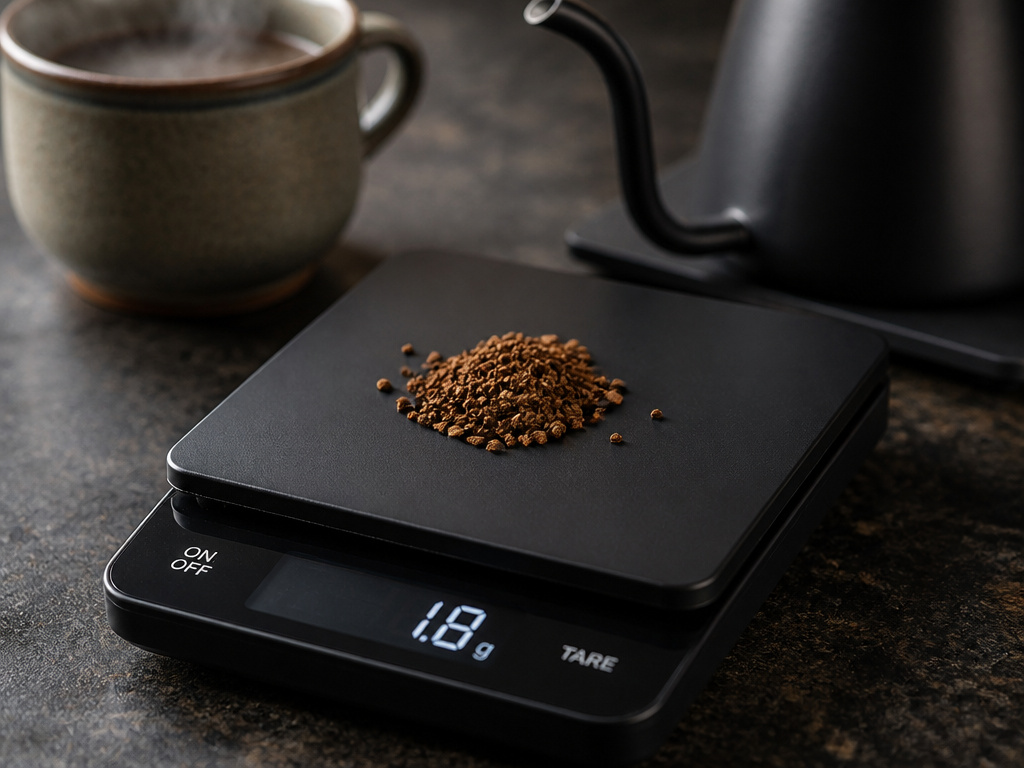
You can make instant coffee with a mug, a spoon, and a heat source. But a couple of specific tools remove the guesswork that ruins most cups.
First, a digital kitchen scale that measures in 0.1-gram increments. This is the single biggest upgrade. It costs less than a bag of specialty coffee and lasts for years. It turns “about a teaspoon” into “1.8 grams.” Consistency from cup to cup is now a given.
Second, a gooseneck kettle with a built-in thermometer. This feels like overkill, but it gives you precise control. You can heat water to 185°F and hold it there. For instant coffee purists, it’s the difference between good and perfect. For everyone else, the standard kettle and 30-second wait works fine.
What you can skip: a frother or blender for basic instant coffee. The agitation from a frother can incorporate air and change the mouthfeel, but it doesn’t improve dissolution over a proper stir. A blender is overkill unless you’re making a large, ice-blended drink.
Water Quality: The Invisible Flavor Variable
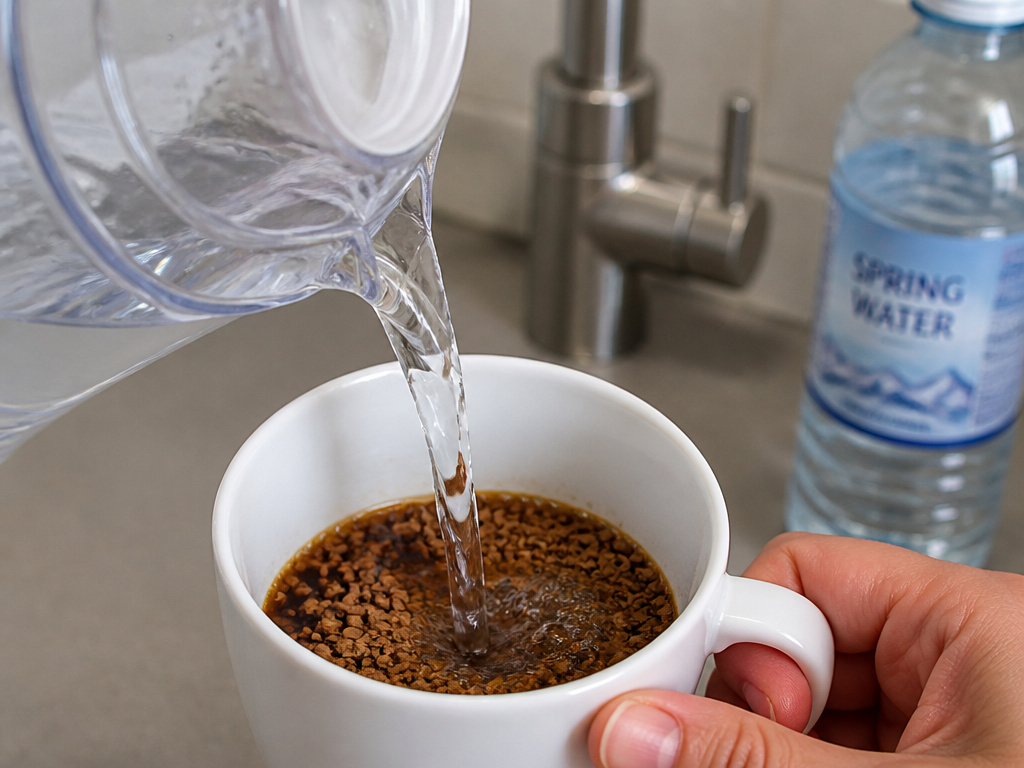
Instant coffee magnifies water flaws. If your tap water tastes like chlorine or minerals, your coffee will taste like chlorinated, mineraly coffee.
The granules are dissolving into that water, not filtering through it like ground coffee. Any off-flavors in the water become central flavors in the cup. Use filtered water if you can. Bottled spring water works in a pinch.
If you’re in a region with very hard water, you might notice a faint film on the surface of your coffee or a chalky aftertaste. That’s the minerals precipitating out. A filter won’t fix extreme hardness, but it helps. This is one reason office coffee from a water cooler often tastes better—it’s made with filtered, softened water.
Beyond the Mug: Creative Uses for Instant Coffee
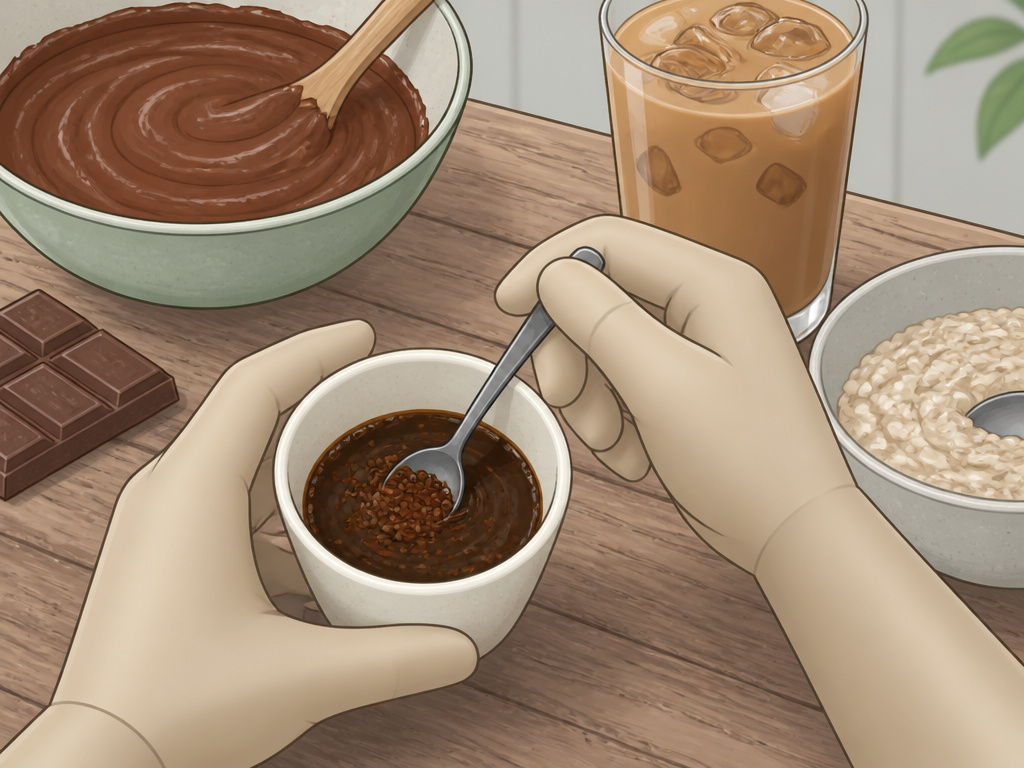
Instant coffee isn’t confined to a morning drink. Its concentrated, soluble form makes it a versatile ingredient.
In Baking and Cooking: A teaspoon of instant coffee granules amplifies the chocolate flavor in brownies, cakes, and frosting. Dissolve it in a teaspoon of hot water first to form a paste, then mix it in. The dry powder can also be mixed into spice rubs for meats to add a deep, roasted note.
For Instant Cold Brew: This is a specific edge case. Brands like Waka Coffee engineer their granules to dissolve in cold water. For standard instant coffee, making a cold drink requires a different approach. Dissolve the granules in a tablespoon of hot water first to form a concentrated syrup, then pour that over ice and add cold water or milk. This prevents the undissolved grit you get from adding granules directly to a cold liquid.
As a Flavor Base: Mix a small amount of instant coffee into yogurt, oatmeal, or smoothies for a coffee flavor without adding liquid. It’s a quick way to add complexity to desserts like tiramisu without brewing espresso.
Experiment with additions like coconut oil coffee for a creamy, energy-boosting drink, or a dash of cinnamon coffee spice for warmth.
Troubleshooting Your Instant Coffee
Your coffee is weak, bitter, or has sludge. Here’s how to diagnose and fix it on the next cup.
| Symptom | Likely Cause | The Fix |
|---|---|---|
| Weak, watery taste | Too little coffee, water too cool | Increase coffee by 0.5g. Ensure water is at least 175°F. |
| Harsh, bitter bite | Water too hot, too much coffee | Let boiling water cool 45 seconds. Reduce coffee by 0.5g. |
| Gritty sludge at bottom | Incomplete stirring, cold milk added too early | Stir for full 15 sec, scraping bottom. Only add milk after full dissolution. |
| No aroma, tastes flat | Old coffee, jar left open, boiling water used | Store jar sealed in a cool, dark place. Use water off the boil. |
| Cloudy appearance | Very hard water, mineral reaction | Use filtered water. This is aesthetic, not a flavor problem. |
If your coffee is already made and tastes bitter, the fastest salvage operation is to add salt to coffee. A single grain or two on the tip of a spoon neutralizes perceived bitterness by blocking certain taste receptors. It’s a chef’s trick that works.
For a weak cup, you can’t add more granules now—they won’t dissolve. Your option is to make a very small, very strong second cup (double the ratio) and combine them.
Frequently Asked Questions
Can you make instant coffee with cold water?
Most standard instant coffee granules will not fully dissolve in cold water. You’ll get floating clumps and sediment. To make an iced coffee, always dissolve the granules in a small amount of hot water first to create a concentrate, then pour that over ice and add cold water or milk. Some specialty brands are formulated for cold dissolution.
Is instant coffee real coffee?
Yes. Instant coffee is made from brewed coffee that is then dehydrated through spray-drying or freeze-drying. It contains coffee solids and caffeine. The USDA National Nutrient Database lists its nutritional profile, confirming it as a source of polyphenols and caffeine, just like brewed coffee.
How much caffeine is in instant coffee compared to regular coffee?
typical 8-ounce cup of instant coffee contains about 60–80 mg of caffeine. A same-sized cup of drip-brewed coffee contains 95–165 mg. Instant coffee generally has less caffeine per serving. For a detailed caffeine comparison with other beverages, we have a full breakdown.
Why does my instant coffee clump in the jar?
Clumping is caused by moisture. If the jar is stored in a humid environment (like near a kettle) or the lid isn’t sealed tightly, the hygroscopic granules absorb water from the air and stick together. To prevent it, always seal the jar tightly and store it in a cool, dry cupboard, not on the counter.
Can you reuse instant coffee grounds?
No. Instant coffee granules are the final product—they are already extracted coffee solids. Adding more water will extract nothing of value. You will get faintly brown, flavorless water. Each portion is for single use.
Is instant coffee bad for you?
Instant coffee contains similar antioxidant compounds as brewed coffee. Some studies suggest it may have slightly lower levels of certain antioxidants and slightly higher levels of acrylamide, a compound formed during high-heat processing, but the amounts are within safe limits for typical consumption. It remains a low-calorie beverage, especially if you watch your calories in coffee from additions.
The Bottom Line
Making great instant coffee is a short discipline. Measure your coffee by weight, not volume. Cool your boiled water for half a minute. Stir with purpose for fifteen seconds. These three actions defeat the bitterness and weakness that define bad instant coffee.
The product in the jar is a finished extract, fragile and precise. Your job is to reconstitute it with care, not assault it with boiling water and hope for the best. When you treat it right, it delivers a consistent, fast, and surprisingly good cup. Keep the jar sealed tight, and don’t be afraid to use it beyond the mug—in baking, in smoothies, or as a base for your own MCT oil coffee experiment. It’s a tool, not a compromise.
{
“@context”: “https://schema.org”,
“@type”: “HowTo”,
“name”: “How to Make Instant Coffee Correctly”,
“totalTime”: “PT3M”,
“supply”: [
{
“@type”: “HowToSupply”,
“name”: “Instant coffee granules”
},
{
“@type”: “HowToSupply”,
“name”: “Fresh, clean water”
},
{
“@type”: “HowToSupply”,
“name”: “Mug or cup”
}
],
“tool”: [
{
“@type”: “HowToTool”,
“name”: “Kettle or method to heat water”
},
{
“@type”: “HowToTool”,
“name”: “Measuring spoon or scale”
},
{
“@type”: “HowToTool”,
“name”: “Stirring spoon”
}
],
“step”: [
{
“@type”: “HowToStep”,
“name”: “Measure the coffee”,
“text”: “Use a teaspoon or scale. For a standard 8-oz mug, start with 1 to 2 teaspoons (roughly 1.5 to 3 grams) of instant coffee granules.”
},
{
“@type”: “HowToStep”,
“name”: “Heat the water to the right temperature”,
“text”: “Bring fresh water to a boil, then let it sit for 30 seconds. Target water temperature is 175–195°F (80–90°C).”
},
{
“@type”: “HowToStep”,
“name”: “Combine and stir thoroughly”,
“text”: “Pour the hot water directly over the granules in your mug. Stir vigorously for 10-15 seconds until no granules remain on the surface or bottom.”
},
{
“@type”: “HowToStep”,
“name”: “Customize and serve”,
“text”: “Add milk, creamer, sugar, or other flavorings like a pinch of salt or cinnamon only after the coffee is fully dissolved.”
}
]
}
{
“@context”: “https://schema.org”,
“@type”: “FAQPage”,
“mainEntity”: [
{
“@type”: “Question”,
“name”: “Can you make instant coffee with cold water?”,
“acceptedAnswer”: {
“@type”: “Answer”,
“text”: “Most standard instant coffee granules will not fully dissolve in cold water. You’ll get floating clumps and sediment. To make an iced coffee, always dissolve the granules in a small amount of hot water first to create a concentrate, then pour that over ice and add cold water or milk. Some specialty brands are formulated for cold dissolution.”
}
},
{
“@type”: “Question”,
“name”: “Is instant coffee real coffee?”,
“acceptedAnswer”: {
“@type”: “Answer”,
“text”: “Yes. Instant coffee is made from brewed coffee that is then dehydrated through spray-drying or freeze-drying. It contains coffee solids and caffeine. The USDA National Nutrient Database lists its nutritional profile, confirming it as a source of polyphenols and caffeine, just like brewed coffee.”
}
},
{
“@type”: “Question”,
“name”: “How much caffeine is in instant coffee compared to regular coffee?”,
“acceptedAnswer”: {
“@type”: “Answer”,
“text”: “typical 8-ounce cup of instant coffee contains about 60–80 mg of caffeine. A same-sized cup of drip-brewed coffee contains 95–165 mg. Instant coffee generally has less caffeine per serving. For a detailed caffeine comparison with other beverages, we have a full breakdown.”
}
},
{
“@type”: “Question”,
“name”: “Why does my instant coffee clump in the jar?”,
“acceptedAnswer”: {
“@type”: “Answer”,
“text”: “Clumping is caused by moisture. If the jar is stored in a humid environment (like near a kettle) or the lid isn’t sealed tightly, the hygroscopic granules absorb water from the air and stick together. To prevent it, always seal the jar tightly and store it in a cool, dry cupboard, not on the counter.”
}
},
{
“@type”: “Question”,
“name”: “Can you reuse instant coffee grounds?”,
“acceptedAnswer”: {
“@type”: “Answer”,
“text”: “No. Instant coffee granules are the final product—they are already extracted coffee solids. Adding more water will extract nothing of value. You will get faintly brown, flavorless water. Each portion is for single use.”
}
},
{
“@type”: “Question”,
“name”: “Is instant coffee bad for you?”,
“acceptedAnswer”: {
“@type”: “Answer”,
“text”: “Instant coffee contains similar antioxidant compounds as brewed coffee. Some studies suggest it may have slightly lower levels of certain antioxidants and slightly higher levels of acrylamide, a compound formed during high-heat processing, but the amounts are within safe limits for typical consumption. It remains a low-calorie beverage, especially if you watch your calories in coffee from additions.”
}
}
]
}
