
The Top Benefits of Adding Honey to Your Morning Coffee
Swapping sugar for honey in coffee provides a more complex sweetness, introduces trace antioxidants and minerals, and has a lower glycemic impact than refined white sugar. The key is using a darker, raw honey and adding it after your coffee has cooled slightly.
Most people reach for honey thinking it’s just a different kind of sweet. They miss the part where the type of honey, clover, buckwheat, orange blossom, changes everything. Light clover honey dissolves fast but tastes flat in a dark roast. Buckwheat honey can overpower a light Ethiopian.
This guide walks through the science, the pairing mistakes, and the method that actually preserves honey’s benefits.
Key Takeaways
- Raw, dark honey like buckwheat carries significantly higher antioxidant levels than light clover honey, per USDA and food chemistry studies.
- Honey is about 40% fructose and 35% glucose; this fructose dominance is why it tastes sweeter gram-for-gram than table sugar and has a lower glycemic index.
- Adding honey to coffee hotter than 104°F (40°C) degrades beneficial enzymes like diastase and invertase within seconds.
- For flavor pairing, match delicate honey (acacia, orange blossom) with light roasts, and robust honey (buckwheat, manuka) with dark roasts.
- The common mistake is treating all honey the same, using a light honey in a bold coffee just makes it taste like sweetened ash.
The Science of Honey’s Sweetness: Fructose vs. Glucose
White table sugar is sucrose, a 50/50 split of glucose and fructose bound together. Honey’s sugar profile is different. According to the USDA FoodData Central entry for regular honey, 100 grams contains about 82 grams of total sugars. The breakdown is roughly 40.9 grams of fructose and 35.7 grams of glucose.
That fructose edge matters. Fructose tastes sweeter to our palate than glucose. This is why a teaspoon of honey can taste sweeter than a teaspoon of white sugar, even though it contains slightly fewer calories per gram. You might use less.
Honey’s fructose-to-glucose ratio is why it has a lower glycemic index (GI) than table sugar. The GI for honey averages around 58, while table sugar sits at about 65. This means honey causes a slower, more gradual rise in blood sugar.
The free fructose and glucose in honey also dissolve more readily than sucrose crystals. You still need to stir more, honey is viscous. But once dissolved, it integrates fully, without the gritty after-feel you sometimes get with undissolved sugar at the bottom of a cup.
TL;DR: Honey is sweeter-tasting and lower-GI than white sugar because of its higher fructose content. Use less of it.
Why Honey Works Better Than Sugar (It’s Not Just Antioxidants)
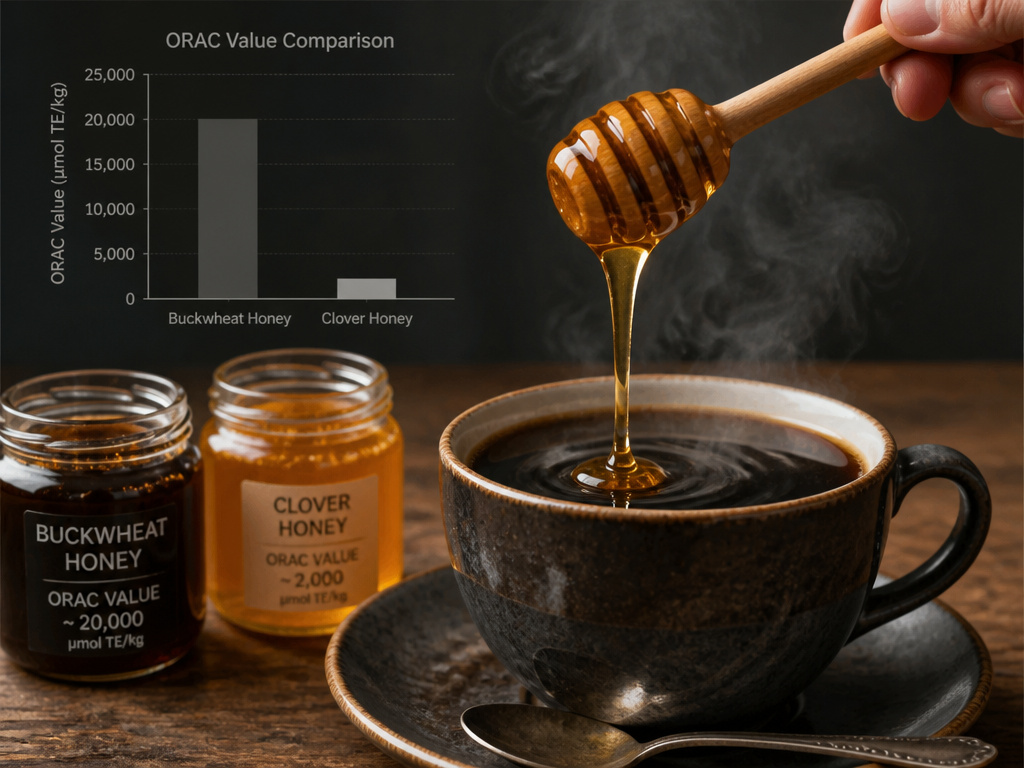
Yes, honey has antioxidants. A 2000 study in Food Chemistry noted that antioxidant capacity varies wildly by floral source. Buckwheat honey scored high; clover honey scored low. But the benefits of swapping go beyond that.
First, honey is a pre-digested sugar. Bees add enzymes like invertase that break down nectar’s complex sugars into the simple fructose and glucose we see. Your body has to do less work. Second, it brings trace amounts of minerals, potassium, calcium, magnesium, and amino acids that refined sugar strips out entirely. We’re talking milligrams per serving, not a nutritional powerhouse, but it’s something.
Common mistake: Using processed, filtered “supermarket honey” – the clear, golden liquid. This honey is often heated to high temperatures for filtration and shelf stability, which destroys the very enzymes and reduces the polyphenol content that makes honey interesting. You’re left with flavored syrup.
The real advantage is flavor layering. Sugar just adds sweetness. A good honey adds floral, earthy, or herbal notes. It can complement a coffee’s inherent flavors instead of masking them. A bright, fruity Kenyan coffee paired with a orange blossom honey can elevate the citrus notes. A smoky Sumatran paired with a dark buckwheat honey leans into the molasses and malt.
How to Add Honey to Coffee Without Losing Benefits
The YouTube transcript from a holistic channel was clear: heat destroys honey’s enzymes and vitamins. It doesn’t make it “toxic,” but it turns a live food into a dead sweetener. The cited threshold is often 104°F (40°C). Coffee brews between 195°F and 205°F.
You have two paths. First, let your coffee cool for a minute off the boil. This drops the temp into the 160s-170s. It’s still hot enough to dissolve the honey but gentler on its delicate components. Second, if you must have it piping hot, add a splash of cool milk or cream first to bring the temperature down, then stir in the honey.
The sequence is non-negotiable. Pour coffee, wait 60 seconds, add honey, stir vigorously for 15 seconds. Skipping the wait means the heat zaps the enzymes diastase and invertase in under ten seconds. You lose the pre-digestion benefit and some of the nuanced flavor.
| Step | Action | Why It Matters |
|---|---|---|
| Brew & Wait | Let coffee sit 30-60 seconds after brewing. | Lowers temperature from ~200°F to ~160°F, preserving enzymes. |
| Measure | Use 1 tsp (7g) dark raw honey per 8 oz cup. | Dark honey has higher antioxidant load; this is a starting dose. |
| Stir Vigorously | Stir for 10-15 seconds until fully dissolved. | Honey’s viscosity requires more agitation than sugar to prevent sinking. |
| Taste & Adjust | Add another 1/2 tsp if bitterness persists. | Dark roasts may need more sweetness to balance roast bitterness. |
I learned this the hard way with a prized jar of raw sourwood honey. I dumped it straight into a just-pulled espresso shot. The resulting cup was simply hot and sweet, none of the delicate vanilla and anise notes the honey was known for. I’d paid for nuance and boiled it away in an instant.
TL;DR: Let your coffee cool for a minute before adding raw honey. Direct scalding destroys the enzymes that make honey more than just sugar.
Choosing the Right Honey for Your Coffee
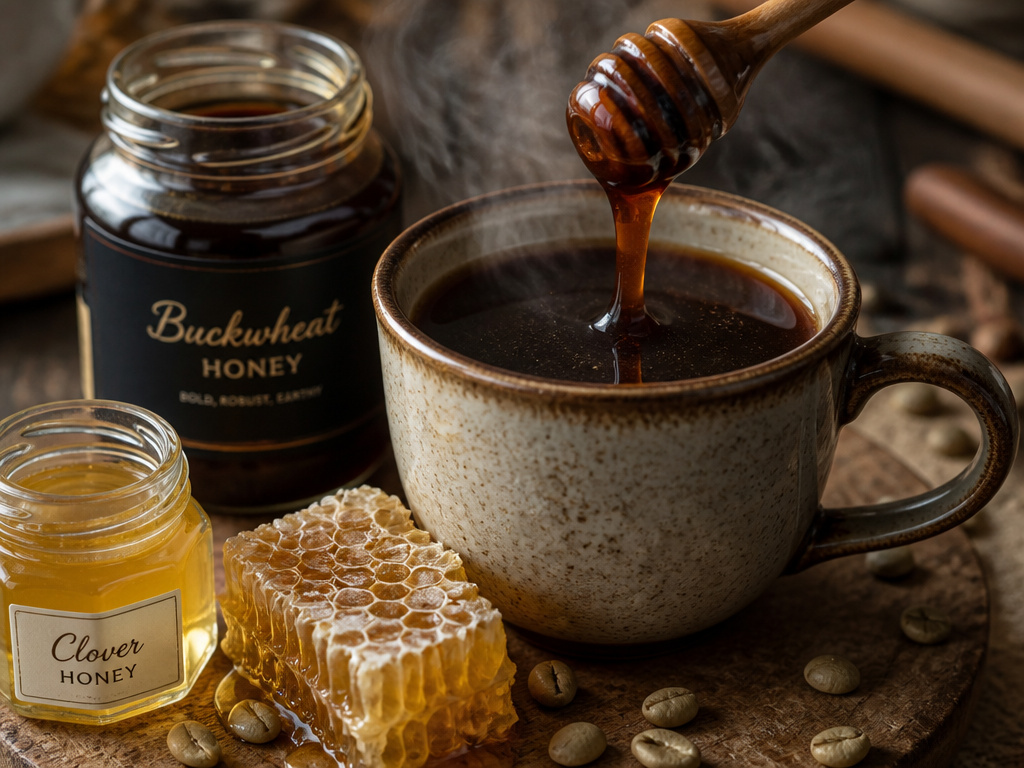
All honey is not equal. The floral source determines color, flavor, antioxidant content, and mineral profile. Picking the wrong one for your coffee roast is the main reason people try it once and reject it.
Light, delicate honeys like Acacia, Clover, or Orange Blossom have mild, floral notes. They get utterly overwhelmed by a dark French or Italian roast. Use them with light roasts. Ethiopian Yirgacheffe, a washed Colombian, or a light roast Kenyan. The honey will accentuate the coffee’s inherent brightness.
Dark, robust honeys like Buckwheat, Manuka, or Avocado are strong. They carry molasses, malt, and sometimes bitter notes. These can stand up to and complement the char, cocoa, and spice notes in a dark roast. They will completely overpower a delicate light roast.
I prefer buckwheat honey for my daily dark roast. Not because it’s the healthiest, but because its earthy, malty flavor integrates with the coffee instead of sitting on top of it. Clover honey just makes my dark roast taste like sweetened ash.
Here’s a simple pairing table:
| Coffee Roast Profile | Recommended Honey Type | Flavor Result |
|---|---|---|
| Light (Fruity, Floral) | Orange Blossom, Acacia, Clover | Highlights acidity and fruit notes; adds a clean sweetness. |
| Medium (Balanced, Nutty) | Wildflower, Sourwood, Blueberry | Complements body and nuttiness; adds complexity without dominating. |
| Dark (Bold, Smoky, Chocolate) | Buckwheat, Manuka, Avocado | Matches intensity; adds molasses/earthy notes that pair with roast char. |
Ignore the marketing hype around Manuka. As the YouTube creator noted, its price reflects rarity from New Zealand, not a miraculous health property unmatched by other dark honeys. A good domestic buckwheat honey will offer similar antioxidant capacity for a fraction of the cost.
The Health Perspective: What the Research Actually Says
A review titled “Honey and Health: A Review of Recent Clinical Research” published in the NIH’s PubMed Central database provides a solid overview. It confirms honey’s antimicrobial, anti-inflammatory, and antioxidant properties in clinical contexts. The PMC clinical research review on honey is a key source for anyone looking beyond anecdote.
The antioxidant activity, measured in ORAC values, is real but variable. The earlier Food Chemistry study showed buckwheat honey can have an ORAC value many times higher than clover. This is why the “which honey” question is critical for the health-conscious.
Common mistake: Assuming a daily spoon of honey in coffee is a major health intervention. It’s a better choice than refined sugar, contributing trace nutrients and a lower glycemic load. It is not a substitute for a diet rich in whole fruits and vegetables.
For those managing calorie intake, honey has about 64 calories per tablespoon versus sugar’s 49. But because it’s sweeter, you might use less. If you’re adding milk, consider that the calories in coffee can add up quickly; honey is one part of that equation. Compared to other popular additions, honey offers a different profile than the fats in coconut oil coffee or MCT oil coffee.
It also stands apart from other flavor modifiers. A pinch of salt reduces bitterness chemically. Cinnamon in coffee adds its own antioxidants and flavor. Honey does both: sweetens and adds its own flavor layer.
Frequently Asked Questions
Does honey become toxic in hot coffee?
No. This is a myth. Extreme heat can destroy some of honey’s beneficial enzymes and vitamins, but it does not create toxins. Millions of people drink hot tea and coffee with honey safely.
Is honey better for you than sugar in coffee?
In several ways, yes. It has a lower glycemic index, contains trace antioxidants and minerals, and offers more complex flavors. It is still an added sugar and should be consumed in moderation.
What is the best honey to put in coffee?
For health benefits, choose a dark, raw honey like buckwheat or manuka for higher antioxidant levels. For flavor pairing, match the honey’s intensity to your coffee’s roast: delicate honey for light roasts, robust honey for dark roasts.
How much honey should I use in my coffee?
Start with one teaspoon per 8-ounce cup. This is about 7 grams of sugar. Taste and adjust, as honey’s sweetness and flavor intensity vary by type. You may need less than you would of white sugar.
Can I use honey in iced coffee?
Absolutely. Honey dissolves more easily in cold liquids than sugar does. Stir it into a small amount of warm water first to create a liquid syrup, then add it to your iced coffee. This prevents clumping.
Does honey taste good in coffee?
It tastes different. It adds floral, earthy, or herbal notes depending on the honey. If you dislike the taste of a particular honey, try a different variety. A common complaint comes from using a light honey in a bold coffee, which creates a dissonant flavor.
Before You Go
Honey isn’t a magic bullet, but it is a meaningful upgrade from refined sugar. The swap gives you more control over sweetness intensity, a lower glycemic bump, and a chance to play with flavor. The rules are simple: pick a raw, dark honey, let your coffee cool a touch, and pair with intention.
Skip the clear, processed supermarket stuff. Find a local buckwheat or strong wildflower honey. Your dark roast will thank you. And if you’re exploring other ways to modify your cup, remember the principles are similar for adding cinnamon to coffee or using brown sugar as a sweetener, it’s all about complementing, not covering up.
For a completely different take on your morning ritual, the health benefits of tea or the specific green tea antioxidants offer a contrasting path. But if you’re staying with coffee, make your sweetener work for you.
