
Does Tea Have Caffeine Like Coffee? The Surprising Real Numbers
Yes, tea has caffeine like coffee, both contain the same stimulant molecule, but a typical cup of tea delivers a much smaller dose. A 200 mL serving of brewed black tea ranges from 25–110 mg of caffeine, while the same volume of brewed coffee ranges from 60–180 mg. The overlap means a strong black tea can rival a weak coffee, but coffee usually wins on caffeine per cup.
Most comparisons stop at “tea has less caffeine,” which is useless. That statement hides the massive, 400% variability within tea itself. A young, delicate green tea leaf can pack more caffeine than a mature black tea leaf, and a five-minute steep can double your dose.
This guide breaks down the peer-reviewed numbers, explains why every rule-of-thumb you’ve heard is probably wrong, and shows you how brewing technique turns a mild cup into a serious jolt. We’ll cover the science of extraction, the matcha exception, and how to actually compare your daily drinks.
Key Takeaways
- Leaf age, not color, dictates caffeine: The plant produces more caffeine in young, tender leaves to deter insects. An early-harvest white tea can have more caffeine than a late-harvest black tea.
- Brewing is everything: Steeping black tea for 5 minutes instead of 1 can extract 40-60 mg more caffeine. Using 95°C water for green tea boosts extraction 10-20% over 80°C water.
- Matcha is the outlier: You consume the entire powdered leaf, so a 2-gram serving of matcha delivers 60-140 mg of caffeine, putting it squarely in coffee’s territory.
- The ranges tell the real story: Black tea (25-110 mg/200mL) and coffee (60-180 mg/200mL) overlap significantly. A strong black tea can have more caffeine than a weak drip coffee.
- Decaf isn’t zero: Commercial decaffeination processes leave 2-5 mg of caffeine per serving. It’s a trace, but not nothing for the highly sensitive.
The Short Answer: Yes, But With a Huge Asterisk
All true tea, black, green, white, oolong, comes from the Camellia sinensis plant and contains caffeine. Coffee comes from the roasted seed of Coffea plants and contains caffeine. It’s the exact same chemical compound.
The caffeine content in a 200 mL cup varies dramatically: brewed coffee spans 60-180 mg, black tea 25-110 mg, green tea 8-91 mg, oolong tea 12-75 mg, and white tea 6-55 mg. These ranges, from a 2005 Journal of Food Science study, show where tea and coffee caffeine levels can actually meet.
The standard “coffee has more” line holds true on average, but the tails of the distribution overlap completely. A robust black tea steeped for five minutes can hit 110 mg. A lightly extracted pour-over coffee might land at 65 mg. Context flips the script.
TL;DR: Tea and coffee share the same caffeine, but the dose per cup is usually lower in tea, unless you brew it long and strong, in which case it can match a weak coffee.
Why “Tea Type” is a Terrible Predictor
You’ve heard the hierarchy: black tea has the most caffeine, then oolong, then green, then white. This is a persistent myth. The plant’s defense mechanism tells the real story.
Caffeine is a natural insecticide. The tea plant pumps more of it into the youngest, most vulnerable leaf buds and first leaves to protect them from pests. As leaves grow larger and tougher, their caffeine content generally drops.
| Factor | Higher Caffeine | Lower Caffeine | Why It Matters |
|---|---|---|---|
| Leaf Age & Size | Young buds, small leaves | Mature, large leaves | A delicate white tea from buds can out-caffeine a black tea from older leaves. |
| Tea Plant Variety | Camellia sinensis var. assamica | Camellia sinensis var. sinensis | The Assamica variety, common in bold black teas, naturally produces more caffeine. |
| Growing Conditions | High altitude, shade-grown | Lower altitude, full sun | Stress and shade can increase caffeine production as a defense. |
This means a finely plucked Silver Needle white tea, made from only buds, can be higher in caffeine than a black tea like Dian Hong, which often uses larger, mature leaves. The processing method (oxidation to make black tea) doesn’t add or remove significant caffeine; it primarily alters flavor compounds.
Common mistake: Assuming black tea is always the strongest caffeine choice, a young, bud-heavy green or white tea can deliver a sharper buzz than a coarse-leaf black tea.
The takeaway is to look at the leaf description, not just the color in your cup. “Bud-only” or “first flush” often signals higher potential caffeine.
The Exact Numbers: Tea vs. Coffee Caffeine Ranges
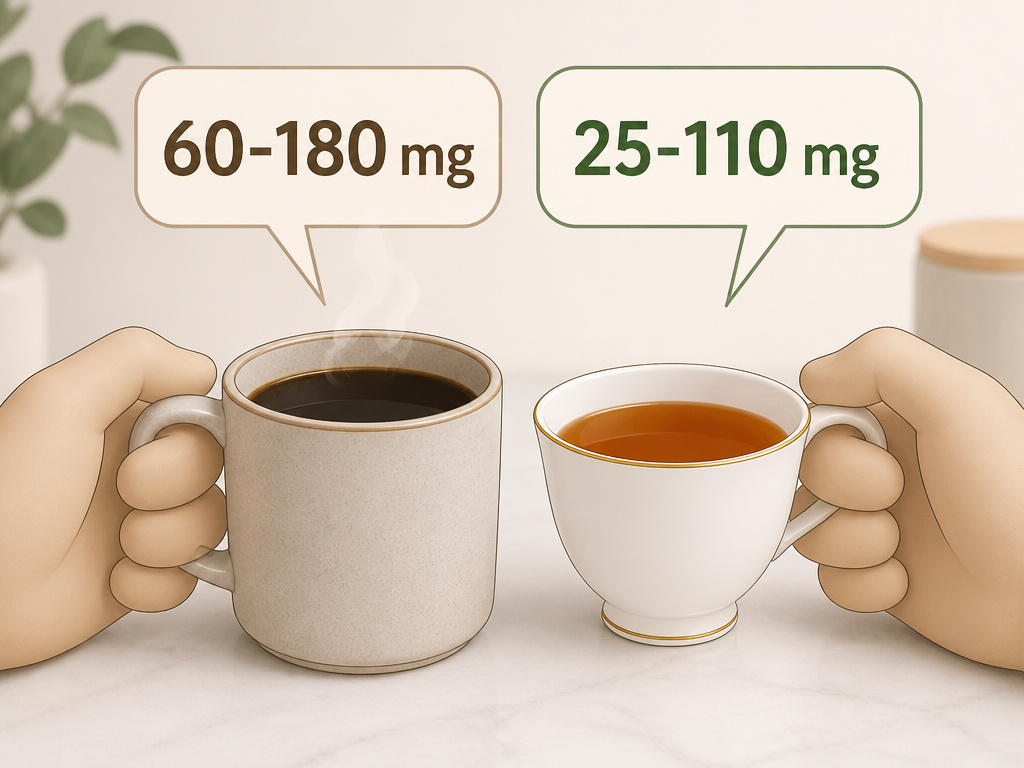
Vague statements don’t help. You need the hard data from controlled studies to make an informed choice. The numbers below are per a standard 200 mL (about 7-ounce) serving, based on the Mayo Clinic caffeine content guide and the 2005 Journal of Food Science study.
| Beverage (200 mL / ~7 oz) | Typical Caffeine Range (mg) | Peak Potential | Key Consideration |
|---|---|---|---|
| Brewed Coffee | 60 – 180 mg | A strong drip or French press | Bean type, roast (light has slightly more), grind size, and brew method create huge variance. |
| Black Tea | 25 – 110 mg | A robust Assam steeped 5+ min | The wide range means it can be half a coffee or equal to one. |
| Green Tea | 8 – 91 mg | A sencha or matcha (see below) | Often lower, but a powdered gyokuro or long-steeped bag can surprise you. |
| Oolong Tea | 12 – 75 mg | A tightly rolled “ball-rolled” oolong | Slower to unfurl and release caffeine, often leading to a more moderate, sustained release. |
| White Tea | 6 – 55 mg | A bud-only Silver Needle | Can be deceptively high for its delicate profile due to the bud content. |
Notice the overlap. The top end of black tea (110 mg) surpasses the bottom end of coffee (60 mg). This is why personal experience varies so wildly. Your “cup of tea” might be 30 mg, while mine is 95 mg.
For a deeper look at how these numbers translate to specific drinks, our article on espresso caffeine content breaks down the concentration per ounce.
The Brewing Factors That Change Everything
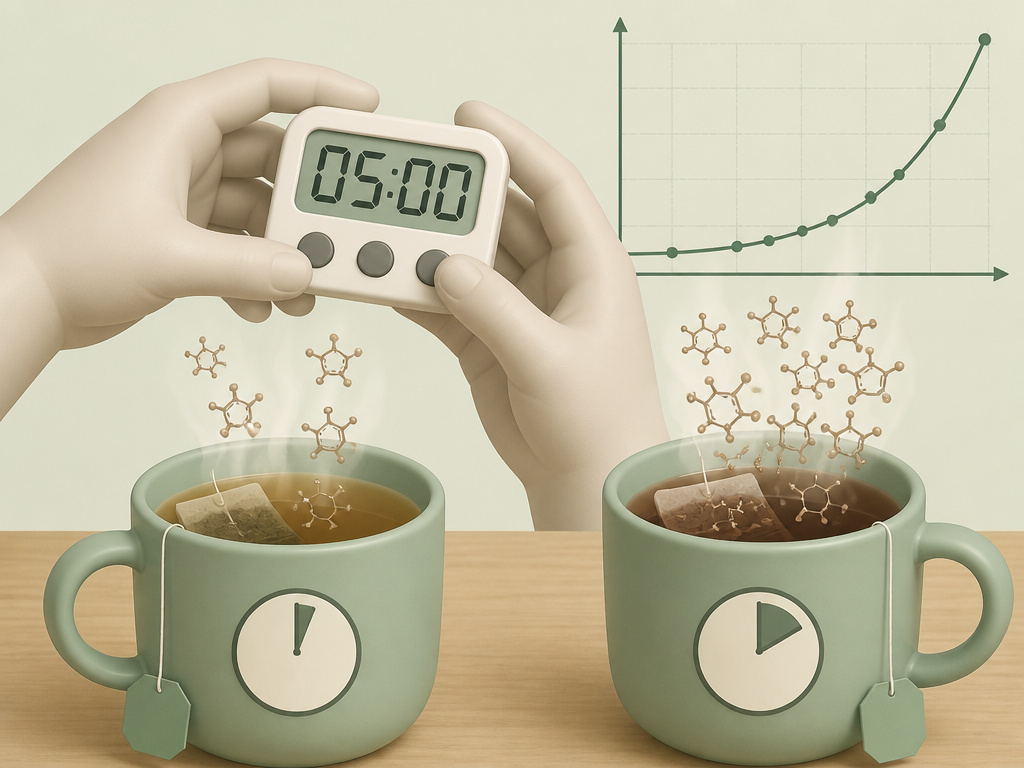
Two people can use the same tea leaves and get totally different caffeine doses. Extraction is a mechanical process, and you control the levers.
- Water Temperature: Heat accelerates extraction. Brewing green tea at 95°C instead of the recommended 80°C can increase caffeine yield by 10-20%. The trade-off is potential bitterness as more tannins also release.
- Steeping Time: This is the biggest driver. Caffeine extracts quickly in the first minute, but it doesn’t stop. A study on black tea showed caffeine content roughly doubling from a 1-minute steep (~20-30 mg) to a 5-minute steep (~40-60 mg). The curve flattens but never truly plateaus.
- Leaf Form (Bag vs. Loose): The tea brewing methods you choose matter. Bagged tea contains finely cut leaves, creating more surface area. This can lead to faster, sometimes more complete, caffeine extraction compared to the same weight of whole loose leaves in a short steep. Over a long steep, the loose leaf may catch up.
I used to brew my morning black tea for exactly three minutes, thinking I was consistent. Then I tested a five-minute steep on a whim. The buzz was noticeably sharper, almost jittery. I now time it religiously, that two-minute difference took me from 50 mg to an estimated 80 mg territory.
TL;DR: Your technique is a caffeine dial. Time is the volume knob, temperature is the treble control. Ignore them, and you have no idea what dose you’re actually drinking.
The Matcha Exception and Other Edge Cases
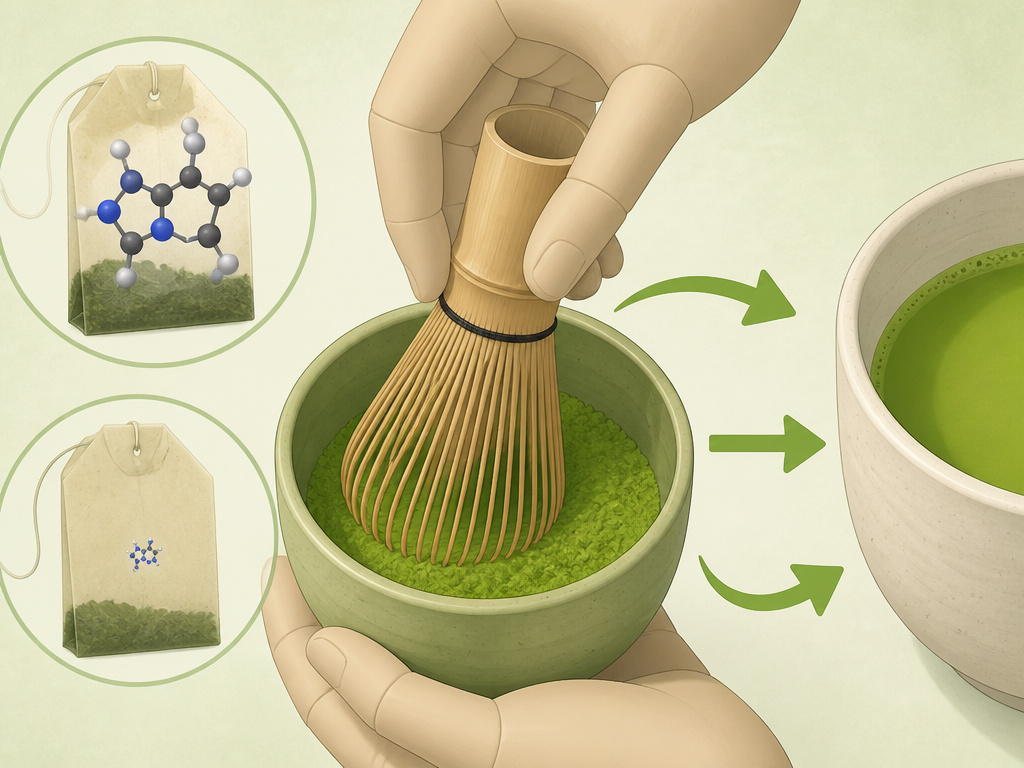
Some teas operate outside the standard steeping rules. You need to know these exceptions.
Matcha is powdered green tea. You whisk the entire leaf into water and drink it. This means you ingest 100% of the leaf’s caffeine, not just what extracts into water. A typical 2-gram serving of matcha contains 60-140 mg of caffeine. That’s a full coffee’s worth, combined with L-theanine for a focused, calm-alert effect.
Decaffeinated Tea is not caffeine-free. Commercial processes (using solvents like ethyl acetate or CO2) remove the majority of caffeine, but regulations allow a small residual amount. You’ll typically find 2-5 mg per serving. It’s a trace, but enough to affect those with extreme sensitivity or caffeine allergies.
Second Infusions pull far less caffeine from the same leaves. The first steep extracts the majority, often 70% or more. A second steep with the same leaves might yield less than half the caffeine. This is a great way to enjoy flavor with a moderated dose.
If you’re exploring low-caffeine options, understanding the acidity of tea versus coffee can also guide a gentler choice for your stomach.
How Does This Compare to Other Caffeine Sources?
To truly understand tea’s place, you need a wider landscape. This isn’t just about tea vs coffee benefits; it’s about managing your total intake.
- Energy Drinks: An 8 oz can can range from 70-150 mg, but often includes large amounts of sugar and other stimulants like taurine. The health impacts of caffeine from these drinks differ due to the combined cocktail.
- Cola/Soda: A 12 oz can of cola contains about 30-40 mg of caffeine, similar to a light cup of tea.
- Dark Chocolate: A 1 oz square (70-85% cacao) has about 20-25 mg of caffeine.
When you view tea through this lens, its role becomes clear. It’s a customizable, mid-range caffeine source. You can tweak it to be a gentle lift or a significant stimulant, all without the acidity or intense bitterness that coffee can bring to the table. For a direct comparison of two popular choices, see our breakdown of green tea vs coffee for health and energy.
Frequently Asked Questions
Does black tea have more caffeine than coffee?
Usually not, but it can. A 200 mL cup of black tea ranges from 25-110 mg of caffeine. A same-sized cup of coffee ranges from 60-180 mg. The high end of black tea surpasses the low end of coffee. So, a strongly brewed black tea can definitely have more caffeine than a weakly brewed coffee.
What has more caffeine, green tea or coffee?
Coffee almost always has more. The typical range for green tea (8-91 mg per 200mL) sits below the typical range for coffee (60-180 mg). Even a maxed-out green tea is unlikely to beat a moderately strong coffee, with the major exception of matcha.
Is the caffeine in tea different from coffee?
No, the caffeine molecule (C8H10N4O2) is identical. However, tea contains other compounds, notably L-theanine, which can modulate caffeine’s effects, promoting focused calm instead of jittery energy. The overall experience feels different.
How much caffeine is in a cup of tea vs a cup of coffee?
There is no single answer because “a cup” isn’t standardized. Using a 200 mL (7 oz) measure: tea can have 6-110 mg, coffee 60-180 mg. Your specific brewing habits determine where you fall in those vast ranges. For precise brewing guidance, our article on optimal black tea brewing can help.
Does brewing time affect caffeine in tea?
Massively. Caffeine extraction increases steeply in the first 3-5 minutes. A five-minute steep can deliver nearly double the caffeine of a one-minute steep from the same leaves. Time is your primary control for dose strength.
Is decaf tea really caffeine free?
No. Commercially decaffeinated tea retains 2-5 mg of caffeine per serving. It’s a trace amount, but not absolute zero. If you require complete caffeine avoidance, you must choose herbal teas (tisanes) like chamomile or peppermint, which are made from plants other than Camellia sinensis.
Before You Go
Forget the simple slogan that tea has less caffeine. The reality is a spectrum of possibility. A delicate-looking white tea from young buds can perk you up more than a hearty-looking black tea from mature leaves. Your brewing technique, the time on the clock, the temperature of the water, acts as a precise dosing tool.
If you’re switching from coffee to tea for a lower caffeine intake, you must master these variables. Use cooler water and shorter steeps. If you want a tea that matches coffee’s kick, seek out bold black teas like Assam, brew them long and hot, or go straight to matcha.
The power is in the particulars. Measure your leaves, time your steep, and know your leaves. That’s how you move from guessing to knowing exactly what’s in your cup. For the definitive look at how these two legendary beverages stack up, our full caffeine in tea vs coffee comparison has the final word.
