
Truth: Does Coffee Decrease Milk Supply & Impact Your Baby?
Drinking coffee does not decrease milk supply. Major health authorities state that up to 300mg of caffeine daily is safe for breastfeeding and not linked to reduced production. The real concern is the caffeine transfer to breast milk, which can affect your baby’s sleep and fussiness, not your supply.
No, drinking coffee in moderation does not decrease your milk supply. Major health authorities like the CDC and NIH state that a daily intake of up to 300 milligrams of caffeine, roughly two to three cups of coffee, is generally safe for breastfeeding and not linked to a reduction in milk production. The primary concern shifts from supply to the transfer of caffeine into your breast milk and its potential effects on your infant’s sleep and behavior.
The confusion often starts because anxious parents notice a fussy baby and blame the coffee, then cut back and worry about supply. But the mechanism isn’t about production; it’s about pharmacokinetics, how caffeine moves from your cup, into your blood, and then into your milk.
This guide breaks down the official health guidelines, explains exactly how caffeine transfers, and details the real-world signs that your baby might be sensitive. It also covers the critical edge cases that change the rules.
Key Takeaways
- The CDC and NIH LactMed database agree: up to 300mg of daily caffeine does not reduce milk supply.
- Caffeine concentration in breast milk reaches about half to equal the level in your blood plasma, peaking 1-2 hours after you drink it.
- A newborn, especially a preemie, can have a caffeine half-life of nearly 100 hours, meaning it stays in their system for days.
- The real issue is infant sensitivity, not supply. Watch for prolonged wakefulness, fussiness, or jitteriness after you consume caffeine.
- If you need to reduce intake, do it gradually. A sudden stop can cause headaches that are often mistaken for supply issues.
The Official Health Guidelines
You do not need to quit coffee. The consensus from primary medical sources is clear and specific.
The Centers for Disease Control and Prevention (CDC) explicitly states that moderate caffeine consumption, defined as about 300 milligrams per day, is generally considered safe during breastfeeding. This aligns with the review in the NIH’s LactMed database entry on caffeine, which notes maternal ingestion up to that level does not appear to have adverse effects on most breastfed infants. These are not suggestions from lifestyle blogs. They are directives from bodies that review clinical evidence.
Common mistake: Cutting out coffee entirely on day one, the resulting caffeine-withdrawal headache feels like a tension headache that can stress you out, and that stress is what you might misread as a dip in supply.
The 300mg limit is your anchor. A standard 8-ounce cup of brewed coffee contains about 95mg of caffeine. Your two morning cups are within the limit. A third in the afternoon pushes you to the boundary. This is where understanding your specific caffeine content comparison between drinks becomes practical, not just academic.
TL;DR: Stick to under 300mg of caffeine daily. This guideline is backed by the CDC and NIH and is not associated with a decrease in milk production.
The Caffeine Transfer Mechanism
Caffeine does not magically vanish. It is absorbed into your bloodstream and passively diffuses into your breast milk. The concentration there is typically 50-100% of what’s in your plasma.
The transfer follows a predictable timeline. Caffeine levels in your milk peak roughly 1 to 2 hours after you finish your drink. If you nurse at the peak, your baby gets the highest possible dose from that serving. This is why timing matters more than total abstinence for sensitive infants. Feeding right before you have your coffee, or during a long nap window, creates a longer gap between your consumption and the next feeding.
| Phase | Timeline After Drinking | Caffeine Concentration in Milk | Strategic Feeding Window |
|---|---|---|---|
| Absorption | 0–60 minutes | Rising rapidly | Least ideal time to feed |
| Peak | 1–2 hours | At its highest (50-100% of plasma) | Avoid feeding if baby is sensitive |
| Decline | 2–6 hours | Gradually falling | Safer window; most babies handle this |
| Clearance | 6+ hours | Low to negligible | Optimal for next feed |
The science behind this is detailed in research like the NIH research on caffeine metabolites, which measures not just caffeine but compounds like paraxanthine in milk. It confirms the transfer and provides the hard numbers.
TL;DR: Caffeine in your milk peaks 1-2 hours post-consumption. Feed your baby just before you drink your coffee to maximize the clearance period.
The Real Concern: Infant Sensitivity
Milk supply is stable. Infant tolerance is variable. This is the core of the issue.
Caffeine is a stimulant. In a baby’s developing system, it can cause effects similar to those in adults but magnified because they lack the enzymes to process it efficiently. The landmark 2012 Pediatrics study on caffeine and infant sleep provided a crucial number: the half-life of caffeine in a newborn can be up to 97.5 hours. For a premature infant, it’s even longer. In an adult, caffeine is mostly gone in 5 hours.
A baby born three weeks early might still have measurable caffeine from your Monday morning coffee in their system on Thursday afternoon. That changes the math from a daily limit to a weekly accumulation.
Watch for these signs in the 2-8 hour window after you’ve had caffeine:
– Unusual wakefulness or difficulty settling for naps
– Increased fussiness or jitteriness
– A tense, alert expression when they should be drowsy
If you see a consistent pattern, your baby is likely sensitive. The solution isn’t to panic about supply. It’s to manage your caffeine intake more tightly, perhaps sticking to one cup right after a morning feed, or exploring low-acid drink options that might be easier on both of you.
TL;DR: Watch your baby, not your supply. Prolonged fussiness or wakefulness after you drink coffee points to caffeine sensitivity, not a production problem.
Special Circumstances and Edge Cases
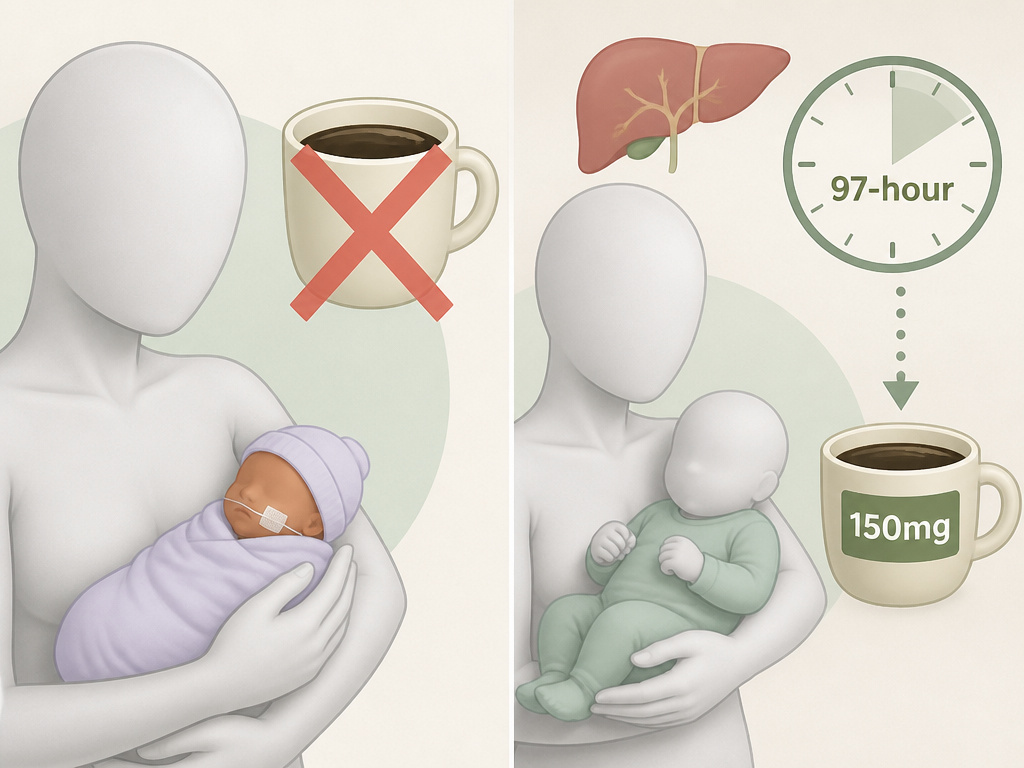
The 300mg rule assumes a full-term, healthy infant over about three months old. Two key situations demand a more conservative approach.
First, premature infants. Their livers are profoundly immature. That 97.5-hour half-life isn’t a worst-case scenario; it’s the baseline. For these babies, caffeine accumulates with each feeding. Many neonatologists advise mothers of preemies to avoid caffeine altogether or stick to a single small cup per day. It’s a temporary adjustment for a vulnerable system.
Second, the first three months. Even a full-term newborn’s metabolic pathways are brand new. While the official guidelines say moderate intake is safe, many lactation consultants and parents find that a lower threshold, say, 150mg, prevents noticeable side effects during this peak fussiness period. It’s about minimizing variables when you’re already sleep-deprived.
Common mistake: Assuming a “safe” guideline applies equally to a 2-week-old and a 6-month-old. The difference in metabolic maturity is enormous, and your strategy should reflect that.
In these cases, knowing the relative caffeine levels in tea versus coffee, or the espresso caffeine content of that afternoon pick-me-up, is a practical tool for staying under a lower, self-imposed limit.
What Actually Can Decrease Milk Supply?
If coffee isn’t the culprit, what is? It’s helpful to separate fact from myth to focus your energy.
The primary drivers of low supply are well-established:
1. Infrequent or ineffective milk removal. This is the number one cause. Supply operates on a use-it-or-lose-it principle.
2. Certain medications. Some prescription decongestants (like pseudoephedrine), hormonal birth control containing estrogen, and some herbs like sage can have a drying effect.
3. Maternal health issues. Conditions like thyroid disorders, retained placenta, or severe anemia can impact production.
4. Severe dehydration or calorie restriction. You need fuel and fluids to make milk, though the threshold for “severe” is higher than most think.
Notice that a moderate dietary stimulant isn’t on that list. Stress and fatigue, while they don’t directly harm supply hormones, can interfere with your let-down reflex and make feeding sessions harder. The headache from quitting coffee cold turkey can create that kind of stress.
Sometimes, the search for a cause leads to other dietary factors, like the calories in coffee additives or experimenting with non-dairy milk alternatives. These are unlikely to affect supply unless they relate to a significant overall calorie deficit or a rare allergy.
TL;DR: Focus on frequent feeding, check your medications, and address health issues before worrying about your coffee habit.
Frequently Asked Questions
What if I drink more than 300mg of caffeine a day?
Exceeding the guideline doesn’t automatically hurt your supply, but it significantly increases the caffeine dose your infant receives. The NIH LactMed database notes that higher maternal doses may cause irritability, poor sleep, and jitteriness in some babies. If you regularly go over, watch for those signs and consider scaling back.
Does decaf coffee affect breast milk?
Decaffeinated coffee contains trace amounts of caffeine, usually 2-5mg per cup. This is pharmacologically insignificant for both supply and infant effects. Decaf is a perfectly safe choice if you want the ritual without the stimulant.
How does caffeine from coffee compare to caffeine from energy drinks?
The caffeine might be the same molecule, but the delivery system matters. An energy drink often contains a concentrated bolus of caffeine alongside other stimulants like taurine and guarana, and often high sugar. The health impacts of stimulants in these combination products are less studied in lactation. It’s wiser to get your caffeine from coffee or tea where the profile is better understood.
My baby is fussy after I drink coffee. Does that mean I have to stop?
Not necessarily. First, try timing your coffee for right after a feeding. Next, try reducing to a single cup. If fussiness persists, you might switch to a lower-caffeine option like black tea caffeine for a week as a test. A direct, immediate reaction is rare; more often it’s a cumulative effect from timing and dose.
Before You Go
The evidence is clear on the main question: moderate coffee consumption does not decrease milk supply. The established safe limit is 300 milligrams of caffeine per day. Your focus should be on observing your infant for signs of sensitivity, like prolonged wakefulness or fussiness, and adjusting your timing or intake accordingly, especially if your baby is premature or very young.
Remember the half-life difference. What leaves your system in hours can linger in your newborn’s for days. Use the feeding-first, coffee-second strategy to create a buffer. And if you need to cut back, do it slowly to avoid withdrawal headaches that feel like a supply scare.
Your morning ritual is likely safe. Keep an eye on your baby, not the coffee pot, and trust the clinical guidelines that give you that permission.
{
“@context”: “https://schema.org”,
“@type”: “HowTo”,
“name”: “How to Safely Manage Coffee Intake While Breastfeeding”,
“totalTime”: “PT5M”,
“step”: [
{
“@type”: “HowToStep”,
“name”: “Check official daily limits”,
“text”: “Confirm your daily caffeine intake stays under 300 milligrams, the limit set by the CDC and NIH for breastfeeding mothers.”
},
{
“@type”: “HowToStep”,
“name”: “Time your consumption strategically”,
“text”: “Drink coffee immediately after a feeding session or during a long nap. This allows the highest caffeine concentration in your blood to decline before the next feed.”
},
{
“@type”: “HowToStep”,
“name”: “Observe your infant for cues”,
“text”: “Watch for signs of caffeine sensitivity in your baby, such as unusual fussiness, jitteriness, or difficulty sleeping after you’ve consumed caffeine.”
},
{
“@type”: “HowToStep”,
“name”: “Adjust for special circumstances”,
“text”: “If your baby is premature or under three months old, consider halving your caffeine intake or switching to decaf, as their ability to process caffeine is significantly slower.”
}
]
}
{
“@context”: “https://schema.org”,
“@type”: “FAQPage”,
“mainEntity”: [
{
“@type”: “Question”,
“name”: “What if I drink more than 300mg of caffeine a day?”,
“acceptedAnswer”: {
“@type”: “Answer”,
“text”: “Exceeding the guideline doesn’t automatically hurt your supply, but it significantly increases the caffeine dose your infant receives. The NIH LactMed database notes that higher maternal doses may cause irritability, poor sleep, and jitteriness in some babies. If you regularly go over, watch for those signs and consider scaling back.”
}
},
{
“@type”: “Question”,
“name”: “Does decaf coffee affect breast milk?”,
“acceptedAnswer”: {
“@type”: “Answer”,
“text”: “Decaffeinated coffee contains trace amounts of caffeine, usually 2-5mg per cup. This is pharmacologically insignificant for both supply and infant effects. Decaf is a perfectly safe choice if you want the ritual without the stimulant.”
}
},
{
“@type”: “Question”,
“name”: “How does caffeine from coffee compare to caffeine from energy drinks?”,
“acceptedAnswer”: {
“@type”: “Answer”,
“text”: “The caffeine might be the same molecule, but the delivery system matters. An energy drink often contains a concentrated bolus of caffeine alongside other stimulants like taurine and guarana, and often high sugar. The health impacts of stimulants in these combination products are less studied in lactation. It’s wiser to get your caffeine from coffee or tea where the profile is better understood.”
}
},
{
“@type”: “Question”,
“name”: “My baby is fussy after I drink coffee. Does that mean I have to stop?”,
“acceptedAnswer”: {
“@type”: “Answer”,
“text”: “Not necessarily. First, try timing your coffee for right after a feeding. Next, try reducing to a single cup. If fussiness persists, you might switch to a lower-caffeine option like black tea caffeine for a week as a test. A direct, immediate reaction is rare; more often it’s a cumulative effect from timing and dose.”
}
}
]
}
