
The Real Reason Coffee Makes You Tired With ADHD Explained
This post contains affiliate links. As an Amazon Associate, we earn from qualifying purchases.
If you have ADHD, coffee can make you tired because caffeine blocks adenosine receptors in a brain already prone to dopamine dysregulation, often leading to a paradoxical calming effect. For slow metabolizers (about half the population), caffeine’s 5-hour half-life means the crash coincides with a massive adenosine backlog, causing pronounced fatigue. The type of coffee and when you drink it, especially relative to your cortisol peak, determines the severity of the crash.
You pour the coffee expecting a lift. An hour later, you’re fighting the urge to put your head on the desk. This isn’t a character flaw or weak brew. It’s a specific biochemical mismatch between your neurochemistry and a complex plant extract. The standard advice to “drink coffee for energy” assumes a neurotypical brain and a fast metabolism. It fails you.
This guide breaks down the mechanics. We’ll look at the adenosine blockade, the genetic lottery of the CYP1A2 enzyme, and how chlorogenic acid in coffee interacts with your gut. Then we’ll map out adjustments, timing, food pairing, brew method swaps, that can turn coffee from a sedative back into a functional tool.
Key Takeaways
- Caffeine doesn’t create energy; it blocks adenosine, the sleep-pressure chemical. In ADHD brains, this can over-activate the prefrontal cortex’s “brakes,” leading to a calming, sometimes fatiguing, effect.
- Your liver enzyme (CYP1A2) dictates your crash. Slow metabolizers process caffeine over 6–10 hours, leading to a harder crash when the blockade lifts and accumulated adenosine floods in.
- Never drink coffee on an empty stomach or within 90 minutes of waking. The former accelerates the spike-and-crash; the latter wastes caffeine when your cortisol is already peaking.
- Brew method is critical. French press and large drip coffee deliver a high, fast caffeine dose. Cold brew or a single espresso shot provides a slower, lower peak that’s easier to manage.
- Coffee is hundreds of compounds, not just caffeine. Chlorogenic acids and other polyphenols affect your gut microbiota and can influence the overall physiological response, sometimes adding to the fatigue.
The Science Behind the Paradox
Coffee making you tired with ADHD isn’t an illusion. It’s a documented paradoxical reaction rooted in neurochemistry. Caffeine’s primary job is to be a molecular impersonator. It fits into adenosine receptors in your brain, blocking the real adenosine from docking. Adenosine builds up all day, creating sleep pressure. By blocking it, caffeine temporarily masks fatigue.
Caffeine is an adenosine receptor antagonist. It does not provide energy but creates the perception of alertness by preventing adenosine, a neuromodulator that promotes sleep and relaxation, from binding to its receptors. This blockade is temporary and site-specific within the brain.
For many with ADHD, the stimulant effect targets the prefrontal cortex, the brain’s executive control center. One YouTube transcript from a medical professional frames it clearly: “What I’m stimulating with people with ADHD is the brakes. I’m hyper-activating the part of your brain that controls the other parts of your brain.” This hyper-activation of control circuits can manifest as a calming, focusing effect. For some, that calm slips into drowsiness, especially as the caffeine wears off.
The real crash comes from the adenosine backlog. While caffeine is on the receptors, adenosine production doesn’t stop. It piles up at the gates. When caffeine finally clears, all that pent-up adenosine floods the receptors at once. The sleep pressure hits you like a wave. This is why the crash feels disproportionate. For a detailed look at how this interacts with other stimulants, our analysis of energy drinks vs coffee explores similar crash dynamics.
TL;DR: Caffeine blocks fatigue signals, not creates energy. In ADHD, it often stimulates brain “brakes,” causing calm or sleepiness, followed by a severe crash from accumulated adenosine.
Your Genetics: The CYP1A2 Enzyme and the 5-Hour Half-Life
The severity of your crash isn’t just about your brain. It’s about your liver. The enzyme cytochrome P450 1A2 (CYP1A2) is almost solely responsible for metabolizing caffeine. Genetics determine if you’re a fast or slow metabolizer.
Approximately half the population carries a variant that makes them slow metabolizers. For them, caffeine has a half-life of six to ten hours. For fast metabolizers, it’s three to four. The standard quoted five-hour half-life is an average that hides this brutal divide.
| Metabolizer Type | Caffeine Half-Life | Impact on ADHD Fatigue |
|---|---|---|
| Fast | 3–4 hours | Shorter, sharper alertness window; crash comes sooner but may be less severe. |
| Slow | 6–10 hours | Prolonged receptor blockade; massive adenosine buildup leads to a deeper, longer crash. |
If you’re a slow metabolizer with ADHD, you get the worst of both worlds: a prolonged period of muted adenosine signaling (which may calm but not energize) followed by an epic crash hours later. You might not even connect the 3 PM slump to the 8 AM coffee. This extended presence also increases the chance of other side effects, which are covered in our guide to coffee and digestion.
Common mistake: Assuming your caffeine tolerance is purely psychological, your liver’s processing speed is a fixed biological reality that dictates your entire experience.
There’s no consumer genetic test specifically for CYP1A2, but you can diagnose it through observation. If a single cup affects you for most of the day or disrupts your sleep when consumed past noon, you’re likely a slow metabolizer. This genetic reality makes blanket caffeine advice useless. Your protocol must be personal.
Beyond Caffeine: Chlorogenic Acid, Cortisol, and the Empty Stomach
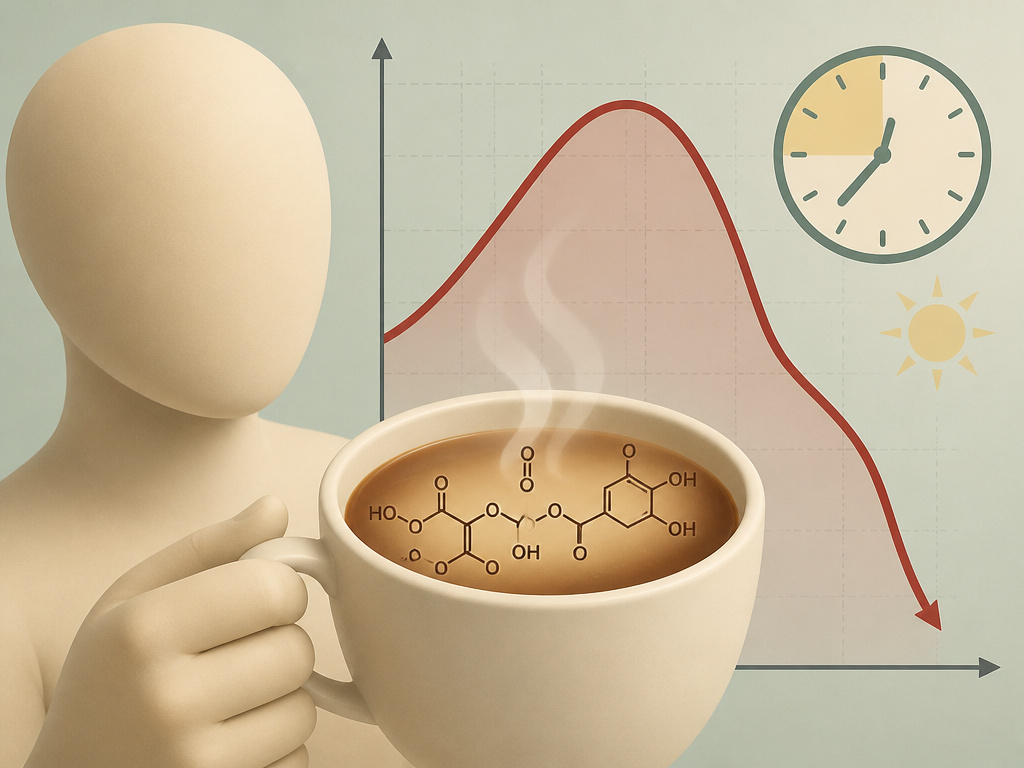
Coffee is a chemical soup. Caffeine is the headliner, but hundreds of other compounds play supporting roles that influence energy and crash. Two major players are chlorogenic acids and the timing of your cortisol rhythm.
Chlorogenic acids are polyphenols abundant in coffee. According to the International Society of Sports Nutrition’s position stand, their bioavailability is low, only 5–10% absorb directly. The rest interact with your gut microbiota in the large intestine. For some individuals, this fermentation process can produce metabolites that promote relaxation or even drowsiness. It’s one reason why coffee’s effect feels different from a pure caffeine pill. The broader physiological impact is a key reason some seek a gentler stimulant option like black tea.
Cortisol timing is the second critical factor. Your cortisol, the alertness hormone, naturally peaks about 60 to 90 minutes after you wake. Drinking coffee during this peak is a waste. The research notes indicate it results in a weaker stimulant effect and a shallower, less effective alertness curve. You’re adding caffeine on top of a naturally high alertness signal, so the perceived boost is minimal. When both cortisol and caffeine decline later, the crash feels steeper.
The empty stomach trap accelerates everything. Coffee on an empty stomach leads to faster caffeine absorption. This creates a sharper spike, a more intense receptor blockade, and consequently, a harder crash when it ends. It also amplifies coffee’s acidic impact on your digestive system. Always pair it with food.
How to Adjust Your Coffee Routine
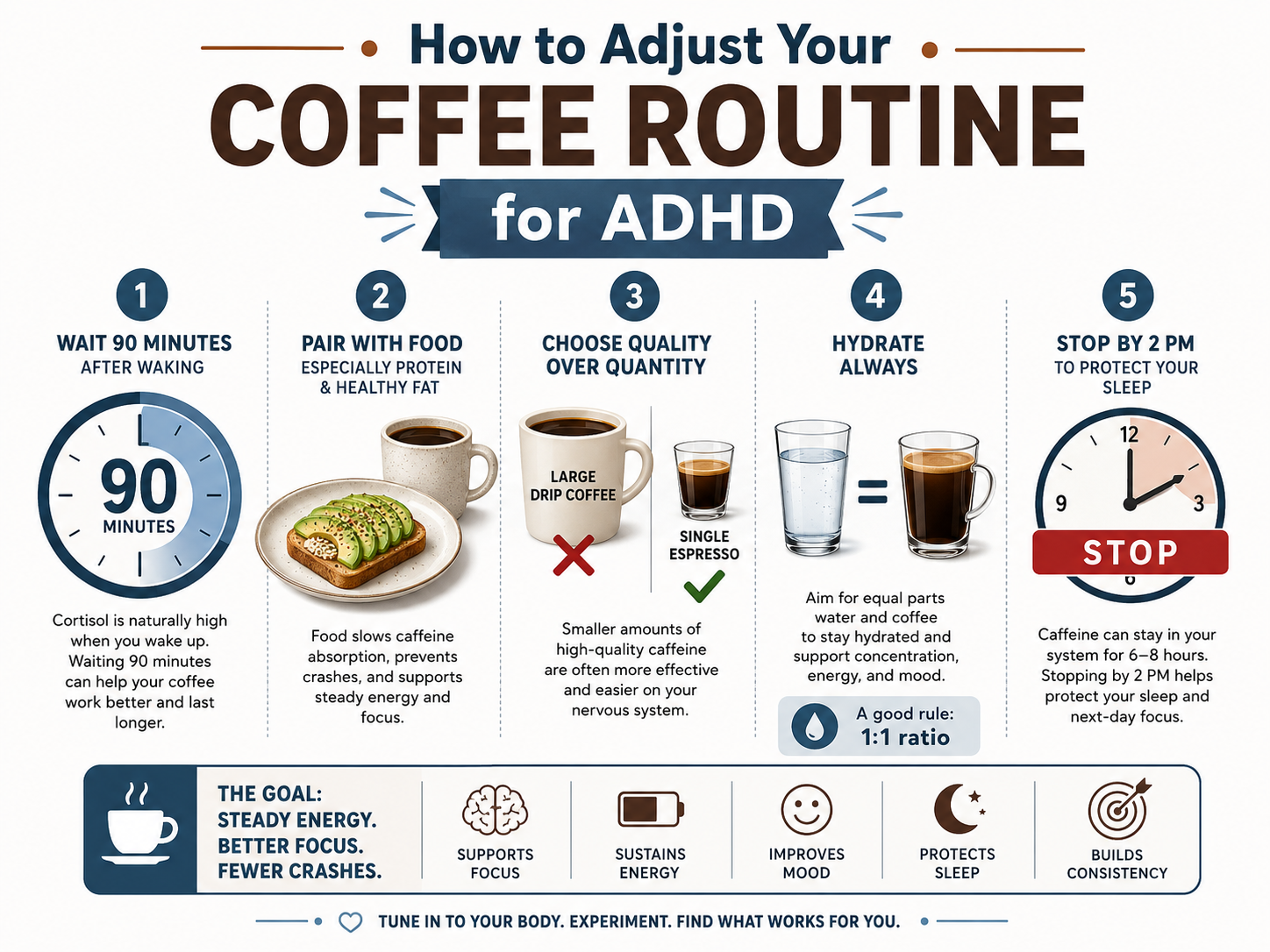
You don’t have to quit. You need a tactical adjustment. The goal is to smooth the spike, manage the crash, and work with your biology, not against it.
- Delay Your First Cup. Wait at least 90 minutes after waking. Let your natural cortisol peak pass. Your first coffee will then provide a clear, distinct lift rather than blending into your morning biology. Use this time to hydrate with water.
- Eat First. Never drink coffee on an empty stomach. Have a breakfast with some protein or fat, even a handful of nuts or a piece of toast with avocado. This slows caffeine absorption, preventing the sharp spike and subsequent crash.
- Switch Your Brew Method (The Most Effective Fix). The dose and release rate matter immensely.
- Avoid: Large mugs of drip coffee, French press, or pourover. These methods extract a high volume of caffeine quickly.
- Try: A single shot of espresso (about 63 mg caffeine) or cold brew. Cold brew, steeped cold for 12+ hours, has a different chemical profile. The caffeine releases more slowly into your bloodstream, offering a smoother ride. For a deeper dive on concentrated sources, see our comparison of espresso caffeine content versus standard coffee.
- Hydrate Relentlessly. Caffeine is a diuretic. Dehydration mimics and worsens fatigue. For every cup of coffee, drink at least one cup of water.
- Set a Hard Cutoff. If you’re a slow metabolizer, stop all caffeine at least 8 hours before bedtime. For a 10 PM sleep, that’s a 2 PM cutoff. This gives your system time to clear the blockade before sleep pressure naturally builds.
If fatigue persists, consider a caffeine “reset.” Take three days off all caffeine, including tea, soda, and dark chocolate. The first day will be rough. The second is easier. On the third, your adenosine receptors reset. Reintroduce with a half-dose of your new, smarter routine.
When to Consider Alternatives

Sometimes, the best adjustment is a substitution. If tactical coffee changes still leave you drained, other beverages might serve your ADHD brain better.
The premier alternative is tea, specifically green or black tea. Tea contains L-theanine, an amino acid that promotes alpha brain waves associated with calm alertness. It synergizes with caffeine to provide focus without jitters or a harsh crash. The benefits of green tea vs coffee are significant for sustained, calm energy. For a direct stimulant comparison, our breakdown of tea caffeine levels provides the numbers.
For those who miss the ritual, decaffeinated coffee is an option. Choose a Swiss Water Process decaf, which removes caffeine without chemical solvents. You get the taste and some of the beneficial polyphenols without the adenosine blockade.
If you need a stronger, more predictable stimulant effect, that’s a conversation for a healthcare provider. Prescription stimulants for ADHD are dosed precisely and work on dopamine and norepinephrine systems more directly than caffeine. Self-medicating with ever-increasing coffee or high-caffeine drinks like energy drinks is an inefficient and often counterproductive strategy, as explored in our piece on Monster Energy caffeine.
Frequently Asked Questions
Does this mean caffeine is bad for ADHD?
Not necessarily. For some, it’s a useful self-medication tool for focus. The problem is the crash and side effects from high, unmanaged doses. The goal is intelligent use, not avoidance.
Will drinking more coffee eventually give me energy?
No. This builds tolerance and increases the adenosine backlog. You’ll need more for less effect, and the crash will worsen. It’s a losing cycle.
How do I know if I’m a fast or slow metabolizer?
Observe. If one cup affects you for 6+ hours or disrupts sleep after noon, you’re likely slow. If you feel effects fade cleanly in 3-4 hours, you’re probably fast. A Lindenwood University faculty research paper on caffeine metabolism details how these variations underpin different responses.
Can other ingredients in my coffee make it worse?
Absolutely. Sugary syrups, creamers, and sweeteners add a blood sugar spike-and-crash on top of the caffeine crash. This double crash is profoundly draining. Drink it black or with a splash of milk.
Is tea really that much better?
For many with ADHD sensitivity, yes. The L-theanine in tea moderates caffeine’s edge. The overall experience is one of calm focus rather than jittery alertness. Comparing the health benefits highlights why switching can be beneficial.
Before You Go
Coffee making you tired with ADHD is a real, mechanistically explainable phenomenon. It’s not in your head. The interplay of adenosine blockade, a possibly slow-metabolizing liver, and the timing of your first cup creates a perfect storm for fatigue.
The fix isn’t willpower. It’s protocol. Wait 90 minutes. Eat first. Choose cold brew or a single shot over a giant mug. Listen to what your energy levels three hours later are telling you. If coffee continues to be a sedative, embrace tea. Its combination of L-theanine and caffeine, as noted in our article on calm focus, is often a better match for the ADHD nervous system.
Your brain is different. Your caffeine strategy should be too. Stop fighting the crash and start engineering around it.
