
Tea vs Coffee: Which is More Harmful? The Data-Backed Answer
Neither tea nor coffee is inherently “harmful” for most people. The real risk comes from three specific factors: consuming either beverage above 140°F (60°C), a genetic mutation affecting caffeine metabolism, and the additives like sugar and cream you pour into the cup. For the average person, moderate consumption of both is linked to net health benefits.
Most comparisons get stuck on caffeine content. That misses the point. The harm isn’t in the bean or the leaf itself, it’s in how you prepare it, how your body processes it, and what you mix into it.
This guide breaks down the documented risks, from the temperature study that followed 50,000 people for a decade to the additive math that turns a simple cup into a dessert. We’ll look at the evidence on cholesterol, bone density, and that one genetic quirk that changes everything.
Key Takeaways
- Drinking any beverage hotter than 140°F (60°C) increases the risk of esophageal cancer, the heat itself is the carcinogen, not the tea or coffee.
- Individuals with a specific genetic mutation (CYP1A2) metabolize caffeine slowly, turning a protective habit into a heart disease risk at just two cups a day.
- Unfiltered coffee (espresso, French press) contains diterpenes like cafestol that can raise LDL cholesterol; paper filters remove them.
- The additives, sugar, flavored syrups, cream, often contribute more negative health impact than the base beverage itself.
- Both drinks inhibit non-heme iron absorption from plant-based foods, with tea having a stronger effect; spacing consumption an hour from meals mitigates this.
The 140°F Rule That Changes Everything
The most significant harm linked to both tea and coffee has nothing to do with caffeine or antioxidants. It’s the temperature. A landmark 10-year study of 50,000 individuals in Iran established a clear correlation: drinking 700 ml (about three cups) of tea per day at 140°F (60°C) or higher was associated with a 90% increased risk of esophageal cancer.
The researchers didn’t just ask people if they liked their tea hot. They brought participants in, brewed tea, and used a thermometer to find the exact sipping temperature each person preferred. This objective method linked real-world behavior to a stark health outcome over a decade. The thermal damage from repeated scalding is thought to cause inflammation and DNA damage in the esophageal lining, or inhibit the esophagus’s natural protective mechanisms. This finding is echoed in a BBC Future health feature, which notes the risk applies to any very hot drink.
Common mistake: Sipping a freshly brewed drink immediately, the esophagus can be scalded at temperatures that merely feel warm to the mouth, raising cancer risk over years of daily exposure.
TL;DR: Let your drink cool below 140°F (60°C) before sipping. This single habit negates the biggest cancer risk linked to either beverage.
How Your Brewing Method Plays a Role
Your equipment dictates your starting temperature. An automatic drip brewer typically outputs coffee at 195–205°F (90–96°C). A kettle boiling for black tea hits 212°F (100°C). The problem isn’t the brew, it’s the rush to drink.
| Beverage | Typical Brew Temp | Time to Cool to 140°F |
|---|---|---|
| Black Coffee (Drip) | 195–205°F (90–96°C) | 4–6 minutes in a mug |
| Black Tea | 212°F (100°C) | 6–8 minutes in a mug |
| Green Tea | 175°F (80°C) | 2–4 minutes in a mug |
| Espresso | 200°F (93°C) | 1–2 minutes in a demitasse |
The takeaway is universal. No matter your drink, waiting five minutes is a cheap insurance policy.
When Genetics Flip the Script
For a small segment of the population, the standard health advice on coffee is completely wrong. It comes down to a gene called CYP1A2, which codes for the primary enzyme that metabolizes caffeine. About half of people have a variant that leads to slow caffeine breakdown.
For slow metabolizers, the health implications of coffee and tea reverse. While fast metabolizers see reduced heart disease risk from moderate coffee consumption, a NIH prospective cohort study and others have shown that slow metabolizers drinking two or more cups daily can have an increased risk of heart attack, hypertension, and prediabetes. The caffeine lingers, amplifying its stimulant effects on the cardiovascular system.
I switched to half-caff for years thinking I was just sensitive. It wasn’t until a DNA test kit flagged the CYP1A2 variant that the palpitations and afternoon crashes made sense. Now, one small cup of black tea in the morning is my limit, coffee is off the menu.
There’s no widespread clinical test for this mutation. If you experience pronounced jitters, anxiety, or a racing heart after even a small coffee, and if you have a family history of hypertension, you might be a slow metabolizer. In that case, tea, with its lower caffeine and calming L-theanine, is the unequivocally safer choice. This genetic wrinkle is a core part of any honest tea and coffee comparison.
The Additive Problem
Discussions about the health impacts of both beverages often ignore the elephant in the room: what you put in the cup. A Starbucks Grande Peppermint White Chocolate Mocha with whipped cream packs 540 calories and 75 grams of sugar. That’s a dessert, not a coffee. The health risk shifts from the drink to the daily dose of added sugar and saturated fat, which are unequivocally linked to obesity, type 2 diabetes, and heart disease.
The math is simple. Black coffee has about 5 calories. A black tea has 2. The harm isn’t in the base liquid for most people, it’s in turning it into a vehicle for cream, sugar, and syrup. This principle extends to the seemingly healthy choice. A “lightly sweetened” bottled iced tea can contain 20 grams of sugar, rivaling a soda.
TL;DR: Judge the harm of your drink by looking in the cup, not at the bag or bean. The additives often outweigh the beverage’s inherent risks.
The Caffeine and Cholesterol Tightrope
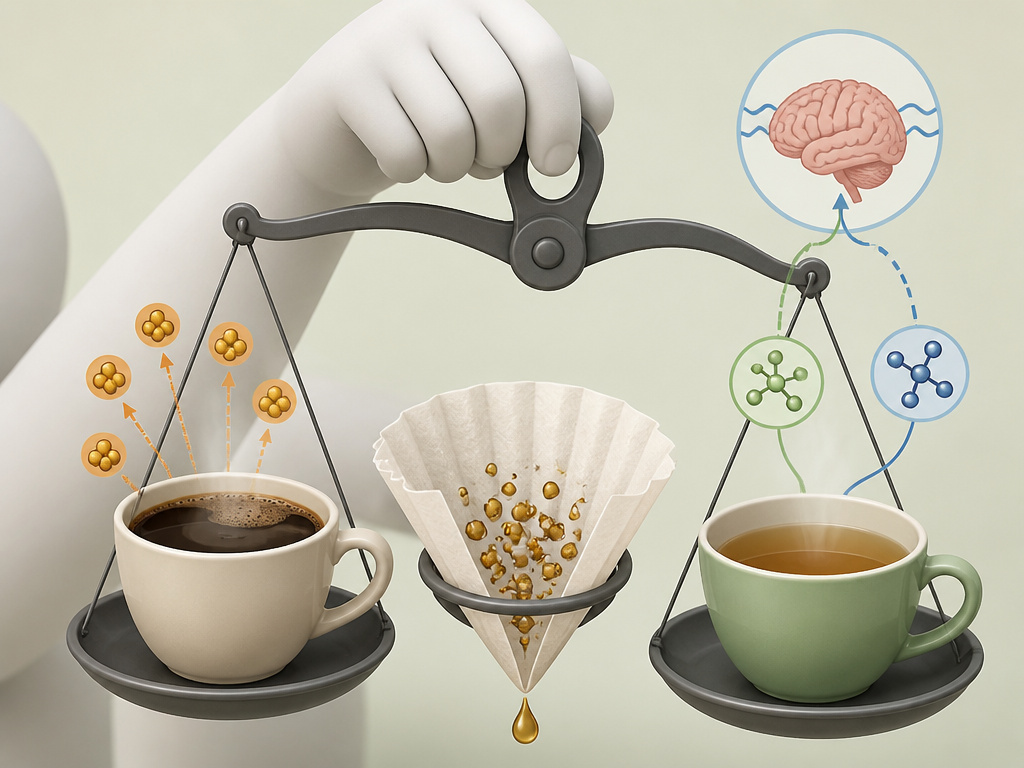
Caffeine content is the most common comparison point, but it’s a oversimplification. An 8-ounce cup of brewed coffee contains 80–100 mg of caffeine. A same-sized cup of black tea has 14–70 mg, with an average around 50 mg. However, matcha or yerba mate can contain 70–85 mg, rivaling coffee.
The more pressing issue for coffee drinkers is a compound called cafestol, a diterpene present in the oily fractions of coffee beans. It’s a potent cholesterol raiser. Paper filters trap cafestol; methods like French press, espresso, and boiled coffee do not. If you have elevated LDL cholesterol and drink unfiltered coffee daily, switching to filtered or instant coffee (where the process removes diterpenes) can be a direct corrective action.
For tea, the caffeine content is lower, but it’s paired with L-theanine, an amino acid that promotes calm alertness without the jittery crash common with coffee. This moderated stimulation is why many find tea better for sustained focus and anxiety.
| Factor | Coffee (Filtered) | Tea (Black) | Where Tea Wins | Where Coffee Wins |
|---|---|---|---|---|
| Caffeine (8 oz) | 80–100 mg | 14–70 mg (avg 50 mg) | Lower, smoother stimulation with L-theanine | Stronger, faster alertness |
| Key Antioxidants | Chlorogenic acids | Catechins (EGCG) | Strong anti-inflammatory, metabolic benefits | Linked to reduced liver & endometrial cancer risk |
| Acidity (pH) | ~5 (more acidic) | ~7 (neutral) | Gentler on tooth enamel and stomach | Brighter, more complex flavor profile |
| Cholesterol Impact | Neutral (filtered) | Neutral | No diterpenes | N/A |
| Iron Absorption | Inhibits non-heme iron | Inhibits more strongly | Drink 1+ hr before/after meals if iron-deficient | Same rule applies |
This caffeine content comparison shows why the question “which is more harmful?” lacks a single answer. For someone with anxiety, coffee’s higher dose is worse. For someone focused on cancer prevention, coffee’s stronger link to reduced liver cancer risk might make it the better choice.
Secondary Health Considerations
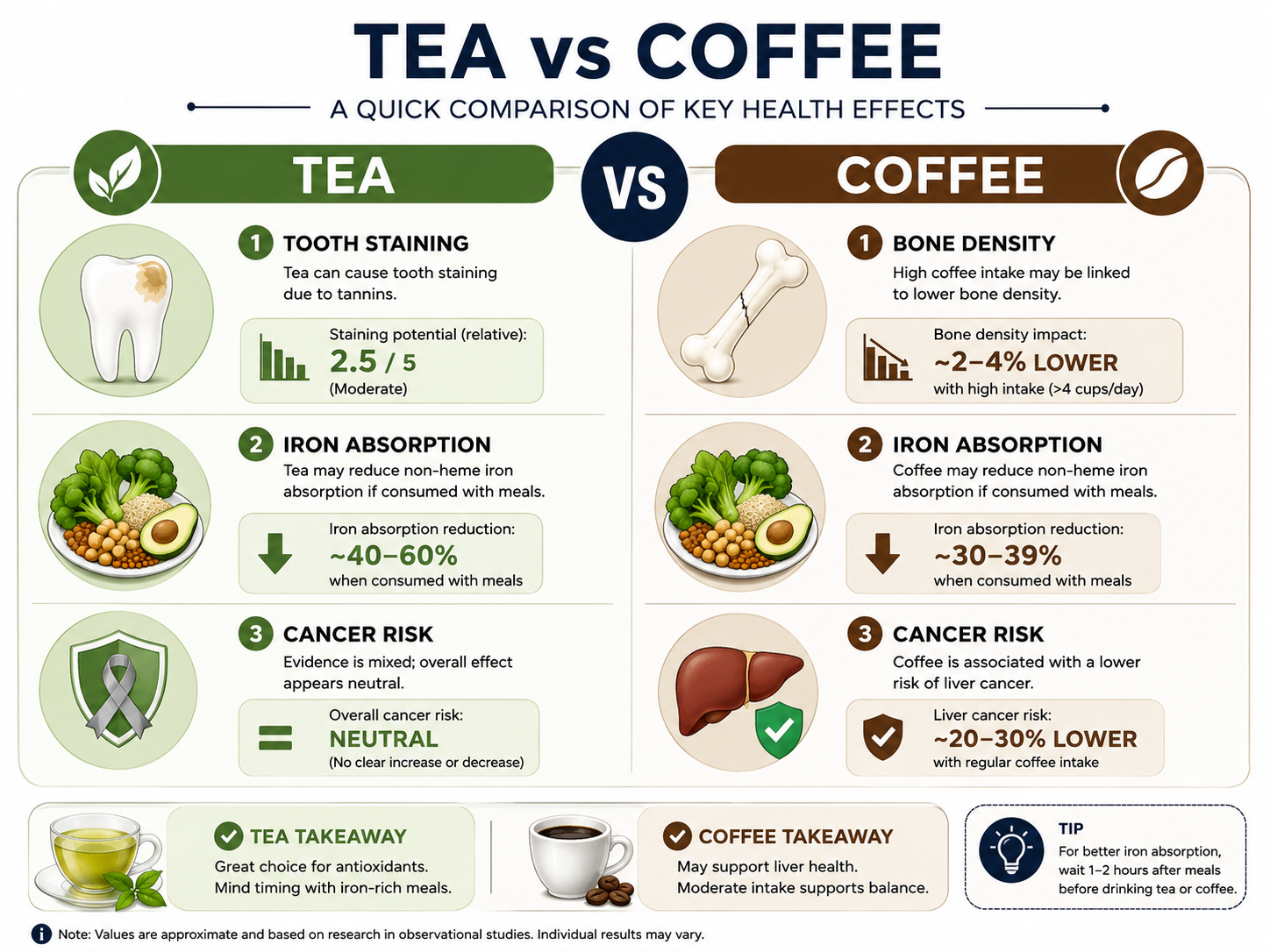
Beyond the major players of temperature, genetics, and additives, a few other factors tip the scales for specific individuals.
Bone Density: High coffee intake (four or more cups daily) has been associated with a 2–4% reduction in bone mineral density in some studies. The mechanism isn’t fully proven but is thought to involve increased calcium excretion. For young, healthy adults, this is likely negligible. For older adults, especially postmenopausal women at risk for osteoporosis, it’s a discussion to have with a doctor. Tea doesn’t show this association.
Iron Absorption: Both drinks inhibit the absorption of non-heme iron, the type found in plants like spinach, beans, and fortified grains. A classic 1982 study found tea reduced absorption by 62%, coffee by 35%. If you’re iron-deficient or follow a plant-based diet, the fix is simple: consume your tea or coffee at least an hour before or after a meal. This is a critical acid reflux consideration for those managing nutrient intake alongside stomach sensitivity.
Dental Staining: Tea, particularly black tea, is more likely to stain teeth than coffee due to its higher tannin content. Using a chlorhexidine-based mouthwash can ironically make this worse by binding the tannins to enamel.
The Cancer Picture: The evidence for cancer prevention favors coffee. Regular consumption is consistently linked to a lower risk of liver and endometrial cancers. The data for tea is weaker, with a possible link only to reduced oral cancer risk. As the Harvard Medical School health guide notes, for most cancers, neither drink shows a harmful link, provided it’s not scalding hot.
Frequently Asked Questions
Does coffee or tea stain your teeth more?
Black tea stains more than coffee due to its higher concentration of tannins. These compounds bind to dental plaque and enamel. Using a straw for iced tea or rinsing with water after drinking can help mitigate this.
Is coffee bad for your heart?
For the majority of people with normal caffeine metabolism, moderate coffee consumption (2–5 cups daily) is associated with a neutral or slightly beneficial effect on heart health. The exception is individuals with the slow-metabolizing CYP1A2 gene variant or those who drink unfiltered coffee and have high cholesterol.
Which has more caffeine, black tea or coffee?
An 8-ounce cup of brewed coffee has roughly 80–100 mg of caffeine. The same amount of black tea averages 50 mg but can range from 14–70 mg. So, coffee typically has about twice the caffeine of a standard cup of black tea.
Can drinking tea or coffee affect iron levels?
Yes. Both beverages inhibit the absorption of non-heme iron from plant-based foods. Tea has a stronger inhibiting effect. To prevent this, consume your tea or coffee at least one hour before or after a meal containing iron-rich plants.
Is green tea healthier than coffee?
It depends on your health goals. Green tea is rich in the antioxidant EGCG and contains L-theanine for calm focus, with less caffeine. Coffee has stronger links to reduced risks of certain cancers like liver cancer. For overall health benefits of green tea vs coffee, green tea is often better for anxiety and sustained energy, while coffee may have an edge for specific disease prevention.
Does decaf coffee have the same health benefits?
Some, but not all. Decaf coffee retains most of the antioxidants but loses the caffeine-related benefits like enhanced alertness and athletic performance. It’s a good option for those sensitive to caffeine who still want the other compounds in coffee.
The Bottom Line
The question isn’t which beverage is more harmful, but which is more harmful for you. Start with temperature, anything above 140°F is a risk factor regardless of what’s in the cup. Then, honestly assess your reaction to caffeine and consider your family’s heart health history. Finally, look at what you’re adding.
For the average person without specific genetic or health conditions, both tea and coffee in moderation are net positives. Your choice should hinge on your body’s response and your personal health targets, not on broad generalizations. The real harm, more often than not, is in the extras.
