
What’s the Point of Decaf Coffee? Understanding Its Purpose
Decaf coffee exists for the ritual and flavor of coffee, not for a caffeine hit. Legally, it must have at least 97% of its caffeine removed in the US, leaving about 2–5 milligrams per 8-ounce cup versus 70–140mg in regular coffee. The point is to enjoy coffee’s taste, warmth, and social aspect without the jitters, sleep disruption, or other side effects of caffeine.
Most people think decaf is just weak coffee. They miss the entire point. It’s not a lesser version of the real thing. It’s a different product for a different need, the need for coffee without the chemical stimulant.
This guide breaks down the science, the flavor trade-offs you actually taste, and the specific health scenarios where switching to decaf isn’t a compromise, but a smart choice.
Key Takeaways
- Decaf is not caffeine-free. A cup has 2–5mg of caffeine; US law requires 97% removal, EU law is stricter at 0.1% by weight.
- Bean structure changes during decaffeination. Decaf beans are more porous, extract faster in brewing, and go stale quicker than regular beans.
- The Swiss Water Process removes 99.9% of caffeine using only water, while ethyl acetate (EA) and CO2 methods remove 96–99%.
- Health benefits linked to coffee’s polyphenols remain in decaf, offering liver protection and reduced diabetes risk without caffeine’s side effects.
- Brewing decaf requires adjustment: grind slightly coarser to account for faster extraction and use beans within weeks of opening.
What “Decaffeinated” Actually Means
The label isn’t marketing. It’s a regulated standard. In the United States, the FDA recognizes the National Coffee Association’s standard: for coffee to be sold as decaffeinated, at least 97% of the original caffeine must be removed from the green, unroasted beans. The European Union sets a stricter bar, allowing no more than 0.1% caffeine by weight in the roasted beans.
Common mistake: Assuming decaf is 100% caffeine-free, a typical 8-ounce serving still contains 2–5 milligrams of caffeine. For someone with extreme sensitivity or a strict medical prohibition, this trace amount matters.
That 97% removal sounds high. The math reveals the reality. If a regular coffee bean starts with, say, 1.2% caffeine by weight, removing 97% of that leaves 0.036% caffeine. It’s a tiny fraction, but it’s not zero. This is why you might still feel a slight effect if you drink multiple large mugs late at night, especially if you’re highly sensitive.
TL;DR: “Decaf” is a legal term for 97% caffeine removal, not 100%. You’re drinking 2–5mg of caffeine per cup.
How is Decaf Coffee Made? (And Why It Matters for Taste)
The method matters more than most roasters admit. It directly shapes the flavor in your cup. There are four primary methods, each with a different mechanical or chemical approach to stripping caffeine from the soaked green bean.
The process isn’t gentle. It stresses the bean. All methods involve soaking green coffee beans in water or a solvent to dissolve and wash away caffeine molecules. This swelling and washing permanently alters the bean’s cellular structure, making it more porous. That structural change is the root of decaf’s unique brewing behavior and shorter shelf life.
| Decaffeination Method | How It Works | Caffeine Removal | Flavor Impact |
|---|---|---|---|
| Swiss Water Process | Uses water saturation and carbon filters. | ~99.9% | Clean, preserves origin character best. No chemical aftertaste. |
| Ethyl Acetate (EA) | A natural solvent (often from sugarcane) bonds with caffeine. | ~97% | Can impart a faintly fruity or solvent-like note. |
| CO2 Method | Pressurized carbon dioxide acts as a solvent. | 96–99% | Excellent flavor retention, often used for high-end decafs. |
| Methylene Chloride | A chemical solvent dissolves caffeine. | 96–97% | Highest risk of chemical residue affecting taste. |
The Swiss Water Process can remove up to about 99.9% of caffeine using only water and carbon filters, creating a clean-tasting cup without chemical notes.
The solvent-based methods, particularly methylene chloride, are controversial. While the FDA maintains that residual solvent levels are safe, the mere idea of a chemical banned from paint thinners touching your coffee bean is a deal-breaker for many. The NCBI PMC decaffeination study on distinguishing decaf from regular coffee focuses on analyzing these residual volatile compounds. Ethyl acetate, derived from sugarcane, is considered “natural” but can still leave a distinct, sometimes unwanted, flavor signature.
Your best bet for unadulterated coffee taste is to seek out beans labeled Swiss Water Process or CO2 Processed. Many roasters now proudly state their method on the bag. It’s the first thing I check.
Why Decaf Tastes Different (And How to Brew It Right)
Decaf tastes different because the bean is physically different. The decaffeination process opens the bean’s cell structure. This has two major consequences your grinder and brewer immediately detect.
First, the bean is more porous. Hot water penetrates it faster during brewing. If you use the exact same grind size and brew time as for regular coffee, you will over-extract decaf. The result is a hollow, papery, or aggressively bitter cup. The fix is simple: grind slightly coarser. On a Baratza Encore, that’s about one full click toward the coarse setting. This slows extraction just enough to hit the sweet spot.
Second, the open structure lets aromatics and oils escape faster. Decaf coffee stales quicker. That bag of whole bean decaf you opened a month ago? It’s likely already tasting flat and cardboard-like. Regular coffee might hold its ground for six weeks. Decaf gives you three, maybe four.
I bought a bag of a fantastic Ethiopian Swiss Water decaf. Forgot about it for five weeks in the cabinet. When I finally brewed it, the vibrant blueberry note was gone, replaced by a vague nuttiness. The lesson was expensive and immediate.
Here’s how to brew decaf to win:
- Buy Fresh and Use Fast. Purchase from roasters who date their bags. Plan to use the entire bag within a month of opening.
- Grind Coarser. Adjust your grinder one setting coarser than your standard for that brew method. For espresso, this is critical, over-extracted decaf espresso is famously bitter.
- Consider Lower Temperature. Try reducing your water temperature by 1-2°C (about 2-4°F). This can further tame astringency in pour-overs like the V60.
- Don’t Under-Dose. Use the same coffee-to-water ratio (e.g., 1:16). The flavor difference comes from extraction speed, not strength.
These adjustments address the core physical change. They turn a potentially disappointing cup into one that can honestly surprise you with its clarity.
The Health Angle: Benefits Without the Buzz
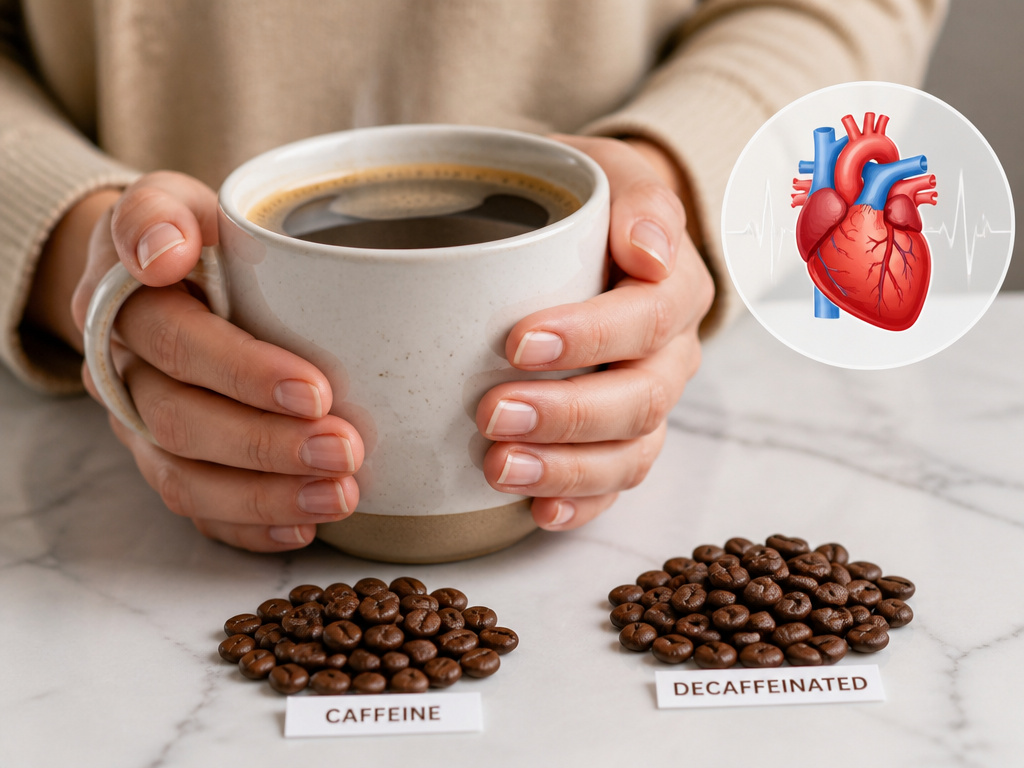
The health conversation around coffee is dominated by caffeine. That misses half the story. Coffee contains hundreds of bioactive compounds, most notably polyphenols and antioxidants. The good news for decaf drinkers is that these beneficial compounds remain largely intact through decaffeination.
This means many of the health benefits linked to coffee consumption are still available to you. Studies associate decaf coffee with a reduced risk of Type 2 diabetes and improved liver enzyme profiles. The polyphenols in coffee, with or without caffeine, appear to support metabolic health.
For those managing specific conditions, decaf is a tool, not a consolation prize.
- Sleep and Anxiety: This is the most obvious one. Caffeine blocks adenosine receptors, disrupting sleep cycles and potentially triggering anxiety. Switching to decaf after noon, or entirely, can normalize sleep and reduce feelings of restlessness. It’s a direct trade: you keep the ritual and flavor while dropping the chemical disruptor.
- Acid Reflux and IBS: While not a cure, caffeine can stimulate acid production and colonic activity. For some, switching to decaf or a low-acid beverage like certain teas significantly reduces gastrointestinal discomfort.
- Blood Pressure and Heart Palpitations: Caffeine is a vasoconstrictor and stimulant. For individuals sensitive to its pressor effects, decaf eliminates that specific trigger.
- Pregnancy and Breastfeeding: Medical guidelines often recommend strict caffeine consumption limits during pregnancy and lactation. Decaf allows for the comfort of a warm drink without exceeding those limits.
The choice isn’t between medicine and pleasure. For many, decaf is the way to get both, the documented health perks of coffee’s compounds without the side effects of its primary drug. It’s why someone might choose decaf over another lower caffeine beverage like tea; they want the specific flavor and antioxidant profile of coffee.
Decaf vs. Other Low-Caffeine Options
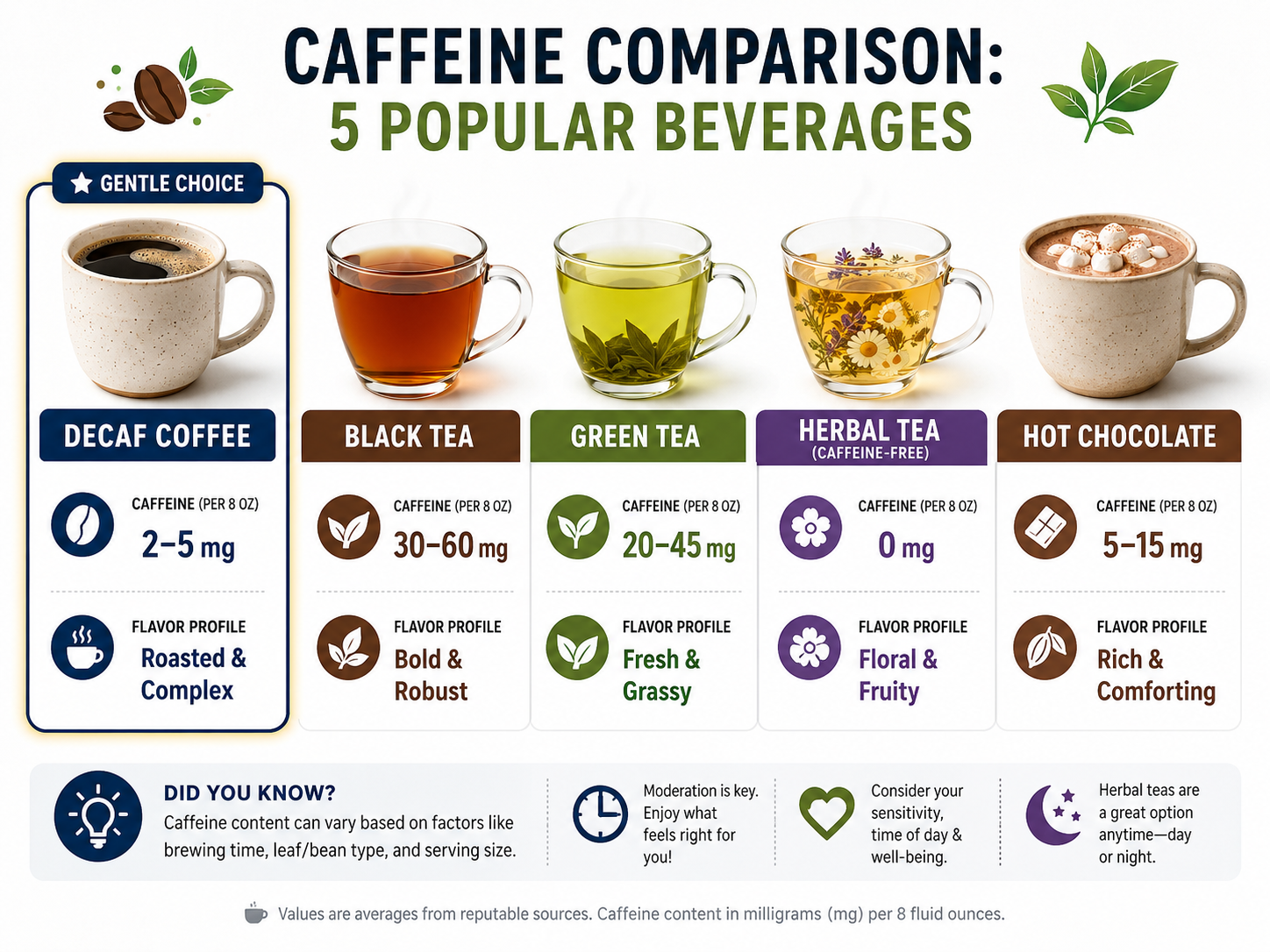
Decaf doesn’t exist in a vacuum. When you want to reduce caffeine, you have a menu of options. Each has a different flavor profile and benefit structure.
| Beverage | Avg. Caffeine (8 oz) | Key Benefit | Flavor Profile |
|---|---|---|---|
| Decaf Coffee | 2–5 mg | Coffee polyphenols, ritual. | Roasted, complex, can be nutty/chocolatey. |
| Black Tea | 40–70 mg | L-theanine for focused calm. | Malty, brisk, astringent. |
| Green Tea | 20–45 mg | High in EGCG antioxidants. | Grassy, vegetal, umami. |
| Herbal Tea | 0 mg | Variety of functional herbs. | Floral, fruity, spicy. |
| Hot Chocolate | 5–10 mg | Comfort, magnesium. | Sweet, creamy, rich. |
The comparison with tea is most relevant. A cup of black tea or green tea provides a milder, slower-release caffeine boost due to the presence of L-theanine, which promotes alert calm. But if you don’t want any stimulant effect, even tea’s 20-70mg is too much. That’s when you step down to decaf or herbal infusions.
Choosing decaf over an iced tea or hot chocolate is a choice for coffee’s specific taste. You’re not just avoiding caffeine; you’re actively choosing the roasted, bitter, complex notes of coffee. It’s a positive selection, not an avoidance.
Who is Decaf Coffee For? (Spoiler: It’s More People Than You Think)
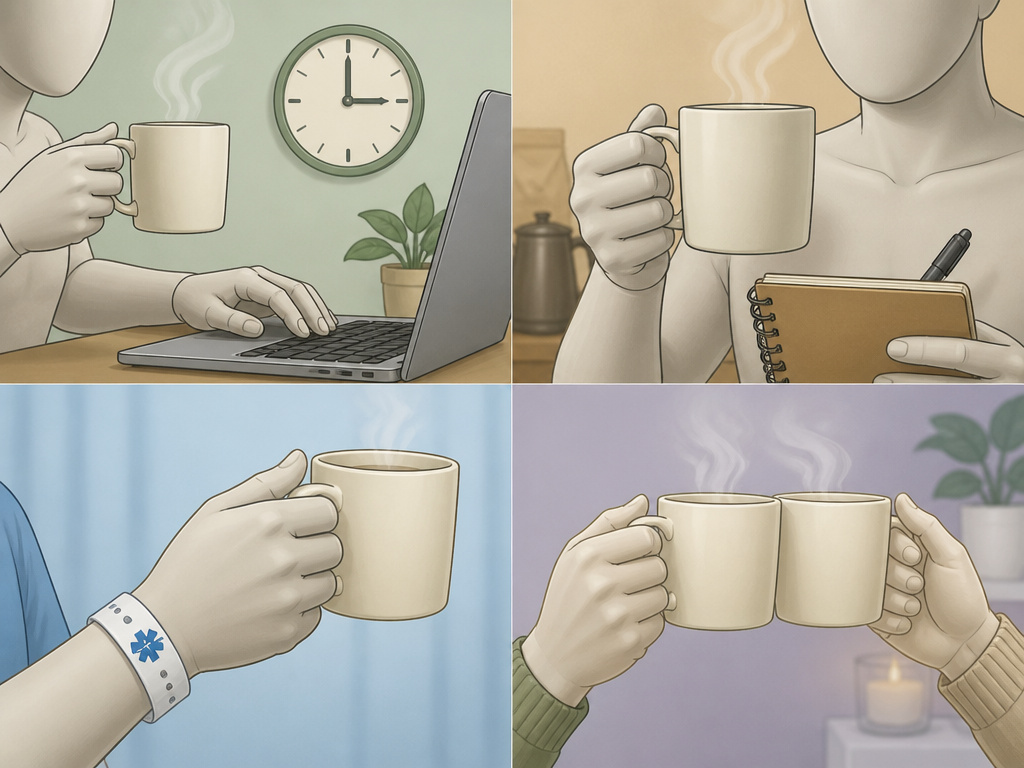
The stereotype is the person who can’t handle caffeine. That’s true, but it’s a narrow slice. The modern decaf drinker is defined by timing and intention, not just sensitivity.
It’s for the afternoon coffee drinker. You want that 3 PM ritual, the warm mug, the break from work, the rich flavor, but you know a full-caf shot will have you staring at the ceiling at 11 PM. Decaf is the enabler of the second-coffee habit without the sleep penalty.
It’s for the flavor-focused home barista. Maybe you love the fruity, acidic notes of a natural-processed Ethiopian. Drinking multiple full-caf cups a day for tasting would wire you to the moon. A high-quality Swiss Water decaf version lets you explore those flavors all day long. James Hoffmann’s 2024 Decaf Project highlighted this, tasting the same coffee decaffeinated three ways side-by-side. It was a masterclass in how process changes flavor, not just caffeine content.
It’s for anyone on a caffeine management plan. This includes people monitoring blood pressure, dealing with anxiety disorders, or following doctor’s orders during pregnancy. For them, decaf isn’t a “fake” coffee. It’s the only coffee that fits their health picture, allowing them to maintain a comforting, familiar habit.
Finally, it’s for the community participant. Coffee is social. When everyone else is having a cup, you don’t want to be the one sipping water. Decaf lets you join in fully, toast, and chat without explaining your caffeine intake or missing out on the shared experience. The point is belonging, not biochemistry.
Frequently Asked Questions
Does decaf coffee have any caffeine?
Yes. In the US, decaf must have at least 97% of caffeine removed, leaving about 2–5 milligrams per 8-ounce cup. It is not caffeine-free.
Why does my decaf coffee taste bitter or flat?
Bitterness usually means over-extraction. Grind your decaf beans coarser than regular coffee. A flat taste often means the beans are stale; decaf loses its freshness faster than regular coffee, so buy fresh and use quickly.
Is decaf coffee bad for you because of chemicals?
Not if you choose the right process. Methods like the Swiss Water Process use no chemical solvents. Solvent-based methods (ethyl acetate, methylene chloride) must meet strict FDA residue limits, but many prefer to avoid them altogether for peace of mind.
Can I drink decaf coffee at night?
For most people, yes. The tiny amount of caffeine (2–5mg) is unlikely to affect sleep unless you are extremely sensitive. It’s a far safer bet than regular coffee or even many teas.
Does decaf coffee have health benefits?
Yes. Decaf retains most of coffee’s beneficial polyphenols and antioxidants, which are linked to reduced risks of Type 2 diabetes and liver disease, without the effects of caffeine.
Before You Go
Decaf coffee’s point is singular: deliver the coffee experience without the caffeine drug. It succeeds when you understand its nature, a slightly different bean that requires slightly different handling. Stop treating it as a failed regular coffee. It’s a successful alternative with its own rules.
Seek out quality. Look for the Swiss Water or CO2 Process label, a recent roast date, and a roaster who seems proud of their decaf. Grind it coarser, brew it fresh, and taste it without the prejudice of expecting a buzz. You might find you’re not missing caffeine at all. You’re just enjoying coffee.
{
“@context”: “https://schema.org”,
“@type”: “HowTo”,
“name”: “How to Choose and Brew Decaf Coffee”,
“totalTime”: “PT10M”,
“tool”: [
{
“@type”: “HowToTool”,
“name”: “Burr coffee grinder”
},
{
“@type”: “HowToTool”,
“name”: “Scale for weighing coffee”
},
{
“@type”: “HowToTool”,
“name”: “Brewing device (pour-over, French press, espresso machine)”
}
],
“step”: [
{
“@type”: “HowToStep”,
“name”: “Select a Swiss Water or CO2 Processed Decaf”,
“text”: “Choose beans decaffeinated via the Swiss Water Process or CO2 method for the cleanest flavor profile without chemical solvent notes.”
},
{
“@type”: “HowToStep”,
“name”: “Grind Slightly Coarser”,
“text”: “Grind your decaf beans one click coarser than you would for regular coffee. The bean’s open cell structure extracts faster, and a coarser grind prevents over-extraction and bitterness.”
},
{
“@type”: “HowToStep”,
“name”: “Use Fresh Beans and Brew Quickly”,
“text”: “Decaf coffee stales faster. Buy from a roaster with a recent roast date and use the beans within 3-4 weeks of opening. Brew immediately after grinding.”
},
{
“@type”: “HowToStep”,
“name”: “Taste and Adjust”,
“text”: “If your decaf brew tastes hollow or papery, your grind is too fine or your water is too hot. Adjust coarser or lower temperature by 1-2 degrees Celsius.”
}
]
}
{
“@context”: “https://schema.org”,
“@type”: “FAQPage”,
“mainEntity”: [
{
“@type”: “Question”,
“name”: “Does decaf coffee have any caffeine?”,
“acceptedAnswer”: {
“@type”: “Answer”,
“text”: “Yes. In the US, decaf must have at least 97% of caffeine removed, leaving about 2–5 milligrams per 8-ounce cup. It is not caffeine-free.”
}
},
{
“@type”: “Question”,
“name”: “Why does my decaf coffee taste bitter or flat?”,
“acceptedAnswer”: {
“@type”: “Answer”,
“text”: “Bitterness usually means over-extraction. Grind your decaf beans coarser than regular coffee. A flat taste often means the beans are stale; decaf loses its freshness faster than regular coffee, so buy fresh and use quickly.”
}
},
{
“@type”: “Question”,
“name”: “Is decaf coffee bad for you because of chemicals?”,
“acceptedAnswer”: {
“@type”: “Answer”,
“text”: “Not if you choose the right process. Methods like the Swiss Water Process use no chemical solvents. Solvent-based methods (ethyl acetate, methylene chloride) must meet strict FDA residue limits, but many prefer to avoid them altogether for peace of mind.”
}
},
{
“@type”: “Question”,
“name”: “Can I drink decaf coffee at night?”,
“acceptedAnswer”: {
“@type”: “Answer”,
“text”: “For most people, yes. The tiny amount of caffeine (2–5mg) is unlikely to affect sleep unless you are extremely sensitive. It’s a far safer bet than regular coffee or even many teas.”
}
},
{
“@type”: “Question”,
“name”: “Does decaf coffee have health benefits?”,
“acceptedAnswer”: {
“@type”: “Answer”,
“text”: “Yes. Decaf retains most of coffee’s beneficial polyphenols and antioxidants, which are linked to reduced risks of Type 2 diabetes and liver disease, without the effects of caffeine.”
}
}
]
}
