
What Does Breve Mean in Coffee | The Creamy American Twist
A breve in coffee is an espresso drink made with steamed half-and-half instead of milk. This American variation uses a dairy blend of equal parts whole milk and light cream, resulting in a richer, creamier, and naturally sweeter beverage than a traditional latte.
A breve is an espresso-based drink where the steamed milk is replaced entirely with steamed half-and-half, a dairy product made from equal parts whole milk and light cream, containing 10-12% milk fat. This simple swap transforms a standard latte into a richer, creamier, and naturally sweeter experience, a distinctly American invention that first appeared on menus in the late 1960s.
Most people hear “breve” and think it’s just a fancy name for a small coffee. That misunderstanding leads to the wrong drink or a confused barista. The term is about the ingredient, not the size.
This guide breaks down what breve means, where it came from, and exactly how to order one so you get the decadent, creamy cup you’re after.
Key Takeaways
- Breve means half-and-half. It’s not a size; it’s the dairy. A “breve latte” is espresso with steamed half-and-half instead of milk.
- It’s an American creation. The term surfaced in the 1990s at Tony’s Coffee House in Washington, evolving from a late-60s coffee shop trend.
- Order carefully at Starbucks. Saying “a breve” might get you just steamed cream. Specify “a breve latte” or “a latte made with half-and-half.”
- Keep it small. The high fat content in half-and-half makes large breves overly rich. A cortado-sized breve (4-6 oz total) is the ideal balance.
- It froths differently. Half-and-half’s higher fat content creates a denser, more velvety foam than milk, but it overheats and breaks more easily.
What Exactly Is a Breve?
A breve is defined by its dairy. You take the standard formula for a latte, espresso and steamed milk, and swap the milk for half-and-half. That’s the entire move. The result is a drink with a heavier mouthfeel, a subtle natural sweetness from the extra cream, and a foam that feels more like whipped cream than airy milk froth.
The half-and-half must have a milk fat content between 10% and 12% to be considered true breve material. This isn’t light cream or heavy whipping cream. It’s the specific blend found in the dairy aisle.
A true breve uses half-and-half with at least 10% fat content. This dairy product is a standardized, even mix of whole milk and light cream, which is why it steams into a uniquely rich, velvety texture compared to milk.
TL;DR: A breve is espresso + steamed half-and-half (10-12% milk fat). It’s richer and sweeter than a latte because of the cream.
Breve vs. Latte: The Dairy Difference
The difference between a breve and a latte isn’t subtle once you taste them side-by-side. It’s a textural and flavor shift driven by chemistry.
A traditional latte uses steamed milk, typically whole milk at around 3.5% fat. It creates a light, sweet foam and a clean coffee flavor. A breve uses half-and-half at 10-12% fat. The higher fat content coats your palate, carries more inherent sweetness from the lactose in the cream, and produces a foam that’s denser and less airy.
This isn’t just a “richer latte.” It’s a different drink category. The fat changes how the espresso’s acids and bitter notes are perceived, often muting sharpness and amplifying chocolate or nutty notes.
| Characteristic | Latte | Breve |
|---|---|---|
| Primary Dairy | Steamed milk (whole, 2%, etc.) | Steamed half-and-half |
| Milk Fat Content | ~3.5% (whole milk) | 10–12% |
| Texture | Light, silky, airy foam | Dense, velvety, creamy foam |
| Flavor Profile | Clean, espresso-forward, mildly sweet | Rich, decadent, naturally sweeter, cream-forward |
| Common Size | 8–12 oz (small) to 16–20 oz (large) | Best at 4–8 oz (cortado to small) |
The practical consequence is size. You can comfortably drink a 16-ounce latte. A 16-ounce breve is a full meal, a milkshake with espresso. Most seasoned coffee drinkers and baristas recommend keeping a breve to cortado size (a 1:1 or 1:2 ratio of espresso to cream). You still get the luxurious experience without the stomachache.
The Origin Story: An American Invention
The word “breve” is Italian for “short.” In musical notation, it’s a long note. In coffee, it has nothing to do with duration or size. This linguistic hijacking is a purely American story.
The drink itself, an espresso with steamed half-and-half, first appeared in U.S. coffee shops in the late 1960s. It was a luxury modification, using cream instead of milk was a treat. The specific term “breve” entered the coffee lexicon much later, in 1990, credited to Tony’s Coffee House in Bellingham, Washington.
They didn’t invent the combination, but they gave it the name that stuck. From that Pacific Northwest shop, “breve” spread through the specialty coffee scene of the 90s and eventually into chains. It’s a perfect example of American coffee culture taking an Italian foundation (the latte) and customizing it with local, richer dairy.
This history explains why you won’t find a “breve” on a menu in Italy. Ask for one in Rome and you’ll likely get a confused look. It’s as American as pumpkin spice, a testament to how U.S. cafes developed their own dialect.
How to Order a Breve (Without Confusion)
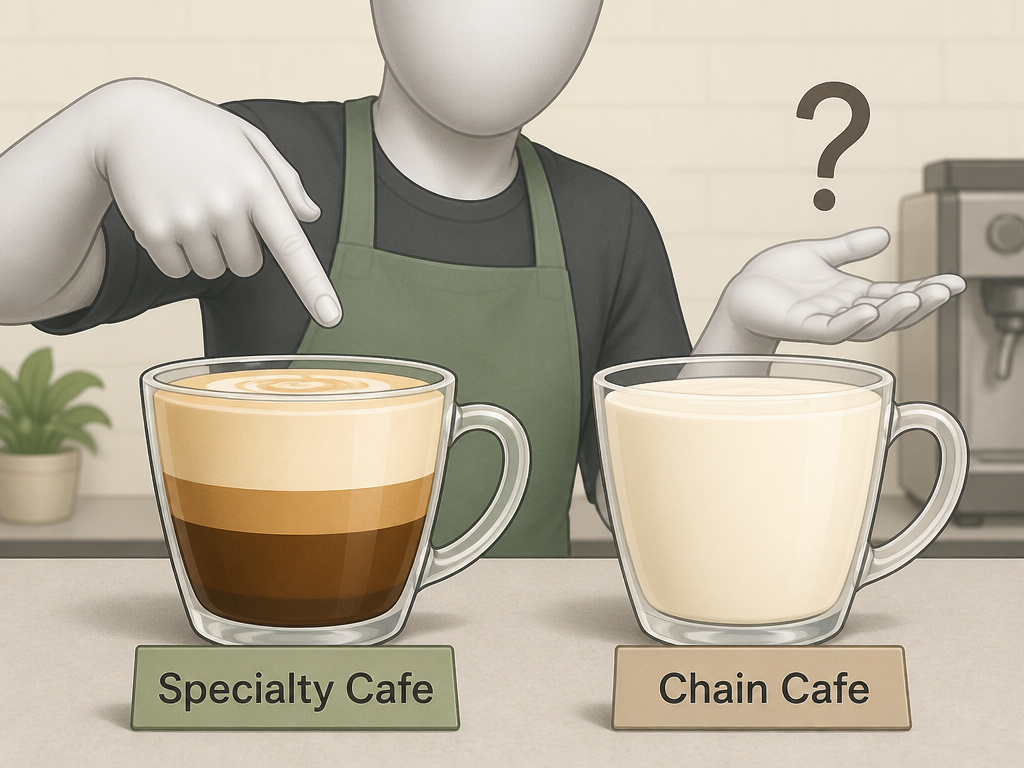
Ordering a breve should be simple, but chain coffee shops have created a linguistic fork. You need to know the local dialect.
At a specialty or independent coffee shop, ordering “a breve” will almost always get you a breve latte, espresso with steamed half-and-half. It’s the standard. You can also say “a latte with half-and-half” for absolute clarity.
At Starbucks, the script flips. In their internal terminology, “breve” is a modifier for the dairy, not a drink name. If you order “a tall breve,” the barista is likely to ring up a “short” or “tall” cup of steamed half-and-half. You must specify the drink you want modified.
Common mistake: Ordering “a breve” at Starbucks, you’ll receive a cup of steamed half-and-half, not an espresso drink. The fix is to order “a latte made with half-and-half” or “a breve latte.”
Here’s the safe ordering script for any cafe:
1. Identify the base drink. “I’d like a latte.”
2. Specify the dairy substitution. “Made with half-and-half, please.”
3. (Optional) Clarify the name. “So, a breve.”
This three-step method eliminates confusion. It’s especially useful for other espresso-based drinks like a cappuccino or a cafe Americano. You can request any of them “breve style.” Want a rich, creamy cappuccino? Ask for a “cappuccino made with half-and-half.” The same principle applies if you’re curious about the strength of a cafe Americano, but want it creamier.
Why the Fat Content (10-12%) Matters
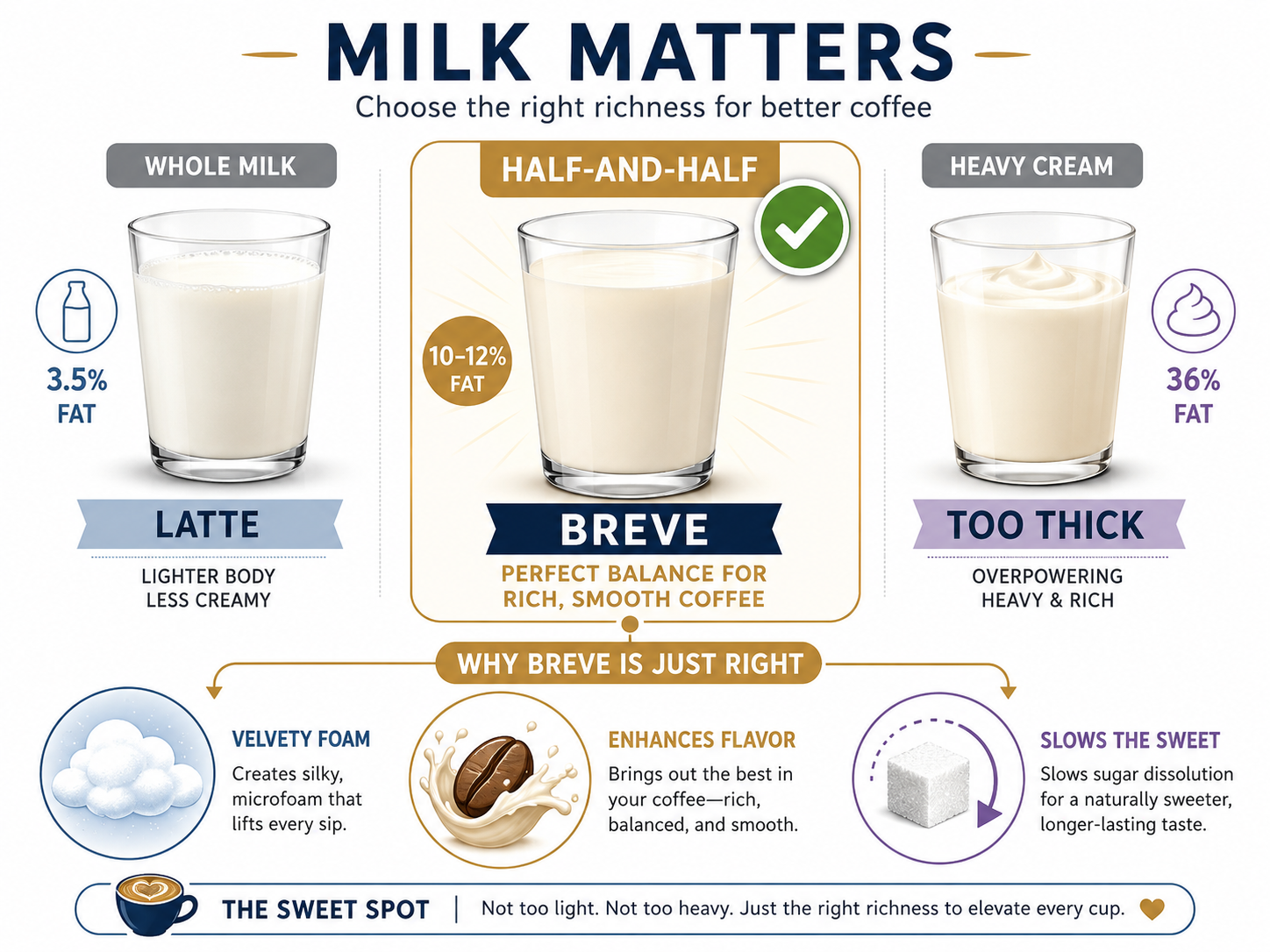
The 10-12% milk fat specification isn’t arbitrary. It’s the engineering sweet spot for the breve experience. This range is mandated by the USDA for products labeled “half-and-half.” It’s the result of blending equal parts milk (3.5% fat) and light cream (18-30% fat).
This specific fat percentage does three things:
1. It steams into a velvety microfoam. The fat molecules help stabilize tiny air bubbles, creating a foam that’s denser and richer than milk foam, but not as stiff as whipped cream.
2. It carries flavor. Fat is a flavor carrier. It binds to the coffee’s oils and aromatic compounds, delivering a more intense and rounded taste to your palate than skim or low-fat milk.
3. It adds natural sweetness. Half-and-half contains more lactose by volume than milk, and the fat content slows down how fast you perceive sweetness, giving a lingering, creamy finish.
Go lower, using whole milk, and you have a latte. Go higher, using heavy cream, and the drink becomes overly thick, almost pudding-like, and the foam becomes difficult to texture properly. The 10-12% window is what makes a breve a breve. It’s also why homemade substitutes work: mixing three parts whole milk with one part heavy cream by volume approximates this fat range almost perfectly.
This fat content is the main driver behind the drink’s calorie load. When considering calorie content of creamers, half-and-half sits in the middle, lower than heavy cream but significantly higher than any milk. It’s a treat, not an everyday drink.
Making a Breve at Home: Tips from the Pitcher
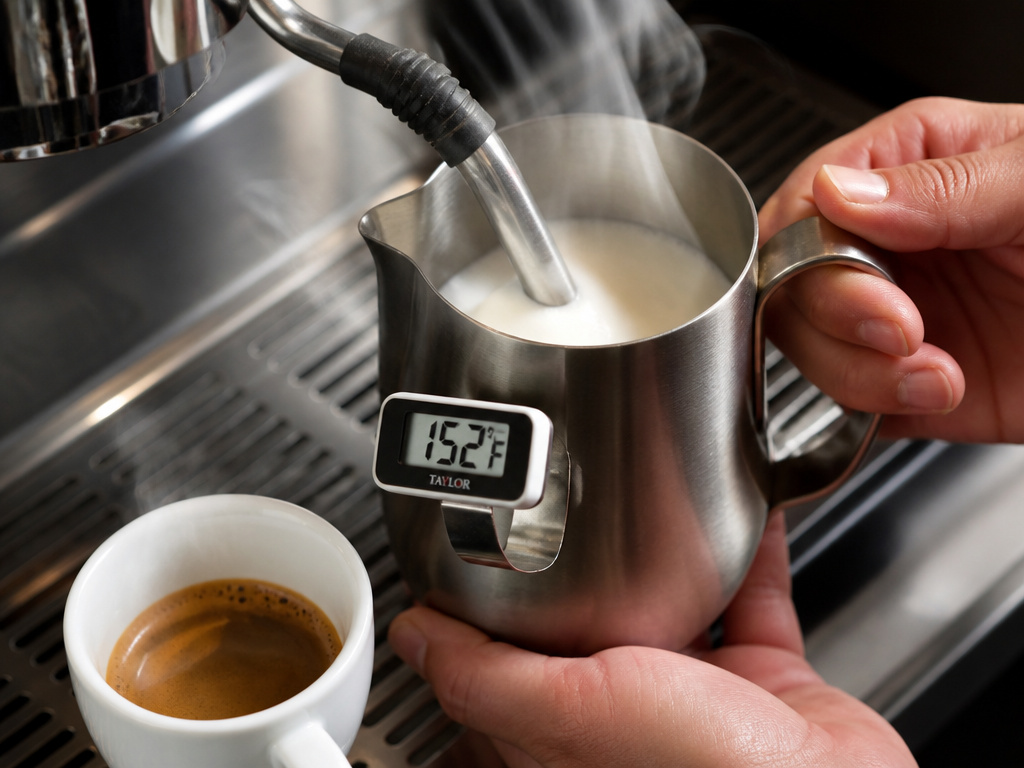
You don’t need a cafe to make a great breve. You need an espresso maker (or a strong Moka pot) and a steaming wand. The process is identical to making a latte, with one critical adjustment: temperature.
Half-and-half scorches easier than milk. Its proteins and fats break down around 160°F (71°C). Your target steaming temperature is 150–155°F (65–68°C). Stop the steam the second the pitcher becomes too hot to touch comfortably.
The step-by-step:
- Pull your shot. Grind 18g of coffee for a standard double shot. Use a light roast coffee for brighter acidity or a medium-dark blend for a chocolatey base. The espresso is the foundation.
- Steam the half-and-half. Pour 4-6 oz of cold half-and-half into a chilled metal pitcher. Submerge the wand tip, turn on the steam, and stretch the milk for 1-2 seconds to incorporate air. Then sink the wand to create a whirlpool and heat to 150-155°F. You’re listening for a consistent, low hiss, not a loud tearing sound.
- Combine immediately. Tap the pitcher on the counter to break large bubbles, swirl to integrate the foam, and pour over the espresso. The higher fat content means the foam integrates smoothly with the liquid, so you don’t need to “hold back” foam as aggressively.
The first time I steamed half-and-half, I treated it like whole milk. I brought it to my usual 160°F. The result was a cup that tasted slightly cooked, with a greasy film on the surface. The fats had separated. Now I use a thermometer for the first pitcher of the day to recalibrate my hand, then go by feel. That 10-degree window is real.
I won’t recommend a large breve for a first-time try. The 10-12% fat content is luxurious in a 4-ounce cortado, oppressive in a 12-ounce mug. Found that out the hard way on a slow Sunday morning.
TL;DR: Steam half-and-half to 150-155°F, not 160°F. Overheating breaks the fats and ruins the texture. Keep the total drink size small.
Frequently Asked Questions
Is a breve the same as a flat white?
No. A flat white is espresso with steamed whole milk, characterized by a very thin layer of velvety microfoam. A breve uses half-and-half, which is inherently richer and creates a denser foam. They share a similar size philosophy but are built on different dairy.
Can I make a breve with non-dairy milk?
Technically, no. “Breve” specifically means half-and-half. You can make a similar rich drink using full-fat canned coconut milk or a barista blend of oat milk, but it won’t be a breve. For true dairy-free milk alternatives, you’re creating a new, delicious hybrid.
Why does my breve sometimes taste bitter?
The high fat content can mute coffee’s acidity, making underlying bitterness more prominent. If your espresso shot is over-extracted or from a very dark roast, the breve format will highlight that. Try a lighter or more balanced espresso shot and ensure your half-and-half isn’t overheated.
Is a breve keto-friendly?
It’s lower in carbs than a latte because half-and-half has less lactose per volume than milk, but it’s not zero-carb. A standard breve has about 3-4 grams of carbs, mostly from sugars in the dairy. It’s a better keto option than a regular latte, but not as good as an espresso with heavy cream.
Can I add flavor to a breve?
Absolutely, but it’s often unnecessary. The half-and-half adds so much sweetness and body that syrups can make it cloying. If you do, opt for a sugar-free syrup or just a dash of vanilla. For a different kind of enhancement, a tiny pinch of salt can actually balance the richness and amplify the sweet perception without adding sugar.
The Bottom Line
Breve means one thing in coffee: half-and-half. It’s the American innovation that swaps steamed milk for steamed cream, creating a drink that’s unapologetically rich and sweet. Remember its 1990s origin, respect its 10-12% fat specification, and always order it small, cortado size is the key to enjoying it without regret.
Whether you’re exploring it as a decadent alternative to your usual latte or curious about how different dairy changes an espresso drink, the breve is a lesson in how a single ingredient swap can redefine a classic. Try it once, made correctly, and you’ll instantly understand what the fuss is about. Just maybe don’t make it a daily habit.
{
“@context”: “https://schema.org”,
“@type”: “HowTo”,
“name”: “How to Make a Breve Coffee at Home”,
“totalTime”: “PT5M”,
“tool”: [
{
“@type”: “HowToTool”,
“name”: “Espresso machine or Moka pot”
},
{
“@type”: “HowToTool”,
“name”: “Milk steaming pitcher”
},
{
“@type”: “HowToTool”,
“name”: “Coffee scale”
}
],
“supply”: [
{
“@type”: “HowToSupply”,
“name”: “Fresh espresso beans (18g)”
},
{
“@type”: “HowToSupply”,
“name”: “Half-and-half (4-6 oz)”
}
],
“step”: [
{
“@type”: “HowToStep”,
“name”: “Pull a double shot of espresso”,
“text”: “Grind 18g of coffee and pull a standard double shot (about 36g yield) into your cup.”
},
{
“@type”: “HowToStep”,
“name”: “Steam the half-and-half”,
“text”: “Pour 4-6 oz of cold half-and-half into your pitcher. Steam it to 150-155°F (65-68°C), creating a smooth, velvety microfoam.”
},
{
“@type”: “HowToStep”,
“name”: “Combine and serve”,
“text”: “Pour the steamed half-and-half over the espresso, holding back the foam with a spoon initially, then topping with the remaining foam.”
}
]
}
{
“@context”: “https://schema.org”,
“@type”: “FAQPage”,
“mainEntity”: [
{
“@type”: “Question”,
“name”: “Is a breve the same as a flat white?”,
“acceptedAnswer”: {
“@type”: “Answer”,
“text”: “No. A flat white is espresso with steamed whole milk, characterized by a very thin layer of velvety microfoam. A breve uses half-and-half, which is inherently richer and creates a denser foam. They share a similar size philosophy but are built on different dairy.”
}
},
{
“@type”: “Question”,
“name”: “Can I make a breve with non-dairy milk?”,
“acceptedAnswer”: {
“@type”: “Answer”,
“text”: “Technically, no. \”Breve\” specifically means half-and-half. You can make a similar rich drink using full-fat canned coconut milk or a barista blend of oat milk, but it won’t be a breve. For true dairy-free milk alternatives, you’re creating a new, delicious hybrid.”
}
},
{
“@type”: “Question”,
“name”: “Why does my breve sometimes taste bitter?”,
“acceptedAnswer”: {
“@type”: “Answer”,
“text”: “The high fat content can mute coffee’s acidity, making underlying bitterness more prominent. If your espresso shot is over-extracted or from a very dark roast, the breve format will highlight that. Try a lighter or more balanced espresso shot and ensure your half-and-half isn’t overheated.”
}
},
{
“@type”: “Question”,
“name”: “Is a breve keto-friendly?”,
“acceptedAnswer”: {
“@type”: “Answer”,
“text”: “It’s lower in carbs than a latte because half-and-half has less lactose per volume than milk, but it’s not zero-carb. A standard breve has about 3-4 grams of carbs, mostly from sugars in the dairy. It’s a better keto option than a regular latte, but not as good as an espresso with heavy cream.”
}
},
{
“@type”: “Question”,
“name”: “Can I add flavor to a breve?”,
“acceptedAnswer”: {
“@type”: “Answer”,
“text”: “Absolutely, but it’s often unnecessary. The half-and-half adds so much sweetness and body that syrups can make it cloying. If you do, opt for a sugar-free syrup or just a dash of vanilla. For a different kind of enhancement, a tiny pinch of salt can actually balance the richness and amplify the sweet perception without adding sugar.”
}
}
]
}
