
Using Vanilla Extract in Coffee: Dosage to Avoid Sweetness
Add 1/4 teaspoon (1.25ml) of pure vanilla extract to a cup of hot coffee after brewing, not before. The 195–205°F (90–96°C) brew temperature instantly vaporizes the 35% alcohol carrier, leaving behind the complex vanilla flavor compounds. Adding it to cold coffee or to the grounds before brewing creates a harsh, flat, or alcoholic taste.
Most people ruin vanilla coffee by pouring extract into cold brew or stirring it into lukewarm coffee. The alcohol doesn’t vaporize, and you get a sharp, medicinal burn instead of a smooth, aromatic lift. They also assume more is better, a full teaspoon overwhelms the cup with a cloying sweetness that masks the coffee’s origin notes.
This guide covers the science of vanillin concentration, why the FDA’s 35% alcohol rule matters for your cup, and the exact method that leaves bitterness behind without adding sugar. You’ll also learn when to use a whole bean instead.
Key Takeaways
- Pure vanilla extract must contain at least 35% alcohol by federal law, this carrier evaporates instantly in hot coffee but lingers unpleasantly in cold brew.
- The optimal vanillin concentration in your final cup is between 0.5 and 2.0 parts per million (ppm). Exceeding 2 ppm adds sweetness without more vanilla flavor.
- Adding vanilla extract to coffee grounds before brewing strips the delicate aromatic compounds in under 30 seconds, leaving a flat, one-dimensional taste.
- For cold coffee, use a vanilla bean infusion or a non-alcoholic syrup. The alcohol in pure extract will not evaporate and creates a harsh flavor.
- Real vanilla contains over 250 flavor compounds; imitation vanilla is just synthetic vanillin and lacks the depth to complement coffee’s complexity.
What Vanilla Extract Actually Is (And Why the Alcohol Matters)
The label “pure vanilla extract” isn’t a marketing term, it’s a legal definition. The FDA vanilla extract standard mandates a solution of vanilla bean compounds in a minimum of 35% ethyl alcohol. That alcohol is a solvent, not a preservative. It pulls hundreds of flavor compounds, including vanillin, piperonal, and 4-hydroxybenzaldehyde, out of the bean during months of maceration.
Common mistake: Using vanilla extract in iced coffee, the alcohol carrier cannot evaporate at low temperatures, and you’ll taste a sharp, solvent-like note that overpowers the coffee within the first sip.
The 35% alcohol content is non-negotiable. In hot coffee, that’s your ally. At 195°F, the alcohol flashes off in seconds, carrying any harsh solvent notes with it and depositing the vanilla’s aromatic oils into your cup. In cold coffee, it’s your enemy. The alcohol stays in solution, and your first taste is a fusel burn followed by a thin vanilla afterthought.
TL;DR: The 35% alcohol in pure vanilla extract is a required extraction agent that must vaporize in hot coffee to work; in cold coffee, it won’t and it ruins the drink.
The Precise Dosage: Why 1/4 Teaspoon Is the Magic Number
A full teaspoon of vanilla extract in your coffee tastes like dessert syrup. A few drops get lost. The sweet spot is 1/4 teaspoon (1.25ml) for an 8.5-ounce cup. This targets a vanillin concentration between 0.5 and 2.0 parts per million in the final liquid.
Vanillin has a unique property: it blocks bitter receptors on your tongue. The effect maxes out at about 1.5 ppm. Going beyond 2 ppm doesn’t increase the vanilla flavor, it just adds a cloying sweetness that masks the coffee’s natural notes. Your Ethiopian Yirgacheffe will taste like sugar water with a vague floral hint.
| Dosage Method | Amount per 8.5oz Cup | Target Vanillin ppm | Risk If You Exceed It |
|---|---|---|---|
| Pure Vanilla Extract | 1/4 teaspoon (1.25ml) | 0.5 – 2.0 ppm | Sweetness overwhelms origin flavors; cup tastes flat |
| Vanilla Syrup | 1/2 – 1 tablespoon (7.5–15ml) | Varies by brand | Often adds significant sugar, altering coffee’s body |
| Whole Bean Infusion | 1 bean per 500ml brewed coffee | ~1.0 ppm (estimated) | Over-infusion can extract bitter guaiacol compounds |
Start with 1/4 teaspoon. Stir. Taste. If the bitterness is still pronounced, you can nudge it to 1/2 teaspoon, but you’re entering dessert-drink territory. The goal is complement, not cover-up.
I learned this the hard way with a particularly astringent Kenyan AA. A full teaspoon made it taste like cheap cream soda. Backing down to 1/4 teaspoon left the blackcurrant notes intact while softening the sharp, wine-like acidity. The coffee still tasted like coffee.
Why Brewing Vanilla Extract With Coffee Grounds Fails
You might think infusing the flavor during brewing is efficient. It isn’t. Adding vanilla extract to your coffee grounds before the water hits them is a guaranteed way to waste good extract.
Brewing water at 195–205°F (90–96°C) strips the volatile aromatic compounds from vanilla extract in under 30 seconds. What’s left is a flat, one-dimensional vanillin note without the supporting cast of esters and aldehydes that give real vanilla its depth.
The process is a brutal distillation. The hot water vaporizes the alcohol and the most delicate top notes first, the very compounds that provide vanilla’s complexity. They escape with the steam, leaving behind a simpler, heavier vanillin base. Your coffee ends up tasting vaguely sweet and woody, missing the floral, rum-like, and creamy notes.
Compare that to adding cinnamon in coffee grounds. Cinnamon’s flavor compounds are more heat-stable. They survive the brew cycle. Vanilla’s are not. This is a fundamental chemical mismatch, not a technique issue.
The Two Ways Real Vanilla Changes Your Cup
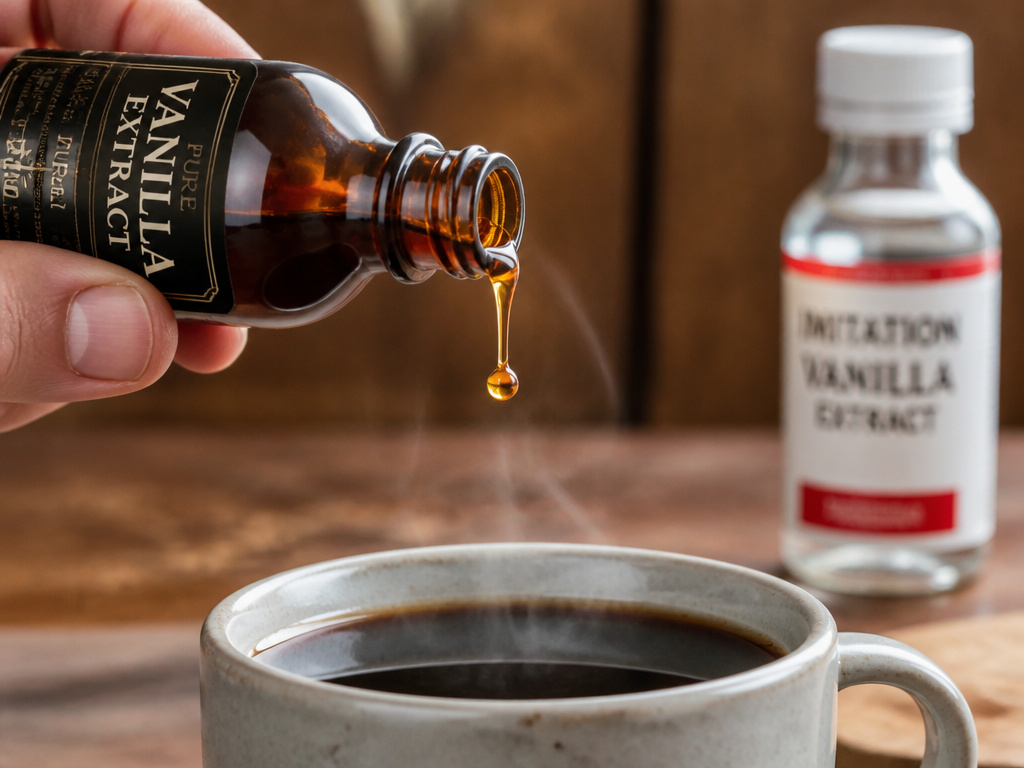
Real vanilla does two things well in coffee: it blocks bitterness and adds aromatic complexity. Imitation vanilla, which is just synthetic vanillin, only does the first one.
A 2023 scientific analysis of vanilla extraction identified 84 volatile compounds in vanilla pods. Headspace solid-phase microextraction (HS-SPME) picked up the most aroma intensity. Your bottle of pure extract contains a version of that spectrum, vanillin, piperonal, vanillic acid, and dozens of others. Imitation vanilla is a single molecule.
- Bitterness blocking: Vanillin binds to certain taste receptors on your tongue, physically preventing bitter compounds in coffee from registering. This works with both pure and imitation vanilla.
- Aromatic layering: The other 250+ compounds in pure extract add floral, creamy, and spicy notes that weave into the coffee’s existing flavor profile. Imitation vanilla adds a flat, sweet woodiness.
Think of it like music. Imitation vanilla is a single note played loudly. Pure vanilla extract is a chord. It supports the coffee’s melody instead of drowning it out.
TL;DR: Pure vanilla extract masks bitterness and adds complementary flavors. Imitation vanilla only masks bitterness, often leaving a hollow, overly sweet aftertaste.
Hot vs. Cold Coffee: A Complete Method Split
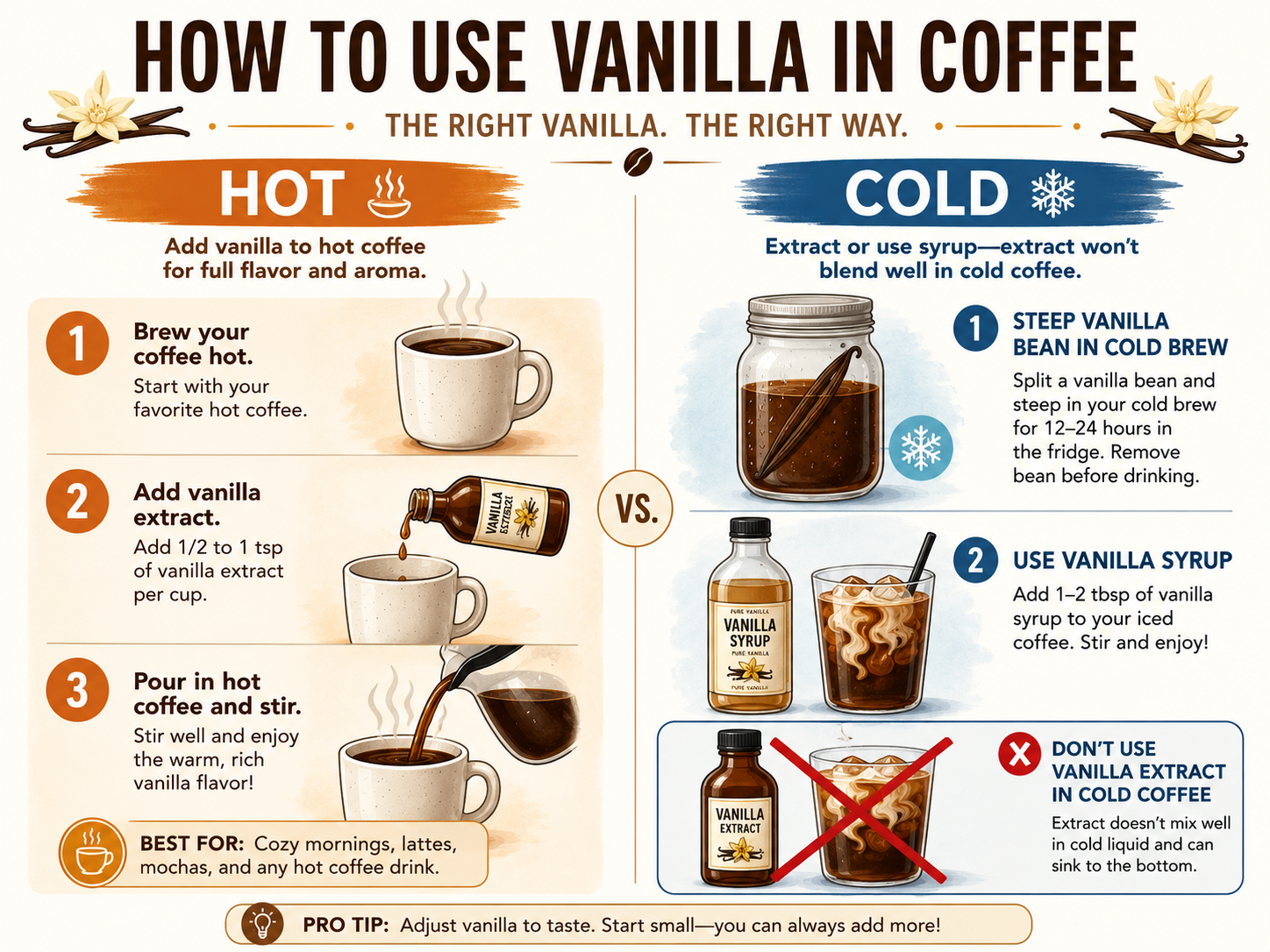
The rules change completely with temperature. Hot coffee vaporizes alcohol. Cold coffee does not.
For Hot Coffee (Drip, Pour Over, Espresso)
- Brew your coffee as usual, ensuring it’s between 195–205°F.
- Measure 1/4 teaspoon of pure vanilla extract into your empty cup.
- Pour the hot coffee directly over the extract.
- Stir vigorously for 5–10 seconds. You should smell the alcohol vaporizing, a quick, sharp scent that disappears.
- Add milk, almond milk in coffee, or sweetener if desired, but taste it black first.
The heat does the work. You’re not “cooking off” the flavor; you’re liberating it from the alcoholic solvent.
For Cold Coffee (Iced, Cold Brew)
Do not use pure vanilla extract. The alcohol will remain, creating a harsh, off-putting flavor. You have two better options:
- Vanilla Bean Infusion: Split a vanilla bean lengthwise and add it to your cold brew concentrate before diluting. Let it steep for 12-24 hours in the refrigerator. Remove the bean. This cold infusion preserves the delicate top notes that hot brewing destroys.
- Non-Alcoholic Vanilla Syrup: Use a commercially prepared syrup or make your own by simmering water, sugar, and scraped vanilla beans, then cooling. Syrups integrate easily and consistently.
Common mistake: Adding pure vanilla extract to a finished glass of iced coffee, the first sip will carry a harsh, almost medicinal alcohol bite that lingers on the palate and completely overpowers the coffee’s flavor.
The method isn’t interchangeable. Choosing the wrong one guarantees a bad cup.
When to Use a Whole Vanilla Bean Instead
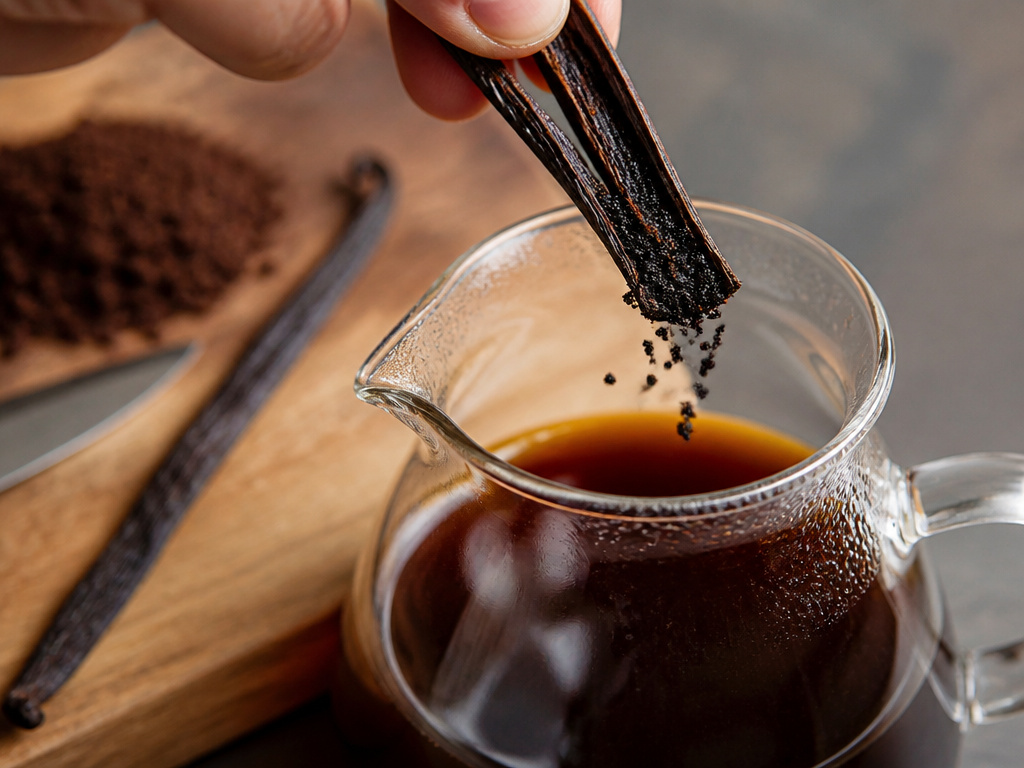
For cold brew or when you want a deeper, more integrated vanilla flavor without any alcohol, skip the extract. Use a whole bean.
- Hot Infusion: Add a split bean to your coffee grounds before brewing. This works best with methods like French press or full-immersion cold brew, where the bean steeps with the coffee. For drip machines, the contact time is too short.
- Cold Infusion: The best method. Add a split bean to your finished cold brew concentrate and steep in the fridge for 12-24 hours. The slow extraction pulls a broader range of flavor compounds than heat, resulting in a more nuanced vanilla profile.
A single Bourbon vanilla bean (about 17cm long) can infuse 500ml of brewed coffee. After use, rinse the bean, let it dry, and you can reuse it 2-3 times for subsequent batches, though the flavor will diminish each time.
Beans have a downside: guaiacol. This compound increases as vanillin content decreases and is generally considered to have a negative effect on aroma. Over-infusing or using a low-quality bean can pull more guaiacol, adding a smoky, medicinal note. That’s why timing matters.
Vanilla Extract vs. Syrup vs. Powder: A Use Case Grid
Not all vanilla products work the same way in coffee. Each has a different composition, sugar content, and integration method.
| Product | Best For | Dosage (per 8.5oz cup) | Integration Method | Primary Risk |
|---|---|---|---|---|
| Pure Vanilla Extract | Hot black coffee | 1/4 tsp (1.25ml) | Stir into hot coffee after brewing | Harsh alcohol taste in cold coffee |
| Vanilla Syrup | Iced lattes, sweetened drinks | 1/2 – 1 tbsp (7.5–15ml) | Stir into finished drink | Adds significant sugar, alters coffee body and calories in coffee additives |
| Vanilla Powder | Baking, blended drinks | 1/8 tsp | Blend into drink (does not dissolve in liquid) | Clumps and creates gritty texture |
| Whole Vanilla Bean | Cold brew, full-immersion hot brew | 1 bean per 500ml | Steep with coffee grounds or concentrate | Over-extraction introduces bitter guaiacol |
Syrups are for sweetness and flavor. Extracts are for flavor without added sugar. Powders are almost useless for liquid coffee. Beans are for purists who control time and temperature.
If you’re exploring other natural flavor enhancers, the principle of complementing without overwhelming applies to adding oils to coffee like coconut oil or MCT oil in coffee. They add body and sustained energy but require vigorous blending to integrate.
The Imitation Vanilla Trap
Imitation vanilla is pure synthetic vanillin. It’s cheaper and consistent. For baking, where high heat drives off subtle aromatics anyway, it’s a fine choice. For coffee, it’s a trap.
It will block bitterness. But it adds a singular, flat, sweet-woody note that can clash with acidic or fruity coffee origins. A light roast Ethiopian will taste like vanilla-scented wood chips. A dark roast might tolerate it better, but you’re still missing the harmony that real extract provides.
The choice becomes clear when you taste them side-by-side. Try a cup with pure extract and a cup with imitation, both at the 1/4 teaspoon dosage. The imitation cup will taste simpler, sweeter, and slightly artificial. The pure extract cup will have a lingering, complex aroma that evolves as the coffee cools.
This is similar to the difference between using white sugar and a more complex sweetener like brown sugar in coffee. One is a blunt instrument; the other adds its own character.
Frequently Asked Questions
Does vanilla extract curdle milk in coffee?
No. The alcohol evaporates instantly in hot coffee, and the remaining vanilla compounds are not acidic enough to curdle dairy or plant-based milks. If you add extract directly to cold milk, the alcohol could potentially cause slight separation, but that scenario is unlikely.
Can I make my own vanilla extract for coffee?
Yes, but it takes time. The FDA vanilla extract standard requires a minimum 35% alcohol solution and a prolonged maceration period, often several months, to extract the full spectrum of flavor compounds. A homemade extract steeped for only a few weeks will be weaker and less complex than commercial versions.
Why does my vanilla coffee taste bitter sometimes?
You’re likely using imitation vanilla or an extract that has oxidized. Pure vanilla extract can also turn bitter if it’s old or has been stored in a warm, bright place. Always store it in a cool, dark cabinet. Also, check your base coffee; if it’s extremely over-extracted or burnt, no amount of vanilla will fully rescue it. A pinch of salt trick can help mitigate inherent bitterness before you add vanilla.
Is vanilla extract keto-friendly?
Pure vanilla extract contains negligible carbohydrates because the flavor compounds are dissolved in alcohol and water. The carbs from the vanilla bean itself are minuscule. Vanilla syrup, however, is typically high in sugar and not keto-friendly.
Does vanilla extract have caffeine?
No. Vanilla extract contains no caffeine. Any stimulant effect you perceive is from the coffee itself. If you’re sensitive to caffeine’s effects, be mindful of your overall intake, as explored in articles on coffee digestion effects.
Before You Go
Use 1/4 teaspoon of pure vanilla extract stirred into hot coffee after brewing. That’s the single rule that matters. It leverages the 35% alcohol to carry flavor in, then vaporizes it away so all you taste is the vanilla. Anything else, adding it to grounds, using it in cold brew, pouring in a full teaspoon, compromises the cup.
Real vanilla is a complement, not a mask. It should highlight your coffee’s origin notes, not bury them. When done right, it turns a good cup into something memorable without a gram of added sugar. That’s the goal. Skip the syrup, measure the extract, and pour it hot.
{
“@context”: “https://schema.org”,
“@type”: “HowTo”,
“name”: “How to Add Vanilla Extract to Coffee”,
“totalTime”: “PT2M”,
“tool”: [
{
“@type”: “HowToTool”,
“name”: “Pure vanilla extract”
},
{
“@type”: “HowToTool”,
“name”: “Measuring spoon (1/4 teaspoon)”
},
{
“@type”: “HowToTool”,
“name”: “Coffee stirrer”
}
],
“step”: [
{
“@type”: “HowToStep”,
“name”: “Brew your coffee hot”,
“text”: “Brew your coffee to a temperature between 195–205°F (90–96°C). The heat is necessary to instantly vaporize the alcohol in the vanilla extract.”
},
{
“@type”: “HowToStep”,
“name”: “Measure the extract”,
“text”: “Pour 1/4 teaspoon (1.25ml) of pure vanilla extract into your empty cup. This dosage targets 0.5 to 2.0 ppm of vanillin in the final cup.”
},
{
“@type”: “HowToStep”,
“name”: “Add the hot coffee”,
“text”: “Pour the freshly brewed hot coffee directly over the measured extract. The high temperature causes the 35% alcohol carrier to evaporate almost immediately.”
},
{
“@type”: “HowToStep”,
“name”: “Stir thoroughly”,
“text”: “Stir the coffee vigorously for 5–10 seconds to ensure the vanilla is fully integrated and the alcohol aroma is completely dispersed.”
}
]
}
{
“@context”: “https://schema.org”,
“@type”: “FAQPage”,
“mainEntity”: [
{
“@type”: “Question”,
“name”: “Does vanilla extract curdle milk in coffee?”,
“acceptedAnswer”: {
“@type”: “Answer”,
“text”: “No. The alcohol evaporates instantly in hot coffee, and the remaining vanilla compounds are not acidic enough to curdle dairy or plant-based milks. If you add extract directly to cold milk, the alcohol could potentially cause slight separation, but that scenario is unlikely.”
}
},
{
“@type”: “Question”,
“name”: “Can I make my own vanilla extract for coffee?”,
“acceptedAnswer”: {
“@type”: “Answer”,
“text”: “Yes, but it takes time. The FDA vanilla extract standard requires a minimum 35% alcohol solution and a prolonged maceration period, often several months, to extract the full spectrum of flavor compounds. A homemade extract steeped for only a few weeks will be weaker and less complex than commercial versions.”
}
},
{
“@type”: “Question”,
“name”: “Why does my vanilla coffee taste bitter sometimes?”,
“acceptedAnswer”: {
“@type”: “Answer”,
“text”: “You’re likely using imitation vanilla or an extract that has oxidized. Pure vanilla extract can also turn bitter if it’s old or has been stored in a warm, bright place. Always store it in a cool, dark cabinet. Also, check your base coffee; if it’s extremely over-extracted or burnt, no amount of vanilla will fully rescue it. A pinch of salt trick can help mitigate inherent bitterness before you add vanilla.”
}
},
{
“@type”: “Question”,
“name”: “Is vanilla extract keto-friendly?”,
“acceptedAnswer”: {
“@type”: “Answer”,
“text”: “Pure vanilla extract contains negligible carbohydrates because the flavor compounds are dissolved in alcohol and water. The carbs from the vanilla bean itself are minuscule. Vanilla syrup, however, is typically high in sugar and not keto-friendly.”
}
},
{
“@type”: “Question”,
“name”: “Does vanilla extract have caffeine?”,
“acceptedAnswer”: {
“@type”: “Answer”,
“text”: “No. Vanilla extract contains no caffeine. Any stimulant effect you perceive is from the coffee itself. If you’re sensitive to caffeine’s effects, be mindful of your overall intake, as explored in articles on coffee digestion effects.”
}
}
]
}
