
The Best Maple Syrup for Coffee: A Guide to Grades & Uses
To use maple syrup in coffee, pick the right grade, measure by weight, and respect a strict five-day shelf life for cold brew. Grade A Dark syrup holds up against espresso, while Grade A Amber suits iced coffee. Adding 7–10 grams (about half a tablespoon) to a 12-ounce cup provides balanced sweetness without masking the coffee’s origin notes.
Most people grab the first bottle of syrup from the pantry and pour it in. That’s the mistake. The wrong grade disappears into the brew, the wrong amount makes it cloying, and the wrong timing spoils a whole batch.
This guide walks through the specific grades that work, the exact spoilage window you must watch, and the measurement method that actually delivers consistent flavor.
Key Takeaways
- Grade A Dark maple syrup is the only grade with enough molasses-like bitterness to stand up to a double ristretto in a latte. Grade A Amber is acceptable for iced coffee. Grade A Golden is too delicate.
- Maple syrup cuts cold brew’s shelf life in half. Refrigerated, unsweetened cold brew lasts 14 days. Add maple syrup, and you have 5 days, 120 hours, before fermentation starts, even if it looks and smells fine.
- Always measure syrup by weight, not volume. Batch-to-batch viscosity varies up to 18%, making a tablespoon an unreliable measure. Use a 0.1g precision scale.
- Never add syrup to nitro cold brew before infusing nitrogen. The viscous sugars will clog the 15–25 µm pores in the diffusion stone, killing the creamy cascade. Stir it in after the pour.
- Heat the syrup slightly before adding to hot coffee. Ten seconds in the microwave thins it, ensuring it blends instantly instead of sinking to the bottom in a sticky pool.
The Grade That Actually Works (And Why)
Not all maple syrup is built for coffee. The official University of Maine Maple Syrup Quality Control Manual states that cleanliness is the top factor for quality, but for our purposes, the color class is the deciding factor. The grading system. Gold, Amber, Dark, Very Dark, is a direct map to flavor intensity and mineral content.
Maple syrup is legally defined as a liquid food concentrated to not less than 66% solids by weight. The color classes, measured by light transmittance, correlate with distinct aromatic notes developed as the harvest season progresses, including vanilla, hazelnut, and coffee.
Grade A Golden (formerly “Fancy”) has a delicate, floral taste. It’s fantastic in a vinaigrette. In coffee, it vanishes. You get sweetness without character, which is a waste of both the syrup and the beans.
Grade A Amber is the versatile middle child. Its richer taste can complement a well-balanced medium-roast pour-over or a glass of iced coffee. It’s the safe choice if you’re not sure.
Grade A Dark (often the old “Grade B”) is the one you want for coffee, especially with milk or espresso. It has a pronounced molasses-adjacent bitterness and robust body. That stronger flavor profile doesn’t get washed out by a ristretto’s intensity or the fat in whole milk. This is the specific stance from a working barista: Grade A Dark for lattes, Grade A Amber is fine, Grade A Golden belongs elsewhere.
TL;DR: Use Grade A Dark for espresso drinks, Grade A Amber for iced or black coffee, and skip Grade A Golden entirely for this application.
Why the Flavor Difference Exists
The variance isn’t arbitrary. According to the Chemistry of Maple Syrup factsheet, the chemistry shifts through the season. Lighter syrups from early season sap have less invert sugar (fructose and glucose). Darker, late-season syrups have more. Invert sugars are more soluble and contribute to a fuller mouthfeel and deeper, caramelized notes that can stand up to roasted coffee flavors. Darker syrups also have nearly double the phenolic antioxidant content of golden ones.
| Syrup Grade (Color Class) | Best Coffee Pairing | What Happens If You Use the Wrong One |
|---|---|---|
| Grade A Golden (Delicate) | Not recommended | Sweetness adds, but all maple character is lost behind the coffee. |
| Grade A Amber (Rich) | Iced coffee, light roast | Adds noticeable caramel sweetness without overpowering. |
| Grade A Dark (Robust) | Lattes, espresso, dark roast | Its bitterness complements roast notes; holds its own against milk. |
This is why choosing a sweetener is more nuanced than grabbing any natural coffee sweeteners like honey or agave. Each has a distinct flavor impact.
Measure by Weight, Not the Bottle’s Cap
Pouring syrup straight from the bottle is a recipe for inconsistency. Maple syrup’s viscosity can vary 12–18% between batches due to factors like the density of the seasonal sap and final boiling temperature. A “tablespoon” of a thick, late-season batch is significantly more sugar than a tablespoon of a runnier early-season batch.
You need a digital kitchen scale with 0.1-gram precision.
- Place your empty cup or pitcher on the scale and press “Tare” to zero it out.
- Slowly pour syrup until the display reads between 7 and 10 grams for a standard 12-ounce (350 mL) cup.
- For a full carafe of cold brew, aim for a 3% sugar-by-weight ratio. For 1000 grams of coffee, that’s 30 grams of syrup.
Skipping the scale means your coffee will taste different every time you open a new bottle. This precision is the same logic behind weighing coffee beans instead of using a scoop, it removes variables. It’s a far more reliable approach than using a pinch of salt for bitterness reduction, which is at least consistent by volume.
The Cold Brew Spoilage Clock
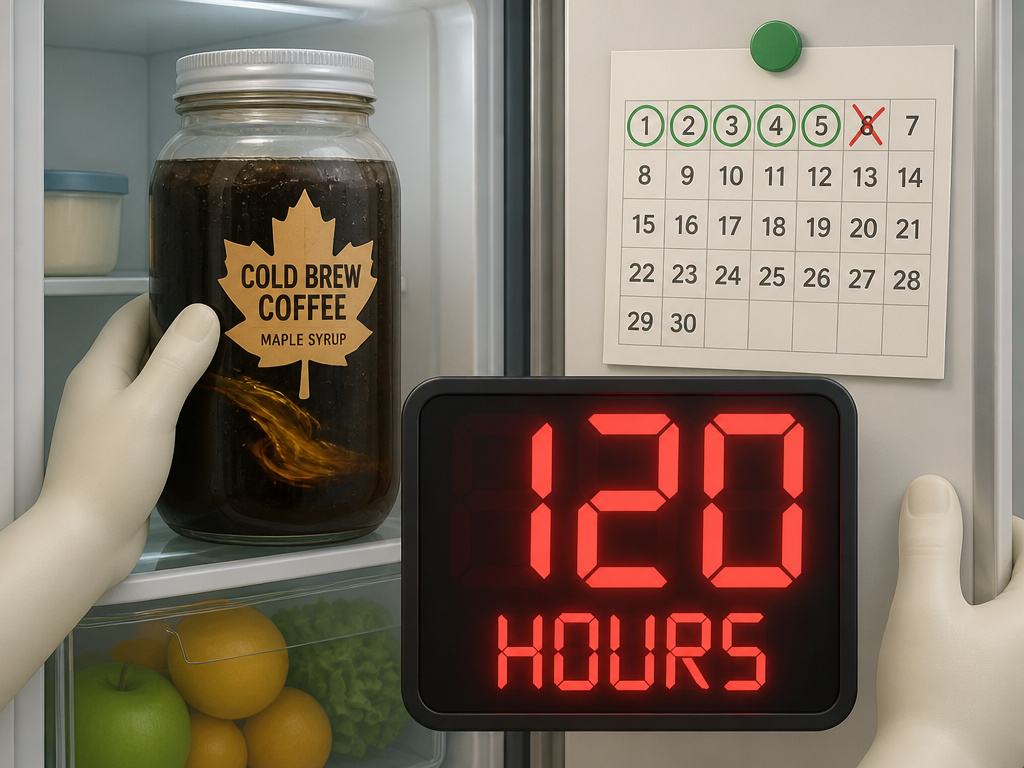
This is the non-negotiable rule most guides omit. Adding maple syrup to cold brew fundamentally changes its biology.
Unsweetened cold brew, kept refrigerated at or below 4°C (39°F), is shelf-stable for about 14 days. The low pH and natural compounds keep microbes in check. Maple syrup introduces a buffet of fermentable sugars, sucrose, fructose, and glucose.
These sugars support the growth of bacteria like Lactobacillus brevis. By day 6 in the fridge, even without any visible mold or sour odor, microbial counts can exceed the threshold considered stable. The coffee might taste fine, but the risk of an unpleasant gastric surprise is real.
Common mistake: Sweetening a whole batch of cold brew concentrate for the week, the fermentable sugars cut the safe refrigerated shelf life from 14 days to just 5 days (120 hours). Discard it on the morning of day six, no exceptions.
The procedure is strict:
* Brew and dilute your cold brew to serving strength.
* Sweeten individual servings only, right before you drink them.
* If you must pre-mix, label the container with the date and time of mixing. Consume it within 120 hours.
This stark shelf-life reduction is a critical difference from using a non-fermentable healthy coffee additive like coconut oil, which doesn’t feed microbes.
The Nitro Cold Brew Exception
Nitro cold brew gets its signature creamy texture from being infused with nitrogen gas under pressure through a fine diffusion stone. The pores in these stones are tiny, typically 15–25 micrometers.
Adding viscous maple syrup before the nitrogen infusion is a guaranteed way to clog those pores. The sugar polymers stick and build up, eventually killing the smooth cascade and creamy head. The fix is simple: always pour your nitro cold brew first, then stir in the syrup. The 15-second stir preserves the texture.
How to Add It to Hot Coffee (The Right Way)
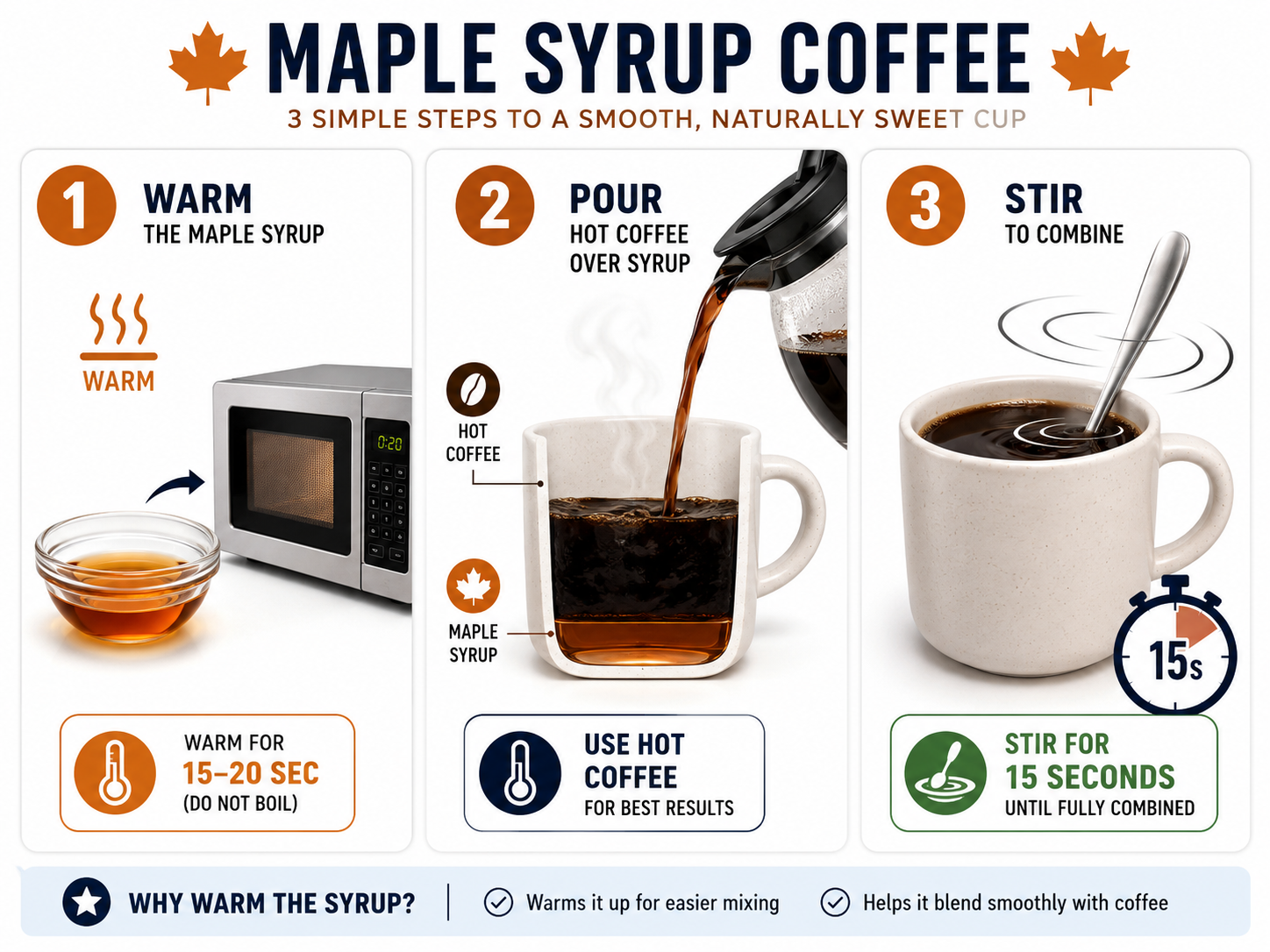
For hot coffee, the goal is immediate integration. Cold, thick syrup hitting hot coffee will often sink and congeal at the bottom, leaving you with a sickly-sweet final sip.
- Warm the syrup. Pour your measured 7–10 grams into a small dish and microwave it for 8–10 seconds. It should be warm to the touch, not hot. This thin layer of MCT oil in coffee for energy also benefits from being fluid, but for syrup, it’s essential.
- Pour the syrup into the cup first. Then, brew your coffee directly onto it. The turbulent stream from your brewer or espresso machine provides the agitation needed for full dissolution.
- Stir for a full 15 seconds. Use a spoon or a small whisk. This isn’t a casual swirl. This ensures the syrup is fully emulsified into the coffee, not just suspended.
If you’re making a latte, add the warmed syrup to your cup before pulling the espresso shot. The espresso will mix it thoroughly, then you can add your steamed milk. This method works better than trying to stir syrup into a finished, milky drink.
Maple Syrup vs. Other Coffee Sweeteners
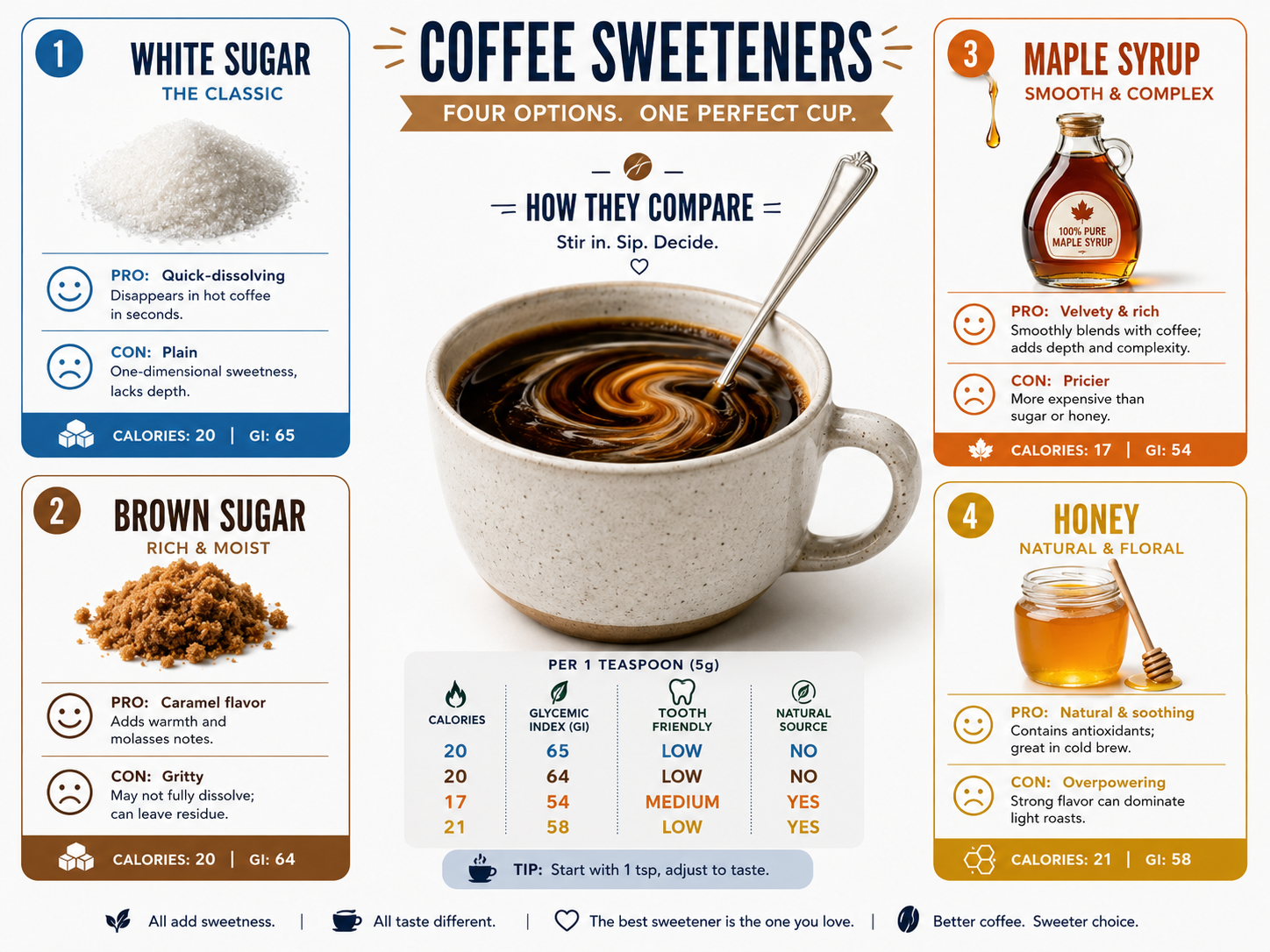
Why choose maple over the white sugar on the counter or the brown sugar in coffee in the pantry? It comes down to flavor complexity and dissolution.
White sugar (sucrose) adds pure sweetness and can sharpen acidity. It dissolves easily. Brown sugar adds molasses notes, but it can leave a gritty residue if not stirred vigorously.
Maple syrup brings sweetness plus its own flavor layer, caramel, vanilla, woodiness, and a velvety mouthfeel. Its invert sugars (fructose and glucose) also make it slightly hygroscopic, helping the coffee retain a perceptible smoothness as it cools. However, it requires the extra step of warming and thorough stirring to avoid stratification.
For a calorie-conscious choice, it’s not a low-calorie option. A 10-gram serving has about 26 calories, similar to honey. If you’re counting, consider the calories in coffee with various additions to make an informed choice.
| Sweetener | Best For | Key Drawback |
|---|---|---|
| White Sugar | Any hot coffee | Can increase perceived acidity; no flavor depth. |
| Brown Sugar | Dark roast coffee | Can be gritty; molasses flavor can overpower light roasts. |
| Maple Syrup | Lattes, cold brew, medium-dark roasts | Requires weight measurement; shortens cold brew shelf life. |
| Honey | Light roast, tea-like coffees | Distinct floral flavor clashes with some beans; doesn’t dissolve well in cold drinks. |
This comparison is similar to weighing the acidity in beverages when choosing between coffee and tea; each option serves a different preference.
Frequently Asked Questions
Does maple syrup dissolve in iced coffee?
Yes, but not instantly. You must stir it vigorously for at least 20 seconds, or better yet, shake the iced coffee and syrup in a sealed jar or shaker. Pouring syrup over ice will cause most of it to stick to the cubes.
Is maple syrup healthier than sugar in coffee?
It contains trace minerals like manganese and zinc and over 50 different antioxidants, which refined white sugar lacks. However, gram-for-gram, their calorie and carbohydrate content is very similar. It’s a more nutrient-dense sweetener, not a low-calorie one.
Can I use maple syrup in my espresso machine?
Never put maple syrup (or any sweetener) into the water tank, portafilter, or steam wand of an espresso machine. The sugars will caramelize on heating elements and clog internal pathways, leading to expensive repairs. Always add it to the cup.
Why does my maple latte taste bland?
You are likely using too light a syrup grade. Grade A Golden or even a mild Amber will be completely overshadowed by espresso and milk. Switch to Grade A Dark (sometimes labeled “Grade B” or “Robust”) and the maple flavor will come through.
Can I use flavored maple syrup?
Avoid them. “Pancake syrup” is often just corn syrup with artificial flavor and has no real maple content. Even natural infusions like vanilla bean can clash with your coffee’s inherent notes. Start with 100% pure maple syrup.
Before You Go
Maple syrup can be a fantastic coffee sweetener when you treat it with specificity. Ditch the volume measurements for a scale. Remember the five-day countdown for cold brew. And most importantly, match the grade to the drink. Dark for strength, Amber for balance, and save the Golden for your yogurt.
It’s a simple upgrade that respects both the coffee and the syrup. Your morning cup will taste consistently better for it, without the guesswork or the risk of a spoiled batch. Now, go warm your syrup.
{
“@context”: “https://schema.org”,
“@type”: “HowTo”,
“name”: “How to Use Maple Syrup in Coffee Without Ruining It”,
“totalTime”: “PT2M”,
“tool”: [
{
“@type”: “HowToTool”,
“name”: “Digital kitchen scale (0.1g precision)”
},
{
“@type”: “HowToTool”,
“name”: “Stirring spoon or small whisk”
},
{
“@type”: “HowToTool”,
“name”: “Refrigerator thermometer”
}
],
“step”: [
{
“@type”: “HowToStep”,
“name”: “Select the correct maple syrup grade”,
“text”: “For hot coffee or lattes, use Grade A Dark maple syrup for its robust flavor. For iced coffee, Grade A Amber works. Avoid Grade A Golden for coffee.”
},
{
“@type”: “HowToStep”,
“name”: “Measure by weight, not volume”,
“text”: “Place your cup on a scale, tare it, and add 7-10 grams of syrup. Volume varies too much with syrup viscosity.”
},
{
“@type”: “HowToStep”,
“name”: “Stir thoroughly for at least 15 seconds”,
“text”: “Stir the syrup into your hot or cold coffee for a full 15 seconds to ensure it fully dissolves and integrates.”
},
{
“@type”: “HowToStep”,
“name”: “Note the shelf life”,
“text”: “If you add syrup to cold brew, label the container and consume it within 5 days. Discard it after 120 hours to avoid fermentation.”
}
]
}
{
“@context”: “https://schema.org”,
“@type”: “FAQPage”,
“mainEntity”: [
{
“@type”: “Question”,
“name”: “Does maple syrup dissolve in iced coffee?”,
“acceptedAnswer”: {
“@type”: “Answer”,
“text”: “Yes, but not instantly. You must stir it vigorously for at least 20 seconds, or better yet, shake the iced coffee and syrup in a sealed jar or shaker. Pouring syrup over ice will cause most of it to stick to the cubes.”
}
},
{
“@type”: “Question”,
“name”: “Is maple syrup healthier than sugar in coffee?”,
“acceptedAnswer”: {
“@type”: “Answer”,
“text”: “It contains trace minerals like manganese and zinc and over 50 different antioxidants, which refined white sugar lacks. However, gram-for-gram, their calorie and carbohydrate content is very similar. It’s a more nutrient-dense sweetener, not a low-calorie one.”
}
},
{
“@type”: “Question”,
“name”: “Can I use maple syrup in my espresso machine?”,
“acceptedAnswer”: {
“@type”: “Answer”,
“text”: “Never put maple syrup (or any sweetener) into the water tank, portafilter, or steam wand of an espresso machine. The sugars will caramelize on heating elements and clog internal pathways, leading to expensive repairs. Always add it to the cup.”
}
},
{
“@type”: “Question”,
“name”: “Why does my maple latte taste bland?”,
“acceptedAnswer”: {
“@type”: “Answer”,
“text”: “You are likely using too light a syrup grade. Grade A Golden or even a mild Amber will be completely overshadowed by espresso and milk. Switch to Grade A Dark (sometimes labeled \”Grade B\” or \”Robust\”) and the maple flavor will come through.”
}
},
{
“@type”: “Question”,
“name”: “Can I use flavored maple syrup?”,
“acceptedAnswer”: {
“@type”: “Answer”,
“text”: “Avoid them. \”Pancake syrup\” is often just corn syrup with artificial flavor and has no real maple content. Even natural infusions like vanilla bean can clash with your coffee’s inherent notes. Start with 100% pure maple syrup.”
}
}
]
}
