
Is Mushroom Coffee Good for You? We Examine the Realities
Is mushroom coffee good for you? It depends entirely on your health profile. For a generally healthy person, swapping a regular cup for a mushroom blend cuts caffeine roughly in half (from 95mg to about 50mg) and adds compounds studied for immune support. But for anyone with kidney issues, on specific medications, or with autoimmune conditions, the risks from oxalates, blood-thinning effects, and immune stimulation can outweigh any potential benefit.
Most reviews talk about earthy flavor and vague wellness. They miss the concrete medical interactions and the sourcing problem, mushrooms bioaccumulate heavy metals from soil, so a cheap brand can introduce new toxins. Your decision isn’t about trendiness. It’s a checklist of personal contraindications.
Here’s how to audit a mushroom coffee product against your own health history, medication list, and sourcing standards to see if it’s a safe switch or a hard pass.
Key Takeaways
- Mushroom coffee contains about half the caffeine of regular coffee, 50mg vs 95mg per cup, but you still must count it toward the FDA’s 400mg daily limit.
- The cited health benefits often come from studies on whole mushrooms or high-dose extracts, not the diluted amounts in your coffee blend.
- People with kidney stones, on blood thinners or immunosuppressants, or who are pregnant should avoid mushroom coffee due to oxalate content and drug interactions.
- Mushrooms absorb contaminants from their growing medium; reputable brands test for heavy metals, but unknown sources are a real risk.
- For some, mushroom extracts are hard to digest and can trigger bloating and gas, especially for those with existing GI issues like IBS.
What Is Mushroom Coffee, Really?
Mushroom coffee is a powdered blend of instant coffee or coffee grounds with extracted compounds from medicinal mushrooms like lion’s mane, chaga, reishi, or cordyceps. It does not taste like mushrooms. The extraction process uses hot water or alcohol to pull beta-glucans and triterpenoids from the fungal cell walls, resulting in a fine powder that dissolves. This powder is then mixed with coffee.
The marketing leans hard on adaptogenic and nootropic claims, better focus, calm energy, immune support. The reality is more about dilution. A serving might contain 1000mg of a mushroom blend. A therapeutic dose in supplement studies is often 10 to 50 times that amount. You are getting a whisper of the studied compounds, not a clinical dose.
A typical serving of mushroom coffee provides a fraction of the bioactive compounds used in clinical studies on whole mushrooms. The health claims are extrapolated, not proven for the beverage itself.
TL;DR: It’s coffee with a small, added amount of mushroom extract, not a potent medicinal tea. Judge the health claims accordingly.
The Caffeine Content: Half the Kick, Same Rules
This is the one area with clear, comparable numbers. A standard 8-ounce cup of brewed coffee contains about 95 milligrams of caffeine. Major mushroom coffee brands like Four Sigmatic and Ryze contain approximately 50mg and 48mg per serving, respectively.
That’s nearly a 50% reduction. For someone sensitive to caffeine’s jitters or afternoon crashes, this is the product’s most tangible benefit. You still get the ritual and a mild stimulant effect.
But the U.S. Food and Drug Administration’s recommended daily caffeine limit of 400mg still applies. Switching to mushroom coffee isn’t a license to double your intake. Two cups of regular coffee put you at 190mg. Four cups of mushroom coffee land you at 200mg. The math is straightforward. You must still track your total daily caffeine from all sources, including tea, soda, and chocolate, as outlined in any thorough caffeine content comparison.
| Beverage | Approx. Caffeine per 8oz Cup | Cups to Hit FDA 400mg Limit |
|---|---|---|
| Brewed Coffee | 95 mg | 4.2 |
| Mushroom Coffee (e.g., Four Sigmatic) | 50 mg | 8 |
| Black Tea | 47 mg | 8.5 |
| Green Tea | 28 mg | 14.3 |
The lower caffeine can be a pro for sleep hygiene or anxiety. It’s a con if you rely on that morning jolt to power through a physical task. There’s no free lunch, less caffeine means less stimulant effect.
TL;DR: The caffeine cut is real, but the daily limits still matter. Don’t let the “functional” label trick you into overconsumption.
Parsing the Health Claims: Evidence vs. Extrapolation
The benefits section of a mushroom coffee bag reads like a supplement label. Lion’s mane for cognitive function. Chaga for antioxidants. Reishi for stress. It’s compelling, but the jump from research to your mug has a gap.
The Harvard Health mushroom coffee article notes that medicinal mushrooms “do have immune-boosting properties and may help regulate metabolism,” citing their high antioxidant activity. The critical word is “may.” These properties are observed in studies using concentrated extracts or whole mushrooms, often in doses far exceeding what’s in your coffee.
For example, a cognitive study on lion’s mane might use 3,000mg daily. Your coffee blend might contribute 250mg of lion’s mane extract. It’s not zero, but it’s not the same intervention. The effect, if any, will be subtler, perhaps a slight modulation rather than a dramatic shift.
This is similar to evaluating other antioxidant-rich coffee additions. A sprinkle of cinnamon adds compounds, but you wouldn’t call it a cinnamon supplement. The mindset should be the same: a potential dietary plus, not a targeted treatment.
The placebo effect is also a powerful factor here. As one YouTube reviewer noted, coffee itself improves focus and mood for many people. If you buy an expensive product promising calm focus, you’re primed to notice that outcome. It becomes difficult to separate the mushroom’s effect from the coffee’s effect and your own expectations.
TL;DR: The mushrooms in your coffee have studied benefits, but the dose is likely too low to match the study results. View it as a supportive addition, not a cure-all.
Who Should Absolutely Avoid Mushroom Coffee?
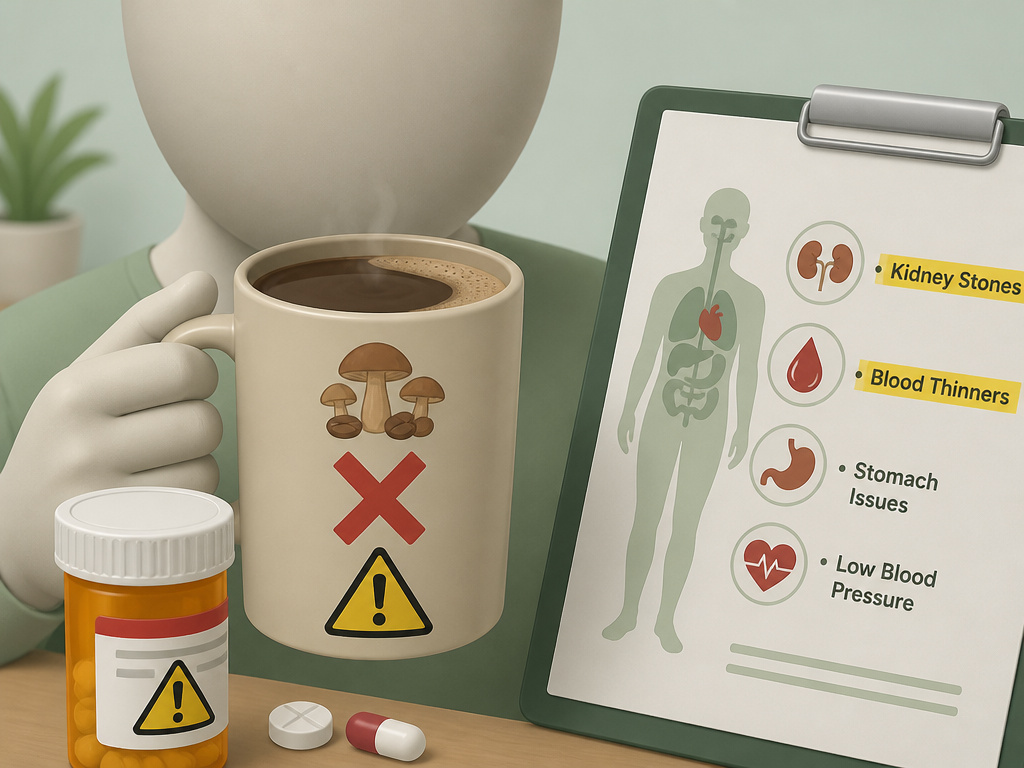
This isn’t about preference. For specific groups, mushroom coffee introduces measurable risk. Ignoring these contraindications is the most common mistake new users make.
Common mistake: Assuming “natural” means safe for everyone, mushroom coffee contains compounds that directly interact with medications and chronic conditions, with effects that can appear within days.
The following table outlines the key risk groups and the specific reasons why. If you fall into any of these categories, consult a healthcare provider before trying it.
| Who Should Avoid | Primary Reason | Potential Consequence |
|---|---|---|
| Kidney stone sufferers | High oxalate content in mushrooms like chaga. | Can increase urinary oxalate, raising the risk of new stone formation within weeks. |
| People on blood thinners (Warfarin, aspirin) | Reishi and chaga may have additional anticoagulant effects. | Could amplify blood thinning, increasing bruising or bleeding risk. |
| People on immunosuppressants | Mushrooms like reishi boost immune function. | May counteract medication meant to suppress immunity (e.g., after transplant). |
| Pregnant/Nursing women | Effects on fetal development and breast milk are completely unstudied. | Unknown risk profile; standard advice is to avoid. |
| Those with autoimmune diseases | Immune-stimulating effects. | Could potentially trigger or exacerbate flare-ups. |
Beyond these groups, individuals on medications for diabetes or high blood pressure should be cautious. Some mushrooms can lower blood sugar and blood pressure, potentially amplifying the effects of your prescriptions. This is not a theoretical concern, it’s a pharmacological interaction that requires monitoring.
If you experience digestive discomfort from other FODMAP-rich foods or have IBS, proceed with caution. The hard-to-digest carbohydrates in mushroom extracts can cause significant gas and bloating. Try a single serving first to assess your tolerance.
TL;DR: Check your medications and health history against the mushrooms in the blend. For many, the risks are clear and categorical.
The Sourcing Problem: Heavy Metals and Your Cup

Mushrooms are bioaccumulators. They absorb and concentrate elements from their growing substrate, including beneficial minerals and harmful contaminants like heavy metals (lead, cadmium, arsenic) and pesticides. This isn’t a flaw; it’s their biology. It makes sourcing the single most important factor for safety.
A brand that uses mushrooms grown on sterile, controlled organic substrate and conducts rigorous batch testing is fundamentally different from one that sources cheap biomass from uncontrolled environments. The Mayo Clinic fungi health guide implicitly highlights this by stressing the importance of quality and research. You cannot taste or see this difference.
When evaluating a brand, look for:
* Transparency about origin: Do they name the country or farm?
* Third-party testing: Are results for heavy metals, pesticides, and microbial contaminants available?
* Organic certification: While not a guarantee of purity, it sets a higher bar for growing practices.
If this information isn’t readily available on the brand’s website, consider it a red flag. You might be swapping a caffeine jitter for a dose of lead. This level of scrutiny is as important as checking the source of your coffee beans.
TL;DR: The mushroom’s growing medium dictates its purity. Always choose brands that provide transparent sourcing and independent contaminant testing.
How Does It Compare to Other “Healthy” Coffee Tweaks?

Mushroom coffee sits in a crowded field of functional coffee additives. Understanding its place helps you decide if it’s the right tool for your goal.
- Vs. MCT or Coconut Oil: Adds sustained energy from coffee via fats, not caffeine modulation. Good for keto diets, but no cognitive or immune claims.
- Vs. Lion’s Mane Supplement: A dedicated lion’s mane capsule delivers a measured, potent dose for cognitive support. The coffee blend offers a microdose alongside caffeine.
- Vs. Green Tea: Provides L-theanine content for calm focus naturally, with less caffeine and a different antioxidant profile. A simpler, more researched option.
- Vs. Cinnamon or Cocoa: These are primarily flavor enhancement tips with minor antioxidant bumps. Mushroom coffee aims for a functional, beyond-flavor effect.
Your goal dictates the choice. Seeking a minor caffeine reduction with potential extra benefits? Mushroom coffee could fit. Want a powerful cognitive boost? A dedicated supplement is more reliable. Just want to cut bitterness? Salt in coffee is cheaper and faster.
A Practical Guide to Trying It Safely
If your health audit clears the major contraindications, follow this sequence to trial mushroom coffee without guesswork.
- Pick a reputable brand. Start with a known company like Four Sigmatic or Ryze that discloses sourcing and testing. Avoid obscure Amazon brands with no verifiable information.
- Read the blend. Know which mushrooms are inside. Reishi for stress? Lion’s mane for focus? Match the blend to your intent.
- Try it alone first. Brew it with just hot water, not mixed with your regular coffee. You need to know how your body reacts to the mushrooms without the variable of a different bean.
- Monitor for reactions. Pay attention to digestion (bloating, gas), energy levels, and any subtle changes in mood or focus over 3-5 days. Note any differences from your normal cup.
- Check in with your body. If you have a known sensitive stomach, consider taking it with food. The Cleveland Clinic health advisory on mushroom coffee suggests this can mitigate digestive upset for some.
This process turns a trendy purchase into a personal experiment. You’re collecting data, not just following a trend.
Frequently Asked Questions
Does mushroom coffee taste like mushrooms?
No. The extraction process removes the earthy, savory flavor. It tastes like slightly mild, smooth coffee, sometimes with a faint woody or nutty note depending on the mushroom blend. Most people wouldn’t identify it as mushroom-based in a blind taste test.
Can mushroom coffee help with weight loss?
There is no direct evidence mushroom coffee causes weight loss. Some mushrooms may support metabolism and stress response, which can indirectly influence weight management over time alongside diet and exercise. It is not a magic drink. Think of it as a potentially supportive element within a broader weight management coffee drinks strategy, not the driver.
Is mushroom coffee okay for everyday use?
For healthy adults without the listed contraindications, daily use is likely fine, thanks to its lower caffeine content. However, variety is a key principle in nutrition. Relying on any single functional food daily isn’t ideal. Rotate it with other healthier drink options like green tea or plain coffee.
What’s the best way to sweeten mushroom coffee?
Use the same natural coffee sweeteners you normally would. A small amount of honey, maple syrup, or even a plant-based milk option like oat or almond milk works well. Avoid overpowering the subtle notes with strong sweeteners.
How does it affect sleep compared to regular coffee?
Due to its lower caffeine content (around 50mg vs 95mg), it may be less disruptive to sleep if consumed in the afternoon. However, caffeine sensitivity varies widely. If you’re very sensitive, even this amount late in the day could interfere. The adaptogenic mushrooms are not a substitute for good sleep hygiene.
Before You Go
Mushroom coffee isn’t a simple yes-or-no product. Its value is conditional. The half-caffeine content is a genuine benefit for many, and the mushroom compounds offer potential, if minor, supportive effects. But the list of medical exclusions is long and serious, from kidney stones to blood thinners.
Your decision must start with a label check and a health audit, not marketing hype. Choose a transparent brand that tests for contaminants. Understand you’re getting a whisper of the studied benefits, not a clinical dose.
For some, it will be a pleasant, lower-stimulant alternative. For others, it’s an unnecessary risk. Your individual health profile writes the final answer.
{
“@context”: “https://schema.org”,
“@type”: “HowTo”,
“name”: “How to Evaluate If Mushroom Coffee Is Good for You”,
“totalTime”: “PT10M”,
“tool”: [
{
“@type”: “HowToTool”,
“name”: “Specific mushroom coffee product label”
},
{
“@type”: “HowToTool”,
“name”: “List of current medications”
},
{
“@type”: “HowToTool”,
“name”: “Healthcare provider contact information”
}
],
“step”: [
{
“@type”: “HowToStep”,
“name”: “Check the caffeine content”,
“text”: “Compare the product’s caffeine per serving (often around 50mg) to your regular coffee (around 95mg) and your daily tolerance.”
},
{
“@type”: “HowToStep”,
“name”: “Review your medical history”,
“text”: “Cross-reference the mushrooms in the blend (like reishi or chaga) against any conditions like kidney issues, autoimmune disorders, or pregnancy.”
},
{
“@type”: “HowToStep”,
“name”: “Audit your medications”,
“text”: “Identify potential interactions with blood thinners, diabetes drugs, blood pressure medications, or immunosuppressants.”
},
{
“@type”: “HowToStep”,
“name”: “Research the brand’s sourcing”,
“text”: “Investigate where the company sources its mushrooms to minimize risk of heavy metal or contaminant exposure.”
},
{
“@type”: “HowToStep”,
“name”: “Try a single serving first”,
“text”: “Brew one cup to assess your digestive reaction, as mushroom extracts can cause bloating in sensitive individuals.”
}
]
}
{
“@context”: “https://schema.org”,
“@type”: “FAQPage”,
“mainEntity”: [
{
“@type”: “Question”,
“name”: “Does mushroom coffee taste like mushrooms?”,
“acceptedAnswer”: {
“@type”: “Answer”,
“text”: “No. The extraction process removes the earthy, savory flavor. It tastes like slightly mild, smooth coffee, sometimes with a faint woody or nutty note depending on the mushroom blend. Most people wouldn’t identify it as mushroom-based in a blind taste test.”
}
},
{
“@type”: “Question”,
“name”: “Can mushroom coffee help with weight loss?”,
“acceptedAnswer”: {
“@type”: “Answer”,
“text”: “There is no direct evidence mushroom coffee causes weight loss. Some mushrooms may support metabolism and stress response, which can indirectly influence weight management over time alongside diet and exercise. It is not a magic drink. Think of it as a potentially supportive element within a broader weight management coffee drinks strategy, not the driver.”
}
},
{
“@type”: “Question”,
“name”: “Is mushroom coffee okay for everyday use?”,
“acceptedAnswer”: {
“@type”: “Answer”,
“text”: “For healthy adults without the listed contraindications, daily use is likely fine, thanks to its lower caffeine content. However, variety is a key principle in nutrition. Relying on any single functional food daily isn’t ideal. Rotate it with other healthier drink options like green tea or plain coffee.”
}
},
{
“@type”: “Question”,
“name”: “What’s the best way to sweeten mushroom coffee?”,
“acceptedAnswer”: {
“@type”: “Answer”,
“text”: “Use the same natural coffee sweeteners you normally would. A small amount of honey, maple syrup, or even a plant-based milk option like oat or almond milk works well. Avoid overpowering the subtle notes with strong sweeteners.”
}
},
{
“@type”: “Question”,
“name”: “How does it affect sleep compared to regular coffee?”,
“acceptedAnswer”: {
“@type”: “Answer”,
“text”: “Due to its lower caffeine content (around 50mg vs 95mg), it may be less disruptive to sleep if consumed in the afternoon. However, caffeine sensitivity varies widely. If you’re very sensitive, even this amount late in the day could interfere. The adaptogenic mushrooms are not a substitute for good sleep hygiene.”
}
}
]
}
