
Is Coffee Mate Dairy Free? The Labeling Loophole Explained
Coffee-mate is not dairy-free. Most of its popular “non-dairy” creamers contain milk-derived ingredients like sodium caseinate or milk protein, which are allergens and disqualify the product for anyone with a milk allergy, lactose intolerance, or a strict vegan diet. You must read the ingredient list, not the front label.
People get this wrong because they trust the term “non-dairy” on the front of the bottle. That label is a legal relic, not a safety guarantee. It creates a dangerous gap between marketing and the reality of what’s in your cup.
This guide walks through the specific milk derivatives Coffee-mate uses, the FDA regulation that allows this, and the exact phrases to look for on an ingredient panel. We’ll also cover which Coffee-mate lines are genuinely dairy-free and how to make a simple alternative at home.
Key Takeaways
- “Non-dairy” is a technical FDA labeling term that permits milk proteins like casein; it does not mean dairy-free.
- Coffee-mate Original and most flavored powders contain milk protein or sodium caseinate. The allergen statement will say “Contains: Milk.”
- For a severe milk allergy, even trace amounts in “non-dairy” creamers pose a risk, as allergens are not exempt from declaration.
- The Natural Bliss line and certain plant-based creamers from Coffee-mate are formulated without any milk derivatives.
- The only way to be sure is to read the ingredient list and the “Contains:” allergen statement, not the front label.
What’s Actually in Coffee-mate Original?
Look at the back of a Coffee-mate Original 450g container. The front says “Non-Dairy” in bold letters. The ingredient list tells a different story.
The official Nestlé product page lists the ingredients for the Original powder: Glucose syrup, Hydrogenated Palm Kernel Oil, Acidity Regulators, Milk Protein (From Cow’s Milk), Emulsifiers, Anti-caking Agent, Salt, Natural Identical Dairy Flavor. The allergen statement is clear: “Contains Milk Protein.”
Common mistake: Assuming “non-dairy” means no milk ingredients — this leads to accidental allergen exposure. The milk protein in Coffee-mate Original is an intentional ingredient, not an incidental contaminant.
The “Natural Identical Dairy Flavor” is a synthetic compound designed to mimic the taste of dairy cream. The actual creamy body and whitening power, however, come from the vegetable oils and that milk protein. This combination is why a class-action lawsuit filed in 2022 against Danone, maker of International Delight, argued that calling such products “coffee creamer” is misleading. The lawsuit notes the FDA defines “coffee cream” as a dairy product with at least 18% milkfat. These oil-and-water-based products with a “de minimis amount of sodium caseinate” are something else entirely.
TL;DR: Coffee-mate Original contains milk protein. “Non-Dairy” on the front is a regulatory term, not an ingredient claim. Always check the back.
The Regulatory Loophole Behind “Non-Dairy”
The confusion stems from a specific FDA regulation. The term “non-dairy” is defined in the Code of Federal Regulations (21 CFR 131.110) for cultured milk products. This old rule allows the use of “non-dairy” on a product that contains sodium caseinate, a milk protein, because caseinate is considered a “whitening agent” rather than a traditional dairy ingredient.
This is the critical loophole.
A product labeled “non-dairy” may contain caseinate, and the FDA specifically states that the presence of caseinate does not preclude use of the term “non-dairy.”
(21 CFR 131.110)
However, and this is the part that matters for safety, the FDA’s allergen labeling rules are separate and stricter. Their Compliance Policy Guide (CPG Sec 555.250) is explicit: allergens like milk are not eligible for the “incidental additive” exemption. If a milk derivative is present as an intentional ingredient, it must be declared.
This creates the jarring disconnect you see on the Coffee-mate label: “Non-Dairy” on the front, “Contains: Milk” on the back. Both are technically correct under different rules, but only one matters for your health. For authoritative details, you can review the official FDA guidance on allergen prevention.
This isn’t just a U.S. issue. In a 2026 UK Supreme Court case, Oatly was challenged over its “POST MILK GENERATION” trademark. The court ruled that using the word “milk” for marketing plant-based products, even in an aspirational slogan, fell under regulations meant to protect dairy terms. It highlights the global tension between marketing language and regulated food definitions.
Which Coffee-mate Creamers Are Truly Dairy-Free?
Not all Coffee-mate products contain milk. The company has expanded its lines to include genuinely dairy-free options, primarily under the Natural Bliss brand and newer plant-based offerings. You must still read the label every time.
| Coffee-mate Line | Dairy-Free? | Key Ingredients to Verify | Best For |
|---|---|---|---|
| Natural Bliss (Almond, Oat, Coconut, Soy) | Yes | Almond milk, oat milk, coconut cream, soy milk. No milk derivatives. | Vegans, milk allergy, lactose intolerance. |
| Coffee-mate Natural Bliss (Dairy) | No | Milk, cream, cane sugar. A traditional dairy creamer. | Those who want real cream. |
| Coffee-mate Original (Powder/Liquid) | No | Milk protein, sodium caseinate. Allergen statement says “Milk.” | Not for dairy avoidance. |
| Coffee-mate Sugar-Free / Flavored (Powder) | Usually No | Often contain sodium caseinate or milk protein. Check label. | Low-sugar diet (if milk protein is tolerated). |
| Coffee-mate Plant-Based (Almond, Oat) | Yes | Almondmilk, oatmilk. Formulated without dairy. | A direct, dairy-free alternative to the original. |
The rule is simple. If the ingredient list includes milk, cream, sodium caseinate, casein, milk protein, or whey, it contains dairy. If the “Contains:” statement lists Milk, it contains dairy.
The shift toward clear plant-based coffee creamers is a response to consumer demand for transparency. These products, like those using almond milk in coffee or oat milk, are formulated to be inherently dairy-free. Their ingredient lists are shorter and based on the named plant source.
TL;DR: Only Coffee-mate’s explicitly plant-based lines (Natural Bliss plant-based, Plant-Based almond/oat) are dairy-free. Assume all classic powders and flavored liquids contain milk unless the label proves otherwise.
How to Read a Creamer Label Like a Pro
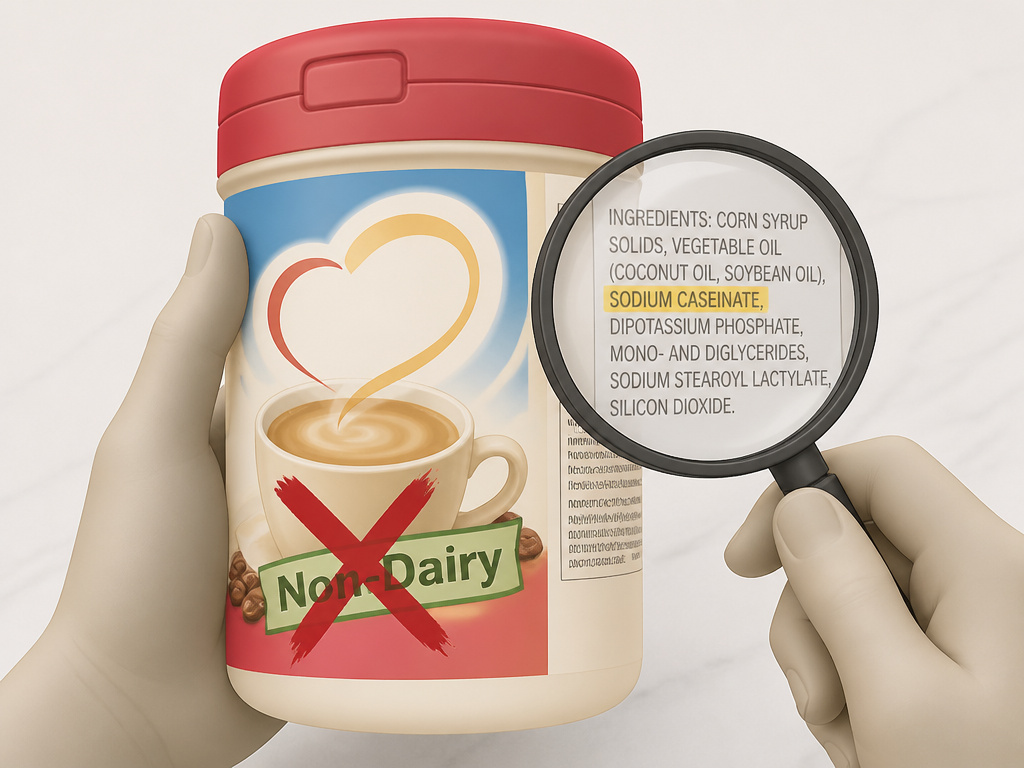
You cannot trust the front of the package. Marketing terms are designed to sell, not to inform about allergens. Your safety check takes less than thirty seconds.
- Ignore the Front. Look past “Non-Dairy,” “Creamy,” “Rich.” These are meaningless for allergy purposes.
- Find the Ingredient List. It’s in small print, usually on the back or side panel. This is the legally binding document.
- Scan for Milk Synonyms. Your target words are: Milk, Cream, Sodium Caseinate, Casein, Micellar Casein, Milk Protein, Whey, Lactose.
- Locate the Allergen Statement. This is often directly beneath the ingredient list. It will say “Contains: Milk” if any of the above are present. This statement overrides everything else.
If you are managing a severe milk allergy, this non-negotiable. The FDA’s stance is that intentionally added allergens must be declared, period. There is no “safe” threshold on a label.
This diligence is similar to checking the calorie content of creamers if you’re counting macros, or verifying the source of fats in products like coconut oil coffee creamer. The label holds the facts; the front holds the fantasy.
I spent two years casually using a “non-dairy” powdered creamer before a friend with a milk allergy asked to see the tub. We found “sodium caseinate” halfway down the list. I’d never looked. I wasn’t allergic, but my trust in front-label claims vanished that day.
Dairy-Free and Vegan Coffee Creamer Alternatives
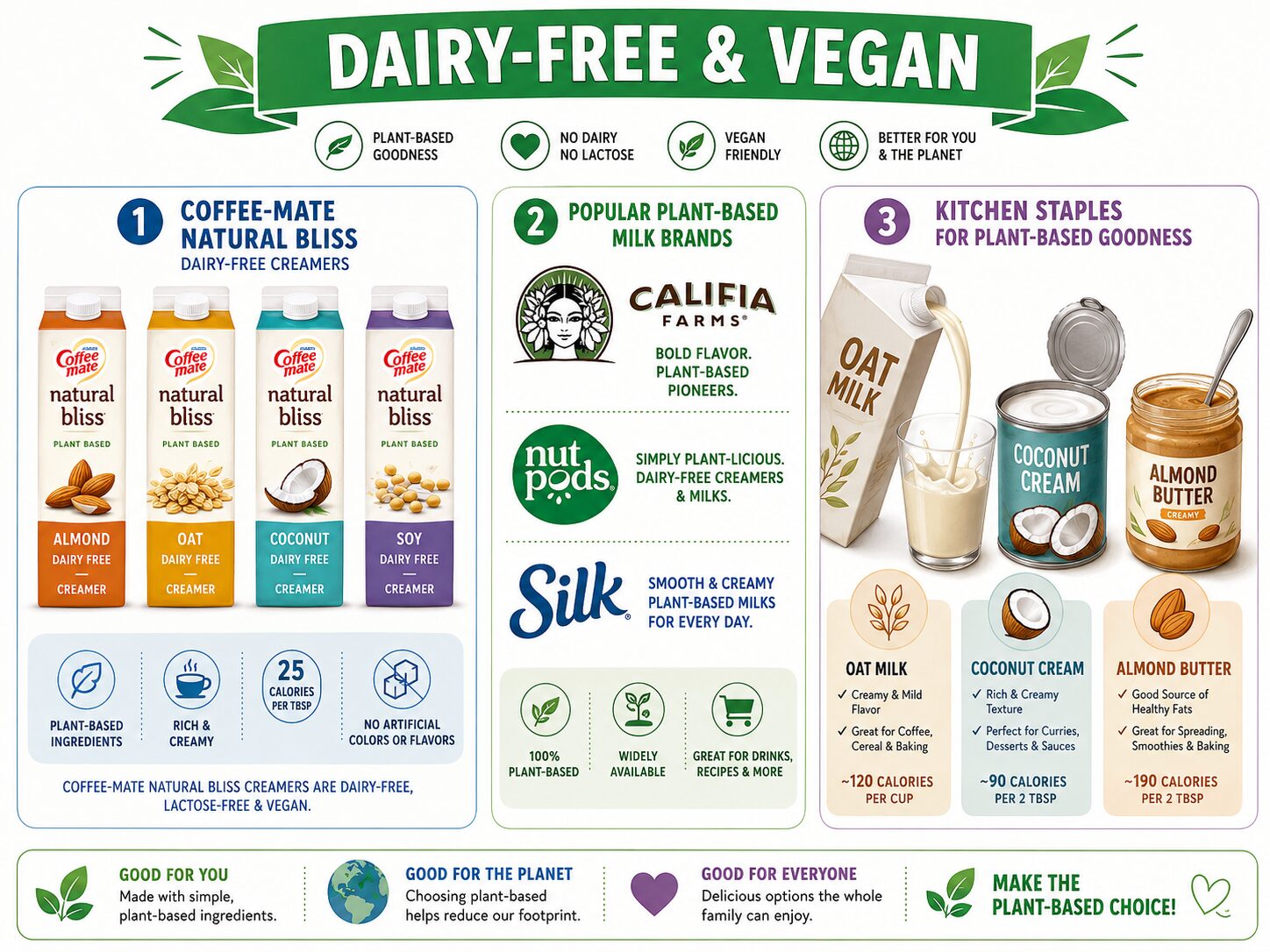
If you need to avoid dairy, you have better and often simpler options than decoding Coffee-mate’s labels. The market now offers clarity.
Commercial Dairy-Free Creamers:
- Coffee-mate Natural Bliss Plant-Based: Almond, Oat, Coconut, or Soy varieties. The ingredient list starts with the plant milk.
- Califia Farms, Nutpods, Silk: These brands build their identity on being plant-based. Their labels are typically free of dairy derivatives.
- Oatly, Chobani Oat Creamer: Oat-based creamers that are naturally dairy-free and often creamier than almond milk.
Whole Food Alternatives:
These options skip the processed oils and emulsifiers entirely, offering a clean flavor enhancement without cream.
* Plain Plant Milk: Unsweetened almond, oat, soy, or coconut milk from the fridge section.
* Canned Coconut Milk or Cream: A spoonful provides immense richness. Perfect for a vegan bulletproof coffee.
* Nut Butters: A small amount of almond or cashew butter blended into hot coffee creates a creamy, nutrient-dense drink.
For sweetening, consider vegan coffee sweetening options like maple syrup, agave, or a brown sugar syrup instead of relying on the pre-sweetened powders that often contain casein.
Frequently Asked Questions
Is Coffee-mate powder dairy-free?
No, most Coffee-mate powder products, including the classic Original and many flavored versions, contain milk-derived ingredients like sodium caseinate or milk protein. The label will state “Contains: Milk.” You must check the specific product’s ingredient list.
Is Coffee-mate lactose-free?
No. Lactose is the sugar in milk, but Coffee-mate’s “non-dairy” products contain milk proteins (casein), not lactose. However, since they contain a milk derivative, they are not suitable for those with a milk allergy or strict vegan diet. They may be tolerated by some with lactose intolerance, but it’s not guaranteed.
What is the difference between non-dairy and dairy-free?
“Non-dairy” is an outdated FDA term that allows the inclusion of milk protein derivatives like caseinate. “Dairy-free” is a consumer term implying no dairy ingredients whatsoever (milk, cream, cheese, butter, or their derivatives). For safety, assume “non-dairy” still contains dairy.
Which coffee creamer is dairy-free?
Look for creamers explicitly labeled “plant-based,” “vegan,” or “dairy-free.” Trusted brands include Coffee-mate Natural Bliss (plant-based varieties), Califia Farms, Nutpods, Silk, and Oatly. Always confirm by reading the ingredient list for milk derivatives.
Why does non-dairy creamer have milk in it?
It contains milk proteins (like casein), not liquid milk, because these proteins are effective, cheap whitening and stabilizing agents. An old FDA regulation permits their use in products labeled “non-dairy,” creating a labeling loophole that confuses consumers.
Before You Go
The answer to “is Coffee-mate dairy free” is a firm no for its core products. The word “non-dairy” on the bottle is a regulatory artifact, not a promise. Your health or dietary choice depends on the small print on the back, not the big print on the front.
Memorize the milk protein synonyms: caseinate, casein, milk protein. Find the “Contains:” statement. This fifteen-second habit is the only reliable method.
If you want certainty, choose a creamer built on a plant foundation from the start. Your coffee ritual should be simple and safe, not a puzzle.
{
“@context”: “https://schema.org”,
“@type”: “HowTo”,
“name”: “How to Check If a Coffee Creamer is Dairy-Free”,
“totalTime”: “PT5M”,
“tool”: [
{
“@type”: “HowToTool”,
“name”: “Coffee creamer bottle or container”
},
{
“@type”: “HowToTool”,
“name”: “Reading glasses if needed”
}
],
“step”: [
{
“@type”: “HowToStep”,
“name”: “Locate the front label”,
“text”: “Ignore marketing terms like ‘non-dairy’ or ‘creamy’ on the front of the package. These are not regulated definitions for allergen safety.”
},
{
“@type”: “HowToStep”,
“name”: “Find the ingredient list”,
“text”: “Turn the container and locate the ‘Ingredients’ panel, usually on the back or side. This is the legally mandated information.”
},
{
“@type”: “HowToStep”,
“name”: “Scan for milk derivatives”,
“text”: “Look for the words ‘milk protein’, ‘sodium caseinate’, ‘casein’, ‘micellar casein’, ‘whey’, or ‘lactose’. If any are present, the product contains dairy.”
},
{
“@type”: “HowToStep”,
“name”: “Check the allergen statement”,
“text”: “Look immediately below the ingredient list for a ‘Contains:’ statement. If it says ‘Contains: Milk’, the product is not dairy-free, regardless of front-label claims.”
}
]
}
{
“@context”: “https://schema.org”,
“@type”: “FAQPage”,
“mainEntity”: [
{
“@type”: “Question”,
“name”: “Is Coffee-mate powder dairy-free?”,
“acceptedAnswer”: {
“@type”: “Answer”,
“text”: “No, most Coffee-mate powder products, including the classic Original and many flavored versions, contain milk-derived ingredients like sodium caseinate or milk protein. The label will state \”Contains: Milk.\” You must check the specific product’s ingredient list.”
}
},
{
“@type”: “Question”,
“name”: “Is Coffee-mate lactose-free?”,
“acceptedAnswer”: {
“@type”: “Answer”,
“text”: “No. Lactose is the sugar in milk, but Coffee-mate’s \”non-dairy\” products contain milk proteins (casein), not lactose. However, since they contain a milk derivative, they are not suitable for those with a milk allergy or strict vegan diet. They may be tolerated by some with lactose intolerance, but it’s not guaranteed.”
}
},
{
“@type”: “Question”,
“name”: “What is the difference between non-dairy and dairy-free?”,
“acceptedAnswer”: {
“@type”: “Answer”,
“text”: “\”Non-dairy\” is an outdated FDA term that allows the inclusion of milk protein derivatives like caseinate. \”Dairy-free\” is a consumer term implying no dairy ingredients whatsoever (milk, cream, cheese, butter, or their derivatives). For safety, assume \”non-dairy\” still contains dairy.”
}
},
{
“@type”: “Question”,
“name”: “Which coffee creamer is dairy-free?”,
“acceptedAnswer”: {
“@type”: “Answer”,
“text”: “Look for creamers explicitly labeled \”plant-based,\” \”vegan,\” or \”dairy-free.\” Trusted brands include Coffee-mate Natural Bliss (plant-based varieties), Califia Farms, Nutpods, Silk, and Oatly. Always confirm by reading the ingredient list for milk derivatives.”
}
},
{
“@type”: “Question”,
“name”: “Why does non-dairy creamer have milk in it?”,
“acceptedAnswer”: {
“@type”: “Answer”,
“text”: “It contains milk proteins (like casein), not liquid milk, because these proteins are effective, cheap whitening and stabilizing agents. An old FDA regulation permits their use in products labeled \”non-dairy,\” creating a labeling loophole that confuses consumers.”
}
}
]
}
