
Is Coffee Low FODMAP? Safe Brewing Tips for IBS Management
This post contains affiliate links. As an Amazon Associate, we earn from qualifying purchases.
Plain black coffee, espresso, instant, or a small cup of brewed, is low FODMAP according to Monash University’s testing. The catch is serving size and what you add to it. A single espresso shot or a small 8-ounce brew is safe, but larger servings of drip coffee can develop trace FODMAPs. More importantly, caffeine and coffee acids are separate, common triggers for IBS symptoms like cramping and urgency.
Most guides stop at the “coffee is low FODMAP” headline. They miss the real problem. Your gut doesn’t react to lab-tested carbohydrate categories. It reacts to the entire drink, the stimulants, the acids, the volume of liquid hitting an already-sensitive system. Treating FODMAPs as the only villain sets you up for confusion when a “safe” cup still causes a flare-up.
This breaks down the Monash University data on coffee types, separates FODMAP content from other irritants, and gives you a realistic protocol for testing coffee in your own diet without restarting the elimination phase.
Key Takeaways
- Monash University classifies a single espresso shot and a small cup (under 250ml/8oz) of brewed coffee as low FODMAP. Instant coffee is also low FODMAP if plain.
- Drip coffee is the exception. The longer brewing process can pull trace amounts of FODMAPs from the grounds, making individual tolerance less predictable than with espresso.
- Caffeine and coffee acids are major non-FODMAP triggers. They stimulate gut motility and acid production, which can cause cramping and diarrhea independently of FODMAPs.
- What you add matters more than the coffee itself. Regular milk (lactose), creamers with inulin, and high-fructose sweeteners will turn a low FODMAP coffee into a high FODMAP drink.
- The low FODMAP diet is a three-phase elimination and reintroduction tool, not a permanent lifestyle. Long-term restriction can harm your gut microbiome.
The Short Answer: Is Coffee FODMAP-Friendly?
The authority on FODMAP testing, Monash University in Australia, has analyzed coffee. Their data shows a clear serving-size limit.
A single espresso shot (about 1 oz) is low FODMAP. A small black coffee, they define it as under 250 milliliters, or roughly 8 ounces, is also low FODMAP. Instant coffee granules, without added flavors or chicory, get the same green light.
According to Monash University’s FODMAP testing, a serving of one espresso shot or a small black coffee (under 250ml) is low in FODMAPs. Instant coffee is also considered low FODMAP when prepared without high-FODMAP additives.
The problem isn’t the coffee bean’s inherent FODMAP content. It’s the brewing process and the volume. Drip coffee, with its longer water contact time, can develop small amounts of oligosaccharides. Monash doesn’t flag it as high FODMAP, but they note the response is less predictable. Drink a 20-ounce travel mug of drip, and you’re consuming a volume that hasn’t been explicitly tested and may push you past your personal threshold.
TL;DR: Yes, but stick to a single shot of espresso or a cup under 8 ounces. Treat drip coffee with more caution.
Why “Low FODMAP” Doesn’t Mean “Gut Friendly”
This is where people get stranded. They check the Monash app, see the green light for coffee, and then get hit with cramps or a urgent trip to the bathroom. They blame themselves or think the diet is broken. The mechanism is different.
Caffeine is a gut stimulant. It triggers the gastrocolic reflex, which is the wave of motion that moves contents through your colon. For someone with IBS, that reflex is often hypersensitive. The result is cramping and urgency, a classic experience many report as coffee-induced loose stools. Decaffeinated coffee reduces but doesn’t eliminate this effect because other compounds in coffee also stimulate motility.
Coffee’s acidity is another factor. It can increase stomach acid production, leading to heartburn or indigestion. This is a separate issue from the fermentable carbs that define FODMAPs. If you’re managing acidity in beverages, the pH of your drink matters as much as its FODMAP load.
The 2014 Halmos EP study, a cornerstone of NIH research hotspot in low FODMAP diet, proved the diet’s efficacy for reducing IBS symptoms. It didn’t claim to eliminate all triggers. Coffee can be a mechanical and chemical irritant outside the FODMAP framework.
| Trigger Type | Found in Coffee? | Primary Effect on IBS | How to Mitigate |
|---|---|---|---|
| Caffeine | Yes, in all regular coffee | Stimulates colon, causes urgency & cramping | Switch to decaf or half-caff |
| Acids | Yes, particularly in light roasts | Increases stomach acid, can cause reflux | Try dark roast or cold brew |
| Trace FODMAPs | Possible in large drip coffee servings | Fermentation, gas, bloating | Limit serving to under 8 oz |
| Additives | Milk, sweeteners, creamers | Lactose, fructose, or fructan overload | Use tested low FODMAP milk alternatives |
What You Add to Coffee Matters Most
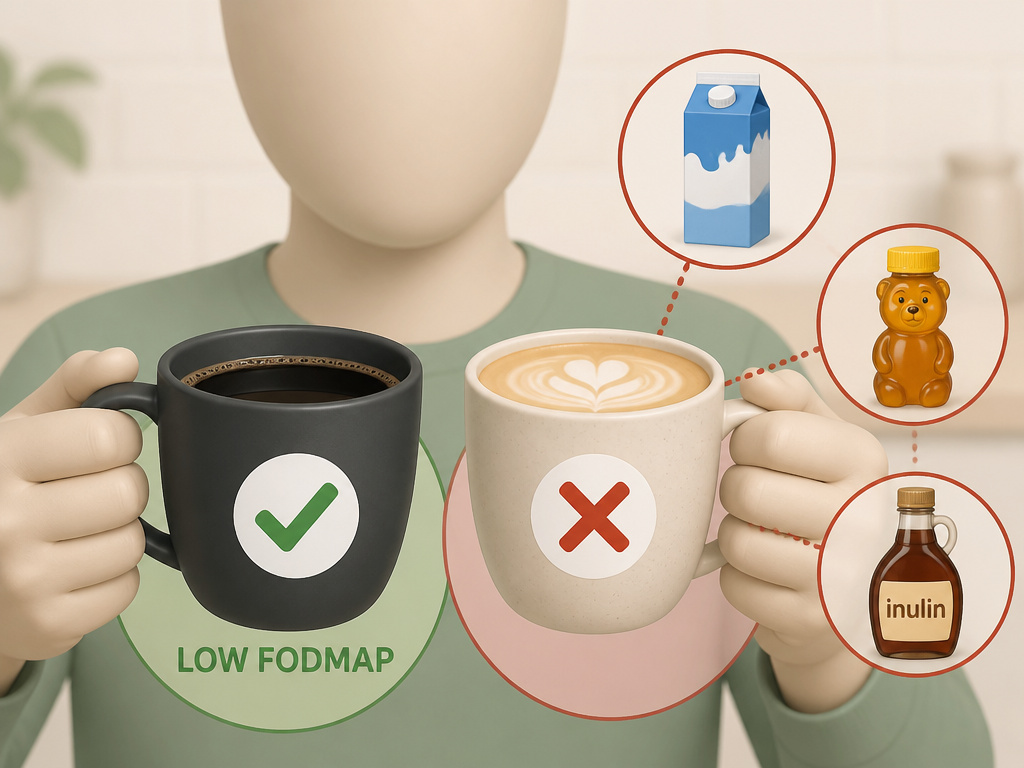
Your coffee is likely low FODMAP. Your latte probably isn’t. The additives are the most common source of high FODMAP ingredients in a coffee drink.
Dairy milk contains lactose, a high FODMAP sugar. A splash might be okay, but a full cup in a latte exceeds the low FODMAP threshold. The milk FODMAP content is the critical variable. Many flavored creamers and syrups contain inulin (a fructan) or high-fructose corn syrup.
Common mistake: Using regular milk or a “healthy” creamer with inulin, the lactose or fructans ferment quickly, causing bloating and gas within 30-60 minutes of drinking.
Your safe additive list is short but effective:
– Milk: Lactose-free milk (up to 1 cup), almond milk (up to 1 cup), or small servings of canned coconut milk.
– Sweeteners: Pure maple syrup (2 tsp max), white sugar (2 tsp max), or glucose syrup.
– Flavor: Pure cinnamon in coffee, cocoa powder, or a drop of real vanilla extract.
– Fats: A teaspoon of coconut oil coffee or MCT oil coffee benefits. These contain no carbs.
Avoid agave nectar, honey, sugar-free syrups with sorbitol or mannitol, and oat milk (unless specifically tested low FODMAP). If you need to cut bitterness, a pinch of salt in coffee is a zero-FODMAP trick that works.
The 3-Step Low FODMAP Diet Process (And Where Coffee Fits)
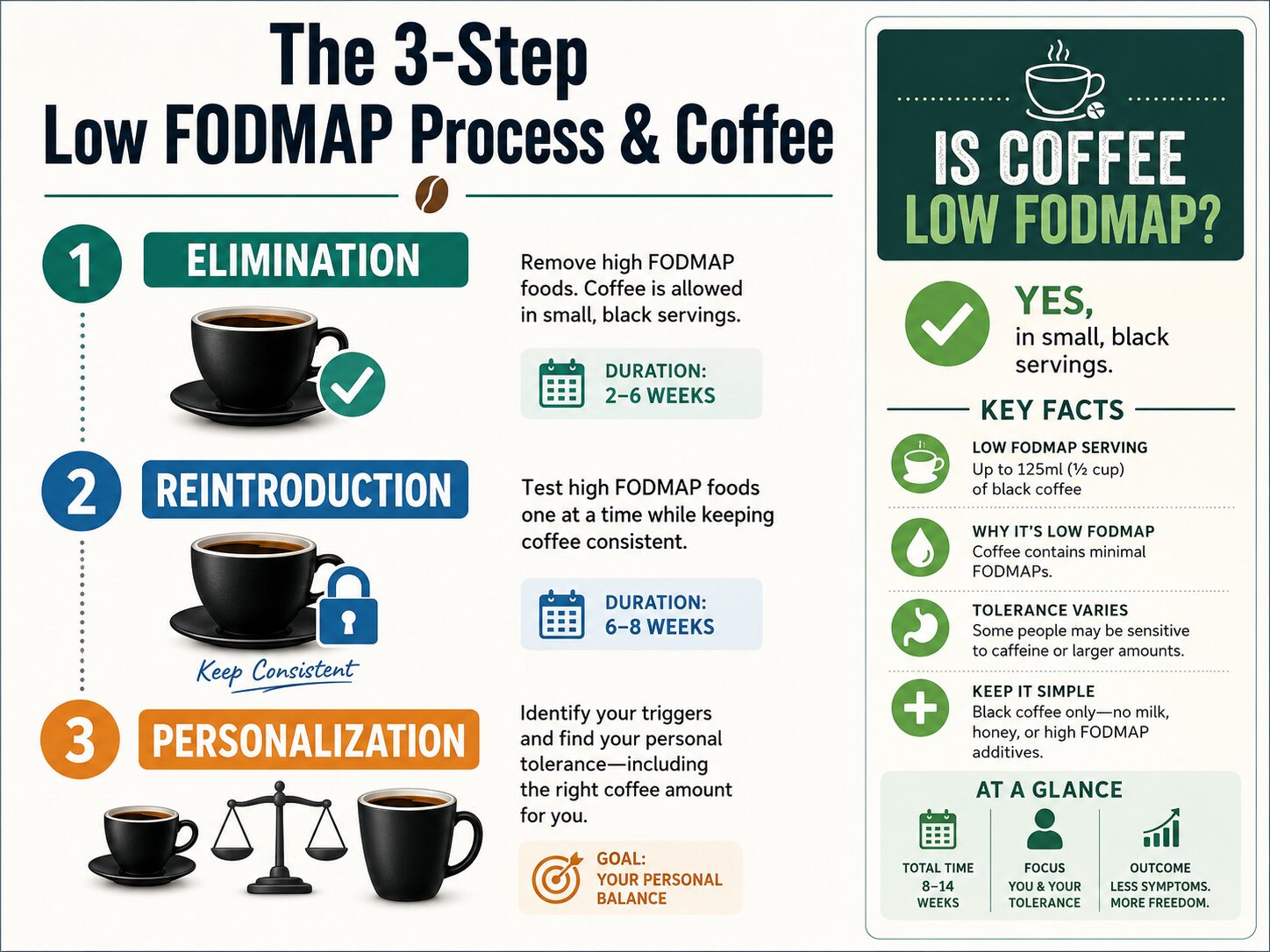
The Cleveland Clinic low FODMAP diet guide outlines the standard three-phase approach. It’s a diagnostic tool, not a forever diet.
- Elimination (2-6 weeks): Remove all high FODMAP foods. During this strict phase, you have two choices with coffee. The purist approach is to remove it entirely to get a clear baseline. The more practical approach is to standardize it: drink one small, black, low FODMAP coffee (espresso or small brew) at the same time each day. Do not change the type or add anything new.
- Reintroduction (8-10 weeks): Systematically test high FODMAP groups. This is not when you test coffee itself. You test fructose, lactose, fructans, etc., using the challenge foods Monash specifies. Keep your coffee routine exactly the same during each challenge. If you suspect coffee, test it as a separate “non-FODMAP irritant” challenge after the formal reintroduction is complete.
- Personalization (Long-term): You rebuild your diet based on your tolerance. You might find you can handle a small daily coffee but not a large one. You might tolerate espresso but not drip. This phase is about learning your individual thresholds for both FODMAPs and irritants like caffeine.
The UVA GI nutrition FODMAP diet PDF calls the diet “credible” but cautions against long-term use. Restricting all fermentable carbs for months can starve your beneficial gut bacteria. This is why the reintroduction phase is non-negotiable.
How to Test Your Own Coffee Tolerance
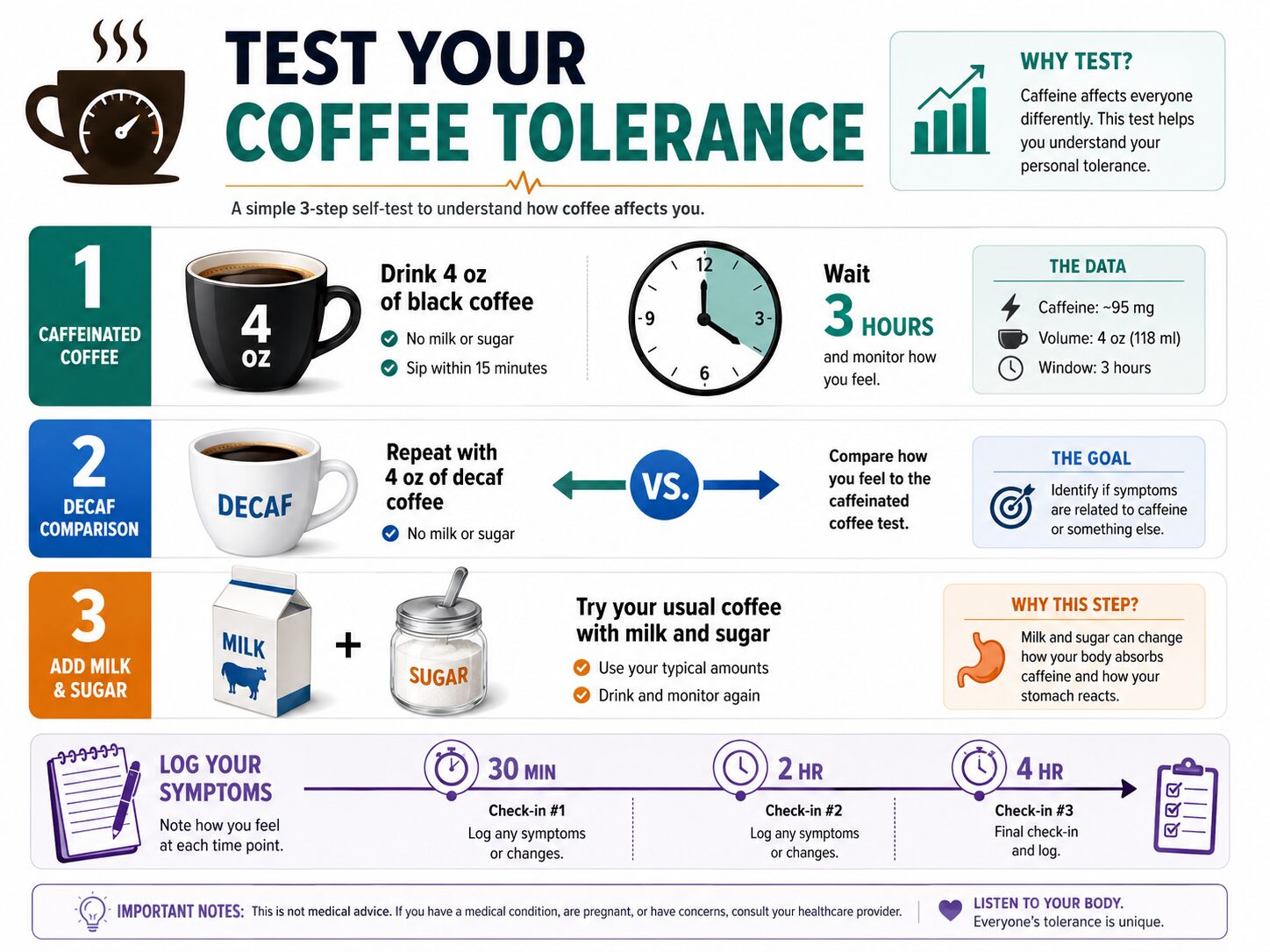
If you’re mid-process or just curious, you can run a simple self-test. The goal is to isolate variables.
First, establish a baseline of no symptoms. This might mean going without coffee for three days.
Then, test in this order:
1. Test the base liquid. Drink a single shot of espresso or 4 ounces of black brewed coffee. Wait 3 hours. Note any gut reaction, energy change, or anxiety.
2. Test the caffeine. The next day, try the same amount of decaffeinated coffee. Compare your reaction.
3. Test your additives. Once you know your tolerance to the black coffee, add your preferred milk (e.g., 1/4 cup lactose-free milk). Test it alone. Then test your sweetener.
Keep a log. The timeline is key. FODMAP-related gas and bloating typically hit 2-4 hours after eating. Caffeine-induced urgency can happen in 30-60 minutes. Jot down what you feel and when.
If even decaf causes issues, consider the acidity. Try cold brew, which is up to 70% less acidic than hot drip coffee. Or switch to a dark roast, which develops compounds that can actually reduce stomach acid production compared to light roasts.
Frequently Asked Questions
Can I drink coffee on the low FODMAP elimination phase?
You can, but it’s simpler to remove it. If you keep it in, standardize it: one small (under 8 oz), black, low FODMAP type (espresso or instant) at the same time every day. Do not introduce any new coffee or additives during this phase.
Is decaf coffee low FODMAP?
Yes, decaffeinated coffee undergoes the same Monash University testing and is considered low FODMAP in the same serving sizes. Remember, decaf still contains other gut-stimulating compounds, so it may not solve all your symptoms.
What about cold brew coffee?
Cold brew is low FODMAP. The cold-steeping process doesn’t increase FODMAP extraction. In fact, its much lower acidity makes it a better choice for people whose IBS symptoms are triggered by acid reflux or general stomach irritation.
Why does coffee still upset my stomach even with low FODMAP additives?
You’re likely reacting to the non-FODMAP components: caffeine or acids. Try a decaf dark roast or cold brew. Also, consider the caffeine content variations; a large brewed coffee can have over 200mg of caffeine, which is a potent stimulant for a sensitive gut.
Before You Go
Coffee gets a tentative pass on the low FODMAP diet, but with strict conditions. The safe zone is a small, black cup. The moment you size up or start pouring in milk and sweeteners, you’re in a personal experiment.
Your gut doesn’t read the Monash University app. It responds to the total package of stimulants, acids, and fermentable carbs. Use the diet’s structure to test properly. Start with the base coffee, control your additives, and pay attention to the clock.
The goal isn’t to eliminate coffee forever. It’s to find the version and volume that doesn’t trade your morning ritual for an afternoon of discomfort. That might mean a single perfect espresso, enjoyed slowly, beats a giant to-go mug every time.
