
Is Coffee Good for Weight Loss? The Science-Backed Answer
Yes, coffee is good for weight loss, but only under one strict condition: you must drink it black. The caffeine and other compounds in unsweetened coffee boost your metabolic rate, increase the rate at which you burn fat during exercise, and can help suppress appetite. Add even a single tablespoon of sugar and you completely cancel the metabolic benefit, adding 48 empty calories that promote weight gain instead.
Most people get this wrong. They order a “skinny” latte or add just a “splash” of cream and sugar, believing the coffee itself is doing the work. The math doesn’t lie. A tablespoon of sugar has 24 times the calories of the coffee itself. That single addition flips the script from a weight-loss aid to a weight-gain contributor.
This guide walks through the exact peer-reviewed mechanisms, the effective caffeine dosing from clinical studies, and the practical, non-negotiable rules for making coffee a genuine tool in your routine. We’ll also cover what type of coffee to buy, how to store it to preserve its beneficial compounds, and the common mistakes that make your daily cup work against you.
Key Takeaways
- The weight-loss benefit is real but fragile: it exists only for black, unsweetened coffee. Adding sugar reverses the effect.
- Caffeine increases your metabolic rate for up to three hours and significantly boosts fat burning during exercise, with studies showing a minimum effective dose of 3 mg per kg of body weight.
- Decaffeinated coffee also shows appetite-suppressing effects, likely due to other bioactive compounds, making it a viable afternoon or evening option.
- Long-term data from Harvard shows that increasing daily unsweetened coffee intake is associated with less weight gain over time, while adding sugar is linked to more.
- Store your beans in a cool, dark place or even the freezer. Research shows coffee stored at 10°C maintains its “very good” quality and antioxidant profile nearly twice as long as beans kept at room temperature.
How Coffee Aids Weight Loss: The Three Mechanisms
Coffee isn’t a magic potion. It works through specific, measurable physiological pathways. Understanding these turns “coffee might help” into “coffee will help if you do X and Y.”
The first mechanism is a temporary increase in your resting metabolic rate. A foundational 1980 study documented that caffeine intake significantly raises the number of calories your body burns at rest for up to three hours after consumption. Your body’s engine idles a little faster. This is the “thermogenic” effect. It’s modest per cup, maybe an extra 10-15 calories burned, but it’s real and cumulative over a day.
The second, more powerful mechanism is enhanced fat oxidation during exercise.
A meta-analysis of clinical trials found caffeine significantly increases the fat oxidation rate during physical activity, with a statistical effect size (SMD) of 0.73. The minimum effective dose for this result was more than 3.0 mg of caffeine per kilogram of body weight.
That means during your workout, a greater proportion of the energy you’re burning comes from stored fat, not carbohydrates. For a 70 kg (154 lb) person, that 3 mg/kg threshold translates to about 210 mg of caffeine, or roughly two standard cups of black coffee, consumed about an hour before you start. The same research noted this also led to a measurable reduction in the respiratory exchange ratio, a technical indicator that the body is indeed burning more fat.
The third mechanism is appetite modulation. Interestingly, this one isn’t solely about caffeine. Research comparing caffeine in water to regular and decaf coffee found that both types of coffee decreased hunger and increased the satiety hormone PYY. The caffeine-alone group saw no such change. Something else in the coffee bean, likely polyphenols or other antioxidants, is sending “I’m full” signals to your brain. This makes decaf a surprisingly useful tool for weight management, especially later in the day.
TL;DR: Coffee aids weight loss by temporarily boosting metabolism, shifting your body to burn more fat during workouts, and helping you feel fuller through non-caffeine compounds.
The Black Coffee Rule: Why Additives Cancel the Benefit
This is the line that separates success from self-sabotage. The metabolic boost from a cup of black coffee is about 2-5 calories. The caloric payload of what most people add to it is an order of magnitude larger.
Let’s run the numbers from Harvard’s Nutrition Source. A plain 8-ounce cup of black coffee contains about 2 calories. Now add one tablespoon of sugar: that’s 48 calories. You’ve just added 24 times the caloric load of the coffee itself. A tablespoon of heavy cream packs 52 calories. A “medium” specialty mocha or latte can deliver 200 to 500 calories and 30+ grams of sugar. The math is brutally simple. The tiny thermogenic benefit is instantly swamped by a massive caloric surplus.
The long-term data confirms this. A large 2021 study published in The American Journal of Clinical Nutrition tracked coffee consumption and weight change over four-year periods.
Common mistake: Adding a packet of sugar to your daily coffee, the Harvard review of three prospective cohorts found that adding sugar was directly associated with increased weight gain over time, completely counteracting coffee’s natural benefit.
The study found that increasing daily consumption of unsweetened coffee, both caffeinated and decaf, was associated with a slight reduction in weight gain. The opposite was true for sweetened coffee. Adding cream or non-dairy whitener didn’t show a significant link to weight change in this analysis, but the sheer calorie load still matters for your daily budget. The Harvard Nutrition Source coffee review stresses that mortality and health benefits are restricted to black coffee or coffee with minimal additives.
| Additive | Calories (per tbsp) | Effect on Weight-Loss Benefit |
|---|---|---|
| Black Coffee | ~2 | Full benefit: metabolism, fat oxidation, appetite. |
| Sugar | 48 | Reverses benefit; promotes weight gain. |
| Heavy Cream | 52 | Nullifies thermogenic effect via caloric surplus. |
| Whole Milk | 9 | Dulls benefit; okay in very small amounts. |
| Syrups/Flavors | 50-100 | Completely cancels benefit. |
If you cannot stomach black coffee, your mission is to wean off sweetness, not justify it. Start by cutting the sugar in half for a week. Then switch to a truly minimal amount of milk. The goal is to taste the coffee, not disguise it. For flavor without calories, spices like cinnamon or nutmeg are excellent allies, and our article on the benefits of cinnamon coffee details why.
Finding Your Effective Dose: What the Studies Say
More coffee is not always better. The relationship between caffeine and fat burning follows a dose-response curve, but it plateaus and eventually brings side effects like jitters, anxiety, and disrupted sleep that harm weight loss.
The research gives us clear guardrails. For the fat-burning effect during exercise, the meta-analysis pointed to a minimum effective dose of 3 mg/kg. For a 70 kg individual, that’s 210 mg of caffeine.
- A typical 8-oz cup of brewed coffee: 95 mg caffeine.
- A single shot of espresso: ~64 mg caffeine.
- For our 70 kg person: 2+ cups of coffee or ~3 espresso shots pre-workout.
Most studies showing metabolic benefits use a range of 3–6 mg/kg per day, which translates to about 2 to 4 cups for the average adult. This aligns with the widely cited moderate intake range of 3–5 cups daily associated with the best health outcomes.
I used to think a single strong cup in the morning was my metabolic ticket. Then I read the dose-response research. For my 185-pound frame, the 3 mg/kg threshold meant I needed a full 250 mg of caffeine before a workout, basically two full mugs. The first time I tried it, my endurance session felt different. The fatigue wall came later. Now I measure my beans to hit that target.
Exceeding 6 mg/kg (about 4+ cups for most) greatly increases the risk of negative side effects without providing additional fat-loss benefit. Your tolerance matters, but the science gives you a target, not a license to chug.
It’s also worth comparing your intake to other sources. If you’re also consuming pre-workout supplements, energy drinks, or certain teas, you can easily overshoot. Our breakdown of caffeine in espresso vs coffee and the different caffeine release rates in tea can help you manage your total daily intake.
How to Brew and Source Coffee for Maximum Benefit
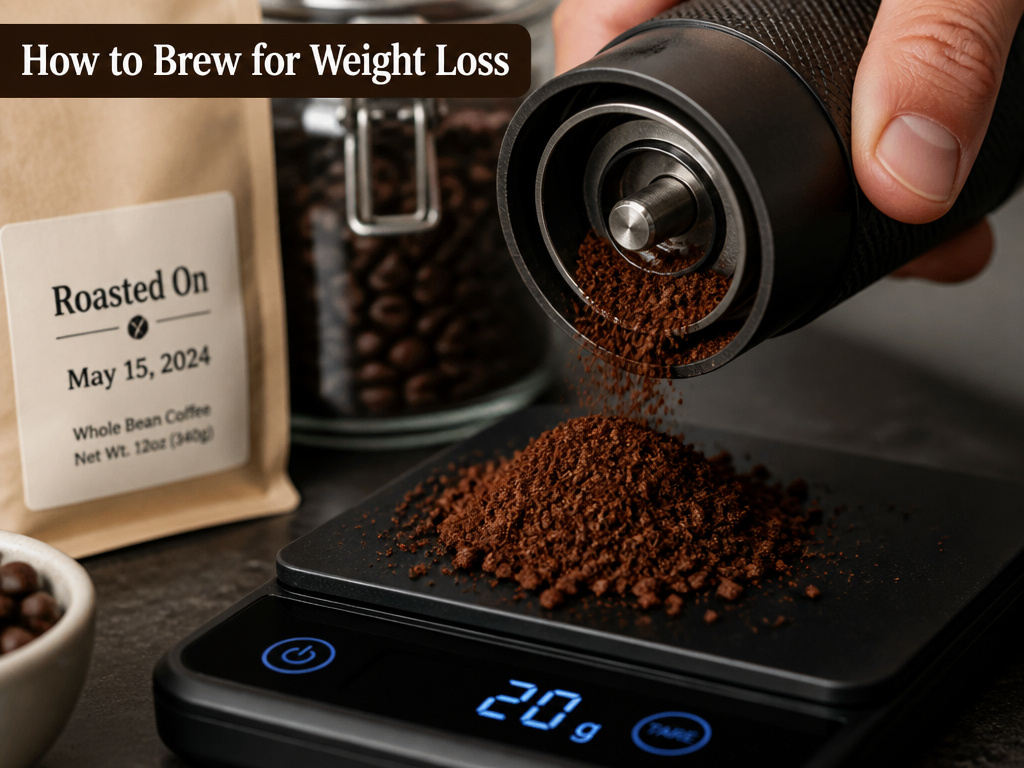
Not all coffee is created equal when the goal is health. The bean’s quality, roast, and how you store it impact the levels of the very antioxidants and polyphenols that contribute to appetite suppression and overall health.
Start with whole beans. Pre-ground coffee loses its beneficial volatile compounds and antioxidants to oxidation far faster. Grind immediately before brewing. A medium roast often strikes the best balance between developed flavor and retained chlorogenic acids (antioxidants linked to health benefits), though this is a nuanced area.
The storage temperature of your beans is more critical than most realize. A 2023 study in Scientific Reports measured coffee quality over time at different temperatures.
Beans stored at 20°C (room temperature) aged the fastest, dropping in quality. Beans stored at 10°C and -10°C maintained “very good” sensory scores for up to 9 months. Specialty coffee scores (above 80 points) were maintained for 6 months at these cooler temperatures.
This means storing your beans in the pantry is the worst common practice. An airtight container in a cool, dark cupboard is the minimum. For any bag you won’t finish within a month, the refrigerator or freezer is a scientifically backed choice to preserve the compounds you’re drinking for. Let the container come to room temperature before opening to prevent condensation.
Here is a simple checklist for sourcing and preparing weight-loss-friendly coffee:
- Buy whole bean, specialty-grade coffee if possible. Look for a roast date, not a “best by” date.
- Store beans in an airtight container. Keep it in the coolest, darkest spot in your kitchen. For long-term storage (>1 month), use the freezer.
- Grind only what you need for each brew. Use a burr grinder for consistency.
- Use a scale to measure your coffee and water. A good starting ratio is 1 gram of coffee to 16 grams of water.
- Brew with water just off the boil (195-205°F). This extracts the beneficial compounds effectively without excessive bitterness.
- Drink it black. If you must add something, choose a splash of low-calorie milk or a spice like cinnamon over any sweetener.
Following these steps ensures you get the full spectrum of caffeine and antioxidants, making each cup as effective as the research suggests it can be. For those exploring other functional additions, be cautious. While some advocate for adding coconut oil or MCT oil in coffee for satiety, these add significant calories and turn your coffee into a meal replacement, not a calorie-free metabolic booster.
When Coffee Might Not Help (Or Could Hurt)
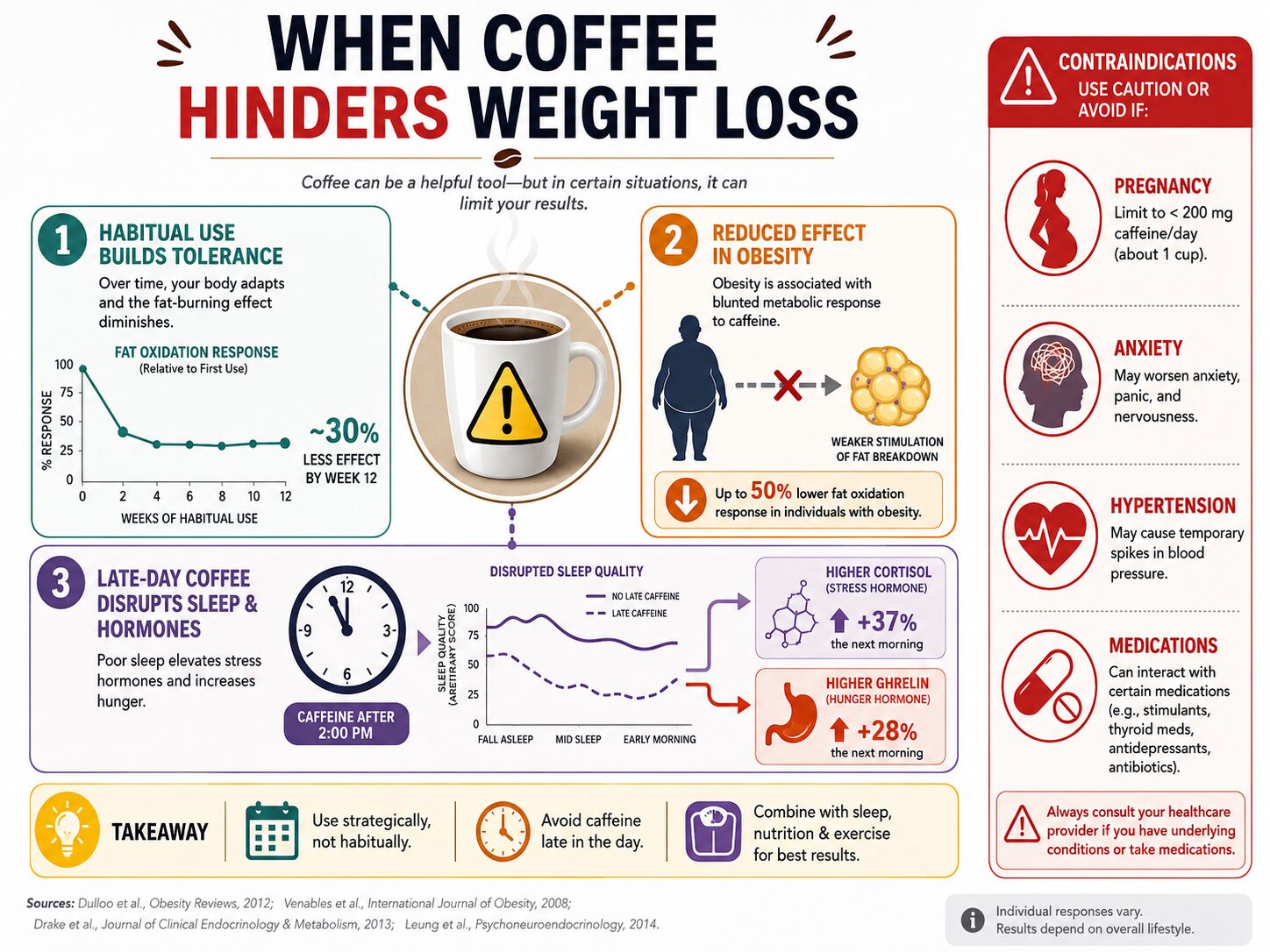
Coffee’s benefits are not universal. Several factors can blunt its effects or make it counterproductive for weight management.
First, habitual consumption builds tolerance. The metabolic and fat-oxidizing effects of caffeine are strongest in individuals who are not regular consumers. If you drink coffee every day, your body adapts. One strategy is to cycle your intake, occasionally going a few days without to resensitize your system, though this is challenging for many.
Second, the fat-burning response may be diminished in individuals with obesity. Some research indicates the metabolic pathways caffeine stimulates can be blunted in this population. This doesn’t mean coffee is useless, but the effect size might be smaller. The appetite-suppressing effects of decaf, however, remain relevant.
Third, and most critically, are the health conditions that warrant caution.
Common mistake: Drinking several cups of caffeinated coffee late in the day, the resulting sleep disruption reduces sleep quality, which increases cortisol and ghrelin (the hunger hormone), directly promoting weight gain and fat storage, especially abdominal fat.
The PMC review of coffee’s health impact and other authorities note specific contraindications:
* Pregnancy: Caffeine intake should be limited to under 200 mg per day due to associations with pregnancy loss and low birth weight.
* Anxiety disorders: High caffeine intake can exacerbate symptoms.
* Uncontrolled hypertension: While coffee’s long-term effect on blood pressure is neutral, acute spikes can be problematic for those with difficulty managing it.
* Certain medications: Caffeine can interact with some drugs; consult your doctor.
If you experience jitters, anxiety, or insomnia, your dose is too high, or your timing is wrong. Switch to decaf after your morning cup. Remember, decaffeinated coffee still provides the appetite-modulating and antioxidant benefits.
Frequently Asked Questions
Does decaf coffee help with weight loss?
Yes, it can. Decaffeinated coffee lacks the caffeine-driven metabolic and fat-burning boost, but research shows it still decreases hunger and increases the satiety hormone PYY. This makes it a useful tool for curbing afternoon or evening snacks without affecting sleep.
How many cups of coffee should I drink for weight loss?
For the caffeine benefits, clinical studies point to 2-4 cups per day (providing 3-6 mg of caffeine per kg of body weight). This should be spread out, with the last caffeinated cup at least 6-8 hours before bedtime to protect sleep quality, which is crucial for weight management.
Is black tea as good as coffee for weight loss?
Black tea contains caffeine and other compounds like theaflavins that may support metabolism, but the research is less extensive and the caffeine content is generally lower per cup. For a direct caffeine-stimulated effect, coffee is typically stronger. For a broader look at the trade-offs, our comparison of green tea vs coffee and black tea vs coffee covers the nuances.
What’s the best time to drink coffee for fat burning?
The most strategic time is 30-60 minutes before aerobic exercise. This allows caffeine levels to peak in your bloodstream, maximizing the fat-oxidation effect during your workout. Drinking it with breakfast can also leverage the appetite-suppressing effects for the rest of the morning.
Can I add artificial sweeteners to my coffee?
This is a gray area. They add negligible calories, so they don’t cancel the metabolic math like sugar does. However, some emerging research suggests artificial sweeteners may negatively impact gut microbiota or insulin sensitivity in certain individuals. If you use them, do so sparingly and monitor your own response. The safest path is to learn to appreciate black coffee.
Does the type of milk matter?
Absolutely. The calories in milk vary significantly. A tablespoon of whole milk has 9 calories, while a tablespoon of heavy cream has 52. If you must use milk, choose a small amount of a low-calorie option like almond milk (3-5 cal/tbsp) or skim milk (5 cal/tbsp). Remember, the goal is minimal caloric addition.
Before You Go
Coffee is a legitimate, science-backed tool for weight management, but it’s a precise one. The benefit lives exclusively in black, unsweetened coffee. Its caffeine temporarily elevates metabolism and powerfully shifts your body to burn more fat during exercise. Other compounds in the bean help tame appetite, an effect even decaf provides.
The single greatest mistake is adding sugar, which transforms a 2-calorie health aid into a 50-calorie weight-gain vehicle. Your strategy should be to source quality beans, store them properly to preserve antioxidants, and time your consumption, especially before workouts. Respect the dose ceiling to avoid side effects that hinder sleep and recovery.
Forget the sugary lattes and blended drinks. A well-brewed cup of black coffee is one of the simplest, most studied additions to a weight-loss plan. Just keep it pure.
{
“@context”: “https://schema.org”,
“@type”: “HowTo”,
“name”: “How to Use Coffee for Weight Loss”,
“totalTime”: “PT5M”,
“tool”: [
{
“@type”: “HowToTool”,
“name”: “Scale for weighing beans”
},
{
“@type”: “HowToTool”,
“name”: “Burr grinder”
},
{
“@type”: “HowToTool”,
“name”: “Coffee maker (pour-over, French press, or drip)”
}
],
“step”: [
{
“@type”: “HowToStep”,
“name”: “Measure your dose”,
“text”: “Use 15-20 grams of whole bean coffee per serving. Grind immediately before brewing to preserve the compounds that aid metabolism.”
},
{
“@type”: “HowToStep”,
“name”: “Brew black”,
“text”: “Use hot water between 195-205°F. Do not add sugar, syrups, or cream. For flavor, consider a dash of cinnamon.”
},
{
“@type”: “HowToStep”,
“name”: “Time your consumption”,
“text”: “Drink your coffee 30-60 minutes before a workout to maximize the fat-burning effect during exercise, or with breakfast to help modulate appetite.”
},
{
“@type”: “HowToStep”,
“name”: “Store beans correctly”,
“text”: “Keep whole beans in an airtight container in a cool, dark place. For long-term storage over a month, use the refrigerator or freezer to preserve antioxidant quality.”
}
]
}
{
“@context”: “https://schema.org”,
“@type”: “FAQPage”,
“mainEntity”: [
{
“@type”: “Question”,
“name”: “Does decaf coffee help with weight loss?”,
“acceptedAnswer”: {
“@type”: “Answer”,
“text”: “Yes, it can. Decaffeinated coffee lacks the caffeine-driven metabolic and fat-burning boost, but research shows it still decreases hunger and increases the satiety hormone PYY. This makes it a useful tool for curbing afternoon or evening snacks without affecting sleep.”
}
},
{
“@type”: “Question”,
“name”: “How many cups of coffee should I drink for weight loss?”,
“acceptedAnswer”: {
“@type”: “Answer”,
“text”: “For the caffeine benefits, clinical studies point to 2-4 cups per day (providing 3-6 mg of caffeine per kg of body weight). This should be spread out, with the last caffeinated cup at least 6-8 hours before bedtime to protect sleep quality, which is crucial for weight management.”
}
},
{
“@type”: “Question”,
“name”: “Is black tea as good as coffee for weight loss?”,
“acceptedAnswer”: {
“@type”: “Answer”,
“text”: “Black tea contains caffeine and other compounds like theaflavins that may support metabolism, but the research is less extensive and the caffeine content is generally lower per cup. For a direct caffeine-stimulated effect, coffee is typically stronger. For a broader look at the trade-offs, our comparison of green tea vs coffee and black tea vs coffee covers the nuances.”
}
},
{
“@type”: “Question”,
“name”: “What’s the best time to drink coffee for fat burning?”,
“acceptedAnswer”: {
“@type”: “Answer”,
“text”: “The most strategic time is 30-60 minutes before aerobic exercise. This allows caffeine levels to peak in your bloodstream, maximizing the fat-oxidation effect during your workout. Drinking it with breakfast can also leverage the appetite-suppressing effects for the rest of the morning.”
}
},
{
“@type”: “Question”,
“name”: “Can I add artificial sweeteners to my coffee?”,
“acceptedAnswer”: {
“@type”: “Answer”,
“text”: “This is a gray area. They add negligible calories, so they don’t cancel the metabolic math like sugar does. However, some emerging research suggests artificial sweeteners may negatively impact gut microbiota or insulin sensitivity in certain individuals. If you use them, do so sparingly and monitor your own response. The safest path is to learn to appreciate black coffee.”
}
},
{
“@type”: “Question”,
“name”: “Does the type of milk matter?”,
“acceptedAnswer”: {
“@type”: “Answer”,
“text”: “Absolutely. The calories in milk vary significantly. A tablespoon of whole milk has 9 calories, while a tablespoon of heavy cream has 52. If you must use milk, choose a small amount of a low-calorie option like almond milk (3-5 cal/tbsp) or skim milk (5 cal/tbsp). Remember, the goal is minimal caloric addition.”
}
}
]
}
