
Coffee vs. Energy Drinks: Which Is Better? The Real Difference
Coffee is better than energy drinks for sustained, health-conscious energy because its natural caffeine release is modulated by hundreds of other compounds, leading to a smoother effect without the jitters and crash associated with the synthetic caffeine and stimulant blends in most energy drinks. A peer-reviewed study found that energy drinks with 240mg of caffeine significantly increased cardiac sympathetic activity, while coffee with the same caffeine amount did not.
Most people think this is just a caffeine shootout. They grab whatever promises the biggest buzz. That misses the entire mechanism.
The real difference lives in the ingredient list beyond caffeine, the source of the stimulant itself, and the wild variability in what we call a “cup of coffee.” This guide breaks down the science, the specs, and the sensory experience so you can choose based on how you want to feel, not just marketing.
Key Takeaways
- Energy drinks spike your nervous system beyond caffeine. A 2022 study in the NIH Public Access journal showed energy drinks with 240mg caffeine increased cardiac sympathetic activity; coffee with the same caffeine did not. The taurine and guarana are likely culprits.
- Synthetic caffeine crashes, natural caffeine coasts. The anhydrous caffeine in energy drinks absorbs fast and peaks hard. The natural caffeine in coffee is released alongside chlorogenic acids, creating a longer, gentler curve.
- A “cup of coffee” isn’t a standard measure. Caffeine in 100mL of brewed coffee can range from 48mg in a cold brew to over 965mg in a tightly packed espresso. Your brewing method decides the dose.
- The sugar is a separate problem. Even sugar-free energy drinks contain other stimulant additives absent in black coffee, which has virtually no calories unless you add them.
- Coffee offers bioactive benefits energy drinks lack. Compounds in coffee, like polyphenols, are linked to antioxidant and anti-inflammatory effects. Energy drinks offer no comparable nutritional upside.
The Key Difference Is Not Caffeine
People compare labels and see 150mg in a can versus 95mg in a cup and call it a day. That is a fundamental error.
The active ingredients operate on different pathways. Coffee’s caffeine is packaged with a complex matrix of chlorogenic acids, polyphenols, and oils that slow its absorption and modulate its effect. Think of it as a time-release capsule designed by nature. The caffeine in a standard energy drink is usually synthetic caffeine anhydrous, refined to a pure powder. It hits your bloodstream fast and peaks within 30-45 minutes. The crash is just as predictable.
A 2022 study published on PMC gave subjects 240mg of caffeine from either a commercial energy drink or coffee. Using a metric called periodic repolarization dynamics (PRD) to measure cardiac sympathetic nervous system activity, they found the energy drink significantly increased PRD. The coffee did not. Both had identical caffeine. The difference was the other stuff: taurine, guarana, and sugars in the energy drink.
That is the non-negotiable fact. The energy drinks vs coffee debate hinges on these additives. Your heart rate and blood pressure respond to more than just the stimulant you think you’re ingesting.
TL;DR: Identical caffeine doses from coffee and energy drinks produce different physiological stress responses. The energy drink’s extra ingredients are the reason.
How Caffeine Sources Dictate Your Day
Synthetic caffeine anhydrous is a pure chemical. Your body doesn’t have to unpack it from plant fibers or wait for digestive enzymes to break down bonds. It dissolves and goes to work.
Natural caffeine from coffee beans is trapped inside cellular structures. As hot water extracts it, it pulls along a host of other compounds. These compounds, particularly chlorogenic acids, compete for the same metabolic pathways. This competition slows everything down. You get a gentler rise to a plateau that lasts longer, followed by a gradual decline instead of a cliff.
The feeling is distinct. The synthetic rush feels electric and anxious. The natural lift feels earned and steady. If you have ever switched from energy drinks to black coffee and wondered why you stopped having 3pm brain fog, this is the mechanism.
Common mistake: Assuming a 200mg caffeine pill equals a 200mg coffee, the pill will hit faster and harder, often with more side effects, because it lacks the modulating compounds.
What’s Really In Your Energy Drink?
Look past the caffeine number. The supporting cast defines the experience and the health impacts of energy drinks.
| Common Ingredient | Primary Claim / Function | The Reality & Interaction |
|---|---|---|
| Taurine | Improves mental performance, reduces fatigue. | An amino acid abundant in the human body. In energy drinks, its synergistic effect with caffeine may overstimulate the sympathetic nervous system, as the PMC study suggests. |
| Guarana | “Natural” caffeine source, provides extended energy. | Contains caffeine (often making the labeled caffeine content inaccurate). Adds other stimulants like theobromine, potentially amplifying jitters. |
| B-Vitamins | Supports energy metabolism. | Water-soluble vitamins you typically get from diet. Megadoses in a drink are largely excreted; they don’t “boost” the caffeine high. |
| High-Fructose Corn Syrup / Sugar | Provides quick carbohydrate energy. | Causes a blood sugar spike and crash independent of the caffeine crash, doubling the fatigue effect. |
This table reveals the formula: rapid-onset caffeine plus secondary stimulants plus sugar. It is a layered assault on your alertness systems. The Monster Energy caffeine content is one thing; its taurine and guarana profile is another.
A study on 5-Hour ENERGY shots (about 200mg caffeine) compared them to a 200mg caffeine pill and a placebo. It found neither improved subjective feelings or cognitive performance more than the other, and both raised diastolic blood pressure. The implied benefit of the proprietary blend? Not evident in the lab.
Coffee, in its pure form, is seed water. It contains caffeine, antioxidants, vitamins B2 and B5, manganese, potassium, and magnesium. The PubMed coffee brewing methods study confirms espresso, for instance, delivers significant magnesium and phosphorus. You are getting bioavailable nutrients, not just a stimulant cocktail.
How You Brew Changes Everything
Asking if coffee is better is like asking if a vehicle is faster. What kind of vehicle? A “cup of coffee” is not a unit of measure.
The Quantitative Analysis of Caffeine in Roasted Coffee review lays it bare. The brewing method creates staggering variability. This is the most overlooked factor in the entire debate.
| Brewing Method | Typical Caffeine Range (per 100mL) | What Determines the Dose |
|---|---|---|
| Espresso | 50.4 – 965.6 mg | Pressure, grind fineness, dose weight, tamp pressure. The highest potential concentration. |
| Moka Pot | 128.0 – 539.9 mg | Stovetop pressure, heat level, coffee grind. Stronger than most automatic drip. |
| AeroPress | 56.35 – 120.92 mg | Immersion time, pressure from the plunge, grind size. Highly customizable. |
| French Press | 52.0 – 123.9 mg | Immersion time, coarseness of grind, water temperature. Full-bodied and potent. |
| Cold Brew | 48.5 – 179.95 mg | Steep time (12-24 hrs), coffee-to-water ratio, grind size. Smooth but can be very strong. |
Your control over the variables, grind size, water temperature, contact time, pressure, lets you dial in not just flavor, but the precise stimulant intensity you want. A cold brew concentrate can exceed the caffeine in Red Bull. A single ristretto shot might have less.
This variability is a feature, not a bug. It means you can tailor your drink to your needs without introducing foreign additives. Want a slow, all-day sip? Make a large, diluted cold brew. Need a quick, potent kick? Pull a double espresso. The espresso caffeine content is in your hands.
Common mistake: Assuming a 12-oz black coffee from a diner has the same caffeine as a 12-oz black coffee from a specialty shop. The diner likely uses a lighter roast, a finer grind, and a longer brew cycle, which can extract more caffeine.
Health and Side Effects: The Long Game

This is where coffee pulls decisively ahead. The consistent, long-term research on moderate coffee consumption paints a positive picture, while energy drink studies are cautionary.
Coffee’s portfolio of polyphenols and antioxidants is linked to reduced inflammation, lower risk of Type 2 diabetes, and potential protection against certain neurodegenerative diseases. These are benefits that accrue over decades of habitual drinking.
Energy drinks have no such portfolio. Their research is dominated by acute effects: increased risk of palpitations, anxiety, insomnia, and, in extreme cases with excessive consumption or pre-existing conditions, cardiovascular events. The NIH comparison of beverage impacts points directly to this acute sympathetic stress.
Let’s talk about two specific side-effect zones: acidity and dental health.
- Acidity: Hot-brewed coffee is acidic, with a pH around 5. This can bother some people. Cold brew, however, is naturally about 67% less acidic due to the cold extraction process. Most energy drinks are highly acidic (pH 2.5-3.5) to preserve shelf life and enhance flavor. This acid bathes your teeth and stomach every time you drink.
- The Crash: The coffee crash is usually gentle, a slow return to baseline as caffeine metabolites clear. The energy drink crash is a double-whammy: the synthetic caffeine wears off abruptly, and if the drink had sugar, your blood glucose is also plummeting. The result is a profound need to reach for another can.
Your body keeps score. The choice between a natural, single-ingredient stimulant and a engineered, multi-stimulant syrup has cumulative consequences. For a deeper look at how other beverages compare, our analysis of the health benefits of tea provides another natural alternative.
Coffee vs Energy Drinks: When to Choose Which
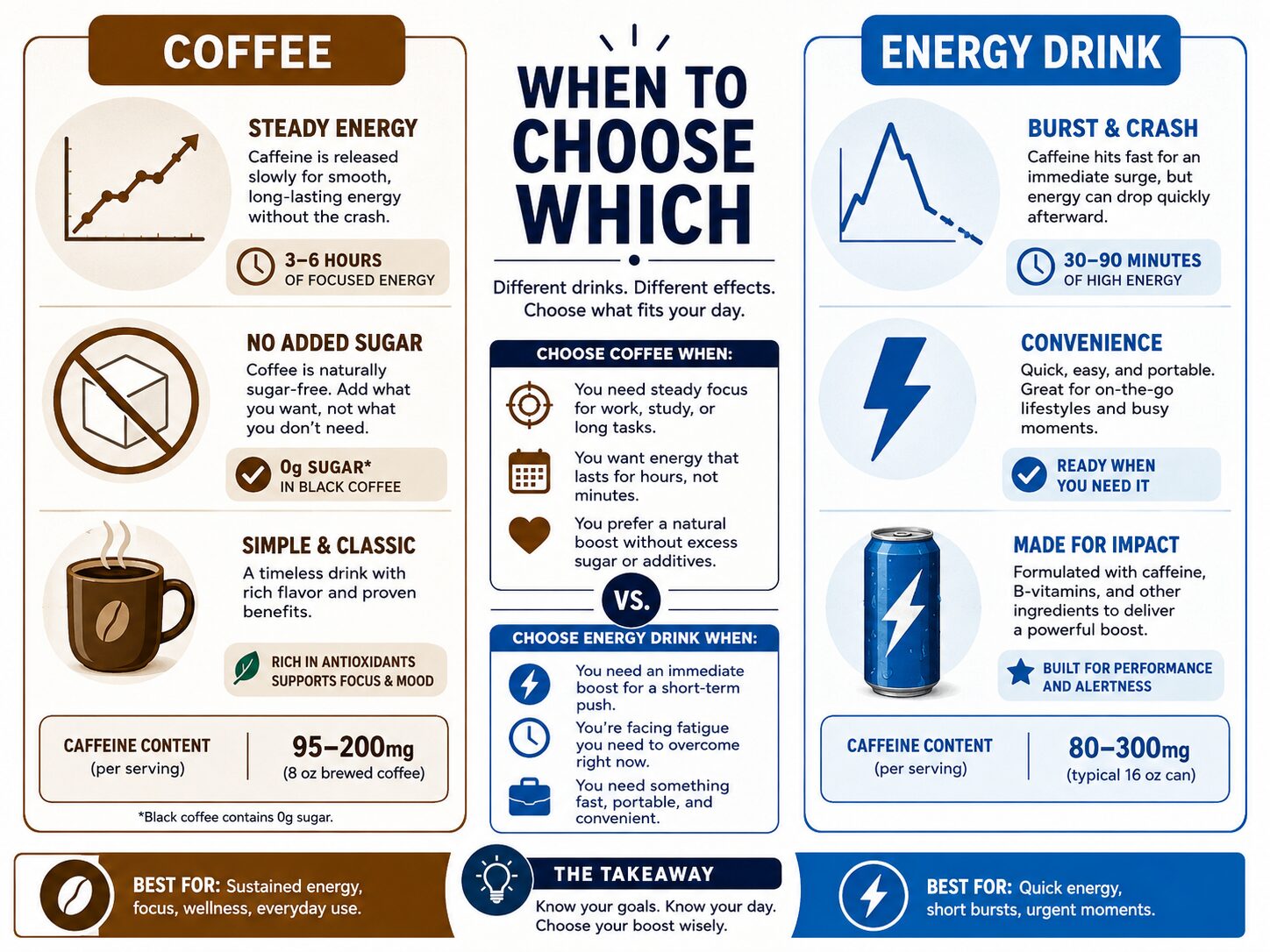
This is not about declaring one universally superior. It is about matching the tool to the task with your eyes open.
Choose Coffee When:
- You need 2-4 hours of focused, steady energy (e.g., for work, studying, creative tasks).
- You are sensitive to jitters or anxiety from stimulants.
- You want to avoid sugar, artificial sweeteners, and food dyes.
- You value the ritual and sensory experience of preparing a drink.
- You are thinking about long-term dietary patterns. The black tea benefits also fit this category for a lower-caffeine option.
Choose an Energy Drink When:
- You need a rapid, 45-60 minute burst of intense alertness and don’t mind the subsequent crash (e.g., before a short, high-intensity workout or to power through the last leg of a night drive).
- Convenience is absolute king, no time to brew, no equipment available.
- You actively want the specific effect of the blend (some people prefer the sharper, more euphoric onset for certain activities).
If you do reach for an energy drink, treat it like a tactical tool, not a daily beverage. Understand its effects of Red Bull or similar brands are more pharmaceutical than nutritional.
Frequently Asked Questions
Does coffee have more caffeine than energy drinks?
Not necessarily. It depends entirely on the coffee. A 2oz double espresso can have 80-150mg of caffeine. A 12oz cold brew can have 200mg or more. A standard 8.4oz Red Bull has 80mg. You must compare serving sizes and brewing methods. The caffeine per volume in espresso is much higher than in drip coffee.
Why does coffee make me less jittery than energy drinks?
Two reasons. First, coffee’s natural caffeine releases more slowly. Second, and more critically, energy drinks contain additional stimulants like taurine and guarana that specifically activate your sympathetic nervous system in ways caffeine alone does not, as shown in clinical research.
Is black coffee healthier than sugar-free energy drinks?
Yes, in most contexts. Black coffee contains beneficial antioxidants and minerals. A sugar-free energy drink replaces sugar with artificial sweeteners and still contains the cocktail of other stimulants and acids, offering no nutritional benefit and potential for negative physiological effects.
Can I drink coffee and energy drinks in the same day?
It is not recommended. You are stacking multiple sources of caffeine and other stimulants, making it very easy to exceed a comfortable or safe dose for your body, leading to severe anxiety, heart palpitations, and digestive distress. Pick one source per day.
What’s the best coffee for energy without the crash?
well-made cold brew or a medium-roast coffee brewed with a method like AeroPress or French Press. These methods extract a smooth, balanced profile. Avoid dark roasts for pure caffeine, they have slightly less caffeine by weight because it’s burned off in roasting, but more bitter compounds that can upset your stomach.
Before You Go
The science is clear. For identical caffeine amounts, coffee does not stress your cardiovascular system the way energy drinks do. That alone should shift the default choice.
Coffee gives you control, over the dose, the flavor, and the experience. It connects you to an agricultural product, not a laboratory formulation. The energy drink is a precise, industrial stimulant delivery system designed for peak intensity and convenience, with all the trade-offs that entails.
Your energy should not come with a mandatory crash. It should be something you build, cup by cup, understanding the variables. Choose the natural, modulatable lift. Your body, and your afternoon self, will know the difference. For those exploring other natural stimulants, understanding the brewing methods for tea or the EGCG antioxidants in green tea offers valuable alternatives.
