
Is Chai Tea Coffee? Caffeine, Taste, and the Real Difference
Chai tea is not coffee. It is a spiced milk tea brewed from tea leaves, while coffee comes from roasted beans. A cup of chai contains 40–60 mg of caffeine, roughly half the 95–120 mg in a standard coffee, and its flavor profile is defined by spices like cardamom and ginger.
Chai tea is not coffee. It is a spiced milk tea brewed from the leaves of the Camellia sinensis plant, the same plant that yields black, green, and oolong tea. Coffee is brewed from roasted beans of the Coffea plant. A standard cup of chai contains 40–60 mg of caffeine, while an average cup of coffee packs 95–120 mg.
The confusion starts with the word “chai” itself, which just means “tea” in many languages. Ordering “chai tea” is like asking for “tea tea.” What Western cafes serve as a sweet, spiced latte is often a simplified version of masala chai, a specific preparation where robust black tea and whole spices are boiled together, not just steeped. This boiling step is non-negotiable. It extracts the heat-stable tannins and flavors that stand up to milk, which most delicate tea-bag preparations cannot.
This guide breaks down the real differences, caffeine, preparation, regional variations, so you can understand what you’re actually drinking and why your morning choice matters more than you think.
Key Takeaways
- Chai is a spiced black tea, not coffee. Its caffeine comes from the tea plant (Camellia sinensis), not the coffee bean.
- A standard cup of chai has 40–60 mg of caffeine, roughly half that of a typical coffee. The caffeine release rates differ due to L-theanine in tea.
- Authentic masala chai requires boiling CTC black tea for several minutes, not just steeping. This extracts thearubigins, which make up to 60% of the solids in the brew and prevent dilution when milk is added.
- In India, “chai” often refers to a single-spice tea like ginger (adrak) or cardamom (elaichi) chai, not the complex Americanized spice blend.
- The smooth mouthfeel comes from boiling milk with the tea for 5–6 minutes, allowing whey proteins to bind with astringent tannins. Adding milk at the end creates a thinner, sharper drink.
Caffeine Content: The Numbers Don’t Lie
A standard 8-ounce cup of chai, made with a typical proportion of black tea, contains between 40 and 60 milligrams of caffeine. The same volume of brewed coffee averages between 95 and 120 milligrams.
That’s about half the kick.
The caffeine content in tea is inherently lower than in coffee beans. A tea leaf simply contains less of the stimulant by dry weight.
But the experience diverges further. Tea contains L-theanine, an amino acid that promotes calm alertness. It modulates the caffeine’s effect, leading to what drinkers often describe as a gentler, more sustained lift without the jittery peak and crash associated with coffee. This difference in caffeine release rates is why a cup of chai can feel focused where a coffee feels frantic.
The type of black tea matters too. The robust, small-cut leaves of CTC (Crush-Tear-Curl) tea, used in traditional chai, extract efficiently during boiling. Orthodox whole-leaf teas, favored for gentle steeping, would turn unpleasantly bitter under the same treatment. If you’re comparing black tea and black coffee, remember the tea’s format is chosen for a brewing method, violent, rolling boils, that coffee grounds would never survive.
TL;DR: Chai has about half the caffeine of coffee, and the presence of L-theanine changes how that caffeine feels, smoother, not sharper.
Flavor Profiles: Spice Versus Roast
Coffee’s flavor is a product of roast and origin. You taste chocolate, nut, berry, or citrus notes developed through heat. Chai’s core flavor is malty, tannic black tea, amplified and complicated by spices.
The spice blend is where most Western interpretations get it wrong. In many parts of India, ordering “chai” gets you a cup focused on one or two dominant spices. Ginger (adrak) chai, cardamom (elaichi) chai, or even saffron chai are common. The complex “masala” blend of cinnamon, clove, cardamom, black pepper, and ginger is just one regional variant.
American cafe chai often leans sweet, relying on pre-made syrups or powders heavy on cinnamon and vanilla. The tea itself can be an afterthought. Authentic chai balances the astringency of strong tea with the warmth of spices and the rounding sweetness of milk and jaggery or sugar. It’s a savory-sweet drink, not a dessert.
Comparing the flavor profile of coffee drinks to chai is like comparing a solo instrument to a full band. Coffee highlights a single note, the bean. Chai is an ensemble where the tea provides the rhythm section and the spices take the melody.
| Aspect | Coffee | Traditional Masala Chai |
|---|---|---|
| Primary Flavor Source | Roasted coffee bean origin | Assam or Ceylon CTC black tea |
| Secondary Notes | Chocolate, nut, fruit, acidity from roast | Ginger, cardamom, cinnamon, clove, black pepper |
| Mouthfeel | Can range from thin (filter) to syrupy (espresso) | Consistently creamy from boiled milk |
| Typical Sweetness | Often drunk black or with a splash of cream/sugar | Almost always sweetened, often with jaggery or sugar |
| Brewing Goal | Extract soluble oils and caffeine quickly | Extract tannins and spice oils through prolonged boil |
The Brewing Divide: Boil, Don’t Steep
This is the mechanical heart of the difference. You steep coffee. You boil chai.
Delicate coffee grounds would over-extract and turn brutally bitter in a rolling boil. Orthodox whole-leaf tea would do the same. Chai uses CTC black tea, a processing method that crushes, tears, and curls the leaves into hard little pellets. These pellets are built to withstand, and indeed require, vigorous boiling to unlock their full flavor.
Common mistake: Steeping a tea bag in hot water and then adding milk. This yields a weak, diluted drink because the tea hasn’t extracted the necessary tannins that bind with milk proteins. The mouthfeel stays thin and the spice flavor never integrates.
A 2018 study by Cleverdon et al. found that a full five minutes of steeping was necessary to release the most polyphenol content from black tea. Traditional chai takes that further, boiling the tea for four to five minutes before the milk even goes in. This aggressive heat extracts thearubigins and theaflavins, polyphenols that give black tea its color, body, and astringency. Thearubigins alone can constitute up to 60% of the solids in a strong black tea infusion.
The process is non-negotiable. You add tea to vigorously boiling water and spices, and you let it roll. The liquid reduces, concentrating the flavor. Only then do you add milk. This sequence ensures the tea is strong enough to not be washed out by the dairy. It’s why a properly made chai can be cut with milk and still taste intensely of tea, while a steeped-and-then-milked cup tastes like flavored milk.
TL;DR: Chai requires boiling robust CTC tea for several minutes to extract the necessary body. Steeping a delicate tea bag will not produce the same drink.
The Spice Is Not Just for Flavor
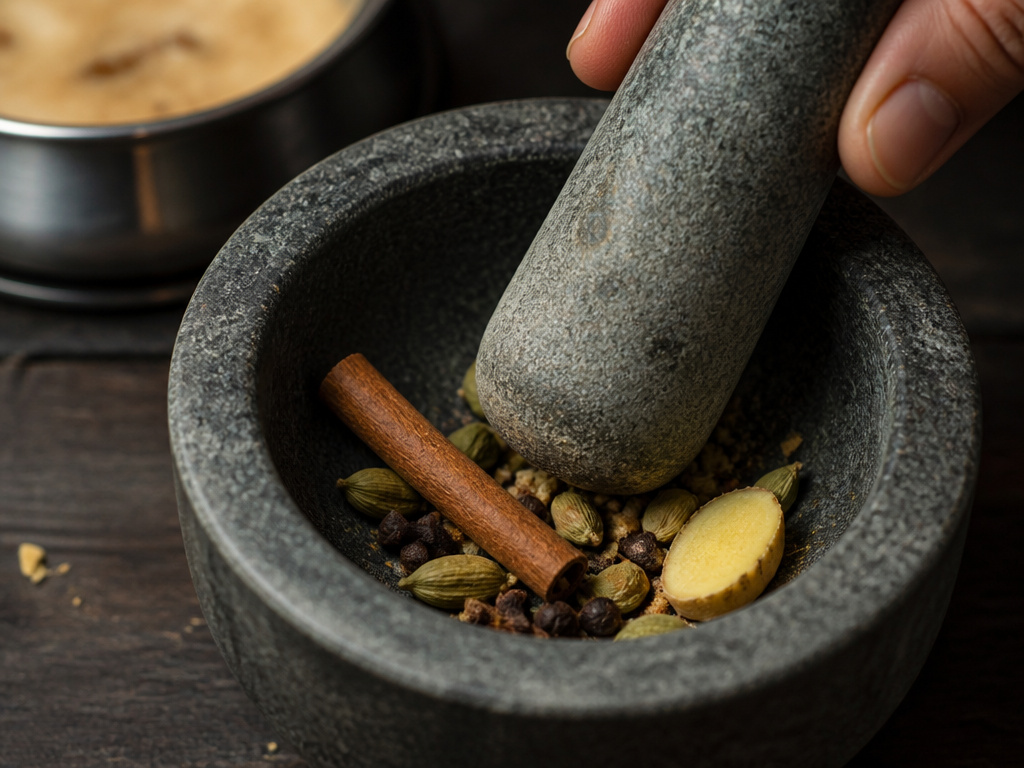
The spices in masala chai aren’t merely for aroma. They perform.
Ginger (adrak) provides a sharp, cleansing heat and aids digestion. Cardamom (elaichi) adds a complex, floral sweetness and is also a carminative, helping to settle the stomach. Black pepper stimulates circulation and, in Ayurvedic tradition, is thought to enhance the bioavailability of other spices. Cinnamon and clove add warmth and sweetness.
Their preparation matters. Whole spices, lightly crushed to open them up, are added at the start of the boil. This allows their volatile oils and harder compounds to diffuse slowly into the water. Ground spices can become muddy and bitter over a long boil.
If you’re using saffron, the rule changes. Saffron’s delicate flavor compounds are destroyed by prolonged high heat. You add a few threads after the boil, during the resting step, letting the residual heat steep them gently. Getting this wrong, boiling the saffron, turns its floral notes into a flat, medicinal bitterness.
The health benefits of tea and coffee often get compared, but the spices add another layer. Gingerol in ginger, piperine in black pepper, and the essential oils in cardamom have their own studied anti-inflammatory and digestive properties. You’re not just drinking a caffeine vehicle; you’re drinking a mild, traditional herbal remedy.
The Milk Protocol That Changes Everything
Adding milk at the end is for London Fog lattes. For chai, milk is a co-ingredient, cooked in.
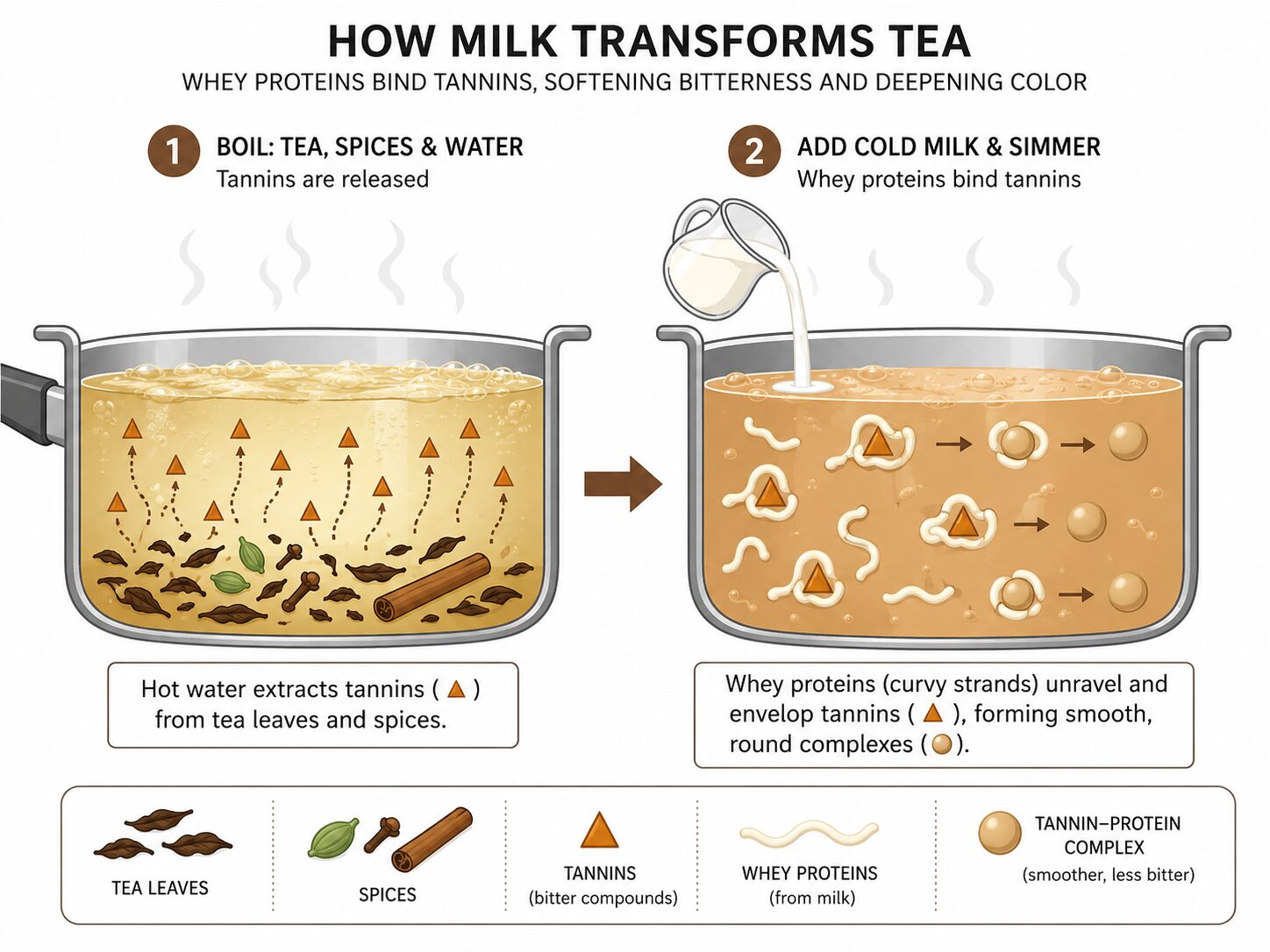
After the tea and spices have boiled and reduced, you add cold milk. You then simmer the mixture together for another five to six minutes. This isn’t just about heating the milk. It’s a chemical process.
Boiling milk with chai for several minutes, rather than just adding it before serving, helps reduce the astringency of tannins by binding them to milk proteins. This results in a smoother mouthfeel. The process is more effective when milk is cooked and its whey proteins unravel.
The proteins in milk, particularly the whey proteins, denature in the heat. As they unfold, they bind with the astringent tannins from the tea, rounding out the flavor and creating that distinct, creamy body. This also changes the color, turning the brew a richer, deeper shade of brown.
The fat content matters. Whole milk provides the richest mouthfeel. Lower-fat milks or dairy alternatives like oat milk can work, but they won’t bind the tannins as effectively, often resulting in a thinner, more astringent final cup. The choice of sweetener plays a role too. White sugar adds pure sweetness. Jaggery, an unrefined cane sugar common in India, adds a deeper, almost smoky molasses note that complements the spices.
TL;DR: Simmering milk with the tea for 5–6 minutes allows milk proteins to bind with tannins, creating a smooth, creamy texture. Pouring cold milk in at the end misses the point.
Why Your Choice Matters
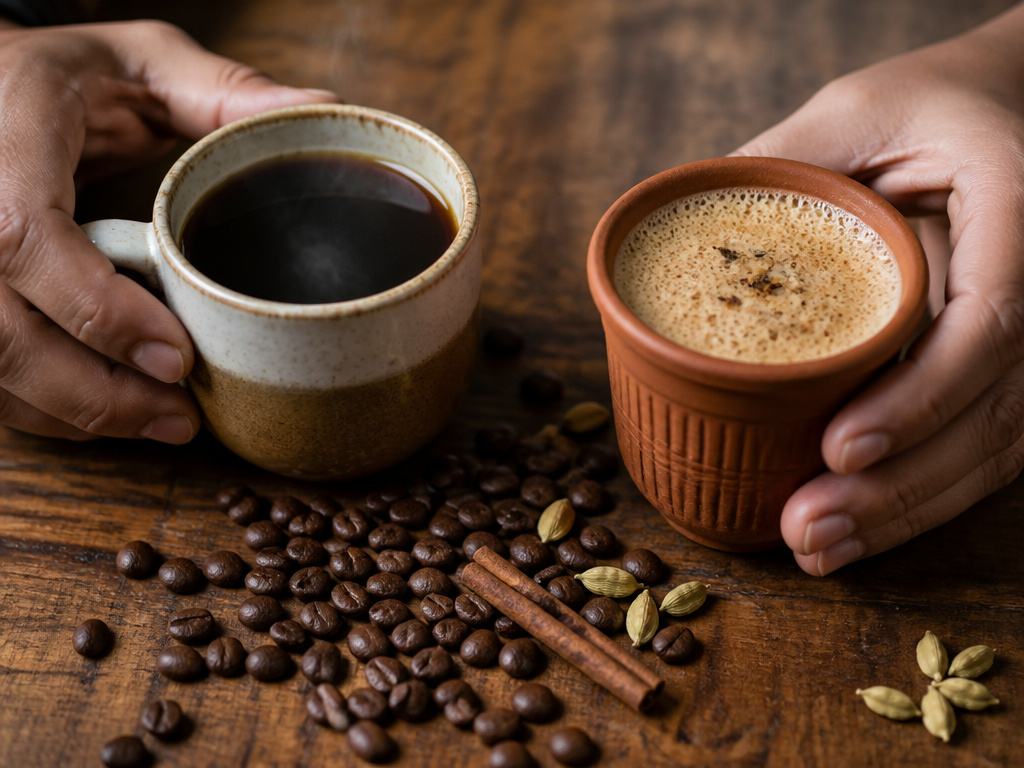
Choosing between chai and coffee isn’t just about caffeine content or flavor preference. It’s about the ritual and the result.
Coffee is often a solo, efficient act, grind, brew, go. The brewed coffee methods are numerous, but the goal is speed and clarity of flavor. Chai is inherently slower. The boiling, the simmering, the straining, it forces a pause. It’s a drink that rewards patience.
For your stomach, the difference can be stark. The acidity in tea versus coffee is significant. Coffee’s pH is generally lower, and its acids can aggravate conditions like acid reflux for some people. The milk and spices in chai, along with tea’s naturally higher pH, often make it a gentler option on a sensitive gut.
Then there’s the crash. The synergistic effect of L-theanine and caffeine in tea moderates the energy spike. You avoid the sudden drop that can follow a strong coffee. If you’re managing afternoon slumps, switching to a cup of chai might provide a more stable plateau of alertness. It’s a different tool for a different kind of focus.
Finally, consider the sugar. A commercial chai latte from a cafe can be a sugar bomb, hiding any health implications of caffeine under a mountain of syrup. A homemade cup, sweetened to your own taste with jaggery or a teaspoon of honey, is a wholly different beverage. You control the variables. You own the ritual.
Frequently Asked Questions
Is chai tea a type of coffee?
No. Chai tea is a redundant term for masala chai, which is a spiced milk tea made from the leaves of the Camellia sinensis plant. Coffee is made from the roasted seeds of the Coffea plant. They are completely different beverages from different plants.
Does chai have more caffeine than coffee?
Almost never. A standard cup of chai contains 40–60 mg of caffeine. A standard cup of coffee contains 95–120 mg. Even a strong caffeine in black tea preparation tops out around 70 mg per cup, still well below a typical coffee.
Can I make chai with a coffee maker?
You should not. A coffee maker uses water just below boiling to steep grounds quickly. Chai requires a full, rolling boil of water, spices, and tea for several minutes, followed by a simmer with milk. A coffee maker cannot achieve or maintain this process and will produce a weak, incorrect drink.
Why does my homemade chai taste weak?
You are likely steeping instead of boiling. Use CTC black tea (like Assam or a strong Ceylon blend) and boil it vigorously with your spices in water for 4–5 minutes before adding milk. This extracts the necessary tannins and thearubigins that give the drink its body and prevent milk from diluting the flavor.
Is chai tea good for you?
The black tea in chai contains antioxidants, and spices like ginger and cardamom have traditional digestive benefits. However, the health benefits of tea and coffee are often offset by added sugar in commercial preparations. A homemade cup with controlled sweetener can be part of a healthy diet, but it is not a medicinal supplement.
What’s the difference between chai and a chai latte?
“Chai” refers to the traditional spiced tea drink. A “chai latte” is a Western cafe invention, typically made by combining a sweet, spiced chai concentrate or syrup with steamed milk. The latte version is often much sweeter and less tea-forward than the traditional boiled preparation.
The Bottom Line
Chai is not coffee. It is a specific, slow-made drink of boiled black tea, spices, and milk. Its caffeine content is lower, its preparation is more involved, and its flavor profile is an ensemble rather than a solo.
The real mistake is treating them as interchangeable morning options. They serve different purposes. Coffee is a precision tool for immediate alertness. Chai is a slower, more ceremonial ritual that delivers a moderated lift. Knowing the difference, the 40–60 mg caffeine count, the necessity of the boil, the regional spice variations, lets you choose intentionally.
Pick the tool for the job. If you need a swift, sharp kick, reach for the coffee. If you want a sustained, focused warmth that starts in the pot and ends in your hands, put the water on to boil.
{
“@context”: “https://schema.org”,
“@type”: “HowTo”,
“name”: “How to Make Traditional Masala Chai”,
“totalTime”: “PT15M”,
“tool”: [
{
“@type”: “HowToTool”,
“name”: “A heavy-bottomed saucepan”
},
{
“@type”: “HowToTool”,
“name”: “A fine mesh strainer”
},
{
“@type”: “HowToTool”,
“name”: “A mortar and pestle or spice grinder”
}
],
“supply”: [
{
“@type”: “HowToSupply”,
“name”: “CTC (Crush-Tear-Curl) black tea”
},
{
“@type”: “HowToSupply”,
“name”: “Fresh ginger root”
},
{
“@type”: “HowToSupply”,
“name”: “Green cardamom pods”
},
{
“@type”: “HowToSupply”,
“name”: “Whole milk or a dairy-free alternative”
},
{
“@type”: “HowToSupply”,
“name”: “Sweetener (jaggery, sugar, honey)”
}
],
“step”: [
{
“@type”: “HowToStep”,
“name”: “Crush the spices”,
“text”: “Lightly crush 3-4 green cardamom pods and a 1-inch knob of peeled ginger in a mortar. This opens the spice pods without pulverizing them.”
},
{
“@type”: “HowToStep”,
“name”: “Boil water and spices”,
“text”: “Add 1 cup of water, the crushed spices, and any whole spices like a cinnamon stick or 2 cloves to the saucepan. Bring to a rolling boil for 3-4 minutes.”
},
{
“@type”: “HowToStep”,
“name”: “Add and boil the tea”,
“text”: “Add 1 heaping teaspoon of CTC black tea leaves. Boil for another 4-5 minutes until the liquid is a deep amber color and reduced by about a third.”
},
{
“@type”: “HowToStep”,
“name”: “Add milk and simmer”,
“text”: “Pour in 1 cup of milk. Reduce heat to a simmer and cook for 5-6 minutes, stirring occasionally. The mixture will darken and thicken slightly.”
},
{
“@type”: “HowToStep”,
“name”: “Strain and sweeten”,
“text”: “Remove from heat. Strain into a cup through a fine mesh strainer. Stir in your preferred sweetener to taste.”
}
]
}
{
“@context”: “https://schema.org”,
“@type”: “FAQPage”,
“mainEntity”: [
{
“@type”: “Question”,
“name”: “Is chai tea a type of coffee?”,
“acceptedAnswer”: {
“@type”: “Answer”,
“text”: “No. Chai tea is a redundant term for masala chai, which is a spiced milk tea made from the leaves of the Camellia sinensis plant. Coffee is made from the roasted seeds of the Coffea plant. They are completely different beverages from different plants.”
}
},
{
“@type”: “Question”,
“name”: “Does chai have more caffeine than coffee?”,
“acceptedAnswer”: {
“@type”: “Answer”,
“text”: “Almost never. A standard cup of chai contains 40–60 mg of caffeine. A standard cup of coffee contains 95–120 mg. Even a strong caffeine in black tea preparation tops out around 70 mg per cup, still well below a typical coffee.”
}
},
{
“@type”: “Question”,
“name”: “Can I make chai with a coffee maker?”,
“acceptedAnswer”: {
“@type”: “Answer”,
“text”: “You should not. A coffee maker uses water just below boiling to steep grounds quickly. Chai requires a full, rolling boil of water, spices, and tea for several minutes, followed by a simmer with milk. A coffee maker cannot achieve or maintain this process and will produce a weak, incorrect drink.”
}
},
{
“@type”: “Question”,
“name”: “Why does my homemade chai taste weak?”,
“acceptedAnswer”: {
“@type”: “Answer”,
“text”: “You are likely steeping instead of boiling. Use CTC black tea (like Assam or a strong Ceylon blend) and boil it vigorously with your spices in water for 4–5 minutes before adding milk. This extracts the necessary tannins and thearubigins that give the drink its body and prevent milk from diluting the flavor.”
}
},
{
“@type”: “Question”,
“name”: “Is chai tea good for you?”,
“acceptedAnswer”: {
“@type”: “Answer”,
“text”: “The black tea in chai contains antioxidants, and spices like ginger and cardamom have traditional digestive benefits. However, the health benefits of tea and coffee are often offset by added sugar in commercial preparations. A homemade cup with controlled sweetener can be part of a healthy diet, but it is not a medicinal supplement.”
}
},
{
“@type”: “Question”,
“name”: “What’s the difference between chai and a chai latte?”,
“acceptedAnswer”: {
“@type”: “Answer”,
“text”: “\”Chai\” refers to the traditional spiced tea drink. A \”chai latte\” is a Western cafe invention, typically made by combining a sweet, spiced chai concentrate or syrup with steamed milk. The latte version is often much sweeter and less tea-forward than the traditional boiled preparation.”
}
}
]
}
