
How to Use a Coffee Press for a Perfect, Sludge-Free Brew
This post contains affiliate links. As an Amazon Associate, we earn from qualifying purchases.
To use a coffee press, you need three things matched correctly: a coarse grind size, water heated to 200°F (93°C), and a total steep time that includes a settling period after the initial brew. The Bodum Chambord manual specifies 4 minutes at 92–96°C; skipping the post-brew settle is why most cups end up sludgy.
Most people get a bitter, gritty cup because they press immediately after the timer beeps. That forces the finest grounds through the mesh filter and into your mug. The fix isn’t a different press. It’s a longer pause.
This guide walks through the full process, from preheating to the final pour, using specs from Bodum and Melitta OEM manuals. You’ll learn why each step matters, when to break the standard rules, and how to adapt the method for cold brew or different bean types.
Key Takeaways
- Preheating the carafe with hot water is non-negotiable; a cold glass steals brew temperature and results in a flat, under-extracted cup.
- Use a coarse grind consistency, like breadcrumbs or rock salt. A fine grind jams the plunger and creates excessive silt.
- The official 4-minute steep time (per Bodum and Melitta manuals) is just the brewing phase. Let the coffee settle for another 4-5 minutes after stirring for a dramatically cleaner cup.
- Press slowly and evenly. Force leads to channeling, which agitates the grounds bed and pushes silt past the filter.
- Pour all the coffee out of the press after pressing. Leaving it in contact with the grounds continues extraction, turning your brew bitter within minutes.
The Non-Negotiable First Step: Preheat and Measure
Head design changes the entire process. Look at the business end of your trimmer.
For the 1.0L Bodum Chambord (model 1928-16US), the manual states optimal brewing temperature is 92–96°C (195–205°F). A cold glass carafe can drop the slurry temperature by 5–10°C on contact, stalling extraction before it starts.
You need two tools before any coffee touches the press: a kettle and a scale. Eyeballing doses creates inconsistent strength. A 1:16 coffee-to-water ratio is the reliable starting point. That means 55 grams of coffee for 880 grams of water, which fills a standard 1-liter press just below the rim.
The preheat step is simple. Boil more water than you need. Pour it into the empty carafe, swirl it around, and let it sit for 30 seconds. Dump it out. The glass will now hold heat steady, letting the water work on extracting flavor from the coffee, not warming up the vessel.
TL;DR: Warm your empty press with hot water first. Measure 55g coffee per 880g water. A cold start makes weak coffee.
Choosing and Grinding Your Coffee
Wind direction decides whether the head feeds or jams.
Immersion brewing in a French press is forgiving with bean selection, but it highlights specific qualities. Oily, dark roast beans can clog the filter mesh over time. A dry, medium or light roast often yields a cleaner cup. For a balanced, complex flavor, a single-origin coffee from Ethiopia or Colombia works beautifully. A balanced coffee blend designed for drip methods also performs well here.
The grind is your most important variable. It must be coarse.
Common mistake: Using a fine or medium grind, the plunger fights you, and the cup is murky with over-extracted silt. The sediment layer at the bottom will be thick enough to taste.
A proper burr coffee grinder is the only tool that gives you a consistent coarse grind. Blade grinders produce a mix of dust and boulders; the dust immediately over-extracts and turns bitter, while the boulders under-extract. Aim for a texture resembling coarse sea salt or panko breadcrumbs. If your grounds look like table salt, it’s too fine.
| Grind Visual | Feels Like | Result in Press |
|---|---|---|
| Coarse | Rock salt, breadcrumbs | Clean press, clear flavor, minimal silt |
| Medium | Sand, table salt | Stiff plunger, some silt, potential bitterness |
| Fine | Powdered sugar | Very difficult plunge, sludgy, bitter cup |
For a bright, nuanced cup, try this with blonde roast beans. Their delicate notes shine in an immersion brew.
The Bloom and Saturate Phase
Water temperature drives clarity. Use a thermometer if you have one. The sweet spot is 200°F (93°C), which both the Bodum and Melitta manuals cite. Water straight off a boil (212°F) can scald the coffee, releasing harsh, bitter compounds. Water below 195°F under-extracts, leaving the coffee tasting sour and weak.
Place your coarse grounds into the preheated carafe. Give it a shake to level the bed. Now, pour.
Start your timer. Pour just enough hot water to saturate all the grounds, roughly twice the weight of the coffee. For our 55g dose, that’s about 110g of water. The grounds will puff up and bubble as they release carbon dioxide. This is the bloom. Stir this slurry gently with a wooden or plastic spoon to ensure every particle is wet. No dry clumps.
Wait 30 seconds. This pause lets the gases escape. If you skip it, the gases can interfere with even water contact during the main brew.
Now, pour the rest of your hot water in a circular motion, filling the press to about an inch below the rim. Give one more gentle stir to integrate everything. Place the lid on top with the plunger pulled all the way up. Do not press yet.
The 4-Minute Steep (and When to Break That Rule)
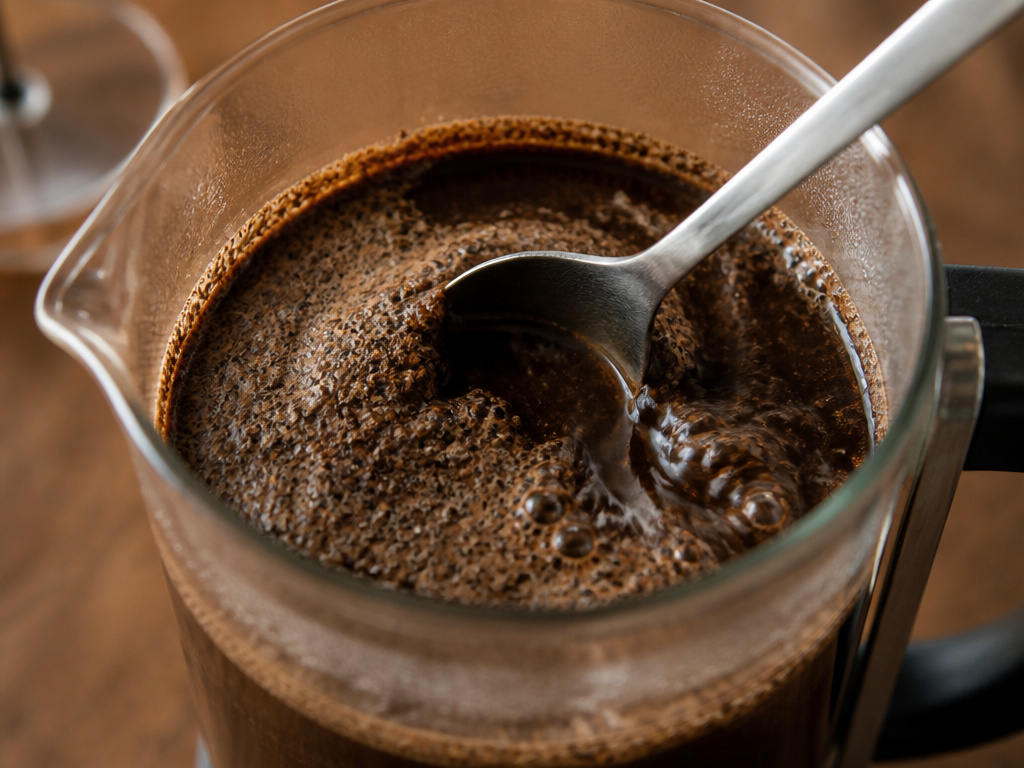
The manufacturer’s 4-minute timer starts now. This is the extraction phase where water dissolves flavors from the coffee grounds.
The Melitta French press model 64000 instruction sheet reads: “Heat water to 200°F (93°C)… Allow to steep for 4 minutes.”
But here’s where standard advice stops and the cleaner cup begins. When the timer hits 4 minutes, you will see a crust of grounds floating on the surface. Take your spoon and break this crust. Stir it gently. You’ll watch most of the grounds immediately fall to the bottom of the carafe.
Now, leave it alone. Set a second timer for 4 to 5 minutes. Let the coffee settle. This is not steeping anymore; the extraction is effectively complete. This settling period allows the fine silt, the “fines” that slip through any filter, to drift to the bottom and form a dense, compact bed. This is the single biggest fix for muddy French press coffee.
Why does this work? The mesh filter in a press has holes around 200–300 microns. Coffee fines are smaller than that. If you plunge immediately after brewing, you agitate the water and suspend those fines, forcing them through the mesh. Letting them settle first means the plunger presses through clear liquid onto a packed bed of grounds, trapping the silt below.
When to break the rule: For a very light roast or a stronger brew, some enthusiasts extend the initial steep to 5 or even 6 minutes. Try it. If your coffee tastes weak or sour, add a minute. If it’s harsh and bitter, subtract a minute. The 4-minute standard is a baseline, not a dogma.
Pressing and Pouring: The Final Act
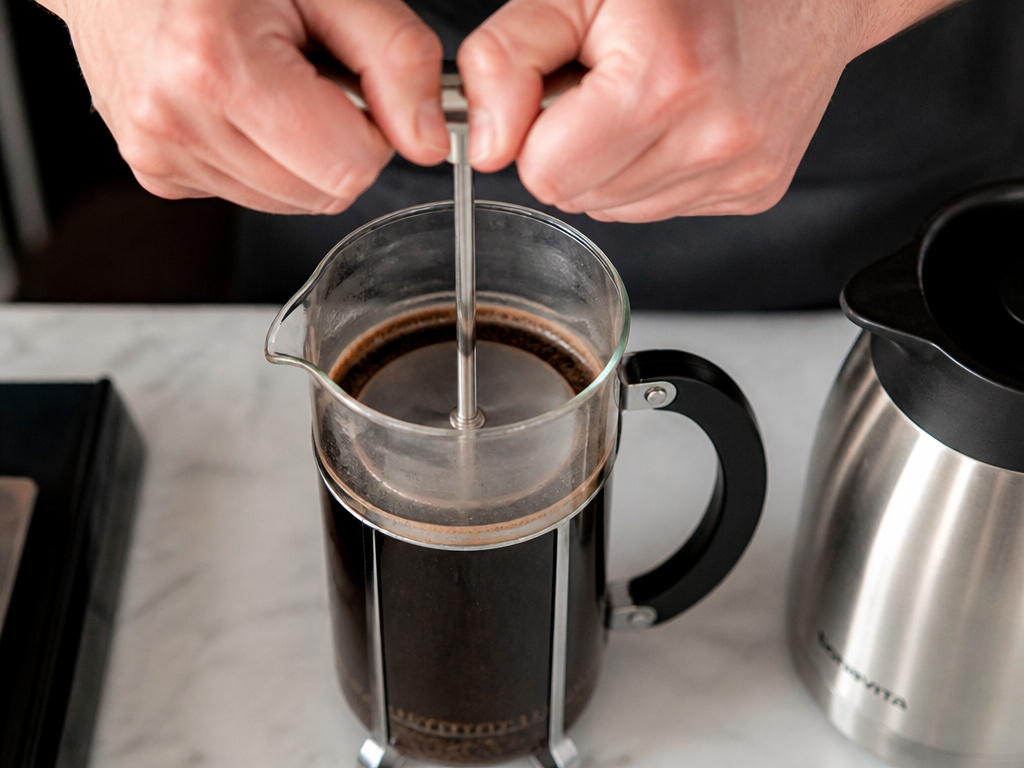
After the extended settle, it’s time to press. Place the lid assembly back on. Grasp the handle or knob firmly.
Press down with steady, even pressure. Do not force it. If you meet strong resistance, you likely have a grind that’s too fine. A correct coarse grind offers a smooth, hydraulic resistance, like pressing a syringe. The plunge should take about 20–30 seconds from top to bottom.
I rushed the press on a new bag of dense Ethiopian beans once. The grind was a touch too fine. Halfway down, the plunger seized. I forced it. The resulting cup was so gritty it felt sandy on the tongue. Now, if the plunge isn’t smooth, I stop, pour the coffee through a paper coffee filter in a sieve to rescue the brew.
Once the plunger is fully depressed, you must pour immediately. Do not let the coffee sit in the press. The grounds are still saturated and will continue to extract, turning your balanced brew bitter within minutes. Pour every last drop into a separate thermal carafe or your serving mugs.
If you enjoy additives, this is the time. A pinch of salt can soften perceived bitterness. Brown sugar dissolves easily and adds caramel notes. For a dairy-free option, almond milk pairs well, though it may separate if the coffee is very hot.
TL;DR: Press slowly and evenly. Pour all coffee out of the press immediately after pressing to stop extraction.
Alternative Methods and Troubleshooting
The French press is versatile. For cold brew, the process inverts. Use the same coarse grind and a 1:8 coffee-to-water ratio. Add room-temperature or cold water, stir, place the lid on top (do not press), and let it steep on your counter or in the fridge for 12 to 24 hours. Then press and pour. You get a smooth, low-acidity concentrate to dilute with water or milk.
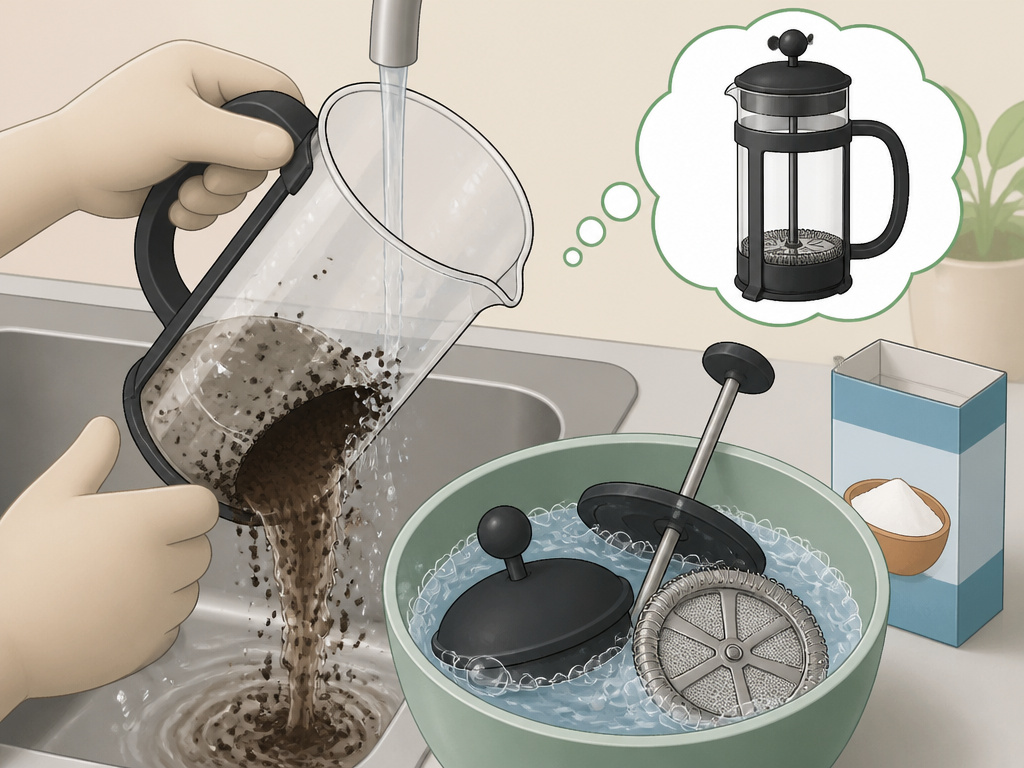
What about cleanup? Rinse the grounds out immediately. Old coffee oils turn rancid and impart foul flavors to your next brew. Disassemble the lid and filter assembly weekly for a deep clean. Soak the mesh filter in a solution of hot water and cafiza or baking soda to dissolve the baked-on oils.
| Problem | Likely Cause | Fix |
|---|---|---|
| Weak, sour coffee | Water too cold, steep time too short, grind too coarse | Increase water temp to 200°F, extend steep by 1 min, grind finer |
| Bitter, harsh coffee | Water too hot, steep time too long, grind too fine | Lower water temp to 195°F, shorten steep, use a coarser grind |
| Excessive silt/mud | Grind too fine, pressed immediately after brew, no settle time | Use a proper coarse grind, add a 4-5 min settle after stirring |
| Plunger is very hard to press | Grind is too fine | Stop pressing. Pour brew through a separate filter. Use a coarser grind next time. |
| Coffee tastes flat or stale | Old beans, not preheating the carafe | Use beans roasted within the last 2-4 weeks. Always preheat. |
For a different flavor twist, try adding cinnamon in coffee to the grounds before adding water. Or, for a rich, textured cup, blend a teaspoon of coconut oil coffee into your finished brew.
Frequently Asked Questions
Can I use pre-ground coffee in a French press?
You can, but it’s not ideal. Pre-ground coffee is usually ground for drip machines, which is a medium grind, too fine for a clean press. It will work, but expect more sediment and a higher chance of bitterness. If you must use it, shorten your steep time to 3 minutes.
Why is my French press coffee always bitter?
Bitterness is a sign of over-extraction. The three most common culprits are: water that’s too hot (over 205°F), a steep time that’s too long (over 5 minutes without the settle), or a grind that’s too fine. Try lowering your water temperature to 195°F, sticking to a 4-minute steep with a settle, and ensuring your grind is coarse.
How do I clean a French press?
Rinse it immediately after use. Weekly, take it apart. Soak the mesh filter and plunger assembly in a mixture of hot water and a tablespoon of baking soda or a dedicated coffee cleaner for 15 minutes. Scrub the mesh with a soft brush, rinse thoroughly, and let air dry. This prevents rancid oil buildup.
What’s the best coffee-to-water ratio for a French press?
ratio of 1:16 is the standard starting point. That’s 1 gram of coffee for every 16 grams of water. For an 8-cup (1-liter) press, this means about 55-60 grams of coffee. Adjust to taste: use more coffee (e.g., 1:15) for a stronger cup, or less (1:17) for a lighter one.
Can I make tea in a French press?
Absolutely. A French press is excellent for loose-leaf tea. Use the same principles: preheat the press, add your tea leaves, pour water at the correct temperature for your tea type (e.g., 175°F for green tea), steep for the recommended time, then press and pour. Clean it thoroughly afterward to prevent coffee flavors from lingering.
The Bottom Line
A coffee press rewards patience and precision. The goal is full extraction without the fines. That means a coarse grind from a burr coffee grinder, water just off the boil, and a steep that includes a quiet settling period. Press gently. Pour promptly.
The method is simple, but the details matter. Preheating matters. The settle matters. Your choice of high-quality beans matters. Get those right, and the press delivers a cup with a body and clarity that paper filters can’t match. It’s not about buying a better gadget. It’s about mastering the one you have.
{
“@context”: “https://schema.org”,
“@type”: “HowTo”,
“name”: “How to Use a Coffee Press for a Clean, Full-Bodied Brew”,
“totalTime”: “PT10M”,
“tool”: [
{
“@type”: “HowToTool”,
“name”: “French press (e.g., Bodum Chambord 1.0L)”
},
{
“@type”: “HowToTool”,
“name”: “Burr coffee grinder”
},
{
“@type”: “HowToTool”,
“name”: “Gooseneck or electric kettle”
},
{
“@type”: “HowToTool”,
“name”: “Kitchen scale”
}
],
“supply”: [
{
“@type”: “HowToSupply”,
“name”: “Fresh coffee beans (coarse grind)”
},
{
“@type”: “HowToSupply”,
“name”: “Filtered water”
}
],
“step”: [
{
“@type”: “HowToStep”,
“name”: “Preheat and measure”,
“text”: “Pour hot water into the empty press carafe to warm it, then discard. Weigh your coffee: use a 1:16 ratio (e.g., 55g coffee for 880g water).”
},
{
“@type”: “HowToStep”,
“name”: “Grind and add coffee”,
“text”: “Grind beans to a coarse consistency, like breadcrumbs or rock salt. Add the grounds to the preheated carafe.”
},
{
“@type”: “HowToStep”,
“name”: “Bloom and steep”,
“text”: “Pour just enough 200°F (93°C) water to saturate the grounds. Stir, wait 30 seconds, then add the remaining water. Start a 4-minute timer.”
},
{
“@type”: “HowToStep”,
“name”: “Stir, settle, and press”,
“text”: “After 4 minutes, stir the crust of grounds on top. Let the coffee settle for 5 more minutes. Place the lid and press the plunger down slowly and evenly.”
},
{
“@type”: “HowToStep”,
“name”: “Pour and enjoy”,
“text”: “Pour all the coffee into a serving carafe immediately after pressing to prevent over-extraction from the settled grounds.”
}
]
}
{
“@context”: “https://schema.org”,
“@type”: “FAQPage”,
“mainEntity”: [
{
“@type”: “Question”,
“name”: “Can I use pre-ground coffee in a French press?”,
“acceptedAnswer”: {
“@type”: “Answer”,
“text”: “You can, but it’s not ideal. Pre-ground coffee is usually ground for drip machines, which is a medium grind, too fine for a clean press. It will work, but expect more sediment and a higher chance of bitterness. If you must use it, shorten your steep time to 3 minutes.”
}
},
{
“@type”: “Question”,
“name”: “Why is my French press coffee always bitter?”,
“acceptedAnswer”: {
“@type”: “Answer”,
“text”: “Bitterness is a sign of over-extraction. The three most common culprits are: water that’s too hot (over 205°F), a steep time that’s too long (over 5 minutes without the settle), or a grind that’s too fine. Try lowering your water temperature to 195°F, sticking to a 4-minute steep with a settle, and ensuring your grind is coarse.”
}
},
{
“@type”: “Question”,
“name”: “How do I clean a French press?”,
“acceptedAnswer”: {
“@type”: “Answer”,
“text”: “Rinse it immediately after use. Weekly, take it apart. Soak the mesh filter and plunger assembly in a mixture of hot water and a tablespoon of baking soda or a dedicated coffee cleaner for 15 minutes. Scrub the mesh with a soft brush, rinse thoroughly, and let air dry. This prevents rancid oil buildup.”
}
},
{
“@type”: “Question”,
“name”: “What’s the best coffee-to-water ratio for a French press?”,
“acceptedAnswer”: {
“@type”: “Answer”,
“text”: “ratio of 1:16 is the standard starting point. That’s 1 gram of coffee for every 16 grams of water. For an 8-cup (1-liter) press, this means about 55-60 grams of coffee. Adjust to taste: use more coffee (e.g., 1:15) for a stronger cup, or less (1:17) for a lighter one.”
}
},
{
“@type”: “Question”,
“name”: “Can I make tea in a French press?”,
“acceptedAnswer”: {
“@type”: “Answer”,
“text”: “Absolutely. A French press is excellent for loose-leaf tea. Use the same principles: preheat the press, add your tea leaves, pour water at the correct temperature for your tea type (e.g., 175°F for green tea), steep for the recommended time, then press and pour. Clean it thoroughly afterward to prevent coffee flavors from lingering.”
}
}
]
}
