
Master How to Make Sweet Coffee With the Right Techniques
To make sweet coffee, you need to dissolve your chosen sweetener completely in a hot liquid. Brew your coffee between 90°C and 96°C (195–205°F), add the sweetener immediately, and stir for at least 10–15 seconds. For cold drinks like iced coffee, use a liquid sweetener like simple syrup to avoid a gritty, undissolved layer at the bottom of your cup.
Most people just dump a spoon of sugar into their mug and give it a quick swirl. The coffee tastes sweet on top, but by the last sip, there’s a gritty sludge of undissolved sucrose sitting there. That’s the universal mistake. It treats coffee like a simple solvent, ignoring temperature, particle size, and the coffee’s own bitter compounds that fight against the sweetness.
This guide walks through the mechanics of sweetness. We’ll cover how to adjust your brew to be naturally sweeter, pick the right sweetener for hot and cold coffee, and integrate techniques from barista training to make every sip consistent.
Key Takeaways
- Sugar dissolves nearly 2.5 times better in water at 100°C than at room temperature. Adding granulated sugar to cold brew is a waste, it physically cannot all dissolve.
- A lighter roast and a slightly finer grind pull more natural fructose and sucrose from the bean, reducing the amount of added sweetener you need.
- Stirring for 10–15 seconds is non-negotiable for granulated sugar. Less than that, and the granules sink and coat the bottom of your cup.
- For espresso-based drinks, add sugar to the milk before steaming or use a syrup. Adding it to the shot itself can create a harsh, caramelized note.
- Regional sweeteners like condensed milk or jaggery bring their own flavors and dissolve differently. They’re not direct substitutes for white sugar.
Why Your Coffee Isn’t Sweet Enough
You added two sugars. It still tastes bitter. The problem often isn’t the quantity of sweetener, but a mismatch between the sweetener and the coffee’s chemistry. Bitterness from over-extraction or a dark roast can overpower a surprising amount of sugar.
Sucrose solubility in water increases dramatically with temperature. At 20°C (68°F), water can hold about 204 grams of sugar per 100 mL. At the SCA’s recommended brewing temperature of 96°C (205°F), that capacity jumps to roughly 487 grams per 100 mL. Cold liquid cannot dissolve as much solid sugar.
If your coffee isn’t hot enough when you add the sugar, you hit a physical limit. The excess sugar just falls out of solution. That’s why iced coffee made with granulated sugar always has a sweet sludge at the bottom after five minutes. The fix is straightforward. Always add solid sweeteners to piping hot coffee and stir aggressively.
TL;DR: Your coffee must be hot (90–96°C) to dissolve granulated sugar fully. Stir for 15 seconds, or switch to a liquid sweetener for cold drinks.
Brewing for Natural Sweetness First
Before you reach for the sugar bowl, tweak your brew to highlight the coffee’s inherent sugars. Coffee beans contain sucrose, fructose, and glucose. A proper extraction pulls these out while minimizing the bitter alkaloids.
Start with your beans. Light and medium roasts retain more of these natural sugars than dark roasts, where prolonged heat caramelizes and breaks them down. A blonde roast coffee is a great starting point for a naturally sweeter cup. Next, look at your grind. A slightly finer grind increases surface area, boosting extraction. But go too fine, and you’ll over-extract bitter compounds. The goal is a balanced, sweeter extraction.
Your water temperature is the final lever. The Specialty Coffee Association mandates a range of 90.0°C to 96.0°C for optimal extraction. Within that range, the higher end (94–96°C) tends to extract sugars more efficiently. If your brewer or kettle doesn’t have a thermometer, bring water to a boil and let it sit for 30 seconds before pouring.
| Brew Variable | Adjustment for Sweetness | Risk If Overdone |
|---|---|---|
| Roast Level | Choose light or medium roast. | Dark roasts taste smoky/bitter, needing more sugar to compensate. |
| Grind Size | Use a slightly finer grind than usual. | Over-extraction causes harsh, bitter flavors that sugar can’t mask. |
| Water Temp | Aim for 94–96°C (201–205°F). | Water over 96°C can scorch grounds, adding a burnt, acrid note. |
The Sweetener Decision Matrix
Not all sweeteners behave the same way in your cup. Your choice should hinge on the coffee’s temperature, your desired flavor, and how much effort you want to spend stirring.
Granulated white sugar (sucrose) is the standard. Its particle size, typically between 0.15 mm and 0.85 mm, requires heat and motion to dissolve. Caster sugar, with its finer particles, dissolves about 20% faster. Brown sugar adds molasses notes but can clump if not stirred thoroughly. For any granulated sweetener, the rule is hot liquid plus vigorous stirring.
Liquid sweeteners win for convenience and cold applications. Simple syrup (equal parts sugar and water, heated until dissolved) integrates instantly. Honey and maple syrup also work but have distinct flavors that can overpower delicate coffee. Agave nectar is very sweet and thin, requiring less volume.
Common mistake: Adding granulated sugar to cold brew concentrate, the undissolved sugar sinks and forms a concrete-like layer at the bottom of the carafe. You’ll taste uneven sweetness and waste product. Use simple syrup instead.
For a nutritional perspective, the calorie content of milk or creamer you add also contributes to perceived sweetness. A splash of whole milk or a sweet almond milk can provide enough lactose or added sugar to reduce the need for additional sweeteners.
The Cold Coffee Conundrum
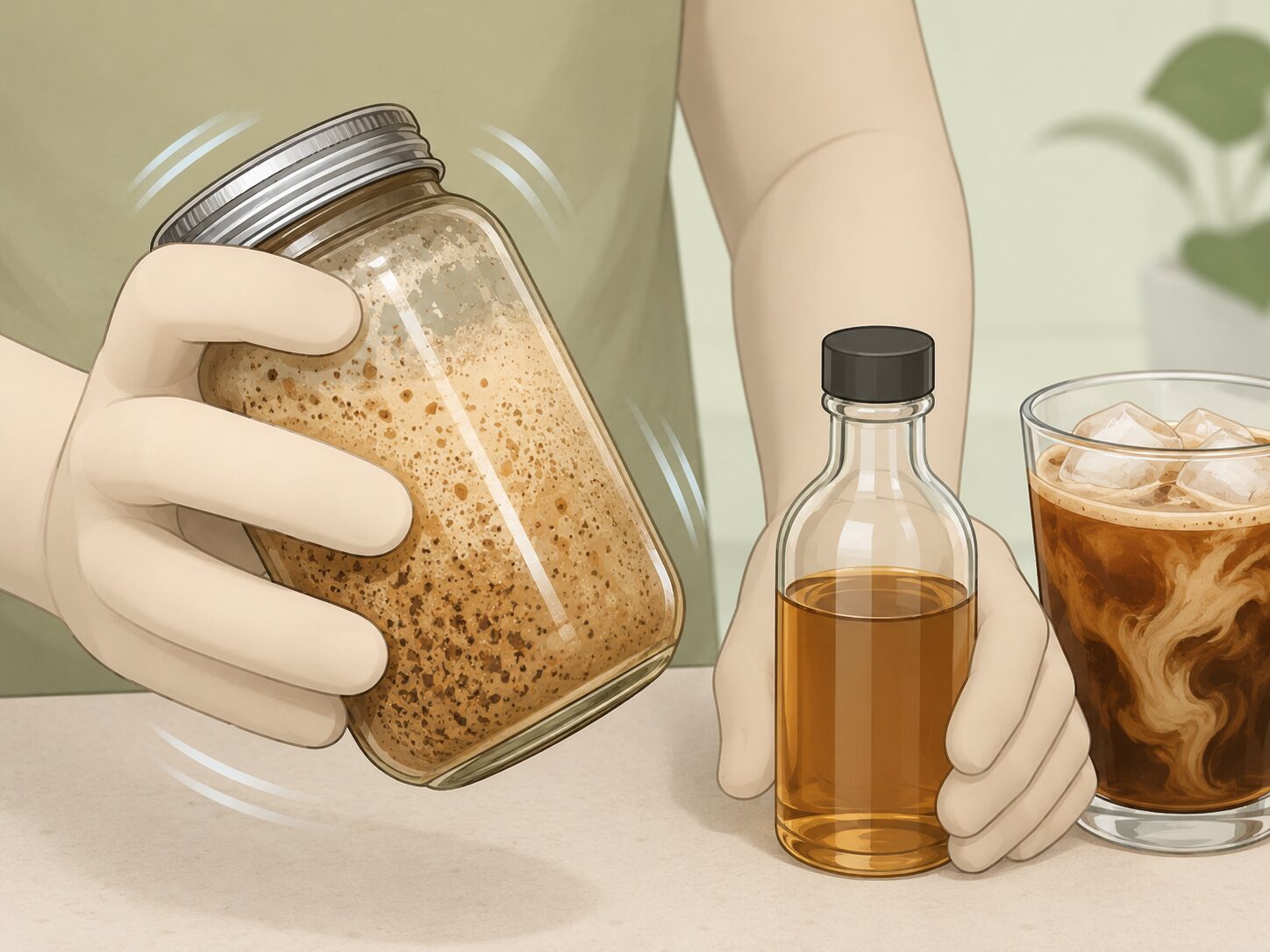
Cold brew and iced coffee break the standard rules. Physics isn’t on your side. As the solubility data shows, cold water simply cannot hold much solid sugar. The YouTube transcript context for a popular instant coffee hack reveals the workaround: creating an emulsified foam by shaking instant coffee, sugar, and cold water violently. That mechanical agitation is a workaround for poor dissolution.
The professional method is to use a pre-dissolved sweetener. Make a simple syrup. It’s foolproof. For a more nuanced flavor, consider adding coconut oil or MCT oil; they won’t sweeten in the traditional sense, but their rich texture can balance bitterness in a way that reduces the desire for sweetness. When you’re building an iced drink, always add the syrup to the concentrate or espresso shot first, before adding ice and cold water or milk. This ensures even distribution throughout the brewed coffee.
Sweeteners Beyond the Sugar Bowl

Global coffee traditions look far beyond the sugar bowl. These ingredients change the game because they bring sweetness, flavor, and texture in one package.
Vietnamese coffee uses sweetened condensed milk. It’s thick, supremely sweet, and blends perfectly with strong, dark brewed coffee or robusta shots. The milk solids and sugar are already in solution, so there’s no dissolution problem, just stirring. In parts of India, jaggery (unrefined cane sugar) is used. It has a complex, almost earthy sweetness and dissolves reasonably well in hot liquid.
Some additives provide a sweet perception without sugar. A pinch of salt is a famous trick to reduce perceived bitterness. Cinnamon sprinkled on top or stirred in can impart a sweet, spicy aroma that tricks your palate. These aren’t sweeteners in the chemical sense, but they are tools for crafting a sweeter-tasting cup without adding a single calorie.
| Regional Sweetener | Best Paired With | Integration Tip |
|---|---|---|
| Sweetened Condensed Milk | Strong dark roast or espresso (e.g., Vietnamese coffee) | Pour directly into the hot coffee; no extra stirring needed. |
| Jaggery | Spiced coffee or traditional Indian filter coffee | Grate or use small pieces; add to very hot coffee and stir until fully melted. |
| Date Syrup | Earthy, nutty coffee profiles | Stir vigorously; it’s thick and can sink if the coffee isn’t hot enough. |
Barista-Level Integration for Espresso Drinks
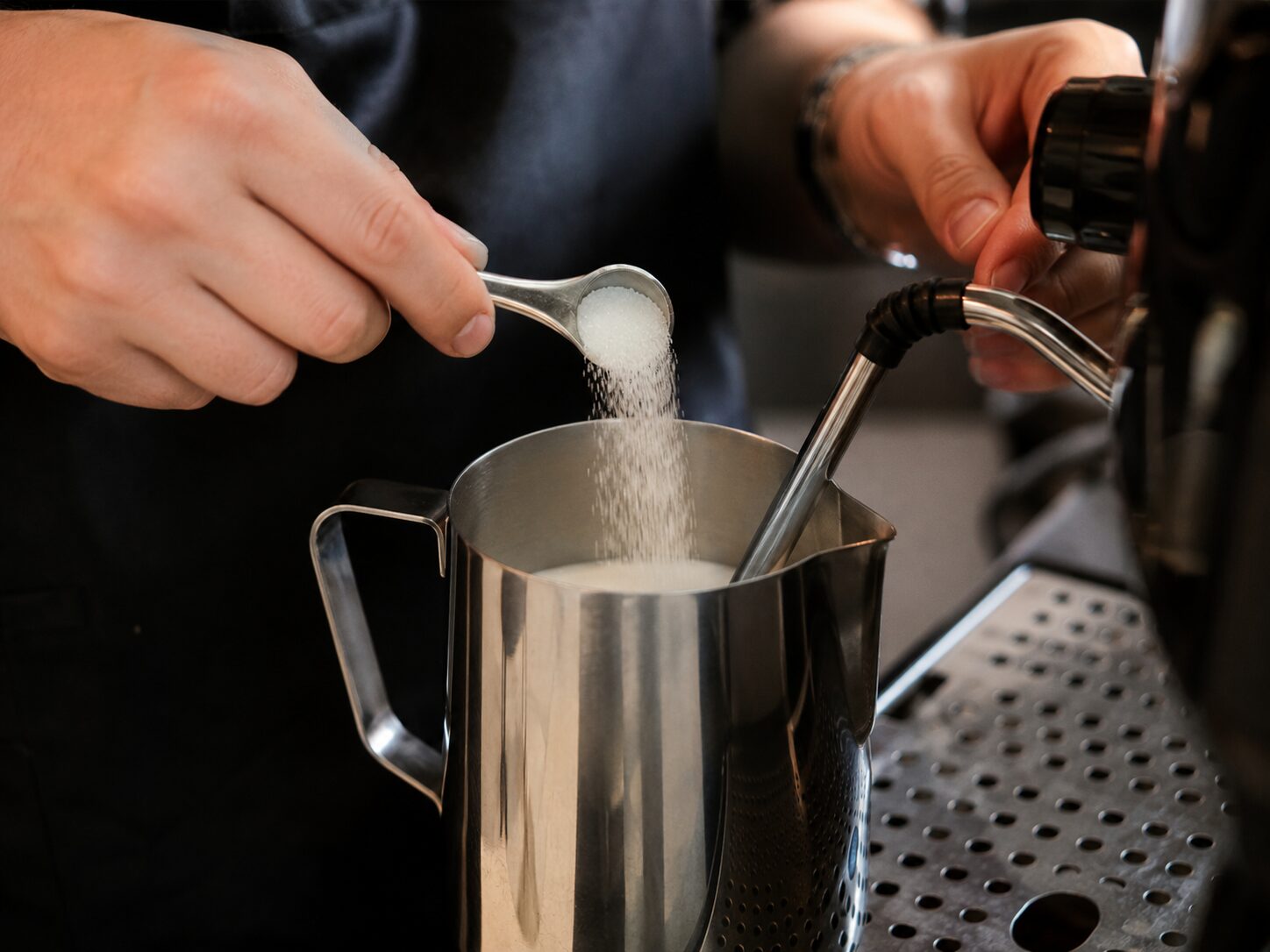
The high concentration and temperature of espresso present a unique challenge. Dumping sugar into a fresh shot can sometimes create a sharp, almost burnt-sugar note. The sugar dissolves rapidly in the small volume of very hot liquid, but it doesn’t always integrate smoothly with the concentrated coffee solids.
The method outlined in the William Angliss Institute coffee workbook for professional service is instructive. For milk-based drinks like lattes and cappuccinos, incorporate the sweetener into the milk before steaming. Add a teaspoon of sugar or a pump of syrup to your cold milk pitcher before you steam it. The steaming wand’s vortex will dissolve and distribute the sweetener uniformly throughout the milk, creating a seamlessly sweet, textured drink.
For an Americano or long black, add the sweetener to your cup first, then pull the espresso shot directly onto it. The force and heat of the shot will help with dissolution. Then add your hot water. This sequence beats stirring a finished Americano, which often leaves a stubborn pocket of undissolved sugar at the bottom.
TL;DR: Steam sugar with your milk for lattes. Pull espresso directly onto sugar in the cup for Americanos. Never just stir it in at the end.
Frequently Asked Questions
Does sugar dissolve better in hot or cold coffee?
Sugar dissolves dramatically better in hot coffee. At near-boiling temperatures (96°C), water can dissolve over twice as much sucrose by weight compared to room-temperature water. In cold brew, granulated sugar will mostly remain undissolved at the bottom of your glass.
What is the best sweetener for iced coffee?
Simple syrup is the best sweetener for iced coffee. Because it’s already a liquid solution of sugar and water, it mixes instantly into cold liquids without any gritty residue. You can easily make it at home by dissolving equal parts sugar and hot water, then cooling the mixture.
How can I make my coffee taste sweet without sugar?
You can enhance natural sweetness by using lighter roast beans, ensuring a proper extraction with the right grind and water temperature, and adding a pinch of salt to suppress bitterness. Ingredients like cinnamon flavor or a splash of almond milk can also create a sweeter perception without adding sugar.
Why does my coffee taste bitter even with sugar?
If your coffee is over-extracted (too fine a grind, too long a brew time, or too hot water) or made from a very dark roast, the resulting bitterness can be intense enough to overpower added sugar. The sugar may be present, but your palate is overwhelmed by the bitter compounds. Fix the brew first.
Is honey a good sweetener for coffee?
Honey can be a good sweetener for coffee, but it has a strong, distinct flavor that will alter your cup’s taste. It also doesn’t dissolve as readily as sugar in hot liquid and can sink to the bottom. If you use honey, stir it very thoroughly into your hot coffee.
The Bottom Line
Sweet coffee is about complete integration, not just addition. The goal is a cup where the sweetness is even from first sip to last, with no gritty surprises. That means respecting solubility: use hot liquid for granulated sweeteners and simple syrup for anything cold.
Remember that your brewing choices are the first step toward sweetness. A well-extracted light roast might need half the sugar you’d dump into a bitter, burnt dark roast. Finally, don’t be afraid to borrow from global traditions or barista manuals. Steaming sweetened milk or using condensed milk isn’t a cheat, it’s a reliable technique for a consistently delicious, sweet cup.
{
“@context”: “https://schema.org”,
“@type”: “HowTo”,
“name”: “How to Make Sweet Coffee That Tastes Balanced”,
“totalTime”: “PT5M”,
“tool”: [
{
“@type”: “HowToTool”,
“name”: “Kettle or brewer with temperature control”
},
{
“@type”: “HowToTool”,
“name”: “Stirring spoon”
},
{
“@type”: “HowToTool”,
“name”: “Measuring spoons”
}
],
“supply”: [
{
“@type”: “HowToSupply”,
“name”: “Freshly ground coffee beans”
},
{
“@type”: “HowToSupply”,
“name”: “Sweetener of choice (e.g., granulated sugar, simple syrup)”
}
],
“step”: [
{
“@type”: “HowToStep”,
“name”: “Start with a sweeter-tasting brew”,
“text”: “Use a lighter roast and a slightly finer grind to increase extraction of natural sugars from the coffee grounds.”
},
{
“@type”: “HowToStep”,
“name”: “Brew at the correct temperature”,
“text”: “Heat your water to between 90°C and 96°C (195–205°F) as recommended by the Specialty Coffee Association for optimal extraction and sugar dissolution.”
},
{
“@type”: “HowToStep”,
“name”: “Add sweetener to hot liquid”,
“text”: “Add your chosen sweetener to the hot coffee immediately after brewing and stir vigorously for 10–15 seconds to ensure complete dissolution.”
},
{
“@type”: “HowToStep”,
“name”: “Adjust for cold drinks”,
“text”: “For iced coffee or cold brew, use a pre-dissolved liquid sweetener like simple syrup to avoid undissosed sugar settling at the bottom of the glass.”
}
]
}
{
“@context”: “https://schema.org”,
“@type”: “FAQPage”,
“mainEntity”: [
{
“@type”: “Question”,
“name”: “Does sugar dissolve better in hot or cold coffee?”,
“acceptedAnswer”: {
“@type”: “Answer”,
“text”: “Sugar dissolves dramatically better in hot coffee. At near-boiling temperatures (96°C), water can dissolve over twice as much sucrose by weight compared to room-temperature water. In cold brew, granulated sugar will mostly remain undissolved at the bottom of your glass.”
}
},
{
“@type”: “Question”,
“name”: “What is the best sweetener for iced coffee?”,
“acceptedAnswer”: {
“@type”: “Answer”,
“text”: “Simple syrup is the best sweetener for iced coffee. Because it’s already a liquid solution of sugar and water, it mixes instantly into cold liquids without any gritty residue. You can easily make it at home by dissolving equal parts sugar and hot water, then cooling the mixture.”
}
},
{
“@type”: “Question”,
“name”: “How can I make my coffee taste sweet without sugar?”,
“acceptedAnswer”: {
“@type”: “Answer”,
“text”: “You can enhance natural sweetness by using lighter roast beans, ensuring a proper extraction with the right grind and water temperature, and adding a pinch of salt to suppress bitterness. Ingredients like cinnamon flavor or a splash of almond milk can also create a sweeter perception without adding sugar.”
}
},
{
“@type”: “Question”,
“name”: “Why does my coffee taste bitter even with sugar?”,
“acceptedAnswer”: {
“@type”: “Answer”,
“text”: “If your coffee is over-extracted (too fine a grind, too long a brew time, or too hot water) or made from a very dark roast, the resulting bitterness can be intense enough to overpower added sugar. The sugar may be present, but your palate is overwhelmed by the bitter compounds. Fix the brew first.”
}
},
{
“@type”: “Question”,
“name”: “Is honey a good sweetener for coffee?”,
“acceptedAnswer”: {
“@type”: “Answer”,
“text”: “Honey can be a good sweetener for coffee, but it has a strong, distinct flavor that will alter your cup’s taste. It also doesn’t dissolve as readily as sugar in hot liquid and can sink to the bottom. If you use honey, stir it very thoroughly into your hot coffee.”
}
}
]
}
