
Master How to Make Iced Coffee with Instant Coffee in Minutes
To make iced coffee with instant coffee, you have two reliable paths: the classic quick-dissolve or the whipped foam method. For the classic, dissolve 1 to 2 teaspoons of granulated instant coffee in 1 to 2 tablespoons of hot water first, then pour over ice and add cold water or milk. For the foam method, whisk equal parts instant coffee, sugar, and hot water into a thick foam, then spoon it over iced milk.
Most people grab the jar, spoon some granules into a cold glass, and watch them sink to the bottom in a gritty, undrinkable layer. The granules don’t dissolve in cold liquid because their starch cells need thermal energy to break open. You end up with weak, grainy coffee.
This guide walks through both working methods, explains why each step matters, and shows you how to fix the common mistakes that turn a two-minute drink into a disappointing experiment.
Key Takeaways
- Always dissolve granulated instant coffee in a small amount of hot water first. Cold liquid leaves starch cells intact, creating sediment at the bottom of your glass within three sips.
- The viral whipped Dalgona foam method uses equal parts instant coffee, sugar, and hot water. The sugar crystals provide structure for the foam; skipping it gives you a flat, bitter liquid.
- For a stronger coffee flavor without dilution, use cold-water soluble instant coffee like Waka Coffee. It’s processed differently and dissolves fully in cold milk or water.
- Sweeten with a liquid syrup, not granulated sugar. Granules won’t dissolve in the cold drink and will settle.
- If your foam collapses, your water wasn’t hot enough. It needs to be near-boiling to properly dissolve the coffee and sugar, creating a stable emulsion.
Why Instant Coffee Acts Weird with Ice
Not all instant coffee is the same. The granulated kind you likely have in the cupboard is made by spray-drying brewed coffee. The process leaves tiny, hollow balls of coffee solids and starch. Hot water melts the starch shell almost instantly, releasing the coffee. Cold water or milk doesn’t have the energy to do that.
The granules float, then sink, and slowly leach a faint coffee taste while leaving a sandy residue. You taste the grit before you taste the coffee.
Common mistake: Adding instant coffee granules directly to a cold glass, the starch shells stay intact, and you’ll have a layer of undissolved sludge at the bottom before you finish the drink.
Cold-water soluble instant coffee, like some specialty brands produce, uses a different method (often freeze-drying or agglomeration) that creates a structure that disperses in cold liquid. If you’re using a standard grocery store jar, assume it needs heat. That single fact changes everything.
TL;DR: Standard instant coffee granules need hot water to dissolve their starch shells. Cold-brew style instant exists but is less common.
The Two Methods: Pick Your Texture
You’re choosing between a liquid coffee base and a coffee foam topping. The decision comes down to time, tools, and the mouthfeel you want.
| Method | Best For | Texture Outcome | Active Time |
|---|---|---|---|
| Classic Quick-Dissolve | A fast, standard iced coffee | Smooth, integrated liquid | 2 minutes |
| Whipped Foam (Dalgona) | A decadent, dessert-like treat with foam | Thick, creamy foam layer on top of milk | 4–5 minutes |
The classic method is what brands like Nescafé recommend. Their official recipe calls for 1-2 teaspoons of Nescafé Classic dissolved in 1-2 tablespoons of hot water before adding to your glass. It’s efficient.
The foam method took over social media for a reason. The transformation of three basic ingredients into a velvety, spoonable cloud is genuinely satisfying. It also delivers a more intense, sweetened coffee hit right at the top of each sip.
The Classic Quick-Dissolve Method (Step-by-Step)
This is the workhorse. You need a tall glass, a spoon, and your instant coffee. The sequence matters.
Before you start: Use freshly boiled water, even if it’s just a tablespoon. Water from the hot tap or that’s been sitting in a kettle for an hour won’t be hot enough to fully dissolve the granules, guaranteeing grit.
-
Measure the coffee. Use 1 to 2 teaspoons of instant coffee granules per glass. Two teaspoons makes a robust base that stands up to melting ice.
Skip this, and your drink will taste weak and watery after the ice melts. -
Add the hot water. Pour 1 to 2 tablespoons of just-boiled water over the granules in a separate cup or bowl. Stir vigorously for 10 seconds until it looks like a dark, smooth syrup with no granules visible.
This step hydrates the starch. The hot water provides the kinetic energy to break down the granule structure. If you see any specks, keep stirring. -
Prep your glass. Fill your serving glass to the top with ice cubes. Pour in your cold milk, oat milk, or water, leaving about an inch of space at the top.
-
Combine and stir. Pour the fully dissolved coffee syrup over the ice and into your cold liquid. Stir thoroughly with a long spoon for 5 seconds to integrate.
> The dissolved coffee syrup is denser than the cold milk. Without stirring, it will sink and create a dark layer at the bottom, leading to uneven sips, strong at the start, weak at the end. -
Sweeten smartly. If you want sweetness, add a simple syrup or flavored syrup now. Granulated sugar won’t dissolve.
A half teaspoon of brown sugar syrup adds caramel notes that pair well with instant coffee’s deeper roast profile.
TL;DR: Dissolve granules in hot water first, then pour over ice and cold milk. Stir well and use liquid sweeteners.
The Whipped Foam Method (Dalgona)
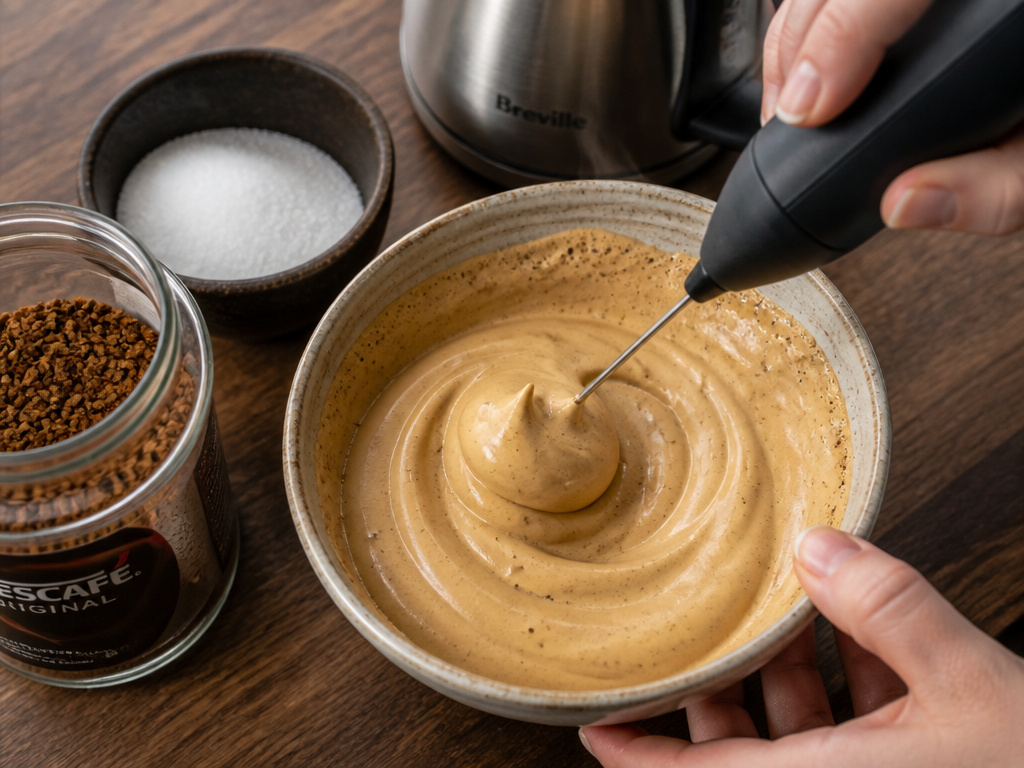
This method creates a show-stopping topping. The formula is rigid: equal parts instant coffee, white sugar, and hot water. The sugar is non-negotiable, it crystallizes during whipping to give the foam its body.
I tried making the foam with a zero-calorie sweetener once. The mixture stayed a dark, runny liquid no matter how long I whisked. The sugar crystals are the scaffolding; without them, the foam has nothing to hold its shape.
You’ll need a medium bowl and either a hand whisk, an electric milk frother, or a immersion blender. A fork works but demands stamina.
-
Combine the triad. In your bowl, add 2 tablespoons each of instant coffee, white sugar, and just-boiled hot water. The water must be hot.
Using warm water means the sugar and coffee won’t dissolve fully. You’ll get a gritty foam that collapses in minutes. -
Whip until transformed. Whisk, blend, or froth aggressively. The mixture will go from a dark liquid to a pale, thick foam that holds stiff peaks. This takes 30 seconds with an electric mixer or 2-3 minutes of vigorous hand-whisking.
The sign you’re done: when you lift the whisk, the foam forms a peak that doesn’t slump over. -
Build the drink. Fill a glass with ice. Pour in cold milk, whole milk, oat milk, or almond milk all work, until the glass is three-quarters full. Spoon the whipped coffee foam generously on top.
Do not stir it in yet. The pleasure is drinking through the thick, sweet foam into the cold milk. -
Customize the base. Add a pinch of salt to the milk before adding the foam. It cuts any residual bitterness from the intense coffee concentrate and enhances the sweetness.
Gear and Ingredients That Change the Game
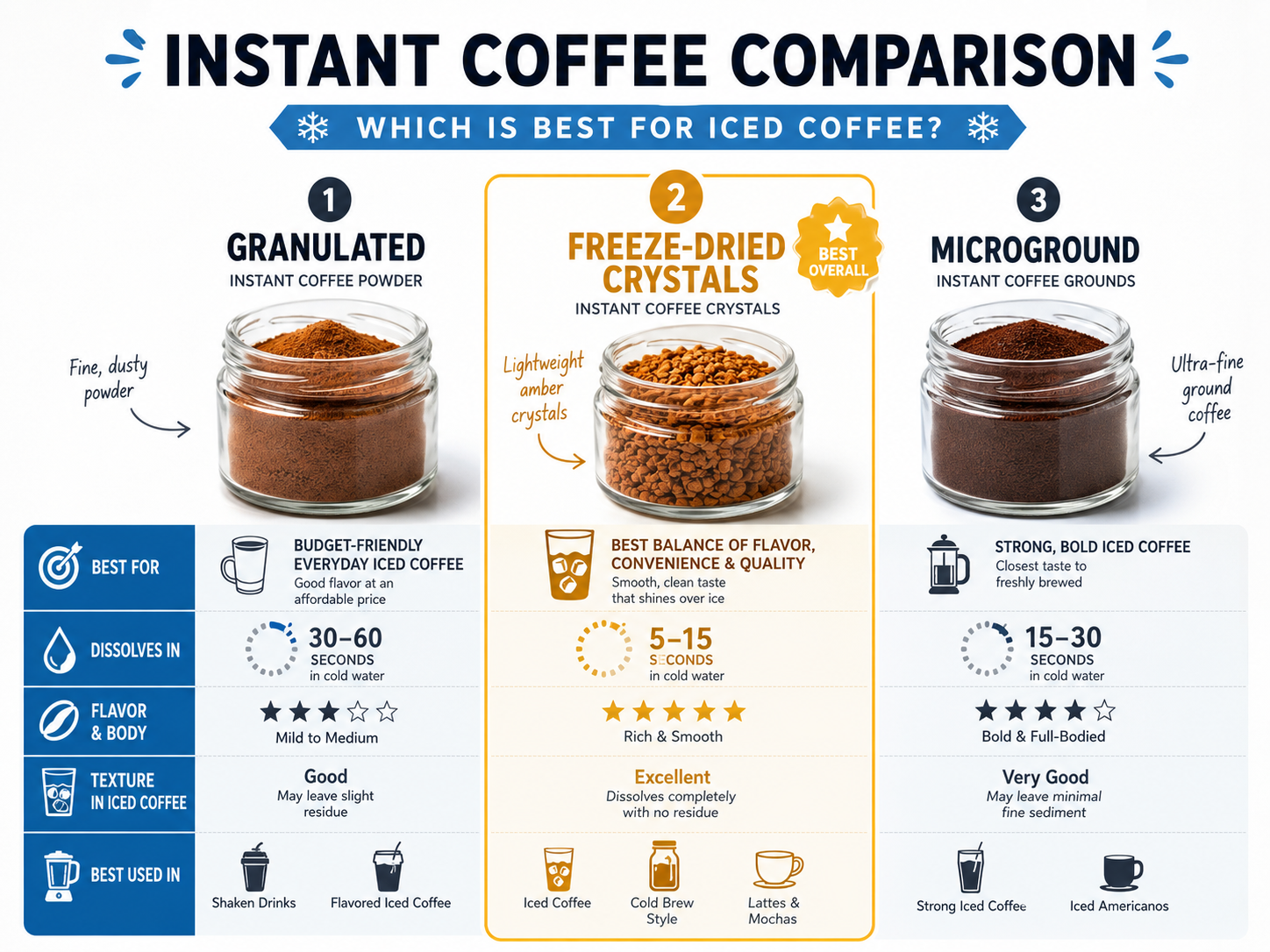
Your tools and your choice of instant coffee define your success. This isn’t about expensive equipment; it’s about the right tool for the chemical task.
Picking Your Instant Coffee
The label tells you what you need to know.
| Type | Appearance | Best For | Dissolves In |
|---|---|---|---|
| Granulated (Spray-Dried) | Fine, dusty powder | Classic method | Hot water only |
| Freeze-Dried Crystals | Small, irregular chunks | Either method | Hot or cold water |
| Microground | Looks like fine dirt | Avoid for iced coffee | Requires filtration |
Freeze-dried crystals, often labeled as “100% freeze-dried,” dissolve more readily in cold liquid than standard granules. Brands that market specifically for iced or cold brew, like Waka Coffee, engineer for this. If you plan to make iced coffee regularly, a jar of cold-water soluble coffee saves the heating step.
Essential Tools You Already Own
- A small whisk or electric milk frother ($10–$20). This is the single biggest upgrade for the foam method. Whipping by hand is a workout; a frother does it in 30 seconds.
- A glass mason jar with a lid. If you don’t have a whisk, add your coffee, sugar, and hot water to the jar, seal it, and shake violently for 45 seconds. It works almost as well.
- Measuring spoons. The equal-ratio requirement for Dalgona foam is precise. Eyeballing it leads to a runny or overly stiff foam.
For the classic method, the only non-negotiable tool is a vessel for the initial hot-water dissolution. A teacup, a ramekin, even the bottle cap from your milk jar, anything that holds two tablespoons of liquid.
Pro Tweaks and Fixes for Common Problems
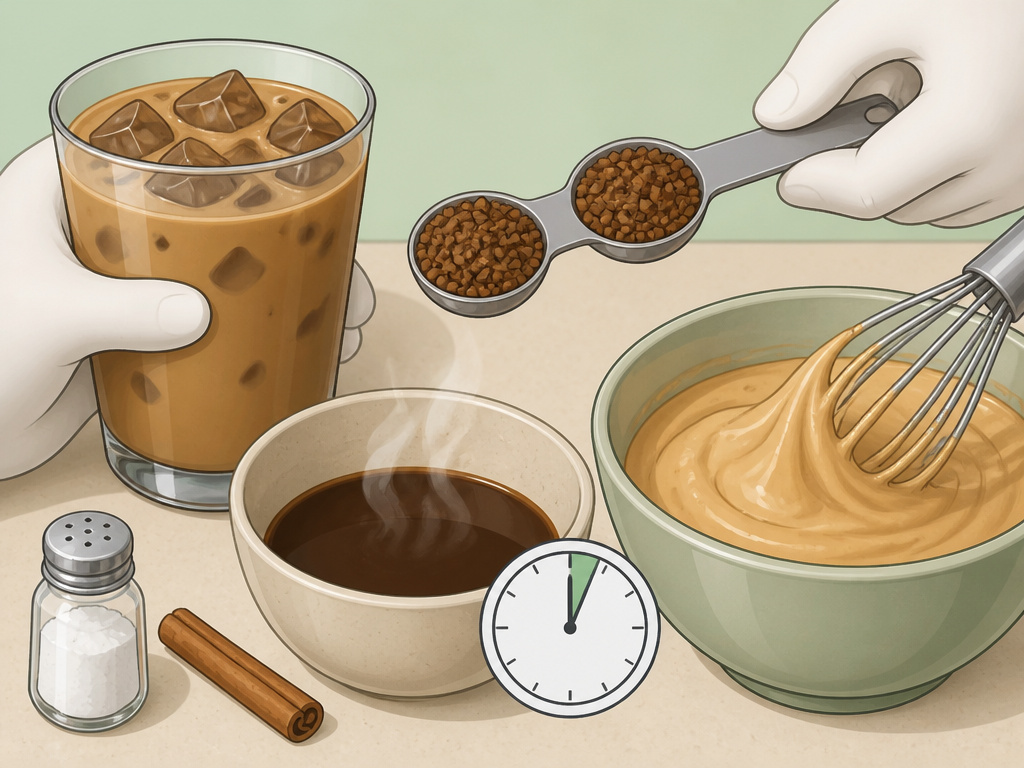
Your drink is mixed, but something’s off. Here are the corrections.
Problem: The coffee tastes weak.
Fix: You under-dosed the coffee or overfilled with ice. Use 2 teaspoons of coffee per 12 oz glass. Let the dissolved coffee syrup cool for a minute before pouring it over the ice to reduce immediate melt.
Problem: The foam won’t get thick or peaks.
Fix: Your water wasn’t hot enough, or you didn’t whip long enough. Start over with freshly boiled water. If using a hand whisk, commit to a full three minutes of constant, rapid motion. The mixture will seem hopeless for the first 90 seconds, then suddenly lighten in color and triple in volume.
Problem: The drink is too bitter.
Fix: Instant coffee is often made from Robusta beans or darker roasts, which carry more bitter compounds. Add a tiny pinch of salt to the glass before stirring, it neutralizes bitterness on the tongue. Alternatively, sweeten with a syrup that has its own flavor, like vanilla or caramel, to mask the harsh notes.
Problem: I want more complexity.
Fix: Add spices to the initial hot water step. A quarter teaspoon of cinnamon stirred in with the granules adds warmth and an antioxidant kick. For a richer, creamier texture, blend a teaspoon of coconut oil into your hot coffee syrup before adding it to the cold glass, it creates a smooth, latte-like consistency.
Common mistake: Using diet sweeteners in the foam method, the foam needs the crystalline structure of real sugar to stabilize. Artificial sweeteners leave you with a flat, sweet liquid.
How Does the Caffeine Compare?
A cup of iced coffee made with instant coffee generally has slightly less caffeine than a cup brewed from ground beans. A teaspoon of most instant coffees delivers about 30–50 mg of caffeine. A standard 8-oz brewed coffee has 95 mg.
If you’re sensitive to caffeine or monitoring your intake, this can be an advantage. You get the flavor with a milder stimulant effect. For a detailed breakdown, our guide on caffeine in cold coffee vs tea covers how brewing methods change potency.
The foam method concentrates the coffee into a smaller volume, so sipping through that thick layer can deliver a more immediate caffeine hit compared to the diluted classic method. It’s something to note if you’re watching your caffeine sensitivity later in the day.
Frequently Asked Questions
Can I make iced coffee with instant coffee without hot water?
Yes, but only if you use a brand specifically formulated for cold dissolution, like Waka Coffee or some freeze-dried varieties. Standard grocery-store instant coffee granules will not fully dissolve and will leave gritty sediment.
Why is my instant iced coffee cloudy?
Cloudiness is usually caused by two things: the natural oils in the coffee coming out of suspension in the cold temperature (harmless), or using mineral-heavy hard water to dissolve the granules. If it tastes fine, the cloudiness is just aesthetic.
How can I make it sweeter without sugar granules at the bottom?
Always use a liquid sweetener. Make a simple syrup by dissolving equal parts sugar and hot water, then cooling it. Flavored syrups, honey, or agave nectar also work. Granulated sugar will simply sink to the bottom of your cold drink.
Does the type of milk affect the foam in the Dalgona method?
The foam is built independently, so the milk choice doesn’t impact its stability. However, fuller-fat milks like whole dairy or creamy oat milk provide a richer, more satisfying contrast to the sweet foam than skim milk or watery almond milk.
Can I make a large batch of instant iced coffee?
For the classic method, absolutely. Dissolve a quarter cup of instant coffee in a half cup of hot water to create a concentrated syrup. Store it in the fridge for up to a week. For each drink, pour 2-3 tablespoons of the syrup over ice and add milk or water. Do not batch the foam method; it must be made fresh.
The Bottom Line
Making great iced coffee with instant coffee comes down to respecting the product’s physics. Granules need hot water to dissolve. Sugar crystals are the engine for foam. With those two rules, you can choose your adventure.
For a daily, no-fuss drink, master the classic quick-dissolve. For a weekend treat that feels like a café splurge, the whipped foam method delivers. Keep a jar of cold-water soluble instant on hand for true lazy mornings, and always reach for the liquid sweetener. Your iced coffee is now two minutes away, and it won’t have grit at the bottom.
{
“@context”: “https://schema.org”,
“@type”: “HowTo”,
“name”: “How to Make Iced Coffee with Instant Coffee”,
“totalTime”: “PT5M”,
“tool”: [
{
“@type”: “HowToTool”,
“name”: “Tall glass or mason jar”
},
{
“@type”: “HowToTool”,
“name”: “Small bowl or cup for mixing”
},
{
“@type”: “HowToTool”,
“name”: “Spoon or small whisk”
},
{
“@type”: “HowToTool”,
“name”: “Measuring spoons”
}
],
“step”: [
{
“@type”: “HowToStep”,
“name”: “Choose your method”,
“text”: “Decide between the classic quick-dissolve for a standard iced coffee or the whipped foam method for a thick, creamy topping.”
},
{
“@type”: “HowToStep”,
“name”: “Dissolve the coffee”,
“text”: “For the classic method, mix 1-2 tsp instant coffee with 1-2 tbsp of hot water until fully liquid. For the foam method, combine equal parts instant coffee, sugar, and hot water.”
},
{
“@type”: “HowToStep”,
“name”: “Aerate the foam (if making Dalgona)”,
“text”: “Vigorously whisk or shake the coffee-sugar-water mixture for 30-60 seconds until it triples in volume and becomes a light brown, fluffy foam.”
},
{
“@type”: “HowToStep”,
“name”: “Assemble the drink”,
“text”: “Fill a glass with ice. Add cold water or milk of choice. For the classic method, pour the dissolved coffee over top. For the foam method, spoon the whipped foam over the milk.”
},
{
“@type”: “HowToStep”,
“name”: “Stir and customize”,
“text”: “Stir the classic method to combine. Add sweeteners, flavored syrups, or spices like cinnamon as desired.”
}
]
}
{
“@context”: “https://schema.org”,
“@type”: “FAQPage”,
“mainEntity”: [
{
“@type”: “Question”,
“name”: “Can I make iced coffee with instant coffee without hot water?”,
“acceptedAnswer”: {
“@type”: “Answer”,
“text”: “Yes, but only if you use a brand specifically formulated for cold dissolution, like Waka Coffee or some freeze-dried varieties. Standard grocery-store instant coffee granules will not fully dissolve and will leave gritty sediment.”
}
},
{
“@type”: “Question”,
“name”: “Why is my instant iced coffee cloudy?”,
“acceptedAnswer”: {
“@type”: “Answer”,
“text”: “Cloudiness is usually caused by two things: the natural oils in the coffee coming out of suspension in the cold temperature (harmless), or using mineral-heavy hard water to dissolve the granules. If it tastes fine, the cloudiness is just aesthetic.”
}
},
{
“@type”: “Question”,
“name”: “How can I make it sweeter without sugar granules at the bottom?”,
“acceptedAnswer”: {
“@type”: “Answer”,
“text”: “Always use a liquid sweetener. Make a simple syrup by dissolving equal parts sugar and hot water, then cooling it. Flavored syrups, honey, or agave nectar also work. Granulated sugar will simply sink to the bottom of your cold drink.”
}
},
{
“@type”: “Question”,
“name”: “Does the type of milk affect the foam in the Dalgona method?”,
“acceptedAnswer”: {
“@type”: “Answer”,
“text”: “The foam is built independently, so the milk choice doesn’t impact its stability. However, fuller-fat milks like whole dairy or creamy oat milk provide a richer, more satisfying contrast to the sweet foam than skim milk or watery almond milk.”
}
},
{
“@type”: “Question”,
“name”: “Can I make a large batch of instant iced coffee?”,
“acceptedAnswer”: {
“@type”: “Answer”,
“text”: “For the classic method, absolutely. Dissolve a quarter cup of instant coffee in a half cup of hot water to create a concentrated syrup. Store it in the fridge for up to a week. For each drink, pour 2-3 tablespoons of the syrup over ice and add milk or water. Do not batch the foam method; it must be made fresh.”
}
}
]
}
