
French Vanilla Coffee Creamer Recipe: Easy Homemade Guide
To make French vanilla coffee creamer, combine a 14-ounce can of sweetened condensed milk with 2 cups of half-and-half or whole milk and 1-2 tablespoons of pure vanilla extract. Blend or shake until smooth, then refrigerate. This basic formula yields about 4 cups of creamer that stays fresh for 10 to 14 days, costs less than the store brand, and contains no vegetable oil or dipotassium phosphate.
Most recipes get the ingredients right but miss the two things that turn a sweet milk mixture into a real creamer: the right fat-to-sugar ratio for texture and the specific vanilla potency for that recognizable flavor. Use the wrong vanilla, and it tastes like candle wax. Skimp on the fat, and it vanishes into your coffee without enriching it.
This guide walks through the five-minute base formula, explains why each ingredient matters, and shows you how to adapt it for every dietary need, dairy-free, sugar-free, or keto. You will also learn how to avoid the curdling that plagues homemade versions and how a single unexpected pantry staple can make the vanilla flavor pop.
Key Takeaways
- The commercial standard relies on sweetened condensed milk for body and shelf stability; substituting it with plain milk and sugar changes the texture and preservation.
- Pure vanilla extract with at least 35% alcohol content (like McCormick’s) extracts flavor fully and acts as a mild preservative; imitation vanilla often leaves a chemical aftertaste in cold applications.
- Non-dairy milks like almond or oat milk can curdle in hot coffee due to acidity; a tiny pinch of baking soda neutralizes the pH but can alter flavor if overused.
- Adding a small pinch of salt is non-negotiable, it balances the sweetness and heightens the vanilla aroma without making the creamer taste salty.
- Homemade creamer lasts 10-14 days in the fridge, not the month-long shelf life of commercial versions loaded with stabilizers like dipotassium phosphate.
The 5-Minute French Vanilla Formula
You need three things: a rich dairy base, a sweetened condensed component, and potent vanilla. The ratio is fixed.
Combine two cups of half-and-half with one 14-ounce can of sweetened condensed milk. Add one to two tablespoons of pure vanilla extract. A tiny pinch of salt goes in now. Blend for 45 seconds or shake in a sealed jar for a full minute.
Technical specification: Commercial creamers like Coffee-Mate use a blend of water, sugar, and vegetable oil (typically palm or coconut) emulsified with dipotassium phosphate to prevent separation in hot coffee. The homemade version replaces the oil-and-water emulsion with the natural fat and protein in dairy, and the sugar comes pre-dissolved in the condensed milk.
That’s the entire process. The blending step is critical, it incorporates air and ensures the condensed milk dissolves completely. Skipping it leaves you with sugary streaks at the bottom of your jar. The creamer will be frothy at first and settle after a few hours in the fridge.
TL;DR: 2 cups half-and-half + 1 can sweetened condensed milk + 1-2 tbsp vanilla extract + pinch of salt. Blend. Done.
Why Your Base Dairy Choice Changes Everything
The fat content in your base dairy determines the creamer’s body and its resistance to curdling. Whole milk works, but half-and-half is the sweet spot.
| Dairy Base | Fat Content | Best For | Risk If Chosen |
|---|---|---|---|
| Half-and-half | 10-12% | Standard richness, minimal curdling | Can mask subtle vanilla notes if overused |
| Whole milk | 3.5% | Lighter texture, lets vanilla shine | Higher curdle risk in very acidic coffee |
| Heavy cream | 36% | Ultra-rich, keto-friendly base | Can overpower coffee, separates when cold |
| Non-dairy milk | Varies | Dairy-free, vegan diets | High curdle risk without pH adjustment |
Half-and-half delivers a luxuriously creamy texture without the overwhelming thickness of heavy cream. It also has enough fat to buffer against the acidity of your coffee, which is the main cause of curdling. Whole milk is a acceptable leaner alternative, but in a strongly brewed light roast, you might see tiny flecks.
Common mistake: Using only plain milk and granulated sugar instead of sweetened condensed milk, the sugar doesn’t fully dissolve in a cold blend, and the final product lacks the viscous, clingy texture that defines a creamer.
For a dairy-free version, full-fat canned coconut milk or a barista-blend oat milk are the most stable choices. Even then, understand the trade-off. The calorie content will differ, and the flavor profile will carry through. A blonde roast coffee with its higher acidity is more likely to cause issues with almond milk than a dark roast.
Vanilla Extract vs. Paste vs. Bean
The vanilla you use is the entire personality of the creamer. This is not a place to save money.
Pure vanilla extract, like McCormick’s Pure Vanilla Extract, contains vanilla bean extractives in water and alcohol (35%). The alcohol is a carrier that volatilizes the flavor compounds, giving you that immediate aromatic punch. Use one to two tablespoons. Vanilla bean paste is a thick slurry of extract and vanilla bean seeds. It provides both flavor and the visual appeal of real bean specks. It’s more potent, start with one tablespoon.
I won’t recommend imitation vanilla for this. In cold or room-temperature applications like creamer, the synthetic vanillin compound can leave a sharp, almost plastic-like aftertaste that becomes obvious after a few days in the fridge. Found that out the hard way trying to cut costs on a large batch.
A real vanilla bean is the premium route. Split one bean lengthwise, scrape the seeds into your dairy base, and add the pod. You must heat the mixture gently (do not boil) and let it steep for at least two hours, then strain. It yields a deeper, more complex flavor but turns a five-minute recipe into a half-day project.
The choice dictates your method. Extract or paste? Just blend. Whole bean? You are now infusing.
The Sweetener That Isn’t Sugar
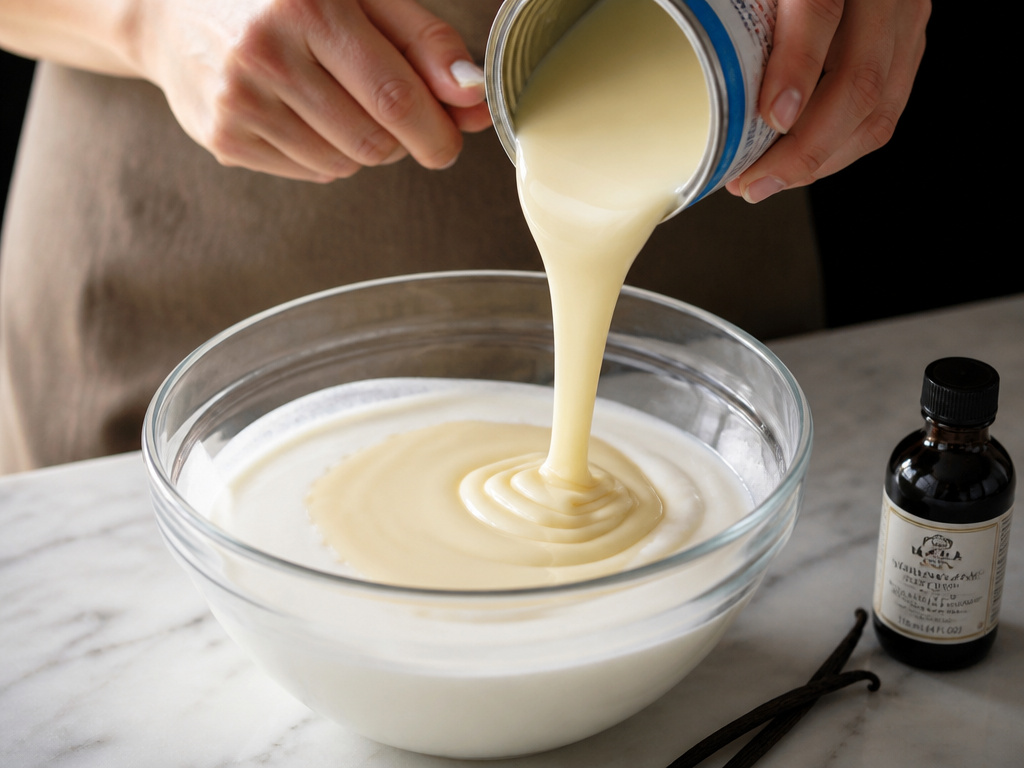
Sweetened condensed milk is the engine of this recipe. It is milk with about 60% of its water removed, then heavily sweetened with sugar. This concentrated sugar syrup acts as a preservative by binding free water molecules, which inhibits microbial growth.
You cannot replicate its function by simply adding granulated sugar to regular milk. The sugar won’t dissolve fully in a cold mix, and you’ll lack the thick, luxurious body. For a sugar-free version, you must use a sugar-free sweetened condensed milk alternative, which is a specialty product. Alternatively, combine your base dairy with a liquid sweetener like allulose syrup or a monk fruit blend and gently heat to dissolve, then cool completely before adding vanilla.
Other sweeteners change the profile. Brown sugar will add a molasses note, turning your French vanilla into a caramel-vanilla hybrid. Honey or maple syrup will thin the texture and introduce their own flavors, shortening the shelf life.
Flavor Twists and Functional Add-Ins

The basic formula is a blank canvas. Once you’ve mastered it, you can branch out.
For a spiced vanilla creamer, add a half teaspoon of ground cinnamon or a cinnamon stick during a heated infusion step. Remember the benefits of cinnamon coffee extend beyond flavor. For a nutty dimension, a mere 1/8 teaspoon of almond extract amplifies the vanilla. Do not exceed that, almond extract is powerful and can dominate.
For a functional boost, consider fats that blend well. A tablespoon of MCT oil will incorporate smoothly for an energy-focused version, while a teaspoon of coconut oil will add a subtle tropical note. Always blend these oils in thoroughly to prevent separation.
Common mistake: Adding cocoa powder or instant coffee directly to the cold blend, it will clump. For a mocha or coffee creamer, dissolve these powders in a tablespoon of hot water or hot milk first to form a paste, then blend that paste into the main mixture.
The most underrated add-in is a pinch of salt. It is not optional. Salt suppresses bitterness and makes sweet and aromatic flavors more perceptible. You won’t taste it. You’ll just notice the vanilla tastes more pronounced.
Storage, Shelf Life, and Troubleshooting

Pour your finished creamer into a perfectly clean, airtight container. A mason jar or a repurposed glass bottle works well. Refrigerate it immediately.
Homemade creamer lasts 10 to 14 days. It does not contain the stabilizers and preservatives that give store-bought creamers a month-long shelf life. If you see separation, just shake the jar. If you smell anything sour or see mold, discard the entire batch.
Curdling in your cup is the most common problem. It happens when the acidity of your coffee (pH around 5) hits the proteins in the dairy, causing them to coagulate. Higher-fat bases curdle less. If you’re using a non-dairy milk and face curdling, try sprinkling a tiny amount of baking soda (less than 1/16 tsp) into your coffee cup before adding the creamer to neutralize the acid. The trade-off is a slight flavor shift.
| Problem | Likely Cause | Fix |
|---|---|---|
| Creamer is too thin | Used low-fat milk or forgot condensed milk | Use half-and-half next time; ensure full can of condensed milk is used. |
| Sugar settles at bottom | Didn’t blend/shake enough | Blend for full 45 seconds; ensure condensed milk is fresh and not crystallized. |
| Curdles in hot coffee | High-acid coffee + low-fat base | Switch to half-and-half; pre-warm creamer; add pinch of baking soda to coffee. |
| Vanilla taste is weak | Used imitation extract or old vanilla | Use pure extract; increase to 2 tbsp; add a pinch of salt to enhance perception. |
If you want a truly hot-coffee-proof creamer, you can gently heat the entire mixture on the stove until it just begins to steam (around 160°F), then cool it before bottling. This pasteurizes it and denatures the proteins slightly, making them less likely to curdle. It also changes the texture, making it slightly thicker.
Frequently Asked Questions
Can I make French vanilla coffee creamer without condensed milk?
Yes, but the texture and shelf life change. Simmer 2 cups of half-and-half with 2/3 cup of granulated sugar until the sugar fully dissolves. Cool completely, then add vanilla. This version is thinner and lasts only 7-10 days.
What’s the best non-dairy milk for homemade creamer?
Barista-blend oat milk or full-fat canned coconut milk. Oat milk is neutral and creamy; coconut milk adds a distinct flavor. Avoid most almond milks, they are too thin and prone to curdling.
Why did my creamer separate in the fridge?
Minor separation is normal for homemade versions without emulsifiers. Just shake the bottle vigorously before each use. If it’s a dramatic split into layers, the base dairy may have been close to spoiling when you used it.
Can I use vanilla syrup instead of extract?
You can, but you must adjust the sweetness. Vanilla syrup is mostly sugar water. If you use 1/4 cup of syrup, reduce the sweetened condensed milk by a few tablespoons or your creamer will be cloyingly sweet.
How can I make a keto French vanilla creamer?
Replace the sweetened condensed milk with a mixture of 1.5 cups of heavy cream, 1/2 cup of water, and a keto-friendly sweetener like allulose or erythritol equivalent to 2/3 cup of sugar. Heat gently to dissolve, cool, then add vanilla extract.
Before You Go
Making French vanilla coffee creamer breaks down to a simple ratio: two parts rich dairy to one part sweetened condensed milk, flavored boldly with real vanilla. It takes five active minutes. You control the sweetness, the fat, and the ingredients list, which means no vegetable oil and no chemical stabilizers.
Remember the fat guards against curdling, the condensed milk is your sweetener and preservative, and the vanilla must be pure. A pinch of salt is your secret weapon for a balanced flavor. Whether you stick to the classic or experiment with cinnamon benefits or MCT oil, you now have a foundation that beats the carton. Your coffee will taste better, and you’ll know exactly what’s in it.
{
“@context”: “https://schema.org”,
“@type”: “HowTo”,
“name”: “How to Make French Vanilla Coffee Creamer from Scratch”,
“totalTime”: “PT5M”,
“supply”: [
{
“@type”: “HowToSupply”,
“name”: “Sweetened condensed milk (14 oz can)”
},
{
“@type”: “HowToSupply”,
“name”: “Half-and-half or whole milk (2 cups)”
},
{
“@type”: “HowToSupply”,
“name”: “Vanilla extract or vanilla bean paste (1-2 tablespoons)”
}
],
“tool”: [
{
“@type”: “HowToTool”,
“name”: “Blender or large jar with lid”
},
{
“@type”: “HowToTool”,
“name”: “Measuring cup”
},
{
“@type”: “HowToTool”,
“name”: “Funnel (optional)”
}
],
“step”: [
{
“@type”: “HowToStep”,
“name”: “Combine the base ingredients”,
“text”: “Pour two cups of your chosen dairy base (half-and-half, whole milk, or a non-dairy alternative like oat milk) into a blender or large mixing jar. Add the entire 14-ounce can of sweetened condensed milk.”
},
{
“@type”: “HowToStep”,
“name”: “Add vanilla and flavorings”,
“text”: “Measure 1 to 2 tablespoons of pure vanilla extract or vanilla bean paste into the mixture. For depth, add a tiny pinch of salt and, optionally, 1/8 teaspoon of almond extract.”
},
{
“@type”: “HowToStep”,
“name”: “Blend or shake thoroughly”,
“text”: “If using a blender, blend on medium speed for 30-45 seconds until completely smooth and frothy. If using a jar, seal the lid tightly and shake vigorously for 60-90 seconds.”
},
{
“@type”: “HowToStep”,
“name”: “Store and use”,
“text”: “Pour the creamer into a clean, airtight container like a mason jar or a repurputed creamer bottle. Refrigerate immediately. The creamer will keep for 10-14 days. Shake well before each use.”
}
]
}
{
“@context”: “https://schema.org”,
“@type”: “FAQPage”,
“mainEntity”: [
{
“@type”: “Question”,
“name”: “Can I make French vanilla coffee creamer without condensed milk?”,
“acceptedAnswer”: {
“@type”: “Answer”,
“text”: “Yes, but the texture and shelf life change. Simmer 2 cups of half-and-half with 2/3 cup of granulated sugar until the sugar fully dissolves. Cool completely, then add vanilla. This version is thinner and lasts only 7-10 days.”
}
},
{
“@type”: “Question”,
“name”: “What’s the best non-dairy milk for homemade creamer?”,
“acceptedAnswer”: {
“@type”: “Answer”,
“text”: “Barista-blend oat milk or full-fat canned coconut milk. Oat milk is neutral and creamy; coconut milk adds a distinct flavor. Avoid most almond milks, they are too thin and prone to curdling.”
}
},
{
“@type”: “Question”,
“name”: “Why did my creamer separate in the fridge?”,
“acceptedAnswer”: {
“@type”: “Answer”,
“text”: “Minor separation is normal for homemade versions without emulsifiers. Just shake the bottle vigorously before each use. If it’s a dramatic split into layers, the base dairy may have been close to spoiling when you used it.”
}
},
{
“@type”: “Question”,
“name”: “Can I use vanilla syrup instead of extract?”,
“acceptedAnswer”: {
“@type”: “Answer”,
“text”: “You can, but you must adjust the sweetness. Vanilla syrup is mostly sugar water. If you use 1/4 cup of syrup, reduce the sweetened condensed milk by a few tablespoons or your creamer will be cloyingly sweet.”
}
},
{
“@type”: “Question”,
“name”: “How can I make a keto French vanilla creamer?”,
“acceptedAnswer”: {
“@type”: “Answer”,
“text”: “Replace the sweetened condensed milk with a mixture of 1.5 cups of heavy cream, 1/2 cup of water, and a keto-friendly sweetener like allulose or erythritol equivalent to 2/3 cup of sugar. Heat gently to dissolve, cool, then add vanilla extract.”
}
}
]
}
