
How to Add Flavor to Coffee | The 4 Methods That Work
To add flavor to coffee, use one of four reliable methods: stir in 1-2 pumps of flavored syrup (Torani, Monin), mix 1/4 tsp of ground spice (cinnamon, nutmeg) with the grounds before brewing, add 1/4 tsp of pure extract (vanilla, almond) to the hot cup, or use a naturally flavorful brewing method like cold brew. Avoid pre-flavored beans, they coat your grinder and taste artificial.
Most people reach for the creamer jug or a dusty bottle of syrup and call it a day. They miss the timing. Adding cinnamon after the brew just makes gritty coffee. Pouring vanilla extract into a cold cup gives you a boozy, separated mess. The flavor never integrates.
This guide walks through the four methods that actually work. You will get specific product grades, exact measurements, and the reasons why each step matters. We will also cover what to skip entirely, based on what gums up grinders and what fades in the bag.
Key Takeaways
- Syrups integrate best when added to hot coffee first, before cream or milk, so the heat can thin the viscosity and distribute the flavor evenly.
- Ground spices like cinnamon or cocoa powder must be mixed with the coffee grounds before brewing; adding them after leaves a gritty, undissolved layer at the bottom of your mug.
- Pure extracts (vanilla, almond) are potent, start with 1/4 teaspoon per cup and add more only after tasting; the alcohol carrier evaporates in hot coffee, leaving the flavor behind.
- Pre-flavored coffee beans are a trap; the flavoring oils coat your grinder’s burrs, contaminating every subsequent batch, and the taste is often one-dimensional and artificial.
- Your base coffee matters; a very dark, bitter roast will fight added flavors, while a clean medium or blonde roast beans provides a neutral, welcoming canvas.
The 4 Reliable Flavoring Paths (and What to Skip)
Your coffee is a hot, acidic, aqueous solution. That environment determines what will dissolve, what will vaporize, and what will just sit there like silt. The four methods below work with that chemistry, not against it.
The first step is always your base brew. Use filtered water heated to between 90°C and 96°C (195°F–205°F), as recommended by the National Coffee Association. This temperature range optimally extracts coffee’s own sugars and balances acidity, giving you a stable foundation. A bitter, over-extracted cup will clash with any addition.
For consistent flavor integration, add liquid flavorings to coffee within 30 seconds of brewing, while the temperature is still above 85°C (185°F). Heat maximizes solubility and speeds the evaporation of alcohol carriers in extracts, preventing a harsh aftertaste.
Here is how the main options stack up for ease, potency, and cleanup.
| Method | Best For | Potency | Key Risk If Misapplied |
|---|---|---|---|
| Flavored Syrup | Sweet, dessert-like drinks (lattes, iced coffee) | High, controlled by pumps | Can make coffee cloyingly sweet if overused; sugar-free versions may have aftertaste. |
| Spices (Ground) | Warm, aromatic notes (cinnamon, nutmeg, cocoa) | Medium, infuses during brew | Adding post-brew causes grit; too much can make coffee bitter and astringent. |
| Pure Extracts | True, concentrated flavors (vanilla, almond, mint) | Very High | Alcohol base tastes harsh if added to cold coffee; easy to overpower the cup. |
| Brewing Tweaks | Enhancing natural coffee flavor (cold brew, Aeropress) | Low to Medium | Requires equipment change; not for adding external flavors like vanilla. |
TL;DR: Pick syrups for sweet convenience, spices for baking warmth, extracts for pure potency, or change your brew to highlight coffee’s own flavors.
1. Flavored Syrups: The Controlled Sweetness Engine
Flavored syrups from brands like Torani or Monin are sugar water (or sugar-free syrup) infused with flavor. They work because sucrose is highly soluble in hot water, and the flavor compounds are suspended in that syrup. One pump is about 1/4 ounce (7-8 ml).
Add the syrup to your empty mug first, then pour the hot coffee over it. The heat and turbulence of pouring does the mixing for you. If you add milk or cream first, the cold dairy sinks and the syrup can stick to the bottom, leading to an uneven first sip and a sickly-sweet last gulp.
Common mistake: Adding syrup after cold creamer, the syrup sinks through the cold layer and pools, giving you a wildly inconsistent flavor from sip to sip.
Start with one pump. Taste. Then decide if you want a second. This is especially important for sugar-free syrups, which can have a pronounced artificial aftertaste that builds with volume.
2. Spices: The Pre-Brew Infusion Trick
This is where most attempts fail. Sprinkling cinnamon on top of a finished cup is a texture disaster. The powder won’t dissolve in the slightly acidic water; it hydrates, swells, and settles as a sludgy layer.
The fix is simple: add the spice to the coffee grounds in your filter or basket before you start the brew. As the hot water passes through, it extracts the spice’s volatile oils and soluble compounds, weaving that flavor directly into the coffee liquor.
- Cinnamon: Use 1/4 teaspoon of ground Saigon cinnamon (it’s sweeter and more potent than regular cassia) per 2 tablespoons of grounds. It adds warmth and a slight sweetness that can reduce perceived bitterness.
- Cocoa Powder: Use 1/2 teaspoon of natural, unsweetened cocoa powder per 2 tablespoons of grounds. It adds a dark chocolate note, not sweetness.
- Nutmeg: A few scrapes of fresh nutmeg are better than pre-ground. It’s strong and piney, start with a very small amount.
The cinnamon in coffee method is a classic for a reason. The heat unlocks cinnamaldehyde, the compound responsible for its signature aroma, and marries it with the coffee’s own flavor compounds during extraction.
3. Pure Extracts & Oils: The Potency Power Play
Pure vanilla extract is not just vanilla flavor, it’s vanilla bean compounds dissolved in an alcohol solution. That alcohol is key. When you add 1/4 teaspoon to a piping hot cup, the alcohol almost instantly evaporates (carrying off any harsh notes), leaving the vanilla flavor behind to disperse.
The same principle applies to almond, peppermint, or orange extract. Always use “pure” extract, not “imitation.” Imitation flavors are often chemical compounds that can taste sharp or plastic-like in hot coffee.
- Technique: Add the extract to the hot coffee and stir vigorously for 5-10 seconds. This encourages evaporation and integration.
- Dose: 1/4 tsp per 8 oz cup is the absolute ceiling for most extracts. They are incredibly potent.
For oil-based additions like coconut oil coffee or MCT oil coffee, the rules change. Oils and water don’t mix. You must emulsify them by blending the hot coffee and oil for 10-15 seconds in a blender or with a milk frother. Simply stirring it in will leave a greasy film on top.
4. Brewing Method as a Flavor Tool
Sometimes, the best way to add flavor is to change the stage, not the actor. Different brewing methods extract different compounds from the same coffee bean, dramatically altering the final cup’s profile without adding a single external ingredient.
- Cold Brew: Steeping coarse grounds in cold water for 12-24 hours produces a concentrate that is naturally sweeter, less acidic, and has more chocolatey notes than hot coffee. It’s a different flavor experience from the same bean.
- Aeropress: Using a slightly lower water temperature (80°C-85°C) and a short steep time (1-2 minutes) with the inverted method can yield a cup that is remarkably smooth and sweet, muting bitterness.
These methods are about maximizing coffee’s inherent flavor potential. They require no added ingredients, just a tweak in your essential brewing equipment and technique.
Why the “Flavored Bean” Shortcut Fails
Walk down any supermarket coffee aisle and you’ll see bags of “French Vanilla” or “Hazelnut Cream” beans. They are tempting. They promise flavor without the fuss of adding anything yourself. It is a trap.
The flavoring is achieved by coating roasted beans with synthetic flavor oils after roasting. These oils are sticky. When you grind them, they adhere to the surfaces of your grinder, the burrs, the plastic hopper, the grind chamber. That vanilla-hazelnut oil residue does not come off with a brush. It will taint the next bag of expensive single-origin beans you grind, creating a muddled, off-flavor.
Furthermore, as a PMC study on coffee aroma compounds details, coffee’s own complex aroma profile consists of hundreds of volatile compounds. These synthetic coatings are often a single, dominant compound. They overwhelm the bean’s natural complexity, resulting in a one-dimensional, artificial taste that masks the coffee itself. You lose the nuance of single-origin flavors for a generic sweetness.
If you must try it, dedicate a cheap blade grinder to the task. Never put flavored beans in a burr grinder you care about. The cleanup is a multi-step process involving grinding rice and disassembling parts, and even then, a ghost of flavor often remains.
Building Your Flavor: A Step-by-Step Layering Guide
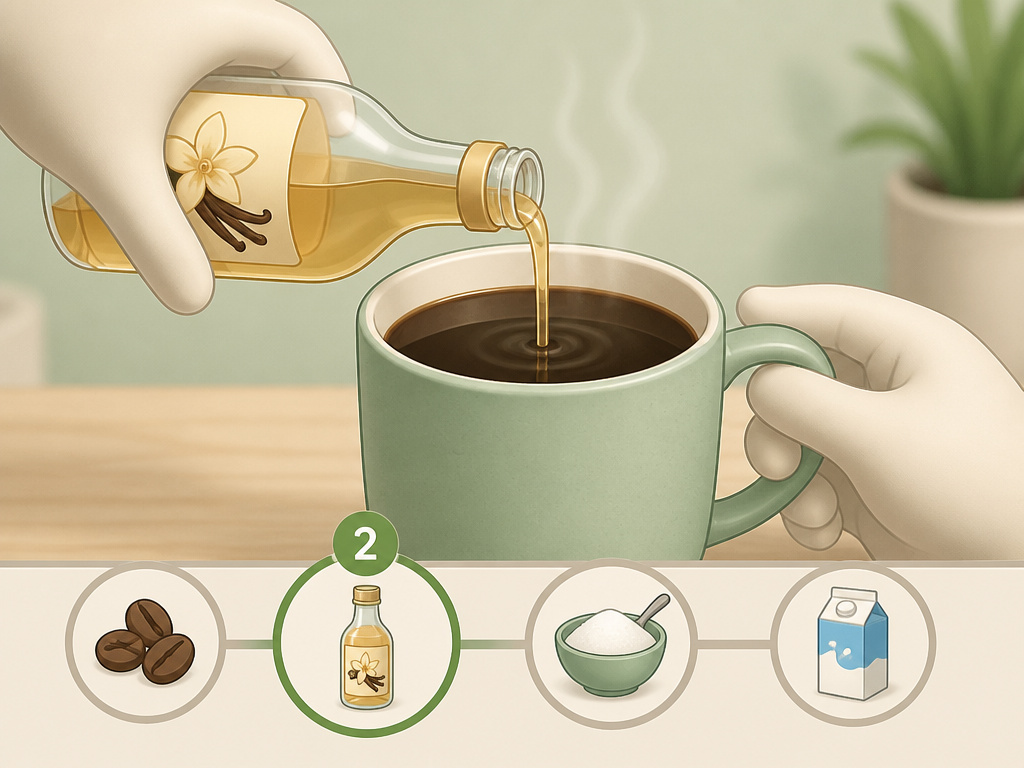
Think of flavoring like building a house. You need a solid foundation, then a structural frame, then finishing details. Throwing everything in at once creates a collapse.
Step 1: Establish Your Base. Brew a clean, balanced cup. A medium roast with good coffee grind consistency is ideal. This is your foundation. A bitter, dark roast is like building on sand, everything you add will sink into that bitterness.
Step 2: Add Your Primary Flavor. Choose one main flavor direction. Is this a vanilla day? A cinnamon day? Add that element first, using the correct method above (syrup to hot coffee, spice to grounds, extract with stirring).
Step 3: Adjust Sweetness. Now, if you want it sweeter, add your sweetener. This could be your flavored syrup (which also adds sweetness), plain sugar, or a natural sweetener option like brown sugar for molasses notes. Adding sweetness after the flavor lets you control the balance.
Step 4: Add Creaminess (Optional). Finally, add your dairy or plant-based milk option. Adding it last prevents it from cooling the coffee too quickly and impeding the dissolution of previous steps. For a calorie-conscious addition, this is where you’d measure your milk.
Skipping this order, like adding cold milk before hot syrup, means each layer doesn’t integrate. You get a stratified drink where each sip is different.
The Science of Solubility: Why Timing and Temperature Are Everything
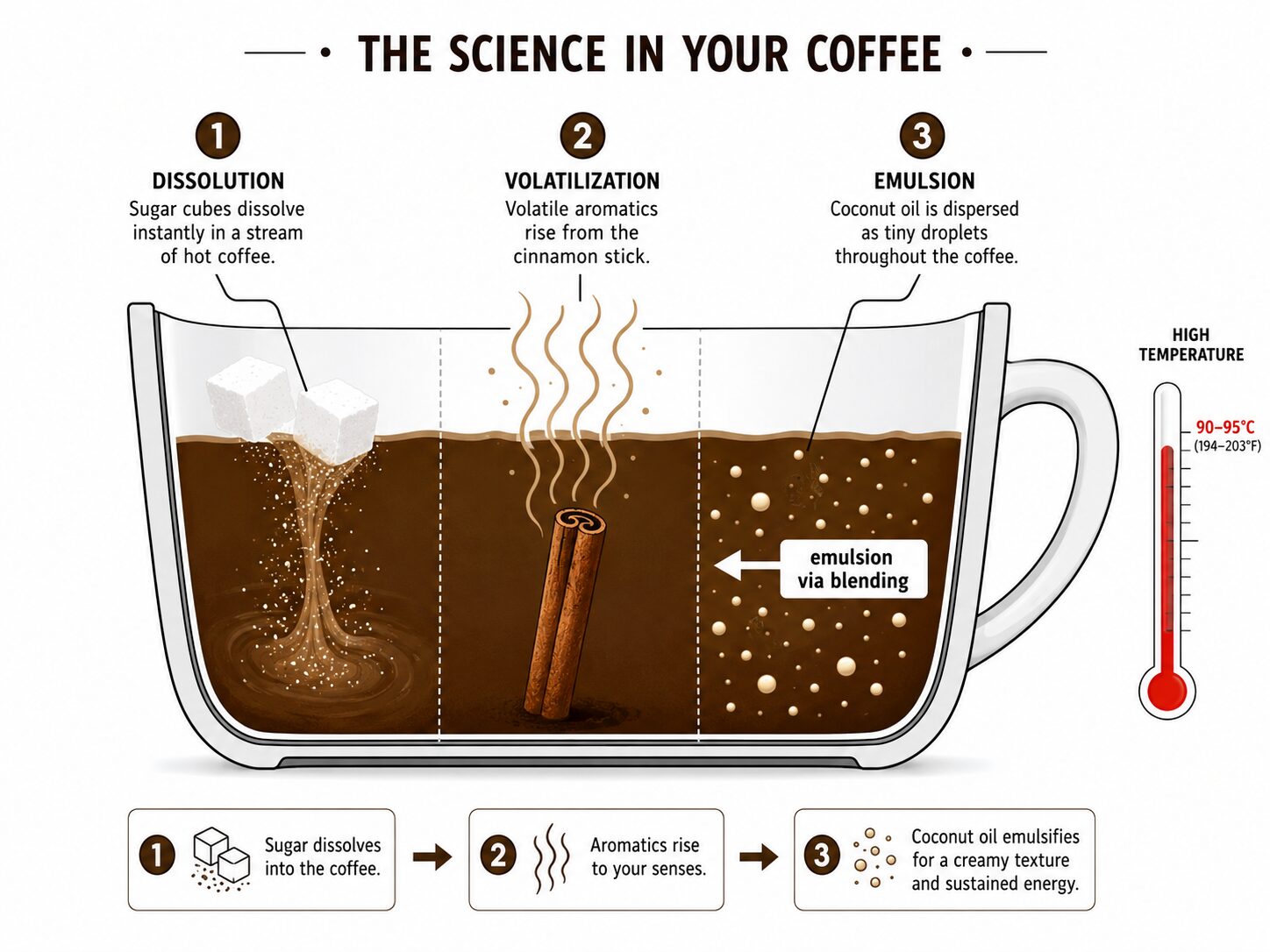
This is the “why” behind every rule so far. Coffee flavoring works through principles of solubility and volatility.
- Sugar Solubility: Sucrose (table sugar, syrup sugar) dissolves exponentially faster in hot water than in cold. A syrup added to a lukewarm cup will sink and take forever to blend. In a hot cup, it’s nearly instant.
- Volatile Aromatics: The compounds that give cinnamon, nutmeg, and vanilla their scent are volatile, they evaporate easily. Heat accelerates this. By adding spices before brewing or extracts to hot coffee, you’re actively driving those aroma molecules into the air above your cup, which is a major part of flavor perception. Add them to cold coffee, and you mostly just taste the raw ingredient.
- Oil-Water Emulsion: Flavor oils and healthy fat in coffee like coconut oil are hydrophobic. They need mechanical energy (blending) to break into tiny droplets and suspend in the water. Without it, they separate, delivering inconsistent flavor and an unpleasant mouthfeel.
Understanding this turns the steps from a random recipe into a logical process. You are not just following orders; you are engineering a solution.
Frequently Asked Questions
Can I add flavor to coffee grounds before brewing?
Yes, for dry spices like cinnamon, cocoa, or cardamom. Mix them directly with the ground coffee in your filter. Do not add liquid extracts or syrups to dry grounds, they will create clumps that lead to uneven extraction and a clogged filter.
How do you add vanilla flavor to coffee without sugar?
Use pure vanilla extract. Add 1/8 to 1/4 teaspoon to your hot brewed coffee and stir well. The alcohol evaporates, leaving the vanilla flavor. For a sugar-free syrup option, look for stevia- or monk-fruit-sweetened vanilla syrups, but be aware they may have a distinct aftertaste.
What is the best way to flavor black coffee?
The cleanest way is to use the spice-in-grounds method (e.g., cinnamon) or a single drop of a high-quality extract like vanilla or almond. This adds flavor without altering the coffee’s body or adding sweetness, preserving the “black coffee” experience.
Why does my flavored coffee taste bitter?
Two likely causes. First, your base coffee may be over-extracted (too fine a grind, too long a brew time). Second, you may have used too much of a potent spice like cinnamon or nutmeg, which contain tannins that become astringent in high concentrations. Always start with a small amount.
Do flavored creamers ruin coffee?
They don’t “ruin” it, but they often overpower it. Most flavored creamers are sweetened and contain oils and thickeners that coat your palate, masking the coffee’s flavor entirely. They are a simple way to make a sweet, dessert-like drink, not a tool for enhancing coffee.
Before You Go
Flavoring coffee well is about control and intention. It is not dumping stuff in a cup. Start with a quality, neutral base. Pick one primary method, syrup, spice, extract, or brew tweak, and apply it correctly. Remember the chemistry: heat is your ally for integration.
Avoid the siren call of pre-flavored beans unless you enjoy cleaning a greasy grinder. And never forget that sometimes, the best flavor is the one already in the bean, unlocked by great brewing. A pinch of salt can work wonders on a bitter cup, but that is a story for another brew.
