
How Long Is Coffee Creamer Good For After Opening? Shelf Life
This post contains affiliate links. As an Amazon Associate, we earn from qualifying purchases.
Refrigerated liquid coffee creamer is generally good for 7 to 14 days after opening, but the exact timeline depends on the brand and specific product. Powdered creamer lasts up to 6 months in a pantry, and unopened shelf-stable liquid cups are good until their printed date.
Most people throw away creamer based on a printed date or a vague feeling. They miss the real factors that shorten or extend its life by days or even weeks. The difference between a fresh pour and a spoiled one isn’t just a calendar. It’s a combination of fridge temperature, bottle placement, and the creamer’s own ingredients.
This guide breaks down the shelf life by type, gives you the official manufacturer numbers, and shows you how to spot the point of no return.
Key Takeaways
- International Delight liquid creamer lasts 7–10 days opened. Coffee-mate liquid lasts up to 14 days. Always check your brand’s FAQ.
- Powdered creamer doesn’t need refrigeration and stays good for about 6 months after opening if kept dry.
- Store liquid creamer on a fridge shelf, not in the door. Door temperature swings can cut its safe life by a third.
- Spoiled creamer smells sour or cheesy and often shows visible separation or mold. When in doubt, throw it out.
- Plant-based creamers can spoil faster than dairy ones. Their lack of traditional preservatives makes them more vulnerable to bacteria.
The 7-14 Day Window for Liquid Creamers
The standard advice of one to two weeks is correct, but it’s a range for a reason. Brand formulas and preservative levels create the spread. Your fridge’s consistency decides where in that range your bottle lands.
Refrigerated liquid coffee creamer, once opened, should be consumed within 7 to 14 days when stored at or below 40°F (4°C). This guideline is supported by the FDA Food Code (Section 3-501.17) for ready-to-eat, potentially hazardous foods, and is reflected in the specific use-by recommendations of major manufacturers like International Delight and Coffee-mate.
International Delight states its liquid creamers should be used within 7 to 10 days of opening. Coffee-mate gives a longer window of up to 14 days for its refrigerated liquid products. That five-day difference isn’t random. It often comes down to the specific stabilizers and emulsifiers used in the recipe. Thicker, richer creamers sometimes have a slightly shorter functional life.
TL;DR: Mark your open date on the bottle. Follow your brand’s specific guideline, 7 days for International Delight, 14 for Coffee-mate liquid, and treat it as a maximum, not a guarantee.
Why Your Fridge Door is the Worst Place for Creamer
You lose days of shelf life by storing the bottle in the door. Every time you open the fridge, warm air floods the door compartments. The temperature there can fluctuate by 10-15 degrees throughout the day. Creamer is a dairy or dairy-like emulsion. Constant warming and cooling breaks that emulsion down faster. It also encourages bacterial growth during the warm spells.
The back of a middle shelf is the target. It’s the coldest, most stable spot. A simple fridge thermometer can show you the difference. The door might read 45°F while the back shelf holds steady at 37°F. That 8-degree gap matters.
Common mistake: Storing creamer in the fridge door, temperature swings accelerate separation and can shorten the safe window by 2-3 days, leading to early spoilage.
If you want your creamer to last, give it a stable home. This is one of the simplest ways to manage your low-calorie coffee additions without waste.
Powdered and Shelf-Stable: The Long-Haul Options
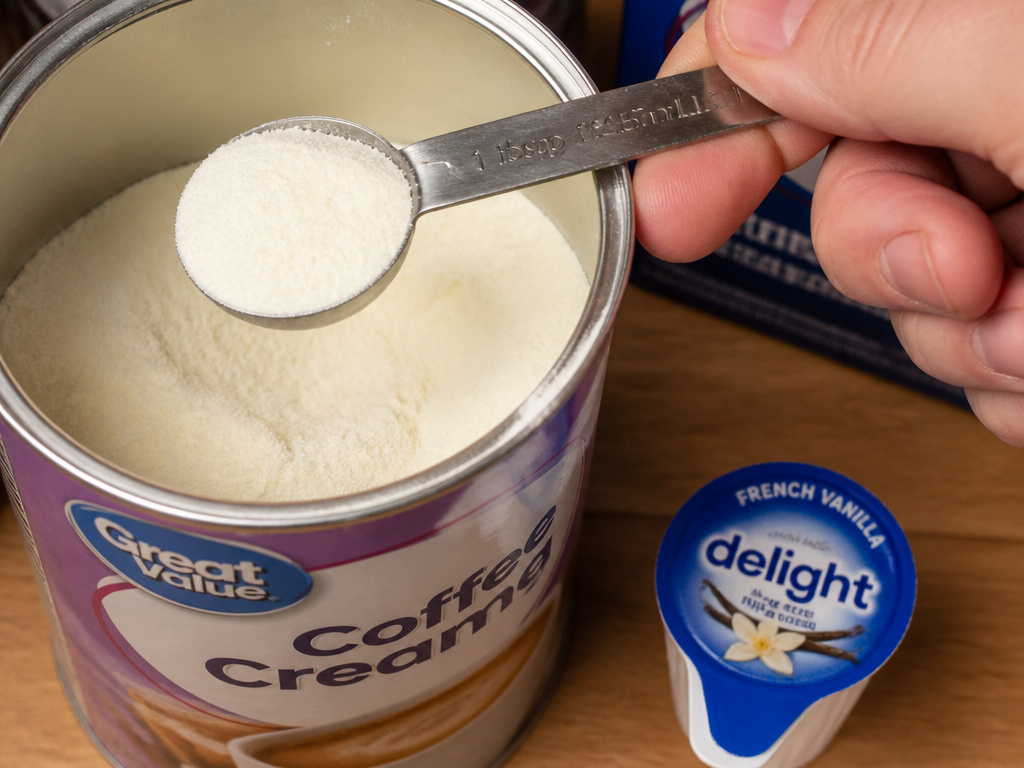
Not all creamers demand refrigerator space. Powdered and individual shelf-stable cups follow completely different rules. Confusing them with liquid creamer leads to unnecessary waste or, worse, consuming a spoiled product.
| Creamer Type | Storage After Opening | Typical Shelf Life After Opening | Key Risk Factor |
|---|---|---|---|
| Refrigerated Liquid | In fridge, on shelf | 7–14 days (brand specific) | Temperature fluctuation, cross-contamination |
| Powdered | Pantry, cool & dry | Up to 6 months | Humidity, clumping |
| Shelf-Stable Liquid Cup | Pantry until opened | Until “Best By” date | Damaged packaging, extreme heat |
Coffee-mate powdered creamer can be stored in a cool, dry place for up to six months after opening. The enemy here is moisture, not bacteria. Once water gets into the powder, it clumps and becomes a breeding ground for mold. Always use a dry spoon and seal the container tightly. For those exploring dairy-free creamer options, many plant-based powders follow this same dry-storage rule.
Shelf-stable liquid creamers, like Coffee-mate’s liquid concentrate singles, don’t need refrigeration at all until you pierce the seal. They are processed to be sterile and shelf-stable. You can keep them in a cupboard until the “Best By” date printed on the box. After opening, treat them like any other liquid creamer and refrigerate for up to two weeks. This makes them a versatile option for travel or office use, much like having a ready-made alternative coffee sweetener on hand.
Spotting Spoiled Creamer: Sight, Smell, and Taste
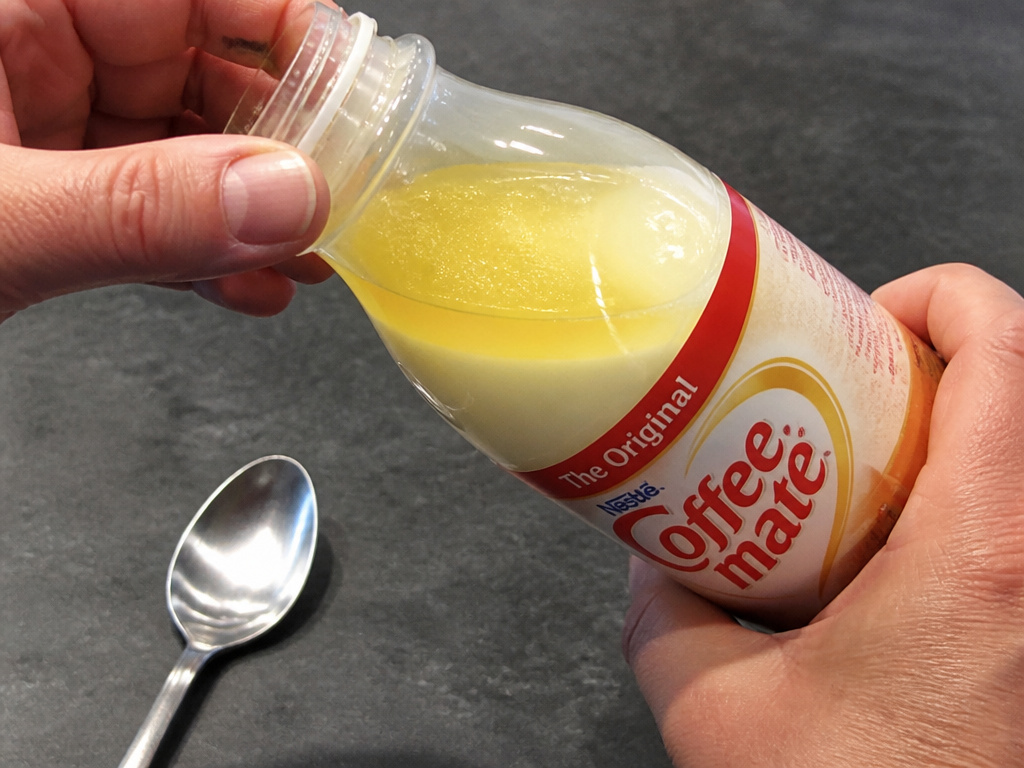
The calendar is a guide, but your senses are the final judge. Creamer spoils in predictable ways. Learning the signs prevents a bad experience.
First, look at it. Pour a small amount into a clean spoon or look directly into the bottle under good light.
* Separation: Some natural separation is normal. A quick shake should recombine it. If shaking leaves oily streaks or distinct layers that won’t blend, the emulsifiers have broken down.
* Discoloration: Any yellowing or darkening of a white creamer is a warning sign.
* Mold: Look for fuzzy spots, especially around the bottle’s rim or threads. This is an immediate discard signal.
Second, smell it. Open the bottle and take a cautious sniff right at the opening.
* A fresh, sweet, neutral smell is good.
* A sour, tangy, or vaguely cheesy odor means lactic acid bacteria have been at work. It’s spoiling.
* A chemical or “off” smell that doesn’t match the flavor also means toss it.
Finally, if it passes sight and smell but you’re still uncertain, do a tiny taste test. Dip a clean spoon, taste a drop, and spit it out. A sharp, sour, or curdled flavor confirms spoilage. This is the same cautious approach you’d use when testing other perishable fatty coffee additions.
TL;DR: If you see mold, smell sourness, or taste sharpness, the creamer is bad. Do not use it.
The Plant-Based and Dairy Difference
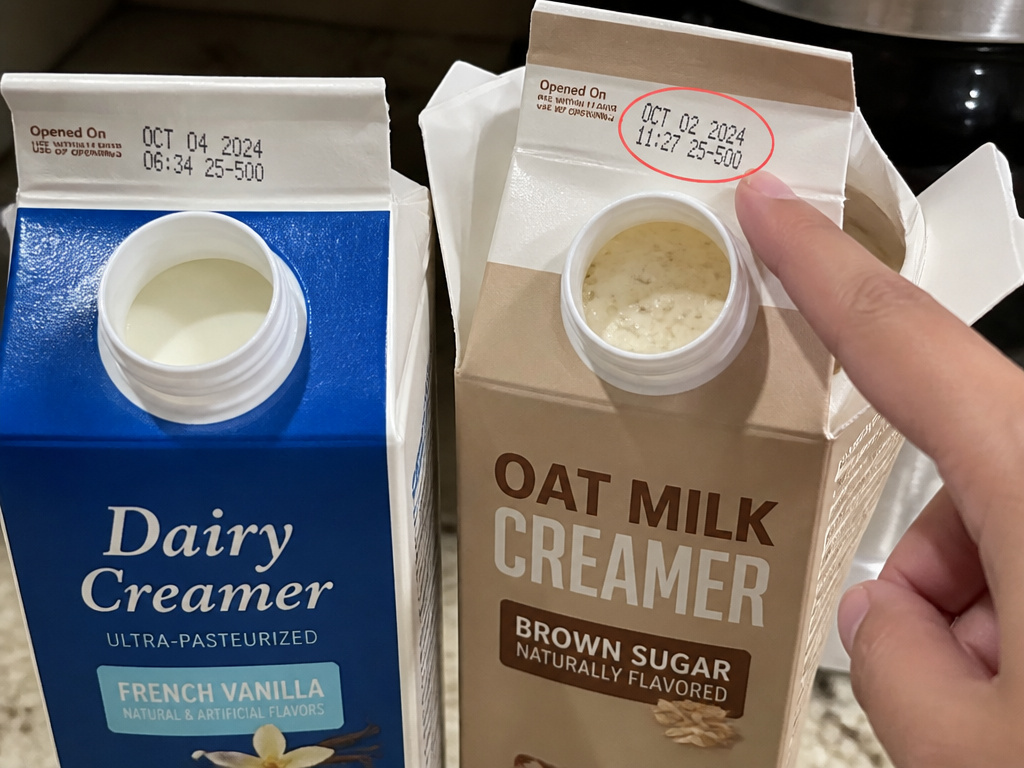
The shift to oat, almond, and coconut creamers isn’t just about taste. It changes the spoilage game. Many plant-based creamers lack the traditional preservatives found in some dairy versions. They also have different sugar and fat profiles that different microbes prefer.
In practice, this often means a plant-based creamer might hit its off-notes a day or two sooner than a dairy counterpart, even within the same 14-day window. The spoilage signs are similar, sour smell, separation, but can appear more abruptly. This doesn’t make them unsafe if handled correctly. It just means you should be slightly more vigilant with the open date.
If you use these for their perceived benefits, like those associated with MCT oil in coffee, you already know freshness impacts the experience. The principle is the same. Store them cold and use them promptly.
How to Make Your Creamer Last Longer
You can’t stop the clock, but you can slow it down. A few handling habits add days of usable life.
- Write the open date. Use a marker on the bottle cap or label the day you open it. Memory is unreliable.
- Never drink from the carton. Pour it into your cup. Introducing mouth bacteria is a surefire way to inoculate the entire bottle with spoilage organisms.
- Keep it cold. Limit time on the counter. Don’t leave it out during a long breakfast. The “2-hour rule” from the USDA applies: perishables shouldn’t sit above 40°F for more than two hours total.
- Wipe the rim. After pouring, wipe any drips from the bottle’s spout and threads before sealing. Dried creamer around the cap attracts mold.
- Consider smaller containers. If you use creamer slowly, buy a smaller size. An open pint used over three weeks is a bigger risk than an open quart used in one week.
Think of it like managing any other fresh ingredient. Just as a dash of salt in coffee requires precise handling to avoid ruining the batch, your creamer needs consistent care.
Frequently Asked Questions
Can you use coffee creamer after the “use by” date if it’s unopened?
For shelf-stable powdered creamer or liquid singles, yes, if stored properly. The “use by” or “best by” date is about peak quality, not safety. For refrigerated liquid creamer, an unopened bottle past its date might be safe for a short time if it’s been consistently cold, but flavor and texture will decline. Always inspect and smell it first.
Does coffee creamer go bad if not refrigerated?
Yes, and quickly. An opened bottle of liquid creamer left out overnight should be discarded. Unopened, shelf-stable creamers (powder or liquid singles) are fine in the pantry. The rule is simple: if it says “refrigerate after opening,” you must. This is a basic food safety step, as important as knowing the caffeine content of your drink.
How can you tell if powdered creamer is bad?
Check for clumps. Moisture causes powder to harden into solid lumps. If it doesn’t break apart easily with a spoon, it’s likely compromised. Smell it, it should smell neutral or mildly sweet. Any musty or rancid odor means it’s gone bad. Discard it.
Why does my creamer smell weird but the date is fine?
Two reasons. First, it might have been stored at a high temperature before you bought it, aging it prematurely. Second, and more likely, your fridge isn’t cold enough. Use a thermometer to verify it’s at or below 40°F. A warm fridge ruins creamer fast.
Is curdled creamer in coffee always bad?
Not always. Sometimes hot coffee can cause a harmless reaction called “breaking,” where the creamer separates into little specks. This is more common with high-acidity coffee or certain plant-based creamers. If the creamer looked and smelled fine in the bottle, the curdling in your cup is probably just a cosmetic issue. If the creamer itself was already questionable, assume it’s spoilage.
Before You Go
Your creamer’s lifespan isn’t a mystery. Refrigerated liquid gets 7 to 14 days, powdered lasts months in the pantry, and shelf-stable singles wait until you need them. The brand on the label gives you the specific number. Your job is to store it right, on a cold shelf, not in the door, and trust your nose over the calendar.
Mark the open date. Keep it clean. And when that sour smell hits, let it go. Wasting a few dollars on fresh creamer beats the alternative. Your coffee, and your stomach, will thank you for the clarity. It’s the same attention to detail that improves everything from your oral health and coffee routine to your choice of healthy coffee spices.
{
“@context”: “https://schema.org”,
“@type”: “HowTo”,
“name”: “How to Determine If Your Opened Coffee Creamer Is Still Good”,
“totalTime”: “PT5M”,
“tool”: [
{
“@type”: “HowToTool”,
“name”: “Refrigerator thermometer”
},
{
“@type”: “HowToTool”,
“name”: “Clean spoon for smell test”
}
],
“step”: [
{
“@type”: “HowToStep”,
“name”: “Check the date and type”,
“text”: “Note the open date and identify your creamer type: refrigerated liquid, powdered, or shelf-stable.”
},
{
“@type”: “HowToStep”,
“name”: “Inspect visually”,
“text”: “Look for color changes, separation, or any visible mold floating on the surface or around the cap.”
},
{
“@type”: “HowToStep”,
“name”: “Smell the product”,
“text”: “Open the bottle and take a cautious sniff. Discard if you detect sour, rancid, or chemically off odors.”
},
{
“@type”: “HowToStep”,
“name”: “Conduct a taste test if unsure”,
“text”: “If it passes sight and smell, pour a tiny amount into a spoon. A sharp, sour, or curdled flavor means it’s spoiled.”
}
]
}
{
“@context”: “https://schema.org”,
“@type”: “FAQPage”,
“mainEntity”: [
{
“@type”: “Question”,
“name”: “Can you use coffee creamer after the \”use by\” date if it’s unopened?”,
“acceptedAnswer”: {
“@type”: “Answer”,
“text”: “For shelf-stable powdered creamer or liquid singles, yes, if stored properly. The \”use by\” or \”best by\” date is about peak quality, not safety. For refrigerated liquid creamer, an unopened bottle past its date might be safe for a short time if it’s been consistently cold, but flavor and texture will decline. Always inspect and smell it first.”
}
},
{
“@type”: “Question”,
“name”: “Does coffee creamer go bad if not refrigerated?”,
“acceptedAnswer”: {
“@type”: “Answer”,
“text”: “Yes, and quickly. An opened bottle of liquid creamer left out overnight should be discarded. Unopened, shelf-stable creamers (powder or liquid singles) are fine in the pantry. The rule is simple: if it says \”refrigerate after opening,\” you must. This is a basic food safety step, as important as knowing the caffeine content of your drink.”
}
},
{
“@type”: “Question”,
“name”: “How can you tell if powdered creamer is bad?”,
“acceptedAnswer”: {
“@type”: “Answer”,
“text”: “Check for clumps. Moisture causes powder to harden into solid lumps. If it doesn’t break apart easily with a spoon, it’s likely compromised. Smell it, it should smell neutral or mildly sweet. Any musty or rancid odor means it’s gone bad. Discard it.”
}
},
{
“@type”: “Question”,
“name”: “Why does my creamer smell weird but the date is fine?”,
“acceptedAnswer”: {
“@type”: “Answer”,
“text”: “Two reasons. First, it might have been stored at a high temperature before you bought it, aging it prematurely. Second, and more likely, your fridge isn’t cold enough. Use a thermometer to verify it’s at or below 40°F. A warm fridge ruins creamer fast.”
}
},
{
“@type”: “Question”,
“name”: “Is curdled creamer in coffee always bad?”,
“acceptedAnswer”: {
“@type”: “Answer”,
“text”: “Not always. Sometimes hot coffee can cause a harmless reaction called \”breaking,\” where the creamer separates into little specks. This is more common with high-acidity coffee or certain plant-based creamers. If the creamer looked and smelled fine in the bottle, the curdling in your cup is probably just a cosmetic issue. If the creamer itself was already questionable, assume it’s spoilage.”
}
}
]
}
