
Evaporated Milk in Coffee Guide | The Creamy Dairy Upgrade
To use evaporated milk in coffee, shake the can well and add 1-2 tablespoons directly to your cup, stirring immediately to blend. It provides a richer, naturally sweeter flavor than fresh milk because over half the water has been removed, concentrating the milk solids, fat, and sugars.
Most people think evaporated milk is just for pumpkin pie. They pour it into a hot cup and watch it separate into tiny, grainy clumps, then swear off the stuff forever. That clump is preventable.
This guide walks through why evaporated milk works, how to add it without curdling, and how its unique specs make it a secret weapon for iced drinks, camping trips, and even a decent latte when the fridge is empty.
Key Takeaways
- Evaporated milk is defined by the FDA standard 21 CFR 131.130 as having at least 7.5% milkfat and 25.5% total milk solids, which is why it’s denser and sweeter than fresh milk.
- Stir immediately and vigorously when adding it to hot coffee. Slow pouring into still liquid lets the proteins curdle in the heat and acidity.
- It shines in cold brew coffee where the lower acidity and cold temperature prevent curdling and the concentrated texture doesn’t get watered down by melting ice.
- A quarter-cup (60mL) of Carnation Original Evaporated Milk delivers 7g of protein, that’s more than a large egg, alongside 10g of natural milk sugars.
- Don’t try to froth it straight from the can for a latte. You need to dilute it first with an equal part water to approximate fresh milk’s consistency, or it will scorch and taste like canned soup.
What Evaporated Milk Actually Is (And Isn’t)
Legally, evaporated milk is a canned dairy product where about 60% of the water has been removed from fresh milk. The FDA evaporated milk standard (21 CFR 131.130) mandates a minimum of 7.5% milkfat and 25.5% total milk solids by weight. That’s the baseline.
What you buy off the shelf is that concentrated milk, often with added vitamin D, and never any added sugar unless the label says “sweetened.” That’s a different product, condensed milk. The Wikipedia evaporated milk entry correctly notes the heat-treatment process gives it a slight cooked or caramelized flavor, which is the “canned” note some people detect.
According to the FDA’s Code of Federal Regulations Title 21, Part 131.130, evaporated milk is “the liquid food made by evaporating water from milk.” The standard specifies it must contain not less than 7.5 percent milkfat and not less than 25.5 percent total milk solids by weight, distinguishing it from condensed, powdered, or fresh fluid milk.
This concentration is the whole game. Removing the water boosts everything else. The fat content climbs, giving a richer mouthfeel than 2% or even whole milk. The natural milk sugar, lactose, gets concentrated too, lending a inherent sweetness without any added sugar. The proteins, mainly casein, are more densely packed, which is why it can turn grainy if you mishandle it with heat.
TL;DR: Evaporated milk is fresh milk with 60% of the water removed, making it richer, sweeter, and thicker. It’s not sweetened condensed milk and it’s not powdered milk.
Why Evaporated Milk Works in Coffee (The Science of the Sip)
Coffee is acidic, with a pH often between 4.5 and 5.5. Fresh milk can curdle in it too, but evaporated milk is more vulnerable because its proteins are already closer together. When you dump it into searing hot coffee, two things happen fast. The heat denatures the proteins, causing them to unfold. The acid then charges those unfolded proteins, making them stick together into visible clumps.
The trick is speed and temperature management. Stirring rapidly incorporates the milk before the heat and acid have time to work on a concentrated pocket. Using slightly cooler coffee, around 85°C (185°F) instead of a full boil, also gives you a bigger margin for error. If your coffee always curdles evaporated milk, your brew temperature is likely too high, or you’re not stirring fast enough.
Its performance in cold brew is where it becomes a genuine alternative to cream. Cold brew’s pH is higher, often around 6.0, which is far less acidic. The cold temperature also slows protein denaturation. The result is that evaporated milk blends smoothly, and its concentrated body stands up to ice without diluting into a weak, milky mess. For a cold brew or an iced coffee, it’s often a better choice than fresh milk.
Common mistake: Pouring evaporated milk slowly into the center of a still, hot cup of coffee, the proteins curdle on contact before you even stir, leaving a grainy film on the surface and tiny clots throughout the cup.
Evaporated Milk vs. Your Other Dairy Options
You don’t reach for the can just because it’s there. You pick it for what it does differently. This table breaks down how it stacks up against common coffee additives.
| Additive | Best For | The Trade-Off |
|---|---|---|
| Evaporated Milk | Richness without added sugar; camping/emergency use; cold brew. | Requires shaking; can curdle in very hot/acidic coffee; has a slight cooked flavor. |
| Fresh Whole Milk | Daily latte practice; neutral, clean dairy flavor. | Requires refrigeration; can water down iced drinks; less sweet. |
| Half-and-Half | Maximum creaminess with minimal fuss. | Higher fat can coat the tongue and mute coffee’s brighter notes. |
| Non-Dairy Creamer | Lactose intolerance; very long shelf life. | Often highly processed with added oils, sweeteners, and stabilizers. |
The standout feature is the protein content. That quarter-cup of Carnation has 7 grams. Half-and-half has about 2 grams for the same volume. If you’re using coffee as a morning meal anchor, evaporated milk adds substantial staying power. It’s also shelf-stable for over a year, which makes it a reliable backup when your fresh milk turns.
For those exploring other rich additives, the principles of fat integration are similar when you’re looking at coconut oil in coffee or MCT oil benefits.
The 7-Step Method for Adding Evaporated Milk (and the One Step Nobody Skips)
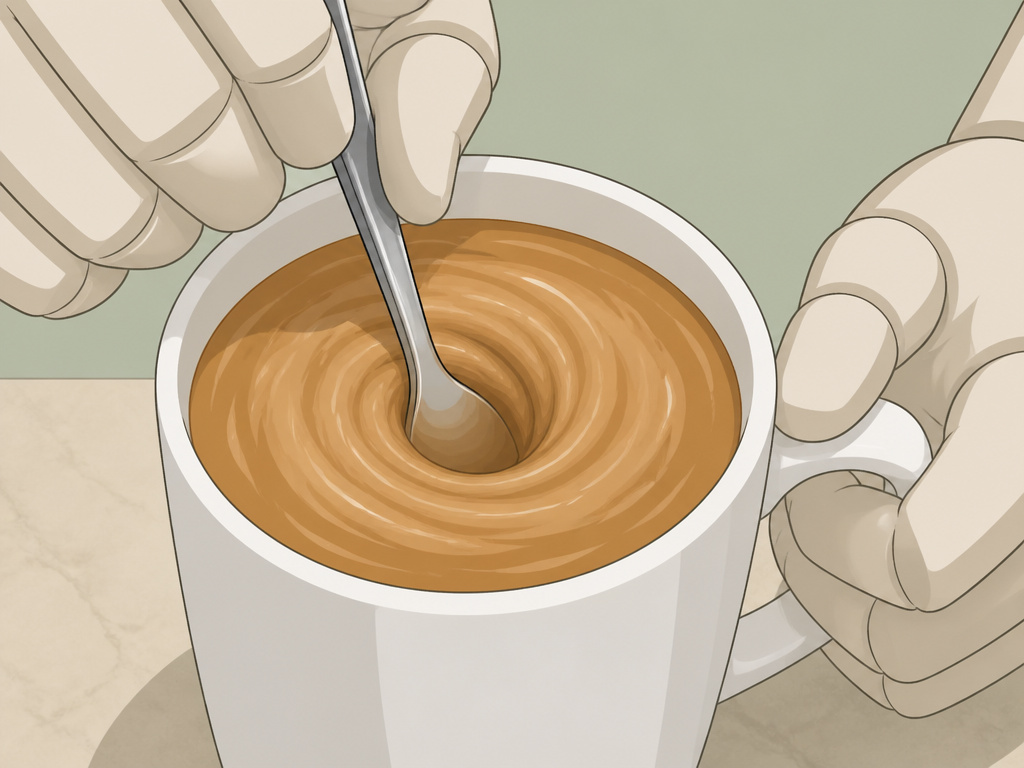
This isn’t complicated. But skipping the first step guarantees a separated, unpleasant texture. Follow this sequence.
- Shake the unopened can for a full 30 seconds. The fat rises and separates during storage. If you don’t redistribute it, the first pour will be watery and the last will be thick sludge. That’s the step people skip.
- Open the can and give the contents a brisk stir. Even after shaking, a quick stir with a fork or small whisk ensures total homogeneity.
- Pre-warm your mug with hot water (for hot coffee). Dumping cold evaporated milk into a cold mug shocks it when hit with hot coffee, encouraging curdling. Dump the water out right before brewing.
- Brew your coffee, aiming for 85–90°C (185–195°F). If you use a boiling kettle, let it sit off the boil for 60 seconds.
- Pour 1–2 tablespoons (15–30 mL) of evaporated milk into the empty, warmed mug. Measure. Eyeballing leads to over-pouring, and the richness can overwhelm the coffee.
- Immediately pour the hot coffee into the mug, aiming the stream directly onto the pooled milk. The force of the pour starts the mixing process.
- Stir vigorously for at least 10 seconds with a spoon. Don’t gently fold. Stir like you’re trying to create a vortex. This rapid incorporation is what prevents curdling.
If you prefer a smoother, more integrated sweetness than plain white sugar offers, the caramel notes from a brown sugar sweetener pair exceptionally well with evaporated milk’s inherent richness.
TL;DR: Shake the can hard, warm the mug, pour the milk first, then the coffee, and stir like hell. It’s the stirring that wins.
Can You Froth or Steam Evaporated Milk for a Latte?
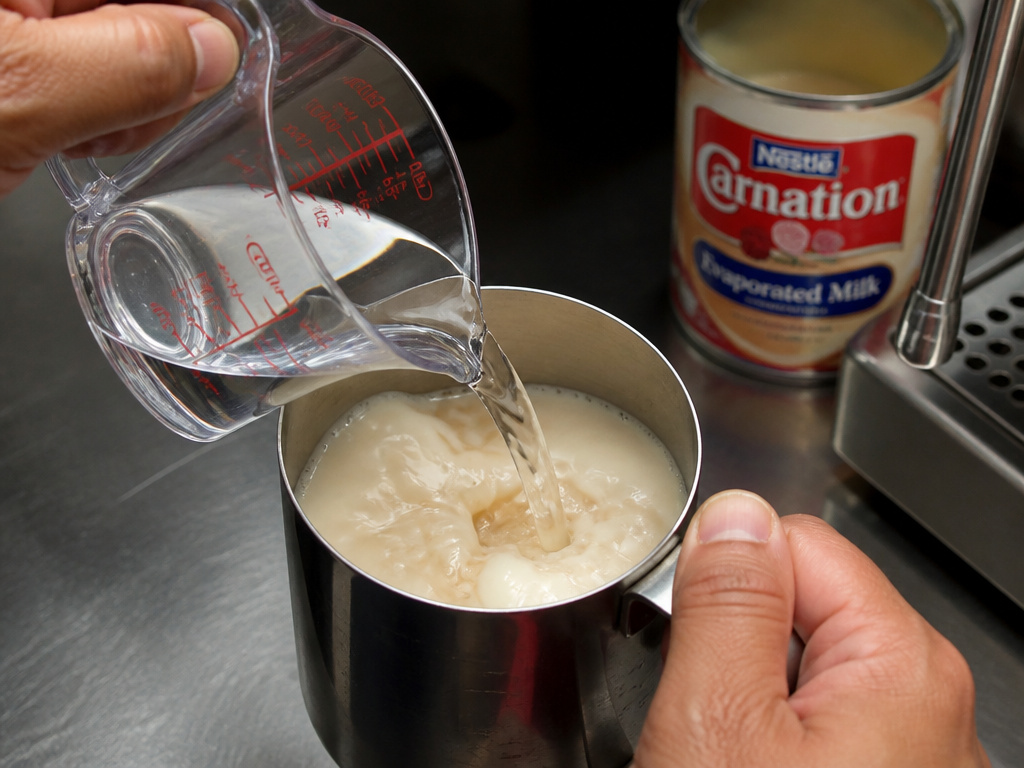
Yes, but not straight from the can. The YouTube experiments show it’s possible, but the tasters note a “whipped cream” or “very rich” quality that can be overwhelming. The reason is viscosity. Evaporated milk is too thick for most steam wands or frothers to properly texture; it can scorch on the bottom of the pitcher and produce large, unstable bubbles.
I tried steaming Carnation milk straight in a small pitcher. It doubled in volume in seconds, but the foam collapsed within a minute and left a scalded-film taste on the back of my tongue. Now I always cut it.
The pro method is dilution. Mix equal parts evaporated milk and cold water first. This brings the fat and solid concentration closer to that of whole milk. Then steam or froth as usual. You’ll get better microfoam and a flavor that’s rich but not like drinking sweetened heavy cream. For a true latte, pairing this method with a strong base like espresso caffeine content ensures the coffee flavor isn’t drowned out.
If you’re exploring other creamy, frothable options, the techniques differ for dairy-free milk alternatives like almond or oat milk.
Evaporated Milk in Cold Brew and Iced Coffee
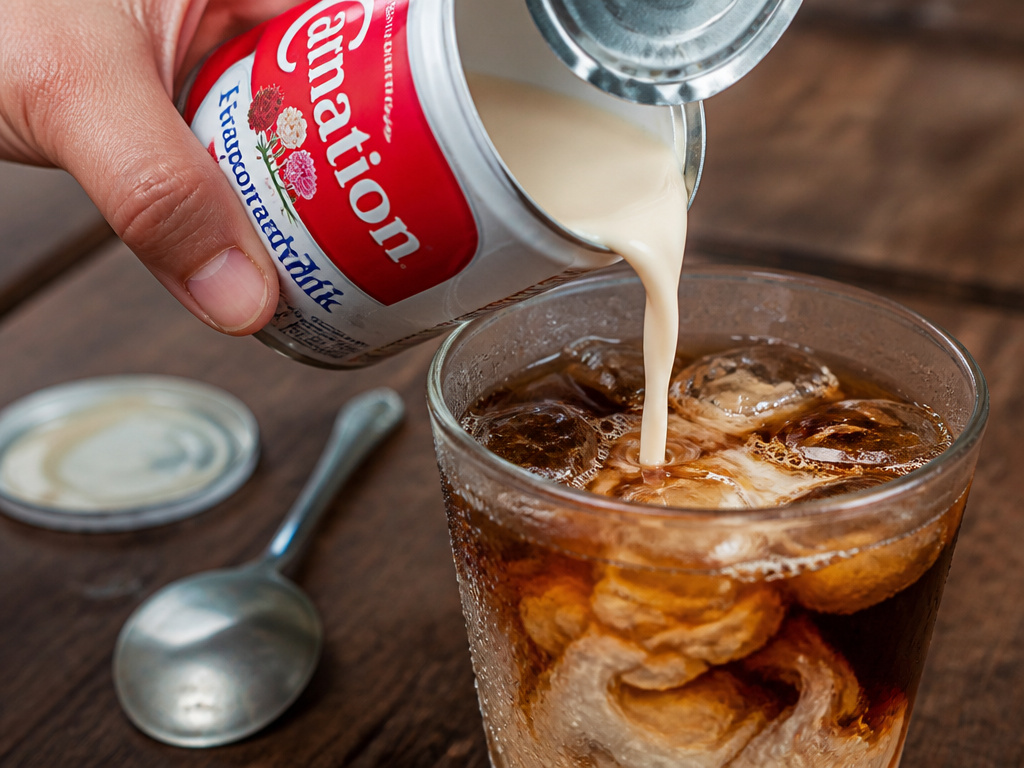
This is its best application. The lower acidity of cold brew means the pH shock is minimal. The cold temperature prevents heat-induced protein clumping. And because evaporated milk is already concentrated, it doesn’t get diluted into weakness as ice melts.
Add it just like you would to hot coffee: shake the can, measure 1-2 tablespoons, and stir it into your cold brew concentrate before adding ice. It creates a luxuriously creamy, sweet glass without any added sugar. For an extra flavor dimension, a pinch of salt method can enhance the sweetness and round out the profile beautifully.
It’s also the traditional, though less common, partner for Cà phê sữa đá, Vietnamese iced coffee, if you find sweetened condensed milk too cloying. The evaporated milk provides the creaminess with a more muted sweetness, letting the bold, dark roast coffee shine through.
Nutrition, Calories, and How It Compares
Let’s use the Carnation Original spec from Canada, as it’s a global benchmark. A 60mL (1/4 cup) serving has:
* 130 Calories
* 7g Total Fat (4.5g saturated)
* 10g Carbohydrates (all from natural milk sugars)
* 7g Protein
* 20% DV Calcium
Compare that to the same volume of 2% milk: about 62 calories, 2.5g fat, 6g carbs, 4g protein. Evaporated milk is calorie-dense because the nutrients are packed into a smaller volume. If you’re mindful of your calorie content of milk, you’ll use a smaller amount. Its high protein content is a notable benefit for satiety.
The ScienceDirect evaporated milk overview details how the heat treatment during production affects the protein structure, which influences both its nutritional bioavailability and its culinary behavior.
Troubleshooting: Why Did My Evaporated Milk Curdle?
Three reasons dominate, and each has a fix.
- The coffee was too hot. Above 90°C (195°F), the risk of curdling spikes. Let your boiling water rest for a minute before brewing.
- The coffee is highly acidic. Light roast coffees, especially African origins, often have brighter, more acidic profiles. If this is your daily driver, consider switching to a darker roast for your evaporated milk days, or use it in cold brew instead. A blonde roast coffee might be too bright a pairing.
- You didn’t stir fast enough. The milk must be incorporated instantly. If you pour the milk in last and let it sit on top, it will curdle every time. Reverse the order: milk first, then coffee poured aggressively onto it, then immediate stirring.
If it curdles, you can sometimes salvage the cup by pouring the entire mixture into a blender and blitzing it for 5 seconds. It won’t be perfectly smooth, but it will be drinkable.
Frequently Asked Questions
Does evaporated milk taste different than regular milk in coffee?
Yes. It tastes richer, slightly sweeter, and has a very subtle cooked or caramelized note from the canning process. It’s a more robust dairy flavor.
Can you use evaporated milk in iced coffee?
Absolutely. It’s excellent in iced coffee and cold brew because the cold temperature prevents curdling and its thick consistency doesn’t water down as the ice melts.
How long does evaporated milk last after opening?
Treat it like fresh milk once opened. Refrigerate it in a sealed container and use it within 5-7 days for best quality and safety.
Is evaporated milk keto-friendly?
Not really. A 60mL serving contains 10g of carbohydrates from natural milk sugar (lactose), which can exceed daily carb limits on a strict keto diet. Heavy cream or oil-based coffee creamers are better keto choices.
Can you make whipped cream with evaporated milk?
No. Evaporated milk does not have enough fat to whip into stable peaks. For whipped cream, you need heavy cream (whipping cream) with at least 30% milkfat.
Before You Go
Evaporated milk is a pantry powerhouse that solves two coffee problems: it adds serious creaminess without added sugar, and it never spoils in the cabinet. The keys are shaking the can, managing your coffee’s heat, and stirring like your cup depends on it. Try it in cold brew first to appreciate its texture, then graduate to hot coffee using the milk-first, pour-aggressively method. It won’t replace fresh milk for your daily latte, but as a richer alternative or a reliable backup, it’s a tool worth having on the shelf. Your choice of beans matters too, a balanced coffee blend often pairs better with its robust character than a delicate single-origin.
