
How Coffee Stains Teeth: The Science of Chromogens and Tannins
Coffee stains your teeth because it contains dark-colored compounds called chromogens and astringent tannins that bind to the microscopic pits and ridges in your tooth enamel. The acidity in coffee also temporarily softens enamel, making it more porous and receptive to these staining agents. This combination leads to visible yellow or brown discoloration over time, a process confirmed by multiple dental studies measuring significant color change.
Most people notice the stain on the surface. They scrub harder. That misses the real problem. The stain isn’t just sitting there like paint. It’s forming a chemical bond with your tooth structure, and your morning routine either fights it or fuels it.
This guide breaks down the science of coffee stains, how to prevent them from setting in, and the right way to remove the discoloration you already have. We’ll move past the generic advice and into the specifics that actually change the color of your smile.
Key Takeaways
- Coffee stains teeth through a dual mechanism: chromogens provide the color, and tannins help that color stick to acid-softened enamel.
- A 2009 Journal of Contemporary Dental Practice study found coffee caused clinically perceptible staining (ΔE > 3.3) on dental composites in just seven days.
- Brushing immediately after coffee can damage enamel; wait 30 minutes and rinse with water first.
- Adding milk may slightly reduce staining potential by binding to tannins, but adding sugar dramatically increases cavity risk by feeding acid-producing bacteria.
- Heavy stains require professional removal with an ultrasonic scaler; over-the-counter whiteners cannot break the bond of long-set chromogens.
The Science Behind the Stain: Chromogens, Tannins, and Your Teeth
Headlines say coffee stains. They rarely explain how. The process isn’t random. It’s a predictable chemical interaction between your saliva, your enamel, and two specific compounds in your brew.
Chromogens are the pigments. They give coffee its rich, dark color. Think of them as microscopic dye molecules. Tannins are astringent polyphenols. They make your mouth feel dry. Their real job here is to make chromogens sticky. Tannins help the pigment molecules bind to proteins in your saliva and on the surface of your teeth. Once bound, they settle into the microscopic landscape of your enamel.
Coffee-induced tooth discoloration is driven by the interaction of chromogens and tannins with the dental pellicle, a protein film on enamel, and is exacerbated by the beverage’s acidity, which increases enamel porosity. This is a chemical adhesion process, not a simple surface deposit.
Your enamel isn’t a smooth sheet of glass. Under a microscope, it looks more like a rocky surface full of ridges and tiny pores. Coffee’s natural acidity, from compounds like chlorogenic acid, temporarily softens this surface. It opens those pores wider. The chromogen-tannin complex slips in. As your saliva neutralizes the acid and your enamel re-hardens, some of that pigment gets trapped inside. This is why surface wiping isn’t enough.
The staining power is measurable. Research like the 2009 study in the Journal of Contemporary Dental Practice used spectrophotometers to quantify the color change coffee causes on dental materials. They reported Delta E (ΔE) values, a unit for color difference. A ΔE greater than 3.3 is visible to the human eye. The study found coffee pushed ΔE values for common resin composites between 4.09 and 10.15 after just one week of simulated exposure. The stain is not your imagination. It’s a documented chemical reaction.
TL;DR: Chromogens provide the color, tannins make it sticky, and coffee’s acidity opens your enamel’s pores to let the stain in. It’s a three-part chemical process.
How Your Daily Habits Accelerate or Prevent Stains
Your routine dictates how deep the stain goes. The YouTube transcript from a dental professional highlights a clear timeline for chronic drinkers. Surface stains build in 24 hours. Within two weeks, the coffee is soaking deeper into the enamel. After four weeks of sugary lattes, you’re not just staining, you’re feeding the bacteria that cause cavities.
The single biggest mistake is nursing a single cup all morning. Every sip resets the acid attack and delivers a fresh wave of chromogens. Your saliva never gets a chance to neutralize and remineralize. The stain accumulates in layers.
Here is the impact of common coffee habits:
| Your Habit | Effect on Staining | The Why-Layer |
|---|---|---|
| Drinking black coffee quickly | Moderate stain risk | High chromogen load hits teeth once, but saliva can recover between cups. |
| Nursing a cup for hours | Very high stain risk | Continuous acid bath keeps enamel porous; chromogens bind constantly. |
| Adding milk or cream | Slightly reduced stain risk | Proteins in dairy bind to tannins, reducing their ability to bind chromogens to teeth. |
| Adding sugar or syrup | High stain & cavity risk | Sugar feeds oral bacteria that produce more acid, doubling the damage to enamel. |
| Drinking through a straw | Reduced front-stain risk | Bypasses direct contact with visible front teeth, though molars still get exposed. |
Common mistake: Brushing your teeth immediately after finishing your coffee, the abrasive action of brushing on acid-softened enamel can wear away microscopic amounts of the surface, creating even more pits for stains to grab onto next time.
The fix is sequence. Drink your coffee within a 20-minute window if you can. Follow it with a big glass of water. Swish the water around. This physically displaces the coffee residue and helps neutralize the acid. Wait at least 30 minutes before you brush. This gives your enamel time to re-harden.
If you use additives, choose wisely. A splash of milk might slightly mitigate stains. A pump of vanilla syrup, however, is a double agent. It makes the coffee more palatable for the stain-causing bacteria on your teeth. For a healthier boost, consider cinnamon coffee benefits or MCT oil in coffee for energy without the sugar.
Does the Type of Coffee or Roast Matter?
All coffee can stain. The degree varies. The science points to specific culprits: chlorogenic acids and melanoidins.
Chlorogenic acids are abundant in lighter roasts. They are antioxidants, but they also break down into compounds that can contribute to discoloration. A PubMed study on coffee-induced discoloration specifically investigated the role of chlorogenic acids and coffee type in this process. Darker roasts have fewer chlorogenic acids, but they have more melanoidins. These are large, dark-colored molecules formed during the roasting process. They are potent chromogens.
So which stains more? It’s a trade-off. – Light Roast: Higher acidity, more chlorogenic acids. May cause staining through a different chemical pathway and be tougher on sensitive teeth. – Dark Roast: Lower acidity, more melanoidins. Delivers a heavier load of the classic dark pigments directly.
The brewing method also plays a role. Espresso has a high concentration of compounds in a small volume, but you typically drink it quickly. Drip coffee or French press is often consumed in larger quantities over a longer time, extending the exposure. Cold brew is less acidic, which is better for your enamel’s porosity, but it still contains all the chromogens. If you’re exploring lower-acid options, understanding the acidity in beverages can help you make informed choices.
The real variable is you. Your enamel’s inherent porosity, the amount of saliva you produce, and any existing dental work create your personal staining equation. The core truth remains: chromogens plus tannins plus acidity equals a stain risk with every cup.
TL;DR: Light roasts stain via chlorogenic acid pathways; dark roasts stain via melanoidin pigments. Brew method affects exposure time, but no coffee is truly stain-proof.
How to Remove Existing Coffee Stains

You have two tiers of stain: fresh surface stains and old, set-in stains. They require different tactics.
For fresh stains (days or a few weeks old), your regular hygiene might handle it. But “regular” needs to be precise. Use a soft-bristled brush. A hard brush scratches enamel. Fluoride toothpaste helps remineralize and smooth the microscopic surface. Pay attention to the areas where stains congregate: the crevices near your gums, the backs of your front teeth, and between teeth. This is where flossing is non-negotiable. It removes the stained plaque biofilm that a brush misses.
When stains have set for months, toothpaste isn’t enough. You’ll see a persistent yellow or brown tint, especially at the gumline. This is where the dental hygienist’s ultrasonic scaler comes in, as mentioned in the YouTube transcript. This tool uses high-frequency vibrations to literally blast off the hardened calculus (tartar) that has fused with coffee pigments. It’s a professional-grade cleaning you cannot replicate at home.
Over-the-counter whitening toothpastes and strips contain mild abrasives or low-dose peroxides. They can lift some surface color. They cannot penetrate deep into enamel to break the chromogen bond. For that, you need professional-grade peroxide gels used in dentist-supervised whitening. Even those have limits. If the stain has penetrated deeply into dentin or is embedded in old dental work, whitening may be ineffective. A study in Scientific Reports evaluated various stain removal methods and found that professional intervention was consistently superior for entrenched discoloration.
I tried a popular charcoal whitening powder on my coffee stains. It made my teeth feel gritty and looked a bit brighter for a day. By the next coffee, the stain was back. The powder had just scrubbed the very top layer. It didn’t change the porous enamel underneath that was holding the pigment. I learned that changing the substrate, making enamel healthier, beats scrubbing it.
Your best removal strategy is a combination of consistent, gentle cleaning and professional help. Schedule a cleaning every six months. Be honest with your hygienist about your coffee habit. They can focus on your problem areas.
The Role of Dental Work and Restorative Materials
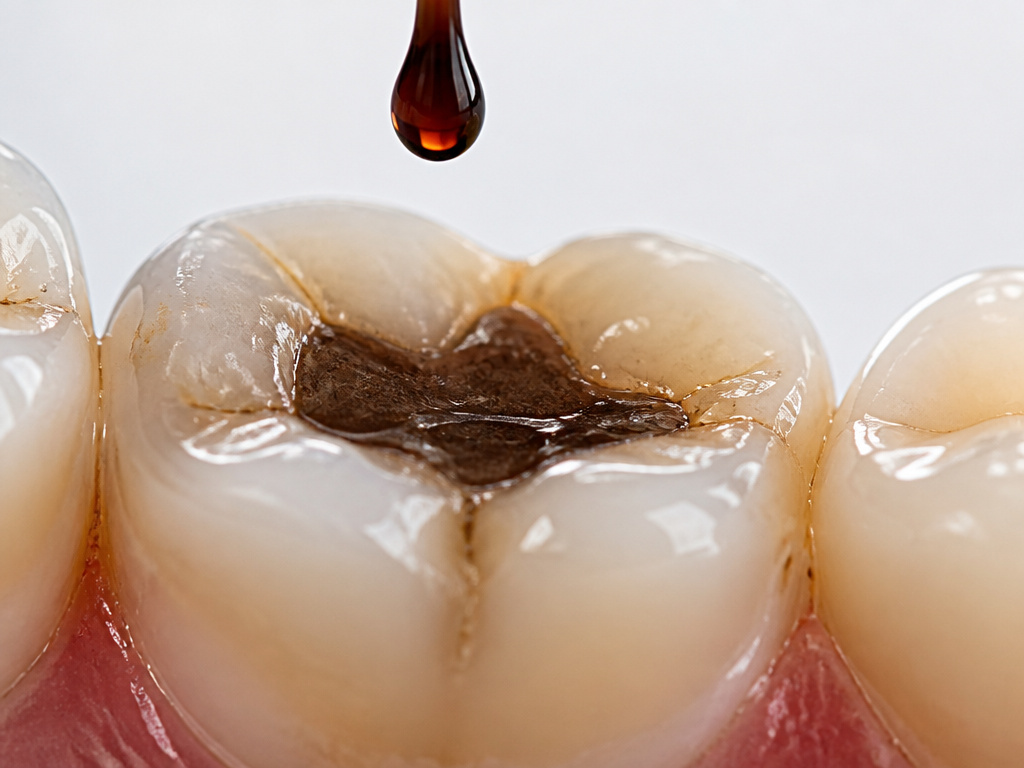
If you have fillings, crowns, or veneers, your staining profile changes. The research is clear on this. The 2009 and 2013 dental studies didn’t just look at natural teeth. They tested coffee’s effect on resin composites, the tooth-colored filling material.
The findings were stark. Coffee caused significant color changes in all composites, but some materials stained much worse than others. The porosity, chemistry, and surface finish of the restoration determine its vulnerability. An old composite filling with a slightly rough surface will grab coffee stains faster than your natural enamel. This can lead to a two-toned tooth where the filling is noticeably darker.
This creates a specific maintenance challenge. You cannot whiten a composite filling. Bleaching gels only work on natural tooth structure. If your filling stains, the only fix is to have it replaced by your dentist. This is a crucial piece of information most general articles miss. Your oral hygiene and coffee routine must be impeccable to protect these expensive restorations.
Porcelain crowns and veneers are far more stain-resistant than composites. Their glass-like surface doesn’t absorb chromogens the same way. However, the cement line at the gum edge can still trap stains. Vigilant flossing is critical here.
| Dental Material | Stain Risk from Coffee | Stain Removal Options |
|---|---|---|
| Natural Enamel | High | Professional cleaning, whitening, improved hygiene. |
| Resin Composite (white filling) | Very High | Cannot be whitened; requires replacement if discolored. |
| Porcelain Crown/Veneer | Low | Resistant to staining; cement line may require professional cleaning. |
| Glass Ionomer | Moderate-High | Porous material; can stain but is often used in non-visible areas. |
If you’re investing in a bright smile, talk to your dentist about the stain resistance of proposed materials. And protect that investment by managing your coffee ritual. Using a natural coffee sweetener like brown sugar won’t protect your dental work, but avoiding acidic additives might help preserve the cement bonds.
Frequently Asked Questions
Does adding milk to coffee prevent stains?
It can reduce them slightly. The casein proteins in milk bind to tannins. This neutralizes some of tannins’ stickiness, so fewer chromogens latch onto your teeth. It doesn’t make coffee stain-proof, but it’s better than black. Be mindful of the calorie content of milk if you’re watching your intake.
How long does it take for coffee to stain teeth?
Surface stains can begin within 24 hours. Research using spectrophotometers measured clinically visible staining on dental materials after seven days of sustained exposure. For deep, set-in stains that require professional cleaning, we’re talking months of daily consumption without adequate oral care.
Can you brush your teeth right after coffee?
No. You should wait at least 30 minutes. Coffee’s acidity softens enamel. Brushing during this vulnerable window is abrasive and can cause microscopic damage. Rinse with water immediately after drinking, then wait to brush.
Are tea stains worse than coffee stains?
Both are significant. Some studies, like the one in the Italian Journal of Food Science, have found tea can cause equal or greater discoloration due to its high tannin content. The staining mechanisms are similar. If you’re considering a switch, compare the health benefits of tea versus coffee beyond just staining.
Do whitening toothpastes work on coffee stains?
They work on fresh, surface-level stains by using mild abrasives to polish the tooth. They cannot remove deep, old stains that have bonded within the enamel or discolored dental work. For those, you need professional treatment.
Does drinking coffee through a straw help?
It can help minimize staining on your front incisors, which are most visible when you smile. However, the coffee still washes over your molars and premolars, so those teeth remain at risk. It’s a partial, not a total, solution.
Before You Go
Coffee stains your teeth. That’s a chemical fact, not a myth. The chromogens and tannins in your brew find a home in the porous landscape of your acid-softened enamel. The stain you see is the result of this bond.
Prevention is about protocol, not punishment. Drink your coffee in a focused window, not over hours. Rinse with water immediately after. Wait before you brush. Be strategic with additives, choose coconut oil coffee or a dash of almond milk in coffee over sugary syrups.
Removal has a hierarchy. Surface stains respond to good hygiene. The stubborn, set-in discoloration that forms over months requires the ultrasonic scaler in your hygienist’s office. Understand that dental work like composite fillings stains differently and can’t be whitened.
You don’t have to quit coffee. You just have to outsmart its chemistry. Respect the process, adjust your habits, and your smile can stay bright cup after cup.
