
Does Coffee Make You Sweat? The Science of Caffeine & Body
Coffee can make you sweat, but usually not by raising your core temperature. The primary driver is caffeine activating your sympathetic nervous system, your body’s fight-or-flight response, which can stimulate sweat glands as a side effect of increased physiological arousal. The heat from the drink itself and individual genetic factors in caffeine metabolism also play significant roles.
Most people blame the hot liquid. That’s part of it, but it’s not the whole story. The real mechanism is more chemical than thermal.
This guide walks through the physiology, from the adenosine receptors in your brain to the sweat glands on your skin. We’ll separate the evidence from the anecdotes and give you a clear picture of why your morning cup might leave you damp.
Key Takeaways
- Caffeine triggers sweat primarily by mimicking a stress response, not by overheating you. It blocks adenosine and stimulates adrenaline release.
- Your genetic profile dictates your response. Fast metabolizers (CYP1A2 gene) may feel little effect, while slow metabolizers can experience intense, prolonged stimulation and sweating.
- The temperature of the drink is a direct and immediate cause of sweating, independent of caffeine. A hot latte will warm you up faster than an iced Americano.
- Decaffeinated coffee can also cause sweating through other compounds, like gastrin, which stimulates stomach acid and can trigger a secondary stress response.
- Managing coffee-induced sweat involves adjusting temperature, dosage, and timing, not just switching to decaf.
The Short Answer: Caffeine’s Fight-or-Flight Effect
The sweating you feel after coffee is less about heat and more about chemical alarm. Caffeine is a central nervous system stimulant. Its most direct path to sweat glands runs through the sympathetic nervous system, your body’s accelerator for “fight or flight.”
Caffeine molecules structurally resemble adenosine, a neurotransmitter that promotes sleep and relaxation. By blocking adenosine receptors in the brain, caffeine prevents the calming signal. This blockade indirectly increases the activity of other neurotransmitters, like dopamine and norepinephrine, leading to heightened alertness and, crucially, the release of epinephrine (adrenaline) from your adrenal glands.
Adrenaline prepares your body for action. It increases heart rate, blood pressure, and, relevant here, can activate your eccrine sweat glands. This is a neurogenic sweat response, similar to the cold sweat of anxiety, not the thermoregulatory sweat you get from exercise.
TL;DR: Coffee sweat is often a stress-response side effect, not a cooling mechanism. The caffeine hijacks your adenosine system and kicks your adrenal glands into gear.
Your Genes Matter More Than the Brand

The textbook explanation above doesn’t happen the same way for everyone. Individual response varies wildly, and the biggest factor is written in your DNA. The enzyme cytochrome P450 1A2 (CYP1A2) in your liver is responsible for breaking down about 95% of ingested caffeine.
| Genetic Profile | Caffeine Metabolism | Typical Sweating Response | Practical Implication |
|---|---|---|---|
| Fast Metabolizer | Clears caffeine quickly (3-4 hour half-life). | Minimal. May feel alert without jitters or sweat. | Can tolerate multiple cups close together. |
| Slow Metabolizer | Processes caffeine slowly (6-8+ hour half-life). | Pronounced. Higher risk of jitters, anxiety, and sweating from prolonged stimulation. | One cup may feel like three; afternoon coffee disrupts sleep. |
This isn’t a minor difference. A PubMed abstract on coffee intake examining sudomotor (sweat gland) function noted that individual variation in caffeine sensitivity significantly influenced outcomes. If you’re a slow metabolizer, the adrenaline surge lasts longer, and your sweat glands get a more sustained activation signal.
You can’t change your genes, but you can work with them.
– If you sweat easily: You’re likely a slow metabolizer. Treat coffee like a measured drug. Stick to one serving, preferably before noon.
– If coffee doesn’t faze you: You’re probably a fast metabolizer. Your risk of caffeine-induced sweat is lower, though the hot liquid can still cause it.
Common mistake: Assuming a “strong” dark roast has more caffeine, it often has less due to longer roasting times. Blaming the roast when your genetics are the real culprit leads to repeated frustration.
Is It the Caffeine or Just a Hot Drink?

This is the crucial separation every basic article glosses over. There are two distinct mechanisms, and they often work together.
1. The Thermal Effect (The Hot Liquid)
Drinking any hot beverage, tea, broth, even hot water, temporarily raises the temperature in your mouth, esophagus, and stomach. Your body’s thermoregulatory system detects this localized heat and may initiate sweating to cool your core. This effect is immediate and short-lived.
2. The Pharmacological Effect (The Caffeine)
This is the fight-or-flight response described earlier. It takes 15-45 minutes for caffeine to peak in your bloodstream, so this sweating is delayed. It’s also more likely to be accompanied by other stimulant symptoms: a racing heart, jittery hands, or anxious thoughts.
How to tell which is causing your sweat:
– Timing: Sweat within 2 minutes? It’s probably the heat. Sweat 20 minutes later? That’s likely the caffeine.
– Compare: Drink a cup of hot herbal tea. If you sweat, you’re thermally sensitive. Then, drink a cold brew coffee. If you still sweat 30 minutes later, caffeine is your trigger.
The Role of Other Compounds in Coffee
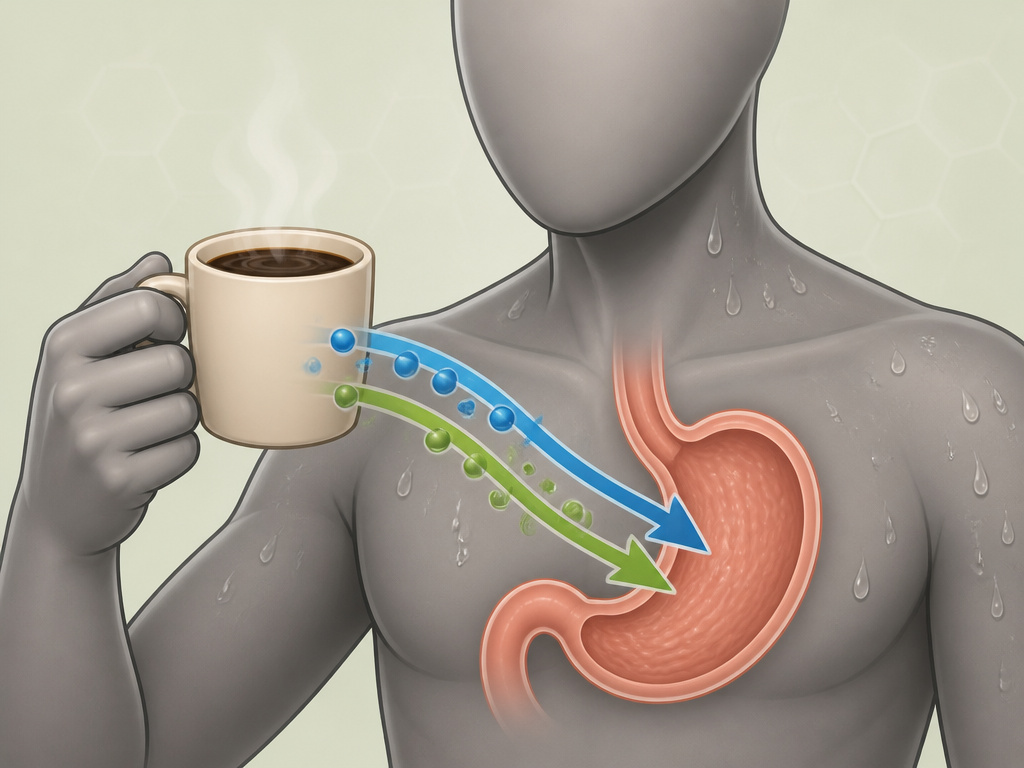
Caffeine takes all the blame, but coffee is a complex brew of over 1,000 compounds. Some of these can cause sweating through completely different pathways.
- Gastrin: This hormone stimulates gastric acid secretion. Both caffeinated and decaf coffee trigger gastrin release, primarily via the bitter taste activating type-2 taste receptors. A sudden increase in stomach acid production can cause discomfort and a secondary stress response that includes sweating.
- Chlorogenic Acids: These antioxidants contribute to coffee’s acidity. For some, this acidity can trigger gastroesophageal reflux (heartburn), whose discomfort can also stimulate sweating.
This explains why some people swear they sweat after decaf. They’re not imagining it. The body’s reaction to the bitter taste and subsequent acid preparation is a real physiological event. If your coffee and diarrhea issues are also triggered by decaf, this gastrin mechanism is a likely common cause.
Coffee’s Other Physical Effects: A Connected System
Sweating doesn’t occur in isolation. It’s one output of a systemic cascade that caffeine initiates. Understanding the other effects shows how interconnected the response is.
| Body System | Caffeine’s Primary Action | Result You Feel | Link to Sweating |
|---|---|---|---|
| Cardiovascular | Blocks adenosine, releases adrenaline. | Increased heart rate, temporary blood pressure rise. | The adrenaline surge is the direct stimulant for stress-sweating. |
| Renal (Kidneys) | Increases blood flow to kidneys, acts as a mild diuretic. | More frequent urination. | Diuresis can lead to mild dehydration if fluid isn’t replaced, thickening blood and making the heart work harder, potentially amplifying the stress response. |
| Thermoregulation | Some studies show it may slightly impair cooling in extreme heat. | Possibly feeling overheated during exercise in heat. | An European Journal of Applied Physiology study found caffeine can compromise thermoregulation during endurance in the heat, potentially increasing reliance on sweating. |
The cardiovascular effect is particularly important. That sudden heart-racing feeling is a hallmark of adrenaline. For people monitoring their heart health and coffee, this acute effect is usually harmless but can be unsettling. That unsettling feeling itself, worrying about your heart, can trigger more anxiety and more sweat. It’s a feedback loop.
The diuretic effect is often overstated. For a regular drinker, the fluid in the cup mostly offsets the loss. But if you’re drinking espresso shots back-to-back without water, or are already dehydrated, the compounded stress on your system can make all symptoms, including sweating, more pronounced.
How to Manage or Prevent Coffee-Induced Sweating
You don’t have to quit coffee. A few strategic adjustments can minimize the damp side effects.
- Change the Temperature. Switch to iced coffee, cold brew, or let your hot coffee cool for five minutes before drinking. This eliminates the thermal trigger entirely.
- Reduce the Dose. Use a smaller cup. Or, try a single espresso shot instead of a 16-ounce drip coffee. Less caffeine means a milder stimulant response.
- Mind Your Timing. Drink coffee when you’re calm, not already stressed. Avoid it before stressful meetings or workouts in hot environments where the thermoregulatory and pharmacological effects can compound.
- Hydrate Proactively. Drink a full glass of water before or with your coffee. This counters the diuretic effect and keeps your system from interpreting dehydration as an additional stressor.
- Experiment with Alternatives. Try black tea brewing factors. Tea often has less caffeine and contains L-theanine, which promotes calm alertness. The different caffeine release rates from tea can provide a smoother energy curve.
If you’ve tried these and still have a pronounced reaction, consider a longer experiment. Cut out caffeine completely for two weeks, then reintroduce it. The contrast will tell you definitively if it’s the culprit. Be aware of withdrawal headaches around day 2-3 as your adenosine receptors readjust.
When Sweating Might Signal Something Else
Occasional coffee-related sweat is normal. Persistent, drenching, or localized sweating could point to other factors that caffeine is merely aggravating.
- Anxiety Disorders: Caffeine can amplify underlying anxiety. If coffee makes you sweat, feel panicky, and have intrusive worries, the issue may be an anxiety disorder, with caffeine as the trigger.
- Hyperhidrosis: This is a condition of excessive sweating unrelated to temperature or exertion. Coffee can worsen it. If you sweat profusely from your palms, feet, or underarms outside of coffee consumption, consult a dermatologist.
- Medication Interactions: Caffeine can interfere with the metabolism of drugs like antidepressants, thyroid medication, and some asthma drugs. This can increase their side effects, which may include sweating. Always check for interactions.
- Hormonal Fluctuations: Menopause, thyroid imbalances (hyperthyroidism), and other hormonal shifts affect your body’s thermostat and sweat response. Caffeine adds another layer of stimulation.
Before you start: If you experience chest pain, dizziness, or extreme shortness of breath with sweating after coffee, stop consumption and seek medical advice. While rare, this could indicate a severe caffeine sensitivity or an unrelated cardiovascular event.
Frequently Asked Questions
Does decaf coffee make you sweat?
Yes, it can. Decaffeinated coffee still contains compounds like chlorogenic acids and trigonelline that stimulate gastrin release and stomach acid production. The bitter taste itself can activate a stress response. For some, this is enough to cause sweating, especially if they have a sensitive stomach or acid reflux.
Why do I sweat when I drink coffee but not energy drinks?
This often comes down to serving size and expectation. A standard 8oz coffee can have 95mg of caffeine, while a 16oz can of Monster Energy drinks can have 160mg. However, you might sip coffee slowly, leading to a hotter thermal input, while chugging a cold energy drink. Furthermore, the caffeine serving sizes in energy drinks are standardized and expected; the variable strength of homemade coffee can deliver an unexpected jolt.
How long after drinking coffee will I sweat?
Thermal sweating from the hot liquid begins almost immediately, within the first minute of drinking. Pharmacological sweating from caffeine typically starts 15-45 minutes after consumption, as caffeine levels peak in your bloodstream.
Can building a tolerance reduce coffee sweating?
Absolutely. Regular consumption leads to physiological tolerance. Your body produces more adenosine receptors, so caffeine blocks a smaller percentage. The adrenaline response becomes attenuated. A daily drinker will typically sweat less from the same cup than an occasional drinker. This tolerance also applies to the diuretic effect.
Is coffee sweating a sign of dehydration?
Not directly. Sweating is a loss of fluid, so excessive sweating can contribute to dehydration. However, the initial sweat from coffee is a neurological or thermal response, not a sign you’re already dehydrated. The bigger dehydration risk is from caffeine’s mild diuretic effect, which is easily mitigated by drinking water alongside your coffee.
The Bottom Line
Coffee can make you sweat through a combination of heat, chemistry, and your unique biology. The primary culprit for most is caffeine’s mimicry of a stress response, not a rise in core temperature. Your genetic makeup as a fast or slow metabolizer sets the baseline for how intense that response will be.
Pay attention to the timing. Immediate sweat points to a hot drink; delayed sweat points to the caffeine. If you’re affected, your best levers are temperature, dose, and timing, not necessarily abstinence. Switch to cold brew, use a smaller cup, and drink it when you’re already relaxed.
Finally, listen to what your body is really saying. If the reaction feels extreme or is accompanied by other concerning symptoms, it’s worth a conversation with a doctor. For most, understanding the why behind the damp forehead is enough to enjoy the next cup with a bit more comfort and a lot less mystery.
