
Does Coffee Make You Gain Weight? The 3 Real Culprits
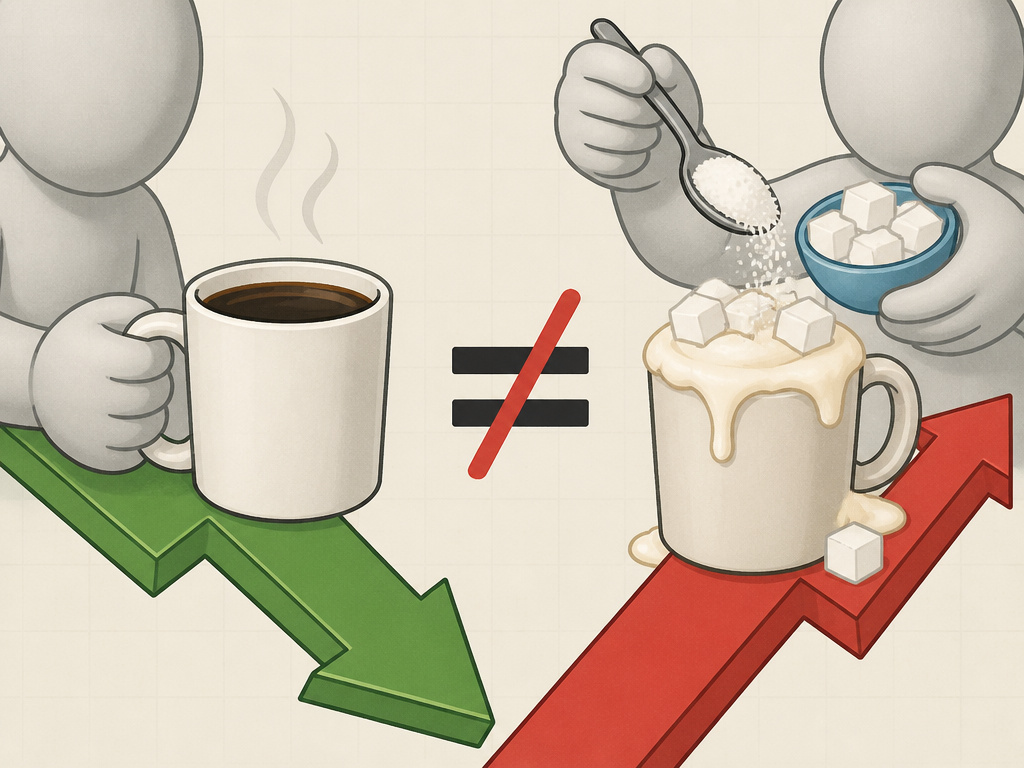
Plain black coffee contains almost no calories and can temporarily boost metabolism and suppress appetite. Coffee makes you gain weight when you turn it into a dessert by adding sugar, flavored syrups, and high-fat dairy. The beverage itself is not the problem; the hundreds of extra calories you pour into it are.
Most people get this wrong because they blame the coffee, not the cup. They order a 500-calorie mocha every afternoon, wonder why the scale won’t budge, and point a finger at caffeine. The real culprit is sitting right there in the whipped cream.
This guide breaks down the science of coffee and weight, shows you the exact math of common drinks, and gives you a plan to keep your coffee habit working for you, not against you.
Key Takeaways
- Black coffee is a near-zero-calorie drink that can increase energy expenditure by 3-11% and suppress hunger hormones like ghrelin.
- The USDA Dietary Guidelines define moderate coffee consumption as 3-5 cups per day (up to 400mg caffeine), a range linked to neutral or beneficial weight outcomes in studies.
- Adding just two tablespoons of heavy cream and two packets of sugar to your daily coffee adds over 300 calories a week, which can lead to about four pounds of weight gain in a year.
- Decaffeinated coffee also appears to promote feelings of fullness by increasing peptide YY, meaning the weight-related benefits aren’t solely from caffeine.
- For intermittent fasters, black coffee does not break a fast and can help extend the fasting window by managing hunger.
The Simple Answer: Calories In vs. Calories Out
Coffee is a plant brew, not a fat molecule. An 8-ounce cup of black coffee brewed from grounds holds between 2 and 5 calories. That is functionally zero in the context of a daily diet. The equation for weight gain is consuming more energy than you burn. Black coffee contributes almost nothing to the “energy in” side.
Where the math changes is in your hand. A single pump of vanilla syrup in a large latte adds about 20 calories. Two tablespoons of half-and-half add another 40. The whipped cream on top is another 70. Suddenly your zero-calorie habit is a 130-calorie snack, several times a day. A systematic review on coffee and obesity confirms the pattern: the association between coffee and weight is largely neutral or inverse, but it doesn’t account for these added ingredients.
TL;DR: Your body doesn’t process coffee beans into body fat. It processes excess sugar and fat from your coffee additions into stored energy.
The Hormone Game: How Coffee Talks to Your Hunger
Caffeine is a stimulant. It blocks adenosine receptors in your brain, which is why you feel more alert. This action has a downstream effect on your digestive system. Research shows caffeine can decrease levels of ghrelin, the hormone that signals hunger to your stomach.
Common mistake: Drinking your coffee with a high-sugar pastry, the caffeine may blunt ghrelin slightly, but the sugar spike causes a sharper insulin response and a crash that triggers even stronger hunger an hour later.
The effect isn’t just about caffeine. Decaffeinated coffee has been shown to increase levels of peptide YY, a gut hormone that promotes feelings of satiety and fullness. This is a key point most quick articles miss. Something in the coffee bean itself, beyond the stimulant, communicates with your digestive hormones. This is one reason many people find a cup of black coffee helps them push a meal back by an hour or two.
If you’re using coffee as a tool, drink it black about 30 minutes before you typically get hungry. The combination of caffeine and other compounds can help quiet the stomach growls. Adding healthy coffee additives like a teaspoon of coconut oil changes this dynamic by adding fat calories, which also promote satiety but break a fast.
The Real-World Math: Your Favorite Drink’s Calorie Bill
You cannot manage what you do not measure. People who are meticulous with their food journal will still write “coffee” and ignore the 250 calories of milk and sugar that went with it. Here is what that oversight costs.
| Coffee Drink (16 oz / Grande) | Key Additions | Estimated Calories | Weekly Impact (1 per day) |
|---|---|---|---|
| Black Coffee / Americano | None | <5 | <35 |
| Brewed Coffee with Milk & Sugar | 2 oz whole milk, 2 sugars | ~70 | ~490 (≈ 1/7 lb) |
| Latte | 10 oz steamed milk | ~190 | ~1330 (≈ 2/5 lb) |
| Flavored Latte (e.g., Vanilla) | 10 oz milk, 3 pumps syrup | ~250 | ~1750 (≈ 1/2 lb) |
| Mocha | Milk, chocolate syrup, whipped cream | ~330 | ~2310 (≈ 2/3 lb) |
| Frozen Blended Coffee Drink | Milk, syrup, base, whipped cream | ~420 | ~2940 (≈ 0.85 lb) |
A weekly surplus of 3,500 calories leads to about one pound of weight gain. As the table shows, switching from a daily mocha to a black coffee can create a deficit large enough to lose a pound every 7-10 weeks, without changing anything else you eat. This is the hidden math of calories in coffee creamer.
The problem compounds with size. A 20-ounce “venti” version of any of these drinks adds 25% more milk and syrup. That mocha climbs over 400 calories. Drink two a day and you’re adding nearly a pound of potential weight gain every week.
What the Research Actually Says
You will find headlines claiming coffee causes weight loss and others saying it causes gain. The confusion comes from not separating the coffee from the cohort. Large population studies, like the one cited in the NIH study on coffee and weight gain, track what people report drinking. The consistent finding is that people who drink more plain coffee tend to have lower body weight over time.
The U.S. Dietary Guidelines for Americans state that moderate coffee consumption, 3 to 5 eight-ounce cups per day, providing up to 400 mg of caffeine, can be part of a healthy diet. They do not warn of weight gain from the coffee itself. The guideline’s implicit warning is about the additions.
A 2025 study in Frontiers in Nutrition took a closer look. This Frontiers in Nutrition coffee study specifically examined the “differential impact of coffee quantity and sweetening.” Its conclusion was straightforward: coffee quantity alone wasn’t the driver of negative body composition changes; sweetening was. The sugars and creams, not the brew, correlated with increased inflammation and less favorable body metrics.
This research underscores a critical point. Drinking six cups of black coffee a day is metabolically different from drinking two giant sweetened lattes. The first is a high-volume, low-calorie habit that keeps you hydrated and may offer antioxidants. The second is a significant source of empty calories and sugar. Comparing them as “coffee consumption” is useless.
How to Drink Coffee for Weight Management (or Loss)
You don’t need to quit. You need to audit and adjust. Follow this sequence.
- Go black for one week. This resets your palate and shows you the true calorie count of your habit. The bitterness is an acquired taste, but you’ll adapt faster than you think.
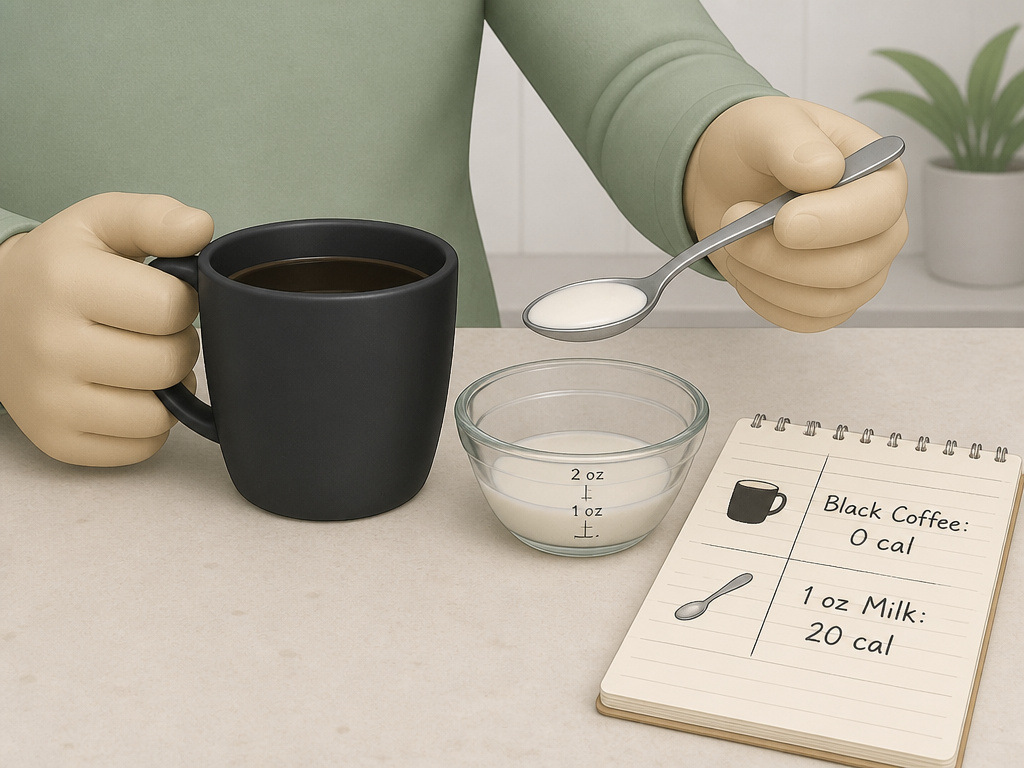
- If you need milk, measure it. Pouring from the carton is a guess. Use a tablespoon. One ounce of whole milk is about 20 calories. An ounce of almond milk in coffee is about 5. That knowledge is power.
- Reconsider sweeteners. If you need sweetness, try a zero-calorie option like stevia or monk fruit. If you prefer real sugar, use one packet (about 20 calories) instead of two or three. Understand that sweetening coffee with brown sugar adds the same caloric load as white sugar, with a slightly different flavor.
- Treat specialty drinks as treats. A pumpkin spice latte is a dessert. Have it on a weekend, not as your Tuesday morning commute fuel. This mindset shift alone can save thousands of calories a month.
- Time it strategically. Drink your coffee 30-60 minutes before a meal you want to make smaller. The appetite-suppressing effects can help you feel satisfied with a smaller portion.
For those practicing intermittent fasting, the rule is clear. Black coffee does not break a fast. It can be a powerful tool to curb hunger during the fasting window. Adding anything with calories, including MCT oil coffee, butter, or milk, does break the fast and shifts your body out of the fasted state.
Coffee vs. Other Caffeine Sources
Is coffee better or worse for your weight than other caffeinated drinks? This matters if you’re considering a switch.
An 8-ounce coffee has about 95 mg of caffeine. A 12-ounce can of cola has about 35 mg but also 40 grams of sugar. The sugar is the primary weight gain risk there. A standard 16-ounce energy drink can have 150 mg of caffeine and 50+ grams of sugar. The coffee vs energy drinks comparison is stark: the energy drink delivers a massive calorie bomb alongside its stimulant.
Even in the healthier realm, a comparison of tea vs coffee shows tea generally has less caffeine and different antioxidants, but both are low-calorie bases. The weight impact, again, comes down to what you put in them. Sweetened iced tea can be just as sugary as soda.
The advantage of coffee is the ritual and the potential for zero-calorie consumption. You are less likely to drink a cup of black tea without anything in it than you are to drink black coffee. That cultural habit makes coffee a more practical tool for weight management for many people.
Frequently Asked Questions
Can decaf coffee help with weight loss?
Yes, potentially. Decaffeinated coffee still contains the other compounds that can increase satiety hormones like peptide YY. It won’t give you the metabolic bump from caffeine, but it can help manage hunger without the stimulant effect.
Does coffee boost your metabolism?
Caffeine can increase your metabolic rate, the number of calories you burn at rest, by 3 to 11 percent. The effect is modest and temporary, lasting a few hours. It’s a minor helper, not a magic bullet. Relying on it without managing diet is ineffective.
How many cups of coffee a day is okay for weight management?
The USDA’s moderate range of 3-5 cups (up to 400mg caffeine) is a safe guideline. Staying within this limit helps you avoid the jitters, sleep disruption, and potential for increased cortisol that can come with excessive intake. More importantly, ensure those cups aren’t loaded with extras.
What’s the worst thing I can add to my coffee for weight gain?
Flavored syrups and sugar-free syrups with artificial sweeteners are a double problem. They add significant calories (or disrupt gut bacteria) and train your palate to expect extreme sweetness, making whole foods taste bland. Regular whipped cream is a close second for its high fat and sugar content.
Will quitting coffee help me lose weight?
Only if your current coffee habit is high-calorie. If you stop drinking three 300-calorie mochas a week, you’ll create a deficit. If you drink black coffee, quitting might not affect your weight directly, but you might experience increased hunger or miss the mild appetite suppression.
The Bottom Line
Coffee is not your enemy in weight management. It is a neutral, nearly calorie-free vehicle. What you choose to load into that vehicle determines whether it becomes a help, a hindrance, or a direct path to weight gain.
The science is consistent: plain coffee consumption is linked to stable or lower body weight. The mechanism involves a mild metabolic boost and helpful hormonal nudges. The danger, confirmed by studies like the one in Frontiers in Nutrition, is the sweetening and the cream. Your daily latte isn’t a coffee problem. It’s a milk-and-sugar problem.
Audit your cup. Measure your additions. Treat the extravagant drinks as what they are, desserts. Do that, and you can keep your ritual without sacrificing your goals. The bitter truth is that the answer was in your hand the whole time.
{
“@context”: “https://schema.org”,
“@type”: “HowTo”,
“name”: “How to Drink Coffee Without Gaining Weight”,
“totalTime”: “PT2M”,
“step”: [
{
“@type”: “HowToStep”,
“name”: “Start with black coffee”,
“text”: “Brew your coffee without adding sugar, flavored syrups, or high-fat dairy. This keeps the base beverage near zero calories.”
},
{
“@type”: “HowToStep”,
“name”: “Measure your additions”,
“text”: “If you use milk or a sweetener, measure it. One tablespoon of heavy cream is about 50 calories; a packet of sugar is about 20. Track these like any other food.”
},
{
“@type”: “HowToStep”,
“name”: “Limit specialty drinks”,
“text”: “Treat large mochas, frappuccinos, and seasonal lattes as desserts, not daily beverages. A 20-ounce white chocolate mocha can contain over 500 calories.”
},
{
“@type”: “HowToStep”,
“name”: “Time it for appetite control”,
“text”: “Drink your coffee about 30-60 minutes before a typical meal. The caffeine and other compounds can help suppress ghrelin, the hunger hormone, making it easier to eat less.”
}
]
}
{
“@context”: “https://schema.org”,
“@type”: “FAQPage”,
“mainEntity”: [
{
“@type”: “Question”,
“name”: “Can decaf coffee help with weight loss?”,
“acceptedAnswer”: {
“@type”: “Answer”,
“text”: “Yes, potentially. Decaffeinated coffee still contains the other compounds that can increase satiety hormones like peptide YY. It won’t give you the metabolic bump from caffeine, but it can help manage hunger without the stimulant effect.”
}
},
{
“@type”: “Question”,
“name”: “Does coffee boost your metabolism?”,
“acceptedAnswer”: {
“@type”: “Answer”,
“text”: “Caffeine can increase your metabolic rate, the number of calories you burn at rest, by 3 to 11 percent. The effect is modest and temporary, lasting a few hours. It’s a minor helper, not a magic bullet. Relying on it without managing diet is ineffective.”
}
},
{
“@type”: “Question”,
“name”: “How many cups of coffee a day is okay for weight management?”,
“acceptedAnswer”: {
“@type”: “Answer”,
“text”: “The USDA’s moderate range of 3-5 cups (up to 400mg caffeine) is a safe guideline. Staying within this limit helps you avoid the jitters, sleep disruption, and potential for increased cortisol that can come with excessive intake. More importantly, ensure those cups aren’t loaded with extras.”
}
},
{
“@type”: “Question”,
“name”: “What’s the worst thing I can add to my coffee for weight gain?”,
“acceptedAnswer”: {
“@type”: “Answer”,
“text”: “Flavored syrups and sugar-free syrups with artificial sweeteners are a double problem. They add significant calories (or disrupt gut bacteria) and train your palate to expect extreme sweetness, making whole foods taste bland. Regular whipped cream is a close second for its high fat and sugar content.”
}
},
{
“@type”: “Question”,
“name”: “Will quitting coffee help me lose weight?”,
“acceptedAnswer”: {
“@type”: “Answer”,
“text”: “Only if your current coffee habit is high-calorie. If you stop drinking three 300-calorie mochas a week, you’ll create a deficit. If you drink black coffee, quitting might not affect your weight directly, but you might experience increased hunger or miss the mild appetite suppression.”
}
}
]
}
