
Does Coffee Make You Anxious? The Data-Backed Truth on Caffeine
Coffee can make you anxious because caffeine blocks adenosine receptors in your brain, a natural calming chemical, while simultaneously triggering the release of adrenaline and cortisol. This one-two punch of removing the brake and hitting the gas creates the physical sensations of anxiety, racing heart, restlessness, tension, especially at doses above 200 mg or in individuals with a genetic sensitivity to caffeine.
The universal mistake is treating all coffee as equal. A light-roast single-origin pour-over might contain 50% more caffeine than a dark-roast espresso blend, and drinking it on an empty stomach guarantees a sharper, more anxious spike. People blame “coffee” when the real variables are dose, timing, biology, and what’s already in your stomach.
This guide breaks down the precise biological chain reaction, identifies who is most at risk using peer-reviewed data, and gives you a tactical plan to adjust your habit without giving up your cup.
Key Takeaways
- Caffeine-induced anxiety is a direct pharmacological effect, not imagination: it blocks adenosine (calming) and spikes adrenaline (alertness) and cortisol (stress).
- The average half-life of caffeine is 5 hours, meaning a 2 PM coffee still has half its punch at 7 PM, disrupting sleep and priming you for next-day anxiety.
- Individuals with a specific CYP1A2 gene variant metabolize caffeine up to four times slower, experiencing stronger, longer-lasting anxiety from the same cup.
- Pairing coffee with food, specifically protein and complex carbs, dramatically blunts the blood sugar and adrenaline spike that fuels jitters.
- Switching to tea or taking an L-theanine supplement (100-200 mg) with your coffee can provide focus without the frantic edge, thanks to L-theanine’s calming effect.
How Caffeine Triggers Anxiety: The Biological Chain Reaction
Headlines call caffeine a stimulant. That’s true but useless. The real story is a specific, two-part chemical hijacking inside your skull.
First, caffeine is an adenosine antagonist. Adenosine is a neurotransmitter that builds up throughout the day, making you feel naturally tired and calm. It plugs into receptors, signaling your brain to slow down. Caffeine molecules are shaped almost identically to adenosine. They slide into those same receptors and block them. The brake pedal is pushed, but the car doesn’t get the message.
Caffeine’s primary mechanism is competitive antagonism at adenosine A1 and A2A receptors in the central nervous system. By occupying these receptors, it prevents endogenous adenosine from binding and exerting its inhibitory, sleep-promoting effects, leading to a net increase in neuronal firing and the release of other neurotransmitters like dopamine and norepinephrine.
Second, with the adenosine brake disabled, your brain’s natural accelerators, norepinephrine and dopamine, run unchecked. Your pituitary gland senses this heightened activity and signals your adrenal glands to release adrenaline (epinephrine) and cortisol. Your heart rate increases. Your muscles tense. Your pupils dilate. Blood sugar rises. This is the fight-or-flight response, identical to the physical symptoms of a panic attack.
TL;DR: Caffeine doesn’t add energy; it removes the chemical that tells your brain to rest, then your body’s stress systems kick in automatically. That’s the anxiety.
Who is Most at Risk? Genetics, Disorders, and Lifestyle
Not everyone feels anxious after a latte. Your reaction depends on three main factors: your genes, your pre-existing mental health landscape, and what you mix with your cup.
Genetic Slow Metabolizers
The CYP1A2 gene produces the liver enzyme that breaks down about 95% of ingested caffeine. Some people carry a variant that makes this enzyme sluggish. A 2016 study in Molecular Psychiatry found these “slow metabolizers” process caffeine up to four times slower. For them, a standard coffee acts like a double or triple shot, with effects lingering for many hours. If you’ve ever wondered why one cup ruins your whole afternoon while a friend drinks three after dinner and sleeps fine, genetics is the likely answer.
Pre-existing Anxiety and Panic Disorders
The research is unequivocal. A 2002 study in Psychiatry and Clinical Neurosciences gave 480 mg of caffeine (about four strong cups) to patients with panic disorder and healthy controls. The panic disorder group experienced significant increases in anxiety symptoms and actual panic attacks. The control group felt jittery but didn’t panic. If you have a diagnosed condition like Generalized Anxiety Disorder (GAD) or Panic Disorder, your nervous system is already primed. Caffeine doesn’t just add stimulation; it lights the existing fuse.
Medication Interactions
This is the silent amplifier. Common medications, including many antidepressants like the SSRI fluvoxamine, inhibit the same CYP1A2 enzyme. A 1996 Clinical Pharmacology & Therapeutics paper showed fluvoxamine could reduce caffeine clearance by over 80%. Mixing your morning coffee with such a medication effectively quadruples your dose. Always check for interactions if you take prescription drugs.
| Risk Factor | Mechanism | Anxiety Consequence |
|---|---|---|
| CYP1A2 Slow Metabolizer | Liver breaks down caffeine 4x slower | Prolonged, intense jitters from a normal dose; symptoms last 8+ hours |
| Panic Disorder Diagnosis | Heightened sensitivity to adrenaline surge | Standard dose can trigger a full panic attack with palpitations and dread |
| Taking Fluvoxamine (SSRI) | Medication blocks caffeine-metabolizing enzyme | Coffee blood levels stay dangerously high, mimicking a massive overdose |
| Empty Stomach | Rapid absorption, no food to buffer blood sugar spike | Sharp adrenaline rush within 15 minutes, leading to shakes and acute nervousness |
The Dose-Response Curve: How Much Coffee is Too Much?
General advice says “moderation.” That’s meaningless without numbers. The relationship between caffeine intake and anxiety is demonstrably dose-dependent, as confirmed by a 2008 community study in the Journal of Anxiety Disorders.
For a healthy adult with average metabolism, the anxiogenic threshold often lies between 200 mg and 400 mg of caffeine consumed within a few hours. To visualize why this matters, let’s compare common sources.
| Beverage | Typical Serving | Caffeine Range | % of 400 mg Threshold |
|---|---|---|---|
| Home-Brewed Coffee | 8 oz (240 ml) | 95–200 mg | 24–50% |
| Starbucks Blonde Roast | 16 oz (Grande) | ~360 mg | 90% |
| Espresso Shot | 1 oz (30 ml) | ~63 mg | 16% |
| Black Tea | 8 oz (240 ml) | 40–70 mg | 10–18% |
| Green Tea | 8 oz (240 ml) | 20–45 mg | 5–11% |
| Monster Energy Drink | 16 oz | ~160 mg | 40% |
| Red Bull | 8.4 oz | ~80 mg | 20% |
Notice the staggering range in a simple cup of coffee. A 16-ounce light roast from a cafe can deliver nearly your entire daily anxiety threshold in one paper cup. This variability explains why switching from a dark roast at home to a blonde roast at a shop can suddenly trigger symptoms. It’s not “stronger” flavor; it’s literally more caffeine.
Common mistake: Assuming “one cup” is a standard unit, a 12-ounce home brew might have 120 mg, while a 20-ounce convenience-store coffee can contain over 400 mg. Without tracking milligrams, you’re guessing your dose.
If you’re exploring the broader landscape of stimulants, our comparison of energy drinks vs coffee details why the cocktail of sugar and other compounds in drinks like Monster can worsen anxiety beyond their caffeine content. Similarly, understanding the caffeine in Red Bull versus a coffee helps contextualize your total intake from all sources.
A 5-Step Tactical Plan to Reduce Coffee-Induced Anxiety
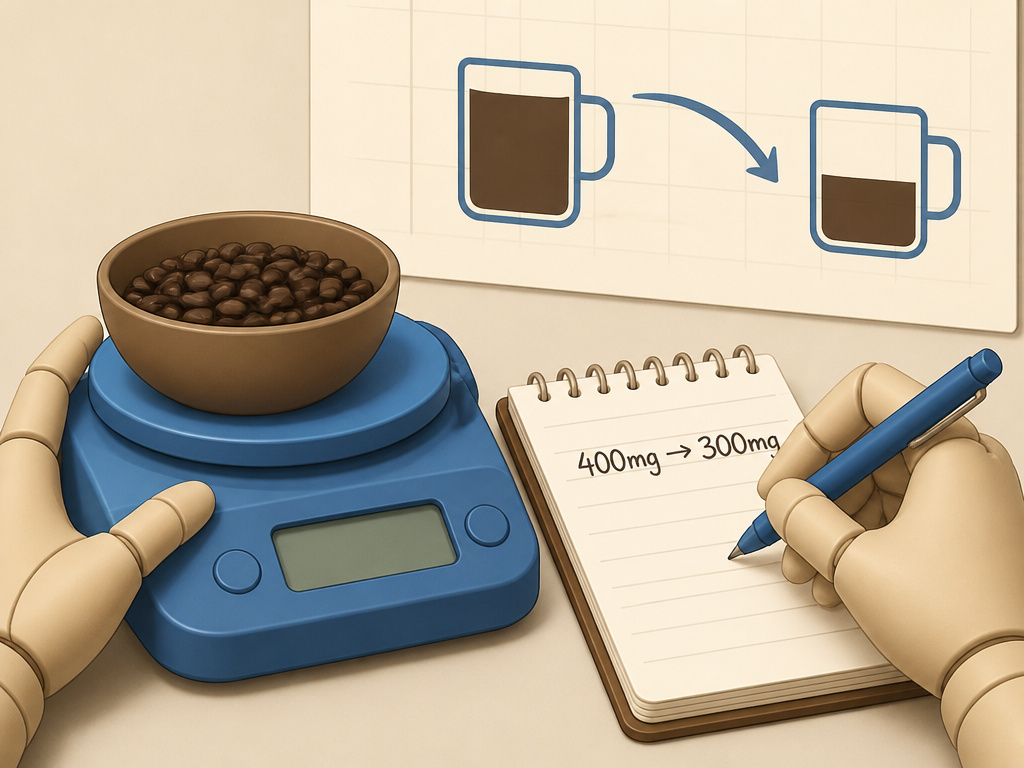
You don’t have to quit. You need a system. This plan prioritizes measurement and gradual change over willpower.
1. Establish a Baseline with a 3-Day Audit.
For three days, write down every caffeine source: coffee type and volume, tea, soda, chocolate, and any medication or supplement with caffeine. Use the USDA database or reputable charts to assign approximate milligrams. The goal isn’t perfection, but pattern recognition. You’ll likely find a “hidden” source, like an afternoon soda or dark chocolate, pushing you over your personal limit.
2. Reduce Your Total Intake by 25% for One Week.
If your audit averages 400 mg daily, your target for week one is 300 mg. Do this by method, not misery. Use a kitchen scale to portion 18 grams of beans instead of 22. Mix half regular and half decaf beans for your morning pot. Swap your afternoon coffee for a lower-caffeine alternative like black tea. A sharp, sudden cut causes headaches and reinforces a sense of deprivation.
3. Never Drink Coffee on an Empty Stomach.
The YouTube reminder is physiologically correct. Coffee stimulates gastric acid and accelerates the absorption of caffeine into your bloodstream. No food means a faster, sharper spike in blood sugar and adrenaline. Eat a real breakfast with protein and complex carbs, eggs and whole-grain toast, yogurt and nuts, 15-30 minutes before your first sip. The difference in jitters is immediate and tangible.
4. Enforce a Caffeine Curfew Based on the 5-Hour Half-Life.
The average half-life is 5 hours. If you want to sleep at 11 PM, your last caffeine should be before 5 PM. For slow metabolizers, make it 2 PM. Residual caffeine fragments prevent deep sleep, and poor sleep is a primary driver of next-day anxiety. You create a vicious cycle: anxious from coffee, sleep poorly, need more coffee tomorrow, feel more anxious.
5. Experiment with L-Theanine or a Tea Transition.
L-theanine is an amino acid found predominantly in tea. It promotes alpha brain waves (calm focus) and counteracts caffeine’s stimulatory edge. You can take a 100-200 mg supplement with your coffee. Alternatively, replace one coffee serving with green tea, which naturally pairs caffeine with L-theanine. Our look at the benefits of green tea vs coffee explores this calming synergy in detail. For a more direct coffee substitute, black tea offers a robust flavor with less caffeine and some L-theanine.
When to See a Doctor

This isn’t just about jitters. If you experience any of the following, consult a healthcare professional to rule out underlying issues:
* Heart palpitations, chest pain, or shortness of breath after caffeine.
* Panic attacks characterized by overwhelming dread, derealization, or fear of losing control.
* Anxiety that persists for hours or days after caffeine has logically worn off.
* You are pregnant, breastfeeding, or managing a diagnosed condition like hypertension or an anxiety disorder. Our resource on caffeine while breastfeeding covers the specific considerations for new mothers.
It’s also prudent to understand how caffeine affects other systems. For some, anxiety is accompanied by heart palpitations; reading about coffee and heart health can provide a fuller picture of caffeine’s cardiovascular effects.
Frequently Asked Questions
Can decaf coffee cause anxiety?
True decaf (97% caffeine removed) is unlikely to cause pharmacological anxiety. However, the ritual, heat, and slight residual caffeine (2-5 mg per cup) can trigger a conditioned psychological response or placebo effect in highly sensitive individuals. Check that your decaf is water-processed, as some solvent-based methods leave trace chemicals that can upset sensitive systems.
Why does coffee sometimes calm my anxiety?
This is often seen in individuals with ADHD, where stimulants have a paradoxical focusing effect. For others, the ritual itself is calming, or the dopamine boost from caffeine temporarily overrides a low-mood state that manifests as anxiety. It’s a short-term loan, though. The adenosine blockade and cortisol release are still happening in the background.
Is espresso better than brewed coffee for anxiety?
Not necessarily. While a single 1-ounce shot has less caffeine (~63 mg) than a mug of brewed coffee, people rarely drink just one. A double shot is 125 mg, and a latte is often a double. Furthermore, the caffeine in espresso is absorbed slightly faster due to the concentrated form, potentially leading to a quicker, sharper spike. Dose for dose, the brewing method matters less than the total milligrams consumed.
How long does coffee anxiety last?
For an average metabolizer, the peak blood concentration hits 30-60 minutes after drinking. The intense jittery phase often subsides within 1-2 hours as your body begins to process it. However, the 5-hour half-life means subtle effects, like background restlessness or impaired sleep quality, can persist for 8-10 hours. For slow metabolizers, noticeable anxiety can last most of the day.
The Bottom Line
Coffee-induced anxiety is a real, measurable pharmacological event, not a character flaw. The solution isn’t a blanket ban but forensic moderation. Weigh your beans. Track your milligrams. Eat first. Respect the 5-hour half-life.
The goal is to retain the ritual and the focus while stripping out the frantic, vibrating edge. For many, that means a lighter dose, a paired L-theanine supplement, or replacing a cup with green tea. Your nervous system will give you clear feedback. Listen to it. The data from the Frontiers meta-analysis on caffeine and anxiety and the longitudinal review in Current Nutrition Reports consistently shows that mindful consumption is the bridge between enjoyment and well-being.
Start with the 25% reduction. That single change, grounded in the findings of studies like the LIPOKAP study on depression and anxiety, breaks the cycle for most people. You get to keep your cup. You just learn to hold it steady.
