
Do Lattes Have Coffee? The Simple Answer & How to Make One
Yes, lattes contain coffee. A latte is a milk-based espresso drink. It is built on one or two shots of espresso, which is concentrated coffee, combined with steamed milk and a thin layer of foam. The standard ratio is about one-third espresso to two-thirds steamed milk.
The confusion starts with the word “coffee.” In a specialty coffee context, “coffee” often means brewed filter coffee. A latte uses espresso, which is a concentrated, pressurized extraction of coffee. So while a latte doesn’t contain drip or pour-over coffee, its entire flavor foundation is espresso, which is absolutely coffee.
This is the part that trips people up at home. You can’t make a real latte with just strong brewed coffee. The body and crema from espresso are what cut through the volume of milk. Without that concentrated base, you have a café au lait or a misto, not a latte.
Key Takeaways
- A latte’s coffee component is espresso, not brewed coffee. The drink is 1/3 espresso, 2/3 steamed milk, with a thin foam cap.
- The main difference between a latte and a cappuccino is the milk texture and ratio. A cappuccino has equal parts espresso, steamed milk, and thick, dry foam.
- A standard 12-oz latte made with two espresso shots contains roughly 128 mg of caffeine. More milk doesn’t dilute the caffeine.
- You need an espresso machine with a steam wand to make a proper latte. A French press or microwave cannot create the necessary microfoam.
- Popular flavored versions like pumpkin spice or caramel lattes still use espresso as the base. The syrup is added to the cup before the milk.
What Exactly Is a Latte?
A caffè latte, which translates to “milk coffee” in Italian, is a specific preparation with strict components. The structure isn’t a suggestion, it’s what separates the drink from its cousins.
The core is a double shot of espresso, pulling 36 grams of liquid in 25 to 30 seconds. This yields a syrupy body and the bittersweet punch needed to balance six to eight ounces of milk. The milk is steamed, not just heated. The goal is microfoam: tiny, uniform bubbles integrated throughout the liquid milk, creating a velvety texture. A thin layer of this foam rests on top.
A caffè latte is a hot espresso-based drink composed of one-third freshly pulled espresso and two-thirds steamed milk with microfoam, yielding a smooth, integrated beverage with minimal visible separation.
If you see clear, distinct layers in a glass, espresso on bottom, milk in the middle, stiff foam on top, that’s closer to a traditional macchiato or a poorly made latte. A well-poured latte homogenizes quickly into a uniform beige color.
TL;DR: A latte is 1/3 espresso, 2/3 steamed milk with integrated microfoam. The espresso is non-negotiable.
The Espresso Foundation
This is where the coffee lives. Using brewed coffee instead of espresso changes the drink’s fundamental chemistry.
Espresso extracts under high pressure (9 bars), forcing oils and suspended solids into the cup. This creates crema, the golden-brown layer on top of the shot. Crema is emulsified coffee oils and gases. It adds texture and a protective layer that slows the integration of espresso and milk, allowing for layered drinks. Brewed coffee lacks this pressure extraction and has no crema, so it mixes with milk immediately and tastes thin.
The dose matters. A single shot (18g grounds yielding 36g espresso) is the minimum for a small latte. Most specialty cafes use a double shot (36g grounds yielding 72g espresso) for a 12-oz drink. That espresso dose is why the coffee flavor persists through all that milk.
| Component | Role in a Latte | What Happens If It’s Wrong |
|---|---|---|
| Espresso Shot | Provides concentrated coffee flavor & body. | Weak or under-extracted espresso gets lost in the milk, tasting like warm, sweet milk. |
| Steamed Milk | Adds sweetness, texture, and volume. | Overheated milk (above 160°F/71°C) tastes scalded and destroys the milk’s natural sugars. |
| Microfoam | Creates a velvety mouthfeel and integrates the drink. | Large, bubbly foam sits on top like a cap, making the drink underneath taste flat and watery. |
Latte vs. Other Espresso Drinks
The espresso-milk family tree can look confusing. The differences come down to math and texture.
A cappuccino is the closest relative. It follows a strict 1:1:1 ratio: one part espresso, one part steamed milk, one part thick, dry foam. The foam is aerated longer, creating larger bubbles that sit on top. You get a drier, fluffier mouthfeel and a stronger espresso presence per sip. A latte has much less foam, and that foam is wetter and integrated into the milk.
A flat white originated in Australia/New Zealand and uses a ristretto shot (a shorter, more concentrated espresso pull) with steamed milk that has almost no foam, just a glossy, liquid texture. It’s served in a smaller cup (5-6 oz), so the coffee flavor is more intense than in a latte.
A macchiato is simply an espresso “stained” with a dollop of foam. A latte macchiato reverses this: steamed milk is “stained” by pouring espresso through the foam. This creates visible layers.
Common mistake: Ordering a “large latte” expecting a stronger coffee taste, the standard espresso dose often stays the same (two shots), so you just get more milk and a milder drink.
Here’s a quick comparison to keep them straight:
| Drink | Espresso | Milk | Foam | Serving Size | Best For |
|---|---|---|---|---|---|
| Latte | 1-2 shots | Steamed, high volume | Thin layer of microfoam | 8-12 oz | A smooth, milky, introductory espresso drink. |
| Cappuccino | 1-2 shots | Steamed, equal part | Thick, dry, equal part | 5-6 oz | A balanced, fluffy texture with pronounced espresso. |
| Flat White | 1-2 ristretto shots | Steamed, velvety | Almost none | 5-6 oz | A strong, rich coffee flavor with a silky texture. |
| Café Americano | 1-2 shots | None | None | 8-12 oz | An espresso-forward, larger volume drink similar in strength to brewed coffee. |
| Macchiato | 1 shot | A spoonful | A dollop | 2-3 oz | A quick, potent espresso hit with a touch of sweetness. |
Do Lattes Have Caffeine?
Yes, and the amount is fixed by the espresso. The milk does not dilute caffeine molecules.
A single espresso shot (1 oz) from arabica beans contains about 64 mg of caffeine. Robusta beans can contain nearly double. Since a standard small latte uses a double shot, you’re looking at roughly 128 mg of caffeine. A 12-oz drip coffee might have 120-200 mg, so they’re in the same ballpark.
The caffeine in your latte comes solely from the espresso. Adding an extra shot increases it by ~64 mg. Switching to decaf espresso removes nearly all of it. The volume of milk is irrelevant to the caffeine content. This is a key difference from a cappuccino caffeine content comparison, where the smaller cup size means you consume the caffeine faster.
Flavored syrups, brown sugar, or a pinch of salt in coffee have zero effect on caffeine levels. If you need a bigger kick, ask for an extra shot or choose a blend vs single-origin coffee that includes higher-caffeine robusta beans.
How to Make a Latte at Home

You need an espresso machine with a steam wand. Pod machines, moka pots, and Aeropresses can make strong coffee, but they cannot produce true espresso or steam milk correctly.
Before you start: The steam wand reaches temperatures above 212°F (100°C). Keep hands clear and always purge the wand (release steam for a second) before and after use to clear milk residue. Never submerge the hot wand in water.
-
Pull Your Espresso Shots
Grind 18g of fresh beans for a double shot. Dose your portafilter, tamp evenly, and lock it in. Start the extraction. You want 36g of espresso in your cup within 25-30 seconds. This is your non-negotiable coffee base.
Skip this, and you’re not making a latte. -
Steam the Milk to Create Microfoam
Fill a metal pitcher with cold milk to just below the spout. Whole milk is standard, but almond milk or oat milk work with practice. Submerge the steam wand tip. Turn the steam on fully.
Immediately lower the pitcher about an inch. You’ll hear a faint tearing sound, this is introducing air. Do this for only 2-3 seconds.
Raise the pitcher to sink the wand tip back under the surface. Position it to create a whirlpool. Heat the milk to 150–155°F (65–68°C). Touch the pitcher’s bottom with your free hand; it should be hot to the touch but not unbearable. Turn off the steam. -
Purge and Wipe the Wand
Purge the steam wand again into a damp cloth to blow out any milk inside. Wipe the exterior clean immediately. Milk baked onto the wand is a nightmare to remove later. -
Integrate and Pour
Tap the pitcher firmly on the counter to pop any large bubbles. Swirl the milk vigorously until it looks glossy and uniform, like wet paint. Pour the milk into the center of the espresso from a low height, then raise the pitcher as you finish to layer the lightest foam on top.
The first few times, your foam will be too thick or your milk too hot. That’s fine. The timing for the air introduction is the hardest part to learn. Listen for that brief, quiet chirp.
Popular Latte Variations
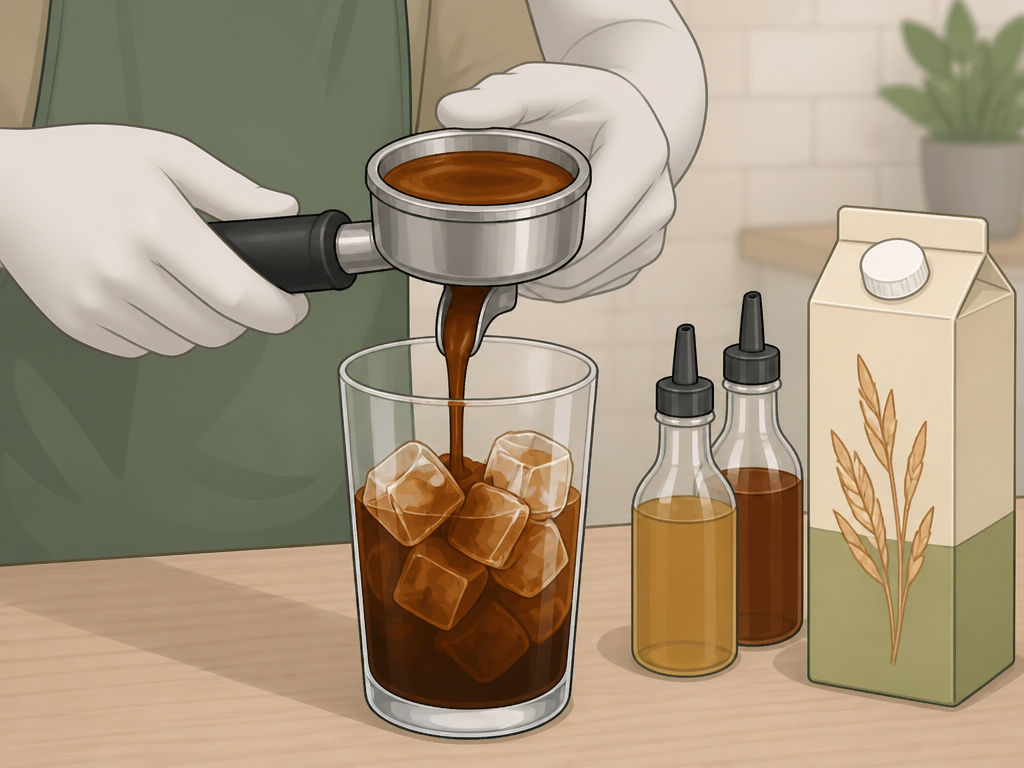
The classic template invites adaptation. Every variation still starts with espresso.
Iced Latte: This is straightforward. Pull espresso shots directly over ice in a glass. Add cold milk. The rapid cooling locks in the espresso’s flavor, but it also kills the crema. Stir well to combine.
Flavored Latte: Syrups like vanilla, caramel, or hazelnut are added to the espresso in the cup before the milk. The hot espresso helps dissolve the syrup. The standard is about 1 oz (2 tablespoons) of syrup for a 12-oz drink.
Alternative Milk Latte: Dairy alternatives change the game. Oat milk steams beautifully, creating creamy microfoam. Almond milk tends to separate when heated too high. Soy milk can curdle if the espresso is too acidic. Each has a distinct taste that alters the flavor profile.
Bulletproof Latte: A keto trend. Espresso is blended with grass-fed butter and MCT oil. It’s rich and filling, but it’s a far cry from the original’s texture.
I used a cheap, single-boiler machine for years. Steaming milk after pulling a shot meant the grouphead overheated and the next espresso was bitter. The workaround? Pull all your shots first into pre-warmed cups, then steam milk for everyone. It’s not ideal, but it works for a small home gathering.
Frequently Asked Questions
Can you make a latte without an espresso machine?
Not a true latte. You can make a similar drink, often called a “fake latte”, by heating and frothing milk and combining it with very strong coffee from a moka pot or French press. It will lack the body, crema, and integrated texture of an espresso-based latte.
Is a latte stronger than regular coffee?
“Stronger” is ambiguous. In terms of caffeine, a latte and a standard cup of drip coffee are comparable. In terms of flavor concentration, the espresso in a latte is far more intense per ounce than brewed coffee, but it’s diluted by milk. A sip of straight espresso is stronger than a sip of straight brewed coffee.
Why is my homemade latte bitter?
The bitterness is almost always from the espresso, not the milk. Your grind is likely too fine, your water is too hot, or your beans are over-roasted. An over-extracted shot (taking longer than 30 seconds) pulls out harsh compounds. Ensure your espresso shots are dialed in before blaming the milk.
Do lattes have more calories than coffee?
Yes, significantly. A black coffee has almost no calories. The milk calories are the entire source in a latte. A 12-oz latte with whole milk has about 210 calories. Using skim milk cuts it to around 130 calories, and sugar-free syrups don’t add any.
What’s the difference between a latte and a Starbucks Latte?
Starbucks standardized the size and sweetness. A “Tall” (12 oz) latte typically gets one less espresso shot than the specialty coffee standard, making it milkier. Their default milk is 2%, and they often use fully automated machines. The core components, espresso, steamed milk, foam, are the same, but the ratios and bean roast levels differ.
The Bottom Line
A latte is coffee. Its heart is one or two shots of espresso, a concentrated coffee extraction that provides the entire flavor foundation. The steamed milk and microfoam add sweetness, texture, and volume, but they don’t replace the coffee, they complement it.
Understanding this turns a generic milk drink into a specific recipe. It explains why you can’t replicate it with a drip machine and why its caffeine content is fixed. Whether you prefer the classic version, an iced iteration, or one made with alternative milk, the espresso base is what you’re paying for and what you should taste. Start there, and the rest is just practice.
