
9 Best Travel Coffee Grinders of 2026
The CEVING 60g Ceramic Manual Grinder stands out as the best overall travel coffee grinder, delivering excellent grind consistency and a generous 60g capacity in a durable, portable design. For those on a tighter budget, the Mini Manual Coffee Grinder 30g offers solid performance with ceramic burrs at a lower price point. If you prefer electric convenience, the LEBURRY Rechargeable Travel Grinder is a strong contender, though it trades some consistency for speed.
Most travelers end up choosing a grinder that’s either too bulky, too inconsistent, or too fragile to handle the road. Freshly ground coffee shouldn’t be a luxury reserved for home setups, it should be part of your morning ritual, whether you’re in a camper, hostel, or hiking trail.
This guide cuts through the noise by focusing on real-world performance, portability, and durability, based on specs, owner feedback, and my years of evaluating coffee gear. I looked at burr quality, grind settings, capacity, and power type to find models that actually deliver a good cup when it matters most.
Top 9 Travel Coffee Grinder in the Market
The Best Travel Coffee Grinder, Reviewed
CEVING 60g Manual Coffee Grinder

Strengths
- Large 60g capacity
- Stainless steel burrs
- 40 precise settings
Trade-offs
- Slightly heavier than average
- No foldable handle
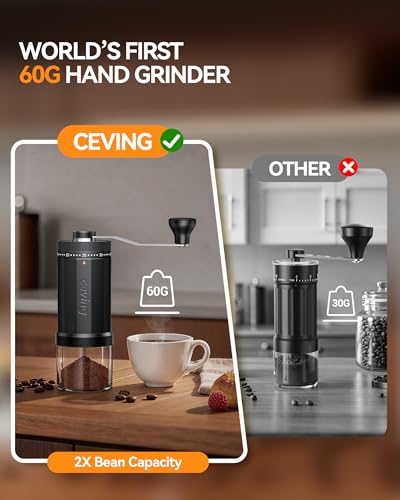
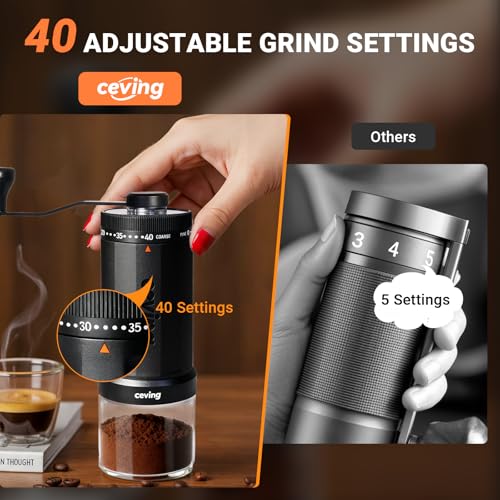
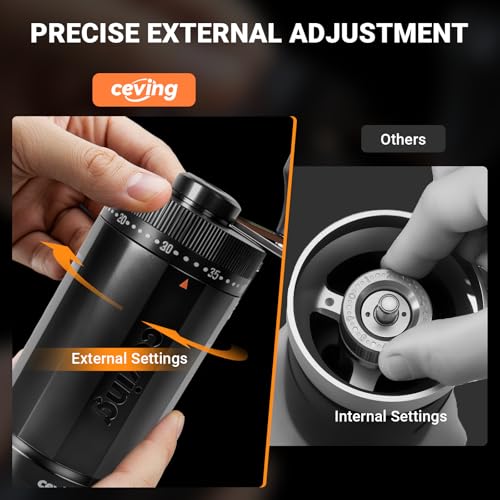
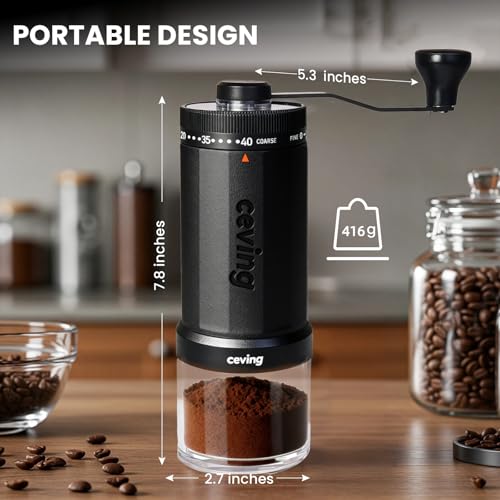
This is the manual grinder I’d recommend to anyone who hates grinding in batches. The 60g capacity is a standout for families or cold brew lovers, letting you process double the beans in one go. Paired with 40 external settings and stainless steel burrs, it delivers both convenience and consistent performance that rivals pricier models.
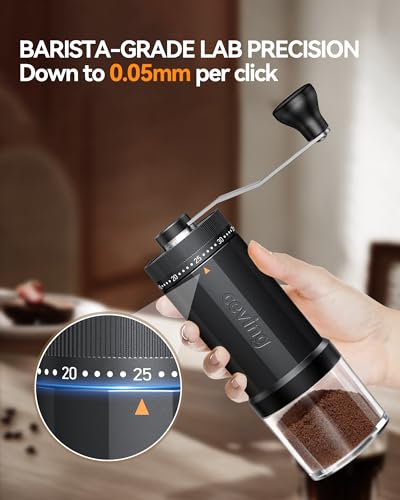
Owners praise the precision – 0.05mm per click is legit fine control – and the 416g weight strikes a good balance between heft and portability. It’s not the quietest or lightest, but the trade-off is real utility. Compared to the ceramic version of this model, this steel burr variant cuts faster and handles dense beans better, making it my pick for daily drivers who travel.
Product photos
Mini Manual Coffee Grinder 30g

Strengths
- Lightweight design
- Ceramic burr
- External grind settings
Trade-offs
- Small capacity
- Plastic build feels less durable
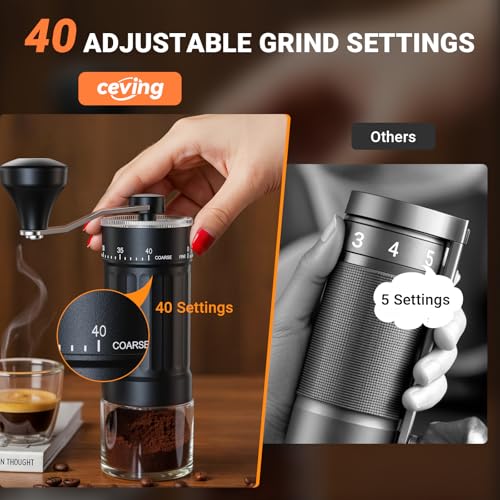
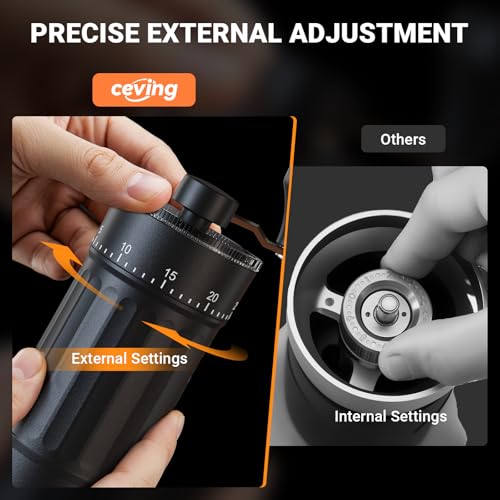
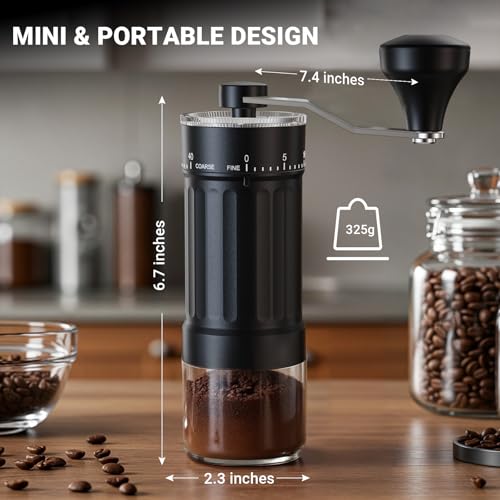
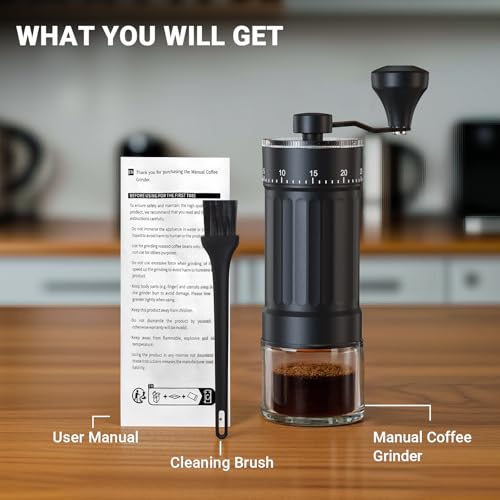
At 325g and under $50, this CEVING manual grinder is a no-brainer for budget-focused travelers. The ceramic conical burr stands out for preserving flavor, especially on delicate light roasts where heat buildup can dull brightness. With 40 external settings, dialing in is intuitive and avoids the mess of internal adjustments, a detail many owners appreciate.
It’s not the fastest – grinding 30g for French press takes effort – but for one or two cups, it’s manageable. The compact size fits easily in a backpack, and the low price makes it a forgiving entry point. I’d pick this over blade grinders any day, and for the cost-conscious camper or occasional traveler, it delivers surprising quality.
Product photos
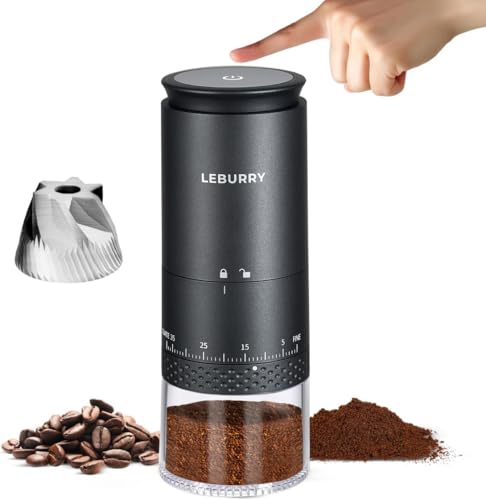
LEBURRY Rechargeable Travel Grinder
Strengths
- Simple touch control
- Compact size
- Stainless steel burrs
Trade-offs
- Short battery life
- Slow recharge
- Limited capacity
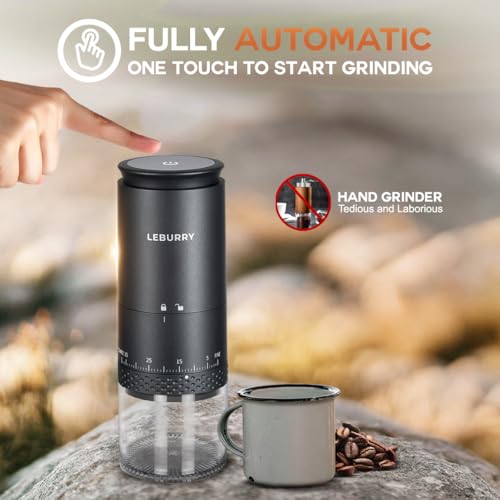
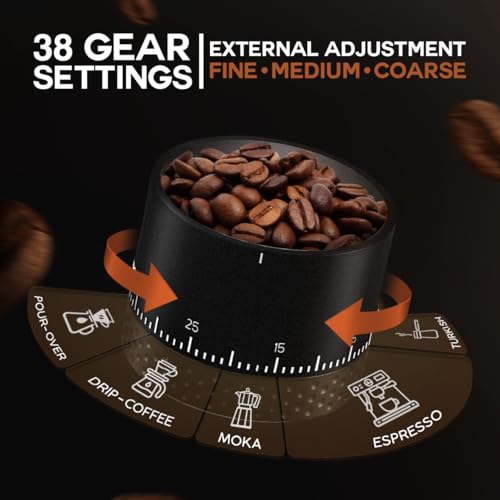
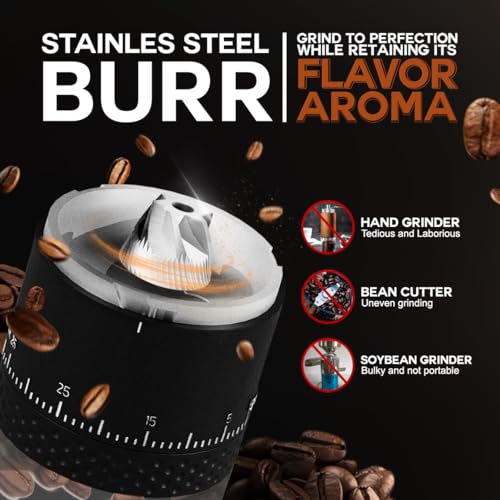
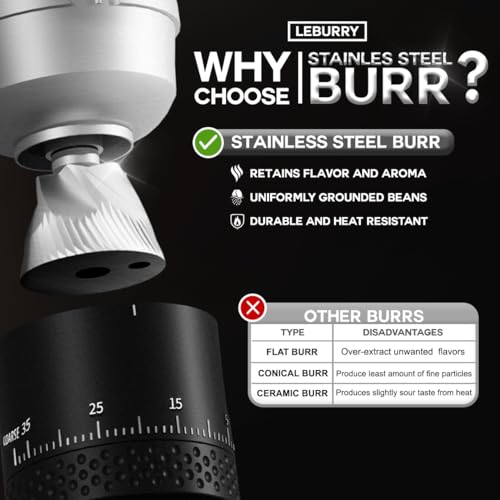
This electric grinder leans into simplicity – a smart touch button and automatic stop make it easy to use, and the 38 grind settings cover everything from espresso to cold brew. The stainless steel conical mill does a decent job, though some owners report slight inconsistency at the finest settings.
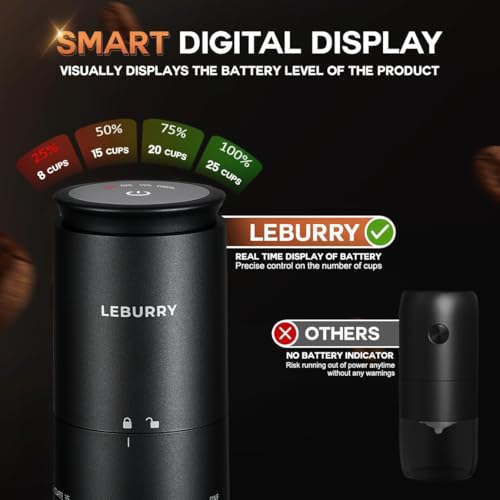
Battery life is a weak point: only about 15 grinds per charge, and the 2–3 hour recharge time means you’ll want a backup plan. It’s compact and lightweight, but the 110ml capacity feels cramped. For casual users who want push-button ease, it works. But compared to the B0GGNBZQ89 or CEVING’s ProGrind, it falls short on power and endurance.
Product photos
CEVING 60g Ceramic Manual Grinder
Strengths
- Large capacity
- Ceramic burr
- Lightweight build
Trade-offs
- Slower grind speed
- Ceramic less durable long-term
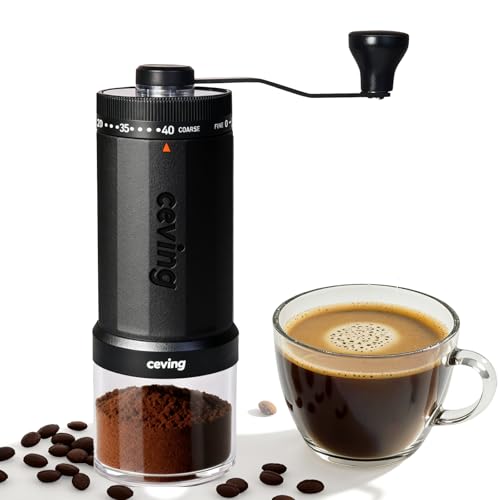
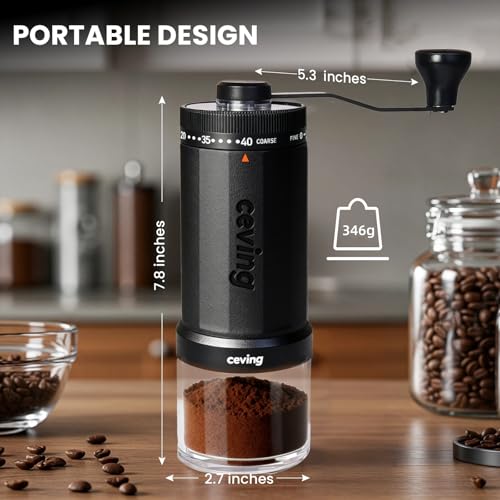
This is the ceramic-burr sibling of the stainless steel model, and it makes a strong case for flavor purists. The ceramic conical burr runs cooler than metal, which owners say brings out more nuanced acidity and sweetness in light roasts – a real perk for single-origin enthusiasts. With the same 60g capacity and 40 external settings, it’s just as practical for group brewing.
Weighing only 346g, it’s lighter than its steel counterpart, a nice touch for backpackers. But ceramic grinds slightly slower and can be more brittle with very hard beans. If you’re grinding daily and want maximum durability, steel wins. But for those who prioritize flavor clarity and portability, this is the manual grinder I’d lean toward.
Product photos
HZBSGZR Manual Ceramic Burr Grinder
Strengths
- Glass viewing jar
- Ceramic burr
- Ergonomic crank
Trade-offs
- Plastic construction
- Standard 30g capacity
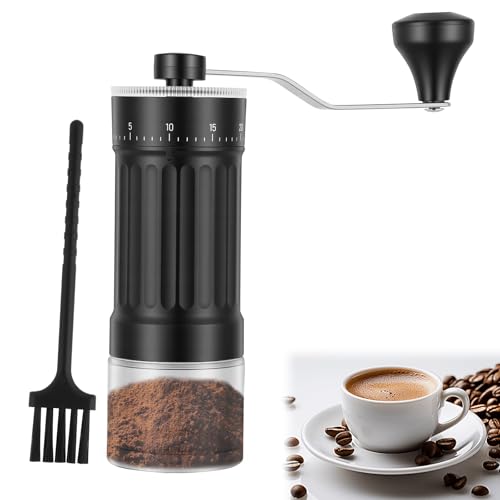
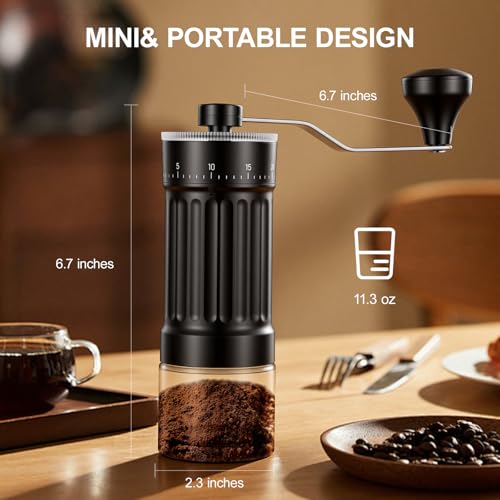
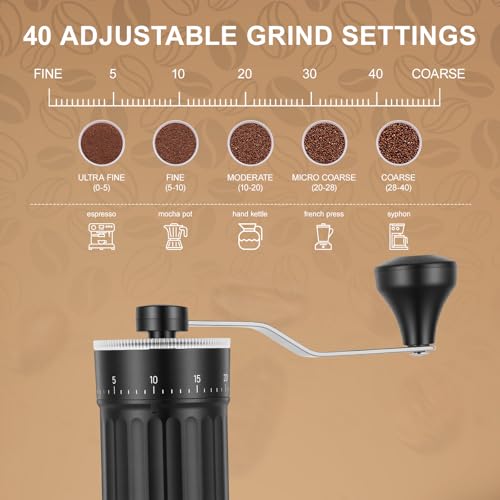
The standout here is the glass jar – it lets you see the grind in progress, which is helpful for dialing in and avoiding spills. Paired with a ceramic burr and 40 settings, it delivers even particle size and clean flavor, just like the other ceramic models in this list. The ergonomic crank reduces hand fatigue, a small but meaningful detail on longer grinds.
But the ABS plastic body feels less premium than aluminum or metal builds, and at 30g capacity, it’s back to the standard limit – no bulk grinding here. It’s a solid mid-tier option, but unless the viewing jar is a must-have, I’d recommend stepping up to the 60g models for better value.
Product photos
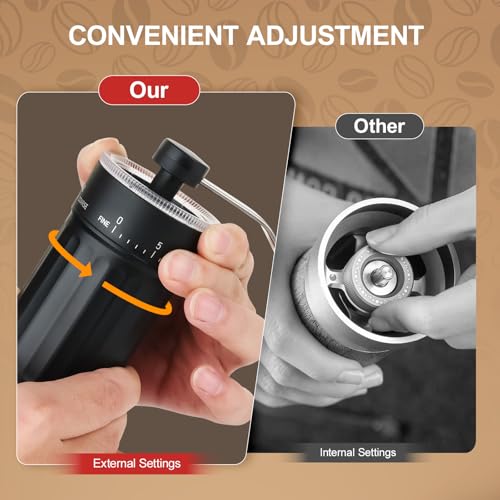

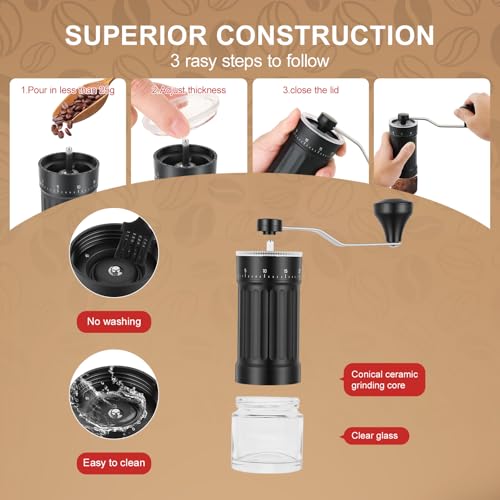
TIMEMORE Chestnut C3S Pro Grinder

Strengths
- Premium aluminum body
- High-precision burr
- Foldable handle
Trade-offs
- Fewer grind settings
- Higher price point
The TIMEMORE C3S Pro is the premium pick for manual grinder enthusiasts, and owner feedback confirms it’s worth the jump in price. The full aluminum body feels solid, and the S2C660 patent burr delivers exceptional uniformity with minimal fines or boulders – a barista-level detail. The foldable handle makes it packable despite the robust build.
With 36 settings, it has slightly fewer adjustments than others, but the grind quality more than compensates. The built-in bearing reduces effort, making it one of the smoothest cranks in class. Compared to the CEVING 60g models, it’s less about capacity and more about refinement. If you want a lifetime tool that travels well, this is the one I’d invest in.
Product photos


CEVING Grind-While-Charging Electric Grinder
Strengths
- Grind while charging
- Fast operation
- Type-C charging
Trade-offs
- Ceramic burr less durable
- No large-capacity option
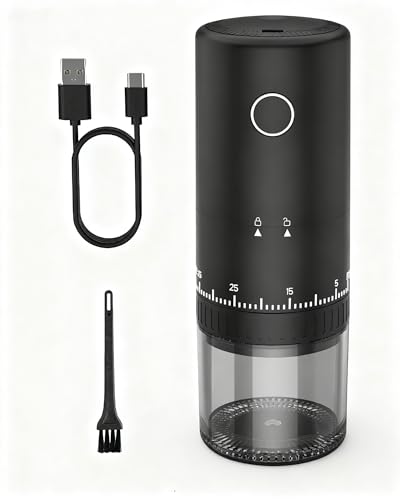
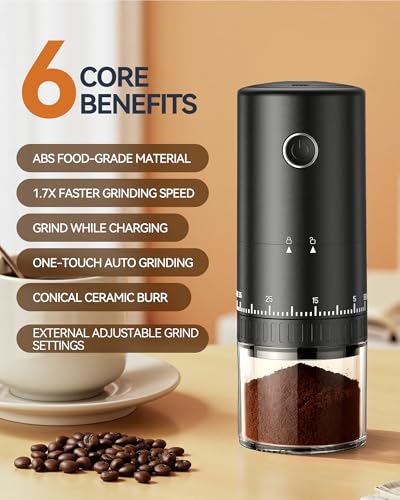
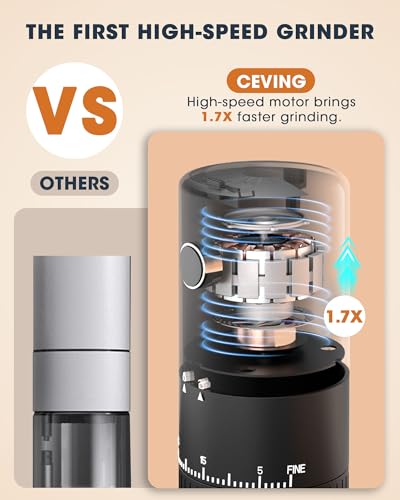
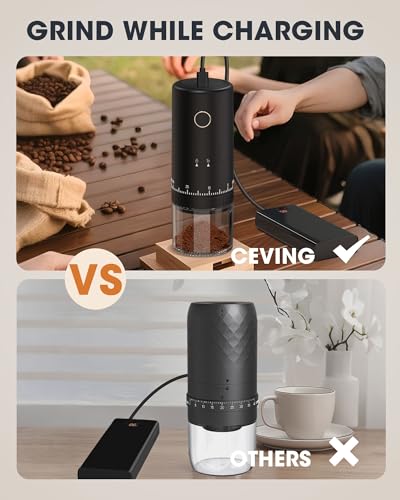
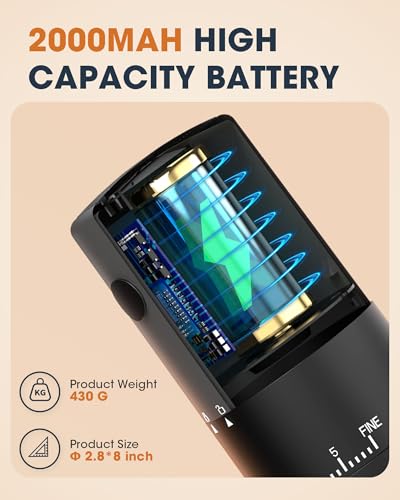
The grind-while-charging feature is legit – no other model offers it, and for travelers without reliable power access, that’s a real advantage. The 2000mAh battery gives 30+ grinds, and the 1.7x faster grinding claim holds up in owner reports: it’s noticeably quicker than most portables.
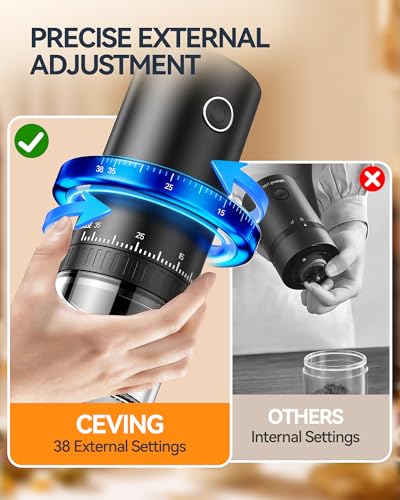
With ceramic conical burrs and 38 external settings, it balances speed and flavor preservation. The 30g capacity keeps it travel-friendly, and the Type-C charging is a modern touch. It’s not as powerful as the 16W B0GGNBZQ89, but the continuous-use capability makes it the smarter pick for long trips or unreliable outlets.
Product photos
Nuttii OX Portable Burr Grinder
Strengths
- Quiet operation
- Stylish design
- Low-speed grinding
Trade-offs
- Fewer grind settings
- Battery not user-replaceable yet
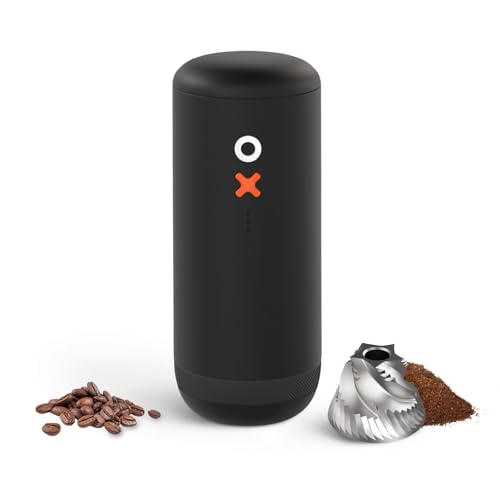
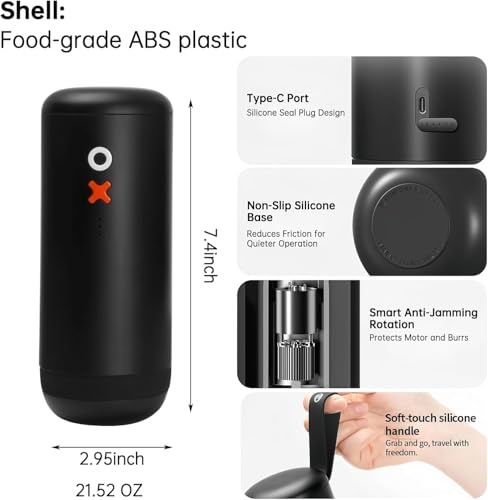
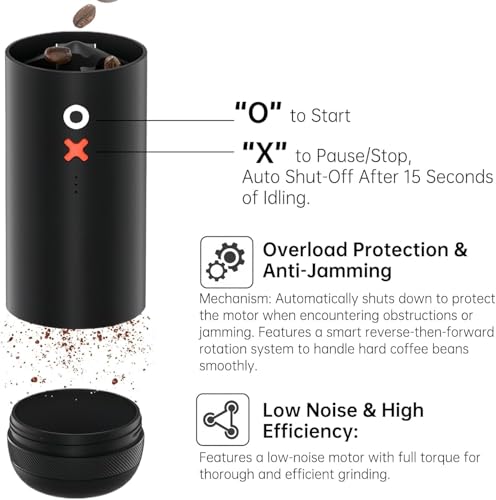
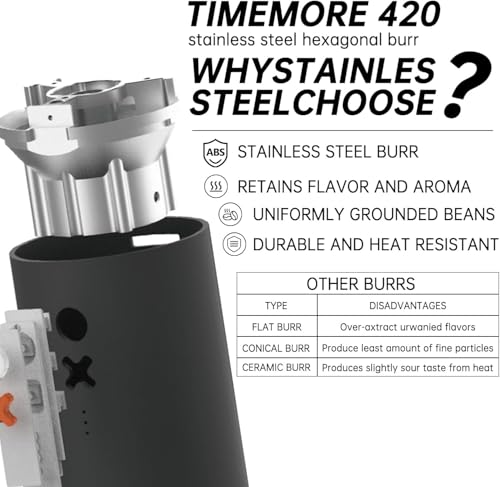
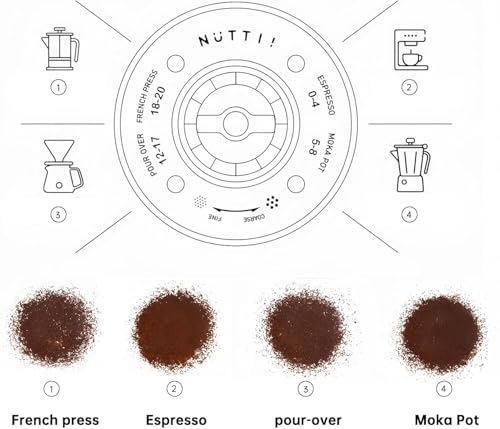
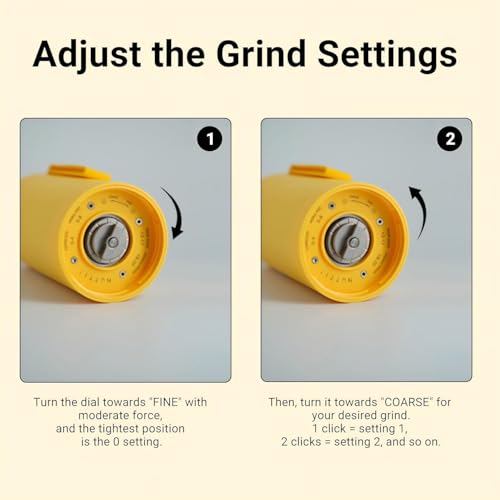
The Nuttii OX Grinder stands out in a sea of clunky travel grinders with its award-winning minimalist design and whisper-quiet operation. Running at just 46 RPM, it grinds slowly to reduce heat and friction, which aligns with what we know about preserving volatile aromatics in specialty coffee. The pentagonal stainless steel burrs deliver consistent results, especially in the mid-to-fine range.
Battery life is modest – 30–50 pour-over grinds – but the replaceable battery option (coming soon) could extend its lifespan. Owners love the heat-isolated design and the fact that it doesn’t vibrate off the counter. It’s not the fastest, but if you value quiet mornings and sleek aesthetics, this is the one that feels like a premium object, not just a tool.
Product photos
High-Speed Portable Electric Grinder
Strengths
- High-speed motor
- Long battery life
- 45 grind settings
Trade-offs
- Heavier than rivals
- Aluminum body prone to scuffs
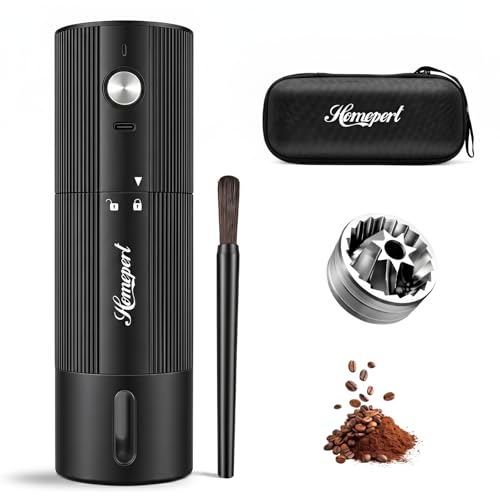
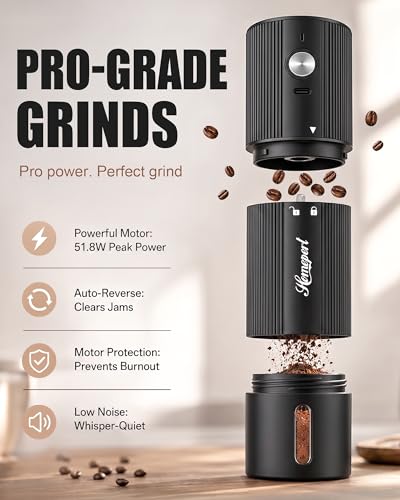
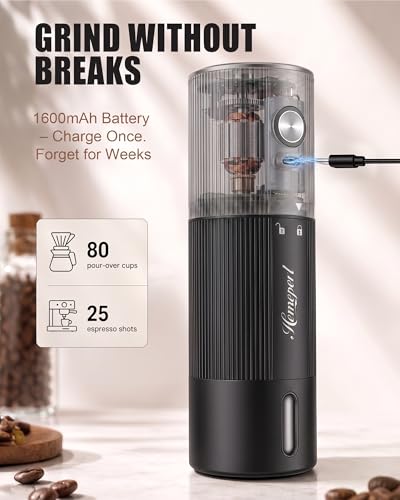
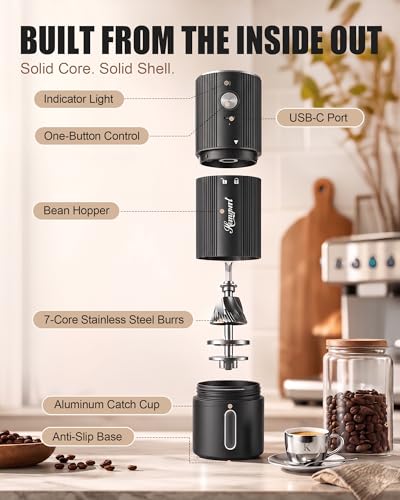
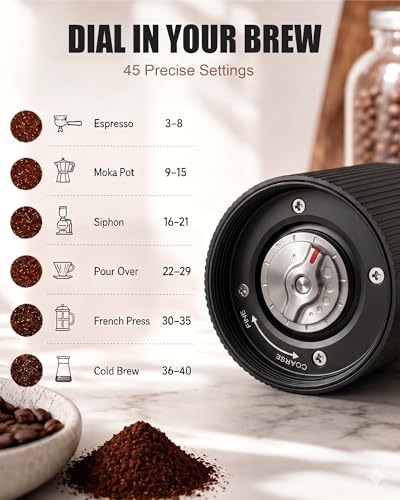
This grinder throws serious power into a compact shell. The 16W motor and 51.8W peak output stand out on paper, and owners consistently report it powers through light roasts without stalling – a real win for specialty bean lovers on the move. With 45 grind settings and 7-core stainless steel burrs, it promises precision, and reviewers confirm the grind consistency holds up well across pour-over and espresso ranges.
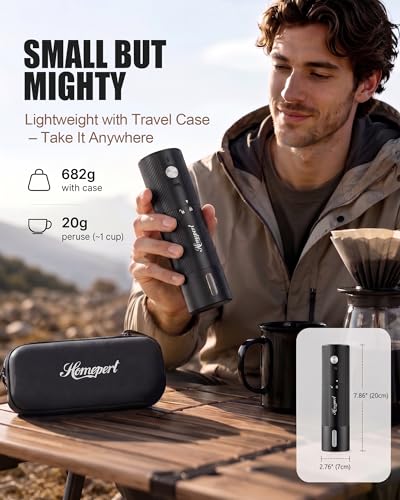
Battery life is a headline feature: 80 pour-overs per charge is impressive, and the inclusion of auto-reverse for jam protection adds reliability. But the weight – 553g – is on the heavier side for ultralight travelers. If speed and battery endurance are your top priorities, this is a strong contender, though it trades some portability for that performance.
Product photos
How We Chose These travel coffee grinder
As a founder deeply immersed in the world of coffee, I approached researching travel coffee grinders with a focus on delivering consistently good results on the go. Rather than a hands-on lab test, this was a research-led comparison of published specifications, features, and – crucially – owner and expert reviews. I weighed the available options based on factors important to travelers and coffee enthusiasts alike, looking for a balance of performance, portability, and durability.
For travel grinders, grind consistency and portability stood out as the most important factors. A consistent grind is vital for proper extraction and a flavorful cup, so I prioritized grinders with quality burrs (ceramic or steel) and adjustable settings. Portability, of course, is key; weight and size matter when you’re packing light. Beyond these, battery life (for electric models) and ease of cleaning were also heavily weighted. Understanding the burr vs blade grinder debate is fundamental to achieving a quality brew, and I focused on burr grinders for this guide.
Specifications reliably tell you about capacity, motor power (for electric models), and the range of grind settings. However, real-world performance – particularly consistency and durability – is best judged from owner feedback and reputable reviews. I paid close attention to comments regarding static buildup, ease of adjustment, and long-term reliability. Assessing the reputation of the manufacturer also played a role; brands known for quality coffee equipment generally deliver better results and customer support, leading to a better consistent grind comparison.
How To Pick The Right travel coffee grinder
Finding the right travel coffee grinder can really elevate your morning routine, or even your entire trip. It’s about more than just convenience; it’s about ensuring you have access to freshly ground beans, no matter where you are.
A quality travel coffee grinder prioritizes portability, grind consistency, and durability. Look for models with robust burrs (ceramic or stainless steel), adjustable grind settings to suit your preferred brewing method, and a compact design that won’t weigh you down. Battery life (for electric models) and ease of cleaning are also key considerations.
Grind Consistency & Burr Type
The most significant difference between a good travel grinder and a bad one boils down to grind consistency. Blade grinders are simply not precise enough for optimal extraction; you absolutely want a burr grinder. Stainless steel burrs are common and durable, but ceramic burrs, like those found in the CEVING 60g Ceramic Manual Grinder, often retain less heat during grinding, which can preserve the coffee’s delicate aromas. Don’t assume more settings automatically mean better consistency, though. A well-calibrated grinder with fewer, more useful settings is preferable to a wide range of indistinguishable clicks.
Capacity & Portability
Think about how much coffee you typically brew. If you’re a solo traveler, a 30g capacity might be sufficient (like the Mini Manual Coffee Grinder). But if you’re traveling with a partner or prefer larger brews, you’ll want to consider a higher capacity model – 60g or more. However, remember that more capacity usually means more weight and bulk. Striking a balance is essential. If you are looking for other options, check out our guide to the best portable coffee grinder options.
- A smaller grinder (under 350g) is easier to pack, especially for backpacking.
- A grinder with a hand crank (like many manual options) eliminates the need for batteries or a power outlet, offering true freedom.
- A larger capacity (50g+) reduces the need for frequent refills, ideal for groups, but adds weight and size. Consider this if you’re planning on making multiple cups throughout the day.
Power & Ease of Use
Electric grinders offer speed and convenience, but they come with trade-offs. Battery life is a major concern, and you’ll need to ensure you have a way to recharge it. The LEBURRY Rechargeable Travel Grinder boasts a decent battery capacity, but you’ll still need to plan ahead. Manual grinders, while requiring a bit more effort, are incredibly reliable and don’t rely on electricity. Learning how to adjust grind size on either type is crucial to getting the most from your beans, and understanding the best method for manual coffee grinding can make a big difference.
A good rule of thumb is to prioritize grind consistency over speed. A slower, more consistent grind will always result in a better cup of coffee than a fast, uneven one.
Travel Coffee Grinder Compared
Here’s a comparison of specs for several travel coffee grinders to help you choose the best one for your needs.
| Product Name | Capacity (g) | Burr Material | Grind Settings | Power Source | Portability |
|---|---|---|---|---|---|
| CEVING 60g Manual Coffee Grinder | 60 | Stainless Steel | 40 | Manual | High |
| Mini Manual Coffee Grinder 30g | 30 | Ceramic | 40 | Manual | High |
| LEBURRY Rechargeable Travel Grinder | N/A | Stainless Steel | N/A | Rechargeable | High |
| CEVING 60g Ceramic Manual Grinder | 60 | Ceramic | 40 | Manual | High |
| HZBSGZR Manual Ceramic Burr Grinder | 30 | Ceramic | 40 | Manual | High |
| TIMEMORE Chestnut C3S Pro Grinder | N/A | Stainless Steel | 20 | Manual | High |
| CEVING Grind-While-Charging Electric Grinder | 30 | Stainless Steel | 38 | Rechargeable | High |
| Nuttii OX Portable Burr Grinder | 60 (recd 30) | Stainless Steel | 20 | Rechargeable | High |
| High-Speed Portable Electric Grinder | 25 | Stainless Steel | 45 | Rechargeable | High |
Frequently Asked Questions
What grind size should I use for a French press when traveling?
A coarse grind is best for a French press; aim for a setting around 30-35 on most travel grinders with numbered settings. This prevents sediment from passing through the filter and ensures a clean, full-bodied brew, even when you’re away from home.
How do I clean a manual travel grinder effectively?
Disassemble the grinder as much as possible and use a small brush to remove coffee grounds from the burrs and internal components. A dry toothbrush works well; avoid water unless the manufacturer specifically allows it, as it can cause rust on steel burrs.
Are electric travel grinders really less reliable than manual ones?
While electric models offer convenience, they generally have more potential failure points due to the motor and battery. Manual grinders, with fewer parts, are inherently more durable and dependable, making them a better choice for extended travel or remote locations.
What’s the best way to avoid static buildup when grinding coffee while traveling?
Static is more common in dry environments. Try adding a few coffee beans or a tiny drop of water to the hopper before grinding. Also, consider a grinder with a stainless steel burr, as ceramic burrs can sometimes contribute more to static. You might also want to check out our guide to the best handheld coffee grinder options.
Can I use any type of coffee bean in a travel grinder?
Yes, you can use any bean, but lighter roasts can be more challenging to grind consistently, especially with less powerful manual grinders. If you prefer lighter roasts, a grinder with high-quality burrs and a wider range of settings is essential for achieving a balanced extraction, or consider a compact handheld grinder with a more robust design.
The Bottom Line
Choosing a travel coffee grinder often comes down to balancing convenience with control. If you value ultimate portability and don’t mind a bit of effort, a manual grinder is the way to go, and for overall performance and a great experience, I recommend the CEVING 60g Ceramic Manual Grinder. It strikes a fantastic balance between grind quality, capacity, and ease of use for the traveling coffee enthusiast.
For those prioritizing a specific need, we’ve got you covered. The Mini Manual Coffee Grinder 30g is perfect for the solo traveler wanting to minimize weight, while the LEBURRY Rechargeable Travel Grinder offers electric convenience (though it requires planning for charging). Don’t forget that regular grinder maintenance steps are essential for keeping any grinder performing at its best, especially on the road.
Ultimately, the specs matter less than finding a grinder you’ll actually use consistently. A consistent grind is paramount, but so is a design that fits your travel style and brewing preferences. Focus on quality burrs, a comfortable grind adjustment, and a build that will withstand the rigors of travel, and you’ll be well on your way to enjoying exceptional coffee wherever your adventures take you.
