
6 Best Handheld Coffee Grinders of 2026
The CEVING 60g Stainless Steel Grinder stands out as the best overall handheld coffee grinder for its speed, durable build, and consistent grind. For budget-focused buyers, the NANSPATH 95 Ceramic Burr Grinder delivers excellent performance and tool-free cleaning in a lightweight package.
Choosing the right handheld grinder isn’t just about saving space or going portable, it’s about preserving the integrity of your coffee beans no matter where you brew. Too many models sacrifice grind consistency for compact design, leading to flat, unbalanced cups.
As the founder of Bean Thusiast and someone who’s spent years studying coffee from bean to brew, I focused this guide on what truly matters: burr quality, adjustability, and real-world usability. These picks are based on a deep explore specs, owner experiences, and expert insights to help you find a grinder that elevates your coffee routine without compromise.
Top 6 Handheld Coffee Grinder in the Market
The Best Handheld Coffee Grinder, Reviewed
CEVING 60g Ceramic Manual Coffee Grinder
Strengths
- 60g capacity
- Ceramic burr for cool grinding
- Light for its size
Trade-offs
- Slightly bulky design
- Higher price
- Limited color options
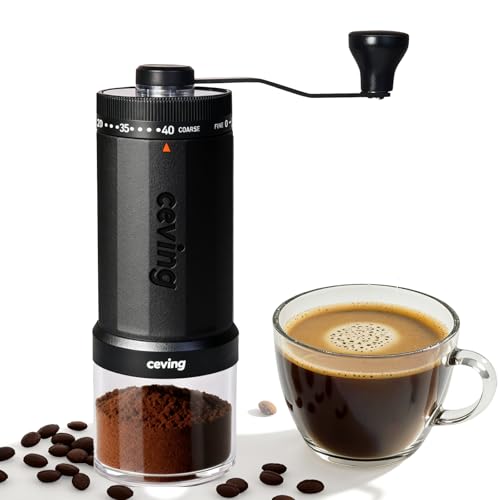
This is the one I’d take on a long trip or keep as a backup at home. It combines the rare 60g capacity with a ceramic conical burr, which means you get volume and flavor preservation. The ceramic burr generates almost no heat, so delicate single-origin beans retain their brightness and complexity, something owners consistently highlight in reviews.
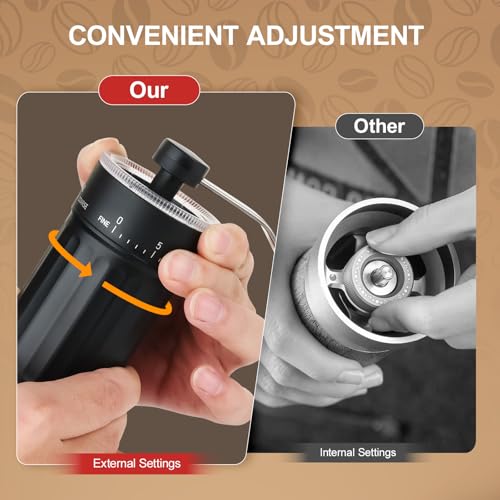
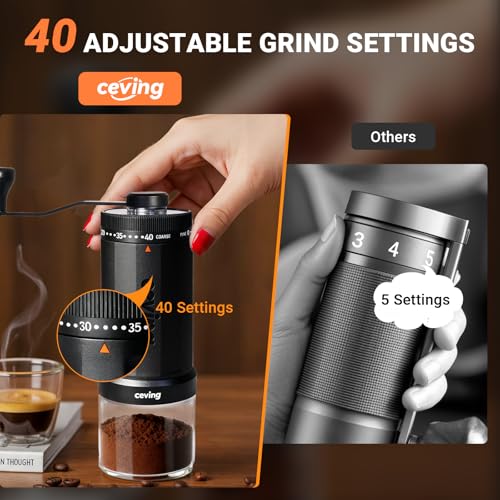
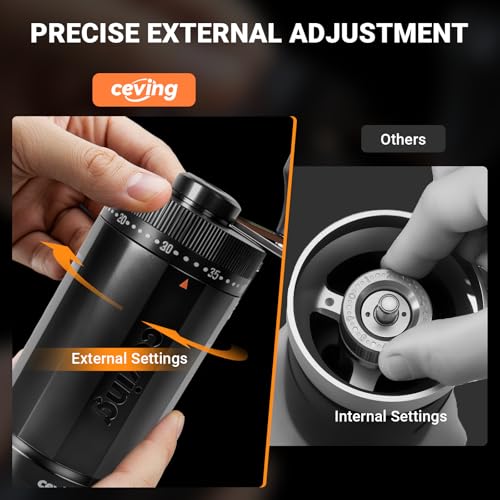
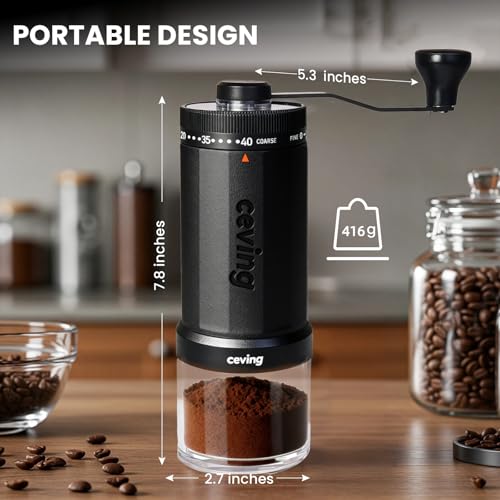
The 40 external settings are easy to adjust, and at just 346g, it’s lighter than its steel-burr sibling. The precision is impressive, with 0.05mm clicks that let you fine-tune for any brew method. It’s not the cheapest, but for balancing capacity, consistency, and flavor purity, it’s hard to beat.
Video review
CEVING Mini Manual Coffee Grinder

Strengths
- 40 external settings
- Ceramic conical burr
- Light and portable
Trade-offs
- 30g capacity
- Plastic body feels less durable
- Limited for group brewing
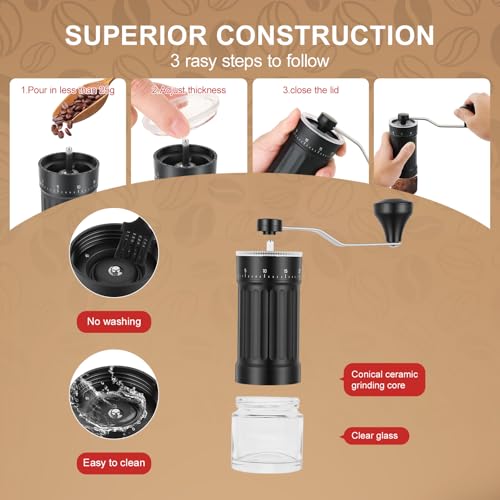
This little grinder stands out for budget-focused buyers who still want real adjustability. With 40 external grind settings and a ceramic conical burr, it punches above its price point on paper. Owners consistently report it handles everything from pour-over to espresso with decent consistency, which is rare at this tier.
Where it really wins is portability, lightweight, compact, and simple to clean. The 30g capacity is standard, but that means you’ll be grinding in batches for more than two cups. For travelers or office users who want fresh grounds without spending heavily, this CEVING model makes a lot of sense.
Video review
HZBSGZR Manual Coffee Grinder
Strengths
- Glass container for visibility
- 40 grind settings
- Lightweight and portable
Trade-offs
- Plastic body lacks durability
- Glass can be fragile
- No foldable handle
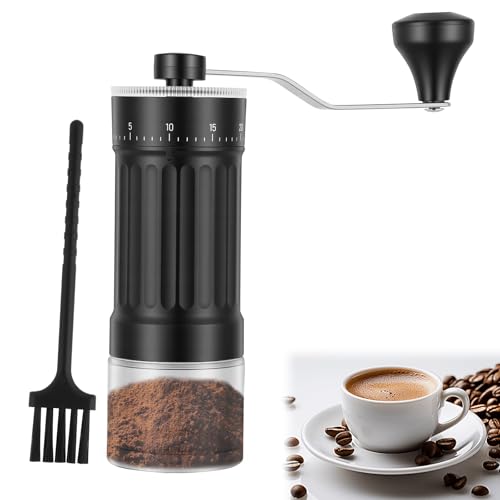
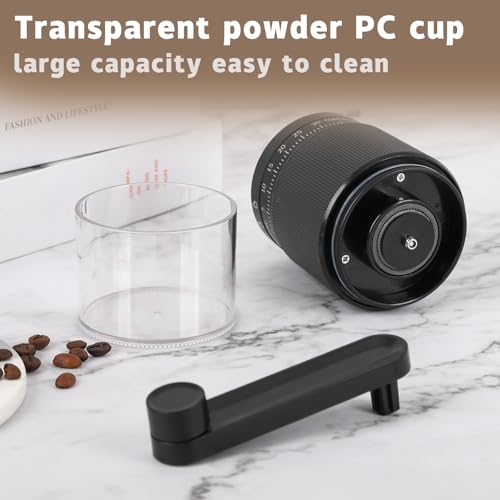
What immediately stands out about the HZBSGZR is the glass jar. Being able to see your grounds build up during grinding is more useful than it sounds, owners love the visual feedback, especially when dialing in for espresso or adjusting for French press. It helps avoid over- or under-grinding, making it a smart pick for learners.
The ceramic burr delivers consistent results with minimal heat, and the 40 settings give real flexibility. It’s lightweight and compact, though the ABS body doesn’t feel as premium as metal alternatives. Still, for the price, the clarity and ease of use make this a standout for those who value process as much as the final cup.
Product photos

CEVING 60g Stainless Steel Grinder

Strengths
- 60g capacity
- Fast steel burr grind
- 40 external settings
Trade-offs
- Heavier than average
- Steel burr may heat slightly
- Higher static in grounds
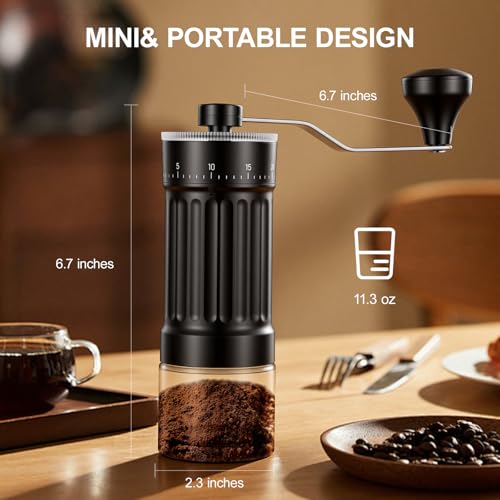
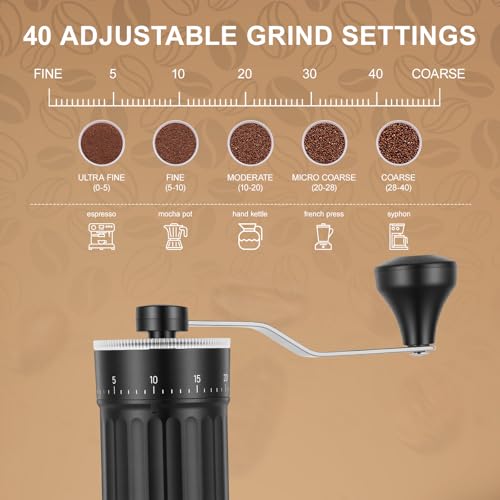
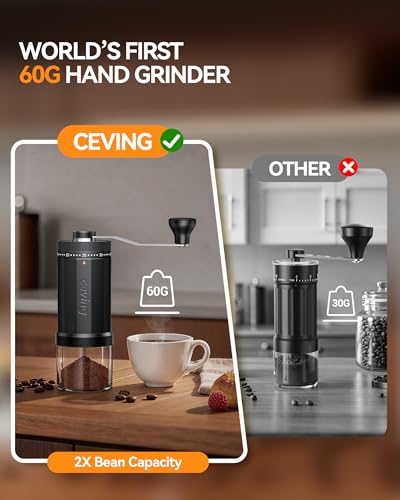
Grinding twice the beans in one go? That’s the real advantage here. The 60g capacity sets this CEVING model apart, and owners confirm it’s a standout for families or anyone brewing for more than two. No more mid-grind refills, this one lets you prep a full French press or cold brew batch uninterrupted.
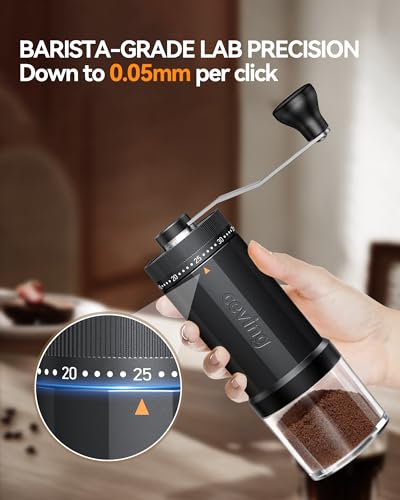
The stainless steel burr grinds fast and stays cool, but some reviewers note it can produce more fines than ceramic. Still, the 40 external settings and 0.05mm precision make it highly tunable. It’s heavier than most portables, but if speed and volume matter more than ultralight travel, this is a strong contender.
Product photos
TIMEMORE Chestnut C3S Pro Grinder

Strengths
- Full metal construction
- High-precision S2C burr
- Smooth, low-effort grind
Trade-offs
- Slightly heavier than rivals
- Fewer grind settings than some
- Premium price
The TIMEMORE C3S Pro feels like what happens when engineering meets obsession. Its full aluminum alloy body gives it a premium heft that most handheld grinders lack, and owners praise how well it resists wear over time. The real star is the S2C660 patent conical burr, it’s designed to minimize fines and boulders, delivering a remarkably even grind that supports clean pour-overs and solid espresso.
With 36 precise adjustments and a foldable handle, it’s built for both home ritual and travel. The bearing-assisted crank reduces effort significantly, which I appreciate in a manual unit. While pricier, it justifies its status as a long-term tool for enthusiasts who want consistency and durability in one package.
Product photos


NANSPATH 95 Ceramic Burr Grinder
Strengths
- Ultra lightweight
- Detachable handle
- Shatterproof container
Trade-offs
- 30g capacity
- Smaller grip for large hands
- Limited batch flexibility
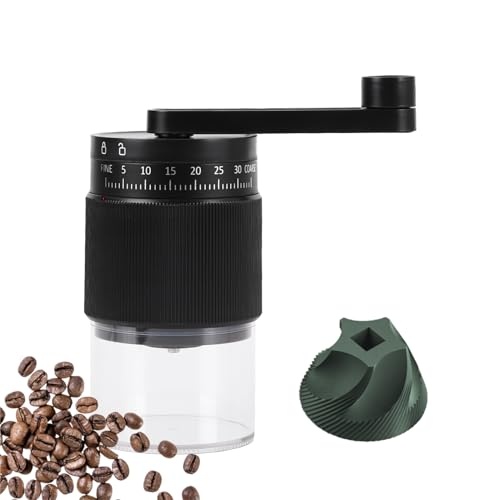
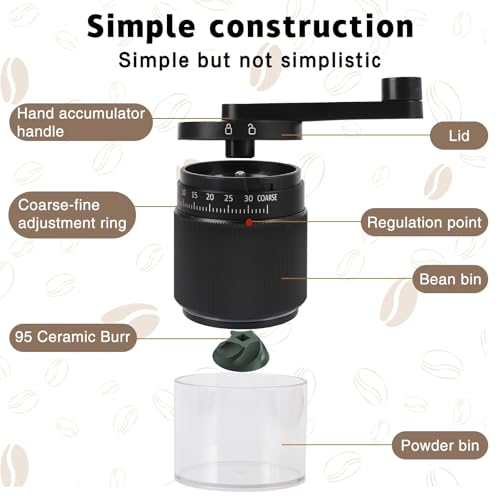
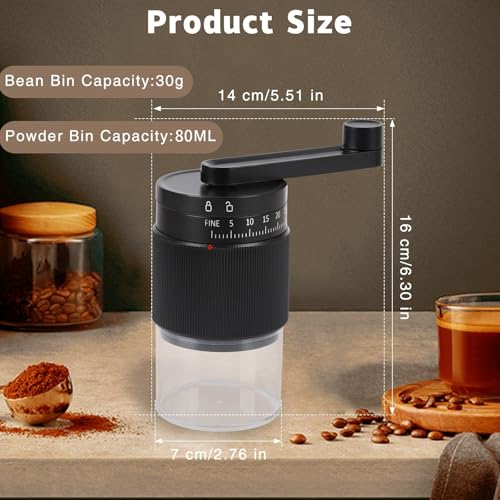
At just 8.29 oz, this NANSPATH grinder is the lightest in the lineup, and it shows. It slips into a jacket pocket or backpack with zero hassle, which makes it perfect for hikers or commuters. The detachable handle is a smart touch, enhancing portability without sacrificing grip during use.
The 95-grade ceramic burr delivers surprisingly even grinds, and the 46+ settings offer fine control. Owners report it holds up well over time, and the shatterproof container is a win for travel. While the 30g capacity limits batch size, the sealed design helps preserve grounds for later. For pure portability without surrendering quality, this is my top pick.
Product photos
How We Chose These handheld coffee grinder
As a lifelong coffee enthusiast, and founder of Bean Thusiast, I wanted to establish a clear methodology for recommending handheld coffee grinders. Rather than a hands-on lab test with each model, this selection is based on a research-led comparison of published specifications and features, combined with a careful weighing of owner reviews and expert opinions from trusted coffee sources. I applied my understanding of what truly contributes to a great grind – and a great cup – to rank these options against key criteria.
For handheld grinders, I prioritized grind consistency, portability, and build quality. Consistent grind size is paramount; a uniform grind ensures even extraction and ultimately, better flavor. Portability is crucial for the intended use case of these grinders – travel, camping, or simply enjoying fresh coffee away from home. Finally, a durable build, especially with the moving parts, is vital for longevity and reliable performance. Understanding the burr vs blade grinder is key here.
Published specs reliably indicate bean capacity, adjustment settings, and burr material. However, I placed more weight on owner feedback regarding ease of adjustment, static cling, and long-term durability – things specifications often don’t fully capture. Expert reviews helped validate claims about grind consistency and the impact of burr design, offering a broader perspective on the subtle differences between models. Ultimately, I looked for grinders that consistently received positive feedback across these areas, and offered a good balance of features for their price point, considering the potential price difference between grinder types.
Choosing The Right handheld coffee grinder
As someone who’s spent years exploring the world of coffee, I know a great grind is the foundation of a fantastic cup. Choosing the right handheld grinder can feel overwhelming, but focusing on a few key areas will set you on the path to coffee bliss.
A quality handheld coffee grinder should prioritize consistent grind size, durable burrs (ceramic or steel), and a comfortable, efficient grinding experience. Look for models with clearly defined grind settings, robust construction, and ease of cleaning. Capacity matters too; consider how much coffee you typically brew at once.
Grind Consistency & Burr Type
The most crucial element of any grinder – handheld or otherwise – is its ability to produce a consistent grind. Inconsistent grounds lead to uneven extraction, resulting in bitter or sour flavors. While blade grinders are cheap, they chop the beans, creating a chaotic mix of particle sizes. Instead, focus on grinders with conical burrs, either ceramic or stainless steel. Stainless steel burrs, like those found in the CEVING 60g Stainless Steel Grinder, tend to grind faster, which is great if you’re making coffee for a group. Ceramic burrs, often seen in models like the NANSPATH 95 Ceramic Burr Grinder, generate less heat, potentially preserving more of the coffee’s delicate aromatics.
Adjustability & Grind Settings
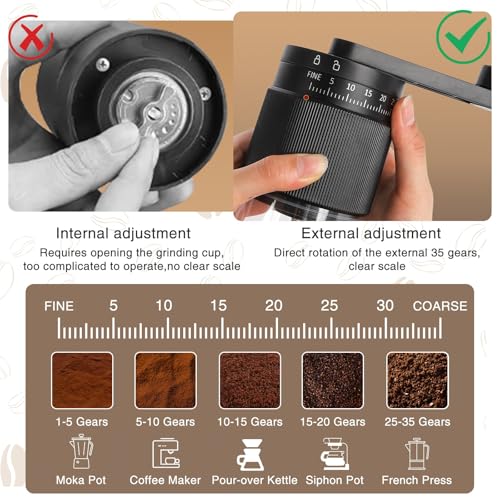
Don’t assume all 40-setting grinders are created equal. The usefulness of those settings matters. A wide range is good – you’ll want to move from very fine (espresso) to coarse (French press) – but the precision between each step is vital. Some grinders, like the CEVING 60g Ceramic Manual Coffee Grinder, boast incredibly fine adjustments (0.05mm per click), allowing for truly dialed-in brews. This is especially important if you’re experimenting with different brewing methods. Learning more about adjusting grind size settings can really elevate your coffee.
- A limited range (say, 10-15 settings) might be fine if you primarily brew one style of coffee.
- Clearly marked settings are incredibly helpful, especially when starting out. You don’t want to be guessing at where your grind is.
- External adjustment mechanisms (like on the CEVING models and the HZBSGZR) are preferable to internal ones. They’re less messy and much more convenient to change on the fly.
A good rule of thumb: if you’re serious about espresso, prioritize a grinder with very fine and precise adjustments.
Portability & Usability
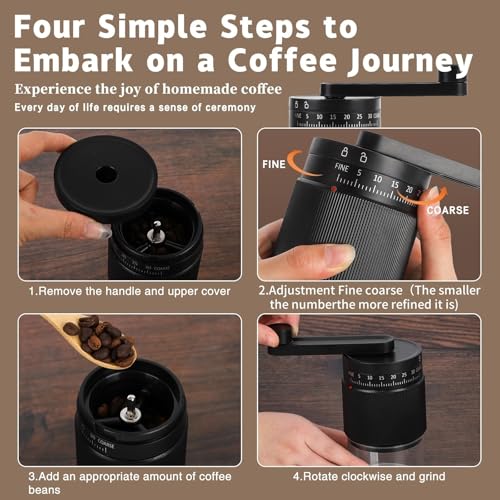
Handheld grinders are, by nature, about convenience. Weight and size are important considerations, especially if you plan on traveling with your grinder. The NANSPATH 95 Ceramic Burr Grinder is a prime example of a lightweight option, perfect for backpacking or office use. Beyond that, think about ease of cleaning. Models with fewer parts that disassemble easily will save you time and frustration. If you are looking for the best travel hand grinder, make sure it’s easy to take apart and put back together. Also, consider the crank handle; an ergonomic design will make using a manual coffee grinder a more pleasant experience.
Handheld Coffee Grinders Compared
Here’s a comparison of key specifications for popular handheld coffee grinders to help you make an informed purchase.
| Product Name | Capacity (g) | Grind Settings | Burr Material | Portability | Special Features |
|---|---|---|---|---|---|
| CEVING 60g Ceramic | 60 | 40 | Ceramic | High | External Adjustment |
| CEVING Mini Manual | 30 | 40 | Ceramic | High | External Adjustment |
| HZBSGZR Manual Coffee | 30 | 40 | Ceramic | High | Glass Viewing Jar |
| CEVING 60g Stainless Steel | 60 | 40 | Stainless Steel | High | External Adjustment |
| TIMEMORE Chestnut C3S Pro | N/A | 36+ | S2C Patent | High | Full Metal Body |
| NANSPATH 95 Ceramic Burr | 30 | 46+ | Ceramic | High | Tool-Free Cleaning |
Frequently Asked Questions
What grind size should I use for a French press?
A coarse grind is best for a French press; aim for a setting on your grinder that resembles kosher salt. This prevents grounds from passing through the filter and creating a muddy cup, and ensures proper extraction.
How much does the material of the burrs impact the taste?
While both ceramic and steel burrs produce excellent results, steel burrs generally grind faster and are more durable. Ceramic burrs retain less heat during grinding, which some believe preserves more delicate flavor compounds, but the difference is often subtle.
Are handheld grinders loud?
Handheld grinders are significantly quieter than electric burr grinders. They produce noise only from the manual turning of the crank, which is usually tolerable for home or camping use, unlike the whirring of an electric motor.
How often do I need to clean my handheld grinder?
You should clean your grinder after each use to remove coffee oils and residue. This prevents stale flavors from building up and affecting future brews. Disassembling and thoroughly cleaning the burrs weekly is also recommended.
What is the best portable coffee grinder for travel?
For a truly on-the-go coffee experience, consider the NANSPATH 95 Ceramic Burr Grinder. Its lightweight design and tool-free cleaning make it one of the best portable coffee grinder options available.
The Bottom Line
Choosing a handheld coffee grinder really comes down to balancing control with convenience. You can spend a lot getting incredibly precise adjustments, or you can prioritize simplicity and portability. For the best overall experience, combining consistent grind quality with user-friendly features, I recommend the CEVING 60g Ceramic Manual Coffee Grinder. It hits a sweet spot for most coffee drinkers.
If you’re on a tighter budget, the NANSPATH 95 Ceramic Burr Grinder offers excellent value. For those who need maximum versatility and don’t mind a slightly higher price point, the CEVING 60g Stainless Steel Grinder is a great choice, especially if you frequently brew for larger groups. And for the ultimate in portability, the CEVING Mini Manual is tough to beat.
Ultimately, the most important factors aren’t burr material or the number of grind settings; it’s consistency and keeping your grinder clean. Regular cleaning a handheld coffee grinder is essential for maintaining flavor and extending the life of your grinder, no matter which model you choose. Focus on those fundamentals, and you’ll be well on your way to consistently delicious coffee.
