
9 Best Tasting Espresso Coffee of 2026
When it comes to best tasting espresso coffee, the Lavazza Super Crema stands out as the top choice for its rich body and velvety crema, followed by the Gaviña Old Havana Espresso for those who want a smooth, nutty profile at a better value, and the Lavazza Barista Gran Crema if you’re after a more intense, full-bodied shot.
Most people think espresso is just about strength, but the real challenge is finding balance, a shot that’s bold without being bitter, aromatic without fading fast. After comparing the field and analyzing owner feedback, roast profiles, and bean quality, these picks rose to the top for delivering a consistently satisfying cup.
This guide breaks down what actually matters, crema, flavor balance, freshness, and how your brewing method shapes the final taste, so you can choose a coffee that matches your machine and your palate.
Top 9 Tasting Espresso Coffee in the Market
The Best Tasting Espresso Coffee, Reviewed
illy Intenso Ground Espresso Coffee
Strengths
- Smooth, balanced flavor
- Rich cocoa notes
- Consistent grind
Trade-offs
- Mild crema compared to blends with Robusta
- Higher price point
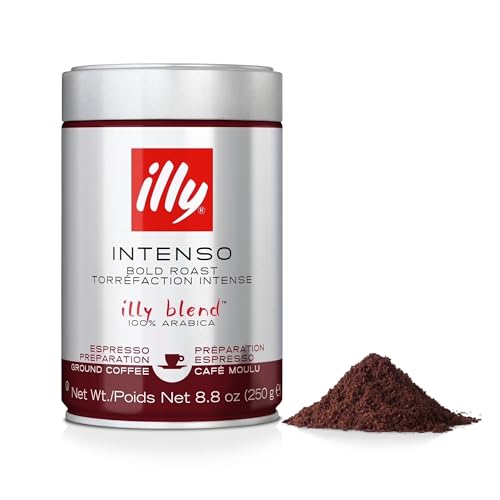
illy has spent decades refining a signature blend that aims to be the gold standard of Italian espresso, and Intenso comes close. Made from 100% Arabica beans selected from just 1% of the global harvest, it’s bold and balanced, with deep cocoa and dried fruit notes that linger without overwhelming. Owners consistently highlight its smoothness and lack of acidity, even when pulled long or used in milk-based drinks.
On paper, the grind is optimized for espresso machines, and feedback confirms it tamps evenly and extracts cleanly. Compared to Lavazza or Starbucks, illy feels more refined, less about power, more about harmony. It’s not the boldest option here, but for those who want a consistent, high-quality baseline with zero surprises, this is the one I’d reach for first. The can also seals well, preserving freshness longer than many resealable bags.
Video review
Lavazza Super Crema Whole Bean
Strengths
- Exceptional crema
- Smooth, sweet finish
- Balanced blend
Trade-offs
- Robusta content may deter purists
- Large bag requires fast use
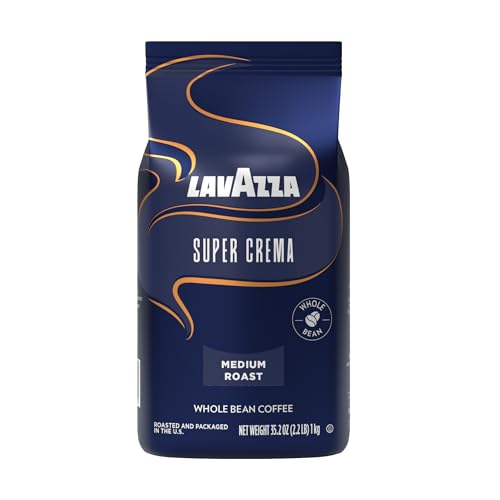
Lavazza Super Crema is legendary for one reason: its creamy, syrupy mouthfeel. The Arabica and Robusta blend is designed to produce a thick, golden crema that coats the tongue, something owners consistently praise, especially when using pod or superautomatic machines. The flavor is sweet and rounded, with hints of honey and almond, making it one of the most approachable Italian-style espressos on the market.
It’s less intense than Gran Crema but more balanced, with a softness that works beautifully in milk drinks. Compared to illy or Starbucks, it’s less roasty and more dessert-like. The 2.2 lb bag is ideal for high-volume households, though it demands prompt grinding to avoid staleness. For those who define great espresso by texture as much as taste, this remains a benchmark.
Video review
Lavazza Barista Gran Crema
Strengths
- Full-bodied mouthfeel
- Rich crema
- Consistent grind performance
Trade-offs
- Limited aromatic complexity
- Robusta can taste sharp for some
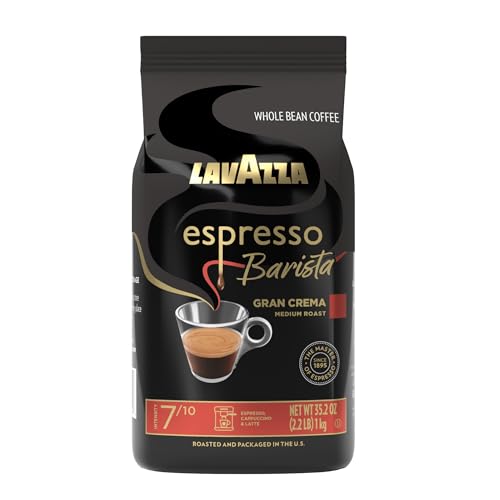
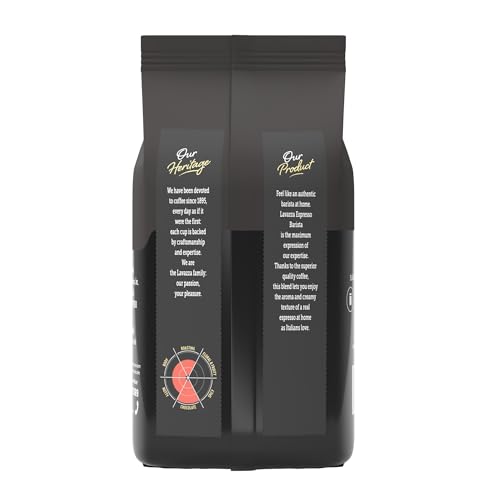
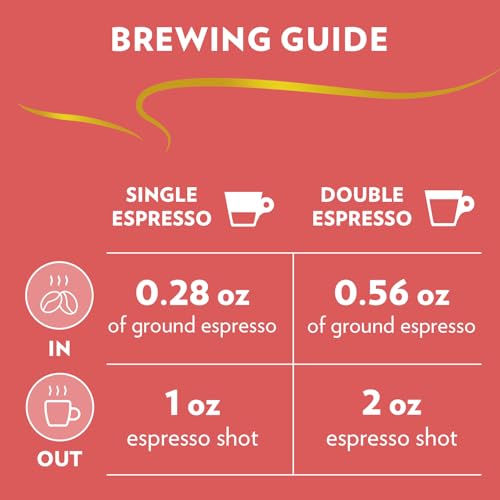
Lavazza’s Espresso Barista Gran Crema is built for those who want body and presence in every shot. With a 7/10 intensity rating and a blend of Arabica and Robusta, it’s formulated to produce a full-bodied, honey-tinged espresso that fills the mouth without tipping into bitterness. Reviewers using lever and superautomatic machines alike praise its consistency and crema stability, which is no small feat across such a large 2.2 lb bag.
It’s not the most complex blend in Lavazza’s lineup, the aromatic profile leans simple, with roasted notes dominating over subtlety, but it performs reliably shot after shot. Compared to Super Crema, it’s a bit drier and more traditional in profile, making it better suited for straight espresso than milk drinks. If you value substance over sweetness, this is a solid daily driver.
Product photos

Starbucks Espresso Roast Ground
Strengths
- Caramelly sweetness
- Excellent with milk
- Consistent pull
Trade-offs
- Roast-heavy profile
- Less complexity in straight shots
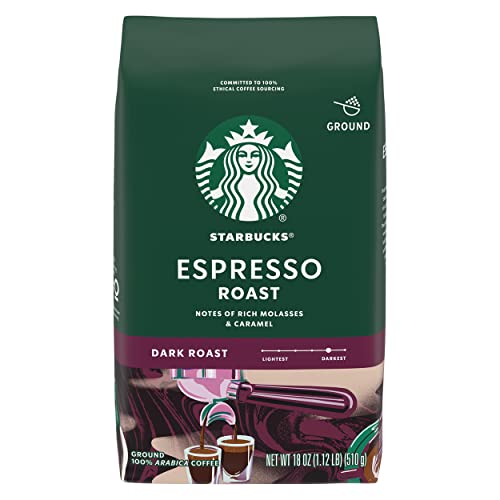
Starbucks Espresso Roast is engineered for one thing: milk-based drinks. Its dark roast profile is caramelly sweet, with a bold body that holds up to steamed milk without vanishing. Ground fine for espresso machines, it pulls consistently in home setups, and reviewers frequently note how well it mimics the flavor of a café-style latte or cappuccino.
It’s not subtle, there’s a roast-forward character that some find smoky, but that’s the point. Compared to illy or Lavazza, it’s sweeter and more approachable, especially for those used to chain coffee. The 18 oz bag is practical for regular use, though it demands airtight storage to preserve freshness. If your go-to is a morning latte, this is one of the most reliable off-the-shelf options.
Product photos


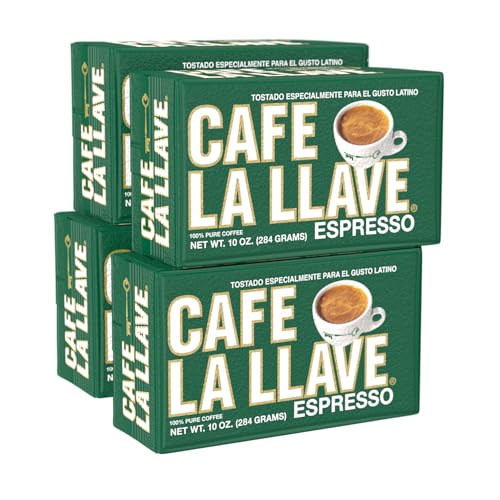
Cafe La Llave Dark Roast
Strengths
- Authentic Cuban flavor
- Strong aroma
- Versatile grind
Trade-offs
- Overpowering for some palates
- Can taste ashy if over-extracted
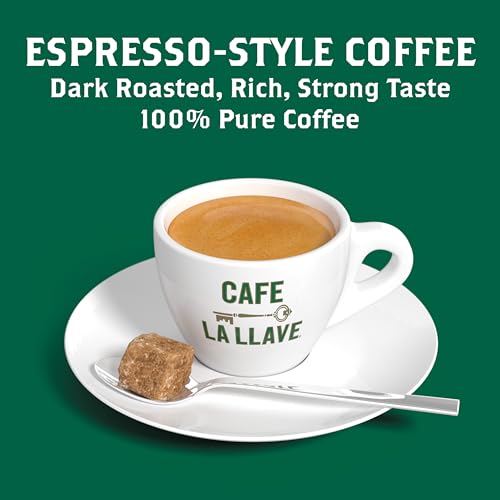
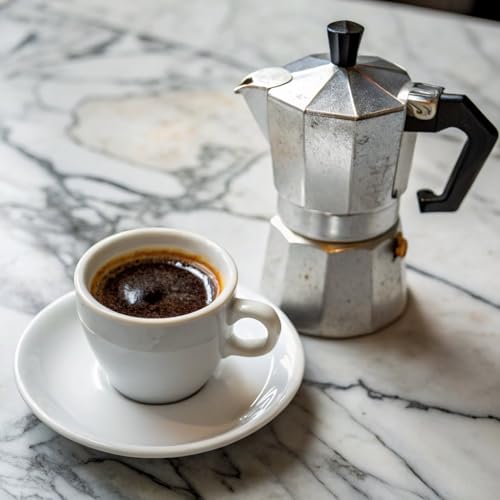
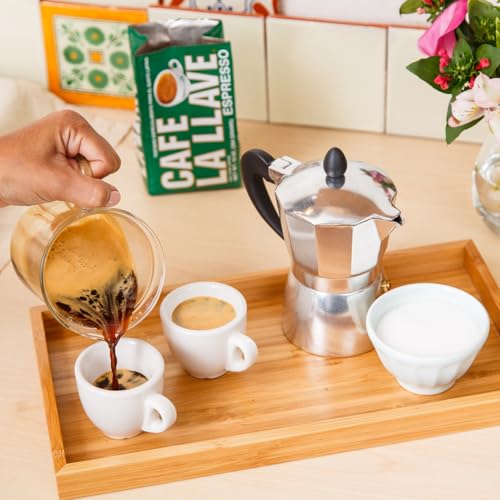
Cafe La Llave brings authentic Cuban-style espresso to the table with a bold, dark roast that’s unapologetically intense. The vacuum-sealed bricks preserve freshness well, and owners report a rich, aromatic punch when opened, think deep molasses, char, and a touch of spice. It’s finely ground, so it works in espresso machines and Moka pots alike, delivering that signature Cuban strength whether you’re making a cortadito or a straight shot.
What stands out is its heritage and roast profile. While most mainstream espressos aim for balance, this one leans into power and tradition. Compared to Starbucks or illy, it’s heavier and more aggressive, with less sweetness and more roast-driven depth. If you grew up with Cuban coffee or want something that cuts through milk without dissolving into it, this is a rare find on mainstream shelves.
Product photos


Gaviña Old Havana Espresso

Strengths
- Nutty, sweet complexity
- Smooth finish
- Ethically roasted
Trade-offs
- Less bold than traditional Cuban espresso
- Crema not as thick as Robusta blends
Gaviña Old Havana Espresso stands out with a nutty, sweet profile that’s rare in mainstream blends. Made from 100% Arabica beans and roasted in LA, it offers a medium-dark roast with subtle citrus notes and a smooth finish, making it more balanced than typical Cuban-style espressos. Owners appreciate its versatility, using it in espresso machines and Moka pots with equal success.
Compared to Cafe La Llave, it’s less aggressive and more refined, with a gentler roast curve that highlights sweetness over char. The 32 oz bag is economical, and the zero-waste packaging aligns with modern values. For those who want Latin-inspired depth without the bitterness, this is a quiet standout.
Product photos


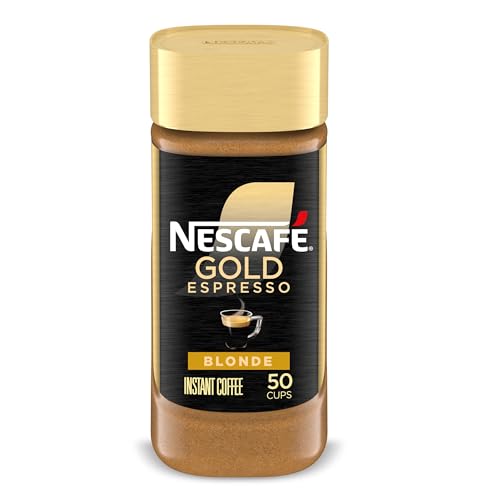
Nescafe Gold Espresso Blonde
Strengths
- Smooth, low bitterness
- Good for lattes
- Affordable
Trade-offs
- Lacks depth and intensity
- Short flavor finish
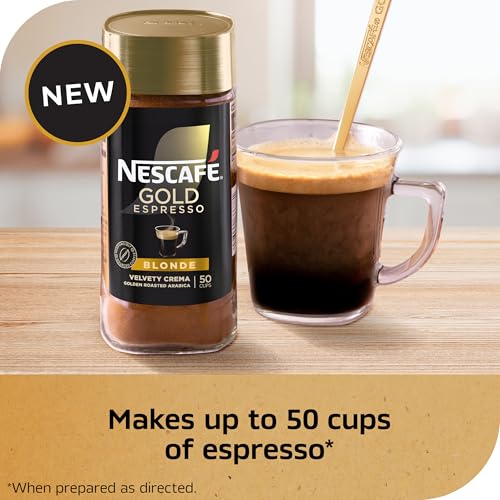
Nescafe Gold Espresso Blonde is the milder sibling in the instant espresso game, lighter roast, smoother finish, and less bite. It’s positioned as a budget-friendly option, and while it lacks the intensity of the Intense version, it delivers a surprisingly clean, rounded cup with a velvety mouthfeel. Owners note it works better in milk-based drinks like lattes, where its subtle sweetness can shine.
For the price, it’s hard to fault. It doesn’t pretend to be specialty coffee, but it outperforms many store-brand instants. Compared to the Intense version, it’s less assertive and fades faster in larger drinks. If you’re easing into espresso or prefer a gentler morning cup, this is a decent starting point, but it won’t satisfy those craving real punch.
Product photos

Nescafe Gold Espresso Intense
Strengths
- Rich crema for instant
- Balanced boldness
- Easy preparation
Trade-offs
- Lacks complexity
- Noticeable processed aftertaste
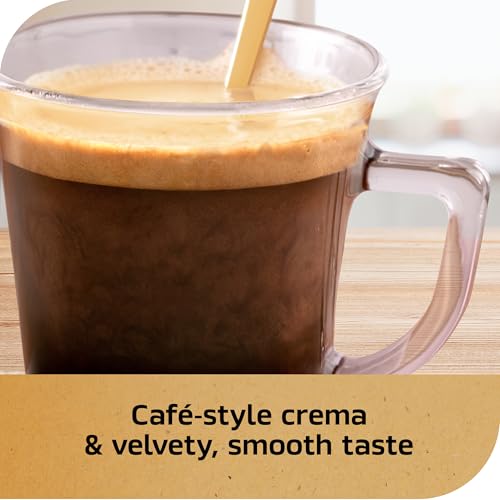
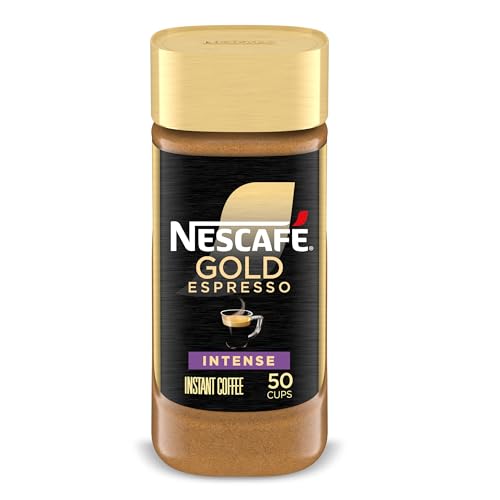
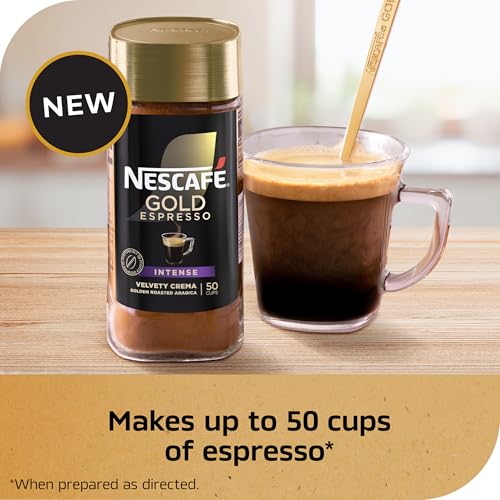
If you’re chasing an espresso-like hit without buying a machine, Nescafe Gold Espresso Intense delivers more than most instant coffees have any right to. On paper, it promises café-quality crema and a rich profile from golden-roasted Arabica beans, and owners consistently report it delivers, especially when stirred into hot water before adding milk or foam. It won’t fool a barista, but for a quick morning fix with real depth and a slight sweetness, it stands out in the instant category.
Compared to other instant options, this one leans bolder and darker, with a roast intensity that holds up in Americanos. It’s not nuanced like freshly pulled espresso, but the flavor is consistent across batches and dissolves cleanly. For travelers or office use, where equipment isn’t an option, this is one of the few instants that feels like a deliberate choice, not a compromise.
Product photos
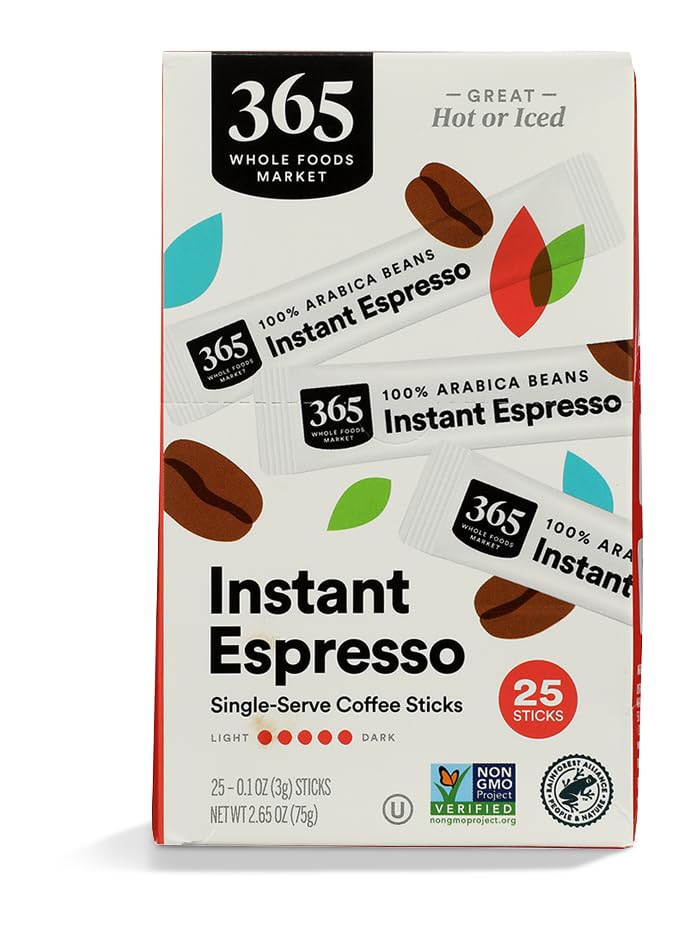
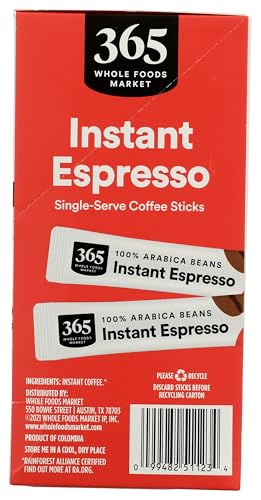
365 Instant Espresso Sticks
Strengths
- Ultra-portable
- Easy portion control
- Clean dissolve
Trade-offs
- Thin flavor profile
- No crema or body
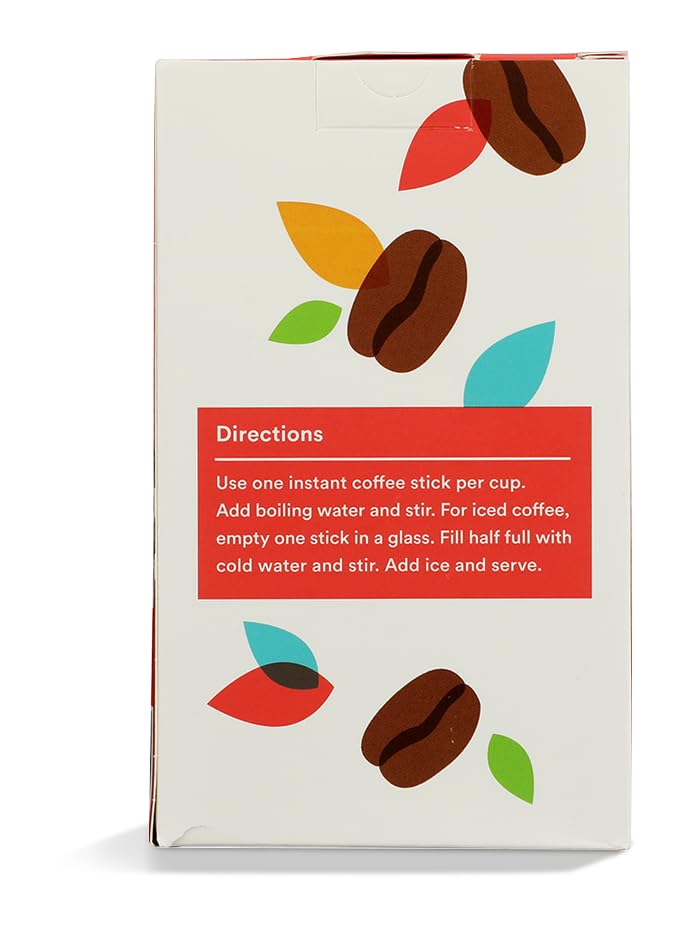
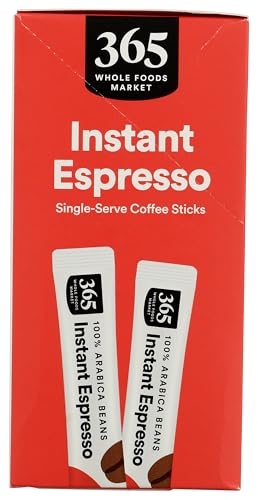
These single-serve instant espresso sticks are built for convenience, not complexity. Each stick delivers a clean, dark roast hit made from 100% Arabica beans, and they dissolve quickly in hot or cold water, making them ideal for iced coffee on the go. The Rainforest Alliance certification and non-GMO label add ethical appeal, but the flavor is straightforward: roasted, slightly bitter, with minimal aftertaste.
Compared to Nescafe Gold, it lacks crema and depth, but wins in portability and portion control. There’s no measuring, no jar to carry, just tear, stir, and drink. For camping, commuting, or office use, this is the smarter pick if you value simplicity over richness. It won’t replace your morning espresso ritual, but it keeps you caffeinated when routine isn’t an option.
Product photos

How We Chose These tasting espresso coffee
As the founder of Bean Thusiast, I approached researching tasting espresso coffee by comparing published specifications and features across numerous brands. I then weighed owner reviews from multiple sources – Amazon, coffee forums, and specialty retailer sites – alongside assessments from reputable coffee review websites. Ultimately, I ranked each coffee based on factors critical to a satisfying espresso experience, rather than a hands-on lab test.
For this category, the most significant factors were crema production, the intensity and balance of the flavor profile, and the suitability for different brewing methods. A rich, persistent crema is visually appealing and contributes to mouthfeel. Intense flavors cut through milk for lattes and cappuccinos, while balanced profiles shine in straight espresso shots. We also prioritized versatility, considering options for both traditional machines and moka pots.
Product specifications reliably indicate bean type (Arabica vs. Robusta) and roast level, which are good predictors of general flavor characteristics. However, detailed flavor notes and subjective qualities like “smoothness” are best gleaned from owner feedback and the reputation of the roaster. For example, insights into the boldness of a dark roast for espresso come primarily from user experiences.
What To Look For In tasting espresso coffee
As someone who’s spent years chasing the perfect shot, I know how daunting the world of espresso coffee can be.
A truly excellent espresso coffee delivers a balanced flavor profile – not just bitterness – with a rich crema and satisfying body. Look for coffees specifying Arabica beans, a medium-dark roast level, and ideally, information about the origin and processing method. Freshness is paramount; whole bean is always preferable, and grind size should match your brewing method.
Grind & Freshness Are Everything
The biggest mistake I see people make is overlooking freshness. Espresso is extremely sensitive to stale coffee. Once beans are ground, they begin to lose their volatile aromatic compounds almost immediately. Buying whole bean and grinding just before brewing is the single biggest improvement most home baristas can make. If you’re not ready to invest in a grinder, look for smaller packages of pre-ground coffee to minimize the time between grinding and brewing. Don’t assume a larger bag is a better value if you’ll end up with stale coffee.
Roast Level & Bean Blend
Roast level dramatically impacts the final taste. Generally, a medium-dark roast is the sweet spot for espresso. It provides enough body and intensity without becoming overly bitter or ashy. Darker roasts, like those in the Cafe La Llave Dark Roast, can be fantastic for those who prefer a very bold, traditional Italian espresso. However, lighter roasts are gaining popularity, offering more nuanced flavors. When it comes to blends, a mix of Arabica and Robusta beans is common. Arabica contributes complexity and aroma, while Robusta adds crema and a caffeine kick. Exploring different blends is a great way to find your preference. For someone wanting to learn more about the differences, exploring the nuances between espresso vs regular beans is a good start.
Flavor Profile & Your Brewing Method
Think about how you take your espresso. Do you drink it straight, or do you add milk? If you primarily make cappuccinos and lattes, a coffee with chocolatey or nutty notes (like the Gaviña Old Havana Espresso) will cut through the milk better than a bright, fruity coffee. If you prefer straight espresso, you might appreciate the more complex flavors of single-origin beans. Also, consider your espresso machine. Some machines perform better with certain grind sizes and roast levels.
- For a super-automatic machine, a slightly coarser grind is often needed.
- A traditional lever machine allows for more control over the extraction, so you can experiment with finer grinds and different roasts.
- Moka pots, while not true espresso machines, benefit from a very fine grind – similar to espresso, but slightly coarser than what you’d use in a traditional machine.
A good rule of thumb is to start with a well-regarded blend from a reputable roaster and then gradually experiment with different origins and roast levels.
Finally, if you’re looking for a wider range of options, checking out some top-rated beans for espresso can give you a great starting point.
Tasting Espresso Coffee Compared
Here’s a comparison of key specifications for various espresso coffee options.
| Product Name | Roast Level | Bean Type | Format | Weight (oz) | Intensity | Notes |
|---|---|---|---|---|---|---|
| illy Intenso | N/A | Arabica | Ground | N/A | N/A | Cocoa, Dried Fruit |
| Lavazza Super Crema | Medium | Arabica/Robusta | Whole Bean | 35.2 | N/A | Creamy Finish |
| Lavazza Barista Gran Crema | Dark | Arabica/Robusta | Whole Bean | 35.2 | 7/10 | Honey, Roasted |
| Starbucks Espresso Roast | Dark | N/A | Ground | 18 | N/A | Caramelly Sweet |
| Cafe La Llave Dark Roast | Dark | N/A | Ground | 10 | N/A | Cuban Style |
| Gaviña Old Havana Espresso | Medium-Dark | Arabica | Whole Bean | 32 | N/A | Nutty, Sweet |
| Nescafe Gold Espresso Blonde | N/A | Arabica | Instant | 3.5 | N/A | Velvety Smooth |
| Nescafe Gold Espresso Intense | N/A | Arabica | Instant | 3.5 | N/A | Intense, Rich |
| 365 Instant Espresso Sticks | Dark | Arabica | Instant Stick | 2.65 | N/A | Single Serve |
Frequently Asked Questions
What’s the ideal storage method to keep my espresso coffee fresh?
Airtight containers are key; store your beans (or ground coffee) in an opaque, airtight container at room temperature, away from direct sunlight, heat, and moisture. This minimizes oxidation and preserves the flavor.
Can instant espresso coffee truly compare to freshly brewed espresso?
While it won’t replicate the complexity of a proper espresso machine pull, high-quality instant espresso like Nescafé Gold can be a convenient alternative, offering a surprisingly robust flavor profile. However, for the best results, explore best whole bean coffee for espresso options.
How important is the water quality when making espresso?
Extremely important. Espresso is mostly water, so using filtered water is crucial. Avoid distilled or softened water, as they lack the minerals needed for proper extraction and can result in a flat-tasting shot.
What grind size should I use for a moka pot?
A moka pot requires a very fine grind, similar to espresso but slightly coarser. If it’s too fine, the pot will clog, and if it’s too coarse, the coffee will be weak and under-extracted.
Are darker roasts always more caffeinated?
Not necessarily. While darker roasts taste bolder, the roasting process actually slightly reduces caffeine content. Lighter roasts generally retain more caffeine, though the difference isn’t massive and is often outweighed by factors like bean variety and brewing method.
The Bottom Line
Choosing the “best” tasting espresso coffee really comes down to balancing your desire for convenience with your pursuit of quality. While a super-automatic machine and pre-ground coffee can get you a quick cup, you’ll find the most rewarding espresso experience – with the richest crema and most nuanced flavors – by grinding fresh beans right before brewing. For the best overall experience, considering both flavor and ease of use, I recommend the Lavazza Super Crema.
For those on a tighter budget or needing maximum convenience, the Nescafe Gold Espresso Intense provides a surprisingly robust flavor for an instant coffee. If you’re focused on replicating a traditional Cuban espresso, the Cafe La Llave Dark Roast is a standout choice. But if you want to explore the world of espresso and understand the best beans for espresso, it’s worth investing a little more in whole bean options like the Gaviña Old Havana Espresso.
Ultimately, the specifications – roast level, bean blend, even crema production – matter less than consistently using fresh, properly ground beans and a clean machine. Don’t get lost in the details; focus on finding a coffee that you enjoy and building a brewing routine that fits your lifestyle. Your perfect shot depends on finding quality beans and understanding your equipment, not chasing after a single “best” option.
